

Mouse cell line authentication
Open accessThe DOI matches its Crossref record; 37 of the 39 references it cites were found in a registry or an index.
Abstract
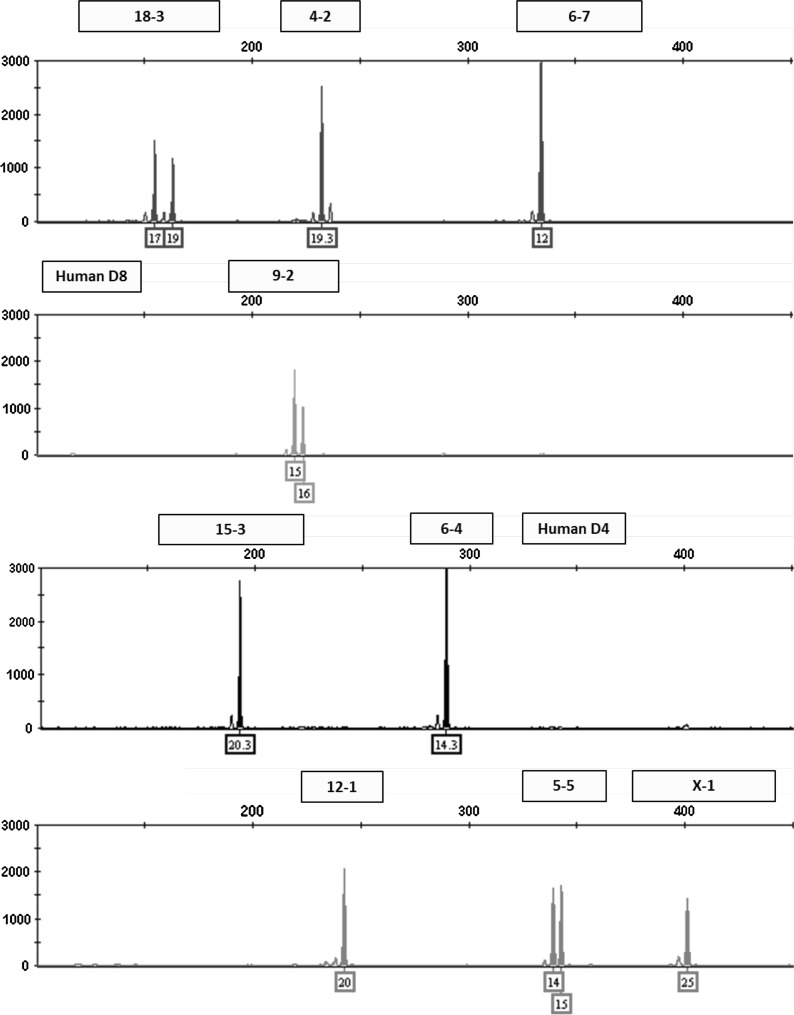
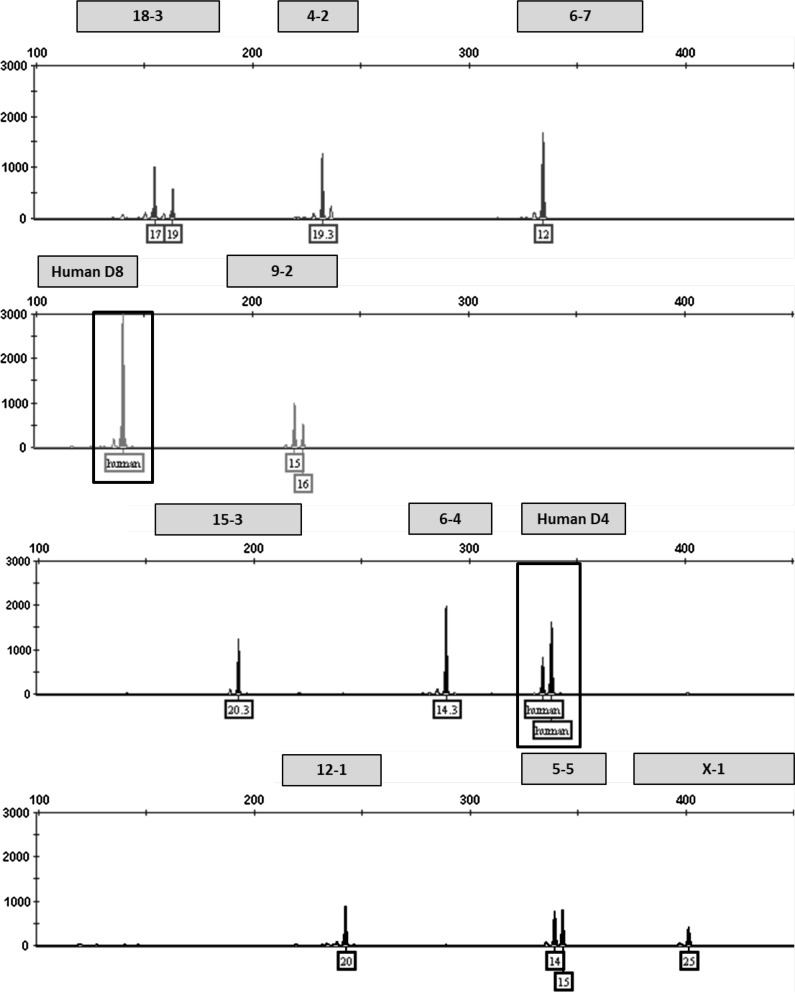
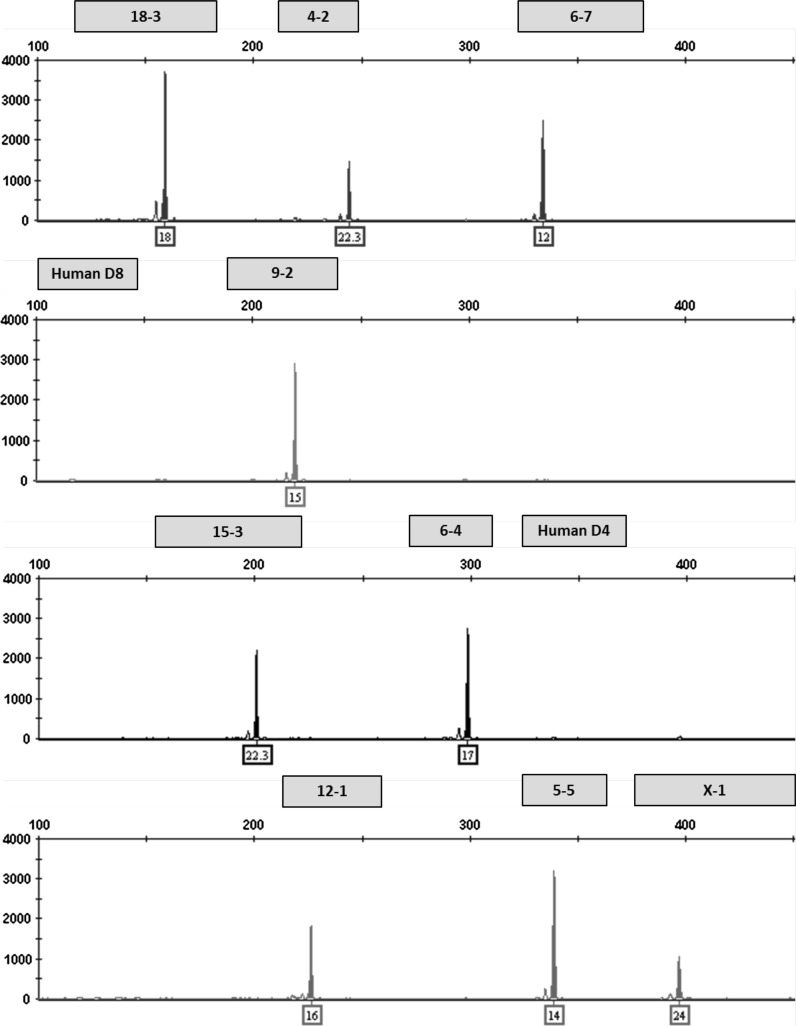
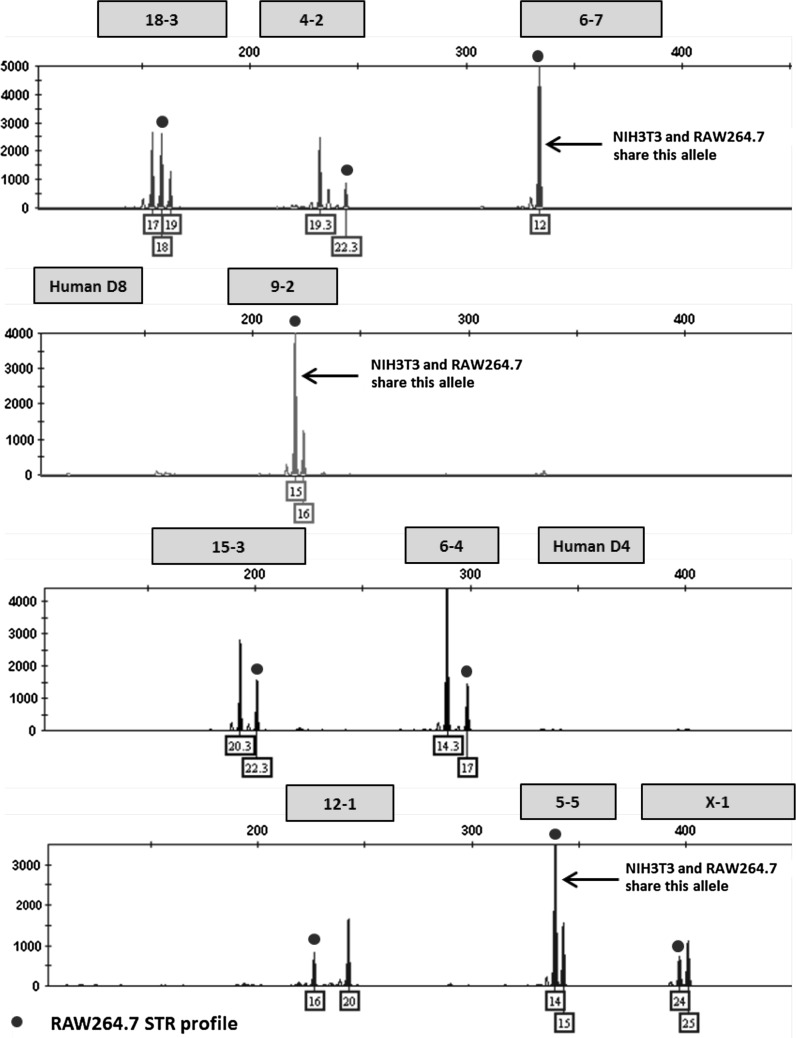
The scientific community has responded to the misidentification of human cell lines with validated methods to authenticate these cells; however, few assays are available for nonhuman cell line identification. We have developed a multiplex polymerase chain reaction assay that targets nine tetranucleotide short tandem repeat (STR) markers in the mouse genome. Unique profiles were obtained from seventy-two mouse samples that were used to determine the allele distribution for each STR marker. Correlations between allele fragment length and repeat number were determined with DNA Sanger sequencing. Genotypes for L929 and NIH3T3 cell lines were shown to be stable with increasing passage numbers as there were no significant differences in fragment length with samples of low passage when compared to high passage samples. In order to detect cell line contaminants, primers for two human STR markers were incorporated into the multiplex assay to facilitate detection of human and African green monkey DNA. This multiplex assay is the first of its kind to provide a unique STR profile for each individual mouse sample and can be used to authenticate mouse cell lines.
Overview
The claims and statistics of this paper haven’t been checked yet.
Free: it reads the open-access text and checks the first 5 claims that cite a source we can check. Create a free account to check every claim.
Integrity signals
Registry
Cites
Statistics
Figures
Verification
Claims the paper makes
The claims and statistics of this paper haven’t been checked yet.
Free: it reads the open-access text and checks the first 5 claims that cite a source we can check. Create a free account to check every claim.
Claims other papers make about this one
Each is checked against this paper’s own text: does it say what the citing paper says it does?
The cited source says what the claim attributes to it.
In the citing paper
“The need for cell line authentication in mouse cell lines has also risen in recent years (Almeida et al., 2019, 2014), so much so that the ATCC is now offering mouse STR profiling as a service.”
From Short tandem repeat profiling via next-generation sequencing for cell line authentication (2023) · cites this paper as Almeida et al., 2014
The cited source says what the claim attributes to it.
In the citing paper
“It should also be noted that there have been some efforts recently to develop sets of STR markers for nonhuman species, specifically for dog 9,10 and mouse.11,12”
From CLASTR: The Cellosaurus STR similarity search tool ‐ A precious help for cell line authentication (2020) · cites this paper as [11]
The check wasn’t confident either way, so it gives no verdict — never disputed.
In the citing paper
“The need for cell line authentication in mouse cell lines has also risen in recent years (Almeida et al., 2019, 2014), so much so that the ATCC is now offering mouse STR profiling as a service.”
From Short tandem repeat profiling via next-generation sequencing for cell line authentication (2023) · cites this paper as Almeida et al., 2014
Experimental — accuracy not yet measured
Self-check
Percentages, sums and reported differences re-computed from the paper’s own numbers.
The self-check needs the paper’s full text.
Citations
Cites
ESTIMATING F -STATISTICS FOR THE ANALYSIS OF POPULATION STRUCTURE
Weir, B. S., & Cockerham, C. C. (1984) · Evolution · doi:10.1111/j.1558-5646.1984.tb05657.x · Cited by 19,066
Continuous cultures of fused cells secreting antibody of predefined specificity
KÖHLER, G., & MILSTEIN, C. (1975) · Nature · doi:10.1038/256495a0 · Cited by 17,229
Primer3 on the WWW for General Users and for Biologist Programmers
Rozen, S., & Skaletsky, H. (2003) · Bioinformatics Methods and Protocols · doi:10.1385/1-59259-192-2:365 · Cited by 15,013
Estimating F-Statistics for the Analysis of Population Structure
Weir, B. S., & Cockerham, C. C. (1984) · Evolution · doi:10.2307/2408641 · Cited by 11,023
Principles of Population Genetics.
Cormack, R. M., Hartl, D. L., & Clark, A. G. (1990) · Biometrics · doi:10.2307/2531471 · Cited by 5,242
Brownstein, M. J., Carpten, J. D., & Smith, J. R. (1996) · BioTechniques · doi:10.2144/96206st01 · Cited by 1,284
A comprehensive genetic map of the mouse genome
Dietrich, W. F., Miller, J., Steen, R., Merchant, M. A., Damron-Boles, D., Husain, Z., Dredge, R., Daly, M. J., Ingalls, K. A., O'Connor, T. J., et al. (1996) · Nature · doi:10.1038/380149a0 · Cited by 827
Forensic DNA Typing: Biology, Technology, and Genetics of STR Markers
Butler, J. M. (2005) · Cited by 716
Check your cultures! A list of cross‐contaminated or misidentified cell lines
Capes‐Davis, A., Theodosopoulos, G., Atkin, I., Drexler, H. G., Kohara, A., MacLeod, R. A. F., Masters, J. R., Nakamura, Y., Reid, Y. A., Reddel, R. R., et al. (2010) · International Journal of Cancer · doi:10.1002/ijc.25242 · Cited by 520 · cited 1×
“In order to detect cell line contaminants, primers for two human STR markers were incorporated into the multiplex assay to facilitate detection of human and African green monkey DNA.”
MethodAutoDimer: a screening tool for primer-dimer and hairpin structures
Vallone, P. M., & Butler, J. M. (2004) · BioTechniques · doi:10.2144/04372st03 · Cited by 519
Research works printed but not linked: 2
- Green EL Biology of the laboratory mouse 1968 2 New York Dover Publications, Inc.
- Russell PJ Genetics 1996 4 New York Harper Collins
Cited by
Guidance Document on Good In Vitro Method Practices (GIVIMP)
OECD (2018) · OECD Series on Testing and Assessment · doi:10.1787/9789264304796-en · Cited by 161
Standards for cell line authentication and beyond
Almeida, J. L., Cole, K. D., & Plant, A. L. (2016) · PLoS Biology · doi:10.1371/journal.pbio.1002476 · Cited by 154
Self-citationReproducibility: changing the policies and culture of cell line authentication
Freedman, L. P., Gibson, M. C., Ethier, S. P., Soule, H. R., Neve, R. M., & Reid, Y. A. (2015) · Nature Methods · doi:10.1038/nmeth.3403 · Cited by 136
Evans, E. E., Jonason, A. S., Bußler, H., Torno, S., Veeraraghavan, J., Reilly, C. A., Doherty, M. A., Seils, J., Winter, L. A., Mallow, C. L., et al. (2015) · Cancer Immunology Research · doi:10.1158/2326-6066.cir-14-0171 · Cited by 134
Guidelines on the use of sex and gender in cardiovascular research
Usselman, C. W., Lindsey, M. L., Robinson, A. T., Habecker, B. A., Taylor, C. E., Merryman, W. D., Kimmerly, D. S., Bender, J. R., Regensteiner, J. G., Moreau, K. L., et al. (2023) · American Journal of Physiology-Heart and Circulatory Physiology · doi:10.1152/ajpheart.00535.2023 · Cited by 98
Improved reproducibility by assuring confidence in measurements in biomedical research
Plant, A. L., Locascio, L. E., May, W. E., & Gallagher, P. D. (2014) · Nature Methods · doi:10.1038/nmeth.3076 · Cited by 89
CLASTR: The Cellosaurus STR similarity search tool ‐ A precious help for cell line authentication
Robin, T., Capes‐Davis, A., & Bairoch, A. (2020) · International Journal of Cancer · doi:10.1002/ijc.32639 · Cited by 85
Use of cause-and-effect analysis to design a high-quality nanocytotoxicology assay
Rösslein, M., Elliott, J. T., Salit, M., Petersen, E. J., Hirsch, C., Krug, H. F., & Wick, P. (2015) · Chemical Research in Toxicology · doi:10.1021/tx500327y · Cited by 81
Cell line authentication: a necessity for reproducible biomedical research
Souren, N. Y., Fusenig, N. E., Heck, S., Dirks, W. G., Capes‐Davis, A., Bianchini, F., & Plass, C. (2022) · The EMBO Journal · doi:10.15252/embj.2022111307 · Cited by 73
“Due to intensive inbreeding, genetic heterogeneity is low within mouse strains, which complicates the identification of individual mouse cell lines (Almeida et al , 2014).”
Yogev, O., de Almeida, G. S., Barker, K. T., George, S. L., Kwok, C., Campbell, J., Zarowiecki, M., Kleftogiannis, D., Smith, L., Hallsworth, A., et al. (2019) · Cancer Research · doi:10.1158/0008-5472.can-18-2759 · Cited by 70
Didion, J. P., Buus, R. J., Naghashfar, Z., Threadgill, D. W., Morse, H. C., & de Villena, F. P.-M. (2014) · BMC Genomics · doi:10.1186/1471-2164-15-847 · Cited by 63
“Multiplex short tandem repeat (STR) profiling is the current standard for authentication of human cell lines [6], and also has been recently applied to the mouse [7].”
BackgroundAlmeida, J. L., Dakic, A., Kindig, K., Kone, M., Letham, D. L. D., Langdon, S., Peat, R., Holding-Pillai, J., Hall, E. M., Ladd, M., et al. (2019) · PLoS ONE · doi:10.1371/journal.pone.0218412 · Cited by 57
Self-citationImmunomodulatory properties of photopolymerizable fucoidan and carrageenans
Amin, M. L., Mawad, D., Dokos, S., Koshy, P., Martens, P. J., & Sorrell, C. C. (2019) · Carbohydrate Polymers · doi:10.1016/j.carbpol.2019.115691 · Cited by 57
Accelerating Biomedical Discoveries through Rigor and Transparency
Hewitt, J., Brown, L. L., Murphy, S. J., Grieder, F. B., & Silberberg, S. D. (2017) · ILAR Journal · doi:10.1093/ilar/ilx011 · Cited by 55
OECD (2018) · OECD series on testing and assessment · doi:10.1787/9789264304796-1-en · Cited by 54
Fankhauser, M., Bechmann, N., Lauseker, M., Goncalves, J., Favier, J., Klink, B., William, D., Gieldon, L., Maurer, J., Spöttl, G., et al. (2019) · Endocrinology · doi:10.1210/en.2019-00410 · Cited by 47
Ali, S. (2017) · Journal of Stem Cell Research & Therapeutics · doi:10.15406/jsrt.2017.02.00078 · Cited by 43
Somatostatin protects photoreceptor cells against high glucose-induced apoptosis.
Arroba, A. I., Mazzeo, A., Cazzoni, D., Beltramo, E., Hernández, C., Porta, M., Simó, R., & Valverde, Á. M. (2016) · PubMed Central · Cited by 38
Terrell, A. M., Anand, D., Smith, S. F., Dang, C. A., Waters, S. M., Pathania, M., Beebe, D. C., & Lachke, S. A. (2014) · Experimental Eye Research · doi:10.1016/j.exer.2014.12.011 · Cited by 37
Molecular characterization of the human lens epithelium-derived cell line SRA01/04
Weatherbee, B. A. T., Barton, J. R., Siddam, A. D., Anand, D., & Lachke, S. A. (2019) · Experimental Eye Research · doi:10.1016/j.exer.2019.107787 · Cited by 29
Nanda, I., Steinlein, C., Haaf, T., Buhl, E. M., Grimm, D. G., Friedman, S. L., Meurer, S. K., Schröder, S. K., & Weiskirchen, R. (2022) · Cells · doi:10.3390/cells11111783 · Cited by 26
Cytogenetic, Genomic, and Functional Characterization of Pituitary Gonadotrope Cell Lines
Ruf-Zamojski, F. M., Ge, Y., Pinças, H., Shan, J., Song, Y., Hines, N., Kelley, K. A., Montagna, C., Nair, P., Toufaily, C., et al. (2019) · Journal of the Endocrine Society · doi:10.1210/js.2019-00064 · Cited by 26
Chen, Y., Liu, K., Jang, C., Hsu, C.-C., Yen, Y., Liu, Y., Chuang, T., Wang, S.-H., Fu, Y., Kuo, C., et al. (2019) · Cancers · doi:10.3390/cancers12010061 · Cited by 25
Genetic and Molecular Characterization of the Immortalized Murine Hepatic Stellate Cell Line GRX
Schröder, S. K., Schüler, H. M., Petersen, K. V., Tesauro, C., Knudsen, B. R., Pedersen, F. S., Krus, F., Buhl, E. M., Roeb, E., Roderfeld, M., et al. (2022) · Cells · doi:10.3390/cells11091504 · Cited by 22
Self-citationBest practices for authenticating cell lines
Nims, R. W., & Reid, Y. (2017) · In Vitro Cellular & Developmental Biology - Animal · doi:10.1007/s11626-017-0212-8 · Cited by 21
DIP2 is a unique regulator of diacylglycerol lipid homeostasis in eukaryotes
Mondal, S., Kinatukara, P., Singh, S., Shambhavi, S., Patil, G. S., Dubey, N., Singh, S. H., Pal, B., Shekar, P. C., Kamat, S. S., et al. (2022) · eLife · doi:10.7554/elife.77665 · Cited by 19
On authentication of cell lines.
Boatright, J. H., Cammarata, C., Nickerson, J. M., & Zhang, Q. (2013) · Molecular vision · Cited by 17
Yu, Y., Jagannathan‐Bogdan, M., Noman, M. Z., Parpal, S., Bartolini, E., Moer, K. V., Kleinendorst, S. C., Sæther, K. B., Tresaugues, L., Silvander, C., et al. (2024) · Molecular Oncology · doi:10.1002/1878-0261.13619 · Cited by 15
Filipczak, P. T., Thomas, C., Chen, W., Salzman, A. L., McDonald, J. D., Lin, Y., & Belinsky, S. A. (2016) · Cancer Research · doi:10.1158/0008-5472.can-16-1052 · Cited by 15
Single Synonymous Mutations in KRAS Cause Transformed Phenotypes in NIH3T3 Cells
Waters, A. M., Bagni, R., Portugal, F. H., & Hartley, J. L. (2016) · PLoS ONE · doi:10.1371/journal.pone.0163272 · Cited by 15
Characterization of Long-Term Cultured Murine Submandibular Gland Epithelial Cells
Ikeura, K., Kawakita, T., Tsunoda, K., Nakagawa, T., & Tsubota, K. (2016) · PLoS ONE · doi:10.1371/journal.pone.0147407 · Cited by 15
Podoplanin is required for tumor cell invasion in cutaneous squamous cell carcinoma
Schwab, M., Lohr, S., Schneider, J., Kaiser, M., Krunic, D., Helbig, D., Géraud, C., & Angel, P. E. (2021) · Experimental Dermatology · doi:10.1111/exd.14344 · Cited by 12
Gu, M., Yang, M., He, J., Xia, S., Zhang, Z., Wang, Y., Zheng, C., & Shen, C. (2022) · International Journal of Cancer · doi:10.1002/ijc.33789 · Cited by 11
Uchio‐Yamada, K., Kasai, F., Ozawa, M., & Kohara, A. (2016) · In Vitro Cellular & Developmental Biology - Animal · doi:10.1007/s11626-016-0104-3 · Cited by 11
Short tandem repeat profiling via next-generation sequencing for cell line authentication
Chen, Y.-H., Connelly, J. P., Florian, C., Cui, X., & Pruett-Miller, S. M. (2023) · Disease Models & Mechanisms · doi:10.1242/dmm.050150 · Cited by 10
“With great effort from the scientific community, STRs have been identified that allow authentication of mouse cell lines from different mouse strains (Almeida et al., 2019, 2014).”
InfluentialGenetic Characterization of Rat Hepatic Stellate Cell Line PAV-1
Gäberlein, K., Schröder, S. K., Nanda, I., Steinlein, C., Haaf, T., Buhl, E. M., Sauvant, P., Sapin, V., Abergel, A., & Weiskirchen, R. (2023) · Cells · doi:10.3390/cells12121603 · Cited by 9
Gao, N., & Yu, F. X. (2024) · Investigative Ophthalmology & Visual Science · doi:10.1167/iovs.65.3.35 · Cited by 9
Culmination of molecular genomic techniques in forensic crime investigation
Bhattacherjee, S., Mukherjee, S., Podder, A., & Paul, S. (2024) · Forensic Science International · doi:10.1016/j.forsciint.2024.112302 · Cited by 8
A comprehensive analysis of e-CAS cell line reveals they are mouse macrophages
Evans, E., Paillot, R., & López-Álvarez, M. R. (2018) · Scientific Reports · doi:10.1038/s41598-018-26512-3 · Cited by 7
Multiplex short tandem repeat profiling of immortalized hepatic stellate cell line Col-GFP HSC
Meurer, S. K., Brenner, D. A., & Weiskirchen, R. (2022) · PLoS ONE · doi:10.1371/journal.pone.0274219 · Cited by 6
Faisal, M., MAUNGCHANBUREE, S., Dokduang, S., RATTANBUREE, T., Tedasen, A., & Graidist, P. (2021) · Indian Journal of Pharmaceutical Sciences · doi:10.36468/pharmaceutical-sciences.770 · Cited by 6
Nims, R. W. (2018) · Advances in Molecular Pathology · doi:10.1016/j.yamp.2018.07.005 · Cited by 5
The Use of Short Tandem Repeat Analysis for Cell Line Authentication
Khorolskiy, M. D., Семенова, И. С., Melnikova, E. V., & Olefir, Y. V. (2019) · Biological Products Prevention Diagnosis Treatment · doi:10.30895/2221-996x-2019-19-4-251-260 · Cited by 5
Variability in genome-engineering source materials: consider your starting point
Patange, S., Miller, S. D., & Maragh, S. (2023) · Synthetic Biology · doi:10.1093/synbio/ysad003 · Cited by 5
Authentication of Primary Murine Cell Lines by a Microfluidics-Based Lab-On-Chip System
Hong, Y., Singh, N., Bamopoulos, S. A., Gjerga, E., Schmalbrock, L. K., Balabanian, K., Schick, M., Keller, U. B., & Wirth, M. (2020) · Biomedicines · doi:10.3390/biomedicines8120590 · Cited by 5
Good Cell Culture Practice (GCCP)
OECD (2018) · OECD series on testing and assessment · doi:10.1787/9789264304796-16-en · Cited by 4
Bekaert, B., Boel, A., Rybouchkin, A., Cosemans, G., Declercq, S., Lopes, S. M. C. D. S., Parrington, J., Stoop, D., Coucke, P. J., Menten, B., et al. (2024) · Journal of Assisted Reproduction and Genetics · doi:10.1007/s10815-024-03095-9 · Cited by 4
Aḥmad, A., Lee, J. R., Metz, J. M., Tang, X., Lin, S., Bagarozzi, D. A., Petway, D. J., & Herzegh, O. (2021) · Journal of Virological Methods · doi:10.1016/j.jviromet.2021.114354 · Cited by 3
Schmitteckert, S., Griesbeck, A., Sumer, S., Jauch, A. S., Rolletschek, A., Niesler, B., Rappold, G., & Hoffmann, S. (2017) · Stem Cell Research · doi:10.1016/j.scr.2017.07.011 · Cited by 3
Asar, D. Y., Kankel, S., Keller, D. T., Hardt, K., Schröder, S. K., Buhl, E. M., Liehr, T., & Weiskirchen, R. (2026) · Cells · doi:10.3390/cells15050390 · Cited by 3
Korch, C. T. (2026) · Current Protocols · doi:10.1002/cpz1.70387 · Cited by 2
Test and reference/control items
OECD (2018) · OECD series on testing and assessment · doi:10.1787/9789264304796-11-en · Cited by 2
Folgueras-Flatschart, Á. V., Gomes, B. C., Leve, F., & Boldrini, L. D. C. (2018) · Vigilância Sanitária em Debate · doi:10.22239/2317-269x.01083 · Cited by 2
Mayers, R. P., Jaber, S. M., Verhoeven, N. A., Jaiyesimi, A., & Polster, B. M. (2026) · bioRxiv (Cold Spring Harbor Laboratory) · doi:10.64898/2026.02.11.705385 · Cited by 2
Authenticating Hybrid Cell Lines
Nims, R. W., Capes‐Davis, A., Korch, C. T., & Reid, Y. A. (2019) · IntechOpen eBooks · doi:10.5772/intechopen.80669 · Cited by 2
Choudhury, S., & Mohan, K. N. (2021) · Stem Cell Research · doi:10.1016/j.scr.2021.102561 · Cited by 2
Artifacts of analysis in cell line identification by short tandem repeat profiling
Malchenkova, A. A., & Kosobokova, E. N. (2024) · CARDIOVASCULAR THERAPY AND PREVENTION · doi:10.15829/1728-8800-2024-4121 · Cited by 1
Standardisation and accreditation bodies
OECD (2018) · OECD series on testing and assessment · doi:10.1787/9789264304796-20-en · Cited by 1
OECD (2018) · OECD series on testing and assessment · doi:10.1787/9789264304796-6-en · Cited by 1
Storage and retention of records and materials
OECD (2018) · OECD series on testing and assessment · doi:10.1787/9789264304796-15-en · Cited by 1
Cell Line Authentication and Characterisation
Masters, J. R., & Reid, Y. A. (2014) · Wiley eBooks · doi:10.1002/9780470015902.a0002559.pub2 · Cited by 1
List of viability testing methods (non-inclusive) of cell cultures
OECD (2018) · OECD series on testing and assessment · doi:10.1787/9789264304796-24-en · Cited by 1
Derivation of an aged mouse induced pluripotent stem cell line, IISHDOi005-A
Ortuño‐Costela, M. D. C., Cerrada, V., García‐López, M., Arenas, J., Martínez, J., Lucía, A., Garesse, R., & Gallardo, M. E. (2019) · Stem Cell Research · doi:10.1016/j.scr.2019.101418 · Cited by 1
OECD (2018) · OECD series on testing and assessment · doi:10.1787/9789264304796-14-en
OECD (2018) · OECD series on testing and assessment · doi:10.1787/9789264304796-13-en
Apparatus, material and reagents
OECD (2018) · OECD series on testing and assessment · doi:10.1787/9789264304796-9-en
OECD GIVIMP meeting 23-24 March, 2017 - participating experts
OECD (2018) · OECD series on testing and assessment · doi:10.1787/9789264304796-19-en
OECD (2018) · OECD series on testing and assessment · doi:10.1787/9789264304796-8-en
Famina, A. A., Заинчковская, А. Н., & Urbanovich, О. Y. (2022) · Молекулярная и прикладная генетика · doi:10.47612/1999-9127-2022-32-97-106
Short Tandem Repeat Profile for Authentication of Immortal Murine Cancer Cell Line MH-22A
Weiskirchen, R., Kankel, S., & Liehr, T. (2024) · Cell and Tissue Biology · doi:10.1134/s1990519x24700214
Ventura, J. (2013) · Albéitar: publicación veterinaria independiente
Novel functions of LUBAC-mediated M1 poly-ubiquitination in TNFR1-mediated necroptosis
Weinelt, N. (2024) · Publication Server of Goethe University Frankfurt am Main (Goethe University Frankfurt) · doi:10.21248/gups.81732
Gao, N., Chen, Q., Stemmer, P. M., & Yu, F. X. (2026) · American Journal Of Pathology · doi:10.1016/j.ajpath.2026.08.009
Goncalves, J. (2021) · theses.fr (ABES) · doi:10.70675/c8c1e120z2ec7z4009zb20bz9588f2985a48
Müller, A. C., Liehr, T., Balakrishnan, P., Kankel, S., Buhl, E. M., Keller, D. T., Hardt, K., Schröder, S. K., Liedtke, C., & Weiskirchen, R. (2026) · Cells · doi:10.3390/cells15151325
Molecular Characterization of Two Human Lens Epithelial Cell Lines: HLE-B3 And SRA01/O4
Barton, J. R. (2016) · Library, Museums and Press - UDSpace (University of Delaware)
Davidyuk, Y. N., Yusupova, A. K., Petukhova, E. O., & Bregestovski, P. D. (2022) · Journal of Evolutionary Biochemistry and Physiology · doi:10.1134/s0022093022050349
A mixture of plant polyphenols unexpectedly aggravates liver metastasis of colorectal cancer in micePreprint
Erdem, M., Roth, J., Knobloch, J., Nolting, J., Hatten, H., Şahin, E., Schön, F., Halbfeld, S., Treichel, N. S., Clavel, T., et al. (2026) · bioRxiv (Cold Spring Harbor Laboratory) · doi:10.64898/2026.02.15.703962
Metadata
- Authors
- Almeida, J. L., Hill, C. R., & Cole, K. D.
- Affiliations
- National Institute of Standards and Technology (US)
- Corresponding author
- Almeida, Jamie L.
- Venue
- Cytotechnology
- Published
- 2013-02-22
- Volume
- 66
- Issue
- 1
- Pages
- 133-147
- ISSN
- 0920-9069 (ISSN-L)
- 1573-0778
- PMC
- PMC3886540
- OpenAlex
- W4247720759
- Cited by
- 75
- References
- 35
- Citations by year
- 2026: 5 · 2024: 7 · 2023: 4 · 2022: 8 · 2021: 5 · 2020: 1 · 2019: 11 · 2018: 16 · 2017: 4 · 2016: 6 · 2015: 2 · 2014: 5 · 2013: 1
- FWCI
- 2.09
- Type
- journal article
- Language
- en
- Open access
- hybrid
- doi.org
- Locations
- Cytotechnology (publishedVersion, cc-by)
- Europe PMC (PubMed Central) (publishedVersion, cc-by)
- PubMed Central (publishedVersion, cc-by)
- PubMed (publishedVersion)
- Funders
- University of Arizona
- National Institute of Standards and Technology
- Topics
- Life Sciences › Biochemistry, Genetics and Molecular Biology › Molecular Biology › Identification and Quantification in Food
- Life Sciences › Biochemistry, Genetics and Molecular Biology › Molecular Biology › Molecular Biology Techniques and Applications
- Life Sciences › Biochemistry, Genetics and Molecular Biology › Genetics › Genetic diversity and population structure
- Keywords
- short tandem repeat loci, tetranucleotide repeats, multiplex PCR, cell line misidentification, L929 fibroblasts, NIH3T3 cells, genotype stability, allele distribution
About these checks
Registry, retraction, Cites and statistics results are computed, not judged, with one exception: a printed reference that no index lists is read once by a model before it counts as a citation error. Claims are extracted by a model and kept only when their quote appears verbatim in the text; each cited source is then checked, with a model’s help, for whether it says what the claim relies on. Those verdicts can be wrong — read the claim’s quote and the cited source before relying on one.
Statistics and arithmetic are recomputed, not judged.
Confidence bands are shown only for fields calibrated on our annotated test set. None is calibrated yet, so no band is shown.
What counts as a claim ›How we measure confidence ›How we check this ›
Are you an author, or do you see a problem with this page? Request a review
Data sources
Bibliographic data: Semantic Scholar, OpenAlex, Crossref.
Contains information from the Semantic Scholar Academic Graph Datasets, made available under the ODC Attribution License (ODC-BY 1.0).
Semantic Scholar’s data is described in: Kinney, R., et al. (2023). The Semantic Scholar Open Data Platform. arXiv:2301.10140.
