

A phase 1b study of transforming growth factor‐beta receptor I inhibitor galunisertib in combination with sorafenib in Japanese patients with unresectable hepatocellular carcinoma
Open accessThe DOI matches its Crossref record; 22 of the 23 references it cites were found in a registry or an index.
Abstract
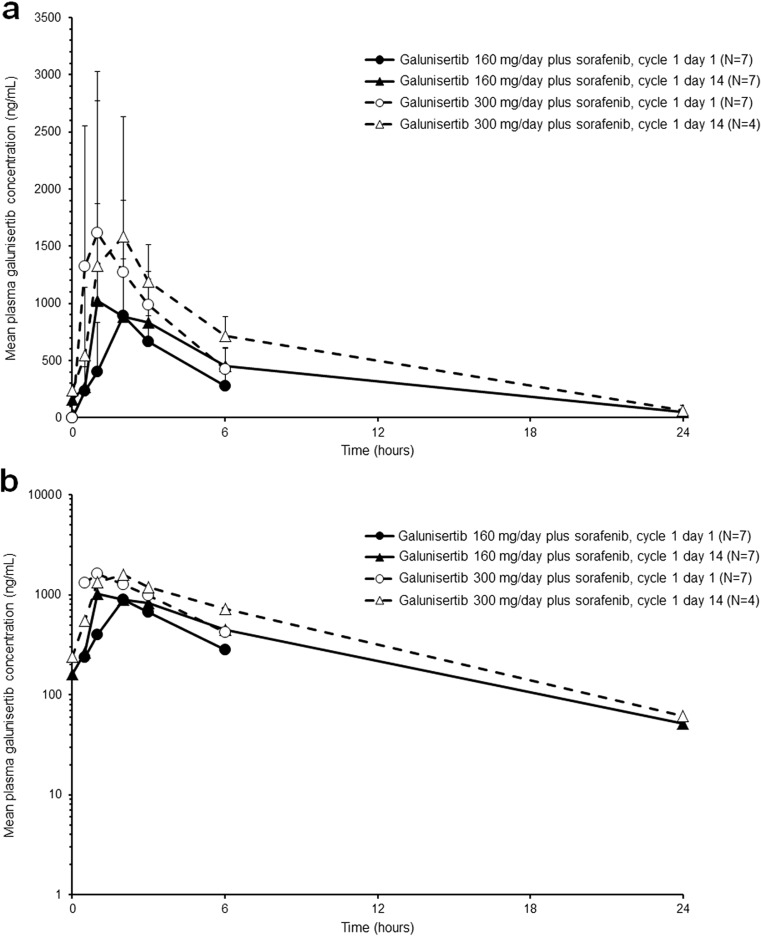
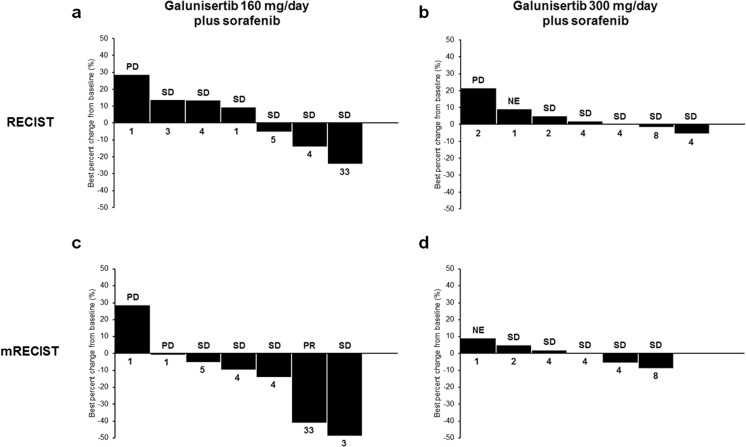
Background Galunisertib inhibits type I transforming growth factor-beta receptor serine/threonine kinase. The primary objective of this study was to evaluate the safety and tolerability of galunisertib in combination with sorafenib in Japanese patients with unresectable hepatocellular carcinoma. Patients and methods This open-label, dose-escalation, multicenter, nonrandomized phase 1b study consisted of two dose levels of galunisertib, 160 or 300 mg/day, in combination with sorafenib 800 mg/day. Galunisertib 80 mg or 150 mg was administered orally twice daily for 14 days followed by 14 days of rest plus sorafenib 400 mg administered orally twice daily for 28 days. The dose-limiting toxicity evaluation was 28 days after the first dose. Safety measures, pharmacokinetics, and antitumor activity were assessed. Results Fourteen patients, 7 at each galunisertib dose, were enrolled and treated. Three dose-limiting toxicities were reported for 2 patients. The most common treatment-emergent adverse events (TEAEs) were hypophosphatemia (14 patients [100%]), palmar-plantar erythrodysesthesia syndrome (12 patients [85.7%]), and decreased platelet count (10 patients [71.4%]). The most common grade ≥ 3 TEAEs were hypophosphatemia (10 patients [71.4%]) and palmar-plantar erythrodysesthesia syndrome (7 patients [50.0%]). No grade 5 TEAEs were reported. The pharmacokinetic profile of galunisertib in combination with sorafenib was similar to that previously reported for galunisertib. Eleven patients had a best overall response of stable disease, and 1 patient achieved a partial response by hepatocellular carcinoma-specific modified RECIST. Conclusions These data are consistent with the known safety profile for galunisertib and sorafenib and confirm tolerability of the recommended dose of galunisertib (150 mg twice daily for 14 days) in combination with sorafenib in Japanese patients with unresectable hepatocellular carcinoma.
Overview
The claims and statistics of this paper haven’t been checked yet.
Free: it reads the open-access text and checks the first 5 claims that cite a source we can check. Create a free account to check every claim.
Integrity signals
Registry
Cites
Statistics
Figures
Verification
Claims the paper makes
The claims and statistics of this paper haven’t been checked yet.
Free: it reads the open-access text and checks the first 5 claims that cite a source we can check. Create a free account to check every claim.
Claims other papers make about this one
Each is checked against this paper’s own text: does it say what the citing paper says it does?
The cited source says what the claim attributes to it.
In the citing paper
“Moreover, various small molecule inhibitors of TGF‐β, including galunisertib (LY2157299) [166, 167, 168], vactosertib (TEW‐7197) [169, 170, 171] and LY3200882 [172], have shown specific antitumor activity.”
From Tumor microenvironment signaling and therapeutics in cancer progression (2023) · cites this paper as [166]
Self-check
Percentages, sums and reported differences re-computed from the paper’s own numbers.
The self-check needs the paper’s full text.
Citations
Cites
Jemal, A., Bray, F., Center, M. M., Ferlay, J., Ward, E., & Forman, D. (2011) · CA: A Cancer Journal for Clinicians · doi:10.3322/caac.20107 · Cited by 54,679
Global cancer statistics, 2012
Torre, L. A., Bray, F., Siegel, R. L., Ferlay, J., Lortet‐Tieulent, J., & Jemal, A. (2015) · CA: A Cancer Journal for Clinicians · doi:10.3322/caac.21262 · Cited by 26,850
Sorafenib in advanced hepatocellular carcinoma
Llovet, J. M., Ricci, S., Mazzaferro, V., Hilgard, P., Gane, E., Blanc, J.-F., de Oliveira, A. C., Santoro, A., Raoul, J.-L., Forner, A., et al. (2008) · New England Journal of Medicine · doi:10.1056/nejmoa0708857 · Cited by 13,097
A New Era of Systemic Therapy for Hepatocellular Carcinoma with Regorafenib and Lenvatinib
Kudo, M. (2017) · Liver Cancer · doi:10.1159/000462153 · Cited by 5,936
Cheng, A.-L., Kang, Y.-K., Chen, Z., Tsao, C.-J., Qin, S., Kim, J. S., Luo, R., Feng, J., Ye, S., Yang, T.-S., et al. (2009) · The Lancet Oncology · doi:10.1016/s1470-2045(08)70285-7 · Cited by 5,832
Sorafenib in Advanced Hepatocellular Carcinoma
정, 재. (2008) · Cited by 5,586
Modified RECIST (mRECIST) Assessment for Hepatocellular Carcinoma
Lencioni, R., & Llovet, J. (2010) · Seminars in Liver Disease · doi:10.1055/s-0030-1247132 · Cited by 4,329
TGF-β Signaling in Tumor Suppression and Cancer Progression
Derynck, R., Akhurst, R. J., & Balmain, A. (2001) · Nature Genetics · doi:10.1038/ng1001-117 · Cited by 2,275
Cytostatic and apoptotic actions of TGF-β in homeostasis and cancer
Siegel, P. M., & Massagué, J. (2003) · Nature Reviews Cancer · doi:10.1038/nrc1208 · Cited by 1,604
TGF- β signaling in cancer – a double-edged sword
Akhurst, R. J., & Derynck, R. (2001) · Trends in Cell Biology · doi:10.1016/s0962-8924(01)02130-4 · Cited by 756
Cited by
TGFβ biology in cancer progression and immunotherapy
Derynck, R., Turley, S. J., & Akhurst, R. J. (2021) · Nature Reviews Clinical Oncology · doi:10.1038/s41571-020-0403-1 · Cited by 944
Targeting TGFβ signal transduction for cancer therapy
Liu, S., Ren, J., & ten Dijke, P. (2021) · Signal Transduction and Targeted Therapy · doi:10.1038/s41392-020-00436-9 · Cited by 413
Molecular therapies for HCC: Looking outside the box
Faivre, S., Rimassa, L., & Finn, R. S. (2020) · Journal of Hepatology · doi:10.1016/j.jhep.2019.09.010 · Cited by 326
Tumor microenvironment signaling and therapeutics in cancer progression
Goenka, A., Khan, F., Verma, B., Sinha, P., Dmello, C. C., Jogalekar, M. P., Gangadaran, P., & Ahn, B. (2023) · Cancer Communications · doi:10.1002/cac2.12416 · Cited by 323
Clinical development of therapies targeting TGFβ: current knowledge and future perspectives
Ciardiello, D., Elez, E., Tabernero, J., & Seoane, J. (2020) · Annals of Oncology · doi:10.1016/j.annonc.2020.07.009 · Cited by 265
Transforming Growth Factor-Beta (TGF-β) Signaling in Cancer-A Betrayal Within
Baba, A. B., Rah, B., Bhat, G. R., Mushtaq, I., Parveen, S., Hassan, R., Hameed Zargar, M., & Afroze, D. (2022) · Frontiers in Pharmacology · doi:10.3389/fphar.2022.791272 · Cited by 224
Neutrophils as potential therapeutic targets in hepatocellular carcinoma
Geh, D., Leslie, J., Rumney, R., Reeves, H. L., Bird, T. G., & Mann, D. A. (2022) · Nature Reviews Gastroenterology & Hepatology · doi:10.1038/s41575-021-00568-5 · Cited by 218
TGFβ control of immune responses in cancer: a holistic immuno-oncology perspective
Nixon, B. G., Gao, S., Wang, X., & Li, M. O. (2022) · Nature reviews. Immunology · doi:10.1038/s41577-022-00796-z · Cited by 154
The TGF-β Pathway: A Pharmacological Target in Hepatocellular Carcinoma?
Gonzalez‐Sanchez, E., Vaquero, J., Fernández‐Barrena, M. G., Lasarte, J. J., Avila, M. A., Sarobe, P., Reig, M., Calvo, M., & Fabregat, I. (2021) · Cancers · doi:10.3390/cancers13133248 · Cited by 110
Design of Rhenium Compounds in Targeted Anticancer Therapeutics
Collery, P., Desmaële, D., & Vijaykumar, V. (2019) · Current Pharmaceutical Design · doi:10.2174/1381612825666190902161400 · Cited by 82
Immune checkpoint inhibitors in HCC: Cellular, molecular and systemic data
Harkus, U., Wankell, M., Palamuthusingam, P., McFarlane, C., & Hebbard, L. (2022) · Seminars in Cancer Biology · doi:10.1016/j.semcancer.2022.01.005 · Cited by 79
The Role of TGF-β Signaling Pathways in Cancer and Its Potential as a Therapeutic Target
Yang, Y., Ye, W.-L., Zhang, R., He, X., Wang, J., Liu, Y., Wang, Y., Yang, X., Zhang, Y., & Gan, W.-J. (2021) · Evidence-based Complementary and Alternative Medicine · doi:10.1155/2021/6675208 · Cited by 86
Peña‐Asensio, J., Sánchez, H. C., Torralba, M., Miquel, J., Sanz‐de‐Villalobos, E., & Larrubia, J. R. (2021) · Cancers · doi:10.3390/cancers13081922 · Cited by 63
Neutrophils: Driving inflammation during the development of hepatocellular carcinoma
Chen, H., Zhou, X.-H., Li, J., Zheng, T., Yao, F.-B., Gao, B., & Xue, T. (2021) · Cancer Letters · doi:10.1016/j.canlet.2021.09.011 · Cited by 62
Diverse Neutrophil Functions in Cancer and Promising Neutrophil-Based Cancer Therapies
Sounbuli, K., Mironova, N. L., & Alekseeva, L. (2022) · International Journal of Molecular Sciences · doi:10.3390/ijms232415827 · Cited by 56
Deciphering the complexities of cancer cell immune evasion: Mechanisms and therapeutic implications
Gupta, I., Hussein, O., Sastry, K. S., Bougarn, S., Gopinath, N., Chin-Smith, E. C., Sinha, Y., Korashy, H. M., & Maccalli, C. (2023) · Advances in Cancer Biology - Metastasis · doi:10.1016/j.adcanc.2023.100107 · Cited by 44
Masuda, A., Nakamura, T., Abe, M., Iwamoto, H., Sakaue, T., Tanaka, T., Suzuki, H., Koga, H., & Torimura, T. (2020) · International Journal of Molecular Medicine · doi:10.3892/ijmm.2020.4594 · Cited by 36
Cancer-associated fibroblasts: heterogeneity, tumorigenicity and therapeutic targets
Lv, K., & He, T. (2024) · Molecular Biomedicine · doi:10.1186/s43556-024-00233-8 · Cited by 42
Galunisertib Exerts Antifibrotic Effects on TGF-β-Induced Fibroproliferative Dermal Fibroblasts
Peterson, J. M., Jay, J. W., Wang, Y., Joglar, A. A., Prasai, A., Palackic, A., Wolf, S. E., & Ayadi, A. E. (2022) · International Journal of Molecular Sciences · doi:10.3390/ijms23126689 · Cited by 36
Cancer‐Associated Fibroblasts: Heterogeneity, Cancer Pathogenesis, and Therapeutic Targets
Li, Y., Liu, Q., Jing, X., Wang, Y., Jia, X., Yang, X., & Chen, K. (2025) · MedComm · doi:10.1002/mco2.70292 · Cited by 45
Hepatocellular carcinoma: an update on investigational drugs in phase I and II clinical trials
Noonan, A. M., & Pawlik, T. M. (2019) · Expert Opinion on Investigational Drugs · doi:10.1080/13543784.2019.1677606 · Cited by 27
Advances in Immunotherapy and the TGF-β Resistance Pathway in Metastatic Bladder Cancer
Benjamin, D. J., & Lyou, Y. (2021) · Cancers · doi:10.3390/cancers13225724 · Cited by 30
Liu, Z.-L., Liu, J., Staiculescu, D., & Chen, J. (2021) · Therapeutic Advances in Medical Oncology · doi:10.1177/17588359211018026 · Cited by 27
TGFβ Signaling in the Tumor Microenvironment
Goulet, C. R., & Pouliot, F. (2020) · Advances in experimental medicine and biology · doi:10.1007/978-3-030-47189-7_6 · Cited by 22
Structure, unique biological properties, and mechanisms of action of transforming growth factor β
Zelisko, N., Lesyk, R., & Стойка, Р. С. (2024) · Bioorganic Chemistry · doi:10.1016/j.bioorg.2024.107611 · Cited by 19
Li, S., Yan, L., Li, C., Lou, L., Cui, F., Yang, X., He, F., & Jiang, Y. (2025) · Nature Communications · doi:10.1038/s41467-024-55788-5 · Cited by 18
Systemic Therapy for Hepatocellular Carcinoma: Advances and Hopes
Zhang, C., Li, M., Lin, Y., & Gao, Q. (2020) · Current Gene Therapy · doi:10.2174/1566523220666200628014530 · Cited by 16
Metabolic adverse events of multitarget kinase inhibitors: a systematic review
Acitelli, E., Maiorca, C., Grani, G., & Maranghi, M. (2023) · Endocrine · doi:10.1007/s12020-023-03362-2 · Cited by 16
Jiang, W. H., Zhao, T., Zhen, X., Jin, C., Li, H., & Ha, J. (2022) · Frontiers in Pharmacology · doi:10.3389/fphar.2022.920436 · Cited by 14
Hepatocellular carcinoma stem cells: the current state of small molecule-based inhibitors
Neves, S. P., Bomfim, L. M., & Bezerra, D. P. (2025) · Cell Death and Disease · doi:10.1038/s41419-025-07983-5 · Cited by 15
In vivo imaging of TGFβ signalling components using positron emission tomography
Rotteveel, L., Poot, A. J., Bogaard, H. J., ten Dijke, P., Lammertsma, A. A., & Windhorst, A. D. (2019) · Drug Discovery Today · doi:10.1016/j.drudis.2019.08.011 · Cited by 11
Cui, H., Li, Z., Liu, Y., Yang, Y., Huangfu, L., Kong, J., Sun, X., Gao, S., Yang, D., & Zheng, Y. (2025) · BMC Cancer · doi:10.1186/s12885-025-14179-9 · Cited by 10
Gao, X., & Zuo, S. (2023) · Clinical and Experimental Medicine · doi:10.1007/s10238-023-01015-2 · Cited by 10
Molecular Pathways Governing the Termination of Liver Regeneration
de Haan, L. R., van Golen, R. F., & Heger, M. (2024) · Pharmacological Reviews · doi:10.1124/pharmrev.123.000955 · Cited by 11
Zhao, G. S., Liu, S., Liu, Y., Li, C., Wang, R. Y., Bian, J., Zhu, R. P., Zhou, J., & Zhang, Y. W. (2022) · Medicine · doi:10.1097/md.0000000000028803 · Cited by 8
Epithelial to Mesenchymal Transition
Dalton, A. C., & Howe, P. H. (2021) · Elsevier eBooks · doi:10.1016/b978-0-12-820472-6.00005-0 · Cited by 6
Lin, G., Zheng, R.-Q., Xu, Z., Xing, S., Wu, H.-F., Xie, Y., Huang, H., & Liu, Y. (2025) · Phytomedicine · doi:10.1016/j.phymed.2025.156468 · Cited by 4
Farah, M., Nelson, K. C., Tetzlaff, M. T., Nagarajan, P., Torres-Cabala, C. A., Prieto, V. G., Curry, J. L., & Aung, P. P. (2020) · Journal of Cutaneous Pathology · doi:10.1111/cup.13645 · Cited by 4
The Role of TGFβ in Clinical Cancer Response
Nemunaitis, J. J., Gillman, C. E., Nemunaitis, J. J., Creeden, J. F., Dworkin, L. D., Stanbery, L., Atkinson, R., & Ong, S. (2020) · Clinical Oncology and Research · doi:10.31487/j.cor.2020.04.02 · Cited by 5
Hongdan, C. H. E. N., Zhang, L., & Li, C. (2025) · Journal of Zhejiang University (Medical Sciences) · doi:10.3724/zdxbyxb-2025-0090 · Cited by 5
TGF-β Signaling Pathway and Its Therapeutic Role in Cancer
James, A. W., Bhat, H. M., Yousuf, S., Jan, M., Rehman, M. U., & Rashid, S. M. (2025) · Springer eBooks · doi:10.1007/978-981-96-2763-9_11 · Cited by 2
Role of epithelial to mesenchymal transition in the resistant mechanism of EGFR-TKIs
Adachi, Y., & Ebi, H. (2023) · Elsevier eBooks · doi:10.1016/b978-0-12-822833-3.00005-x · Cited by 1
Cancer Stem Cells in Gastrointestinal Cancers
Li, M., Li, J., He, D., & Liu, M. (2024) · Stem cell biology and regenerative medicine · doi:10.1007/978-3-031-74842-4_12
Wan, L., Mao, B., & Wang, B. (2025) · World Journal of Clinical Oncology · doi:10.5306/wjco.v16.i5.102611
Targeted Therapy and Immunotherapies in Hepatocellular Carcinoma: Mechanisms and Clinical Studies
He, P. C., Xie, S., Xie, K., Gao, F., Cai, Y., Huang, Y., Liu, C., Wu, H., Lyu, Y., & Lan, T. (2026) · MedComm · doi:10.1002/mco2.70694
Arendt, N., Payo‐Serafín, T., Kolosenko, A., Kopsida, M., Sjöblom, M., & Heindryckx, F. (2026) · Therapeutic Advances in Medical Oncology · doi:10.1177/17588359261442686
Metadata
- Authors
- Ikeda, M., Morimoto, M., Tajimi, M., Inoue, K., Benhadji, K. A., Lahn, M. M. F., & Sakai, D.
- Affiliations
- National Cancer Center Hospital East (JP)
- Kanagawa Cancer Center (JP)
- Eli Lilly (Japan) (JP)
- Eli Lilly (United States) (US)
- Osaka University Hospital (JP)
- Corresponding author
- Ikeda, Masafumi
- ORCID
- Venue
- Investigational New Drugs
- Published
- 2018-07-11
- Volume
- 37
- Issue
- 1
- Pages
- 118-126
- ISSN
- 0167-6997 (ISSN-L)
- 1573-0646
- PMC
- PMC6510840
- OpenAlex
- W2856466152
- Cited by
- 46
- References
- 23
- Citations by year
- 2026: 2 · 2025: 8 · 2024: 4 · 2023: 5 · 2022: 8 · 2021: 8 · 2020: 8 · 2019: 3
- FWCI
- 2.98
- Type
- journal article
- Language
- en
- Open access
- hybrid
- doi.org
- Licence
- cc-by
- creativecommons.org/licenses/by/4.0 (tdm)
- creativecommons.org/licenses/by/4.0 (vor)
- Locations
- Investigational New Drugs (publishedVersion, cc-by)
- Europe PMC (PubMed Central) (publishedVersion, cc-by)
- PubMed Central (publishedVersion, cc-by)
- PubMed (publishedVersion)
- Funders
- Eli Lilly and Company
- Topics
- Health Sciences › Medicine › Hepatology › Hepatocellular Carcinoma Treatment and Prognosis
- Health Sciences › Medicine › Oncology › Colorectal Cancer Treatments and Studies
- Health Sciences › Medicine › Hepatology › Liver physiology and pathology
- Keywords
- galunisertib, sorafenib, hepatocellular carcinoma, unresectable liver cancer, combination therapy, dose-limiting toxicity, hypophosphatemia, palmar-plantar erythrodysesthesia syndrome, pharmacokinetics, anticancer activity, Japanese patients
- MeSH terms
- Sorafenib, Receptor, Transforming Growth Factor-beta Type I, Aged, Aged, 80 and over, Antineoplastic Combined Chemotherapy Protocols, Female, Follow-Up Studies, Carcinoma, Hepatocellular, Humans, Liver Neoplasms, Male, Middle Aged, Prognosis, Pyrazoles, Quinolines, Tissue Distribution, Maximum Tolerated Dose
About these checks
Registry, retraction, Cites and statistics results are computed, not judged, with one exception: a printed reference that no index lists is read once by a model before it counts as a citation error. Claims are extracted by a model and kept only when their quote appears verbatim in the text; each cited source is then checked, with a model’s help, for whether it says what the claim relies on. Those verdicts can be wrong — read the claim’s quote and the cited source before relying on one.
Statistics and arithmetic are recomputed, not judged.
Confidence bands are shown only for fields calibrated on our annotated test set. None is calibrated yet, so no band is shown.
What counts as a claim ›How we measure confidence ›How we check this ›
Are you an author, or do you see a problem with this page? Request a review
Data sources
Bibliographic data: Semantic Scholar, OpenAlex, Crossref.
Contains information from the Semantic Scholar Academic Graph Datasets, made available under the ODC Attribution License (ODC-BY 1.0).
Semantic Scholar’s data is described in: Kinney, R., et al. (2023). The Semantic Scholar Open Data Platform. arXiv:2301.10140.
