

Effective learning with a personal AI tutor: A case study
Open accessThe DOI matches its Crossref record; 28 of the 28 references it cites were found in a registry or an index.
Abstract
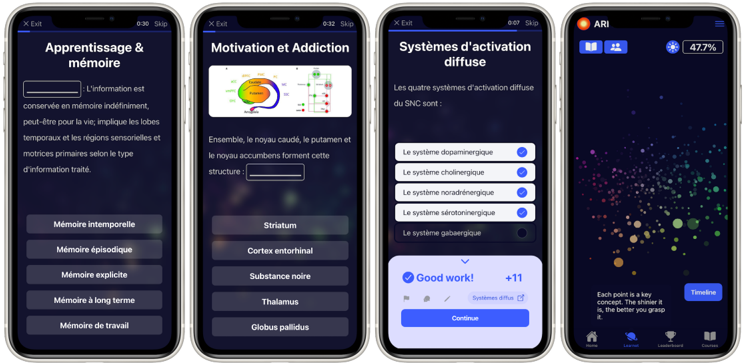
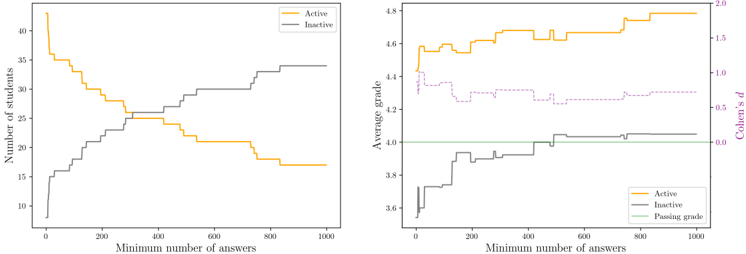
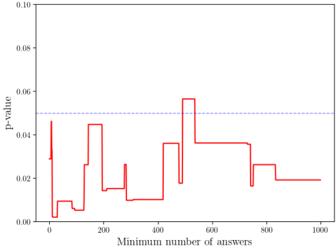
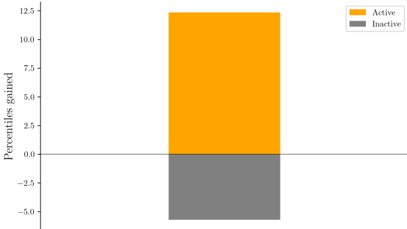
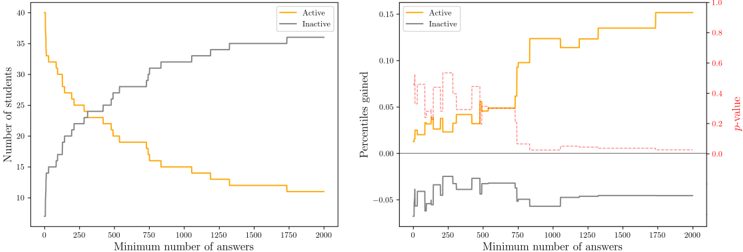
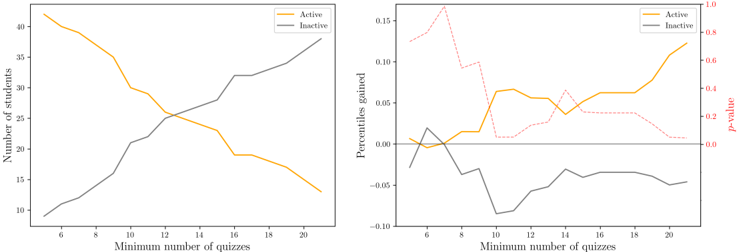
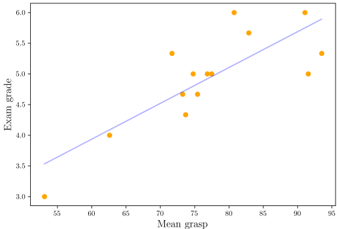
Effective learning strategies based on principles like personalization, retrieval practice, and spaced repetition are often challenging to implement due to practical constraints. Here we explore the integration of AI tutors to complement learning programs in accordance with learning sciences. A semester-long study was conducted at UniDistance Suisse, where an AI tutor app was provided to psychology students taking a neuroscience course (N=51). After automatically generating microlearning questions from existing course materials using GPT-3, the AI tutor developed a dynamic neural-network model of each student’s grasp of key concepts. This enabled the implementation of distributed retrieval practice, personalized to each student’s individual level and abilities. The results indicate that students who actively engaged with the AI tutor achieved significantly higher grades. Moreover, active engagement led to an average improvement of up to 15 percentile points compared to a parallel course without AI tutor. Additionally, the grasp strongly correlated with the exam grade, thus validating the relevance of neural-network predictions. This research demonstrates the ability of personal AI tutors to model human learning processes and effectively enhance academic performance. By integrating AI tutors into their programs, educators can offer students personalized learning experiences grounded in the principles of learning sciences, thereby addressing the challenges associated with implementing effective learning strategies. These findings contribute to the growing body of knowledge on the transformative potential of AI in education.
Overview
The claims and statistics of this paper haven’t been checked yet.
Free: it reads the open-access text and checks the first 5 claims that cite a source we can check. Create a free account to check every claim.
Integrity signals
Registry
Cites
Statistics
Figures
Verification
Claims the paper makes
The claims and statistics of this paper haven’t been checked yet.
Free: it reads the open-access text and checks the first 5 claims that cite a source we can check. Create a free account to check every claim.
Claims other papers make about this one
Each is checked against this paper’s own text: does it say what the citing paper says it does?
In the citing paper
“Studies with graduate students have found improvements using AI tutors (Baillifard et al., 2025;Fazlollahi et al., 2022).”
From AI chatbots in higher education: Comparing expectations to evidence (2026) · cites this paper as Baillifard et al., 2025
Self-check
Percentages, sums and reported differences re-computed from the paper’s own numbers.
The self-check needs the paper’s full text.
Citations
Cites
Vaswani, A., Shazeer, N., Parmar, N., Uszkoreit, J., Jones, L., Gomez, A. N., Kaiser, L., & Polosukhin, I. (2017) · arXiv · doi:10.48550/arxiv.1706.03762 · Cited by 120,404
(1978) · Medical Entomology and Zoology · Cited by 53,488
Language Models are Few-Shot Learners
Brown, T. B., Mann, B., Ryder, N., Subbiah, M., Kaplan, J., Dhariwal, P., Neelakantan, A., Shyam, P., Sastry, G., Askell, A., et al. (2020) · arXiv · doi:10.48550/arxiv.2005.14165 · Cited by 23,372
Zawacki-Richter, O., Marín, V. I., Bond, M., & Gouverneur, F. (2019) · International Journal of Educational Technology in Higher Education · doi:10.1186/s41239-019-0171-0 · Cited by 7,242 · cited 1×
“These applications can be grouped into four main categories (Zawacki-Richter et al., 2019).”
Dunlosky, J., Rawson, K. A., Marsh, E. J., Nathan, M. J., & Willingham, D. T. (2013) · Psychological Science in the Public Interest · doi:10.1177/1529100612453266 · Cited by 3,138
The 2 Sigma Problem: The Search for Methods of Group Instruction as Effective as One-to-One Tutoring
BLOOM, B. S. (1984) · Educational Researcher · doi:10.3102/0013189x013006004 · Cited by 2,734 · cited 2×
“…plays a crucial role, in particular by determining appropriate spacing intervals for each learner, by selecting the desirable levels of difficulty for retrieval practice exercises, and by interleaving and connecting concepts in a way that is adapted to individual progress (Bloom, 1984).”
Artificial intelligence in higher education: the state of the field
Crompton, H., & Burke, D. (2023) · International Journal of Educational Technology in Higher Education · doi:10.1186/s41239-023-00392-8 · Cited by 2,010 · cited 1×
“While the application of AI in education (AIEd) has been the subject of research for over three decades, recent advancements in machine learning have unlocked a wide range of possibilities to enhance education (Hannele Niemi, 2022; Ouyang et al., 2022; Crompton & Burke, 2023).”
The critical role of retrieval practice in long-term retention
Roediger, H. L., & Butler, A. C. (2011) · Trends in Cognitive Sciences · doi:10.1016/j.tics.2010.09.003 · Cited by 1,796 · cited 2×
“It has proven effective across a wide range of learning situations (Roediger & Butler, 2011).”
Ouyang, F., Zheng, L., & Jiao, P. (2022) · Education and Information Technologies · doi:10.1007/s10639-022-10925-9 · Cited by 831
Busato, V. V., Prins, F. J., Elshout, J. J., & Hamaker, C. (2000) · Personality and Individual Differences · doi:10.1016/s0191-8869(99)00253-6 · Cited by 740
Research works printed but not linked: 2
- Alemanno, S. (2022). Testing the effectiveness of personalized spaced repetition. EPFL, School of Computer and Communication Sciences. Master’s thesis supervised by Prof. Pierre Dillenbourg
- Hannele Niemi, Y. L., & Roy, D. (2022). Pea. Designing the future. Springer Cham: AI in Learning.
Cited by
Exploring the frontiers of LLMs in psychological applications: a comprehensive review
Ke, L., Tong, S., Cheng, P., & Peng, K. (2025) · Artificial Intelligence Review · doi:10.1007/s10462-025-11297-5 · Cited by 149
Wijaya, T. T., Yu, Q., Cao, Y., He, Y., & Leung, F. K. S. (2024) · Behavioral Sciences · doi:10.3390/bs14111008 · Cited by 103
Wang, Y. J., Wei, Z., Wijaya, T. T., Cao, Y., & Ning, Y. (2025) · BMC Psychology · doi:10.1186/s40359-025-02781-2 · Cited by 81
Agentic AI in Education: State of the Art and Future Directions
Kostopoulos, G., Gkamas, V., Rigou, M., & Kotsiantis, S. (2025) · IEEE Access · doi:10.1109/access.2025.3620473 · Cited by 69
“In addition to formal education, agentic AI has the capability of enabling independent and lifelong learning through enabling learners to develop personalized learning plans, establish independent goals and react to reflective prompts that instill metacognition and self-regulation [30], [41].”
Wu, X.-Y., Radloff, J., Yeter, I. H., Wang, L., & Chiu, T. K. F. (2025) · Interactive Learning Environments · doi:10.1080/10494820.2025.2563086 · Cited by 48
Metadata
- Authors
- Baillifard, A., Gabella, M., Lavenex, P. B., & Martarelli, C. S.
- Venue
- Education and Information Technologies
- Published
- 2024-07-13
- Volume
- 30
- Issue
- 1
- Pages
- 297-312
- ISSN
- 1360-2357 (ISSN-L)
- 1573-7608
- OpenAlex
- W4400608537
- Cited by
- 87
- References
- 28
- FWCI
- 12.95
- Type
- journal article
- Language
- en
- Open access
- hybrid
- Licence
- www.springernature.com/gp/researchers/text-and-data-mining (tdm)
- www.springernature.com/gp/researchers/text-and-data-mining (vor)
About these checks
Registry, retraction, Cites and statistics results are computed, not judged, with one exception: a printed reference that no index lists is read once by a model before it counts as a citation error. Claims are extracted by a model and kept only when their quote appears verbatim in the text; each cited source is then checked, with a model’s help, for whether it says what the claim relies on. Those verdicts can be wrong — read the claim’s quote and the cited source before relying on one.
Statistics and arithmetic are recomputed, not judged.
Confidence bands are shown only for fields calibrated on our annotated test set. None is calibrated yet, so no band is shown.
What counts as a claim ›How we measure confidence ›How we check this ›
Are you an author, or do you see a problem with this page? Request a review
How to cite
Cite CoChat for the checks on this page, and the paper for its own findings.
- This page
- CoChat. (2026). Citation check: Effective learning with a personal AI tutor: A case study. https://app.cochat.ai/papers/10.1007/s10639-024-12888-5
- The paper
- Baillifard, A., Gabella, M., Lavenex, P. B., & Martarelli, C. S. (2025). Effective learning with a personal AI tutor: A case study. Education and Information Technologies. https://doi.org/10.1007/s10639-024-12888-5
Data sources
Bibliographic data: Semantic Scholar, OpenAlex, Crossref.
Contains information from the Semantic Scholar Academic Graph Datasets, made available under the ODC Attribution License (ODC-BY 1.0).
Semantic Scholar’s data is described in: Kinney, R., et al. (2023). The Semantic Scholar Open Data Platform. arXiv:2301.10140.
