

COVID-19 Tests the Market Stability Reserve
Open accessThe DOI matches its Crossref record; 23 of the 24 references it cites were found in a registry or an index, and 1 are not checked yet; 1 of the 14 sources its claims cite were checked for support.
Abstract
We compare the decrease in energy demand and CO2 emissions in Europe during the financial crisis 2008-2009 with the expected drop in demand and emissions due to COVID-19, and the price response of the EU Emission Trading System (EU ETS). We ask whether the rather limited current price reduction may be due to the Market Stability Reserve (MSR), implemented in the EU ETS between the two crises. Stylized facts and basic theory are complemented with simulations based on a model of the EU ETS. Together, they suggest a mixed result. The MSR stabilizes the EU ETS price in turbulent times, but imperfectly. We show that the more persistent the COVID-19 shock is, the less the MSR is able to serve its purpose.
Verified 2026-11-22 · 1 reference not checked yet
Overview
CoChat Summary
TL;DR
The paper compares the EU ETS price response to the 2008–09 financial crisis and COVID-19 and asks whether the Market Stability Reserve (MSR) explains the smaller 2020 price drop. It finds the MSR stabilizes prices well for short-lived demand shocks but is less effective or ineffective for persistent shocks.
Key findings
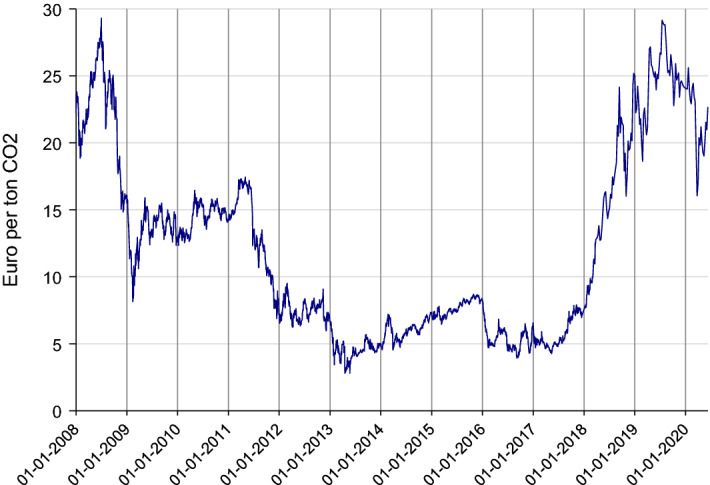
- During the 2008–09 crisis, the EUA price fell from a high of 25 Euro/t at end-August 2008 to less than 10 Euro/t in February 2009, later stabilizing around 13 Euro/t; in 2020, from January/February to May, it fell about 20 percent, from around 24 to 19 Euro/t, and returned to pre-Corona levels by early June 2020.
- The paper reports that IEA expected global energy demand to fall 6 percent and global CO2 emissions 8 percent in 2020, with EU energy consumption falling 11 percent; Refinitiv expected EU ETS emissions to drop 14 percent in 2020, 17 percent versus its pre-Corona forecast, totaling 1.3 Gt over 2020–2030.
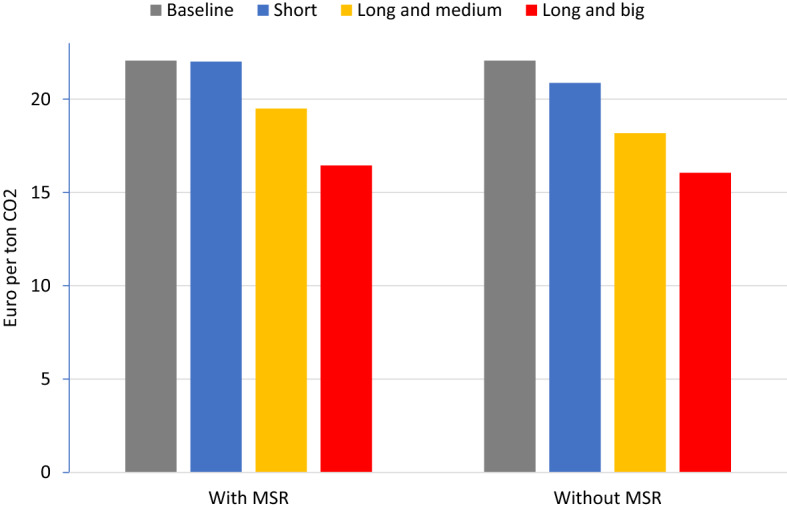
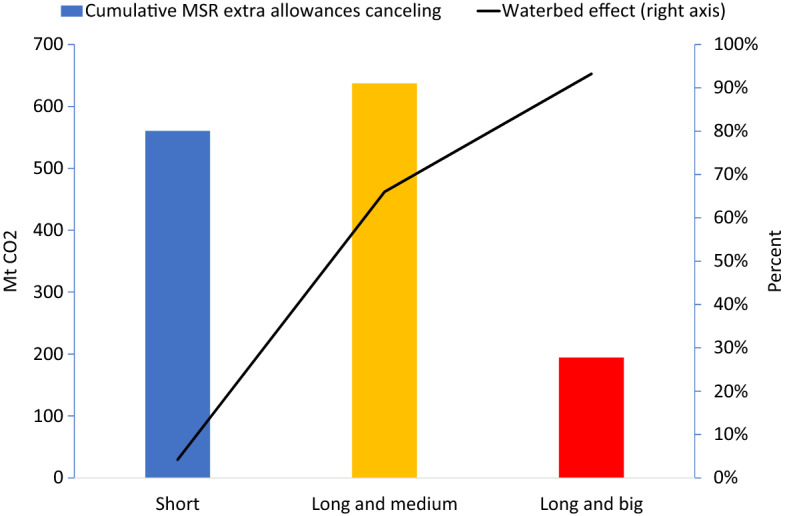
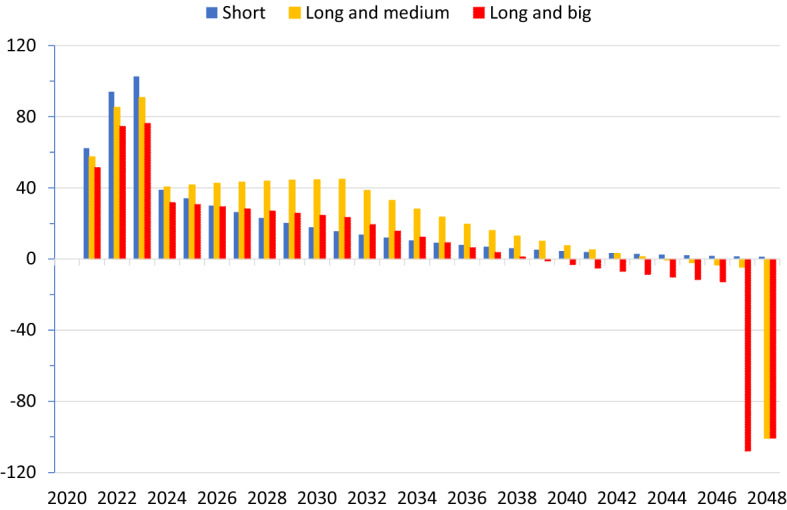
- In the model without the MSR, the 2020 price drops by 1.2 Euro in the “Short” scenario and 6.0 Euro in “Long and big”; with the MSR, the “Short” scenario has 560 Mt additional canceling and only a 4 percent waterbed effect, so the price hardly changes.
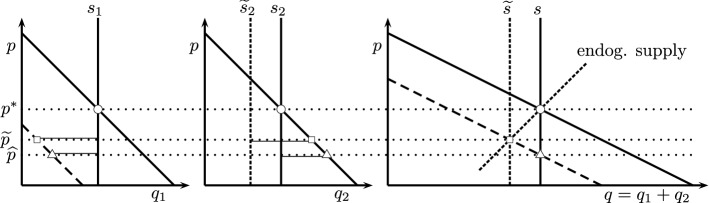
- For persistent shocks, the MSR weakens: in “Long and medium,” extra MSR canceling is less than 80 Mt, the waterbed effect is 66 percent, and the 2020 price falls 2.6 Euro versus 3.9 Euro without the MSR; in “Long and big,” canceling falls to 190 Mt, the waterbed effect is 96 percent, and the price falls 5.6 Euro versus 6.0 Euro without the MSR.
Methods
- The paper combines stylized facts and basic theory with simulations based on a stylized, dynamic, deterministic model of the EU ETS with and without the MSR, following Gerlagh et al. (2020).
- The baseline model starts at 21.0 Euro/t CO2 in 2019, rises with a 5 percent interest rate, has exogenous EUA supply declining linearly to zero in 2057, and endogenous emissions dropping to zero in 2067.
- It constructs three COVID-19 demand scenarios with the same short-run effects in 2020–22 but different long-term effects: “Short,” “Long and medium,” and “Long and big,” and compares simulated price paths with and without the MSR.
Limitations
- The paper states three main shortcomings: perfect foresight, no changes in context variables such as the rate of return on assets, and no difference between short- and long-run price responsiveness; it also assumes no changes in expected policy measures affecting the EU ETS.
- The model is deterministic, so each scenario has perfect foresight, and the future effects of COVID-19 on EUA demand, especially long-term effects, are uncertain.
- The paper notes that at the time of writing it is hard to know how much COVID-19 will reduce EU ETS emissions, and IEA did not provide an EU CO2 emissions forecast.
Model-written summary. Check it against the paper before relying on it.
Integrity signals
Registry
Cites
Statistics
Figures
Verification
Claims the paper makes
1 Valid · 2 Not valid · 11 Not checked · 41 Own results and interpretations
A result the paper states — it cites no source for it, so there is none to check. The quote shows it is in the paper.
In the paper
“This observation contrasts with the 2020 COVID-19 crisis, since at the time of writing the EUA price has fallen less in 2020 even though the IEA expects the impact on EU emissions to be “almost double the impact of the global financial crisis”.”
§ COVID-19 Tests the Market Stability Reserve > Introduction
plain- Asserted: passes — The authors put it forward as true.
- Checkable: passes — It can be checked against evidence.
- Load-bearing: passes — The paper’s conclusions depend on it.
- Based: passes — The paper gives a reason why it holds.
The paper states this without a source or data behind it here, so there is nothing to check it against. The quote shows it is in the paper.
In the paper
“Indeed, when the 2008 financial crisis hit, the EUA price dropped by more than 50 percent in only a few months.”
§ COVID-19 Tests the Market Stability Reserve > Introduction
plainstates a cause- Asserted: passes — The authors put it forward as true.
- Checkable: passes — It can be checked against evidence.
- Load-bearing: passes — The paper’s conclusions depend on it.
- Based: unclear — It is unclear why the paper says it holds.
A result the paper reports from its own data — it cites no other source for it, so there is none to check. The quote shows it is in the paper.
In the paper
“In our “Long and medium” scenario, the reduction in demand is more persistent. Future demand reductions, however, have a lower propensity to flow into the MSR.”
§ COVID-19 Tests the Market Stability Reserve > Model Simulation
plainstates a cause- Asserted: passes — The authors put it forward as true.
- Checkable: passes — It can be checked against evidence.
- Load-bearing: passes — The paper’s conclusions depend on it.
- Based: passes — The paper gives a reason why it holds.
- Rests on 5 assumptions not shown here.
A result the paper states — it cites no source for it, so there is none to check. The quote shows it is in the paper.
In the paper
“Since supply of EUAs is then fixed, the waterbed effect is fully operative and hence cumulative emissions are the same with or without the COVID-19 shock.”
§ COVID-19 Tests the Market Stability Reserve > Model Simulation
plain- Asserted: passes — The authors put it forward as true.
- Checkable: passes — It can be checked against evidence.
- Load-bearing: passes — The paper’s conclusions depend on it.
- Based: passes — The paper gives a reason why it holds.
- Rests on 5 assumptions not shown here.
A result the paper reports from its own data — it cites no other source for it, so there is none to check. The quote shows it is in the paper.
In the paper
“By 2024, after three years of 24 percent intake, 56 percent of these additional banked EUAs have entered the MSR.”
§ COVID-19 Tests the Market Stability Reserve > Model Simulation
plainstates a cause- Asserted: passes — The authors put it forward as true.
- Checkable: passes — It can be checked against evidence.
- Load-bearing: passes — The paper’s conclusions depend on it.
- Based: passes — The paper gives a reason why it holds.
- Rests on 5 assumptions not shown here.
17 more claims
Create a free account to see all 55 claims and every source verdict.
- It may state two separate claims as one. 24
- The quote only partly states this claim. 1
- Probably not a substantial claim. 9
Claims other papers make about this one
Each is checked against this paper’s own text: does it say what the citing paper says it does?
The source backs part of the claim, not all of it — or backs it for a different population, condition or comparison.
In the citing paper
“The European Union Emissions Trading System (EU ETS), a cornerstone of EU climate policy, is being put to the test by three large shocks affecting the demand for or supply of emission allowances: a temporary negative allowance demand shock because COVID-19 lockdowns reduced energy demand1–3, a positive or negative allowance demand change because of overlapping policies from the NextGenerationEU”
From COVID-19, Green Deal and recovery plan permanently change emissions and prices in EU ETS Phase IV (2022) · cites this paper as [3]
Experimental — accuracy not yet measuredThe source backs part of the claim, not all of it — or backs it for a different population, condition or comparison.
In the citing paper
“The COVID-19 pandemic tested this resilience to unexpected shocks and the MSR responded as intended (Gerlagh et al., 2020).”
From The European Union Emissions Trading System Market Stability Reserve: Does It Stabilize or Destabilize the Market? (2022) · cites this paper as Gerlagh et al., 2020
Experimental — accuracy not yet measured
Citations
Cites
Koch, N., Fuss, S., Grosjean, G., & Edenhofer, O. (2014) · Energy Policy · doi:10.1016/j.enpol.2014.06.024 · Cited by 448
Allowance price drivers in the first phase of the EU ETS
Hintermann, B. (2010) · Journal of Environmental Economics and Management · doi:10.1016/j.jeem.2009.07.002 · Cited by 441 · cited 2×
“Indicators that are documented as good proxies for changes in demand for ETS allowances include GDP and fossil fuel prices, see Hintermann (2010), Chevallier (2011), Creti et al.”
BackgroundMartin, R., Muûls, M., & Wagner, U. J. (2016) · Review of Environmental Economics and Policy · doi:10.1093/reep/rev016 · Cited by 432
Carbon price drivers: Phase I versus Phase II equilibrium?
Creti, A., Jouvet, P.-A., & Mignon, V. (2012) · Energy Economics · doi:10.1016/j.eneco.2011.11.001 · Cited by 330
The European Union Emissions Trading System: Ten Years and Counting
Ellerman, A. D., Marcantonini, C., & Zaklan, A. (2016) · Review of Environmental Economics and Policy · doi:10.1093/reep/rev014 · Cited by 321
A model of carbon price interactions with macroeconomic and energy dynamics
Chevallier, J. (2011) · Energy Economics · doi:10.1016/j.eneco.2011.07.012 · Cited by 266 · cited 2×
“Indicators that are documented as good proxies for changes in demand for ETS allowances include GDP and fossil fuel prices, see Hintermann (2010), Chevallier (2011), Creti et al.”
BackgroundGreen promotes the dirtiest: on the interaction between black and green quotas in energy markets
Böhringer, C., & Rosendahl, K. E. (2010) · Journal of Regulatory Economics · doi:10.1007/s11149-010-9116-1 · Cited by 215
Self-citationNew EU ETS Phase 4 rules temporarily puncture waterbed
Perino, G. (2018) · Nature Climate Change · doi:10.1038/s41558-018-0120-2 · Cited by 192 · cited 2×
“For more details about the MSR, see Perino (2018) and Gerlagh and Heijmans (2019).”
Background(2018) · OECD Economics Department Working Papers · doi:10.1787/4819b016-en · Cited by 177
Flachsland, C., Pahle, M., Burtraw, D., Edenhofer, O., Elkerbout, M., Fischer, C., Tietjen, O., & Zetterberg, L. (2020) · Climate Policy · doi:10.1080/14693062.2019.1682494 · Cited by 100
Research works printed but not linked: 1
- IEA (2020). Global energy review 2020. The impacts of the Covid-19 crisis on global energy demand and CO2 emissions. Technical report
Cited by
Wang, Q., Yang, X., & Li, R. (2021) · Energy Strategy Reviews · doi:10.1016/j.esr.2021.100761 · Cited by 112
Different This Time? The Prospects of CCS in the Netherlands in the 2020s
Akerboom, S., Waldmann, S., Mukherjee, A., Agaton, C. B., Sanders, M. W. J. L., & Kramer, G. J. (2021) · Frontiers in Energy Research · doi:10.3389/fenrg.2021.644796 · Cited by 78
Covid-19 and energy sector: Unique opportunity for switching to clean energy
Gollakota, A. R. K., & Shu, C. (2022) · Gondwana Research · doi:10.1016/j.gr.2022.01.014 · Cited by 71
COVID-19 and energy: Influence mechanisms and research methodologies
Zhang, L., Li, H., Lee, W., & Liao, H. (2021) · Sustainable Production and Consumption · doi:10.1016/j.spc.2021.05.010 · Cited by 63
Suggestions for a Covid-19 Post-Pandemic Research Agenda in Environmental Economics
Elliott, R., Schumacher, I., & Withagen, C. A. A. M. (2020) · Environmental and Resource Economics · doi:10.1007/s10640-020-00478-1 · Cited by 66
Perino, G., Ritz, R., & van Benthem, A. (2019) · doi:10.3386/w25643 · Cited by 58
The Market Stability Reserve in the EU Emissions Trading System: A Critical Review
Borghesi, S., Pahle, M., Perino, G., Quemin, S., & Willner, M. (2023) · Annual Review of Resource Economics · doi:10.1146/annurev-resource-111820-030145 · Cited by 54
“Hence, it stabilizes prices, as has been illustrated by the COVID-19 pandemic (Gerlagh et al. 2020, Azarova & Mier 2021, Bruninx & Ovaere 2022).”
BackgroundExploring volatility of carbon price in European Union due to COVID-19 pandemic
Dong, F., Gao, Y., Li, Y., Zhu, J., Hu, M., & Zhang, X. (2021) · Environmental Science and Pollution Research · doi:10.1007/s11356-021-16052-1 · Cited by 60
COVID-19 pandemic and stability of stock market—A sectoral approach
Buszko, M., Orzeszko, W., & Stawarz, M. (2021) · PLoS ONE · doi:10.1371/journal.pone.0250938 · Cited by 59
COVID-19, Green Deal and recovery plan permanently change emissions and prices in EU ETS Phase IV
Bruninx, K., & Ovaere, M. (2022) · Nature Communications · doi:10.1038/s41467-022-28398-2 · Cited by 50
Emissions trading with rolling horizons
Quemin, S., & Trotignon, R. (2021) · Journal of Economic Dynamics and Control · doi:10.1016/j.jedc.2021.104099 · Cited by 50
An endogenous emissions cap produces a green paradox
Gerlagh, R., Heijmans, R. J. R. K., & Rosendahl, K. E. (2021) · Economic Policy · doi:10.1093/epolic/eiab011 · Cited by 46
Self-citationNational and Sub-national Policies and Institutions
Change, I. P. O. C. (2023) · Cambridge University Press eBooks · doi:10.1017/9781009157926.015 · Cited by 83
Perino, G., Willner, M., Quemin, S., & Pahle, M. (2022) · Review of Environmental Economics and Policy · doi:10.1086/721015 · Cited by 43
Market Stability Reserve under exogenous shock: The case of COVID-19 pandemic
Azarova, V., & Mier, M. (2021) · Applied Energy · doi:10.1016/j.apenergy.2020.116351 · Cited by 35
“Similar conclusion is derived in a recent study by [12]—with similar focus on the efficiency of the MSR but substantial differences in the modelling setting (assumption of emission allowance demand shocks)– who also suggest that the MSR passes the test introduced by the COVID19 pandemic.”
Raising climate ambition in emissions trading systems: The case of the EU ETS and the 2021 review
Quemin, S. (2022) · Resource and Energy Economics · doi:10.1016/j.reseneeco.2022.101300 · Cited by 33
Design and impact assessment of policies to overcome oversupply in China's national carbon market
Ji, C.-J., Wang, X., Wang, X.-Y., & Tang, B.-J. (2024) · Journal of Environmental Management · doi:10.1016/j.jenvman.2024.120388 · Cited by 38
Shifting concerns for the EU ETS: are carbon prices becoming too high?
Gerlagh, R., Heijmans, R. J. R. K., & Einar Rosendahl, K. (2022) · Environmental Research Letters · doi:10.1088/1748-9326/ac63d6 · Cited by 29
“Published by IOP Publishing Ltd exogenous cumulative cap on emissions to one with an endogenous cap (Perino 2018, Rosendahl 2019, Gerlagh et al 2020b)4.”
BackgroundSelf-citationTietjen, O., Lessmann, K., & Pahle, M. (2021) · Resource and Energy Economics · doi:10.1016/j.reseneeco.2020.101214 · Cited by 22
Sattarhoff, C., & Gronwald, M. (2022) · International Review of Financial Analysis · doi:10.1016/j.irfa.2022.102403 · Cited by 25
Wu, Z., Zhang, W., & Zeng, X. (2022) · Environmental Science and Pollution Research · doi:10.1007/s11356-022-19858-9 · Cited by 24
Perino, G., Ritz, R. A., & van Benthem, A. (2025) · The Economic Journal · doi:10.1093/ej/ueaf021 · Cited by 32
Adjustable emissions caps and the price of pollution
Heijmans, R. J. R. K. (2023) · Journal of Environmental Economics and Management · doi:10.1016/j.jeem.2023.102793 · Cited by 19
Self-citationCOVID-19, recovery policies and the resilience of EU ETS
Dong, H., Tan, X., Cheng, S., & Liu, Y. (2022) · Economic Change and Restructuring · doi:10.1007/s10644-021-09372-2 · Cited by 18
COVID-19 and the Energy Stock Market: Evidence From China
(2021) · doi:10.46557/001c.27024 · Cited by 11
Carbon market design and market sentiment
Perino, G. (2024) · Journal of Environmental Economics and Management · doi:10.1016/j.jeem.2024.103057 · Cited by 16
Beyond Control: Policy Incoherence of the EU Emissions Trading System
Willner, M., & Perino, G. (2022) · Politics and Governance · doi:10.17645/pag.v10i1.4797 · Cited by 9
Ahani, P., Arantes, A., Garmanjani, R., & Melo, S. (2023) · Sustainability · doi:10.3390/su151612266 · Cited by 13
An Optimization Model for Structuring a Car‐Sharing Fleet Considering Traffic Congestion Intensity
Ahani, P., Arantes, A., & Melo, S. (2023) · Journal of Advanced Transportation · doi:10.1155/2023/9283130 · Cited by 9
Kamali, A. H., Iranmanesh, S. H., & Goodarzian, F. (2024) · Engineering Applications of Artificial Intelligence · doi:10.1016/j.engappai.2024.108973 · Cited by 5
Emission regulation: Prices, quantities and hybrids with endogenous technology choice
Storrøsten, H. B. (2024) · Journal of Environmental Economics and Management · doi:10.1016/j.jeem.2024.102985 · Cited by 5
Tietjen, O., Lessmann, K., & Pahle, M. (2019) · SSRN Electronic Journal · doi:10.2139/ssrn.3436736 · Cited by 4
Lynch, B., & O’Hagan-Luff, M. (2023) · European Journal of Finance · doi:10.1080/1351847x.2023.2204195 · Cited by 3
Waterbed leakage drives EU ETS emissions: COVID-19, the Green Deal & the recovery plan
(2021) · doi:10.21203/rs.3.rs-270917/v1 · Cited by 51
Wang, S., Yuan, D., Chen, X., Cui, F., Hua, G., & Yan, X. (2024) · Energy & Environment · doi:10.1177/0958305x241279954 · Cited by 4
Wang, S., Chen, X., Yuan, D., & Yan, X. (2022) · Research Square · doi:10.21203/rs.3.rs-1848651/v1 · Cited by 2
Crypto Market and Liquidity Risk in Environments due to Pandemic Uncertainty
Saleemi, J. (2022) · Journal of Contemporary Research in Business Economics and Finance · doi:10.55214/jcrbef.v3i4.164 · Cited by 2
Time Horizons and Emissions TradingPreprint
Heijmans, R. J. R. K., & Engström, M. (2022) · SSRN Electronic Journal · doi:10.2139/ssrn.4280682 · Cited by 2
Self-citationEffective Risk-limiting Carbon Emission Aware Economic Dispatch: An Algorithmic Perspective
Sun, J., Zhang, Y., & Wu, C. (2023) · ACM International Conference on Future Energy Systems (e-Energy) · doi:10.1145/3575813.3576879 · Cited by 3
Project Appraisal in the Reformed EU ETS: Looking for ShortcutsPreprint
Johansson, P. (2021) · SSRN Electronic Journal · doi:10.2139/ssrn.3756883 · Cited by 1
Time Horizons and Emissions TradingPreprint
Heijmans, R. J. R. K., & Engström, M. (2024) · SSRN Electronic Journal · doi:10.2139/ssrn.4703701 · Cited by 3
Self-citationSaleemi, J. (2022) · Journal of Contemporary Research in Business Economics and Finance · doi:10.55214/jcrbef.v4i3.183 · Cited by 2
Bulbul, G., Hassan, A., AlAmeeri, A., et al. (2025) · SSRN Electronic Journal · doi:10.2139/ssrn.5371232
The Path from Economic to Environmental Short- and Long-Term Fear Theory
Khan, S. A. R., Sajid, M. J., & Yu, Z. (2023) · Industrial ecology · doi:10.1007/978-981-99-6384-3_12
Sustainable Finance Instruments and Mechanisms
Küfeoğlu, S. (2025) · Sustainable development goals series · doi:10.1007/978-3-032-10440-3_4 · Cited by 3
Governing the energy transition through the EU carbon market as a complex adaptive system
Wu, G. (2026) · Discover Sustainability · doi:10.1007/s43621-026-02949-9 · Cited by 2
Bulbul, G., Hassan, A., AlAmeeri, A., et al. (2025) · Journal of Governance and Regulation · doi:10.22495/jgrv14i3art7
Mitigating Greenhouse Gas Emissions -the Big PicturePreprint
Haites, E. F. (2025) · SSRN Electronic Journal · doi:10.2139/ssrn.5245230
Short-Term Fear industry’s Environmental Consequences and Its Implications for SDGs 1, 2, 3, and 16
Khan, S. A. R., Sajid, M. J., & Yu, Z. (2023) · Industrial ecology · doi:10.1007/978-981-99-6384-3_10
Ji, C., Wang, X., Wang, X.-Y., & Tang, B.-J. (2024) · SSRN Electronic Journal · doi:10.2139/ssrn.4690276
Metadata
- Authors
- Gerlagh, R., Heijmans, R. J. R. K., & Rosendahl, K. E.
- Affiliations
- Tilburg University (NL)
- Norwegian University of Life Sciences (NO)
- Corresponding author
- Rosendahl, Knut Einar
- Venue
- Environmental and Resource Economics
- Published
- 2020-08
- Volume
- 76
- Issue
- 4
- Pages
- 855-865
- ISSN
- 0924-6460 (ISSN-L)
- 1573-1502
- PMC
- PMC7399596
- OpenAlex
- W3047366900
- Cited by
- 57
- References
- 23
- Citations by year
- 2026: 3 · 2025: 7 · 2024: 7 · 2023: 11 · 2022: 13 · 2021: 11 · 2020: 3
- FWCI
- 7.65
- Type
- journal article
- Language
- en
- Open access
- hybrid
- doi.org
- Licence
- cc-by
- creativecommons.org/licenses/by/4.0 (tdm)
- creativecommons.org/licenses/by/4.0 (vor, 3 d)
- Locations
- Environmental and Resource Economics (publishedVersion, cc-by)
- PubMed Central (publishedVersion, cc-by)
- Research portal (Tilburg University) (publishedVersion, other-oa)
- PubMed (publishedVersion)
- NORA - Norwegian Open Research Archives (submittedVersion, other-oa)
- Data Archiving and Networked Services (DANS) (submittedVersion, other-oa)
- RePEc: Research Papers in Economics (submittedVersion)
- Epsilon Open Archive (Sveriges lantbruksuniversitet biblioteket (Swedish University of Agricultural Sciences)) (submittedVersion)
- Funders
- Research council of Norway (209698)
- Topics
- Social Sciences › Economics, Econometrics and Finance › Economics and Econometrics › Climate Change Policy and Economics
- Social Sciences › Economics, Econometrics and Finance › Economics and Econometrics › Market Dynamics and Volatility
- Physical Sciences › Environmental Science › Global and Planetary Change › COVID-19 impact on air quality
- Keywords
- Market Stability Reserve, EU Emissions Trading System, carbon pricing, COVID-19 pandemic, energy demand, CO2 emissions, 2008 financial crisis, emission allowance prices
About these checks
Registry, retraction, Cites and statistics results are computed, not judged, with one exception: a printed reference that no index lists is read once by a model before it counts as a citation error. Claims are extracted by a model and kept only when their quote appears verbatim in the text; each cited source is then checked, with a model’s help, for whether it says what the claim relies on. Those verdicts can be wrong — read the claim’s quote and the cited source before relying on one.
The claim verdicts this report counts are experimental: their accuracy is not yet measured.
A language model drew the claims from the paper on 2026-10-10, under version 3 of the claim definition (model deepseek-v4.1-flash, prompt extract-v3).
A second model labelled each claim on 2026-10-10 (model jev-1.13-20260917, definition revision gold-guideline-v0.2).
Statistics and arithmetic are recomputed, not judged.
Confidence bands are shown only for fields calibrated on our annotated test set. None is calibrated yet, so no band is shown.
What counts as a claim ›How we measure confidence ›How we check this ›
Are you an author, or do you see a problem with this page? Request a review
Data sources
Bibliographic data: Semantic Scholar, OpenAlex, Crossref.
Contains information from the Semantic Scholar Academic Graph Datasets, made available under the ODC Attribution License (ODC-BY 1.0).
Semantic Scholar’s data is described in: Kinney, R., et al. (2023). The Semantic Scholar Open Data Platform. arXiv:2301.10140.
