

Impact of log parsing on deep learning-based anomaly detection
Open accessThe DOI matches its Crossref record; 47 of the 47 references it cites were found in a registry or an index.
Abstract
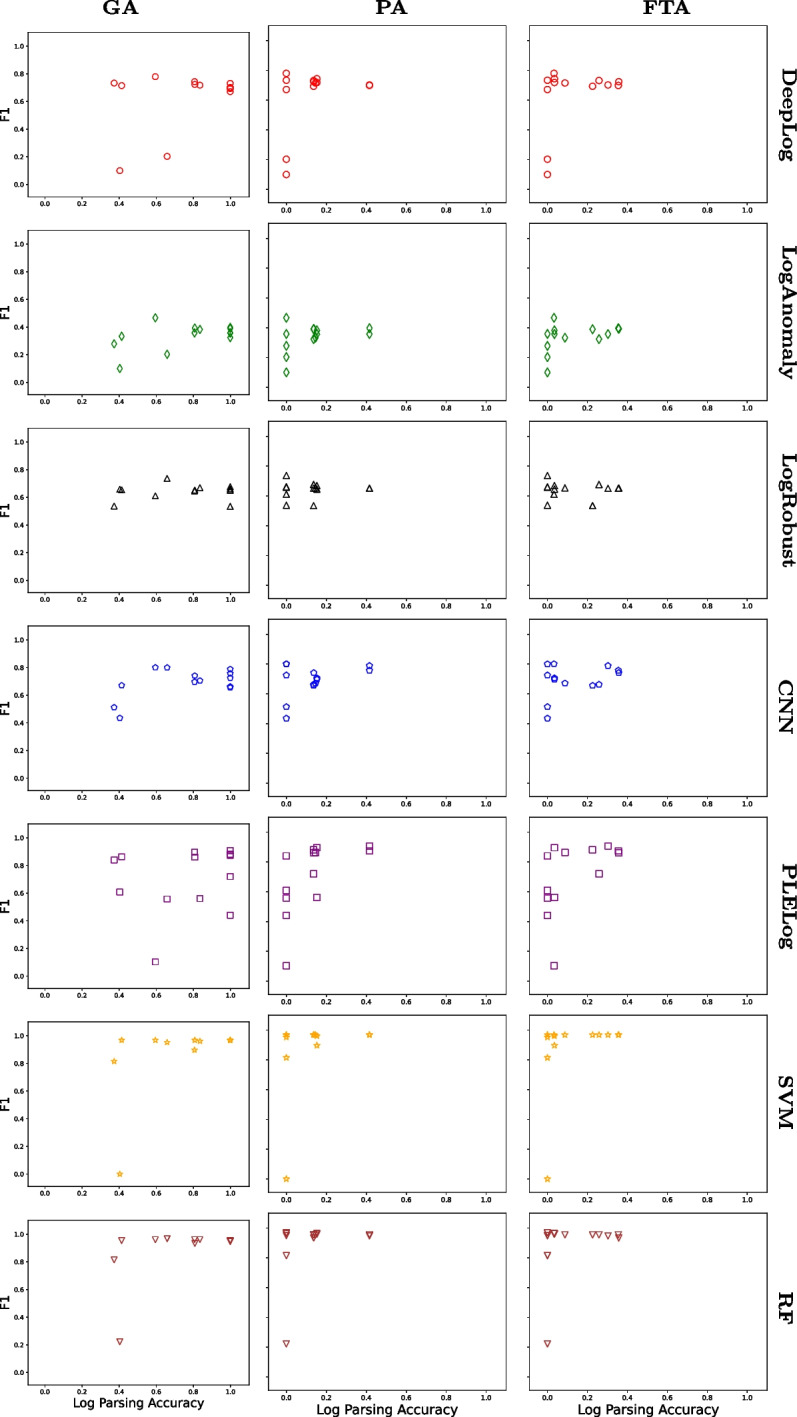
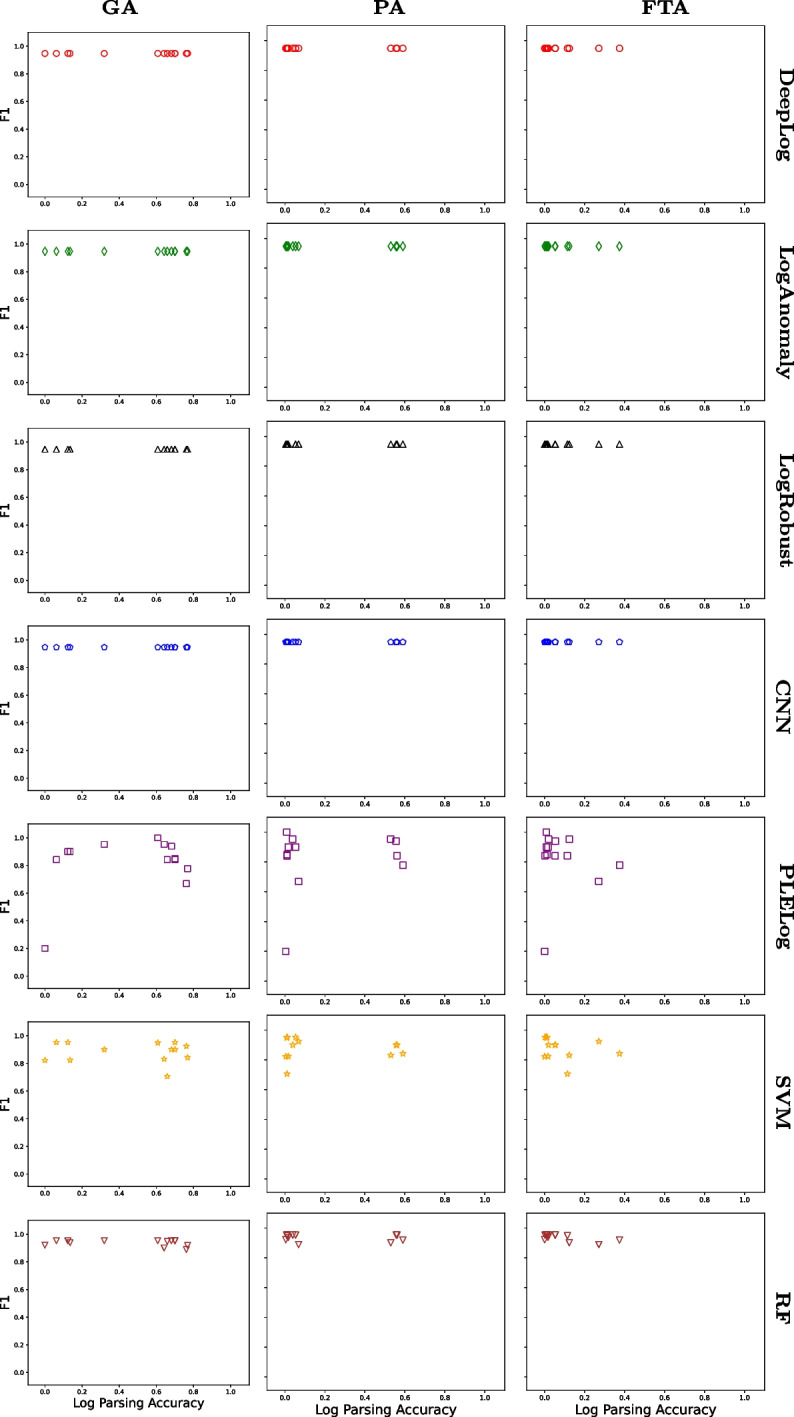
Software systems log massive amounts of data, recording important runtime information. Such logs are used, for example, for log-based anomaly detection, which aims to automatically detect abnormal behaviors of the system under analysis by processing the information recorded in its logs. Many log-based anomaly detection techniques based on deep learning models include a pre-processing step called log parsing. However, understanding the impact of log parsing on the accuracy of anomaly detection techniques has received surprisingly little attention so far. Investigating what are the key properties log parsing techniques should ideally have to help anomaly detection is therefore warranted. In this paper, we report on a comprehensive empirical study on the impact of log parsing on anomaly detection accuracy, using 13 log parsing techniques, seven anomly detection techniques (five based on deep learning and two based on traditional machine learning) on three publicly available log datasets. Our empirical results show that, despite what is widely assumed, there is no strong correlation between log parsing accuracy and anomaly detection accuracy, regardless of the metric used for measuring log parsing accuracy. Moreover, we experimentally confirm existing theoretical results showing that it is a property that we refer to as distinguishability in log parsing results—as opposed to their accuracy—that plays an essential role in achieving accurate anomaly detection.
Overview
The claims and statistics of this paper haven’t been checked yet.
Free: it reads the open-access text and checks the first 5 claims that cite a source we can check. Create a free account to check every claim.
Integrity signals
Registry
Cites
Statistics
Figures

Verification
Claims the paper makes
The claims and statistics of this paper haven’t been checked yet.
Free: it reads the open-access text and checks the first 5 claims that cite a source we can check. Create a free account to check every claim.
Claims other papers make about this one
Each is checked against this paper’s own text: does it say what the citing paper says it does?
In the citing paper
“Research has focused on tasks such as anomaly detection [90, 237], incident classification [36, 68], and root cause analysis [228, 247].”
From A 2030 Roadmap for Software Engineering (2025) · cites this paper as [90]
Self-check
Percentages, sums and reported differences re-computed from the paper’s own numbers.
The self-check needs the paper’s full text.
Citations
Cites
Breiman, L. (2001) · Machine Learning · doi:10.1023/a:1010933404324 · Cited by 133,538 · cited 2×
“…learning models, we included two representative traditional machine learning models, namely Support Vector Machine (SVM) (Hearst et al. 1998) and Random Forest(RF)Breiman(2001) 2 sincetheyareknownfortheireffectivenessinanomalydetection tasks on the HDFS dataset (Wu et al. 2023; Jia et al. 2023).”
MethodBERT: Pre-training of Deep Bidirectional Transformers for Language Understanding
Devlin, J., Chang, M.-W., Lee, K., & Toutanova, K. (2018) · arXiv · doi:10.48550/arxiv.1810.04805 · Cited by 73,173 · cited 3×
“…log representation techniques, such as FastText (Joulin et al. 2016), Word2Vec (Mikolov et al. 2013), TF-IDF (Salton and Buckley 1988) and BERT (Devlin et al. 2018), used to convert textual log data into numerical feature vectors for machine learning algorithms, such as Support Vector Machine,…”
BackgroundMethodEfficient Estimation of Word Representations in Vector Space
Mikolov, T., Chen, K., Corrado, G., & Dean, J. (2013) · arXiv · doi:10.48550/arxiv.1301.3781 · Cited by 26,568 · cited 3×
“They considered different log representation techniques, such as FastText (Joulin et al. 2016), Word2Vec (Mikolov et al. 2013), TF-IDF (Salton and Buckley 1988) and BERT (Devlin et al. 2018), used to convert textual log data into numerical feature vectors for machine learning algorithms, such as Support Vector Machine…”
MethodTerm-weighting approaches in automatic text retrieval
Salton, G., & Buckley, C. (1988) · Information Processing & Management · doi:10.1016/0306-4573(88)90021-0 · Cited by 9,740 · cited 2×
“They considered different log representation techniques, such as FastText (Joulin et al. 2016), Word2Vec (Mikolov et al. 2013), TF-IDF (Salton and Buckley 1988) and BERT (Devlin et al. 2018), used to convert textual log data into numerical feature vectors for machine learning algorithms, such as Support Vector Machine…”
MethodHearst, M. A., Dumais, S. T., Osuna, E., Platt, J., & Scholkopf, B. (1998) · IEEE Intelligent Systems and their Applications · doi:10.1109/5254.708428 · Cited by 7,243 · cited 8×
“In Table 6, except for PLELog, SVM, and RF, the values for all anomaly detection techniques are identical due to the reasons explained in the last paragraph of Section 5.1.”
MethodInfluentialOn the Properties of Neural Machine Translation: Encoder–Decoder Approaches
Cho, K., van Merrienboer, B., Bahdanau, D., & Bengio, Y. (2014) · Proceedings of SSST-8, Eighth Workshop on Syntax, Semantics and Structure in Statistical Translation · doi:10.3115/v1/w14-4012 · Cited by 7,099
Individual Comparisons by Ranking Methods
Wilcoxon, F. (1992) · Springer Series in Statistics · doi:10.1007/978-1-4612-4380-9_16 · Cited by 2,915 · cited 1×
“To see if the differences between R dst and R ind are significant, we applied the non-parametric L og R obu s t ( F 1 ) Wilcoxon signed rank test (Wilcoxon 1992) for paired samples to the F1 scores of R dst and R ind , for each of the seven anomaly detection techniques and the two datasets.”
MethodDeepLog: Anomaly Detection and Diagnosis from System Logs through Deep Learning
Du, M., Li, F., Zheng, G., & Srikumar, V. (2017) · Proceedings of the 2017 ACM SIGSAC Conference on Computer and Communications Security · doi:10.1145/3133956.3134015 · Cited by 1,835 · cited 12×
“…would be enough in some cases (e.g., detecting anomalies based on the sequence of template IDs without considering the content of the templates (Du et al. 2017)), correctly identified templates (i.e., templates identical to the corresponding oracle ones) matter when the fixed parts of templates…”
BackgroundMethodInfluentialDrain: an online log parsing approach with fixed depth tree
He, P., Zhu, J., Zheng, Z., & Lyu, M. R. (2017) · 2017 IEEE International Conference on Web Services (ICWS) · doi:10.1109/icws.2017.13 · Cited by 943 · cited 7×
“…various elements of each variable part with a special character “ <*> ”; this representation is widely used in log-based analyses (e.g., log parsing (He et al. 2017; Jiang et al. 2008), anomaly detection (Zhang et al. 2019; Du et al. 2017), and log-based testing (Elyasov 2012; Jeong et al.…”
BackgroundMethodInfluentialFastText.zip: Compressing text classification models
Joulin, A., Grave, E., Bojanowski, P., Douze, M., Jégou, H., & Mikolov, T. (2016) · arXiv · doi:10.48550/arxiv.1612.03651 · Cited by 887 · cited 4×
“Furthermore, this is the first work to empirically demonstrate the importance of distinguishability after the theoretical framework proposed by Shin et al. (2021).”
BackgroundMethodInfluential
Research works printed but not linked: 6
- Ali Abd Al-Hameed K (2022) Spearman’s correlation coefficient in statistical analysis. Int J Nonlinear Anal Appl 13(1):3249–3255
- Huang C, Guan H, Jiang A, Zhang Y, Spratling M, Wang YF (2022) Registration based few-shot anomaly detection. European conference on computer vision. Springer, Springer, New York, NY, USA, pp 303–319
- Meng W, Liu Y, Zhu Y, Zhang S, Pei D, Liu Y, Chen Y, Zhang R, Tao S, Sun P et al (2019) Loganomaly: Unsupervised detection of sequential and quantitative anomalies in unstructured logs. IJCAI, ACM, New York, NY, USA 19:4739–4745
- Oliner A, Stearley J (2007) What supercomputers say: A study of five system logs. 37th annual IEEE/IFIP international conference on dependable systems and networks (DSN’07), IEEE, IEEE/IFIP International Conference on Dependable Systems and Networks (DSN’07). Edinburgh, UK, pp 575–584
- Pedregosa F, Varoquaux G, Gramfort A, Michel V, Thirion B, Grisel O, Blondel M, Prettenhofer P, Weiss R, Dubourg V et al (2011) Scikit-learn: Machine learning in python. J Mach Learn Res 12:2825–2830
- Vaarandi R, Pihelgas M (2015) Logcluster - a data clustering and pattern mining algorithm for event logs. In: 2015 11th International conference on network and service management (CNSM), IEEE, Los Alamitos, CA, USA, pp 1–7. 10.1109/CNSM.2015.7367331 · DOI · Paper page
Cited by
A Large-Scale Evaluation for Log Parsing Techniques: How Far Are We?
Jiang, Z., Liu, J., Huang, J., Li, Y., Huo, Y., Gu, J., Chen, Z., Zhu, J., & Lyu, M. R.-T. (2024) · ACM SIGSOFT International Symposium on Software Testing and Analysis (ISSTA) · doi:10.1145/3650212.3652123 · Cited by 179
LLMParser: An Exploratory Study on Using Large Language Models for Log Parsing
Ma, Z., Chen, A. R., Kim, D. J., Chen, T.-H., & Wang, S. (2024) · Proceedings of the IEEE/ACM 46th International Conference on Software Engineering · doi:10.1145/3597503.3639150 · Cited by 92
Exploring the Effectiveness of LLMs in Automated Logging Statement Generation: An Empirical Study
Li, Y., Huo, Y., Jiang, Z., Zhong, R., He, P., Su, Y., Briand, L., & Lyu, M. R.-T. (2024) · IEEE Transactions on Software Engineering · doi:10.1109/tse.2024.3475375 · Cited by 93
Self-citationArtificial Intelligence for Software Engineering: The Journey So Far and the Road Ahead
Ahmed, I., Aleti, A., Cai, H., Chatzigeorgiou, A., He, P., Hu, X., Pezzè, M., Poshyvanyk, D., & Xia, X. (2025) · ACM Transactions on Software Engineering and Methodology · doi:10.1145/3719006 · Cited by 54
A comprehensive study of machine learning techniques for log-based anomaly detection
Ali, S., Boufaied, C., Bianculli, D., Branco, P., & Briand, L. (2025) · Empirical Software Engineering · doi:10.1007/s10664-025-10669-3 · Cited by 53
Self-citationLibreLog: Accurate and Efficient Unsupervised Log Parsing Using Open-Source Large Language Models
Ma, Z., Kim, D. J., & Chen, T.-H. P. (2025) · ACM/IEEE International Conference on Software Engineering: Companion Proceedings (ICSE-Companion) · doi:10.1109/icse55347.2025.00103 · Cited by 50
LLM Meets ML: Data-efficient Anomaly Detection on Unstable Logs
Hadadi, F., Xu, Q., Bianculli, D., & Briand, L. (2026) · ACM Transactions on Software Engineering and Methodology · doi:10.1145/3771283 · Cited by 37
Self-citationLog Anomaly Detection with Conformal Alert Control and Evidence-Grounded Incident Ticket Generation
Xin, Q. (2026) · Aviation Electronics Information Technology Telecommunications Electricals Controls (AVITEC) · doi:10.28989/avitec.v8i2.3974 · Cited by 28
“However, recent journal evidence also shows that parser choice and configuration materially affect downstream anomaly detection: over-generalization can merge distinct events, while over-fragmentation can dilute rare-but-important signals [7 – 9].”
InfluentialXin, Q. (2026) · JEECS (Journal of Electrical Engineering and Computer Sciences) · doi:10.54732/jeecs.v11i1.3 · Cited by 23
“This is consistent with recent journal studies showing that log anomaly detection accuracy depends not only on the classifier family but also on the interaction among preprocessing, feature design, and sequence modeling choices [8], [9], [10].”
Log Parsing with Generalization Ability under New Log Types
Yu, S., Wu, Y., Li, Z., He, P., Chen, N., & Liu, C. (2023) · ACM Joint European Software Engineering Conference and Symposium on the Foundations of Software Engineering (ESEC/FSE) · doi:10.1145/3611643.3616355 · Cited by 22
A 2030 Roadmap for Software Engineering
Pezzè, M., Abrahão, S., Penzenstadler, B., Poshyvanyk, D., Roychoudhury, A., & Yue, T. (2025) · ACM Transactions on Software Engineering and Methodology · doi:10.1145/3731559 · Cited by 13
SemiSMAC: A semi-supervised framework for log anomaly detection with automated hyperparameter tuning
Sun, Y., Keung, J., Yang, Z., Liu, S., & Liao, Y. (2025) · Information and Software Technology · doi:10.1016/j.infsof.2025.107869 · Cited by 13
ADALog: Adaptive Unsupervised Anomaly detection in Logs with Self-attention Masked Language Model
Pospieszny, P., Mormul, W., Szyndler, K., & Kumar, S. (2025) · International Conference on Machine Learning Technologies (ICMLT) · doi:10.1109/icmlt65785.2025.11193311 · Cited by 14
“…structures leading to potential loss of critical rare information, application of sequence-based models for in in practice often broken sequences of events or anomaly thresholding based on heuristics that reduce generalizability across diverse and dynamic system infrastructures [10], [11].”
Li, C., Kiat, Y. C., Jing, J., & Long, C. (2025) · Expert Systems · doi:10.1111/exsy.70078 · Cited by 11
Udayakumar, S. K., Ragothaman, H., & Khare, K. M. (2025) · International Conference on Data Science, Agents & Artificial Intelligence (ICDSAAI) · doi:10.1109/icdsaai65575.2025.11011761 · Cited by 11
Govea, J., Gutierrez, R., Villegas-Ch, W. E., & Navarro, A. M. (2025) · IEEE Access · doi:10.1109/access.2025.3588076 · Cited by 13
LLM meets ML: Data-efficient Anomaly Detection on Unstable Logs
Hadadi, F., Xu, Q., Bianculli, D., & Briand, L. (2024) · arXiv · doi:10.48550/arxiv.2406.07467 · Cited by 7
Self-citationA Multi-dataset Evaluation of Models for Automated Vulnerability Repair
Khan, Z. A., Garg, A., & Tang, Q. (2025) · Lecture notes in computer science · doi:10.1007/978-3-032-00630-1_5 · Cited by 3
Self-citationNgwenya, D., Ismail, D. K. B., & Wong, P. (2025) · IEEE International Conference on Cluster Computing Workshops (CLUSTER Workshops) · doi:10.1109/clusterworkshops65972.2025.11164207 · Cited by 3
“Khan et al. [24] established that effective anomaly detection requires the parsing function τ to maintain distinguishability between normal and abnormal log sequences, formally expressed as τ ∗ ( L n ) ∩ τ ∗∗ ( L a ) = ∅ , where L n and L a represent sets of normal and abnormal logs, respectively.”
Investigating the Impact of Log-Sequence Embeddings on Anomaly Detection: A Systematic Study
Alzahrani, M. (2026) · Information · doi:10.3390/info17030228 · Cited by 2
Evaluation of Multi-Language Vulnerability Patching with Pre-Trained Models
Khan, Z. A., Garg, A., Guo, Y., & Tang, Q. (2026) · ACM Symposium on Applied Computing · doi:10.1145/3748522.3779750 · Cited by 2
Self-citationLogLSHD: Fast Log Parsing with Locality-Sensitive Hashing and Dynamic Time Warping
Huang, S.-W., Wu, X., & Li, H. (2025) · doi:10.1145/3727582.3728685 · Cited by 3
DEVELOPMENT AND RESEARCH OF ALGORITHMS FOR FORECASTING FIRE HAZARDOUS SITUATIONS
Singh, S., Васильевич, П. А., & Kosenko, E. (2025) · Известия Южного федерального университета. Технические науки · doi:10.18522/2311-3103-2025-1-65-81 · Cited by 1
RT-LogAAS: A Real-time Log Anomaly Analysis System based on Large Language Models for Net-Cloud
Wang, J., Cai, X., Yang, G., Chen, X., Li, B., Xiong, Q., & Zhou, X. (2025) · International Conference on Computer Information Science and Artificial Intelligence (CISAI) · doi:10.1145/3773365.3773625 · Cited by 1
Scalable Anomaly Detection in Cloud Logs with Sparse Transformer
Anu, V. R. (2025) · IEEE Recent Advances in Intelligent Computational Systems · doi:10.1109/raics66191.2025.11332589 · Cited by 1
“The logset extraction process employed in this work adopts a keyword-based search strategy originally introduced by Wall et al. [8].”
LogMoE: Lightweight Expert Mixture for Cross-System Log Anomaly Detection
Qi, J., Luan, Z., Huang, S., Fung, C., Wang, Y., Wang, A., Zhang, H., Yang, H., & Qian, D. (2025) · IEEE/ACM International Conference on Automated Software Engineering (ASE) · doi:10.1109/ase63991.2025.00035 · Cited by 3
“While effective within their respective systems, these models struggle to generalize across different systems due to variations in log formats and behaviors [19], [43]–[46].”
Lyashkevych, M., & Шувар, Р. (2026) · Herald of Khmelnytskyi National University Technical sciences · doi:10.31891/2307-5732-2026-365-35 · Cited by 1
Sun, Y., Keung, J., Ma, X., Liao, Y., Mao, Z., & Yu, H. K. (2026) · Information and Software Technology · doi:10.1016/j.infsof.2026.108205 · Cited by 1
LLM-Orchestrated Multi-Agent Framework for Log-Centric Cyber Threat Detection and Analysis
Sasikrishna, A., Subhash, J., Ayineni, C. S. R. C., & Balachander, T. (2026) · International Conference on Intelligent Communication Technologies and Virtual Mobile Networks (ICICV) · doi:10.1109/icicv68925.2026.11554848 · Cited by 2
“According to Khan et al., better accuracy in parsing is found to improve deep learning-based anomaly detection systems by giving them more stable input representations [4].”
A security control recommender approach with human in the loop for cybersecurity compliance auditing
Tasew, J. M., Samal, P., Pakshad, P., Omar, M., & Dawson, M. E. (2026) · Discover Networks · doi:10.1007/s44354-026-00033-2
“Deep-learning–based log parsing and anomaly detection use hybrid pipelines to increase recall and precision under varied formats and vocabularies [15, 16].”
InfluentialLyashkevych, V. (2026) · Security of Infocommunication Systems and Internet of Things · doi:10.31861/sisiot2026.1.01010 · Cited by 1
“…intelligence, and operational diagnostics, but they typically focus on analytical pipelines, detection performance, and workflow integration rather than the broader problem of linking anomaly evidence to domain entities, semantic states, decision rules, and adaptive monitoring policies [6, 7].”
Kovalev, V. V. (2024) · Известия Южного федерального университета. Технические науки · doi:10.18522/2311-3103-2024-5-29-37 · Cited by 1
Software anomaly detection technology based on deep learning
Long, G., Yu, K., Yang, S., Zhou, X., Shen, X., & Lu, N. (2025) · Procedia Computer Science · doi:10.1016/j.procs.2025.04.066 · Cited by 1
Sun, Y., Keung, J., Yu, H. K., Liu, S., Liao, Y., & Zhang, J. (2025) · IEEE Annual International Computer Software and Applications Conference (COMPSAC) · doi:10.1109/compsac65507.2025.00173 · Cited by 5
“While recent deep learning models show promising F1-scores, the main focus of log analysis remains rapid anomaly detection [10].”
Research on log anomaly detection method based on deep learning
Shi, Y., & Liu, H. (2025) · International Symposium on Computer Technology and Information Science (ISCTIS) · doi:10.1109/isctis65944.2025.11065107
“In log anomaly detection, single modal information is often difficult to fully characterize system behavior [6].”
Impact of log file processing on learning speed and defect classification accuracy
Kaiafiuk, A. (2025) · Technologies and Engineering · doi:10.30857/2786-5371.2025.2.2
Large Language Models for Online Log Parsing in AIOps
Zhang, S., Fan, D., Liu, Y., He, L., & Ding, Z. (2025) · Lecture notes in computer science · doi:10.1007/978-3-032-04624-6_32 · Cited by 2
Türkzeybek, F. Z., & İnan, E. (2025) · International Artificial Intelligence and Data Processing Symposium (IDAP) · doi:10.1109/idap68205.2025.11222273
Zhang, Z., & Zhu, K. (2025) · International Conference on Digital Society, Information Science and Risk Management (ICDIR) · doi:10.1109/icdir66749.2025.11281022
“Log templates generated through log parsing [3]–[6] can encapsulate the core information of the logs, and log classification [7]–[10] serves as an efficient method for system monitoring and fault root cause localization.”
On log parsing and log-based anomaly detection: an empirical evaluation
Khan, Z. A. (2023) · Open Repository and Bibliography (University of Luxembourg) · Cited by 1
Self-citationAI/ML Driven End-to-End Anomaly Detection in Cloud Control Plane
Gupta, P., Mishra, S., Priya, K., & Vinod, S. (2025) · IEEE International Conference for Women in Innovation, Technology & Entrepreneurship (ICWITE) · doi:10.1109/icwite64848.2025.11307153
Applied Modified Metaheuristic: Optimization for Anomaly Detection in Cloud-System Operational Logs
Kostic, V., Jovanović, L., Radomirović, B., Zeljkovic, V., Tuba, E., Tuba, M., Zivkovic, M. Z., & Bačanin, N. (2026) · Lecture notes in networks and systems · doi:10.1007/978-3-032-11518-8_19
Unsupervised, Accurate, and Efficient Log Parsing Using Smaller Open Source Large Language Models
Ma, Z., Kim, D. J., & Chen, T.-H. P. (2026) · ACM Transactions on Software Engineering and Methodology · doi:10.1145/3796239 · Cited by 3
Log anomaly detection with multidimensional features and decision-level fusion
Cai, J., & Li, Z. (2026) · International Conference on Algorithms, Network, and Communication Technology (ICANCT) · doi:10.1117/12.3109304
“To accommodate differences in log structure and discriminative power 12 across datasets, we design dataset-specific semantic feature extraction strategies for BGL and HDFS respectively.”
LogFree: A Low-Resource-Oriented Model for Log Anomaly Detection
Li, Y., Wei, Y., Gu, T., Yu, M., & Lin, Y. (2025) · International Conference on Blockchain Technology and Information Security (ICBCTIS) · doi:10.1109/icbctis66509.2025.11387440
“Log parsing is a critical process that transforms semi-structured raw log data into structured information, significantly impacting the effectiveness of subsequent log anomaly detection [18].”
Towards Universal Segmentation for Log Parsing
Le, V.-H., Bianculli, D., & Nguyen, H. (2026) · IEEE International Conference on Program Comprehension (ICPC) · doi:10.1145/3794763.3794811
Self-citationEnhanced IoT Sensor Anomaly Detection Using Deep Learning and Transformer-Based Hybrid Models
Vullam, N., Thirunagari, S., Anuradha, S., P.Haritha, Babu, N. R., & Swapna, V. (2025) · Modern Electronics Devices and Intelligent Communication Systems (MEDCOM) · doi:10.1109/medcom67532.2025.11404873
Token interdependency parsing (Tipping)—A map-reduced based statistical log parser
Hashemi, S., & Mäntylä, M. (2026) · Information and Software Technology · doi:10.1016/j.infsof.2026.108137 · Cited by 1
HeRF-AD: Robust Anomaly Detection for Software Systems via Heterogeneous Representation Fusion
Tan, X., Li, B., Lu, S., Chen, W., & Wang, D. (2026) · Lecture notes in computer science · doi:10.1007/978-981-95-8408-6_16
A Unified API-Driven IPAM Framework with LSTM-Based Anomaly Detection for Hybrid Cloud Environments
Javeed, M. S., Rafi, M. A., Eva, A. A., Mridha, M. F., Zhao, Q., & Shin, J. (2026) · Computers, materials & continua/Computers, materials & continua (Print) · doi:10.32604/cmc.2026.076825
“Khan et al. evaluated how log parsing affects deep-learning-based anomaly detection and found that parsing accuracy was not the main factor influencing detection performance [25].”
Wijaya, Q. A., Saputra, H. K., Budayawan, K., & Wahyuni, T. S. (2026) · Journal of Authentic Research · doi:10.36312/y98nvh32
Machine Learning for Attendance Fraud Detection in Biometric Logs
Al-Awaishah, M., Alzboon, M. S., Wahed, M. K. Y. A., & Al-Batah, M. S. (2026) · International Conference on Smart Multidomain Integrated Learning Environments (ICSMILE) · doi:10.1109/icsmile69273.2026.11519283
Cloud Reliability Analysis via Log-based Anomaly Detection: An End-to-End Evaluation on HDFS Logs
Kidu, T., Rajendren, V. B., & Zhu, A. (2026) · IEEE International Conference on Secure IoT, Assured and Trusted Computing (SATC) · doi:10.1109/satc69565.2026.11542427
“Recent empirical work studies how parsing properties affect downstream anomaly detection [10].”
Roslöf, E. (2026) · Aaltodoc (Aalto University)
Vu, T., Do, D., Bui, T. M., Mai, D.-T., & Pham, C. (2026) · IEEE Access · doi:10.1109/access.2026.3707431
“This is consistent with the observation that parsing distinguisha-bility matters more than absolute template accuracy [36], [48]: provided distinct events remain consistently separable, occasional template errors degrade detection gracefully rather than catastrophically.”
InfluentialA Dual Hybrid Approach for Log Anomaly Detection using Deep Learning
Abbas, H. M., Al-Ta’i, Z. T. M., & Rashid, S. J. (2026) · Journal of Al-Qadisiyah for Computer Science and Mathematics · doi:10.29304/jqcsm.2026.18.22645
Controlled Granularity Tuning for Log-Based Anomaly Detection in Converged HPC-Cloud Environments
Ngwenya, D., Ismail, D. K. B., & Wong, P. (2026) · International Conference on Supercomputing · doi:10.1145/3774895.3813788
Topological Signatures for Synthetic Intrusion Detection in Government Networks
Aguilar-Ortíz, J., Díaz-Parra, O., Ruíz-Vanoye, J. A., Trejo-Macotela, F. R., Vera-Jiménez, M. A., Zamudio-García, V. M., & Domínguez-Mayorga, C. R. (2026) · IGI Global eBooks · doi:10.4018/979-8-2600-2845-2.ch006
Log-based Anomaly Detection Uses All Contextual Information with a Linear Self- Attention EncoderPreprint
Chou, C.-M., & Chen, S.-K. (2026) · Research Square · doi:10.21203/rs.3.rs-8217733/v1
A Story About Cohesion and Separation: Label-Free Metric for Log Parser Evaluation
Qin, Q., Zhao, J., Li, H., Shang, W., & Merlo, E. (2026) · IEEE International Conference on Software Analysis, Evolution and Reengineering (SANER) · doi:10.1109/saner67736.2026.00079 · Cited by 2
“…are determined by their logging statements [19], [1], which are often inaccessible due to large codebases or cross-team access restrictions [17], [26]: a recent study by Khan et al. [26] found that only 3 systems’ (HDFS, Hadoop, OpenStack) logging statements are available among the 16 systems…”
InfluentialA Comparative Study of Anomaly Detection Methods in Adaptive Educational Platforms
Alikhan, D., & Tutkyshbayeva, S. (2026) · IEEE International Conference on Smart Information Systems and Technologies (SIST) · doi:10.1109/sist61674.2026.11596006
“Khan et al. demonstrate that poorly structured logs and inconsistent templates can significantly degrade the effectiveness of deep learning–based anomaly detection [8].”
Alsubait, T. (2026) · Computers, materials & continua/Computers, materials & continua (Print) · doi:10.32604/cmc.2026.083550 · Cited by 1
Meta-analysis of publications on software logging
Sosnowski, J. S., Lewandowski, J., & Reszka, Ł. (2026) · International Journal of Electronics and Telecommunications · doi:10.24425/ijet.2026.157954
“…28, 29] – 2022, [30, 31] – 2024 Security [32] - 2016, [33, 34, 35] - 2020, Anomaly det.: [36, 37], - 2020; [38] – 2021; [39, 40, 41], - 2022; [42, 43, 44, 45]-2024, Within log analysis divers methods are presented, they are supported with developed tools and assessed using specified log datasets.”
SLOPE: Fine-Grained Log Parser Combining Syntax with LLM-Distilled Semantic
Lai, S., Huang, H., Chen, P., He, Z., Li, M., & Shen, T. (2026) · ACM Transactions on Software Engineering and Methodology · doi:10.1145/3838599
Adapala, P. K., & Baseera, A. (2026) · IEEE Global Symposium on Emerging and Communication Technologies (GSEACT) · doi:10.1109/gseact68539.2026.11620079
“The collected data undergoes processing including log aggregation, data normalization, and log parsing to obtain structured event templates [18].”
Chou, C.-M., & Chen, S.-K. (2026) · Research Square · doi:10.21203/rs.3.rs-10885441/v1
Boundary Conditions for Semantic Log Parsing in Systems Observability Pipelines
Ngwenya, D., Wong, P., & Ismail, D. K. B. (2026) · ACM International Systems and Storage Conference (SYSTOR) · doi:10.1145/3793230.3837775
Bhattacharjee, G., Dey, J., Mahmud, T., Hossain, M. S., & Andersson, K. (2026) · Computers, materials & continua/Computers, materials & continua (Print) · doi:10.32604/cmc.2026.085032
“Although effective for small or homogeneous datasets, these methods frequently exhibit limited scalability, high sensitivity to parameter tuning, and inadequate semantic context capture, resulting in inaccurate templates and degraded performance in downstream anomaly detection tasks [1,3].”
InfluentialCirkovic, M. (2026) · Doria (University of Helsinki)
Omoighe, J. A., Atoyebi, T. O., Kolapo, R., & Kirubakaran, P. A. (2026) · Iconic Research and Engineering Journals · doi:10.64388/irev10i3-1723220
Anomaly Detection in Software System Logs Using Machine Learning
Han, J. (2026) · Theoretical and Natural Science · doi:10.54254/2753-8818/2026.37416
Pillai, H. R. (2026) · Technology and Innovation Conference (TIC) · doi:10.1109/tic68483.2026.11702843
“Detecting inter-component relations in such data is not a possibility in the threshold-based systems [6].”
Arunvinodh, C., & Rao, N. V. (2026) · International Conference on Innovations in Mechanical, Robotics, Computing and Biomedical Engineering (ICIMRBE) · doi:10.1109/icimrbe70745.2026.11709915
“In addition to these works, it is well known from previous research [15], that an appropriate level of accuracy in the parsing of logs are required before one can apply deep-learning based anomaly-detecting algorithms.”
LogNexus: Effective Log Compression via Unified Redundancy Encoding
Liu, Y., Zhang, K., Chen, Z., & Zheng, Z. (2026) · Proceedings of the ACM on software engineering. · doi:10.1145/3832263
Xiao, H., Janet, S., Li, Z., Qian, G., & 许楚宏 (2026) · arXiv (Cornell University) · doi:10.48550/arxiv.2610.05807
“SemParser showed that richer parsing semantics can change downstream analytics [24] and Khan and colleagues report the same sensitivity for deep detectors [7].”
Dai, H., Hao, N., Zhang, X., Li, H., & Yang, G. (2026) · International Journal of Intelligent Computing and Cybernetics · doi:10.1108/ijicc-07-2026-0869
Development of an Intelligent Security Information and Event Management System
Cynthia, N. U., Nwakeze, O. M., Mgbeafulike, I. J., & Agubosim, C. C. (2026) · International journal of research and scientific innovation · doi:10.51244/ijrsi.2026.1313cs030
When parsing goes wrong: Revisiting log anomaly detection from parsing to deployment
Sun, Y., Keung, J., Yu, H. K., Li, Y., & Ma, X. (2026) · Journal of Systems and Software · doi:10.1016/j.jss.2026.113161
Too many clients spoil the logs: distributed parsing, aggregation techniques and metricsPreprint
Gómez, A. G., Beck, V., Landauer, M., Wurzenberger, M., Skopik, F., Rauber, A., & Weipp, E. (2026) · arXiv (Cornell University) · doi:10.48550/arxiv.2610.36946
MGL-log: Multi-modal Gated Linear Transformer for Log Anomaly Detection
Yan, R., Cai, J., & Su, Y. (2026) · International Conference on Computer Systems (ICCS) · doi:10.1109/iccs71313.2026.11739821
“Parsing-based methods [5], [6] usually convert raw logs into discrete templates and then detect anomalies using statistical features or sequential patterns.”
The Cost of Waiting in Early Log Anomaly Recognition: Stopping Rules and Evaluation PopulationsPreprint
Li, J., Li, W., & Zhan, J. (2026) · Research Square · doi:10.21203/rs.3.rs-11535197/v1
Morgan-Benita, J. A., Espino-Salinas, C. H., & Chaires, L. A. F. (2026) · doi:10.68744/dqs8cp53/ch10
Güçyener, H. E., & Tulum, G. (2026) · Applied Sciences · doi:10.3390/app162211099
IMPACT OF CLOCK DRIFT, EVENT LOSS AND NODE FAILURES ON DIAGNOSTICS IN IOT LOGGING
Omeliukh, N., Klym, H., & Ткачук, Т. І. (2026) · Komp'ûternì sistemi ta merežì · doi:10.23939/csn2026.02.200
Metadata
- Authors
- Khan, Z. A., Shin, D., Bianculli, D., & Briand, L. C.
- Affiliations
- University of Luxembourg (LU)
- University of Sheffield (GB)
- University of Ottawa (CA)
- Corresponding author
- Khan, Zanis Ali
- Venue
- Empirical Software Engineering
- Published
- 2024-08-17
- Volume
- 29
- Issue
- 6
- Pages
- 139-139
- ISSN
- 1382-3256 (ISSN-L)
- 1573-7616
- PMC
- PMC11330418
- OpenAlex
- W4401667316
- Cited by
- 49
- References
- 42
- Citations by year
- 2026: 23 · 2025: 25 · 2024: 1
- FWCI
- 8.16
- Type
- journal article
- Language
- en
- Open access
- hybrid
- doi.org
- Licence
- cc-by
- creativecommons.org/licenses/by/4.0 (tdm)
- creativecommons.org/licenses/by/4.0 (vor)
- Locations
- Empirical Software Engineering (publishedVersion, cc-by)
- PubMed Central (publishedVersion, cc-by)
- PubMed (publishedVersion)
- arXiv (Cornell University) (submittedVersion, cc-by)
- White Rose Research Online (University of Leeds, The University of Sheffield, University of York) (submittedVersion, cc-by)
- Open Repository and Bibliography (University of Luxembourg) (submittedVersion, cc-by)
- Figshare (submittedVersion, cc-by-nc-sa)
- University of Limerick Institutional Repository (University of Limerick) (submittedVersion, cc-by-nc-sa)
- arXiv (Cornell University) (cc-by)
- University of Limerick Institutional Repository (University of Limerick)
- Funders
- Fonds National de la Recherche Luxembourg (C22/IS/17373407/LOGODOR)
- Natural Sciences and Engineering Research Council of Canada
- Topics
- Physical Sciences › Computer Science › Computer Networks and Communications › Software System Performance and Reliability
- Physical Sciences › Computer Science › Information Systems › Software Engineering Research
- Physical Sciences › Computer Science › Software › Software Testing and Debugging Techniques
- Keywords
- log parsing, log anomaly detection, deep learning, distinguishability
About these checks
Registry, retraction, Cites and statistics results are computed, not judged, with one exception: a printed reference that no index lists is read once by a model before it counts as a citation error. Claims are extracted by a model and kept only when their quote appears verbatim in the text; each cited source is then checked, with a model’s help, for whether it says what the claim relies on. Those verdicts can be wrong — read the claim’s quote and the cited source before relying on one.
Statistics and arithmetic are recomputed, not judged.
Confidence bands are shown only for fields calibrated on our annotated test set. None is calibrated yet, so no band is shown.
What counts as a claim ›How we measure confidence ›How we check this ›
Are you an author, or do you see a problem with this page? Request a review
Data sources
Bibliographic data: Semantic Scholar, OpenAlex, Crossref.
Contains information from the Semantic Scholar Academic Graph Datasets, made available under the ODC Attribution License (ODC-BY 1.0).
Semantic Scholar’s data is described in: Kinney, R., et al. (2023). The Semantic Scholar Open Data Platform. arXiv:2301.10140.
