

Spatial expansion of avocado in Mexico: Could the energy use of pruning residues offset orchard GHG emissions?
Open accessPublished version of a preprint
The DOI matches its Crossref record; 56 of the 59 references it cites were found in a registry or an index.
Abstract
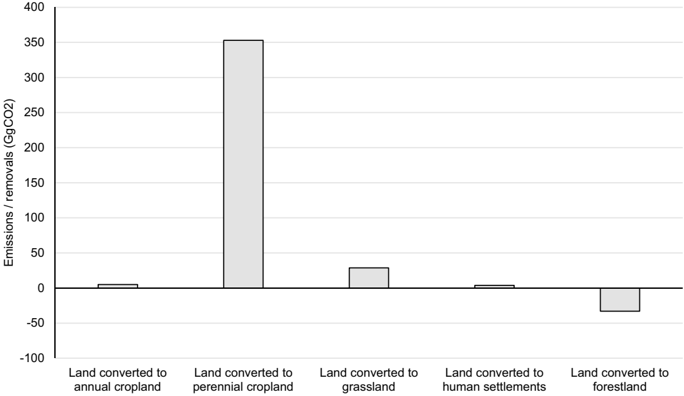
Avocado orchards ( Persea americana ) in Mexico are constantly being expanded to meet the increasing demand for the fruit in the national and international markets. The land-use change (LUC) caused by this expansion has numerous negative impacts, including greenhouse gas (GHG) emissions due to the loss of forest cover and the burning of pruning residues. To generate a comprehensive evaluation of this complex environmental issue, we calculate emissions from LUC and from residue burning between 1974 and 2017 at a local scale (1:20,000), and the energy potential of pruning residues was estimated as an alternative to revalue a waste product and mitigate the negative impacts of avocado cultivation. Our results show that land-use conversions emitted 390.5 GgCO 2 , of which 91% came from conversions to avocado orchards. Emissions of GHG from biomass burning amounted to an additional 20.68 GgCO 2 e released per year. Given that around 12,600 tons of dry avocado pruning residues are generated annually in the study region, their use for energy generation could replace 240 TJ/year of fossil fuels in rural industries and could mitigate around 31 GgCO 2 e per year. This study provides decision-makers with a concrete example of how to establish multiple-impact strategies at local scales.
Overview
The claims and statistics of this paper haven’t been checked yet.
Free: it reads the open-access text and checks the first 5 claims that cite a source we can check. Create a free account to check every claim.
Integrity signals
Registry
Cites
Statistics
Figures
Verification
Claims the paper makes
The claims and statistics of this paper haven’t been checked yet.
Free: it reads the open-access text and checks the first 5 claims that cite a source we can check. Create a free account to check every claim.
Claims other papers make about this one
Each is checked against this paper’s own text: does it say what the citing paper says it does?
The source backs part of the claim, not all of it — or backs it for a different population, condition or comparison.
In the citing paper
“However, the greatest impacts on ecosystems would probably come from excessive land-use change that lacks planning and environmental assessments [32].”
From Forest Supply Chain for Bioenergy: An Approach for Biomass Study in the Framework of a Circular Bioeconomy (2023) · cites this paper as [32]
Experimental — accuracy not yet measuredThe check wasn’t confident either way, so it gives no verdict — never disputed.
In the citing paper
“Remote sensing allows estimating biomass at the landscape scale, but regardless of the sensor or satellite used, field measurements are essential to adjust the observed/measured relationships [31,32].”
From Forest Supply Chain for Bioenergy: An Approach for Biomass Study in the Framework of a Circular Bioeconomy (2023) · cites this paper as [32]
Experimental — accuracy not yet measured
Self-check
Percentages, sums and reported differences re-computed from the paper’s own numbers.
The self-check needs the paper’s full text.
Citations
Cites
Photogrammetric Engineering and Remote Sensing
Nicol, J., King, B., Quattrochi, D., Dowman, I. J., Ehlers, M., & Xiaoli, D. (2007) · UCL Discovery (University College London) · Cited by 9,325
2006 IPCC Guidelines for National Greenhouse Gas Inventories
Paustian, K. H., Ravindranath, N. H., & van Amstel, A. R. (2006) · Socio-Environmental Systems Modeling · Cited by 6,706
Emission of trace gases and aerosols from biomass burning
Andreae, M. O., & Merlet, P. (2001) · Global Biogeochemical Cycles · doi:10.1029/2000gb001382 · Cited by 3,902 · cited 1×
“Here, we considered the following end-user (Andreae & Merlet, 2001); l = default value for maize agricultural residues (post-harvest burning; (IPCC, 2006)) assuming that 100% of residues are burned; m = average default value for perennial shrub-like crops (IPCC, 2006; Sagarpa, 2015).”
Re-evaluation of forest biomass carbon stocks and lessons from the world's most carbon-dense forests
Keith, H., Mackey, B. G., & Lindenmayer, D. B. (2009) · Proceedings of the National Academy of Sciences · doi:10.1073/pnas.0901970106 · Cited by 889 · cited 1×
“However, it is important to consider that forest growth within conserved sites is not unlimited, given that the carbon sequestration capacity of an ecosystem decreases as it reaches carrying capacity or climax (Keith et al., 2009).”
Design and Analysis for Thematic Map Accuracy Assessment
Stehman, S. V., & Czaplewski, R. L. (1998) · Remote Sensing of Environment · doi:10.1016/s0034-4257(98)00010-8 · Cited by 710 · cited 1×
“We then cartographically validated our classification following the guidelines for evaluation of thematic maps by Congalton (1988) and Stehman and Czaplewski (1998), assigning 50 verification points for each type of land use.”
A global meta-analysis of yield stability in organic and conservation agriculture
Knapp, S., & van der Heijden, M. G. A. (2018) · Nature Communications · doi:10.1038/s41467-018-05956-1 · Cited by 530 · cited 1×
“There is therefore a prevailing need to reduce the environmental impact of agriculture (Knapp & Heijden, 2018).”
(1977) · Australian Forestry · doi:10.1080/00049158.1977.10675659 · Cited by 505
Historical carbon dioxide emissions caused by land-use changes are possibly larger than assumed
Arneth, A., Sitch, S., Pongratz, J., Stocker, B. D., Ciais, P., Poulter, B., Bayer, A. D., Bondeau, A., Calle, L., Chini, L. P., et al. (2017) · Nature Geoscience · doi:10.1038/ngeo2882 · Cited by 491 · cited 1×
“However, as Arneth et al. (2017) point out, land-cover simulation models underestimate CO 2 emissions from LUC because they do not consider processes such as tree felling and land-clearing for crop change.”
Valuation of the ecosystem services: A psycho-cultural perspective
Kumar, M., & Kumar, P. (2008) · Ecological Economics · doi:10.1016/j.ecolecon.2007.05.008 · Cited by 406 · cited 1×
“In addition, the consensus in ecology research is that each ecosystem represents a unique combination of biodiversity and biophysical characteristics (Kumar & Kumar, 2008; UNEP, 2019), rendering them irreplaceable and not interchangeable (Bordt & Saner, 2019; Mengist & Soromessa, 2019).”
(2017) · Revista de Ciencias Sociales · doi:10.26489/rvs.v30i41 · Cited by 370
Ravindranath, N. H., & Ostwald, M. (2008) · Springer eBooks · doi:10.1007/978-1-4020-6547-7 · Cited by 361 · cited 1×
“Emissions of gases other than CO 2 are largely the product of microbiological processes (i.e. within the soil) and the combustion of organic materials (FAO, 2015; IPCC, 2003; Ravindranath & Ostwald, 2008).”
The potential for land sparing to offset greenhouse gas emissions from agriculture
Lamb, A., Green, R., Bateman, I., Broadmeadow, M., Bruce, T., Burney, J., Carey, P., Chadwick, D., Crane, E., Field, R., et al. (2016) · Nature Climate Change · doi:10.1038/nclimate2910 · Cited by 238 · cited 1×
“Extended author information available on the last page of the article Direct GHG emissions from agriculture (Astier et al., 2014; IPCC, 2007; Lamb et al., 2016) account for 14 to 17% of global anthropogenic emissions (Maraseni & Qu, 2016).”
Biomass, Carbon, and Nitrogen Pools in Mexican Tropical Dry Forest Landscapes
Jaramillo, V. J., Kauffman, J. B., Renter�a-Rodr�guez, L., Cummings, D. L., & Ellingson, L. J. (2003) · Ecosystems · doi:10.1007/s10021-002-0195-4 · Cited by 234
Aguilera, E., Guzmán, G., & Alonso, A. (2015) · Agronomy for Sustainable Development · doi:10.1007/s13593-014-0265-y · Cited by 198 · cited 3×
“Their potential to mitigate environmental impacts through carbon sequestration and biofuel provision (Aguilera et al., 2015) have increasingly been explored: fruit orchards have been proposed as a strategy to increase CO 2 sinks, particularly in regions exposed to LUC (Paz et al., 2018), while the…”
Understanding the importance of primary tropical forest protection as a mitigation strategy
Mackey, B., Kormos, C. F., Keith, H., Moomaw, W. R., Houghton, R. A., Mittermeier, R. A., Hole, D., & Hugh, S. (2020) · Mitigation and Adaptation Strategies for Global Change · doi:10.1007/s11027-019-09891-4 · Cited by 181 · cited 1×
“…the conversion from forest to cropland and grassland generates emissions (IPCC, 2006; Man-rique & Franco, 2020; Pinillos et al., 2020) and that carbon capture occurs whenever there is a conversion from cropland or grasslands to forest (IPCC, 2006; Mackey et al., 2020; Rizinjirabake et al., 2019).”
Air pollution, food production and food security: A review from the perspective of food system
Sun, F., DAI, Y., & Yu, X. (2017) · Journal of Integrative Agriculture · doi:10.1016/s2095-3119(17)61814-8 · Cited by 127 · cited 1×
“Globally, conventional agriculture generates negative environmental impacts (Ullah et al., 2020), including forest degradation and fragmentation, biodiversity loss, intensive pesticide use, air pollution (Sun & Dai, 2017), and greenhouse gas (GHG) emissions.”
Quantification of the residual biomass obtained from pruning of trees in Mediterranean olive groves
Velázquez-Martí, B., Fernández-González, E., López-Cortés, I., & Salazar-Hernández, D. M. (2011) · Biomass and Bioenergy · doi:10.1016/j.biombioe.2011.04.042 · Cited by 125 · cited 1×
“Other studies have also reported lower values, including Velázquez-Martí et al. (2011) for almond trees in Spain (1.3 tDM/ha), and for plum trees in Ecuador (2 tDM/ha; (Velázquez-Martí & Cazco-Logroño, 2018)).”
InfluentialMengist, W., & Soromessa, T. (2019) · ENVIRONMENTAL SYSTEMS RESEARCH · doi:10.1186/s40068-019-0150-4 · Cited by 119 · cited 1×
“In addition, the consensus in ecology research is that each ecosystem represents a unique combination of biodiversity and biophysical characteristics (Kumar & Kumar, 2008; UNEP, 2019), rendering them irreplaceable and not interchangeable (Bordt & Saner, 2019; Mengist & Soromessa, 2019).”
Ordóñez, J. A., de Jong, B., García‐Oliva, F., Aviña, F. L., Pérez, J., Guerrero, G., Martínez, R., & Masera, O. (2008) · Forest Ecology and Management · doi:10.1016/j.foreco.2007.12.024 · Cited by 112
Olive-derived biomass as a renewable source of value-added products
Contreras, M. D. M., Romero, I., Moya, M., & Castro, E. (2020) · Process Biochemistry · doi:10.1016/j.procbio.2020.06.013 · Cited by 112 · cited 2×
“Avocado trees are pruned annually, generating substantial amounts of biomass that must be removed from the field as soon as possible to avoid the spread of pests (Contreras et al., 2020).”
Barsimantov, J. A., & Antezana, J. N. (2011) · Applied Geography · doi:10.1016/j.apgeog.2011.09.001 · Cited by 104
Global Environment Outlook – GEO-6: Summary for Policymakers
(2019) · Cambridge University Press eBooks · doi:10.1017/9781108639217 · Cited by 100
Cho, K., Goldstein, B. P., Gounaridis, D., & Newell, J. P. (2020) · Journal of Environmental Management · doi:10.1016/j.jenvman.2020.111482 · Cited by 84 · cited 7×
“Those that have studied LUC for avocado cultivation in Michoacán have done so at scales of 1:50,000 (Mas et al., 2017), 1:100,000 (Cho et al., 2021), and 1:250,000 (Ávila-Ortega, 2018).”
InfluentialAn international comparison of agricultural nitrous oxide emissions
Maraseni, T., & Qu, J. (2016) · Journal of Cleaner Production · doi:10.1016/j.jclepro.2016.07.035 · Cited by 76 · cited 1×
“Extended author information available on the last page of the article Direct GHG emissions from agriculture (Astier et al., 2014; IPCC, 2007; Lamb et al., 2016) account for 14 to 17% of global anthropogenic emissions (Maraseni & Qu, 2016).”
Agriculture, forestry, and other land-use emissions in Latin America
Calvin, K., Beach, R., Gurgel, A., Labriet, M., & Loboguerrero, A. M. (2015) · Energy Economics · doi:10.1016/j.eneco.2015.03.020 · Cited by 71 · cited 2×
“As highlighted by our results, the main avenue for mitigating emissions would be to conserve the primary forests that have remained unchanged, as well as reforestation (Calvin et al., 2016) and sustainable forest management (Pradhan et al., 2019).”
Singh, R., Sinha, V. S. P., Joshi, P. K., & Kumar, M. (2020) · Environmental Monitoring and Assessment · doi:10.1007/s10661-020-8144-2 · Cited by 71 · cited 1×
“In addition, forestry and other land-use change (FOLU 1 ) emissions, which are partly due to agricultural intensification is equally linked to climate change (Singh et al., 2020) and GHG emissions (Pradhan et al., 2019) of anthropogenic CO 2 emissions (IPCC: Climate Change, 2014).”
Evaluación de los recursos forestales mundiales 2020
(2021) · FAO eBooks · doi:10.4060/ca9825es · Cited by 70
Estimation of the quantity and availability of forestry residue for bioenergy production in China
Fu, T., Ke, J. H., Zhou, S., & Xie, G. H. (2020) · Resources, Conservation and Recycling · doi:10.1016/j.resconrec.2020.104993 · Cited by 69 · cited 1×
“This is higher than the value of 3 ton/ha reported by Fu et al. (Fu et al., 2020) for pruning residues from apple, citrus, pear, and peach trees in China.”
Torres, M. Á. O., Kallas, Z., & Ornelas, S. (2020) · Land Use Policy · doi:10.1016/j.landusepol.2020.105031 · Cited by 69
Mas, J., Lemoine-Rodríguez, R., González-López, R., López-Sánchez, J. G., Garduño, A. P., & Flores, E. H. (2017) · Madera y Bosques · doi:10.21829/myb.2017.2321472 · Cited by 61 · cited 5×
“We used publicly available land use maps as cartographic references (INEGI, 2016; Mas et al., 2017).”
InfluentialHu, Y., Janowicz, K., Prasad, S., & Gao, S. (2015) · Transactions in GIS · doi:10.1111/tgis.12151 · Cited by 59
Energy balance and greenhouse gas emissions in organic and conventional avocado orchards in Mexico
Astier, M., Merlín-Uribe, Y., Villamil-Echeverri, L., Garciarreal, A., Gavito, M. E., & Masera, O. R. (2014) · Ecological Indicators · doi:10.1016/j.ecolind.2014.03.002 · Cited by 52 · cited 4×
“Astier et al. (2014) analyzed the energy balance and GHG emissions from orchards of avocados intended for export, finding that the average energy consumption was 56 GJ ha −1 yr −1 and that emissions reached 3.3 MgCO 2 e ha −1 yr −1 , with no significant differences between organic and conventional…”
InfluentialGHG mitigation in Agriculture, Forestry and Other Land Use (AFOLU) sector in Thailand
Pradhan, B. B., Chaichaloempreecha, A., & Limmeechokchai, B. (2019) · Carbon Balance and Management · doi:10.1186/s13021-019-0119-7 · Cited by 48 · cited 2×
“In addition, forestry and other land-use change (FOLU 1 ) emissions, which are partly due to agricultural intensification is equally linked to climate change (Singh et al., 2020) and GHG emissions (Pradhan et al., 2019) of anthropogenic CO 2 emissions (IPCC: Climate Change, 2014).”
Spatial patterns and determinants of avocado frontier dynamics in Mexico
Ramírez-Mejía, D., Levers, C., & Mas, J. (2022) · Regional Environmental Change · doi:10.1007/s10113-022-01883-6 · Cited by 44
Sagani, A., Hagidimitriou, M., & Dedoussis, V. (2018) · Sustainable Energy Technologies and Assessments · doi:10.1016/j.seta.2018.11.001 · Cited by 43 · cited 1×
“Likewise, processing and treating pruning residues could generate new employment opportunities and higher incomes (Sagani et al., 2019; Torquati et al., 2016).”
Ullah, S., Ai, C., Huang, S., Song, D., Abbas, T., Zhang, J., Zhou, W., & He, P. (2019) · Applied Soil Ecology · doi:10.1016/j.apsoil.2019.103395 · Cited by 41 · cited 1×
“Globally, conventional agriculture generates negative environmental impacts (Ullah et al., 2020), including forest degradation and fragmentation, biodiversity loss, intensive pesticide use, air pollution (Sun & Dai, 2017), and greenhouse gas (GHG) emissions.”
Pinillos, D., Bianchi, F. J. J. A., Poccard-Chapuis, R. J. M., Corbeels, M., Tittonell, P. A., & Schulte, R. P. O. (2020) · Frontiers in Environmental Science · doi:10.3389/fenvs.2019.00206 · Cited by 38 · cited 1×
“…emissions from LUC by assuming that the conversion from forest to cropland and grassland generates emissions (IPCC, 2006; Man-rique & Franco, 2020; Pinillos et al., 2020) and that carbon capture occurs whenever there is a conversion from cropland or grasslands to forest (IPCC, 2006; Mackey et…”
Ledo, A., Heathcote, R., Hastings, A., Smith, P., & Hillier, J. (2018) · Environmental Modelling & Software · doi:10.1016/j.envsoft.2017.12.005 · Cited by 37 · cited 4×
“Based on Ledo et al. (2018), we used global warming potential values over 100 years of 28 and 265 for CH 4 and N 2 O, respectively, IPCC (2014). where L fire = GHG emissions from burning (t); A = burned surface (ha), which corresponds to the surface that remains under the same land-use for the…”
InfluentialHow sustainable are biofuels in a natural resource-dependent economy?
Nakamya, M. (2022) · Energy Sustainable Development/Energy for sustainable development · doi:10.1016/j.esd.2021.12.012 · Cited by 37 · cited 1×
“In order to boost the energy use of avocado pruning residues to promote growth in low-income agriculture-dependent economies, they require a regulatory framework and biomass programs that are driven by sustainability (Nakamya, 2022).”
Kärkkäinen, L., Lehtonen, H. S., Helin, J. A., Lintunen, J., Peltonen‐Sainio, P., Regina, K., Uusivuori, J., & Packalen, T. (2020) · Land Use Policy · doi:10.1016/j.landusepol.2020.104991 · Cited by 35 · cited 1×
“As stated by Kärkkäinen et al. (2020), net GHG emissions can be mitigated either through carbon sequestration by conserving or improving existing carbon stocks, or by diminishing emissions from gases other than CO 2 .”
Tauro, R., Serrano‐Medrano, M., & Masera, O. (2018) · Clean Technologies and Environmental Policy · doi:10.1007/s10098-018-1529-z · Cited by 33 · cited 2×
“The fossil fuels considered were selected according to Tauro et al. (2018), who contemplated that biomass could be economically competitive under current fuel oil and LPG prices.”
Self-citationCambios de uso del suelo en la meseta purépecha (1976-2005)
Orozco, C. G., & Bocco, G. (2012) · Universidad Nacional Autónoma de México, Centro de Investigaciones en Geografía Ambiental eBooks · doi:10.22201/ciga.9786077908500e.2012 · Cited by 31
Torquati, B., Marino, D., Venanzi, S., Porceddu, P. R., & Chiorri, M. (2016) · Biomass and Bioenergy · doi:10.1016/j.biombioe.2016.09.017 · Cited by 27 · cited 2×
“Pruning residues could generate energy in different ways, including by conversion to ethanol (Contreras et al., 2020) or electricity generation (Con-treras et al., 2020; Torquati et al., 2016).”
Villamil, L. M. V., Astier, M., Merlín-Uribe, Y., Ayala, R., Ramírez‐García, E., Martínez‐Cruz, J., Devoto, M., & Gavito, M. E. (2017) · Agroecology and Sustainable Food Systems · doi:10.1080/21683565.2017.1410874 · Cited by 25 · cited 1×
“…flow reduction in springs, contamination from the use of agrochemicals (Bravo et al., 2019), and modifications to water quantity and quality (Tapia et al., 2014)); biodiversity loss (Burgos et al., 2011; Villamil et al., 2018); and GHG emissions (Anaya & Burgos, 2015; Astier et al., 2014).”
Bordt, M., & Saner, M. (2019) · One Ecosystem · doi:10.3897/oneeco.4.e31420 · Cited by 22 · cited 1×
“In addition, the consensus in ecology research is that each ecosystem represents a unique combination of biodiversity and biophysical characteristics (Kumar & Kumar, 2008; UNEP, 2019), rendering them irreplaceable and not interchangeable (Bordt & Saner, 2019; Mengist & Soromessa, 2019).”
Quantifying the net benefit of land use of fruit trees in China
Xia, C., Liu, Z., Suo, X., & Cao, S. (2019) · Land Use Policy · doi:10.1016/j.landusepol.2019.104276 · Cited by 22 · cited 2×
“Perennial crops, particularly fruit orchards, are an important resource that generates numerous ecological and economic benefits (Xia et al., 2020), while also playing an important role in land use change (LUC).”
Estimating Afforestation Area Using Landsat Time Series and Photointerpreted Datasets
Cavalli, A., Francini, S., McRoberts, R. E., Falanga, V., Congedo, L., Fioravante, P. D., Maesano, M., Munafò, M., Chirici, G., & Mugnozza, G. S. (2023) · Remote Sensing · doi:10.3390/rs15040923 · Cited by 21 · cited 1×
“;) in recent papers such as Cavalli et al. (2023).”
Potential Use of Pruning Residues from Avocado Trees as Energy Input in Rural Communities
Tauro, R., Velázquez-Martí, B., Manrique, S. M., Ricker, M., Martínez-Bravo, R. D., Ruiz-García, V. M., Ramos-Vargas, S., Masera, O., Soria-González, J. A., & Armendáriz-Arnez, C. (2022) · Energies · doi:10.3390/en15051715 · Cited by 20 · cited 2×
“The amount of pruning residues generated per area unit was estimated from interview data and compared with data from the literature (Soria-González, 2019; Tauro et al., 2022).”
InfluentialSelf-citationDissolved organic carbon leaching flux in a mixed agriculture and forest watershed in Rwanda
Rizinjirabake, F., Pilesjö, P., & Tenenbaum, D. E. (2019) · Journal of Hydrology Regional Studies · doi:10.1016/j.ejrh.2019.100633 · Cited by 18 · cited 1×
“…the conversion from forest to cropland and grassland generates emissions (IPCC, 2006; Man-rique & Franco, 2020; Pinillos et al., 2020) and that carbon capture occurs whenever there is a conversion from cropland or grasslands to forest (IPCC, 2006; Mackey et al., 2020; Rizinjirabake et al., 2019).”
Regional Drivers behind the Burning of Remanent Forests in Michoacán Avocado Belt, Central Mexico
Olivares-Martínez, L. D., Gómez‐Tagle, A., & Pérez‐Salicrup, D. R. (2023) · Fire · doi:10.3390/fire6030081 · Cited by 11
Manrique, S. M., & Franco, J. (2020) · Mitigation and Adaptation Strategies for Global Change · doi:10.1007/s11027-020-09930-5 · Cited by 10
Self-citationMéxico en el mercado internacional de aguacate
Macías, A. M. (2012) · Revista de Ciencias Sociales · doi:10.31876/rcs.v17i3.25580 · Cited by 8 · cited 1×
“The starting period was chosen as a baseline prior to the North American Free Trade Agreement of 1993 (Macías-Macías, 2011) and because no land use maps were previously available for this date, allowing this study to contribute to the environmental history of the region.”
Energy consumption in the management of avocado orchards in Michoacán, Mexico
Centro de Investigaciones en Geografía Ambiental, U. N. A. D. M., Anaya, C. A., Burgos, A. L., & Centro de Investigaciones en Geografía Ambiental, U. N. A. D. M. (2015) · Revista Chapingo Serie Horticultura · doi:10.5154/r.rchsh.2014.01.002 · Cited by 5 · cited 2×
“Anaya and Burgos (2015) evaluated direct and indirect fossil fuel consumption in the avocado production chain, finding that fertilizer application represents the highest energy use (54.4% of the total), followed by the application of pesticides (39.9%), weed control (5.6”
InfluentialSTRUCTURE ANALYSIS AND BIOMASS MODELS FOR PLUM TREE (PRUNUS DOMESTICA L.) IN ECUADOR
Velázquez-Martí, B., & Cazco-Logroño, C. (2017) · Experimental Agriculture · doi:10.1017/s001447971600079x · Cited by 5
Chavez, R. M., & Rojas, A. (2020) · doi:10.13140/rg.2.2.24281.06247 · Cited by 2
(2008) · IIASA PURE (International Institute of Applied Systems Analysis)
Research works printed but not linked: 4
- Ávila-Ortega, D. I. (2018). Tracking avocado production in Michoacan, Mexico. A twenty-years land use analysis. Conference: IX Simposio Internacional del Carbono en México, Project: Avocado sustainability series. Sonora, México.
- IPCC: Climate Change. (2014). Synthesis Report. Contribution of Working Groups I, II and III to the Fifth Assessment Report of the Intergovernmental Panel on Climate Change. [Core Writing Team, R.K. Pachauri and L.A. Meyer (eds.)]. IPCC, Geneva, Switzerland.
- Soria-González, J. A. (2019). Estudio del potencial biomásico de residuos de podas del árbol de aguacate para la producción de biocombustibles sólidos en el municipio de Salvador Escalante, Michoacán. [Bachelor's thesis]. Universidad Michoacana de San Nicolás de Hidalgo. México.
- Villanueva-Tomas, L., & Zepeda-Anaya, J. A. (2016). The Production of Avocado in Michoacan State and its effects on poverty rates, land use change and migration. Revista Mexicana Sobre Desarrollo Local, 2, 1-12s.
Cited by
Lara, C. O. D., Vargas, D., Sacramento‐Rivero, J. C., Baz-Rodríguez, S. A., Espinoza, J. E. R., Aguilera-Cauich, E. A., Baas-López, J. M., & Pacheco-Catalán, D. E. (2025) · Recycling · doi:10.3390/recycling10030084 · Cited by 8
“Such issues are particularly evident in rural areas, where proper waste management strategies are lacking, and practices like open burning or dumping are common [63].”
Manrique, S. M., Subelza, C. R., Toro, M. A., Quintero Bertel, Q. R., & Tauro, R. J. (2023) · Energies · doi:10.3390/en16207140 · Cited by 5
Self-citationTrends and Drivers of Avocado Production in Ethiopia: A Review
Asfaw, E., & Nigussie, Z. (2024) · World Journal of Food Science and Technology · doi:10.11648/j.wjfst.20240804.11 · Cited by 4
Pyrolysis of Persea americana Pruning Residues: Kinetic and Thermodynamic Analyses
Soria-González, J. A., Alvarado-Flores, J. J., Rutiaga-Quiñones, J. G., Vera, J. V. A., Herrera‐Bucio, R., Rodríguez, M. L. Á., López-Sosa, L. B., & Guzmán-Mejía, E. (2025) · Processes · doi:10.3390/pr13123993 · Cited by 1
Self-citationHuang, Y., Xu, W., Hong, C., Fang, Y., Sun, K., & Liu, J. (2026) · Biomass Futures · doi:10.1016/j.bmf.2026.100024 · Cited by 1
Metadata
- Authors
- Tauro, R., Manrique, S., Franch-Pardo, I., Charre-Medellin, J. F., Ortega-Riascos, C. E., Soria-González, J. A., & Armendáriz-Arnez, C.
- Affiliations
- Secretaría de Ciencia, Humanidades, Tecnología e Innovación (MX)
- National University of Salta (AR)
- Universidad Nacional Autónoma de México (MX)
- Universidad Michoacana de San Nicolás de Hidalgo (MX)
- Corresponding author
- Armendáriz-Arnez, Cynthia
- Venue
- Environment, Development and Sustainability
- Published
- 2023-08-19
- Volume
- 26
- Issue
- 11
- Pages
- 27325-27350
- ISSN
- 1387-585X (ISSN-L)
- 1573-2975
- OpenAlex
- W4385970488
- Cited by
- 5
- References
- 59
- Citations by year
- 2026: 1 · 2025: 2 · 2024: 1 · 2023: 1
- FWCI
- 1.82
- Type
- journal article
- Language
- en
- Open access
- hybrid
- doi.org
- Licence
- cc-by
- creativecommons.org/licenses/by/4.0 (tdm)
- creativecommons.org/licenses/by/4.0 (vor)
- Locations
- Environment Development and Sustainability (publishedVersion, cc-by)
- Research Square (acceptedVersion, cc-by)
- RePEc: Research Papers in Economics (submittedVersion)
- CONICET Digital (CONICET) (submittedVersion, cc-by-nc-sa)
- Greater South Information System
- Funders
- Dirección General de Asuntos del Personal Académico, Universidad Nacional Autónoma de México
- Topics
- Life Sciences › Agricultural and Biological Sciences › Forestry › Wood Residue Utilization and Solid Biofuels
- Physical Sciences › Energy › Renewable Energy, Sustainability and the Environment › Forest Biomass Utilization and Management
- Life Sciences › Agricultural and Biological Sciences › Agronomy and Crop Science › Bioenergy crop production and management
- Keywords
- avocado orchards, avocado, land use change, greenhouse gas emissions, pruning residues, biomass burning, bioenergy, energy consumption, forest cover loss, Mexico, rural energy, carbon mitigation
About these checks
Registry, retraction, Cites and statistics results are computed, not judged, with one exception: a printed reference that no index lists is read once by a model before it counts as a citation error. Claims are extracted by a model and kept only when their quote appears verbatim in the text; each cited source is then checked, with a model’s help, for whether it says what the claim relies on. Those verdicts can be wrong — read the claim’s quote and the cited source before relying on one.
Statistics and arithmetic are recomputed, not judged.
Confidence bands are shown only for fields calibrated on our annotated test set. None is calibrated yet, so no band is shown.
What counts as a claim ›How we measure confidence ›How we check this ›
Are you an author, or do you see a problem with this page? Request a review
Data sources
Bibliographic data: Semantic Scholar, OpenAlex, Crossref.
Contains information from the Semantic Scholar Academic Graph Datasets, made available under the ODC Attribution License (ODC-BY 1.0).
Semantic Scholar’s data is described in: Kinney, R., et al. (2023). The Semantic Scholar Open Data Platform. arXiv:2301.10140.
