

The DOI matches its Crossref record; 3 of the 3 references it cites were found in a registry or an index.
A model for the supervisor-doctoral student relationship
Overview
The claims and statistics of this paper haven’t been checked yet.
Run the check — free, no account needed. It reads the open-access text and checks the sources it cites.
Integrity signals
Registry
Cites
Statistics
Figures
Verification
Claims the paper makes
The claims and statistics of this paper haven’t been checked yet.
Run the check — free, no account needed. It reads the open-access text and checks the sources it cites.
Claims other papers make about this one
Each is checked against this paper’s own text: does it say what the citing paper says it does?
In the citing paper
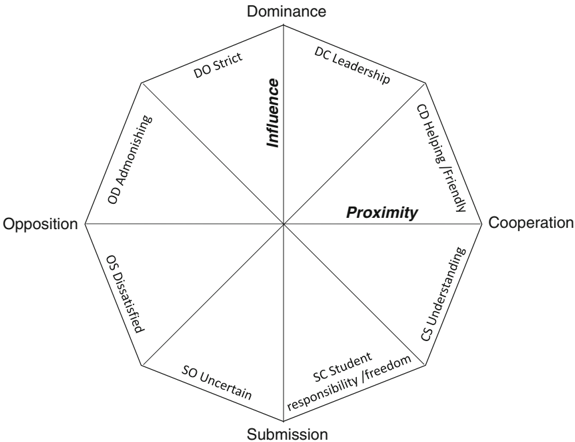
“However, they reduced the supervisory styles into two dimensions. Given that each style has a certain degree of proximity and influence (Mainhard et al., 2009), it is unknown whether the two dimensions actually indicate a measure of proximity and influence independently.”
From The supervisory relationship as a predictor of mental health outcomes in doctoral students in the United Kingdom (2024) · cites this paper as Mainhard et al., 2009
In the citing paper
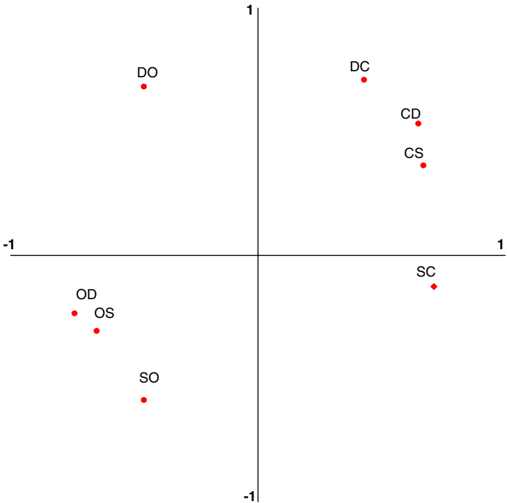
“Finally, as already mentioned, the interpersonal model of supervision includes supervisory styles which correlate highly with each other (Mainhard et al., 2009).”
From The supervisory relationship as a predictor of mental health outcomes in doctoral students in the United Kingdom (2024) · cites this paper as Mainhard et al., 2009
In the citing paper
“The style includes indecisiveness and ambiguity during meetings with the supervisor, as well as the supervisor not providing clear directions (Mainhard et al., 2009).”
From The supervisory relationship as a predictor of mental health outcomes in doctoral students in the United Kingdom (2024) · cites this paper as Mainhard et al., 2009
Self-check
Percentages, sums and reported differences re-computed from the paper’s own numbers.
The self-check needs the paper’s full text.
Citations
Cites
Hattie, J., & Timperley, H. (2007) · Review of Educational Research · doi:10.3102/003465430298487 · Cited by 12,905 · cited 1×
“As has been shown for teacher’s feedback for students, important conditions must be met to make feedback supportive (Hattie and Timperley 2007).”
BackgroundUniversal dimensions of social cognition: warmth and competence
Fiske, S. T., Cuddy, A. J. C., & Glick, P. (2007) · Trends in Cognitive Sciences · doi:10.1016/j.tics.2006.11.005 · Cited by 4,567
AN INVESTIGATION OF GENDER AND OTHER VARIABLES ON TIME TO COMPLETION OF DOCTORAL DEGREES
Seagram, B. C., Gould, J., & Pyke, S. W. (1998) · Research in Higher Education · doi:10.1023/a:1018781118312 · Cited by 228
Research works printed but not linked: 41
- Anderson, M. S., & Seashore-Louis, K. (1994). The graduate student experience and subscription to the norms of science. Research in Higher Education, 35(3), 273–299. doi: 10.1007/BF02496825 . · DOI
- Australian Council for Educational Research. (1999). Evaluation and validation of the trial postgraduate research experience questionnaires. Camberwell: Australian Council for Educational Research.
- Bell-Ellison, B. A., & Dedrick, R. F. (2008). What do doctoral students value in their ideal mentor? Research in Higher Education, 49(6), 555–567. · DOI
- Braskamp, L. A., & Ory, J. C. (1994). Assessing faculty work: Enhancing individual and institutional performance. San Francisco, CA: Jossey-Bass.
- Cashin, W. E., & Downey, R. G. (1992). Using global student ratings for summative evaluation. Journal of Educational Psychology, 84(4), 563–572. · DOI
- d’Apollonia, S., & Abrami, P. C. (1997). Navigating student ratings of instruction. American Psychologist, 52(11), 1198–1208. · DOI
- Denicolo, P. (2004). Doctoral supervision of colleagues: Peeling off the veneer of satisfaction and competence. Studies in Higher Education, 29(6), 693–707. · DOI
- Derksen, K. (1995). Activating instruction: The effects of a teacher-training programme. Paper presented at the 6th conference of the European Association for Research on Learning and Instruction, Nijmegen.
- Fraser, B. J. (1991). Two decades of classroom environment research. In B. J. Fraser & H. J. Walberg (Eds.), Educational environments (pp. 3–27). Oxford: Pergamon Press.
- Gatfield, T. (2005). An investigation into PhD supervisory management styles: Development of a dynamic conceptual model and its managerial implications. Journal of Higher Education Policy and management, 27(3), 311–325. · DOI
- Golde, C. M. (2000). Should I stay or should I go? Student descriptions of the doctoral attrition process. The Review of Higher Education, 23(2), 199–227. · DOI
- Heath, T. (2002). A quantitative analysis of PhD students’ views of supervision. Higher Education Research & Development, 21(1), 41–53. · DOI
- Hockey, J. (1996). A contractual solution to problems in the supervision of PhD degrees in the UK. Studies in Higher Education, 21(3), 359–371. · DOI
- Holligan, C. (2005). Fact and fiction: A case history of doctoral supervision. Educational Research, 47(3), 267–278. · DOI
- Ives, G., & Rowley, G. (2005). Supervisor selection or allocation and continuity of supervision: PhD students’ progress and outcomes. Studies in Higher Education, 30(5), 535–555. · DOI
- Judd, C. M., James-Hawkins, L., Yzerbyt, V., & Kashima, Y. (2005). Fundamental dimensions of social judgment: Understanding the relations between judgments of competence and warmth. Journal of Personality and Social Psychology, 89(6), 899–913. · DOI · Paper page
- Kam, B. H. (1997). Style and quality in research supervision: The supervisor dependency factor. Higher Education, 34(1), 81–103. · DOI
- Kremer-Hayon, L., & Wubbels, T. (1993a). Supervisors’ interpersonal behavior and student teachers’ satisfaction. In T. Wubbels & J. Levy (Eds.), Do you know what you look like?: Interpersonal relationships in education (pp. 123–135). London: The Falmer Press.
- Kremer-Hayon, L., & Wubbels, T. (1993b). Principals’ interpersonal behavior and teachers’ satisfaction. In T. Wubbels & J. Levy (Eds.), Do you know what you look like?: Interpersonal relationships in education (pp. 113–122). London: The Falmer Press.
- Leary, T. (1957). An interpersonal diagnoses of personality. New York, NY: The Ronald Press Company.
- Leonard, D., Metcalfe, J., Becker, R., & Evans, J. (2006). Review of literature on the impact of working context and support on the postgraduate research student learning experience. New York, NY: The Higher Education Academy.
- Li, S., & Seale, C. (2007). Managing criticism in PhD supervision: A qualitative case study. Studies in Higher Education, 32(4), 511–526. · DOI
- Lindén, J. (1999). The contribution of narrative to the process of supervising PhD students. Studies in Higher Education, 24(3), 351–369. · DOI
- Luna, G., & Cullen, D. (1998). Do graduate students need mentoring? College Student Journal, 32(3), 322–330.
- Marsh, H. W., & Dunkin, M. (1997). Students’ evaluations of university teaching: A multidimensional perspective. In R. P. Perry & J. C. Smart (Eds.), Effective teaching in higher education: Research and practice (pp. 241–320). New York, NY: Agathon.
- Marsh, H. W., & Roche, L. A. (1993). The use of students’ evaluations and an individually structured intervention to enhance university teaching effectiveness. American Educational Research Journal, 30(1), 217–251. · DOI
- Marsh, H. W., & Roche, L. A. (1997). Making students’ evaluations of teaching effectiveness effective. American Psychologist, 52(11), 1187–1197. · DOI
- Marsh, H. W., Rowe, K. J., & Martin, A. (2002). PhD students’ evaluations of research supervision. The Journal of Higher Education, 73(3), 313–348.
- McAlpine, L., & Norton, J. (2006). Reframing out approach to doctoral programs: An integrative framework for action and research. Higher Education Research & Development, 25(1), 3–17. · DOI
- Murphy, N., Bain, J. D., & Conrad, L. M. (2007). Orientations to research higher degree supervision. Higher Education, 53(2), 209–234. · DOI
- Nelson, M. L., & Friedlander, M. L. (2001). A close look at conflictual supervisory relationships: The trainee’s perspective. Journal of Counseling Psychology, 48(4), 384–395. · DOI
- Paglis, L. L., Green, S. G., & Bauer, T. N. (2006). Does adviser mentoring add value? A longitudinal study of mentoring and doctoral student outcomes. Research in Higher Education, 47(4), 451–476. · DOI · Paper page
- Pearson, M. (1996). Professionalising PhD education to enhance the quality of the student experience. Higher Education, 32(3), 303–320. · DOI
- Rose, G. L. (2003). Enhancement of mentor selection using the ideal mentor scale. Research in Higher Education, 44(4), 473–494. · DOI
- Rose, G. L. (2005). Group differences in graduate students’ concepts of the ideal mentor. Research in Higher Education, 46(1), 53–79. · DOI
- Scott, R., Fisher, D., & den Brok, P. (2003). Specialist science teachers’ classroom behaviors in 12 primary schools. Paper presented at the annual conference of the European Science Education Research Association, Noordwijkerhout.
- Shuell, T. J. (1996). Teaching and learning in a classroom context. In D. C. Berliner & R. C. Calfee (Eds.), Handbook of educational psychology (pp. 726–763). New York, NY: MacMillan.
- Sinclair, M. (2004). The pedagogy of ‘good’ PhD supervision: A national cross-disciplinary investigation of PhD supervision. Canberra: Australian Government, Department of Education, Science and Training.
- Watzlawick, P., Beavin, J. H., & Jackson, D. D. (1967). The pragmatics of human communication. New York, NY: Norton.
- Wubbels, T., Créton, H., & Holvast, A. J. C. D. (1988). Undesirable classroom situations. Interchange, 19(2), 25–40. · DOI
- Wubbels, T., Brekelmans, M., den Brok, P., & van Tartwijk, J. (2006). An interpersonal perspective on classroom management in secondary classrooms in the Netherlands. In C. Evertson & C. Weinstein (Eds.), Handbook of classroom management: Research, practice, and contemporary issues (pp. 1161–1191). Mahwah, NJ: Lawrence Erlbaum Associates.
Cited by
Sorted by citations
Fan, L., Mahmood, M., & Uddin, M. A. (2019) · Asia Pacific Education Review · doi:10.1007/s12564-018-9572-3 · Cited by 121
Mavrogalou-Foti, A. P., Kambouri, M. A., & Çili, S. (2024) · Frontiers in Psychology · doi:10.3389/fpsyg.2024.1437819 · Cited by 34
Metadata
- Authors
- Mainhard, T., van der Rijst, R., van Tartwijk, J., & Wubbels, T.
- Venue
- Higher Education
- Published
- 2009-02-05
- Volume
- 58
- Issue
- 3
- Pages
- 359-373
- ISSN
- 0018-1560
- 1573-174X
- Cited by
- 209
- References
- 3
- Language
- en
About these checks
Registry, retraction, Cites and statistics results are computed, not judged, with one exception: a printed reference that no index lists is read once by a model before it counts as a citation error. Claims are extracted by a model and kept only when their quote appears verbatim in the text; each cited source is then checked, with a model’s help, for whether it says what the claim relies on. Those verdicts can be wrong — read the claim’s quote and the cited source before relying on one.
Statistics and arithmetic are recomputed, not judged.
Confidence bands are shown only for fields calibrated on our annotated test set. None is calibrated yet, so no band is shown.
What counts as a claim ›How we measure confidence ›How we check this ›
Are you an author, or do you see a problem with this page? Request a review
