

“Alexa, who am I?”: Voice Assistants and Hermeneutic Lemniscate as the Technologically Mediated Sense-Making
Open accessThe DOI matches its Crossref record; 68 of the 73 references it cites were found in a registry or an index; 3 of the 29 sources its claims cite were checked for support.
Abstract
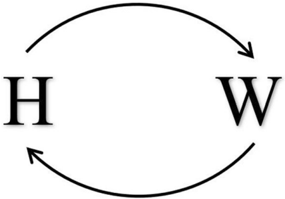
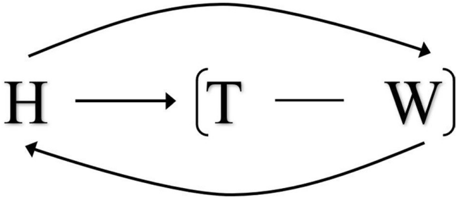
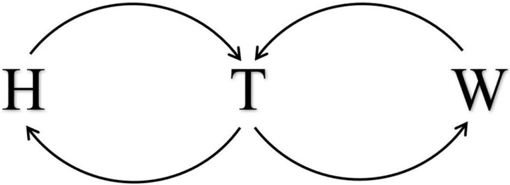
In this paper, I argue that AI-powered voice assistants, just as all technologies, actively mediate our interpretative structures, including values. I show this by explaining the productive role of technologies in the way people make sense of themselves and those around them. More specifically, I rely on the hermeneutics of Gadamer and the material hermeneutics of Ihde to develop a hermeneutic lemniscate as a principle of technologically mediated sense-making. The lemniscate principle links people, technologies and the sociocultural world in the joint production of meaning and explicates the feedback channels between the three counterparts. When people make sense of technologies, they necessarily engage their moral histories to comprehend new technologies and fit them in daily practices. As such, the lemniscate principle offers a chance to explore the moral dynamics taking place during technological appropriation. Using digital voice assistants as an example, I show how these AI-guided devices mediate our moral inclinations, decisions and even our values, while in parallel suggesting how to use and design them in an informed and critical way.
Overview
CoChat Summary
TL;DR
The paper argues that AI-powered voice assistants, like all technologies, actively mediate interpretative and moral sense-making. It develops a “hermeneutic lemniscate” from Gadamer and Ihde/Verbeek to model feedback among people, technologies, and the sociocultural world, illustrated with digital voice assistants.
Key findings
- Proposes the hermeneutic lemniscate as a principle of technologically mediated sense-making that links people, technologies, and the sociocultural world in joint meaning production, with feedback channels among all three, overcoming the linearity the paper identifies in Ihde’s and Verbeek’s accounts.
- Technological appropriation is defined as a projective and practical dimension of interpretation through which people make technologies their own, engaging moral histories and allowing normative ideas to be re-articulated.
- DVAs mediate moral perceptions, actions, and values: female-voiced assistants can reinforce gender stereotypes (citing UNESCO report West et al. 2019: 104–115); privacy is often framed as an either-or trade-off, but creative appropriations such as Project Alias show alternatives; and the value of meaningful communication is affected by misrecognition, especially for non-native or accented speakers (citing Wu et al. 2020).
- The paper notes that over 91 languages exceed 10 million users with born and acquired speech variations, and argues that the slow expansion of DVA language processing and predominant focus on English create unfair fragmentation (citing Sowanski and Janicki 2020: 477).
Methods
- Conceptual/philosophical paper with no primary empirical data collection; it builds on Gadamer’s hermeneutics and Ihde’s material hermeneutics/postphenomenology, extended through Verbeek’s co-constitution idea.
- Uses digital voice assistants (e.g., Alexa, Google Home, Siri) as an illustrative case to trace how technologies mediate moral sense-making.
- Analysis is theoretical synthesis and model-building, drawing on secondary empirical studies and examples rather than original fieldwork.
Limitations
- The paper states that further research is needed on whether the hermeneutic lemniscate can examine sense-making beyond the individual level in the wider social and political realm, and on how the model handles AI-based technologies with self-teaching algorithms.
- Evident from the text: the paper offers no primary empirical test or validation of the lemniscate model; its DVA claims rely on cited studies and illustrative examples.
Model-written summary. Check it against the paper before relying on it.
Integrity signals
Registry
Cites
Statistics
Figures
Verification
Claims the paper makes
3 Valid · 0 Not valid · 19 Not checked · 65 Own results and interpretations
Every source the paper cites for this claim was checked and supports it.
In the paper
“By helping to shape moral inclinations and decisions, technologies mediate morality: prenatal genetic testing mediates moral questions and decisions about childbearing, (semi)autonomous robots mediate the moral experiences of war and CCTV cameras mediate public behavior.”
§ "Alexa, who am I?": Voice Assistants and Hermeneutic Lemniscate as the Technologically Mediated Sense-Making > Finding a Place for Technologies in the Process of Sense-Making
What the sources say
- Supportedcites Kudina and Verbeek 2019 matched to “Ethics from Within: Google Glass, the Collingridge Dilemma, and the Mediated Value of Privacy” (2019) source
The Technological Mediation section states that technologies mediate morality by helping to shape moral actions and decisions. This supports the attributed claim; the paper says “actions” rather than “inclinations.” (LLM, conf=0.94)
plainstates a cause- Asserted: passes — The authors put it forward as true.
- Checkable: passes — It can be checked against evidence.
- Load-bearing: passes — The paper’s conclusions depend on it.
- Based: passes — The paper gives a reason why it holds.
- Supported
The sources with a verdict support this claim; the rest weren’t checked yet, have no full text we could read, or their verdicts aren’t rated yet.
In the paper
“Following the technological mediation approach, this encounter can proceed along the lines of co-shaping moral perceptions, actions (Verbeek 2011) and values of people (Kudina 2019).”
§ "Alexa, who am I?": Voice Assistants and Hermeneutic Lemniscate as the Technologically Mediated Sense-Making > The Moral Mediation of DVAs
What the sources say
- Not checked — no full text of the sourcecites Verbeek 2011 matched to “Moralizing Technology: Understanding and Designing the Morality of Things” (2011) source
- Supportedcites Kudina 2019 matched to “Ethics from Within: Google Glass, the Collingridge Dilemma, and the Mediated Value of Privacy” (2019) source
The cited paper's “Technological Mediation and the Collingridge Dilemma” section (page not provided) says that understandings of privacy are reinvented through interaction with Google Glass and that technologies mediate value frameworks. This supports the part attributed to Kudina concerning the shaping of people's values; the citing sentence attributes perceptions and actions to Verbeek 2011 instead. (LLM, conf=0.92)
plainstates a possible cause- Asserted: passes — The authors put it forward as true.
- Checkable: passes — It can be checked against evidence.
- Load-bearing: passes — The paper’s conclusions depend on it.
- Based: passes — The paper gives a reason why it holds.
The cited sources support only part of this claim — read each source’s verdict below.
In the paper
“Current speech recognition systems are poorly equipped to process the speech variance and impaired speech intelligibility due to, e.g., oral cancer (Halpern et al. 2020), cleft lip and palate (Schuster et al. 2006) or stroke survivors (Jacks et al. 2019).”
§ "Alexa, who am I?": Voice Assistants and Hermeneutic Lemniscate as the Technologically Mediated Sense-Making > Postphenomenology and Ihde's Human-World Relations
What the sources say
- Partly supportedcites Halpern et al. 2020 matched to “Detecting and Analysing Spontaneous Oral Cancer Speech in the Wild” (2020) sourceExperimental — accuracy not yet measured
The Introduction (p. 1) says oral cancer survivors can have impaired speech intelligibility and describes how treatment alters their articulation. But the paper studies detection of oral cancer speech, not whether current speech recognition systems are poorly equipped to process it. Cleft lip and palate and stroke survivors are attributed to separate citations in the citing sentence. (LLM, conf=0.84)
- Not checked — no full text of the sourcecites Schuster et al. 2006 matched to “Evaluation of speech intelligibility for children with cleft lip and palate by means of automatic speech recognition” (2006) source
- Not checked — no full text of the sourcecites Jacks et al. 2019 matched to “Automated Speech Recognition in Adult Stroke Survivors: Comparing Human and Computer Transcriptions” (2019) source
plainstates a cause- Asserted: passes — The authors put it forward as true.
- Checkable: passes — It can be checked against evidence.
- Load-bearing: passes — The paper’s conclusions depend on it.
- Based: passes — The paper gives a reason why it holds.
- Partly supported
In the paper
“Similarly, regardless of the outer appearance as a plastic box and the robotic glitches in the voice, Druga and colleagues (2017) showed how the voice-based interface and the unchallenged answering of non-stop questions increase the anthropomorphism tendencies of children towards DVAs, generating trust and authority in the device akin to role models.”
§ "Alexa, who am I?": Voice Assistants and Hermeneutic Lemniscate as the Technologically Mediated Sense-Making > Introduction
What the sources say
- Not matchedcites Druga and colleagues (2017)
An author–year citation the paper’s reference list doesn’t settle. We don’t search these by name.
boostedstates a cause- Asserted: passes — The authors put it forward as true.
- Checkable: passes — It can be checked against evidence.
- Load-bearing: unclear — It is unclear whether the paper’s conclusions depend on it.
- Based: passes — The paper gives a reason why it holds.
- Not matched
A conclusion the paper draws from its own results — it cites no other source for it, so there is none to check. The quote shows it is in the paper.
In the paper
“In this paper, I argue that AI-powered voice assistants, just as all technologies, actively mediate our interpretative structures, including values.”
§ "Alexa, who am I?": Voice Assistants and Hermeneutic Lemniscate as the Technologically Mediated Sense-Making > Abstract
plainstates a cause- Asserted: passes — The authors put it forward as true.
- Checkable: unclear — It is unclear whether it could be checked against evidence.
- Load-bearing: passes — The paper’s conclusions depend on it.
- Based: unclear — It is unclear why the paper says it holds.
18 more claims
Create a free account to see all 87 claims and to verify the 1 reference still open.
- Probably not a substantial claim. 52
- It may state two separate claims as one. 24
Claims other papers make about this one
Each is checked against this paper’s own text: does it say what the citing paper says it does?
The cited source says what the claim attributes to it.
In the citing paper
“digital technologies mediate and modify our world (Romele 2020), co-configure our narratives (Reijers and Coeckelbergh 2020), and mediate our sense-making: people try to comprehend new technologies and fit them in their daily practices (Kudina 2021).”
From Narrative responsibility and artificial intelligence (2023) · cites this paper as Kudina 2021
Citations
Cites
Hepburn, R. W., Heidegger, M., Macquarrie, J., & Robinson, E. (1927) · Medical Entomology and Zoology · Cited by 12,201
Gadamer, H. G., Weinsheimer, J. C., & Marshall, D. G. (1960) · Cited by 9,338
Toward a Theory of Social Practices: A Development in Culturalist Theorizing
Reckwitz, A. (2002) · European Journal of Social Theory · doi:10.1177/13684310222225432 · Cited by 5,544 · cited 2×
“Following Reckwitz (2002) and Dewey (1922) with a practice-based approach to the moral world, the hermeneutic lemniscate allows discerning not only which ethical concerns come to be in technological practice but also taking responsibility for how the values at stake materialize by scrutinizing the…”
BackgroundMethodThe Body Multiple: Ontology in Medical Practice
Mol, A. (2002) · doi:10.1215/9780822384151 · Cited by 4,381
The Work of Art in the Age of Mechanical Reproduction
Benjamin, W. (2007) · Stardom and Celebrity: A Reader · doi:10.4135/9781446269534.n3 · Cited by 3,818
Gummett, P. (1988) · Physics Bulletin · doi:10.1088/0031-9112/39/8/019 · Cited by 2,974 · cited 1×
“…of Science and Technology Studies, technology never determines how users adopt it—even though it scripts user behavior, it is only in the social-technological co-shaping and negotiation that specific technological effects materialize (Bijker, Hughes and Pinch 1987; MacKenzie and Wajcman 1985).”
BackgroundBijker, W. E., Hughes, T. P., & Pinch, T. (1987) · Cited by 2,957
What computers still can't do: a critique of artificial reason
Penny, S., & Dreyfus, H. (1994) · Leonardo · doi:10.2307/1575958 · Cited by 1,637
Technology and the lifeworld: from garden to earth
(1990) · Choice Reviews Online · doi:10.5860/choice.28-1535 · Cited by 1,281
Human Nature and Conduct: An Introduction to Social Psychology.
Ayres, C. E., & Dewey, J. (1922) · The Journal of Philosophy · doi:10.2307/2939506 · Cited by 1,274
Research works printed but not linked: 4
- 4. Blond, L., & Schiølin, K. (2018). Getting to grips with multistable technology in an apparently stable world. In J. Aagard, J. K. Berg Friis, J. Sorenson, O. Tafdrup and C. Hasse (Eds.), Postphenomeno- logical methodologies: new ways in mediating techno-human relationships (pp. 151-167). Lanham: Lexington Books.
- 13. Dreyfus, H. L. (2001). On the internet. New York: Routledge.
- 18. Gadamer, H.-G. (1977). Philosophical hermeneutics (D. E. Linge, Trans.). Berkeley: University of California Press.
- 35. McLuhan, M. (1994). The medium is the message. In Understanding media: The extensions of man (pp. 7-21). Cambridge, MA: MIT press. (Original work published 1964).
Cited by
Narrative responsibility and artificial intelligence
Coeckelbergh, M. (2023) · AI & SOCIETY · doi:10.1007/s00146-021-01375-x · Cited by 81
“…it has recently been argued that digital technologies mediate and modify our world (Romele 2020), co-configure our narratives (Reijers and Coeckel-bergh 2020), and mediate our sense-making: people try to comprehend new technologies and fit them in their daily practices (Kudina 2021).”
BackgroundThe Work of Art in the Age of AI Image Generation
Coeckelbergh, M. (2023) · Journal of Human-Technology Relations · doi:10.59490/jhtr.2023.1.7025 · Cited by 28
“…theory has moved to a view that is more dynamic, or at least more explicitly dynamic: a view in which subject and object are constituted in the relation (Verbeek, 2005) and in which there is a joint production of meaning that links people, technologies, and the cultural world (Kudina, 2021).”
BackgroundFrom applied ethics and ethical principles to virtue and narrative in AI practices
Hayes, P., Fitzpatrick, N., & Vicente, J. M. F. (2024) · AI and Ethics · doi:10.1007/s43681-024-00472-z · Cited by 42
“This approach emphasises the contribution of technological and digital artefacts to mediation in the world in examining our processes of technological appropriation [56], as well as the very process of individuation (of becoming human) in the technosphere [32].”
Umbrello, S. (2023) · Religions · doi:10.3390/rel14121536 · Cited by 51
“There is an innate beauty in considering that behind streams of code and data, there lies a reflection of human culture, emotion, and wisdom (Kudina 2021).”
BackgroundToward children-centric AI: a case for a growth model in children-AI interactions
Fors, K. L. (2022) · AI & Society · doi:10.1007/s00146-022-01579-9 · Cited by 20
“The article advocates for a hermeneutic model for children-AI (age group 7–11 years) interactions (Kudina, 2021) in which the desired purpose of AI systems shall be children’s growth.”
BackgroundYaroğlu, A. C. (2024) · Systems Research and Behavioral Science · doi:10.1002/sres.3037 · Cited by 28
Frennert, S., Erlingsdóttir, G., Muhic, M., Rydenfält, C., Nymberg, V. M., & Ekman, B. (2022) · Scandinavian Journal of Caring Sciences · doi:10.1111/scs.13099 · Cited by 23
More work for Roomba? Domestic robots, housework and the production of privacy
Coggins, T. N. (2022) · Prometheus · doi:10.13169/prometheus.38.1.0098 · Cited by 16
“For instance, researchers working on the social effects of virtual assistants, such as Amazon’s Alexa, have raised concerns that children may develop habits ill-suited for human-to-human communication by using these technologies at home (Wiederhold, 2018; Kudina, 2021).”
BackgroundThe seven troubles with norm-compliant robots
Coggins, T. N., & Steinert, S. (2023) · Ethics and Information Technology · doi:10.1007/s10676-023-09701-1 · Cited by 20
“Because these technologies have trouble interpreting anything other than direct commands, long-term users can come to overly rely on this way of speaking and issue imperatives more frequently than considered appropriate during conversations with humans (Wiederhold, 2018; Kudina, 2021).”
BackgroundThere is no "I" in Postphenomenology
Claassen, K. (2024) · Human Studies · doi:10.1007/s10746-024-09727-4 · Cited by 13
“…postphenomenology to account for these contexts include analysing its normative dimensions (Verbeek, 2005), reconciling it to theories like critical constructivism (Feenberg, 2022; Botin, 2020), or placing it within a hermeneutic horizon of interpretation (Kudina, 2021), to name but a few.”
Edwards, A. P., Edwards, C. C., Fortunati, L., Manganelli, A. M., & de Luca, F. (2024) · Computers in Human Behavior Artificial Humans · doi:10.1016/j.chbah.2024.100060 · Cited by 15
Narrativity and responsible and transparent ai practices
Hayes, P., & Fitzpatrick, N. (2024) · AI & Society · doi:10.1007/s00146-024-01881-8 · Cited by 15
“…the lenses of (digital) hermeneutics towards technology generally and AI in particular in an effort to understand how we interpret ourselves and our technologies, and how we come to be together, and the ethical implications of this (Reijers and Coeckelbergh 2020; Fitzpatrick 2021; Kudina 2021).”
InfluentialBIBER, S. E., & Capasso, M. (2022) · Information technology and law series/Information technology & law series · doi:10.1007/978-94-6265-523-2_25 · Cited by 12
Groen, E. L. M., Sharon, T., & Becker, M. (2026) · AI and Ethics · doi:10.1007/s43681-025-00955-7 · Cited by 12
“…is implemented and used, Cruz can mediate our perception of the role of women as doc-ile obedient servants, mediate our actions for we employ privacy-preserving methods to bypass the always-listening design of these tools, and, moreover, mediate the value of good and meaningful communication [50].”
Experience without essentialism: on ‘posting’ phenomenology
Aagaard, J., & Rosenberger, R. (2024) · Qualitative Research in Psychology · doi:10.1080/14780887.2024.2355277 · Cited by 11
“4 As Olya Kudina (2021) puts it, ‘a person is not the same person and the world is not the same world when they find themselves in a technologically mediated situation.”
Navigating the Future of Data-Driven Systems: Children’s perspectives on data and agency
Babai, N., Durall, E., Iivari, N., & Kinnula, M. (2025) · ACM International Conference on Interaction Design and Children (IDC) · doi:10.1145/3713043.3728844 · Cited by 11
“This aligns with views from the philosophy of technology, where scholars argue that technology mediates human relationships, perceptions, and actions by presenting specific ways of engaging with the world [44, 69, 71].”
Kudina, O. (2022) · Humanities and Social Sciences Communications · doi:10.1057/s41599-021-00972-x · Cited by 9
“Known as “ value dynamism ” (Kudina, 2021), this phenomenon explores how technologies reveal existing value conceptualizations and help to re-af fi rm them, shift accents between them, challenge the dominant de fi - nitions and enable new value meanings.”
BackgroundSelf-citationvan de Poel, I., Hopster, J. K. G., Löhr, G., Ziliotti, E., Buijsman, S., & Brey, P. A. E. (2023) · Open Book Publishers · doi:10.11647/obp.0366.01 · Cited by 6
Between Code and Culture: The Evolving Role of Conversation Designers and UX in AI Development
Rodwell, E. A. (2025) · Science Technology & Human Values · doi:10.1177/01622439251324884 · Cited by 7
“There have been widespread calls to address the biases coded into AI, which recent developments in generative AI have renewed (Oudshoorn et al. 2004; Gray et al. 2018; Ylipulli and Luusua 2019; Kudina 2021).”
The Perturbing Mediatization of Voice-based Virtual Assistants: The Case of Alexa
Fortunati, L., Edwards, A. P., & Edwards, C. C. (2024) · Human-Machine Communication · doi:10.30658/hmc.7.6 · Cited by 4
Commodification in academic writing: a comparative analysis of two LLM apps
Weydner-Volkmann, S. (2025) · AI & Society · doi:10.1007/s00146-025-02446-z · Cited by 6
“One way to deal with this would be to move away from Ihde-style conceptions of materiality as Wellner (2020, 110–111, 2023) does, at least in terms of hermeneutic relations with digital technologies (cf. also Kudina 2021).”
Solicitude, Emotions, and Narrative in Technology Design Ethics
Hayes, P., & Fitzpatrick, N. (2024) · Études Ricoeuriennes / Ricoeur Studies · doi:10.5195/errs.2024.645 · Cited by 8
Yaroğlu, A. C. (2025) · International Journal of Business Communication · doi:10.1177/23294884251327584 · Cited by 11
“In this way, it can be ensured that the correct meaning and messages are conveyed in communication (Kudina, 2021).”
de Wildt, T. E., & Schweizer, V. J. (2022) · Prometheus · doi:10.13169/prometheus.38.1.0025 · Cited by 3
“DVAs may also affect behavioural norms in social interactions (Hamer et al., 2020; Kudina, 2021).”
BackgroundSmith, M., van der Zwan, S., van Dijk, L., et al. (2023) · Journal of Human-Technology Relations · doi:10.59490/jhtr.2023.1.7026 · Cited by 3
Re-imagining Current AI Ethics Policy Debates: A View from the Ethics of Technology
Ruttkamp, E. (2022) · Communications in computer and information science · doi:10.1007/978-3-030-95070-5_21 · Cited by 4
Piya, K., Shrestha, S., Frank, C., Jebessa, E., & Mohd, T. K. (2022) · Preprints.org · doi:10.20944/preprints202212.0567.v1 · Cited by 3
Education as Hermeneutic Study: Uncovering Meaning in The Digital Era
Faridah, F., & Nurhayati, S. (2025) · Jurnal Riset dan Inovasi Pembelajaran · doi:10.51574/jrip.v5i1.2603 · Cited by 4
“We can employ hermeneutics to investigate how these algorithms generate narratives, embed prejudices, or systematically influence public opinion (Kudina, 2021).”
Intergenerational Justice as Driver for Responsible AI
Ruttkamp, E. (2023) · Communications in computer and information science · doi:10.1007/978-3-031-49002-6_2 · Cited by 6
Game Over: Reframing Ethical Decision-Making through Failure for Engineering Education
Fox, A., & Beiter, B. C. (2024) · ASEE Annual Conference & Exposition · doi:10.18260/1-2--43769 · Cited by 2
Visual Narrative As A Way Of Constituting Identity
Andreeva, O. V., & Eldarion, A. A. (2022) · The European Proceedings of Social & Behavioural Sciences · doi:10.15405/epsbs.2022.06.10 · Cited by 1
(2023) · Computer Vision Studies · doi:10.58396/cvs020103
8. Nothing in Practice: Entanglements of Sartre’s Nothingness and Social Media Practice
Kurz, A. (2024) · Open Book Publishers · doi:10.11647/obp.0421.08
Innocenti, M. (2025) · SSRN Electronic Journal · doi:10.2139/ssrn.5386124
Kuilman, S. K., Nyholm, S. R., Buijsman, S., & Siebert, L. C. (2025) · Philosophy & Technology · doi:10.1007/s13347-025-00976-4 · Cited by 2
“Some research has also been done on the media-tive standing of AI voice assistants (Kudina, 2021) and how it may shape our values.”
Virtuous narrative ethics for accommodation or refusal of AI for sustainability
Hayes, P., & Fitzpatrick, N. (2026) · SN Social Sciences · doi:10.1007/s43545-026-01401-z
“…and understand our-selves and the world (and re-interpret ourselves and the world) with and through the technological mediations presented to us by the technologies we appropriate (or at least, to which we adapt) (Ihde 1990; Verbeek 2016; Kudina 2021; Reijers et al. 2021; Hayes et al. 2025).”
Towards a Sociotechnical Horizon of Expectations: Hermeneutics against Presentism
Cressman, D. (2026) · Philosophy & Technology · doi:10.1007/s13347-026-01071-y
“Kudina ( 2021 ) draws on Gadamer's philosophical hermeneutics to argue for a cir - cular account of sociotechnical interpretation, pointing to the fore-structures of understanding that precede sociotechnical engagements as an essential aspect of hermeneutic inquiry.”
A Narrative Understanding of Privacy and the Problem of Digital Duplicates for Narrative Identity
Hayes, P., & Fitzpatrick, N. (2026) · Springer eBooks · doi:10.1007/978-3-032-15112-4_9
Does the Voice Have a Body? Esposito’s Vox Munus in an Age of Synthetic Voice
Vallee, M. (2026) · Body & Society · doi:10.1177/1357034x261441176
“Second, beyond medical applications, voice technologies have pervaded everyday life in the form of digital voice assistants (Siri, Alexa, etc.), speech recognition systems, and AI-generated voices for various media (Kudina, 2021; Melzner et al., 2023).”
Dupuis, J. (2026) · Music Sound and the Moving Image · doi:10.3828/msmi.2026.3
“The AI not only passes the Turing Test but seemingly circumvents it, exploiting the appeal and comforts of real human voices that digital voice assistants are designed to imitate (Kudina, 2021, p.234).”
Denegri‐Knott, J., Molesworth, M., Belk, R. W., Caliandro, A., Mardon, R., & Sörum, N. (2026) · Journal of Marketing Management · doi:10.1080/0267257x.2026.2729244
“However, they have been applied in a wide range of fields, from STS to medicine, engineering, and design, and to the study of a variety of digital technologies, such as caring technologies (Shaw et al., 2020) and AI-powered voice assistants (Kudina, 2021).”
Hartley, J. M., & Ovaska, L. (2026) · Journalism Studies · doi:10.1080/1461670x.2026.2731392
Visions of quantum computing: An ethical assessment
de Jong, E. J., & Grunwald, A. (2026) · Futures · doi:10.1016/j.futures.2026.103941
Metadata
- Authors
- Kudina, O.
- Affiliations
- Delft University of Technology (NL)
- Corresponding author
- Kudina, Olya
- ORCID
- Kudina, Olya
- Venue
- Human Studies
- Published
- 2021-02-23
- Volume
- 44
- Issue
- 2
- Pages
- 233-253
- ISSN
- 0163-8548 (ISSN-L)
- 1572-851X
- OpenAlex
- W3129824875
- Semantic Scholar
- e96bf4275fc5bc06e186e368ced3d82cc826c88a
- Cited by
- 44
- References
- 73
- Citations by year
- 2026: 10 · 2025: 7 · 2024: 10 · 2023: 7 · 2022: 9 · 2021: 1
- FWCI
- 27.92
- Type
- journal article
- Language
- en
- Open access
- hybrid
- doi.org
- Licence
- cc-by
- creativecommons.org/licenses/by/4.0 (tdm)
- creativecommons.org/licenses/by/4.0 (vor)
- Locations
- Human Studies (publishedVersion, cc-by)
- Research Repository (Delft University of Technology) (submittedVersion, cc-by)
- Data Archiving and Networked Services (DANS) (submittedVersion, other-oa)
- Funders
- Nederlandse Organisatie voor Wetenschappelijk Onderzoek (277-20-006)
- H2020 European Research Council (788321)
- Topics
- Social Sciences › Arts and Humanities › History and Philosophy of Science › Cybernetics and Technology in Society
- Physical Sciences › Computer Science › Human-Computer Interaction › Innovative Human-Technology Interaction
- Social Sciences › Arts and Humanities › Philosophy › Hermeneutics and Narrative Identity
- Keywords
- voice assistants, Hans-Georg Gadamer, Ihde, material hermeneutics, technology appropriation, values, self-understanding, AI ethics, critical design
About these checks
Registry, retraction, Cites and statistics results are computed, not judged, with one exception: a printed reference that no index lists is read once by a model before it counts as a citation error. Claims are extracted by a model and kept only when their quote appears verbatim in the text; each cited source is then checked, with a model’s help, for whether it says what the claim relies on. Those verdicts can be wrong — read the claim’s quote and the cited source before relying on one.
The claim verdicts this report counts are experimental: their accuracy is not yet measured.
A language model drew the claims from the paper on 2026-10-19, under version 3 of the claim definition (model deepseek-v4.1-flash, prompt extract-v3).
A second model labelled each claim on 2026-10-19 (model jev-1.13-20260917, definition revision gold-guideline-v0.2).
Cited sources are checked with a language model’s help (gpt-6-sol).
Statistics and arithmetic are recomputed, not judged.
Confidence bands are shown only for fields calibrated on our annotated test set. None is calibrated yet, so no band is shown.
What counts as a claim ›How we measure confidence ›How we check this ›
Are you an author, or do you see a problem with this page? Request a review
Data sources
Bibliographic data: Semantic Scholar, OpenAlex, Crossref.
Contains information from the Semantic Scholar Academic Graph Datasets, made available under the ODC Attribution License (ODC-BY 1.0).
Semantic Scholar’s data is described in: Kinney, R., et al. (2023). The Semantic Scholar Open Data Platform. arXiv:2301.10140.
