

A Causal and Mediation Analysis of the Comorbidity Between Attention Deficit Hyperactivity Disorder (ADHD) and Autism Spectrum Disorder (ASD)
Open accessThe DOI matches its Crossref record; 58 of the 58 references it cites were found in a registry or an index.
Abstract
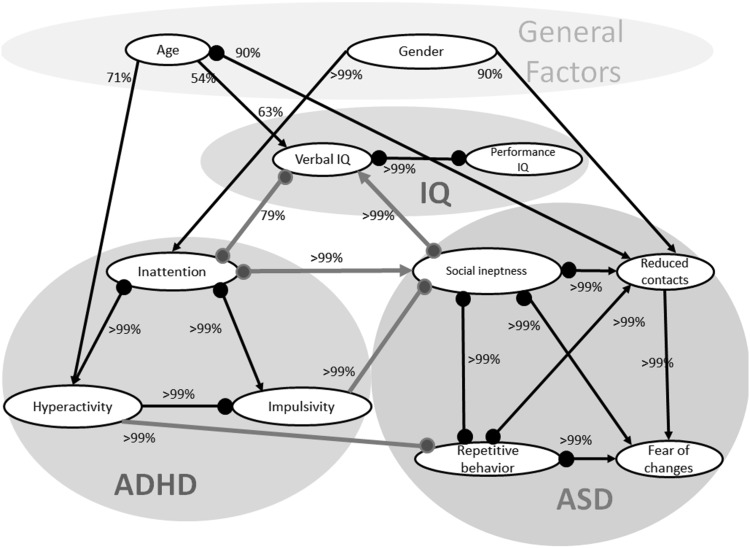
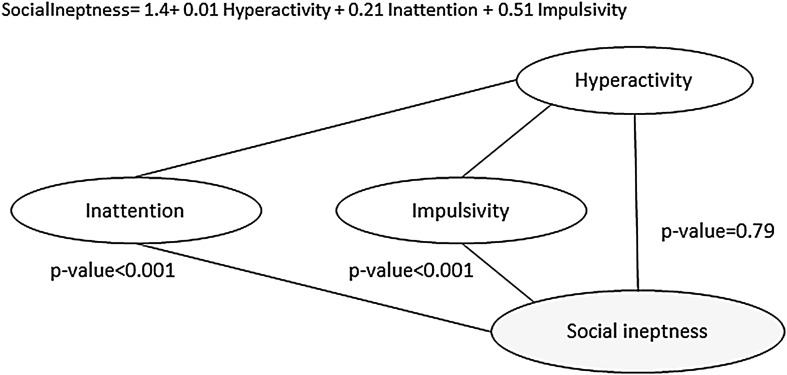
Autism spectrum disorder (ASD) and Attention-deficit/hyperactivity disorder (ADHD) are often comorbid. The purpose of this study is to explore the relationships between ASD and ADHD symptoms by applying causal modeling. We used a large phenotypic data set of 417 children with ASD and/or ADHD, 562 affected and unaffected siblings, and 414 controls, to infer a structural equation model using a causal discovery algorithm. Three distinct pathways between ASD and ADHD were identified: (1) from impulsivity to difficulties with understanding social information, (2) from hyperactivity to stereotypic, repetitive behavior, (3) a pairwise pathway between inattention, difficulties with understanding social information, and verbal IQ. These findings may inform future studies on understanding the pathophysiological mechanisms behind the overlap between ASD and ADHD.
Overview
The claims and statistics of this paper haven’t been checked yet.
Free: it reads the open-access text and checks the first 5 claims that cite a source we can check. Create a free account to check every claim.
Integrity signals
Registry
Cites
Statistics
Figures
Verification
Claims the paper makes
The claims and statistics of this paper haven’t been checked yet.
Free: it reads the open-access text and checks the first 5 claims that cite a source we can check. Create a free account to check every claim.
Claims other papers make about this one
Each is checked against this paper’s own text: does it say what the citing paper says it does?
The source backs part of the claim, not all of it — or backs it for a different population, condition or comparison.
In the citing paper
“This piqued interest likely resulted from theory, research and empirical evidence linking executive function deficits to various psychopathologies (including neurodevelopmental disorders) and to adverse functional outcomes in clinical and non-clinical pediatric populations.19,69,109”
From Executive function deficits in attention-deficit/hyperactivity disorder and autism spectrum disorder (2024) · cites this paper as [109]
Experimental — accuracy not yet measuredThe source backs part of the claim, not all of it — or backs it for a different population, condition or comparison.
In the citing paper
“the now-traditional executive function tests most frequently used in clinical practice lack the sensitivity and specificity necessary to capture the global and specific executive function deficits that are characteristic of children with neurodevelopmental disorders.109”
From Executive function deficits in attention-deficit/hyperactivity disorder and autism spectrum disorder (2024) · cites this paper as [109]
Experimental — accuracy not yet measuredThe source backs part of the claim, not all of it — or backs it for a different population, condition or comparison.
In the citing paper
“the most parsimonious conclusion is that children with ADHD and/or ASD tend to perform moderately worse than neurotypical children on a broad range of performance-based neuropsychological tests that likely place at least some demands on executive functions.109,117”
From Executive function deficits in attention-deficit/hyperactivity disorder and autism spectrum disorder (2024) · cites this paper as [109]
Experimental — accuracy not yet measuredThe check wasn’t confident either way, so it gives no verdict — never disputed.
In the citing paper
“there is a preponderance of evidence questioning the construct validity and test specificity of most of the traditional norm-referenced, performance-based neuropsychological tests of executive function widely used in clinic settings,29,109 including the Delis–Kaplan Executive Function System,113 the Woodcock-Johnson III Tests of Cognitive Abilities,114 the Developmental Neuropsychological Asses”
From Executive function deficits in attention-deficit/hyperactivity disorder and autism spectrum disorder (2024) · cites this paper as [109]
Experimental — accuracy not yet measuredThe check wasn’t confident either way, so it gives no verdict — never disputed.
In the citing paper
“In either case, the construct valid measurement of working memory specifically, and executive functioning more broadly, is currently significantly limited in clinical practice”
From Executive function deficits in attention-deficit/hyperactivity disorder and autism spectrum disorder (2024) · cites this paper as [109]
Experimental — accuracy not yet measured
5 more claims about this paper
Create a free account to see every claim other papers make about this one.
Self-check
Percentages, sums and reported differences re-computed from the paper’s own numbers.
The self-check needs the paper’s full text.
Citations
Cites
Diagnostic and Statistical Manual of Mental Disorders
American Psychiatric Association (2013) · doi:10.1176/appi.books.9780890425596 · Cited by 116,369
Baron, R. M., & Kenny, D. A. (1986) · Journal of Personality and Social Psychology · doi:10.1037/0022-3514.51.6.1173 · Cited by 91,532 · cited 1×
“Mediation analysis distinguishes between independent variable, dependent variable, and potential mediators (Baron and Kenny 1986).”
BackgroundCAUSALITY: MODELS, REASONING AND INFERENCE
Hitchcock, C. (2001) · The Philosophical Review · doi:10.1215/00318108-110-4-639 · Cited by 4,741
Causality: models, reasoning, and inference
(2000) · Choice Reviews Online · doi:10.5860/choice.38-1494a · Cited by 2,873
Biederman, J. (2000) · American Journal of Psychiatry · doi:10.1176/appi.ajp.157.5.816 · Cited by 1,498 · cited 1×
“…1996; Ramtekkar et al. 2010); age influences hyperactivity level with older subjects having lower level of hyperactivity than younger subjects (Biederman et al. 2000); ADHD symptoms are associated with ASD symptoms (Ronald et al. 2008) and both are associated with IQ (with children having…”
BackgroundJournal of the American Academy of Child & Adolescent Psychiatry
ScienceDirect (1987) · Cited by 1,339
Handbook of Psychological Assessment
(2019) · Elsevier eBooks · doi:10.1016/c2014-0-01970-3 · Cited by 1,247
Causality models, reasoning and inference
Pearl, J. (2000) · Cited by 1,040
Attention Deficit Disorder: A Review of the Past 10 Years
CANTWELL, D. P. (1996) · Journal of the American Academy of Child & Adolescent Psychiatry · doi:10.1097/00004583-199608000-00008 · Cited by 773 · cited 1×
“…structure of the network matches other studies in the literature: gender influences symptom counts with males having higher scores than females (Cantwell 1996; Ramtekkar et al. 2010); age influences hyperactivity level with older subjects having lower level of hyperactivity than younger…”
ResultHandbook of Psychological Assessment
Groth‐Marnat, G., & Wright, A. J. (2016) · Wiley eBooks · doi:10.1002/9781394258918 · Cited by 769 · cited 1×
“The selected WISC-III/WAIS-III subtests are known to correlate between 0.90 and 0.95 with the full-scale IQ (Groth-Marnat 1997).”
BackgroundInfluential
Research works printed but not linked: 7
- Conners K Rating scales in ADHD 1996 Durham, NC: Duke University Medical Center
- Hartman CA Luteijn E Moorlag H de Bildt A Minderaa R Vragenlijst voor inventarisatie van sociaal gedrag kinderen (VISK) 2015 Handleiding Boom Test Uitgevers
- Le Couteur A Lord C Rutter M The autism diagnostic interview—revised (ADI-R) 2003 Los Angeles, CA Western Psychological Services
- Rommelse NN Franke B Geurts HM Hartman CA Buitelaar JK Shared heritability of attention-deficit/hyperactivity disorder and autism spectrum disorder European Child and Adolescent Psychiatry 2010 19 281 295 10.1007/s00787-010-0092-x 20148275 PMC2839489 · DOI · Paper page
- Rutter M Bailey A Berument S Lecouter A Lord C Pickles A Social communication questionnaire (SCQ) 2003 Los Angeles, CA Western Psychological Services
- Wechsler D WAIS-III Nederlandstalige bewerking. Technische Handleiding 2000 London The Psychological Corporation
- Wechsler D WISC-III Handleiding 2002 London The Psychological Corporation
Cited by
Neurodevelopmental disorders—the history and future of a diagnosticconcept
Morris-Rosendahl, D. J., & Crocq, M.-A. (2020) · Dialogues in Clinical Neuroscience · doi:10.31887/dcns.2020.22.1/macrocq · Cited by 510
Antshel, K. M., & Russo, N. (2019) · Current Psychiatry Reports · doi:10.1007/s11920-019-1020-5 · Cited by 450
Annual Research Review: The transdiagnostic revolution in neurodevelopmental disorders
Astle, D. E., Holmes, J., Kievit, R., & Gathercole, S. E. (2022) · Journal of Child Psychology and Psychiatry · doi:10.1111/jcpp.13481 · Cited by 384
Attention deficit hyperactivity disorder and comorbidity: a review of literature
Gnanavel, S., Sharma, P., Kaushal, P., & Hussain, S. (2019) · World Journal of Clinical Cases · doi:10.12998/wjcc.v7.i17.2420 · Cited by 296
The Co-Occurrence of Autism Spectrum Disorder in Children With ADHD
Zablotsky, B., Bramlett, M. D., & Blumberg, S. J. (2020) · Journal of Attention Disorders · doi:10.1177/1087054717713638 · Cited by 162
“It has further been hypothesized that these risk factors may mediate ASD symptoms among children with ADHD (Kroger et al., 2011), with recent studies also exploring causal and mediation pathways between the symptoms of the two disorders (Sokolova et al., 2017).”
BackgroundLeblond, C. S., Le, T.-L., Malesys, S., Cliquet, F., Tabet, A.-C., Delorme, R., Rolland, T., & Bourgeron, T. (2021) · Molecular and Cellular Neuroscience · doi:10.1016/j.mcn.2021.103623 · Cited by 136
Siafis, S., Çıray, O., Wu, H., Schneider-Thoma, J., Bighelli, I., Krause, M., Rodolico, A., Ceraso, A., Deste, G., Huhn, M., et al. (2022) · Molecular Autism · doi:10.1186/s13229-022-00488-4 · Cited by 126
“Despite lack of clear evidence in efficacy, about half of the individuals with ASD receive psychotropic drugs [8].”
BackgroundInfluentialAvni, E., Ben-Itzchak, E., & Zachor, D. A. (2018) · Frontiers in Psychiatry · doi:10.3389/fpsyt.2018.00717 · Cited by 128
“Children and adolescents with ASD have shown high rates of ADHD symptoms (16–85%) (5–7, 9) and overlap between ASD and ADHD symptoms has been described as well (13).”
BackgroundBossenbroek, R., Wols, A., Weerdmeester, J., Lichtwarck-Aschoff, A., Granic, I., & van Rooij, M. M. J. W. (2020) · JMIR Mental Health · doi:10.2196/16066 · Cited by 105
“Rather, neurological deficits in individuals with ADHD or ASD that are associated with attention-related problems [77-79] may have caused the disruptive behaviors of the individuals that did not improve.”
BackgroundMikami, A. Y., Miller, M., & Lerner, M. D. (2019) · Clinical Psychology Review · doi:10.1016/j.cpr.2018.12.005 · Cited by 105
Emotion Recognition in Children and Adolescents with ASD and ADHD: a Systematic Review
Lievore, R., Crisci, G., & Mammarella, I. C. (2023) · Review Journal of Autism and Developmental Disorders · doi:10.1007/s40489-023-00407-0 · Cited by 102
“Unaffected siblings have the same genetic variants and environmental risk factors as their affected siblings, and behavioral outcomes can be examined independently of any diagnosis (Sokolova et al., 2017; van Lieshout et al., 2019).”
Montazeri, F., de Bildt, A., Dekker, V., & Anderson, G. M. (2020) · Journal of Autism and Developmental Disorders · doi:10.1007/s10803-019-03914-4 · Cited by 74
“A possible explanation of the differential clustering of “cognitive impairment” in the two groups and specifically its clustering with “restlessness” in ASD, could reflect a link between IQ and inattentive symptoms in children with ASD and/or ADHD (Sokolova et al. 2017).”
BackgroundInfluentialCognitive dimensions of learning in children with problems in attention, learning, and memory.
Holmes, J., Guy, J., Kievit, R., Bryant, A., Mareva, S., CALM Team, & Gathercole, S. E. (2021) · Journal of Educational Psychology · doi:10.1037/edu0000644 · Cited by 78
Casseus, M., Kim, W. J., & Horton, D. B. (2023) · Autism Research · doi:10.1002/aur.2894 · Cited by 63
“While estimates vary widely based on assessments used and populations examined, between 14% and 62% of children diagnosed with ASD also have ADHD (Gordon-Lipkin et al., 2018; Rau et al., 2020; Ronald et al., 2008; Sikora et al., 2012; Supekar et al., 2017).”
BackgroundBonti, E., Zerva, I. K., Koundourou, C., & Sofologi, M. (2024) · Journal of Personalized Medicine · doi:10.3390/jpm14030300 · Cited by 79
“All these hypotheses cause serious doubts concerning the conceptualization of NDDs as distinct phenotypic entities [175–177].”
BackgroundExecutive function deficits in attention-deficit/hyperactivity disorder and autism spectrum disorder
Kofler, M. J., Soto, E. F., Singh, L. J., Harmon, S. L., Jaisle, E. M., Smith, J. N., Feeney, K. E., & Musser, E. D. (2024) · Nature Reviews Psychology · doi:10.1038/s44159-024-00350-9 · Cited by 51
“…evidence indicating that individual subtests from these batteries contribute meaningfully to psychometric g (global neuropsychological functioning or IQ) but do not adequately or accurately capture strengths and weaknesses in specific executive function components 96,98,99,101,103–105, 108, 109 .”
Iffland, M., Livingstone, N., Jorgensen, M. L., Hazell, P., & Gillies, D. M. (2023) · Cochrane Database of Systematic Reviews · doi:10.1002/14651858.cd011769.pub2 · Cited by 72
The Impact of the Comorbidity of ASD and ADHD on Social Impairment
Harkins, C. M., Handen, B. L., & Mazurek, M. O. (2021) · Journal of Autism and Developmental Disorders · doi:10.1007/s10803-021-05150-1 · Cited by 58
Patra, S., Nebhinani, N., Viswanathan, A., & Kirubakaran, R. (2019) · Autism Research · doi:10.1002/aur.2059 · Cited by 46
“Causal and mediational analyses have identified multiple pathways between ASD and ADHD with specific targets for interventions [Sokolova et al., 2017].”
BackgroundLook duration at the face as a developmental endophenotype: elucidating pathways to autism and ADHD
Gui, A., Mason, L., Gliga, T., Hendry, A. J., Ali, J. B., Pasco, G., Shephard, E., Curtis, C. J. C., Charman, T., Johnson, M. H., et al. (2020) · Development and Psychopathology · doi:10.1017/s0954579420000930 · Cited by 46
“Alternatively, it could be that symptoms of one condition lead to a behavioral profile characteristic of another (Bishop, 2017; Neale & Kendler, 1995; Sokolova et al., 2017).”
Dellapiazza, F., Audras-Torrent, L., Michelon, C., & Baghdadli, A. (2021) · Research in Developmental Disabilities · doi:10.1016/j.ridd.2021.103930 · Cited by 51
Fucà, E., Guerrera, S., Valeri, G., Casula, L., Novello, R. L., Menghini, D., & Vicari, S. (2023) · Journal of Clinical Medicine · doi:10.3390/jcm12020677 · Cited by 43
“In a similar trend, Sokolova and collaborators [89] explored the relationship between ASD and ADHD symptoms by applying causal modeling.”
BackgroundCarta, A., Fucà, E., Guerrera, S., Napoli, E., Valeri, G., & Vicari, S. (2020) · Frontiers in Psychology · doi:10.3389/fpsyg.2020.00861 · Cited by 40
“, 2013), few authors (McClain et al., 2017; Sokolova et al., 2017) have characterized the clinical features of a group with the co-occurrence diagnosis compared to ADHD or”
BackgroundSutoko, S., Monden, Y., Tokuda, T., Ikeda, T., Nagashima, M., Kiguchi, M., Maki, A., Yamagata, T., & Dan, I. (2019) · Frontiers in Human Neuroscience · doi:10.3389/fnhum.2019.00007 · Cited by 32
“The relationship between ADHD and ASD has been extensively studied, resulting in the proposal of three comorbidity scenarios: (1) impulsivity leading to difficulties in understanding social information, (2) hyperactivity connected to stereotypic and repetitive behavior, and (3) a pairwise pathway between inattention,…”
BackgroundChien, Y., Chou, M., Chiu, Y., Chou, W., Wu, Y., Tsai, W., & Gau, S. S. (2017) · Molecular Autism · doi:10.1186/s13229-017-0153-9 · Cited by 36
“recently explored the relationship between ASD and ADHD symptoms by applying causal modeling and found distinct pathways between inattention and social cognition, and between hyperactivity and stereotypy in a sample mixed with probands with ASD, ADHD, their unaffected siblings, and controls [56].”
BackgroundEmotional and behavioral problems in children and adolescents with neurofibromatosis type 1
Rietman, A. B., van der Vaart, T., Plasschaert, E., Nicholson, B., Oostenbrink, R., Krab, L. C., Descheemaeker, M., de Wit, M. Y., Moll, H. A., Legius, E., et al. (2017) · American Journal of Medical Genetics Part B Neuropsychiatric Genetics · doi:10.1002/ajmg.b.32612 · Cited by 29
“A recent study suggested a link between verbal IQ and both ADHD and ASD symptoms (Sokolova et al., 2017).”
BackgroundKappel, D. B., Schuch, J. B., Rovaris, D. L., da Silva, B. S., Müller, D., Breda, V., Teche, S. P., Riesgo, R. D. S., Schüler‐Faccini, L., Rohde, L. A., et al. (2019) · NeuroMolecular Medicine · doi:10.1007/s12017-019-08525-x · Cited by 37
Implicit guidance of attention in contextual cueing: Neuropsychological and developmental evidence
Jiang, Y. V., Sisk, C. A., & Toh, Y. N. (2019) · Neuroscience & Biobehavioral Reviews · doi:10.1016/j.neubiorev.2019.07.002 · Cited by 34
“ASD What about children with ASD, a condition that sometimes receives a concomitant ADHD diagnosis (Sokolova et al., 2017)? According to the “weak central coherence” account (Happé and Frith, 2006), individuals with ASD have an atypical profile of attention, with preference for local, rather than global, information.”
Pehlivanidis, A., Papanikolaou, Κ., Korobili, K., Kalantzi, E., Mantas, V., Pappa, D., & Papageorgiou, C. (2020) · Brain Sciences · doi:10.3390/brainsci11010018 · Cited by 35
“[60] studied the relationship between ASD and ADHD symptoms by applying causal modeling.”
BackgroundIncreased risk of ADHD in families with ASD
Septier, M., Peyre, H., Amsellem, F., Beggiato, A., Maruani, A., Poumeyreau, M., Amestoy, A., Scheid, I., Gaman, A., Bolognani, F., et al. (2018) · European Child & Adolescent Psychiatry · doi:10.1007/s00787-018-1206-0 · Cited by 33
Evaluating atypical language in autism using automated language measures
Salem, A. C., MacFarlane, H., Adams, J. R., Lawley, G. O., Dolata, J. K., Bedrick, S. D., & Fombonne, E. J. (2021) · Scientific Reports · doi:10.1038/s41598-021-90304-5 · Cited by 30
Lü, Y., Chen, S., Miao, Z., Delen, D., & Gin, A. (2021) · Decision Support Systems · doi:10.1016/j.dss.2021.113583 · Cited by 28
Andersen, P. N., Hovik, K. T., Skogli, E. W., & Øie, M. G. (2017) · Frontiers in Psychology · doi:10.3389/fpsyg.2017.02004 · Cited by 31
“Inattention problems in ASD may also be related to Executive Functions (EF) as these have been found to be impaired in both children with ASD and ADHD (Hosenbocus and Chahal, 2012).”
BackgroundInfluentialthe Eurosibs Team, Hendry, A. J., Jones, E. J. H., Bedford, R., Konke, L. A., Ali, J. B., Bölte, S., Brocki, K. C., Demurie, E., Johnson, M. H., et al. (2020) · Journal of Autism and Developmental Disorders · doi:10.1007/s10803-020-04465-9 · Cited by 32
Pharmacogenomics of drugs used to treat brain disorders
Cacabelos, R. (2020) · Expert Review of Precision Medicine and Drug Development · doi:10.1080/23808993.2020.1738217 · Cited by 24
“Both clinical entities may also coexist in specific genophenotypes [42, 43].”
BackgroundLiu, S., Kuja‐Halkola, R., Larsson, H., Lichtenstein, P., Ludvigsson, J. F., Svensson, A., Guðbjörnsdóttir, S., Tideman, M., Serlachius, E., & Butwicka, A. (2021) · Diabetologia · doi:10.1007/s00125-020-05372-5 · Cited by 26
“Neurodevelopmental disorders are a group of conditions classified together by the Diagnostic and Statistical Manual ofMental Disorders (5th edition) [5] because of their common onset during childhood, high comorbidity rate of 20–80% and essential overlap of contributing factors across specific diagnoses [6].”
BackgroundHarrison, L., Kats, A., Kilroy, E., Butera, C. D., Jayashankar, A., Keleş, Ü., & Aziz‐Zadeh, L. (2021) · Scientific Reports · doi:10.1038/s41598-021-87455-w · Cited by 33
Müller, F., Wijayanto, F., Abrahams, H. J. G., Gielissen, M. F. M., Prinsen, H., Braamse, A. M. J., van Laarhoven, H. W. M., Groot, P., Heskes, T., & Knoop, H. (2021) · Psycho-Oncology · doi:10.1002/pon.5710 · Cited by 30
“Causal discovery has been shown to find consistent results which are close to the true underlying mechanism of simulated datasets.(17,18)”
Self-citationFantozzi, P., Sesso, G., Muratori, P., Milone, A., & Masi, G. (2021) · Brain Sciences · doi:10.3390/brainsci11111399 · Cited by 28
“In this perspective, the association between ASD and ADHD traits may be featured by shared attention-related problems (inattention and attentional switching capacity) and biological pathways involving attentional control may be a key factor in the overlapping conditions [97,98].”
BackgroundBraaten, E. B., Ward, A. K., Forchelli, G. A., Vuijk, P. J., Cook, N. E., McGuinness, P. S., Lee, B., Samkavitz, A. R., Lind, H. S., O’Keefe, S. M., et al. (2020) · European Child & Adolescent Psychiatry · doi:10.1007/s00787-019-01455-w · Cited by 29
Maternal Inflammatory Proteins in Pregnancy and Neurodevelopmental Disorders at Age 10 Years
Wang, T., Mohammadzadeh, P., Jepsen, J. R. M., Thorsen, J., Rosenberg, J. B., Lemvigh, C. K., Brustad, N., Chen, L., Ali, M., Vinding, R., et al. (2025) · JAMA Psychiatry · doi:10.1001/jamapsychiatry.2025.0122 · Cited by 24
Sreenivas, N., Maes, M. H. J., Padmanabha, H., Dharmendra, A., Chakkera, P., Choudhury, S. P., Abdul, F., Mullapudi, T., Gowda, V. K., Berk, M., et al. (2023) · Brain Behavior and Immunity · doi:10.1016/j.bbi.2023.11.013 · Cited by 22
Zhu, B., Deng, F., Yan, S., Huang, K., Wu, X., Tao, X., Wang, S., & Tao, F. (2021) · Psychoneuroendocrinology · doi:10.1016/j.psyneuen.2021.105435 · Cited by 23
Blanco, B., Lloyd‐Fox, S., Ali, J. B., Pirazzoli, L., Goodwin, A., Mason, L., Pasco, G., Charman, T., Jones, E. J. H., Johnson, M. H., et al. (2023) · Cortex · doi:10.1016/j.cortex.2023.07.010 · Cited by 24
“…between ASD and ADHD, particularly in attention-related problems, impulsivity, and impairments in social communication (Mayes et al., 2012; Rommelse et al., 2011; Sokolova et al., 2017; van der Meer et al., 2017), and changes within DSM-5 now allow for a simultaneous diagnosis of both conditions.”
BackgroundLiang, S.-C., Sun, C.-K., Chang, C.-H., Cheng, Y.-S., Tzang, R.-F., Chiu, H.-J., Wang, M. Y., Cheng, Y.-C., & Hung, K.-C. (2024) · BJPsych Open · doi:10.1192/bjo.2023.645 · Cited by 20
“4,5 Despite the guideline recommendation of combining pharmacological and behavioural interventions for children diagnosed with ADHD, 6 management with comorbid disorders in ADHD could be more challenging.”
BackgroundColizzi, M., Ciceri, M. L., Gennaro, G. D., Morari, B., Inglese, A., Gandolfi, M., Smania, N., & Zoccante, L. (2020) · Brain Sciences · doi:10.3390/brainsci10090601 · Cited by 24
Okyar, E., & Görker, İ. (2020) · BMC Psychiatry · doi:10.1186/s12888-020-02703-z · Cited by 23
Schoenmacker, G., Groenman, A. P., Sokolova, E., Oosterlaan, J., Rommelse, N. N. J., Roeyers, H., Oades, R. D., Faraone, S. V., Franke, B., Heskes, T., et al. (2018) · European Neuropsychopharmacology · doi:10.1016/j.euroneuro.2018.06.003 · Cited by 22
Self-citationShakeshaft, A., Heron, J. E., Blakey, R., Riglin, L., Smith, G. D., Stergiakouli, E., Tilling, K. M., & Thapar, A. (2023) · Journal of Child Psychology and Psychiatry · doi:10.1111/jcpp.13851 · Cited by 19
“Those with autism-ADHD comorbidity show greater impairment, worse outcomes and pose a greater treatment challenge (Hartman, Geurts, Franke, Buitelaar, & Rommelse, 2016; Sokolova et al., 2017; Vaidya & Klein, 2022).”
BackgroundPrimaVera: Synergising Predictive Maintenance
Ton, B., Basten, R., Bolte, J. F. B., Braaksma, J., Bucchianico, A. D., de Calseyde, P. P. F. M. V., Grooteman, F. P., Heskes, T., Jansen, N., Teeuw, W. B., et al. (2020) · Applied Sciences · doi:10.3390/app10238348 · Cited by 23
“, climate research [39], neuroscience [40], proteomics [41], psychology [42]), its application in industrial settings is largely unprecedented.”
BackgroundSelf-citationA 16-Year Cohort Analysis of Autism Spectrum Disorder-Associated Morbidity in a Pediatric Population
Cawthorpe, D. (2018) · Frontiers in Psychiatry · doi:10.3389/fpsyt.2018.00635 · Cited by 18
Pleiotropic Contribution of MECOM and AVPR1A to Aggression and Subcortical Brain Volumes
van Donkelaar, M. M. J., Hoogman, M., Pappa, I., Tiemeier, H., Buitelaar, J. K., Franke, B., & Bralten, J. (2018) · Frontiers in Behavioral Neuroscience · doi:10.3389/fnbeh.2018.00061 · Cited by 16
“…the direction of association between different variables, using exploratory structure learning algorithms to find conditional independencies, which makes it possible to infer parts of the structure of a structural equation model (SEM) and make predictions about causation (Sokolova et al., 2017).”
MethodSelf-citationGui, A., Jones, E. J. H., Wong, C. C. Y., Meaburn, E. L., Xia, B., Pasco, G., Lloyd‐Fox, S., Charman, T., Bolton, P., & Johnson, M. H. (2020) · Infant Behavior and Development · doi:10.1016/j.infbeh.2019.101409 · Cited by 20
Ioannou, C., Seernani, D. P., Stefanou, M. E., Riedel, A., van Elst, L. T., Smyrnis, N., Fleischhaker, C., Biscaldi-Schaefer, M., Boccignone, G., & Klein, C. (2020) · Frontiers in Psychiatry · doi:10.3389/fpsyt.2020.545567 · Cited by 22
Zachor, D. A., & Ben‐Itzchak, E. (2019) · Journal of Autism and Developmental Disorders · doi:10.1007/s10803-019-04042-9 · Cited by 17
The regulatory role of endoplasmic reticulum chaperone proteins in neurodevelopment
Sun, H., Wu, M., Wang, M., Zhang, X., & Zhu, J. Z. (2022) · Frontiers in Neuroscience · doi:10.3389/fnins.2022.1032607 · Cited by 16
“2% (Polanczyk et al., 2007, 2014; Sokolova et al., 2017; Wang T. et al., 2017), and the prevalence of BD is 1–4% (Merikangas et al.”
BackgroundPostural Control in Childhood: Investigating the Neurodevelopmental Gradient Hypothesis
Zoccante, L., Ciceri, M. L., Chamitava, L., Di Gennaro, G., Cazzoletti, L., Zanolin, M. E., Darra, F., & Colizzi, M. (2021) · International Journal of Environmental Research and Public Health · doi:10.3390/ijerph18041693 · Cited by 13
“Despite evidence of comorbidity [5,10,19], ASD, ADHD, and TS were previously considered different from each other [20].”
BackgroundVaidya, C. J., & Klein, C. (2022) · Current topics in behavioral neurosciences · doi:10.1007/7854_2022_334 · Cited by 17
Petti, T. A., Gupta, M., Fradkin, Y., & Gupta, N. (2023) · BJPsych Open · doi:10.1192/bjo.2023.589 · Cited by 20
GIACOMO, A. D., Craig, F., Palermo, G., Coppola, A., Margari, M., Campanozzi, S., Margari, L., & Turi, M. (2021) · Neuropsychiatric Disease and Treatment · doi:10.2147/ndt.s300452 · Cited by 15
The typical and atypical developing mind: a common model
Δημητρίου, Α., Spanoudis, G. C., & Papadopoulos, T. C. (2024) · Development and Psychopathology · doi:10.1017/s0954579424000944 · Cited by 19
“Thus, social impairments in the two conditions are associated with different pathways, channeled by inattention, impulsivity, and hyperactivity in ADHD to social ineptness and stereotyped behavior in ASD (Sokolova et al., 2017).”
Neurodiversity at Work: Challenges and Opportunities for Human Resource Management
Volpone, S. D., & Hennekam, S. (2025) · Human Resource Management · doi:10.1002/hrm.70032 · Cited by 28
Krakowski, A. D., Szatmári, P., Crosbie, J., Schachar, R. J., Duku, E., Georgiades, S., & Anagnostou, E. A. (2021) · Frontiers in Psychiatry · doi:10.3389/fpsyt.2021.654120 · Cited by 13
Sexting experiences and motivations among adolescents with ADHD and ASD
Lunde, C., Burén, J., Reinholdsson, T., & Daneback, K. (2022) · Computers in Human Behavior · doi:10.1016/j.chb.2022.107595 · Cited by 11
Neurodevelopmental disorders: An innovative perspectiveviathe response to intervention model
Rodríguez, C., Areces, D., García, T., Cueli, M., & Castro, P. G. (2021) · World Journal of Psychiatry · doi:10.5498/wjp.v11.i11.1017 · Cited by 15
Peled, J., Cassuto, H., & Berger, I. (2019) · Nordic Journal of Psychiatry · doi:10.1080/08039488.2019.1686063 · Cited by 12
“Some researchers even considered it that ASD and ADHD are of one continuum since these disorders share many aspects such as early-onset neurodevelopmental delays, cognitive impairments, a male preponderance, and strong genetic influences on individual differences and liability [9,10].”
BackgroundZhao, B., Song, S., Zhao, W., Xu, H., Peng, K., Shan, X.-S., Chen, Q., Liu, H., Liu, H., & Ji, F. (2024) · Journal of Neurochemistry · doi:10.1111/jnc.16068 · Cited by 9
“Furthermore, autism and attention-deficit/hyperactivity disorder (ADHD) share common behavioral phenotypes, including social difficulties, inattention, and differences in learning style, which were also validated in this model (Sokolova et al., 2017).”
BackgroundReduced motor planning underlying inhibition of prepotent responses in children with ADHD
Valori, I., Longa, L. D., Angeli, A., Marfia, G., & Farroni, T. (2022) · Scientific Reports · doi:10.1038/s41598-022-22318-6 · Cited by 15
“However, they are frequently found in ADHD, and show similar characteristics across ASD and ADHD (38), which often co-occur, share clinical manifestations, and entail impairments in overlapping mechanisms (39, 40).”
BackgroundMenezes, M., Robinson, M. F., Simmons, S. C., Smith, K. R., Zhong, N., & Mazurek, M. O. (2021) · Research in Autism · doi:10.1016/j.rasd.2021.101803 · Cited by 10
Dimensions of cognition, behaviour, and mental health in struggling learners: A spotlight on girls
Guy, J., Mareva, S., Franckel, G., the CALM Team, & Holmes, J. (2022) · JCPP Advances · doi:10.1002/jcv2.12082 · Cited by 10
“…approaches adopted across trans-diagnostic studies (e.g., Holmes et al., 2021; Kotov et al., 2017; Mercier et al., 2018; Reininghaus et al., 2019; Sokolova et al., 2017) a latent variable approach was used to identify dimensions of difficulty in the whole sample, and then to test whether these…”
MethodFantozzi, P., Muratori, P., Caponi, M. C., Levantini, V., Nardoni, C., Pfanner, C., Ricci, F., Sesso, G., Tacchi, A., Milone, A., et al. (2021) · Children · doi:10.3390/children8070596 · Cited by 10
“In this line, the association between ASD and ADHD traits may be due to shared attention-related problems (inattention and attentional switching capacity) and biological pathways involving attentional control may be a key factor in the overlapping conditions [48,49].”
BackgroundDomenico, C. D., Alito, A., Leonardi, G., Pironti, E., Cara, M. D., Piccolo, A., Settimo, C., Quartarone, A., Gagliano, A., & Cucinotta, F. (2025) · Journal of Clinical Medicine · doi:10.3390/jcm14114000 · Cited by 16
Diagnostic and Therapeutic Challenges of Comorbid ASD, ADHD and Psychosis: A Case Report
Scarselli, V., Martucci, M., Novelli, M., Galosi, S., Romani, M., & Sogos, C. (2022) · Behavioral Sciences · doi:10.3390/bs12100382 · Cited by 7
“These pathways are from impulsivity to social information processing difficulties, from hyperactivity to restricted and repetitive behaviors and a pairwise pathway between inattention, verbal IQ and social information processing difficulties [15].”
BackgroundHeyman, M., Galligan, M. R. L., Salinas, G., Baker, E. J., Blacher, J., & Stavropoulos, K. K. M. (2021) · Advances in Autism · doi:10.1108/aia-01-2021-0002 · Cited by 11
Seernani, D. P., Ioannou, C., Damania, K., Hill, H., Foulsham, T., Smyrnis, N., Biscaldi, M., & Klein, C. (2021) · Biological Psychology · doi:10.1016/j.biopsycho.2021.108096 · Cited by 8
Shipkova, M., Butera, C. D., Flores, G. D., Kilroy, E., Jayashankar, A., Harrison, L., Cermak, S. A., & Aziz‐Zadeh, L. (2024) · Autism Research · doi:10.1002/aur.3110 · Cited by 8
“Thus, caregivers may perceive restricted and repetitive behaviors as anxiety-driven (Storch, Ehrenreich May, et al., 2012) or associate stereotyped behaviors with hyperactivity (Sokolova et al., 2017).”
BackgroundYamamoto, A., & Roozen, H. G. (2019) · Advances in Neurodevelopmental Disorders · doi:10.1007/s41252-019-00122-0 · Cited by 7
Stable Specification Search in Structural Equation Models with Latent Variables
Rahmadi, R., Groot, P., & Heskes, T. (2019) · ACM Transactions on Intelligent Systems and Technology · doi:10.1145/3341557 · Cited by 11
“This association was also indicated by [33].”
BackgroundResultSelf-citationMixed-effect Bayesian network reveals personal effects of nutrition
Turkia, J., Mehtätalo, L., Schwab, U., & Hautamäki, V. (2021) · Scientific Reports · doi:10.1038/s41598-021-91437-3 · Cited by 8
Ballan, M. S. (2019) · Oxford University Press eBooks · doi:10.1093/oso/9780190886578.003.0003 · Cited by 7
Thorsheim, C., Khan, S. R., Lu, Y., & Kauffman, R. P. (2025) · Frontiers in Psychiatry · doi:10.3389/fpsyt.2025.1577707 · Cited by 10
Çetin, S., Uysal, S., Girgin, D., Alp, A., Kiliç, E., & Çıray, R. O. (2025) · Neuroglia · doi:10.3390/neuroglia6030034 · Cited by 5
Casseus, M., Cheng, J., & Reichman, N. E. (2024) · Research in Developmental Disabilities · doi:10.1016/j.ridd.2024.104787 · Cited by 4
Park, H., Jung, S. B., Byun, Y. H., Ahn, D., Park, C. W., Byun, S., & Huang, Y. (2025) · CHI Conference on Human Factors in Computing Systems · doi:10.1145/3706598.3713965 · Cited by 7
Boccaccio, F. M., Klip, H., Vollebregt, M. A., Pieters, S., Rizzo, R., Pirrone, C., & Buitelaar, J. K. (2026) · European Child & Adolescent Psychiatry · doi:10.1007/s00787-026-03058-8 · Cited by 5
“Previous research proposed that the overlap between ASD and ADHD traits is primarily explained by shared attention-related difficulties, including inattention and deficits in attentional switching [ 71 ].”
Self-citationSociability: Comparing the Effect of Chlorpyrifos with Valproic Acid
Morales‐Navas, M., Pérez-Fernández, C., Castaño-Castaño, S., Sánchez-Gil, A., Colomina, M. T., Leinekugel, X., & Sánchez-Santed, F. (2024) · Journal of Autism and Developmental Disorders · doi:10.1007/s10803-024-06263-z · Cited by 8
Galligan, D. E., Payne, L., Sullivan, D., Lokeshappa, M. B., Ziser, L., Nunn, L., Wallace, L. M., Andersen, I., Howarth, S., Kato, A., et al. (2025) · BMJ Open · doi:10.1136/bmjopen-2024-091676 · Cited by 5
Nauman, J., & Ingersoll, B. R. (2022) · Research in Autism · doi:10.1016/j.rasd.2022.102091 · Cited by 8
Object Exploration and Manipulation in Infants at Typical vs. Elevated Likelihood for ASD: A Review
Focaroli, V., Taffoni, F., Velardi, A., Caravale, B., & Keller, F. (2024) · Children · doi:10.3390/children11070825 · Cited by 6
“For instance, conditions such as developmental coordination disorder (DCD) [124], attention-deficit/hyperactivity disorder (ADHD) [125], and intellectual disabilities may co-occur with ASD [126,127] and impact fine motor skills.”
BackgroundOTs Should Be Using Video Modeling to Teach Self-Care to Children with NDDs
Dalton, D., & Baist, H. (2024) · Journal of Occupational Therapy Schools & Early Intervention · doi:10.1080/19411243.2024.2341659 · Cited by 3
“…affect the ability to carry out occupations, including basic self-care skills, and impact a child’s ability to perform meaningful and purposeful activities at home and in the school environment (APA, 2015; Baker et al., 2021; Domire & Wolfe, 2014; Ronald et al., 2014; Sokolova et al., 2017).”
Ras, RhoA, and vascular pharmacology in neurodevelopment and aging
Nussinov, R., Jang, H., & Cheng, F. (2024) · Neurochemistry International · doi:10.1016/j.neuint.2024.105883 · Cited by 4
Related Disorders (Intellectual, Attention, and Language Disorders) and ASD
Dieckhaus, M. F. S., Thomas, R. P., Frisch, M., Moreno, M. P., Suh, J., & FEIN, D. A. (2024) · Autism and child psychopathology series · doi:10.1007/978-3-031-64499-3_4 · Cited by 4
Dimitri, D., Delia, G., Arduino, M., Turco, N., & Fioretto, F. (2023) · Frontiers in Child and Adolescent Psychiatry · doi:10.3389/frcha.2023.1052115 · Cited by 4
“The connection between ADHD and ASD has been widely analysed, leading to the proposal of three different comorbidity scenarios: (1) impulsivity that leads to difficulty in the comprehension of social cues; (2) hyperactivity in connection to stereotyped and repetitive behaviours; and (3) co-presence of attention defici…”
BackgroundGreydanus, D. E., Patel, D. R., & Rowland, D. C. (2021) · Elsevier eBooks · doi:10.1016/b978-0-12-820472-6.00085-2 · Cited by 4
Caserini, C., Rakesh, D., Lu, S., Bedford, R., Lewis, C. M., Malanchini, M., & Michelini, G. (2025) · JAACAP Open · doi:10.1016/j.jaacop.2025.11.011 · Cited by 4
“However, this classification does not reflect their frequent co-occurrence 2,5 and substantial overlap in clinical features and underpinnings.”
Liang, X., Chan, R. C. F., Haegele, J. A., Healy, S., Xu, R. H., Liu, C., Chen, M., Li, M., Zhang, H., Sit, C. H. P., et al. (2026) · Research in Developmental Disabilities · doi:10.1016/j.ridd.2026.105233 · Cited by 3
“For example, studies have demonstrated that 22 % – 83 % of children with ASD have ADHD symptoms and 30 % – 65 % of children with ADHD have ASD symptoms (Sokolova et al., 2017).”
Causal Discovery in Observational Medical Research: Scoping Review
Liu, Z., Luo, T., Ma, H., Mo, J., Yang, X., Huang, Z., Li, J., & Kuang, J. (2026) · JMIR Medical Informatics · doi:10.2196/82499 · Cited by 7
“[22,80], and attention-deficit/hyperactivity disorder (2/72, 2.8”
InfluentialIdentifying Autistic-Like Symptoms in Children with ADHD: A Comparative Study Using ADOS-2
GIACOMO, A. D., Craig, F., Medicamento, S., Gradia, F., Sardella, D., Costabile, A., Matera, E., & Turi, M. (2024) · Neuropsychiatric Disease and Treatment · doi:10.2147/ndt.s462030 · Cited by 7
“30,31,40 In a noteworthy study, Sokolova and colleagues 41 conducted a mediation analysis on a large sample encompassing both ASD and ADHD individuals.”
BackgroundLister, A. (2021) · Open Access Victoria University of Wellington | Te Herenga Waka (Figshare) · doi:10.26686/wgtn.16613965.v1 · Cited by 3
Hendry, A. J., Jones, E. J. H., Bedford, R., Konke, L. A., Ali, J. B., Bölte, S., Brocki, K. C., Demurie, E., Johnson, M. H., Pijl, M., et al. (2020) · PsyArXiv (OSF Preprints) · doi:10.31234/osf.io/t9swg · Cited by 3
Metadata
- Authors
- Sokolova, E., Oerlemans, A. M., Rommelse, N. N., Groot, P., Hartman, C. A., Glennon, J. C., Claassen, T., Heskes, T., & Buitelaar, J. K.
- Affiliations
- Radboud University Nijmegen (NL)
- University Medical Center Groningen (NL)
- Radboud University Medical Center (NL)
- Corresponding author
- Sokolova, Elena
- ORCID
- Venue
- Journal of Autism and Developmental Disorders
- Published
- 2017-03-02
- Volume
- 47
- Issue
- 6
- Pages
- 1595-1604
- ISSN
- 0162-3257 (ISSN-L)
- 1573-3432
- PMC
- PMC5432632
- OpenAlex
- W2591609611
- Cited by
- 136
- References
- 58
- Citations by year
- 2026: 9 · 2025: 16 · 2024: 15 · 2023: 12 · 2022: 16 · 2021: 27 · 2020: 16 · 2019: 15 · 2018: 5 · 2017: 4
- FWCI
- 6.28
- Type
- journal article
- Language
- en
- Open access
- hybrid
- doi.org
- Licence
- cc-by
- creativecommons.org/licenses/by/4.0 (tdm)
- creativecommons.org/licenses/by/4.0 (vor)
- Locations
- Journal of Autism and Developmental Disorders (publishedVersion, cc-by)
- Europe PMC (PubMed Central) (publishedVersion, other-oa)
- PubMed Central (publishedVersion, cc-by)
- PubMed (publishedVersion)
- University of Groningen research database (University of Groningen / Centre for Information Technology) (acceptedVersion, cc-by)
- Radboud Repository (Radboud University) (submittedVersion)
- Radboud Repository (Radboud University) (submittedVersion, other-oa)
- University of Groningen research database (University of Groningen / Centre for Information Technology) (submittedVersion, cc-by)
- Funders
- Seventh Framework Programme (278948 (TACTICS))
- Nederlandse Organisatie voor Wetenschappelijk Onderzoek (MoCoCaDi (612.001.202), 91610024, 1750102007010)
- National Institute of Mental Health (R01 MH62873-01A1)
- European Community’s Horizon 2020 Program (43051 (MiND))
- Innovative Medicines Initiative Joint Undertaking (115300 (EU-AIMS))
- European Federation of Pharmaceutical Industries and Associations
- Topics
- Life Sciences › Neuroscience › Cognitive Neuroscience › Autism Spectrum Disorder Research
- Health Sciences › Medicine › Psychiatry and Mental health › Attention Deficit Hyperactivity Disorder
- Life Sciences › Biochemistry, Genetics and Molecular Biology › Genetics › Genetics and Neurodevelopmental Disorders
- Keywords
- autism spectrum disorder, attention deficit hyperactivity disorder, comorbidities, causal discovery, mediation analysis, impulsivity, hyperactivity, inattention, verbal IQ, children, siblings
- MeSH terms
- Autism Spectrum Disorder, Adolescent, Age Factors, Attention Deficit Disorder with Hyperactivity, Child, Female, Humans, Male, Sex Factors, Statistics as Topic, Stereotyped Behavior, Comorbidity, Siblings, Internationality
About these checks
Registry, retraction, Cites and statistics results are computed, not judged, with one exception: a printed reference that no index lists is read once by a model before it counts as a citation error. Claims are extracted by a model and kept only when their quote appears verbatim in the text; each cited source is then checked, with a model’s help, for whether it says what the claim relies on. Those verdicts can be wrong — read the claim’s quote and the cited source before relying on one.
Statistics and arithmetic are recomputed, not judged.
Confidence bands are shown only for fields calibrated on our annotated test set. None is calibrated yet, so no band is shown.
What counts as a claim ›How we measure confidence ›How we check this ›
Are you an author, or do you see a problem with this page? Request a review
Data sources
Bibliographic data: Semantic Scholar, OpenAlex, Crossref.
Contains information from the Semantic Scholar Academic Graph Datasets, made available under the ODC Attribution License (ODC-BY 1.0).
Semantic Scholar’s data is described in: Kinney, R., et al. (2023). The Semantic Scholar Open Data Platform. arXiv:2301.10140.
