

"For me, the anorexia is just a symptom, and the cause is the autism": investigating restrictive eating disorders in autistic women
Open accessThe DOI matches its Crossref record; 68 of the 68 references it cites were found in a registry or an index.
Abstract
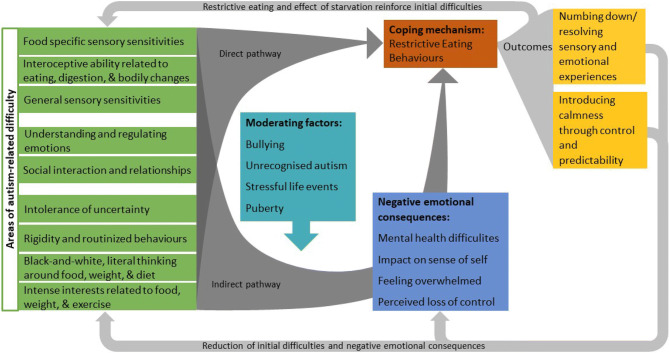
Autistic women are overrepresented among people in treatment for Anorexia Nervosa (AN). The current study aimed to: (1) better understand how AN develops and persists in autistic individuals from the perspective of autistic women, parents and healthcare professionals; (2) derive a theoretical model of restrictive eating difficulties in autism. We conducted 44 semi-structured interviews and used Thematic Analysis to identify patterns of meaning across the data. Themes related to sensory sensitivities, social interaction and relationships, sense of self and identity, difficulties with emotions, thinking styles, and a need for control and predictability. We developed a model of potential autism-specific mechanisms underlying restrictive eating difficulties. This study generated novel insights, which have the potential to inform treatment adaptations following empirical testing.
Overview
The claims and statistics of this paper haven’t been checked yet.
Free: it reads the open-access text and checks the first 5 claims that cite a source we can check. Create a free account to check every claim.
Integrity signals
Registry
Cites
Statistics
Figures
Verification
Claims the paper makes
The claims and statistics of this paper haven’t been checked yet.
Free: it reads the open-access text and checks the first 5 claims that cite a source we can check. Create a free account to check every claim.
Self-check
Percentages, sums and reported differences re-computed from the paper’s own numbers.
The self-check needs the paper’s full text.
Citations
Cites
Using thematic analysis in psychology
Braun, V., & Clarke, V. (2006) · Qualitative Research in Psychology · doi:10.1191/1478088706qp063oa · Cited by 194,414 · cited 2×
“Thematic Analysis (Braun and Clarke 2006) was used to identify patterns of meaning across the data.”
MethodDiagnostic and Statistical Manual of Mental Disorders
American Psychiatric Association (2013) · doi:10.1176/appi.books.9780890425596 · Cited by 116,369
Diagnostic and Statistical Manual of Mental Disorders
Williams, J. B. W., & First, M. (2013) · Encyclopedia of Social Work · doi:10.1093/acrefore/9780199975839.013.104 · Cited by 109,519
How Many Interviews Are Enough?: An Experiment with Data Saturation and Variability
Guest, G., Bunce, A., & Johnson, L. (2006) · Field Methods · doi:10.1177/1525822x05279903 · Cited by 20,808 · cited 1×
“Based on the teams previous experience of conducting qualitative research with autistic women and individuals with eating disorders and on other guidance (Guest et al. 2016), we aimed to recruit 15 participants for each group.”
BackgroundFereday, J., & Muir-Cochrane, E. (2006) · International Journal of Qualitative Methods · doi:10.1177/160940690600500107 · Cited by 11,829
Qualitative research in health care: Analysing qualitative data
Pope, C. (2000) · BMJ · doi:10.1136/bmj.320.7227.114 · Cited by 8,131 · cited 1×
“We adhered to guidelines for good practice in qualitative research (Mays and Pope 2000; Pope et al. 2000) to ensure that interpretations of the data were thorough and consistent.”
MethodThe Use of Triangulation in Qualitative Research
Carter, N., Bryant-Lukosius, D., DiCenso, A., Blythe, J., & Neville, A. J. (2014) · Oncology Nursing Forum · doi:10.1188/14.onf.545-547 · Cited by 3,915
Qualitative research in health care: Assessing quality in qualitative research
Mays, N. (2000) · BMJ · doi:10.1136/bmj.320.7226.50 · Cited by 3,742
Simonoff, E., Pickles, A., Charman, T., Chandler, S., Loucas, T., & Baird, G. (2008) · Journal of the American Academy of Child & Adolescent Psychiatry · doi:10.1097/chi.0b013e318179964f · Cited by 3,399
A Guide to Conducting Consensual Qualitative Research
Hill, C. E., Thompson, B. J., & Williams, E. N. (1997) · The Counseling Psychologist · doi:10.1177/0011000097254001 · Cited by 2,884
Cited by
Items 101–184 of 184
Tololeski, B. P., Grabner, A. S., & Kumperščak, H. G. (2021) · Frontiers in Psychiatry · doi:10.3389/fpsyt.2021.686030 · Cited by 7
“They may experience some additional issues when compared to neurotypical peers, such as communication difficulties, which may lead to more trouble engaging to treatment, sensory problems that subsequently motivate food restriction, and higher levels of cognitive rigidity, which makes it hard to modify maladaptive beha…”
BackgroundNegative Aspects of Dietary Habits in Children and Adolescents with Autism Spectrum Disorders
Grot, M., Białek-Dratwa, A., Krupa-Kotara, K. H., Grajek, M. K., Nigowski, M., Szczepańska, E., & Kowalski, O. (2024) · Nutrients · doi:10.3390/nu16183059 · Cited by 9
“These traits can interact to influence both directly and indirectly a variety of restrictive eating behaviors [32].”
BackgroundLate diagnosis of autistic women in Spain: A participatory study
Gargallo-Nieto, L., Rodríguez-Zafra, A., Clemente-Sánchez, M., & García-Molina, I. (2025) · Women s Studies International Forum · doi:10.1016/j.wsif.2025.103177 · Cited by 7
Carpita, B., Nardi, B., Pini, S., Parri, F., Perrone, P., Pronestì, C., Giovannoni, F., Russomanno, G., Bonelli, C., Massimetti, G., et al. (2025) · Eating and Weight Disorders - Studies on Anorexia Bulimia and Obesity · doi:10.1007/s40519-025-01785-6 · Cited by 5
“These studies have consistently shown striking similarities in the neurobiological and neuropsychological structures of AN and ASD, as well as shared challenges with empathy, social interaction, and emotional reciprocity [9, 11, 12, 23, 52].”
InfluentialMakin, L., Allen, K. L., & Tchanturia, K. (2026) · Frontiers in Psychiatry · doi:10.3389/fpsyt.2026.1787957 · Cited by 7
Self-citationKirkovski, M., Papavasiliou, G., Speranza, B. E., Scarfo, J., Albein‐Urios, N., Linardon, J., Phillipou, A., Fuller‐Tyszkiewicz, M., & Enticott, P. G. (2024) · Psychiatry Research · doi:10.1016/j.psychres.2024.116285 · Cited by 7
Disabilities and eating disorders: A theoretical model and call for research
Fennig, M., Longhurst, P., Gillikin, L. M., Cascio, M. A., Burnette, C. B., Gilbert, K., & Hahn, S. L. (2025) · Eating Behaviors · doi:10.1016/j.eatbeh.2025.101951 · Cited by 5
Converging paths: Autistic traits, body image concerns, and disordered eating symptoms in women
Laskowski, N. M., Juergensen, V., Lehe, M. S., Halbeisen, G., & Paslakis, G. (2025) · Journal of Psychiatric Research · doi:10.1016/j.jpsychires.2025.02.018 · Cited by 5
Cognitive and emotional empathy in acute and remitted anorexia nervosa: a systematic review
Gray, I. E., Kirkovski, M., Enticott, P. G., & Fuller‐Tyszkiewicz, M. (2024) · Frontiers in Psychiatry · doi:10.3389/fpsyt.2024.1385185 · Cited by 6
Westwood, H., Mandy, W., & Brewer, R. (2025) · Journal of Autism and Developmental Disorders · doi:10.1007/s10803-024-06708-5 · Cited by 8
“Indeed, Brede et al. (2020) interviewed autistic participants who differences between the groups were observed, although these should be interpreted with caution considering the lack of group difference in the full model.”
InfluentialSelf-citationIsaac, J., Jeremias, D., Almeida, C. R., & Albuquerque, R. P. (2022) · BMJ Case Reports · doi:10.1136/bcr-2021-246320 · Cited by 12
Chen, X., Lin, L., Xia, H., & Zhao, S. (2024) · Appetite · doi:10.1016/j.appet.2024.107406 · Cited by 5
Eating Behaviors of Autistic Women with an Eating Disorder
Schröder, S. S., Elburg, A. A. V., Spek, A. A., & Danner, U. N. (2025) · Nutrients · doi:10.3390/nu17101622 · Cited by 5
“To help conceptualize the interplay between autism traits and disordered eating, Brede et al. [23] proposed a model in which sensory sensitivities, cognitive rigidity, and social–emotional difficulties are thought to directly and indirectly contribute to the development and maintenance of…”
Meneguzzo, P., Magno, M., Garolla, A., Bonello, E., Tenconi, E., & Todisco, P. (2025) · International Journal of Eating Disorders · doi:10.1002/eat.24529 · Cited by 5
The Relationship Between Autism Diagnostic Criteria and Problematic Eating Behaviors
Young, R. L., Smith, P., Lim, A., & Short, M. A. (2022) · Advances in Neurodevelopmental Disorders · doi:10.1007/s41252-021-00231-9 · Cited by 5
“Furthermore, many women believed that it was their autistic symptomology that was central to the development of their problematic eating behaviors rather than traditional eating disordered cognitions, such as distorted views of shape, weight, or body image (Brede et al., 2020; Kinnaird et al., 2019).”
BackgroundInfluentialAmbler, F., Hill, A. J., Willis, T. A., Gregory, B., Mujahid, S., Romeu, D., & Brennan, C. A. (2025) · Healthcare · doi:10.3390/healthcare13151914 · Cited by 3
““That feeling of putting on weight. . . that’s what kind of sends me back into restricting food, because it’s not about ‘oh god my stomach looks really big’, it’s more about I don’t like the sensation of how my stomach feels [56].””
InfluentialDonkin, L., McColl, C., & Hindle, S. (2025) · Eating Disorders · doi:10.1080/10640266.2025.2558005 · Cited by 6
Kerr‐Gaffney, J., Nimbley, E., Austin, A., Gillespie‐Smith, K., Sharpe, H., & Duffy, F. (2026) · Frontiers in Psychiatry · doi:10.3389/fpsyt.2026.1837078 · Cited by 3
“Brede (37) and Brede et al. (25) compared Ritvo Autism and Asperger Diagnostic Scale-Revised (RAADS-14) childhood ratio scores in Autistic women without EDs, Autistic women with restrictive EDs, women with restrictive EDs with high Autistic traits but no autism diagnosis, and women with restrictive EDs with low Autist…”
InfluentialPorter, C., Whitehead, R. E., & Hopkins, L. (2025) · Community Mental Health Journal · doi:10.1007/s10597-024-01433-w · Cited by 3
“Restrictive or excessive eating in times of stress could be formulated as an eating disorder, but could also be driven by underlying autism (Brede et al., 2020).”
Yin, J., Xiao, Y., Longhurst, P., Tan, C., Zhao, Y., Huang, Z., Cui, S., Nagata, J. M., & He, J. (2025) · Research in Autism · doi:10.1016/j.reia.2025.202687 · Cited by 3
Loizou, S., Beresford, K. D. L. P., Baudinet, J., Herrera-Gener, P., Oregan, D., Alford, C., Tchanturia, K., & Stewart, C. S. (2025) · Journal of Eating Disorders · doi:10.1186/s40337-025-01399-4 · Cited by 3
“Previous research has shown that autistic women with a diagnosis of AN reported a lack of concern about body image, suggesting that AN may present differently in autistic girls and that sensory differences may be more involved in the development and maintenance of eating difficulties [6, 15].”
Self-citationSlothouber, V., Phonepraseuth, J., & Lindsay, S. (2025) · International Journal of Transgender Health · doi:10.1080/26895269.2025.2566186 · Cited by 3
Carpita, B., Nardi, B., Giovannoni, F., Parri, F., Pronestì, C., Bonelli, C., Massimetti, G., Pini, S., Bruno, A., Muscatello, M. R. A., et al. (2025) · Frontiers in Psychiatry · doi:10.3389/fpsyt.2025.1646586 · Cited by 2
Pettitt, L., Satherley, R., & Hale, L. S. (2025) · Journal of Eating Disorders · doi:10.1186/s40337-025-01420-w · Cited by 3
Exploring recovery from anorexia in autistic adults: a qualitative study
McIntosh, A., & Hunter, R. (2026) · BMJ Open · doi:10.1136/bmjopen-2025-111034 · Cited by 4
“19 These hypersensitivities can lead to discomfort and distress, providing further motivation for restrictive eating 20 and may be a factor in the continued vulnerability to AN and other EDs.”
Why does FND mainly affect women? A consideration of gender imbalance in neuropsychiatric disease
Bradlow, R. C. J., von der Weid, L., Zwickl, S., Cheung, A. S., & Kanaan, R. (2026) · Psychological Medicine · doi:10.1017/s0033291726104085 · Cited by 3
“Both FND and anorexia are associated with autism, which may explain these common factors (Brede et al., 2020; Gonzalez-Herrero et al., 2022).”
Passarini, S., Parisi, M., Guerrera, S., Vicari, S., & Fucà, E. (2026) · Journal of Eating Disorders · doi:10.1186/s40337-026-01639-1 · Cited by 2
“Third, a cognitive profile characterized by weak central coherence, rigidity, and poor mentalizing ability has been observed in both autistic individuals and those with FEDs [20, 21].”
Jewell, T. (2021) · OSF Preprints (OSF Preprints) · doi:10.31219/osf.io/ru8sd · Cited by 3
Boltri, M., Gabriel-Segard, T., Sapuppo, W., Kayser, N., Dicembre, M., Yeganyan, A., Duquesnoy, M., Leboyer, M., & Hanachi, M. (2025) · Journal of Psychiatric Research · doi:10.1016/j.jpsychires.2025.07.011 · Cited by 1
Keller, J., Mandy, W., Herle, M., & Leno, V. C. (2025) · Journal of Child Psychology and Psychiatry · doi:10.1111/jcpp.70051 · Cited by 2
“A better understanding of the specific challenges experienced and how these are linked to aspects of the autism phenotype (e.g. sensory sensitivities; Brede et al., 2020) would allow interventions to be better targeted and thus more effective.”
InfluentialSelf-citationComorbidity between ASD and ED: A systematic review of therapeutic and educational interventions
Gallego-Jiménez, M. G., Manresa, S. T., & Gallego, S. N. (2026) · Research in Autism · doi:10.1016/j.reia.2026.202877 · Cited by 1
Undiagnosed Autism Spectrum Disorder in Women: Clinical Overlap With Anorexia Nervosa
Noone, R. (2026) · Psychiatric Annals · doi:10.3928/00485713-20260113-04 · Cited by 1
Longhurst, P., Burnette, C. B., Cascio, M. A., Maloney, E., & Tylka, T. L. (2026) · Body Image · doi:10.1016/j.bodyim.2026.102140 · Cited by 2
Joshua, P. R., Simpson, S., Lewis, V., & Kelty, S. F. (2026) · Clinical Psychologist · doi:10.1080/13284207.2026.2733231 · Cited by 1
Exploring the Lack of Research About Autistic Women
Bennett, M., & Goodall, E. (2022) · Emerald Group Publishing Limited eBooks · doi:10.1108/978-1-80382-463-520221005 · Cited by 3
O'Connor, M., Griffin, C., Corrigan, J., Somers, C., Delaney, M., & Larkin, F. (2024) · Clinical Child Psychology and Psychiatry · doi:10.1177/13591045241295419 · Cited by 2
“A recent qualitative study highlighted that women with ASD experienced their anorexia nervosa as closely linked with their ASD, intertwined with their need for control and predictability, rigid thinking styles, sensory sensitivities and their sense of self and identity (Brede et al., 2020).”
Psychiatric Comorbidity in Individuals with Autism
Thom, R. P., Balaj, K., & McDougle, C. J. (2022) · Autism and child psychopathology series · doi:10.1007/978-3-030-98507-3_5 · Cited by 2
McCrossin, R. (2024) · Preprints.org · doi:10.20944/preprints202402.0185.v1
McCrossin, R. (2024) · Preprints.org · doi:10.20944/preprints202402.0185.v2
Narducci, D. M. (2025) · British Journal of Sports Medicine · doi:10.1136/bjsports-2024-109026 · Cited by 1
McCrossin, R. (2025) · Preprints.org · doi:10.20944/preprints202504.1047.v1
Paphiti, A., Gilbert, J., Gibson, A., & Collin, P. (2025) · SSRN Electronic Journal · doi:10.2139/ssrn.5130129 · Cited by 1
Thomas, K. S., Keith, M., Williams, G. T., Blackbrook, H., Bainbridge, R., Merry, J., LEADING Lived Experience Advisory Group, Williams, M. O., Henley, J., Jones, C. R. G., et al. (2026) · Journal of Eating Disorders · doi:10.21203/rs.3.rs-9556606/v1 · Cited by 4
Self-citationAutism and anorexia nervosa: longitudinal prediction of eating disorder outcomesPreprint
Leppänen, J., Sedgewick, F., Halls, D., & Tchanturia, K. (2022) · Research Square · doi:10.21203/rs.3.rs-1791109/v1
Self-citationNeural Processing of Self-Touch and Other-Touch in Anorexia and AutismPreprint
Frost-Karlsson, M., Capusan, A. J., Perini, I., Olausson, H., Zetterqvist, M., Gustafsson, P. A., & Boehme, R. (2022) · SSRN Electronic Journal · doi:10.2139/ssrn.4122066
Gabrielsen, T. P., Begay, K. K., Campbell, K. M., Hahn, K., & Harrington, L. T. (2023) · Springer eBooks · doi:10.1007/978-3-031-33969-1_10
Daniels, A., Cornelius, T. M., & Gorin, A. A. (2023) · Mental Health Science · doi:10.1002/mhs2.42
Autism Spectrum Conditions and Eating Disorders
Bentz, M. (2023) · Springer eBooks · doi:10.1007/978-3-030-97416-9_39-1
Update in Autism Spectrum Disorder
Smith, R. G., Samdup, D. Z., & Akberzai, S. (2023) · Springer eBooks · doi:10.1007/978-3-031-41542-5_7
Essstörungen und psychische Komorbidität
Mühleck, J., Wick, K., & Berger, U. (2024) · Ernährung & Medizin · doi:10.1055/a-2263-8834
“Dass insbesondere AN und ASS viele Gemeinsamkeiten aufweisen, wurde zwar bereits 1985 beschrieben [9] und auch in einer neueren Studie wird eine ASS bei Mädchen und Frauen als zusätzlicher Risikofaktor für die Entwick - lung einer ES diskutiert [10].”
BackgroundBennett, G., & Goodall, E. (2024) · Springer eBooks · doi:10.1007/978-981-97-0656-3_2
Pathogenese funktioneller Störungen der Nahrungsaufnahme im Kindesalter
Bolten, M. I., Légeret, C., & Odenheimer, S. (2024) · Springer eBooks · doi:10.1007/978-3-662-69606-4_5
Included but Not Inclusive: A Femme Theory Analysis of Autism Research on the Feminine Spectrum
Coombs, E. C., Maroney, M. R., Brown, H. M., & McMorris, C. A. (2024) · Journal of femininities. · doi:10.1163/29501229-bja10008 · Cited by 2
Wigham, S., Welsh, P., Ingham, B., Wilson, C., Fisher-Rogers, A., Lees, R., McConnell, O., Nedyalkova, A., Nicholson, L., Couteur, A. S. L., et al. (2024) · Autism in Adulthood · doi:10.1089/aut.2023.0079 · Cited by 2
Jensen, M. K., Lydiksen, T. W., Pedersen, S. H., & Bentz, M. (2024) · Journal of Psychiatry and Brain Science · doi:10.20900/jpbs.20240009
“Further, they wondered if knowing about autism earlier could have made AN treatment more helpful [18].”
InfluentialAutism Spectrum Conditions and Eating Disorders
Bentz, M. (2024) · Springer eBooks · doi:10.1007/978-3-031-46096-8_39
Alper, M., Rodgers, R. F., Rauchberg, J. S., Simpson, E., & Harrison, K. (2025) · New Media & Society · doi:10.1177/14614448251339408
“Body image and weight concerns are less central in the development of anorexia among autistic women compared to non-autistic women (Brede et al., 2020).”
Mentalizing ability in acute and remitted anorexia nervosa
Gray, I. E., Enticott, P. G., Fuller‐Tyszkiewicz, M., & Kirkovski, M. (2025) · Eating Disorders · doi:10.1080/10640266.2025.2519906
Autism spectrum and disordered eating: the mediating roles of poor sleep quality and mood problems
Ates, H. H., Newman, E., & Williams, J. M. (2025) · Current Psychology · doi:10.1007/s12144-025-08331-8
“These mood problems might subsequently contribute to the development of DE, including ARFID symptomology, as food might be used as a coping mechanism (Brede et al., 2020 ; Kinnaird et al., 2019).”
InfluentialMalone, D., Keating, K., & Ryan, C. (2025) · Journal of Autism and Developmental Disorders · doi:10.1007/s10803-025-07044-y · Cited by 2
Nimbley, E., Gillespie‐Smith, K., Duffy, F., Maloney, E., Ballantyne, C. J., & Sharpe, H. (2024) · Figshare · doi:10.6084/m9.figshare.26594279
Kerr‐Gaffney, J., Hayward, H., Jones, E. J. H., Halls, D., Murphy, D., & Tchanturia, K. (2021) · Figshare · doi:10.6084/m9.figshare.14889427
Self-citationRankin, R. M., Conti, J., Ramjan, L. M., & Hay, P. (2023) · Figshare · doi:10.6084/m9.figshare.23488855
Li, Z., Holetic, V., Webb, J., Chubinidze, D., Byford, S., & Tchanturia, K. (2024) · Figshare · doi:10.6084/m9.figshare.26604076
Self-citationKerr‐Gaffney, J., Hayward, H., Jones, E. J. H., Halls, D., Murphy, D., & Tchanturia, K. (2021) · Figshare · doi:10.6084/m9.figshare.14889430
Self-citationHull, L., Levy, L., Lai, M., Petrides, K. V., Baron‐Cohen, S., Allison, C. L., Smith, P. L., & Mandy, W. (2021) · Figshare · doi:10.6084/m9.figshare.14052675
Self-citationRankin, R. M., Conti, J., Ramjan, L. M., & Hay, P. (2023) · Figshare · doi:10.6084/m9.figshare.23488849
Rankin, R. M., Conti, J., Ramjan, L. M., & Hay, P. (2023) · Figshare · doi:10.6084/m9.figshare.23488861
Field, S. L., Fox, J. R. E., Jones, C. R. G., & Williams, M. O. (2024) · Figshare · doi:10.6084/m9.figshare.26567414
Self-citationKenny, T. E., & Lewis, S. P. (2024) · Figshare · doi:10.6084/m9.figshare.26577005
Nimbley, E., Gillespie‐Smith, K., Duffy, F., Maloney, E., Ballantyne, C. J., & Sharpe, H. (2024) · Figshare · doi:10.6084/m9.figshare.26594285
Assessment and Indications for Adolescents’ Intensive CBT-E
Grave, R. D. (2026) · Springer eBooks · doi:10.1007/978-3-032-18352-1_4
Thomas, K. S., Cooper, K., & Jones, C. R. G. (2026) · Archives of Sexual Behavior · doi:10.1007/s10508-026-03448-8
“For some autistic people, this can result in an internalized sense of defectiveness and inad-equacy, which in turn, can lead to engagement in disordered eating behaviors and cognitions (Brede et al., 2020; Nimbley et al., 2023).”
InfluentialSelf-citationBourne, L., Mandy, W., & Bryant‐Waugh, R. (2026) · Journal of Eating Disorders · doi:10.1186/s40337-026-01588-9
“This also supports the literature which discusses the impact of a mis-diagnosis of anorexia nervosa for neurodivergent eating disorder patients who may more appropriately receive a diagnosis of ARFID [40, 41].”
Self-citationSensory food preferences in eating disorders
Klein, E., & Nikitin, I. A. (2026) · Tovaroved prodovolstvennykh tovarov (Commodity specialist of food products) · doi:10.33920/igt-01-2606-02
Social and Emotional Wellbeing for Females With Autism at School: A Qualitative Analysis
Jarman, B., & Beswick, K. (2026) · Australasian Journal of Special and Inclusive Education · doi:10.1017/jsi.2026.10014
“Teachers and parents of children with autism (aged 4 – 17 years) have described sensory experiences that resulted in distraction and anxiety and limited the ability of the children to participate in learning activities (Jones et al., 2020).”
InfluentialFood-based multisensory stimulation as a potential innovative approach for brain health and disease
Nuzzo, D., Predieri, S., Tonacci, A., Billeci, L., Girgenti, A., Tartarisco, G., Pioggia, G., Isidoro, S. I., Palumbo, L., Dang, T. N. H., et al. (2026) · Trends in Food Science & Technology · doi:10.1016/j.tifs.2026.105949
Buchan, K., Maloney, E., Duffy, F., Sader, M., Nimbley, E., Kettley, S., Sharpe, H., & Gillespie‐Smith, K. (2026) · Autism in Adulthood · doi:10.1177/25739581261482021
Makin, L., & Tchanturia, K. (2026) · Current Psychiatry Reports · doi:10.1007/s11920-026-01719-8 · Cited by 1
Self-citationDowns, J. L., Maloney, E., Carnegie, A. C., Thomas, K. S., & Chapman, L. A. (2026) · Journal of Eating Disorders · doi:10.1186/s40337-026-01757-w
Comparing mental health treatment outcomes for autistic and non-autistic people: a systematic reviewPreprint
Griffiths, J., Elise, F., Thompson, J., Li, S., Olive, R. R., Bhutta, A., Liu, W., Holden, M., Mandiangu, M., Baptiste, D., et al. (2026) · medRxiv · doi:10.64898/2026.10.08.26364831
Self-citationEnjoyEAT: Embodied Interaction for Behavior-Aware, CBT-Informed Eating-Disorder Support
Wang, L., Liu, M., Jiang, Y., & Chang, D. (2026) · International Journal of Human-Computer Interaction · doi:10.1080/10447318.2026.2740424
Watts, B., Chawner, S. J. R. A., Burchell, G., & Fox, J. R. E. (2026) · Frontiers in Psychiatry · doi:10.3389/fpsyt.2026.1953234
Self-citation
Metadata
- Authors
- Brede, J., Babb, C., Jones, C., Elliott, M., Zanker, C., Tchanturia, K., Serpell, L., Fox, J., & Mandy, W.
- Affiliations
- University College London (GB)
- Cardiff University (GB)
- King's College London (GB)
- Corresponding author
- Brede, Janina
- Venue
- Journal of Autism and Developmental Disorders
- Published
- 2020-04-09
- Volume
- 50
- Issue
- 12
- Pages
- 4280-4296
- ISSN
- 0162-3257 (ISSN-L)
- 1573-3432
- PMC
- PMC7677288
- OpenAlex
- W3013495962
- Cited by
- 184
- References
- 68
- Citations by year
- 2026: 22 · 2025: 42 · 2024: 43 · 2023: 25 · 2022: 25 · 2021: 22 · 2020: 5
- FWCI
- 7.69
- Type
- journal article
- Language
- en
- Open access
- hybrid
- doi.org
- Licence
- cc-by
- creativecommons.org/licenses/by/4.0 (tdm)
- creativecommons.org/licenses/by/4.0 (vor)
- Locations
- Journal of Autism and Developmental Disorders (publishedVersion, cc-by)
- PubMed Central (publishedVersion, cc-by)
- PubMed (publishedVersion)
- ORCA Online Research @Cardiff (Cardiff University) (acceptedVersion)
- UCL Discovery (University College London) (submittedVersion)
- Funders
- Autistica (7252)
- Topics
- Social Sciences › Psychology › Clinical Psychology › Eating Disorders and Behaviors
- Health Sciences › Medicine › Psychiatry and Mental health › Child Nutrition and Feeding Issues
- Life Sciences › Neuroscience › Cognitive Neuroscience › Autism Spectrum Disorder Research
- Keywords
- anorexia nervosa, autism spectrum disorder, autistic women, restrictive eating disorders, sensory sensitivity, social interaction, emotional problems, thinking styles, theoretical model, parents' perspectives, healthcare professionals' perspectives
- MeSH terms
- Adult, Anorexia, Anorexia Nervosa, Feeding and Eating Disorders, Autistic Disorder, Emotions, Female, Humans
About these checks
Registry, retraction, Cites and statistics results are computed, not judged, with one exception: a printed reference that no index lists is read once by a model before it counts as a citation error. Claims are extracted by a model and kept only when their quote appears verbatim in the text; each cited source is then checked, with a model’s help, for whether it says what the claim relies on. Those verdicts can be wrong — read the claim’s quote and the cited source before relying on one.
Statistics and arithmetic are recomputed, not judged.
Confidence bands are shown only for fields calibrated on our annotated test set. None is calibrated yet, so no band is shown.
What counts as a claim ›How we measure confidence ›How we check this ›
Are you an author, or do you see a problem with this page? Request a review
Data sources
Bibliographic data: Semantic Scholar, OpenAlex, Crossref.
Contains information from the Semantic Scholar Academic Graph Datasets, made available under the ODC Attribution License (ODC-BY 1.0).
Semantic Scholar’s data is described in: Kinney, R., et al. (2023). The Semantic Scholar Open Data Platform. arXiv:2301.10140.
