

"For me, the anorexia is just a symptom, and the cause is the autism": investigating restrictive eating disorders in autistic women
Open accessThe DOI matches its Crossref record; 68 of the 68 references it cites were found in a registry or an index.
Abstract
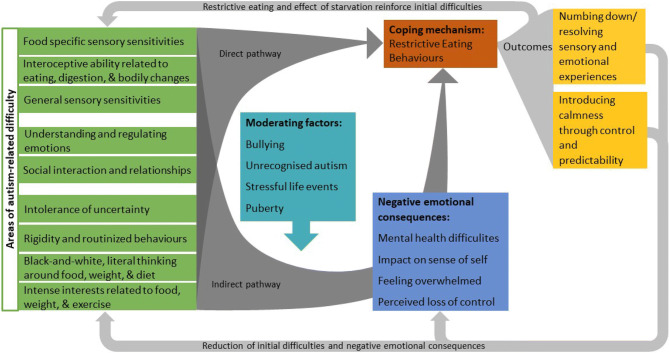
Autistic women are overrepresented among people in treatment for Anorexia Nervosa (AN). The current study aimed to: (1) better understand how AN develops and persists in autistic individuals from the perspective of autistic women, parents and healthcare professionals; (2) derive a theoretical model of restrictive eating difficulties in autism. We conducted 44 semi-structured interviews and used Thematic Analysis to identify patterns of meaning across the data. Themes related to sensory sensitivities, social interaction and relationships, sense of self and identity, difficulties with emotions, thinking styles, and a need for control and predictability. We developed a model of potential autism-specific mechanisms underlying restrictive eating difficulties. This study generated novel insights, which have the potential to inform treatment adaptations following empirical testing.
Overview
The claims and statistics of this paper haven’t been checked yet.
Free: it reads the open-access text and checks the first 5 claims that cite a source we can check. Create a free account to check every claim.
Integrity signals
Registry
Cites
Statistics
Figures
Verification
Claims the paper makes
The claims and statistics of this paper haven’t been checked yet.
Free: it reads the open-access text and checks the first 5 claims that cite a source we can check. Create a free account to check every claim.
Self-check
Percentages, sums and reported differences re-computed from the paper’s own numbers.
The self-check needs the paper’s full text.
Citations
Cites
Using thematic analysis in psychology
Braun, V., & Clarke, V. (2006) · Qualitative Research in Psychology · doi:10.1191/1478088706qp063oa · Cited by 194,414 · cited 2×
“Thematic Analysis (Braun and Clarke 2006) was used to identify patterns of meaning across the data.”
MethodDiagnostic and Statistical Manual of Mental Disorders
American Psychiatric Association (2013) · doi:10.1176/appi.books.9780890425596 · Cited by 116,369
Diagnostic and Statistical Manual of Mental Disorders
Williams, J. B. W., & First, M. (2013) · Encyclopedia of Social Work · doi:10.1093/acrefore/9780199975839.013.104 · Cited by 109,519
How Many Interviews Are Enough?: An Experiment with Data Saturation and Variability
Guest, G., Bunce, A., & Johnson, L. (2006) · Field Methods · doi:10.1177/1525822x05279903 · Cited by 20,808 · cited 1×
“Based on the teams previous experience of conducting qualitative research with autistic women and individuals with eating disorders and on other guidance (Guest et al. 2016), we aimed to recruit 15 participants for each group.”
BackgroundFereday, J., & Muir-Cochrane, E. (2006) · International Journal of Qualitative Methods · doi:10.1177/160940690600500107 · Cited by 11,829
Qualitative research in health care: Analysing qualitative data
Pope, C. (2000) · BMJ · doi:10.1136/bmj.320.7227.114 · Cited by 8,131 · cited 1×
“We adhered to guidelines for good practice in qualitative research (Mays and Pope 2000; Pope et al. 2000) to ensure that interpretations of the data were thorough and consistent.”
MethodThe Use of Triangulation in Qualitative Research
Carter, N., Bryant-Lukosius, D., DiCenso, A., Blythe, J., & Neville, A. J. (2014) · Oncology Nursing Forum · doi:10.1188/14.onf.545-547 · Cited by 3,915
Qualitative research in health care: Assessing quality in qualitative research
Mays, N. (2000) · BMJ · doi:10.1136/bmj.320.7226.50 · Cited by 3,742
Simonoff, E., Pickles, A., Charman, T., Chandler, S., Loucas, T., & Baird, G. (2008) · Journal of the American Academy of Child & Adolescent Psychiatry · doi:10.1097/chi.0b013e318179964f · Cited by 3,399
A Guide to Conducting Consensual Qualitative Research
Hill, C. E., Thompson, B. J., & Williams, E. N. (1997) · The Counseling Psychologist · doi:10.1177/0011000097254001 · Cited by 2,884
Cited by
Is social camouflaging associated with anxiety and depression in autistic adults?
Hull, L., Levy, L., Lai, M.-C., Petrides, K. V., Baron-Cohen, S., Allison, C., Smith, P., & Mandy, W. (2021) · Molecular Autism · doi:10.1186/s13229-021-00421-1 · Cited by 337
Self-citationFeeding and Eating Problems in Children and Adolescents with Autism: A Scoping Review
Baraskewich, J., von Ranson, K. M., McCrimmon, A., & McMorris, C. A. (2021) · Autism · doi:10.1177/1362361321995631 · Cited by 221
“Recently, Brede et al. (2020) proposed a model of autism-specific traits that may influence the development and maintenance of restrictive eating problems.”
BackgroundIn Our Own Words: The Complex Sensory Experiences of Autistic Adults
MacLennan, K., O’Brien, S., & Tavassoli, T. (2022) · Journal of Autism and Developmental Disorders · doi:10.1007/s10803-021-05186-3 · Cited by 160
Chapman, L., Rose, K., Hull, L., & Mandy, W. (2022) · Research in Autism Spectrum Disorders · doi:10.1016/j.rasd.2022.102069 · Cited by 135
Self-citationBabb, C., Brede, J., Jones, C. R. G., Elliott, M., Zanker, C., Tchanturia, K., Serpell, L., Mandy, W., & Fox, J. R. E. (2021) · Autism · doi:10.1177/1362361321991257 · Cited by 99
“…participant groups from across the UK: autistic women with experience of AN; parents of autistic women with experience of AN; and ED HCPs. Data collection was intended to serve two different but related studies, and all participants in this study overlap with the sample in Brede et al. (2020).”
BackgroundInfluentialSelf-citationSensory Processing and Eating Behaviours in Autism: A Systematic Review
Nimbley, E., Golds, L., Sharpe, H., Gillespie‐Smith, K., & Duffy, F. (2022) · European Eating Disorders Review · doi:10.1002/erv.2920 · Cited by 93
“, 2019; Kinnaird & Tchanturia, 2021), while differences in emotion processing (Brede et al., 2020; Courty et al., 2013; Kerr‐Gaffney et al., 2021) or alexithymia (Vuiller et al.”
BackgroundLai, M.-C., Lin, H.-Y., & Ameis, S. H. (2022) · Current Opinion in Psychiatry · doi:10.1097/yco.0000000000000770 · Cited by 86
Autistic Cognition: Charting Routes to Anxiety
Stark, E., Stacey, J., Mandy, W., Kringelbach, M. L., & Happé, F. (2021) · Trends in Cognitive Sciences · doi:10.1016/j.tics.2021.03.014 · Cited by 77
Self-citationRole of gastrointestinal health in managing children with autism spectrum disorder
Al‐Beltagi, M., Saeed, N. K., Bediwy, A. S., Elbeltagi, R. M., & Alhawamdeh, R. (2023) · World Journal of Clinical Pediatrics · doi:10.5409/wjcp.v12.i4.171 · Cited by 106
Neurodivergence, intersectionality, and eating disorders: a lived experience-led narrative review
Cobbaert, L., Millichamp, A., Elwyn, R., Silverstein, S., Schweizer, K., Thomas, E., & Miskovic‐Wheatley, J. (2024) · Journal of Eating Disorders · doi:10.1186/s40337-024-01126-5 · Cited by 95
“…people have a literal, or concrete, thinking style [24, 217], dichotomous portrayals of ‘healthy’ or ‘good’ versus ‘unhealthy’ or ‘bad’ foods asso - ciated with diet culture and public health messages may contribute to fixations towards foods considered ‘healthy’ (e.g., orthorexia) [61, 154, 218].”
InfluentialSix ideas about how to address the autism mental health crisis
Mandy, W. (2022) · Autism · doi:10.1177/13623613211067928 · Cited by 60
Self-citationA comparison of the eating disorder service experiences of autistic and non-autistic women in the UK
Babb, C., Brede, J., Jones, C. R. G., Serpell, L., Mandy, W., & Fox, J. (2022) · European Eating Disorders Review · doi:10.1002/erv.2930 · Cited by 54
“For example, autistic women related their eating difficulties to sensory sensitivities, thinking styles, sense of identity, and emotional and social processing (Brede et al., 2020).”
BackgroundInfluentialO’Nions, E., Lewer, D., Petersen, I., Brown, J. M., Buckman, J. E. J., Charlton, R. A., Cooper, C., Baou, C. E., Happe, F. G. E., Manthorpe, J., et al. (2023) · The Lancet Regional Health - Europe · doi:10.1016/j.lanepe.2023.100776 · Cited by 79
“9,10 However, on average we suspect that the support needs of diagnosed autistic people are probably greater than those who are undiagnosed (i.e. there is a differential exposure misclassi fi cation).”
Self-citationKerr‐Gaffney, J., Halls, D., Harrison, A., & Tchanturia, K. (2020) · Frontiers in Psychiatry · doi:10.3389/fpsyt.2020.00401 · Cited by 57
“Similarly, based on their qualitative study of AN and ASD comorbidity, Brede and colleagues (83) hypothesized that AN may develop through both direct and indirect pathways.”
BackgroundSelf-citationAlexithymia may explain the relationship between autistic traits and eating disorder psychopathology
Vuillier, L., Carter, Z., Teixeira, A. R., & Moseley, R. L. (2020) · Molecular Autism · doi:10.1186/s13229-020-00364-z · Cited by 48
“In qualitative research, alexithymia has indeed been identified by autistic people themselves as one risk factor for their ED, alongside other elements of being autistic [146].”
BackgroundImproving Diagnostic Procedures in Autism for Girls and Women: A Narrative Review
Cook, J. M., Hull, L., & Mandy, W. (2024) · Neuropsychiatric Disease and Treatment · doi:10.2147/ndt.s372723 · Cited by 84
“46 Accurate identification of autism is essential to enable appropriate interventions to be developed to support women with eating disorders, 47 and clinicians should be mindful that women and girls assessed for eating disorders should also be screened for autism.”
BackgroundSelf-citationPotential mechanisms underlying the association between feeding and eating disorders and autism
Adams, K. L., Mandy, W., Catmur, C., & Bird, G. (2024) · Neuroscience & Biobehavioral Reviews · doi:10.1016/j.neubiorev.2024.105717 · Cited by 55
“For example, starvation or over-eating may be used to numb overwhelming negative feelings (Brede et al., 2020).”
InfluentialSelf-citationAutism symptoms in anorexia nervosa: a comparative study with females with autism spectrum disorder
Kerr‐Gaffney, J., Hayward, H., Jones, E. J. H., Halls, D., Murphy, D., & Tchanturia, K. (2021) · Molecular Autism · doi:10.1186/s13229-021-00455-5 · Cited by 52
Self-citationBundy, R., Mandy, W., Crane, L., Belcher, H., Bourne, L., Brede, J., Hull, L., Brinkert, J., & Cook, J. (2022) · Autism · doi:10.1177/13623613211065543 · Cited by 43
“Given the elevated prevalence of eating disorders in autistic people (Brede et al., 2020; Westwood et al., 2017, 2018), this finding is concerning.”
BackgroundSelf-citationLooking beneath the surface: Distinguishing between common features in autism and anorexia nervosa
Kinnaird, E., & Tchanturia, K. (2020) · Journal of Behavioral and Cognitive Therapy · doi:10.1016/j.jbct.2020.09.001 · Cited by 50
Self-citationAutism and anorexia nervosa: Longitudinal prediction of eating disorder outcomes
Leppänen, J., Sedgewick, F., Halls, D., & Tchanturia, K. (2022) · Frontiers in Psychiatry · doi:10.3389/fpsyt.2022.985867 · Cited by 54
“3% of participants in the present study considered themselves recovered and were no longer in treatment for AN, this is in line with qualitative findings that many autistic people with EDs report that currently available treatments do not adequately meet their needs forming a further barrier to recovery (44, 45).”
BackgroundResultSelf-citationRankin, R. M., Conti, J., Ramjan, L. M., & Hay, P. (2023) · Journal of Eating Disorders · doi:10.1186/s40337-023-00820-0 · Cited by 48
Inal-Kaleli, I., Doğan, N., Köse, S., & Bora, E. (2024) · International Journal of Eating Disorders · doi:10.1002/eat.24307 · Cited by 45
Nimbley, E., Sharpe, H., Maloney, E., Gillespie‐Smith, K., Tchanturia, K., & Duffy, F. (2024) · International Journal of Eating Disorders · doi:10.1002/eat.24311 · Cited by 41
Self-citationElsayed, H. E., Thompson, K. L., Conklin, J., & Watson, L. R. (2022) · American Journal of Speech-Language Pathology · doi:10.1044/2022_ajslp-21-00401 · Cited by 45
Nimbley, E., Gillespie‐Smith, K., Duffy, F., Maloney, E., Ballantyne, C. J., & Sharpe, H. (2023) · Journal of Eating Disorders · doi:10.1186/s40337-023-00813-z · Cited by 39
Field, S. L., Fox, J. R. E., Jones, C. R. G., & Williams, M. O. (2023) · Journal of Eating Disorders · doi:10.1186/s40337-023-00740-z · Cited by 40
“Without support for these differences, autistic women might partly cope with them through restricting eating [13].”
BackgroundInfluentialSelf-citationBradley, S., Moore, F. R., Duffy, F., Clark, L., Suratwala, T., Knightsmith, P., & Gillespie‐Smith, K. (2024) · Autism · doi:10.1177/13623613241245749 · Cited by 42
“The relationship between sensory sensitivities and AN has been highlighted (Brede et al., 2020); however, this has not been consistently corroborated (Kinnaird et al., 2020).”
BackgroundResultInfluentialChen, Y., Xi, Z., Saunders, R., Simmons, D., Totsika, V., & Mandy, W. (2024) · Clinical Psychology Review · doi:10.1016/j.cpr.2024.102516 · Cited by 53
Self-citationBarnett, A., Edwards, K., Harper, R., Evans, E. H., Alexander, D., Choudhary, M., & Richards, G. (2020) · Journal of Autism and Developmental Disorders · doi:10.1007/s10803-020-04669-z · Cited by 34
More than an outcome: a person-centered, ecological framework for eating disorder recovery
Kenny, T. E., & Lewis, S. P. (2023) · Journal of Eating Disorders · doi:10.1186/s40337-023-00768-1 · Cited by 48
“, sensory sensitivities, thinking styles) contribute uniquely via direct and indirect pathways to the development of EDs [75].”
BackgroundInfluentialProblematic eating behaviours of autistic women—A scoping review
Schröder, S. S., Danner, U. N., Spek, A. A., & Elburg, A. A. V. (2022) · European Eating Disorders Review · doi:10.1002/erv.2932 · Cited by 33
“All of which combined, ultimately result in a severe level of eating pathology deeply intertwined with the ASD (Brede et al., 2020).”
BackgroundAdams, K. L., Murphy, J., Catmur, C., & Bird, G. (2022) · European Eating Disorders Review · doi:10.1002/erv.2905 · Cited by 32
“Alternatively, reduced objective interoceptive accuracy in autism could lead to difficulties in regulating food intake, or difficulties with emotion regulation, which could result in the use of abnormal eating behaviour as a coping strategy (Brede et al., 2020; Herbert et al., 2020).”
BackgroundInfluentialYau, N., Anderson, S., & Smith, I. (2023) · Research in Autism · doi:10.1016/j.rasd.2022.102101 · Cited by 35
Investigating service users' perspectives of eating disorder services: A meta‐synthesis
Babb, C., Jones, C. R. G., & Fox, J. R. E. (2022) · Clinical Psychology & Psychotherapy · doi:10.1002/cpp.2723 · Cited by 36
“Research suggests that some populations have unique treatment needs relating to their ED, for example, autistic individuals (Babb et al., 2021; Brede et al., 2020), those with diabetes (Macdonald et al.”
BackgroundSelf-citationLeno, V. C., Micali, N., Bryant‐Waugh, R., & Herle, M. (2022) · European Eating Disorders Review · doi:10.1002/erv.2902 · Cited by 44
“Thematic analysis of interviews with autistic adults with eating disorders have revealed a number of possible mechanisms that could underpin the association between autism and eating disorders, including food‐specific sensory sensitivities (Brede et al., 2020; see also Kinnaird et al., 2019).”
BackgroundEating Problems in Autistic Females and Males: A Co-twin Control Study
Lundin Remnélius, K., Neufeld, J., Isaksson, J., & Bölte, S. (2022) · Journal of Autism and Developmental Disorders · doi:10.1007/s10803-021-05198-z · Cited by 25
Eating disturbances in adults with autism spectrum disorder without intellectual disabilities
Demartini, B., Nisticò, V., Bertino, V., Tedesco, R., Faggioli, R., Priori, A., & Gambini, O. (2021) · Autism Research · doi:10.1002/aur.2500 · Cited by 30
“…that symptoms detected at the SWEAA, being intrinsic to primary features of the ASD itself, might be considered a “first level” of eating disturbances in participants with ASDs without intellectual disabilities, representing a risk factor for the development of other EDs (Brede et al., 2020).”
BackgroundHealy, S., Pacanowski, C., Kennedy, L., & Obrusníková, I. (2021) · Autism · doi:10.1177/13623613211006989 · Cited by 20
“Similar traits were identified as directly related to restrictive eating practices in interviews with autistic women, parents of autistic women, and healthcare professionals (Brede et al., 2020).”
BackgroundKeller, J., Herle, M., Mandy, W., & Leno, V. C. (2024) · The Lancet Psychiatry · doi:10.1016/s2215-0366(24)00186-x · Cited by 28
Self-citationBentz, M., Pedersen, S. H., & Moslet, U. (2022) · European Eating Disorders Review · doi:10.1002/erv.2938 · Cited by 22
“The elevated prevalence suggests that autism may represent a vulnerability factor for R‐ED, and this is confirmed by individuals with a lived experience of both conditions (Brede et al., 2020).”
BackgroundHiding in Plain Sight: Eating Disorders, Autism, and Diagnostic Overshadowing in Women
Brown, C. M., Hedley, D., Hooley, M., Hayward, S. M., Fuller‐Tyszkiewicz, M., Krug, I., & Stokes, M. A. (2024) · Autism in Adulthood · doi:10.1089/aut.2023.0197 · Cited by 30
Body image and autism: A scoping review
Longhurst, P. (2023) · Research in Autism · doi:10.1016/j.rasd.2023.102170 · Cited by 27
Li, Z., Hutchings-Hay, C., Byford, S., & Tchanturia, K. (2024) · Frontiers in Psychiatry · doi:10.3389/fpsyt.2024.1332441 · Cited by 31
Self-citationMakin, L., Zesch, E., Meyer, A., Mondelli, V., & Tchanturia, K. (2025) · European Eating Disorders Review · doi:10.1002/erv.3177 · Cited by 28
Self-citationAnorexia nervosa and comorbid autism spectrum disorders
Saure, E., Laasonen, M. R., & Raevuori, A. (2021) · Current Opinion in Psychiatry · doi:10.1097/yco.0000000000000742 · Cited by 24
Kinnaird, E., Oakley, M., Lawrence, V. C., Shergill, S. S., & Tchanturia, K. (2021) · Journal of Eating Disorders · doi:10.1186/s40337-021-00397-6 · Cited by 23
“Brede et al. (2020) explored the relationship between restrictive eating difficulties and ASC with carers, patients and clinicians.”
BackgroundResultInfluentialSelf-citationSaure, E., Lepistö‐Paisley, T., Raevuori, A., & Laasonen, M. R. (2022) · Frontiers in Psychiatry · doi:10.3389/fpsyt.2022.850594 · Cited by 24
“In another recent study including participants with both AN and ASD, the participants described that they had food-specific sensory sensitivities, and that food restriction was often related to the sensory properties of food (18).”
BackgroundSaure, E., Ålgars, M., Laasonen, M. R., & Raevuori, A. (2022) · Psychology Research and Behavior Management · doi:10.2147/prbm.s246056 · Cited by 22
“Challenges in cognitive flexibility may result in the rigid behavior typical to AN and ASD and contribute to the development of rigid eating pattern including the urge to count and monitor calories and weight.(17,22,23) Weak central coherence, in turn, refers to increased attention to detail and challenges in global i…”
BackgroundBrooks, C. P., Kafle, E., Butt, N., Chawner, D., Day, A., Elsby-Pearson, C., Elson, E., Hammond, J., Herbert, P., Jenkins, C. L., et al. (2023) · Research Involvement and Engagement · doi:10.1186/s40900-023-00460-3 · Cited by 26
“These include: people with other comorbid mental health issues [10, 17, 69, 137], autistic spectrum conditions [3, 22, 40, 62, 118, 121], people with binge-eating disorder, EDNOS/OSFED or ARFID [11, 13, 106], men [103, 112, 120, 134, 138, 140], racially minoritized groups [1, 20, 52, 53, 77, 114,…”
BackgroundLoomes, R., & Bryant‐Waugh, R. (2021) · Journal of Eating Disorders · doi:10.1186/s40337-021-00511-8 · Cited by 28
“[37] conducted a series of qualitative semi-structured interviews to better understand the development and maintenance of AN in people with an autism diagnosis.”
BackgroundInfluentialNisticò, V., Faggioli, R., Bertelli, S., Priori, A., Gambini, O., & Demartini, B. (2021) · Eating and Weight Disorders - Studies on Anorexia Bulimia and Obesity · doi:10.1007/s40519-021-01225-1 · Cited by 19
Barriers and facilitators to ethical co-production with Autistic people with an eating disorder
Nimbley, E., Maloney, E., Buchan, K., Sader, M., Gillespie‐Smith, K., & Duffy, F. (2024) · Journal of Eating Disorders · doi:10.1186/s40337-024-01076-y · Cited by 20
“Several attempts have been made to propose ED models drawing on autism-specific mechanisms [8, 11, 26], however understandings of this overlap remain elusive.”
BackgroundLoomes, R., Chivers, K., Georgeaux‐Healy, C., Mandy, W., & Jewell, T. (2025) · European Eating Disorders Review · doi:10.1002/erv.3181 · Cited by 18
“For example, avoidance of ‘embarrassing’ meltdowns or channelling their anxiety by focussing worry on food and nothing else (Brede et al. 2020).”
InfluentialSelf-citationGalvin, J., Evans, E. H., Talbot, C. V., Wilson, C., & Richards, G. (2022) · PLoS ONE · doi:10.1371/journal.pone.0276249 · Cited by 15
“, polarised or inflexible thinking patterns) and intense interests around their food, weight, diet, and exercise [12].”
BackgroundResultInfluentialChallenges and opportunities for conceptualizing intuitive eating in autistic people
Longhurst, P., & Burnette, C. B. (2023) · International Journal of Eating Disorders · doi:10.1002/eat.24057 · Cited by 19
Longhurst, P., Aspell, J. E., Todd, J., & Swami, V. (2023) · Body Image · doi:10.1016/j.bodyim.2023.101655 · Cited by 25
Autism diagnosis in females by eating disorder professionals
Parsons, M. A. (2023) · Journal of Eating Disorders · doi:10.1186/s40337-023-00785-0 · Cited by 20
“Potential autism-specific mechanisms underlying eating difficulties include deficits in social interaction and relationships, poor sense of self and identity, difficulties with emotions, and a need for control and predictability [6].”
BackgroundLonghurst, P., Todd, J., Aspell, J. E., & Swami, V. (2024) · Body Image · doi:10.1016/j.bodyim.2024.101706 · Cited by 16
The clinical characteristics of autistic women with restrictive eating disorders
Brede, J., Babb, C., Jones, C. R. G., Serpell, L., Hull, L., Adamson, J., Baker, H., Fox, J. R. E., & Mandy, W. (2024) · BJPsych Open · doi:10.1192/bjo.2024.65 · Cited by 20
Self-citationSteegers, C. P. M., Dieleman, G. C., Moskalenko, V. D., Santos, S., Hillegers, M. H. J., White, T. J. H., & Jansen, P. W. (2021) · International Journal of Eating Disorders · doi:10.1002/eat.23633 · Cited by 15
“These features may be possible early markers of AN, and are also associated with other somatic and psychological disorders, such as obesity, depression (Geliebter & Aversa, 2003; Van Strien, 2018) and autism (Brede et al., 2020; Brown & Stokes, 2020).”
BackgroundMakin, L., Meyer, A., Mondelli, V., & Tchanturia, K. (2025) · Journal of Eating Disorders · doi:10.1186/s40337-025-01493-7 · Cited by 19
“This risk is likely compounded by delays in Autism recognition and diagnosis [14, 15, 17–19 , Fewer studies have examined other forms of Neurodi-vergence or other EDs [9].”
InfluentialSelf-citationNeural Processing of Self-Touch and Other-Touch in Anorexia and Autism
Frost-Karlsson, M., Capusan, A. J., Perini, I., Olausson, H., Zetterqvist, M., Gustafsson, P. A., & Boehme, R. (2022) · NeuroImage Clinical · doi:10.1016/j.nicl.2022.103264 · Cited by 21
Nuyttens, M., Simons, A., Antrop, I., & Glazemakers, I. (2023) · European Eating Disorders Review · doi:10.1002/erv.3042 · Cited by 15
Introducing a Smart Toy in Eating Disorder Treatment: A Pilot Study
Chubinidze, D., Li, Z., Slovák, P., Baudinet, J., Dufour, E., & Tchanturia, K. (2024) · Nutrients · doi:10.3390/nu16040467 · Cited by 15
“This is particularly evident in the realm of sensory disturbances and difficulties in emotion regulation (ER) [4–7].”
BackgroundSelf-citationThomas, K. S., Keating, J., Ross, A. A., Cooper, K., & Jones, C. R. G. (2025) · Journal of Eating Disorders · doi:10.1186/s40337-025-01215-z · Cited by 19
Self-citationLubieniecki, G., McGrath, I., & Sharp, G. (2025) · Journal of Eating Disorders · doi:10.1186/s40337-025-01393-w · Cited by 15
“These findings advance a small but growing body of research which emphasise the inadequacy of conventional treatment frameworks in meeting the cognitive, sensory, and relational needs of neurodivergent individuals with SEED [24, 28, 38, 39, 43, 75].”
Schröder, S. S., Danner, U. N., Spek, A. A., & Elburg, A. A. V. (2023) · Current Opinion in Psychiatry · doi:10.1097/yco.0000000000000894 · Cited by 17
“In addition, autism or autistic traits in women with eating disorder are theorised to be one of the most && maintenance of the eating disorder, Brede et al. [97] have proposed a model of autism-specific mechanisms underlying disordered eating behaviours.”
Christiansen, G. B., Petersen, L. V., Chatwin, H., Yılmaz, Z., Schendel, D., Bulik, C. M., Grove, J., Brikell, I., Semark, B. D., Holde, K. E. V., et al. (2024) · Molecular Psychiatry · doi:10.1038/s41380-024-02825-w · Cited by 25
“…implications, as individuals with ARFID restrict food intake due to sensory aspects of food, a lack of interest in food and/or fear of negative consequences when eating or a combination of these symptoms, but typically restriction is not motivated by a fear of weight gain as seen in AN [39].”
In-person and online sensory wellbeing workshop for eating disorders: updated case series
Li, Z., Holetic, V., Webb, J., Chubinidze, D., Byford, S., & Tchanturia, K. (2023) · Journal of Eating Disorders · doi:10.1186/s40337-023-00834-8 · Cited by 13
“Among individuals with ED, research has also identified a subgroup with a comorbidity of autism that have a more complex presentation [3, 13].”
BackgroundSelf-citationMartini, M. I., Kuja‐Halkola, R., Butwicka, A., Rietz, E. D., Kanina, A., Brikell, I., Chang, Z., Larsson, H., Lichtenstein, P., Bölte, S., et al. (2025) · Journal of Child Psychology and Psychiatry · doi:10.1111/jcpp.14130 · Cited by 18
“…anxiety (e.g. anxiousness in social situations), eating disorders (e.g. inflexibility in cognitions and routines) or attention-deficit hyperactivity disorder (ADHD, e.g. regulation of attention) (Brede et al., 2020; Fusar-Poli et al., 2022; Happ (cid:2) e et al., 2016; Lai & Baron-Cohen, 2015).”
Trudel, S. M., Winter, E. L., Fitzmaurice, B., Norman, G., & Bray, C. R. (2022) · Psychology in the Schools · doi:10.1002/pits.22704 · Cited by 16
Towards identifying a method of screening for autism amongst women with restrictive eating disorders
Adamson, J., Brede, J., Babb, C., Serpell, L., Jones, C. R. G., Fox, J. R. E., & Mandy, W. (2022) · European Eating Disorders Review · doi:10.1002/erv.2918 · Cited by 23
Self-citationMeasuring eating disorders in Autistic people: a proposal for future research
Longhurst, P., Nimbley, E., Evans, E. H., MacLennan, K., Gillespie‐Smith, K., & Duffy, F. (2024) · Eating Disorders · doi:10.1080/10640266.2024.2416340 · Cited by 11
“Existing ED measures for Autistic people commonly lack the inclusion of potentially pertinent constructs (for interested readers, see Brede et al., 2020; Field et al., 2023; Nimbley et al., 2023).”
Ingrosso, G., Nisticò, V., Lombardi, F., Morlacchi, B., Cigognini, A. C., Oresti, M., Faggioli, R., Mottaran, A., Redaelli, C. A., Tramontano, M., et al. (2024) · Scientific Reports · doi:10.1038/s41598-024-74984-3 · Cited by 14
Lubieniecki, G., McGrath, I., & Sharp, G. (2025) · Journal of Eating Disorders · doi:10.1186/s40337-025-01335-6 · Cited by 11
“This tension is particularly salient for individuals with neurodivergent identities or complex trauma histories, for whom dominant treatment paradigms may fail to offer meaningful or accessible care pathways [22, 35–39].”
Fithall, K., Gray, I. E., Linardon, J., Phillipou, A., Donaldson, P. H., Albein‐Urios, N., Enticott, P. G., Fuller‐Tyszkiewicz, M., & Kirkovski, M. (2023) · BMC Psychology · doi:10.1186/s40359-023-01306-z · Cited by 14
“Taking these findings together, it is logical to suggest that even sub-clinically, autistic traits contribute to the presence of eating disorder psychopathology, and that this might be more salient among females [53, 67].”
BackgroundSaure, E., Laasonen, M. R., Kylliäinen, A., Hämäläinen, S., Lepistö‐Paisley, T., & Raevuori, A. (2024) · Journal of Clinical Psychology · doi:10.1002/jclp.23700 · Cited by 13
Comparative Analysis of Autistic Women Across the Lifespan: Childhood vs. Adulthood Diagnosis
Diemer, M. C., Ros‐Demarize, R., Bradley, C. C., Kanne, S. M., Kim, S. H., Parish‐Morris, J., Snyder, L. G., Wodka, E. L., & Carpenter, L. A. (2025) · Autism Research · doi:10.1002/aur.70073 · Cited by 14
Mahmoud, N. F., Abdelhameed, R. S., Abdelmonam, S. A., Abdelmonem, A. A., Khalil, D. M., & Bakia, S. A. S. (2021) · The Egyptian Journal of Otolaryngology · doi:10.1186/s43163-021-00152-3 · Cited by 12
Xiao, Y., Han, J., Zickgraf, H. F., Barnhart, W. R., Zhao, Y., & He, J. (2024) · Food Quality and Preference · doi:10.1016/j.foodqual.2024.105303 · Cited by 8
Nimbley, E., Maloney, E., Gillespie‐Smith, K., Sharpe, H., Buchan, K., Kettley, S., Bragg, J., Shepherd, A., Choat, B., Long, J., et al. (2024) · Eating Disorders · doi:10.1080/10640266.2024.2441540 · Cited by 9
“A multi-dimensional range of factors have been implicated in EDs in autistic people (Brede et al., 2020; Kinnaird & Tchanturia, 2021); however, these factors and their impact on ED treatment remain poorly understood (e.g., Babb et al., 2021; Li et al, 2022).”
Self-citationThomas, K. S., Cooper, K., & Jones, C. R. G. (2025) · Neurodiversity · doi:10.1177/27546330241308649 · Cited by 9
“Autistic traits such as rigid thinking, routinised behaviours, and sensory sensitivities are also thought to be key to the development of DE, particularly restrictive-type eating disorders like anorexia nervosa (Brede et al., 2020).”
Self-citationCreese, M., Hampton, S., Brede, J., Babb, C., Elliott, M., Serpell, L., Jones, C. R. G., Fox, J. R. E., Loewenberger, A., & Mandy, W. (2025) · European Eating Disorders Review · doi:10.1002/erv.3186 · Cited by 10
“The interview schedule can be found elsewhere (Brede et al. 2020; Babb et al. 2021).”
Self-citationSaure, E., & Keski‐Rahkonen, A. (2025) · Current Opinion in Psychiatry · doi:10.1097/yco.0000000000001042 · Cited by 14
Makin, L., Meyer, A., Chubinidze, D., Mondelli, V., & Tchanturia, K. (2025) · Eating and Weight Disorders - Studies on Anorexia Bulimia and Obesity · doi:10.1007/s40519-025-01804-6 · Cited by 17
“Our findings demonstrate the transferability of these models to bulimic-spectrum EDs, with participants describing similar experiences underlying the connection between Autism-related traits (such as sensory processing and social differences) and restrictive or irregular eating [10, 23, 50].”
InfluentialSelf-citationAnderson, C., Wood, C. I., Franklin, L., Iampieri, A., & Sarsony, C. (2024) · Journal of Autism and Developmental Disorders · doi:10.1007/s10803-024-06353-y · Cited by 15
“Co-occurring conditions are common, occur in endless combinations, and include (but are not limited to) seizures, attention deficit hyperactivity disorder (ADHD), anxiety (Shoaib et al., 2022), gender dysphoria (Kallit-sounaki & Williams, 2023) and eating disorders (Brede et al., 2020).”
Integrating the Autistic Experience Into Existing Models for Disordered Eating
Longhurst, P., & Clark, L. (2022) · Frontiers in Psychology · doi:10.3389/fpsyg.2022.926415 · Cited by 12
“, impacted sense of self, emotional dysregulation) which, as a result, reinforces EDrelated behaviors/coping strategies (Mansour et al., 2016; Brede et al., 2020).”
BackgroundInfluentialMcCrossin, R. (2023) · Children · doi:10.3390/children10020272 · Cited by 9
Demartini, B., Ingrosso, G., Serio, F., Nisticò, V., Broglia, G., Bertani, A., Faggioli, R., Gambini, O., Massimetti, G., Dell’Osso, L., et al. (2024) · European Psychiatry · doi:10.1192/j.eurpsy.2024.1791 · Cited by 10
Nimbley, E., Buchan, K., Maloney, E., Kettley, S., Sader, M., Duffy, F., & Gillespie‐Smith, K. (2025) · Journal of Clinical Psychology · doi:10.1002/jclp.23802 · Cited by 8
“…between autism and EDs have been proposed, implicating a range of shared and autism ‐ specific social, emotional, sensory and cognitive factors, (Brede et al. 2020; Kinnaird and Tchanturia 2021; Carpita et al. 2022), however many of these mechanisms are still to be robustly empirically…”
InfluentialDisordered eating in autistic trans and gender diverse people: a lived experience-led scoping review
White, L., Schweizer, K., & Thomas, K. S. (2025) · Journal of Eating Disorders · doi:10.1186/s40337-025-01447-z · Cited by 11
“For some Autistic people, restrictive eating becomes a way to cope with these difficult emotions or is an attempt to fit in with neurotypical peers [51, 53].”
Moseley, R. L., Atkinson, C., Surman, R., Greville-Harris, M., May, L., & Vuillier, L. (2023) · Journal of Eating Disorders · doi:10.1186/s40337-023-00746-7 · Cited by 15
“The dovetailing of these mediators is inherent in the cognitive-interpersonal approach described above [60] and implied in the lived-experience perspectives of autistic and non-autistic people with ED [57, 58].”
BackgroundNisticò, V., Ingrosso, G., Lombardi, F., Chiudinelli, E., Bianchini, G., Faggioli, R., Bertani, A., Gambini, O., & Demartini, B. (2024) · Eating and Weight Disorders - Studies on Anorexia Bulimia and Obesity · doi:10.1007/s40519-024-01639-7 · Cited by 9
“This contribution occurred through general sensory overload, food-specific sensory sensitivities, and discomfort and confusion related to internal and bodily sensations, ultimately leading one participant to state: "For me, anorexia is just a symptom, and the cause is autism" ([6], p. 4288).”
BackgroundInfluentialFood and Nutrition in Autistic Adults: Knowledge Gaps and Future Perspectives
Remón, S., Ferrer‐Mairal, A., & Sanclemente, T. (2025) · Nutrients · doi:10.3390/nu17091456 · Cited by 11
“Brede et al. [41] provided further qualitative insight, highlighting that food-related sensory sensitivities, such as texture, taste, and temperature aversions, were persistent contributors to restrictive eating behaviors in autistic women.”
Lacroix, A., Tzang, C.-C., Yu, J., Jacob, B. K., Alexandrovsky, M., Winge-Breen, A., Rodak, T., & Lai, M. (2025) · Frontiers in Neuroendocrinology · doi:10.1016/j.yfrne.2025.101229 · Cited by 11
Califano, M., Pruccoli, J., Martucci, M., Visconti, C., Barasciutti, E., Sogos, C., & Parmeggiani, A. (2024) · Pediatric Reports · doi:10.3390/pediatric16040092 · Cited by 9
“Such sensory overload seems to lead to the choice of fasting as a way to alleviate the discomfort associated with the sensations described [20,21].”
Breiner, C. E., McQuaid, G. A., Wallace, G. L., & Zickgraf, H. F. (2025) · Autism Research · doi:10.1002/aur.70039 · Cited by 6
“…in autistic individuals despite having lower weight/shape concerns and higher levels of sensory sensitivities than non-autistic individuals with anorexia nervosa (Brede et al. 2024, 2020), and to differentiate ARFID eating restrictions from the impact of autism or co-occurring medical conditions.”
Family History of Eating Disorder and the Broad Autism Phenotype in Autism
Barrionuevo, B. A., Chowdhury, A. R., Lee, J. M., Dueker, N., Martin, E. R., Pericak‐Vance, M. A., & Cuccaro, M. L. (2020) · Autism Research · doi:10.1002/aur.2378 · Cited by 7
“[Brede et al. 2020] investigated the relationship between AN and ASD through qualitative assessments and found that both these conditions shared overlapping features including difficulties with emotions and social interactions, a desire for routine and control, and similar sensory sensitivities.”
BackgroundKalaycı, B. M., NALBANT, K., & Akdemir, D. (2021) · Nöro Psikiyatri Arşivi · doi:10.29399/npa.27175 · Cited by 8
“It has been reported that adolescents with AN have elevated ASD traits (7, 20), in particular, repetitive stereotyped behaviors, elevated difficulties with reciprocal social interaction (42), similar to the results of this study.”
BackgroundResult
Metadata
- Authors
- Brede, J., Babb, C., Jones, C., Elliott, M., Zanker, C., Tchanturia, K., Serpell, L., Fox, J., & Mandy, W.
- Affiliations
- University College London (GB)
- Cardiff University (GB)
- King's College London (GB)
- Corresponding author
- Brede, Janina
- Venue
- Journal of Autism and Developmental Disorders
- Published
- 2020-04-09
- Volume
- 50
- Issue
- 12
- Pages
- 4280-4296
- ISSN
- 0162-3257 (ISSN-L)
- 1573-3432
- PMC
- PMC7677288
- OpenAlex
- W3013495962
- Cited by
- 184
- References
- 68
- Citations by year
- 2026: 22 · 2025: 42 · 2024: 43 · 2023: 25 · 2022: 25 · 2021: 22 · 2020: 5
- FWCI
- 7.69
- Type
- journal article
- Language
- en
- Open access
- hybrid
- doi.org
- Licence
- cc-by
- creativecommons.org/licenses/by/4.0 (tdm)
- creativecommons.org/licenses/by/4.0 (vor)
- Locations
- Journal of Autism and Developmental Disorders (publishedVersion, cc-by)
- PubMed Central (publishedVersion, cc-by)
- PubMed (publishedVersion)
- ORCA Online Research @Cardiff (Cardiff University) (acceptedVersion)
- UCL Discovery (University College London) (submittedVersion)
- Funders
- Autistica (7252)
- Topics
- Social Sciences › Psychology › Clinical Psychology › Eating Disorders and Behaviors
- Health Sciences › Medicine › Psychiatry and Mental health › Child Nutrition and Feeding Issues
- Life Sciences › Neuroscience › Cognitive Neuroscience › Autism Spectrum Disorder Research
- Keywords
- anorexia nervosa, autism spectrum disorder, autistic women, restrictive eating disorders, sensory sensitivity, social interaction, emotional problems, thinking styles, theoretical model, parents' perspectives, healthcare professionals' perspectives
- MeSH terms
- Adult, Anorexia, Anorexia Nervosa, Feeding and Eating Disorders, Autistic Disorder, Emotions, Female, Humans
About these checks
Registry, retraction, Cites and statistics results are computed, not judged, with one exception: a printed reference that no index lists is read once by a model before it counts as a citation error. Claims are extracted by a model and kept only when their quote appears verbatim in the text; each cited source is then checked, with a model’s help, for whether it says what the claim relies on. Those verdicts can be wrong — read the claim’s quote and the cited source before relying on one.
Statistics and arithmetic are recomputed, not judged.
Confidence bands are shown only for fields calibrated on our annotated test set. None is calibrated yet, so no band is shown.
What counts as a claim ›How we measure confidence ›How we check this ›
Are you an author, or do you see a problem with this page? Request a review
Data sources
Bibliographic data: Semantic Scholar, OpenAlex, Crossref.
Contains information from the Semantic Scholar Academic Graph Datasets, made available under the ODC Attribution License (ODC-BY 1.0).
Semantic Scholar’s data is described in: Kinney, R., et al. (2023). The Semantic Scholar Open Data Platform. arXiv:2301.10140.
