

Autism Spectrum Disorder and Gender Dysphoria/Incongruence. A systematic Literature Review and Meta-Analysis
Open accessThe DOI matches its Crossref record; 115 of the 116 references it cites were found in a registry or an index.
Abstract
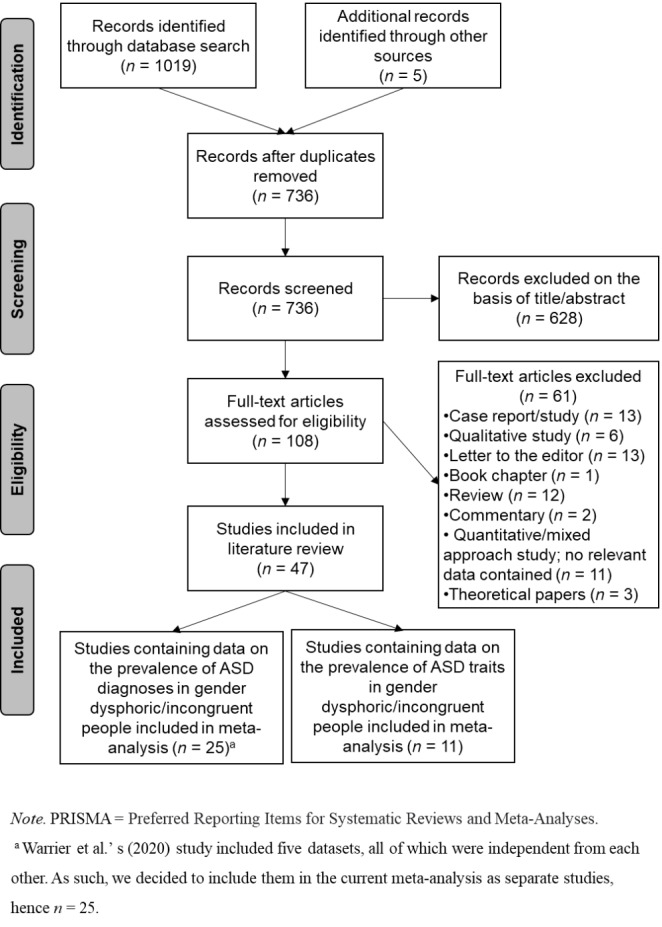
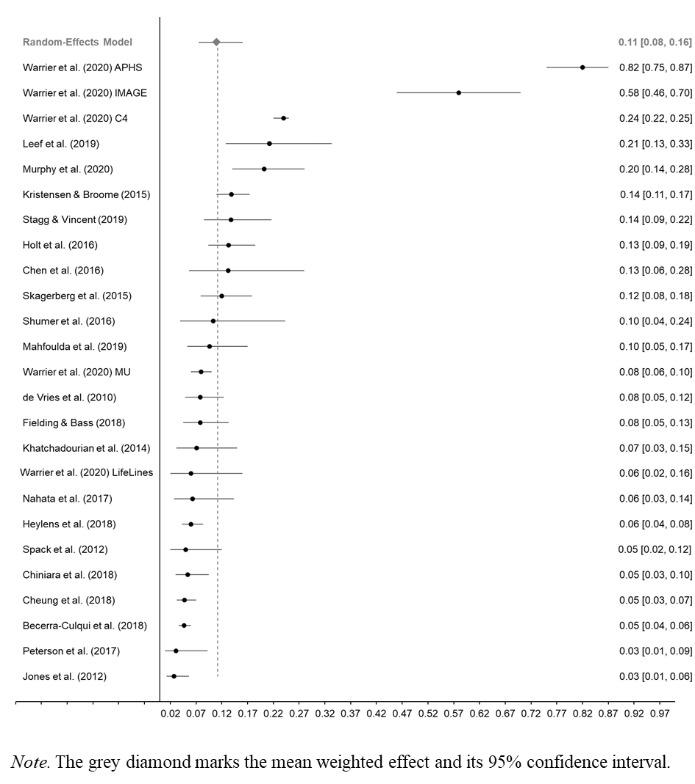
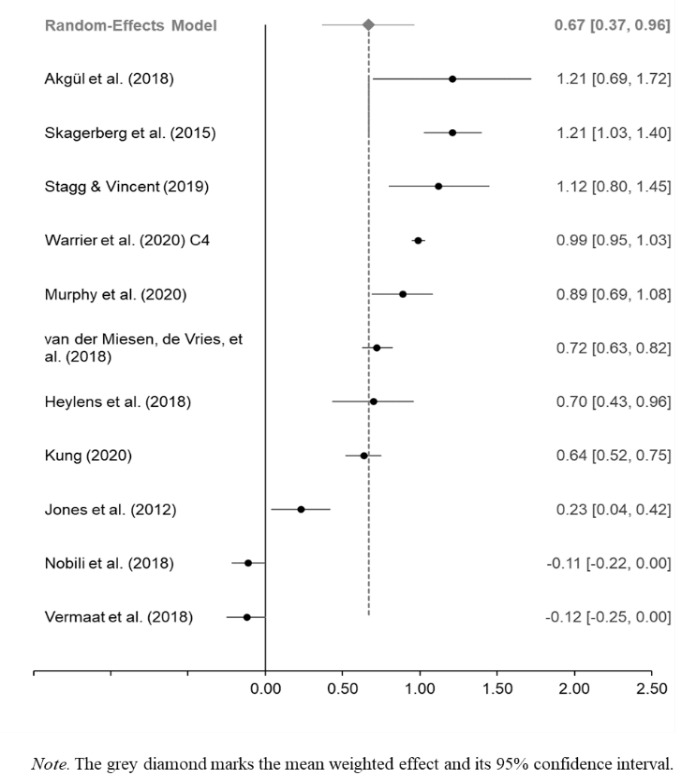
The suggested overlap between autism spectrum disorder (ASD) and gender dysphoria/incongruence (GD/GI) has been much disputed. This review showed a relationship between ASD traits and GD feelings in the general population and a high prevalence of GD/GI in ASD. Our meta-analyses revealed that the pooled estimate of the prevalence of ASD diagnoses in GD/GI people was 11% ( p < .001) and the overall effect size of the difference in ASD traits between GD/GI and control people was significant ( g = 0.67, p < .001). Heterogeneity was high in both meta-analyses. We demonstrated that the chances that there is not a link between ASD and GD/GI are negligible, yet the size of it needs further investigation.
Overview
The claims and statistics of this paper haven’t been checked yet.
Free: it reads the open-access text and checks the first 5 claims that cite a source we can check. Create a free account to check every claim.
Integrity signals
Registry
Cites
Statistics
Figures
Verification
Claims the paper makes
The claims and statistics of this paper haven’t been checked yet.
Free: it reads the open-access text and checks the first 5 claims that cite a source we can check. Create a free account to check every claim.
Claims other papers make about this one
Each is checked against this paper’s own text: does it say what the citing paper says it does?
In the citing paper
“Gender diversity has also been associated with some neurodevelopmental conditions16,17 (Box 4).”
From Sex and gender in neurodevelopmental conditions (2023) · cites this paper as [16]
Self-check
Percentages, sums and reported differences re-computed from the paper’s own numbers.
The self-check needs the paper’s full text.
Citations
Cites
Diagnostic and Statistical Manual of Mental Disorders
American Psychiatric Association (2013) · doi:10.1176/appi.books.9780890425596 · Cited by 116,369
Statistical Power Analysis for the Behavioral Sciences
Muller, K. (1989) · Technometrics · doi:10.1080/00401706.1989.10488618 · Cited by 99,167
Measuring inconsistency in meta-analyses
Higgins, J. P. T., Thompson, S. G., Deeks, J. J., & Altman, D. G. (2003) · BMJ · doi:10.1136/bmj.327.7414.557 · Cited by 63,139 · cited 2×
“…of the observed variance reflects variation in the true effect sizes rather than sampling error, we calculated I2 values and to identify how much the true effects vary across studies we estimated prediction intervals (Borenstein et al., 2009; Borenstein et al., 2017; Higgins et al., 2003).”
BackgroundStatistical Power Analysis for the Behavioral Sciences (2nd ed.).
Lachenbruch, P. A., & Cohen, J. (1989) · Journal of the American Statistical Association · doi:10.2307/2290095 · Cited by 37,395 · cited 13×
“Also, results did not change substantively when we replaced Kung’s (2020) control group from Baron-Cohen et al. (2014) with Ruzich et al's (2015), instead (see Supplementary Material).”
BackgroundMethodInfluentialPRISMA-P Group, Moher, D., Shamseer, L., Clarke, M., Ghersi, D., Liberati, A., Petticrew, M., Shekelle, P., & Stewart, L. A. (2015) · Systematic Reviews · doi:10.1186/2046-4053-4-1 · Cited by 26,223
Borenstein, M., Hedges, L. V., Higgins, J. P. T., & Rothstein, H. R. (2009) · doi:10.1002/9780470743386 · Cited by 14,225
(2000) · Cited by 9,198
Lord, C., Risi, S., Lambrecht, L., Cook, E. H., Leventhal, B. L., DiLavore, P. C., Pickles, A., & Rutter, M. (2000) · Journal of Autism and Developmental Disorders · doi:10.1023/a:1005592401947 · Cited by 7,520 · cited 2×
“Along with a formal diagnosis of ASD, standardized diagnostic tools (e.g., Autism Diagnostic Observation Schedule and Autism Diagnostic Interview-Revised; Lord et al., 2000; Rutter et al., 2003) could also be used in an attempt to elucidate the high heterogeneity we observe in the prevalence of ASD diagnoses in this p…”
MethodBaron-Cohen, S., Wheelwright, S., Skinner, R., Martin, J., & Clubley, E. (2001) · Journal of Autism and Developmental Disorders · doi:10.1023/a:1005653411471 · Cited by 6,450 · cited 4×
“Jones et al. (2012) and Pasterski et al. (2014) took the data of their control group from the same source (i.e., Baron-Cohen et al., 2001).”
BackgroundInfluentialDistribution Theory for Glass's Estimator of Effect Size and Related Estimators
Hedges, L. V. (1981) · Journal of Educational Statistics · doi:10.2307/1164588 · Cited by 5,695 · cited 1×
“Likewise, Kung (2020) found that transgender men and nonbinary females reported significantly more 3107 Journal of Autism and Developmental Disorders (2023) 53:3103–3117 1 3 (Hedges, 1981; Hedges & Olkin, 1985).”
Background
Research works printed but not linked: 2
- Comprehensive Meta-Analysis Borenstein M Hedges L Higgins J Rothstein H Version 3) [Computer software] 2013 Englewood: NJ Biostat
- Rutter M Le Couteur A Lord C ADI-R: Autism Diagnostic Interview-Revised (ADI-R) 2003 Los Angeles, CA Western Psychological Services
Cited by
Sex and gender in neurodevelopmental conditions
Bölte, S., Neufeld, J., Marschik, P. B., Williams, Z. J., Gallagher, L., & Lai, M.-C. (2023) · Nature Reviews Neurology · doi:10.1038/s41582-023-00774-6 · Cited by 249
Mental health challenges faced by autistic people
Lai, M. (2023) · Nature Human Behaviour · doi:10.1038/s41562-023-01718-2 · Cited by 100
“The co-existence of gender diversity and neurodivergence is increasingly recognized, especially the increased autism diagnoses in trans and gender-diverse (TGD) populations 117 , and increased gender identity diversity in autistic individuals across ages 118,119 .”
BackgroundJiang, X., Chen, X., Su, J., & Liu, N. (2024) · BMC Psychiatry · doi:10.1186/s12888-024-05729-9 · Cited by 92
Özel, F., & Griffin, G. (2025) · Frontiers in Sociology · doi:10.3389/fsoc.2025.1610206 · Cited by 74
Transidentities and autism spectrum disorder: A systematic review
Bouzy, J., Brunelle, J., Cohen, D., & Condat, A. (2023) · Psychiatry Research · doi:10.1016/j.psychres.2023.115176 · Cited by 91
Bruce, H., Munday, K., & Kapp, S. K. (2023) · Autism in Adulthood · doi:10.1089/aut.2023.0003 · Cited by 52
“Recent research has shown a positive relationship between autistic traits and gender-diverse identities among the general population as well as increased frequency of autism diagnoses and autistic traits in the gender-diverse population.(30) Much research explores the possibilities for these cooccurrences; causal fact…”
BackgroundMaggio, M. G., Calatozzo, P., Cerasa, A., Pioggia, G., Quartarone, A., & Calabrò, R. S. (2022) · Brain Sciences · doi:10.3390/brainsci12111427 · Cited by 58
“In line with these results, a meta-analysis performed by Kallitsounaki and Williams highlighted a relationship between ASD traits and gender dysphoria in the general population [62].”
ResultLai, M., Amestoy, A., Bishop, S. L., Brown, H. M., Onaiwu, M. G., Halladay, A. K., Harrop, C., Hotez, E., Huerta, M., Kelly, A. M., et al. (2023) · The Lancet Child & Adolescent Health · doi:10.1016/s2352-4642(23)00221-3 · Cited by 64
Taylor, J., Hall, R., Langton, T., Fraser, L., & Hewitt, C. E. (2024) · Archives of Disease in Childhood · doi:10.1136/archdischild-2023-326681 · Cited by 51
Keski-Rahkonen, A., & Ruusunen, A. (2023) · Current Opinion in Psychiatry · doi:10.1097/yco.0000000000000896 · Cited by 38
“Gender diversity is common among autistic & [16 ] and people with eating disorders [17].”
BackgroundStrang, J. F., Wallace, G. L., Michaelson, J. J., Fischbach, A. L., Thomas, T., Jack, A., Shen, J., Chen, D., Freeman, A., Knauss, M., et al. (2023) · American Psychologist · doi:10.1037/amp0001117 · Cited by 36
McQuaid, G. A., Ratto, A. B., Jack, A., Khuu, A., Smith, J. V., Duane, S. C., Clawson, A., Lee, N., Verbalis, A. D., Pelphrey, K. A., et al. (2024) · Autism · doi:10.1177/13623613241243117 · Cited by 47
“…of gender diversity and autism recommends screening all gender-diverse youth for autism (Strang, Meagher, et al., 2018), given the significant proportional over-occurrence of autism in gender diversity (i.e. ~11% of gender-diverse individuals are autistic; Kallitsounaki & Williams, 2022).”
Common Intersection of Autism and Gender Diversity in Youth
Strang, J. F., van der Miesen, A. I. R., Fischbach, A. L., Wolff, M., Harris, M. C., & Klomp, S. E. (2023) · Child and Adolescent Psychiatric Clinics of North America · doi:10.1016/j.chc.2023.06.001 · Cited by 40
Bonazzi, G., Peyroux, É., Jurek, L., Souiller, L., Zufferey, A., Giroudon, C., Nourredine, M., & Demily, C. (2025) · Autism in Adulthood · doi:10.1089/aut.2024.0202 · Cited by 45
Development of Gender Non-Contentedness During Adolescence and Early Adulthood
Rawee, P., Rosmalen, J. G. M., Kalverdijk, L. J., & Burke, S. (2024) · Archives of Sexual Behavior · doi:10.1007/s10508-024-02817-5 · Cited by 35
“In addition, prior studies in clinical samples of individuals with gender dysphoria found elevated rates of mental health problems (Dhejne et al., 2016), behavioral and emotional problems (de Vries et al., 2016), and autism spectrum disorders (Kallitsounaki & Williams, 2023).”
BackgroundKallitsounaki, A., & Williams, D. M. (2022) · Archives of Sexual Behavior · doi:10.1007/s10508-022-02386-5 · Cited by 37
“The hypothesis of a link between ASD and gender diversity has also been supported by evidence of increased ASD traits in gender diverse people (Kallitsounaki & Williams, 2022).”
BackgroundResultSelf-citationTaylor, J., Hall, R., Heathcote, C., Hewitt, C. E., Langton, T., & Fraser, L. (2024) · Archives of Disease in Childhood · doi:10.1136/archdischild-2023-326500 · Cited by 34
“12 59 Finally, there are no recommendations about the management of those who, having started to socially or medically transition, wish to desist, detransition or ‘re-transition’.”
BackgroundChen, Y., Jenkins, C. A., Charlton, R. A., Happe, F. G. E., Mandy, W., & Stewart, G. R. (2024) · Autism in Adulthood · doi:10.1089/aut.2024.0031 · Cited by 36
Mental Health Outcomes in Transgender and Nonbinary People: An Umbrella Review
Hainey, K., Connolly, D. J., Thomson, R., Smalley, N. W., Campbell, D., Wells, V., Connelly, P. J., Delles, C., Mitchell, K. R., & Katikireddi, S. V. (2025) · JAMA Psychiatry · doi:10.1001/jamapsychiatry.2025.1850 · Cited by 27
Recent Developments in Autism Genetic Research: A Scientometric Review from 2018 to 2022
Lim, M., Carollo, A., Dimitriou, D., & Esposito, G. (2022) · Genes · doi:10.3390/genes13091646 · Cited by 28
“The current label “Sex Difference” is derived from some studies in the cluster investigating the significant discrepancy in maleto-female individuals diagnosed with ASD and the effects of sex on ASD [125,165–168], with a small extension of research into ASD and gender dysphoria [169].”
BackgroundThe autism spectrum among transgender youth: default mode functional connectivity
Strang, J. F., McClellan, L. S., Li, S., Jack, A., Wallace, G. L., McQuaid, G. A., Kenworthy, L. E., Anthony, L. G., Lai, M., Pelphrey, K. A., et al. (2023) · Cerebral Cortex · doi:10.1093/cercor/bhac530 · Cited by 27
Zepf, F. D., König, L., Kaiser, A. M., Ligges, C., Ligges, M., Roessner, V., Banaschewski, T., & Holtmann, M. H. (2024) · Zeitschrift für Kinder- und Jugendpsychiatrie und Psychotherapie · doi:10.1024/1422-4917/a000972 · Cited by 28
Why do we need sex‐balanced studies of autism?
Nordahl, C. W. (2023) · Autism Research · doi:10.1002/aur.2971 · Cited by 29
“Current estimates suggest that gender diversity occurs at higher rates in autistic individuals than in non-autistic individuals (4 – 8% vs. (cid:1) 1%; Janssen et al., 2016; Kallitsounaki & Williams, 2022; Warrier et al., 2020).”
Dewinter, J., Onaiwu, M. G., Massolo, M. L., Caplan, R., Beneden, E. V., Brörmann, N., Crehan, E. T., Croen, L., Faja, S., Gassner, D. L., et al. (2023) · Autism · doi:10.1177/13623613231188349 · Cited by 28
“…autistic people are more likely to identify as transgender or gender diverse (i.e. identify as a gender different than their assigned sex at birth; George & Stokes, 2018a; van der Miesen et al., 2016) and more often experience gender dysphoria or incongruence (Kallitsounaki & Williams, 2023).”
Bo, L., van der Miesen, A. I. R., Klomp, S. E., Williams, Z. J., Szatmári, P., & Lai, M. (2024) · EClinicalMedicine · doi:10.1016/j.eclinm.2024.102849 · Cited by 29
“10 This pattern is exempli fi ed in the SOC8, 2 in which autism is only very brie fl y mentioned in the ‘ Assessment of Adults ’ chapter, with much more coverage in the ‘ Adolescents ’ and ‘ Children ’ chapters – a trend mirrored in other examined documents.”
BackgroundResultInfluentialElkadi, J., Chudleigh, C., Maguire, A., Ambler, G. R., Scher, S., & Kozlowska, K. (2023) · Children · doi:10.3390/children10020314 · Cited by 24
Mental Health of Youth With Autism Spectrum Disorder and Gender Dysphoria
Kahn, N. F., Sequeira, G. M., Reyes, V., Garrison, M. M., Orlich, F., Christakis, D., Aye, T., Conard, L. A. E., Dowshen, N., Kazak, A. E., et al. (2023) · PEDIATRICS · doi:10.1542/peds.2023-063289 · Cited by 26
McQuaid, G. A., Sadowski, L. Y., Lee, N., & Wallace, G. L. (2024) · Autism in Adulthood · doi:10.1089/aut.2022.0121 · Cited by 26
“148,149 Thus, given the independent streams of evidence indicating (i) increased prevalence of anxiety and depression among autistic adults, 74,75 (ii) overall increased prevalence of anxiety and depression among gender-diverse relative to cisgender people, 150–152 and elevated rates of mental…”
Moore, H. L., Cassidy, S., & Rodgers, J. (2023) · Autism Research · doi:10.1002/aur.3073 · Cited by 30
“Increasingly, higher prevalence of gender diversity is recognised among autistic individuals (Kallitsounaki & Williams, 2022), making it a priority to include a wider gender demographic in research.”
Research methods at the intersection of gender diversity and autism: A scoping review
Mittertreiner, E. J. E., Ng‐Cordell, E., McVey, A. J., & Kerns, C. M. (2024) · Autism · doi:10.1177/13623613241245595 · Cited by 27
“To date, there are six relevant systematic or scoping reviews (Øien et al., 2018; Glidden et al., 2016; Herrmann et al., 2020; Manjra & Masic, 2022; Thrower et al., 2020; van der Miesen et al., 2016) and one systematic review and meta-analysis (Kallitsounaki & Williams, 2023).”
Mental and Physical Health Among Danish Transgender Persons Compared With Cisgender Persons
Glintborg, D., Møller, J. K., Rubin, K. H., Lidegaard, Ø., T'Sjoen, G. G., Larsen, M.-L. J. Ø., Hilden, M., Christensen, L. L., & Andersen, M. (2025) · JAMA Network Open · doi:10.1001/jamanetworkopen.2025.7115 · Cited by 21
Tollit, M. A., Maloof, T., Hoq, M., Haebich, K. M., Pace, C. C., Rodriguez, Z. M., Sial, M., Payne, J. M., & Pang, K. C. (2024) · The Lancet Regional Health - Western Pacific · doi:10.1016/j.lanwpc.2024.101084 · Cited by 27
“13 Please note that we use both identity-fi rst language (autistic person) and person-fi rst language (person with autism) throughout this paper to re fl ect variability in the language preferences of the autism community.”
BackgroundMethodNyquist, C. B., Torgersen, L., David, L. W., Diseth, T. H., Magnus, P. M., Biele, G., & Wæhre, A. (2024) · European Child & Adolescent Psychiatry · doi:10.1007/s00787-024-02508-5 · Cited by 23
RetractedRea, H. M., Øien, R. A., Webb, S. J., Bansal, S., Strang, J. F., & Nordahl‐Hansen, A. (2024) · Journal of Autism and Developmental Disorders · doi:10.1007/s10803-024-06650-6 · Cited by 23
Fuller, S. J., Tan, J. O. A., Costa, H. D., & Nicholls, D. (2023) · BJPsych Bulletin · doi:10.1192/bjb.2023.30 · Cited by 21
“19,20 Therefore, it is especially important to consider the impact of NGT feeding under restraint in this group of patients as they may be at higher risk of prolonged restraints and risk of reliving trauma.”
BackgroundAdams, N., Jacobsen, K., Li, L., Francino, M., Rutherford, L. L., Tei, C., Scheim, A. I., & Bauer, G. R. (2024) · Autism in Adulthood · doi:10.1089/aut.2023.0024 · Cited by 19
Strang, J. F., McClellan, L. S., Raaijmakers, D., Caplan, R., Klomp, S. E., Reutter, M., Lai, M., Song, M., Gratton, F. V., Dale, L. K., et al. (2023) · Autism in Adulthood · doi:10.1089/aut.2023.0002 · Cited by 18
“T he intersection of autism and gender diversity* is common (i.e., * 11% of gender-diverse people are autistic 2 ).”
Fecteau, S.-M., Normand, C. L., Normandeau, G., Cloutier, I., Guerrero, L., Turgeon, S., & Poulin, M.-H. (2024) · Neurodiversity · doi:10.1177/27546330241253696 · Cited by 25
“Half of the autistic adults identi fi ed as women, 35.7% as men, and the remaining as trans men, trans woman, non-binary, or “ other ’’ , re fl ecting the greater gender diversity typically observed in the autistic community (Kallitsounaki & Williams, 2023).”
InfluentialSimpson, A., Rensburg, M. V., Ding, L., & Rydzewska, E. (2024) · Research in Autism · doi:10.1016/j.rasd.2024.102427 · Cited by 19
A systematic review of sexual health, knowledge, and behavior in Autism Spectrum Disorder
Motamed, M., Hajikarim‐Hamedani, A., Fakhrian, A., & Alaghband‐Rad, J. (2025) · BMC Psychiatry · doi:10.1186/s12888-025-06836-x · Cited by 21
Brief Report: An Exploration of Alexithymia in Autistic and Nonautistic Transgender Adults
Kallitsounaki, A., & Williams, D. M. (2023) · Autism in Adulthood · doi:10.1089/aut.2022.0113 · Cited by 14
“15 Furthermore, research has shown an elevated number of autistic traits in nonautistic transgender and gender diverse people relative to nonautistic cisgender people.”
Self-citationManley, J., Brownlow, C., & Brömdal, A. (2024) · International Journal of Transgender Health · doi:10.1080/26895269.2024.2317392 · Cited by 13
Thomas, K. S., Keating, J., Ross, A. A., Cooper, K., & Jones, C. R. G. (2025) · Journal of Eating Disorders · doi:10.1186/s40337-025-01215-z · Cited by 19
Loffi, R. G., Cruz, T. K. F., Paiva, G. M., Souto, D. O., Barreto, S. R., SANTANA, P. C. M., Nascimento, A. A. A. C., Costa, F. R. M., Cota, E. B., & Haase, V. G. (2024) · Children · doi:10.3390/children11020191 · Cited by 24
“Difficulties in adolescence can be illustrated by the high incidence of gender dys-phoria [100,101].”
BackgroundWoodhouse, E., Hollingdale, J., Davies, L., Al‐Attar, Z., Young, S., Vinter, L. P., Agyemang, K., Bartlett, C., Berryessa, C. M., Chaplin, E., et al. (2024) · BMC Medicine · doi:10.1186/s12916-024-03320-3 · Cited by 26
“A recent meta-analysis utilising data from 25 studies consisting of 8662 participants identified an autism prevalence rate of 11% in individuals with gender dysphoria/incongruence [12].”
MethodFischbach, A. L., Hindenach, A., van der Miesen, A. I. R., Yang, J. S., Buckley, O. J., Song, M., Campos, L., & Strang, J. F. (2024) · British Journal of Developmental Psychology · doi:10.1111/bjdp.12486 · Cited by 15
Corbett, B. A., Muscatello, R. A., Cyperski, M. A., Sadikova, E., Edmiston, E. K., McGonigle, T., Calvosa, R., & Vandekar, S. (2024) · Autism Research · doi:10.1002/aur.3141 · Cited by 16
“The authors also found that autistic individuals are more likely to experience TGD than non-autistic individuals across all studies examined (Kallitsounaki & Williams, 2023).”
Unmet need for autism-aware care for gynaecological, menstrual and sexual wellbeing
de Visser, R. O., Moseley, R. L., Turner‐Cobb, J. M., Hull, L., Sedgewick, F., Featherstone, C., Quint, C., Freeman, E., & Karavidas, M. (2024) · Autism · doi:10.1177/13623613241290628 · Cited by 20
“They are more likely to report adverse sexual experiences (Bargiela et al., 2016; Gibbs et al., 2021), and to reject gender binaries or identify with a gender different from that assigned at birth (Kallitsounaki & Williams, 2023).”
English, M. C. W., Poulsen, R. E., Maybery, M. T., McAlpine, D., Sowman, P. F., & Pellicano, E. (2025) · Autism · doi:10.1177/13623613251347740 · Cited by 36
Taylor, J., Hall, R., Langton, T., Fraser, L., & Hewitt, C. E. (2024) · Archives of Disease in Childhood · doi:10.1136/archdischild-2023-326760 · Cited by 16
Gender diversity in a Chinese community sample and its associations with autism traits
van der Miesen, A. I. R., Shi, S. Y., Lei, H. C., Ngan, C. L., VanderLaan, D. P., & Wong, W. I. (2023) · Autism Research · doi:10.1002/aur.3075 · Cited by 11
“Otherstudies focused on autism traits instead of diagnosis in gender clinic-referred youth (Kallitsounaki & Williams, 2022).”
InfluentialHechler, F. C., Tuomainen, O., Weber, N., Fahr, F., Karlek, B., Maroske, M., Misia, M., & Caruana, N. (2025) · Molecular Autism · doi:10.1186/s13229-025-00643-7 · Cited by 12
“This is in line with research suggesting that a higher proportion of autistic people identify as non-binary [88, 103].”
David, L. W., Stenberg, N., Diseth, T. H., Helverschou, S. B., Nyquist, C. B., Øien, R. A., & Wæhre, A. (2023) · Journal of Autism and Developmental Disorders · doi:10.1007/s10803-023-06181-6 · Cited by 11
Diagnostic assessment of autism spectrum disorder in transgender and gender diverse youth
Greene, R. K., Rutter, T. M., Phelps, R. A., Olsen, E., Harmon, R., & Moyer, D. N. (2024) · The Clinical Neuropsychologist · doi:10.1080/13854046.2024.2331272 · Cited by 11
“Gender diverse persons have been found to demonstrate higher rates of ASD traits compared to cisgender peers (Kallitsounaki & Williams, 2022a; Warrier et al., 2020), even in the absence of a confirmed ASD diagnosis.”
InfluentialGender dysphoria in adolescence: examining the rapid-onset hypothesis
Leonhardt, A., Fuchs, M., Gander, M., & Sevecke, K. (2024) · Neuropsychiatrie · doi:10.1007/s40211-024-00500-8 · Cited by 11
English, M. C. W., Poulsen, R. E., Maybery, M. T., McAlpine, D., Sowman, P. F., & Pellicano, E. (2024) · doi:10.31234/osf.io/gfaeq · Cited by 9
Autism traits in transgender and gender-diverse adults seeking gender-affirming medical treatment
Huisman, B., Noens, I. L. J., Steensma, T. D., Kreukels, B. P. C., & van der Miesen, A. I. R. (2024) · International Journal of Transgender Health · doi:10.1080/26895269.2024.2368077 · Cited by 12
Strang, J. F., Fischbach, A. L., Rao, S., Clawson, A., Knauss, M., Bernstein, S. N., van der Miesen, A. I. R., Inge, A. P., Alonzo, K., Zeroth, J. A., et al. (2024) · The Clinical Neuropsychologist · doi:10.1080/13854046.2024.2318155 · Cited by 9
“…program patient navigator over an eight-month period were referred to the GAP; interestingly, this proportion matches the co-occurrence rate identified in a recent meta-analysis (i.e. approximately 11% of gender-diverse people across the age span are autistic (Kallitsounaki & Williams, 2022)).”
InfluentialAnderson, C., Wood, C. I., Franklin, L., Iampieri, A., & Sarsony, C. (2024) · Journal of Autism and Developmental Disorders · doi:10.1007/s10803-024-06353-y · Cited by 15
Furente, F., Matera, E., Margari, L., Lavorato, E., Annecchini, F., Mugnozza, F. S., Colacicco, G., Gabellone, A., & Petruzzelli, M. G. (2023) · Journal of Clinical Medicine · doi:10.3390/jcm12093236 · Cited by 9
Fraumeni‐McBride, J. (2024) · Sexual Health & Compulsivity · doi:10.1080/26929953.2024.2368538 · Cited by 7
Özel, F., White, R. A., Clark, K. D., Indremo, M., Zejlon, I., Rüegg, J., & Papadopoulos, F. C. (2025) · Psychiatry Research · doi:10.1016/j.psychres.2025.116591 · Cited by 10
Disordered eating in autistic trans and gender diverse people: a lived experience-led scoping review
White, L., Schweizer, K., & Thomas, K. S. (2025) · Journal of Eating Disorders · doi:10.1186/s40337-025-01447-z · Cited by 11
“Neurodivergence and gender diversity overlap as part of natural human variation; an example of this is that at least 11% of TGD people are Autistic [43].”
Alcohol Use Patterns Among Underage Autistic and Non-Autistic Youth
Holmes, L. G., Xuan, Z., Quinn, E. K., Caplan, R., Sanchez, A., Wharmby, P., Holingue, C., Levy, S., & Rothman, E. F. (2023) · Journal of Autism and Developmental Disorders · doi:10.1007/s10803-023-06086-4 · Cited by 10
“In this study, autistic youth were more likely than non-autistic youth to report that they were transgender or sexual minorities, consistent with previous autism research stud - ies (Dewinter et al., 2017 ; Kallitsounaki & Williams, 2022 ).”
ResultMo, K., Anagnostou, E. A., Lerch, J. P., Taylor, M. J., VanderLaan, D. P., Szatmári, P., Crosbie, J., Nicolson, R., Georgiadis, S., Kelley, E. A., et al. (2024) · Journal of Child Psychology and Psychiatry · doi:10.1111/jcpp.13965 · Cited by 10
McQuaid, G. A., Ratto, A. B., Jack, A., Khuu, A., Smith, J. V., Duane, S. C., Clawson, A., Lee, N., Verbalis, A. D., Pelphrey, K. A., et al. (2023) · doi:10.31234/osf.io/kc6ax · Cited by 7
Zheng, J., Chen, J., Zhang, Q., Ying, L., Huang, H., Yang, H. J., & Chen, Z. (2025) · npj Primary Care Respiratory Medicine · doi:10.1038/s41533-025-00440-y · Cited by 6
Shimoyama, S., & Endo, T. (2024) · Autism · doi:10.1177/13623613241235722 · Cited by 12
“Kallitsounaki and Williams (2023) conducted a meta-analysis and concluded that the possibility of there being no association between autism and GD is negligible.”
BackgroundKavitha, V., & Siva, R. (2024) · Computer Methods in Biomechanics & Biomedical Engineering · doi:10.1080/10255842.2024.2399016 · Cited by 6
Allely, C. S., & Pickard, M. (2024) · Psychiatry Research · doi:10.1016/j.psychres.2024.116198 · Cited by 10
Pattar, B. S. B., Gulamhusein, N., Rytz, C. L., Miranda, K. T., Beach, L. B., Marshall, Z., Collister, D., Greene, D. N., Whitley, C. T., Saad, N., et al. (2024) · PLoS ONE · doi:10.1371/journal.pone.0309169 · Cited by 8
Gender diversity in autistic clients: an ethical perspective
Glaves, K. J., & Kolman, L. (2023) · Frontiers in Psychiatry · doi:10.3389/fpsyt.2023.1244107 · Cited by 9
A Systematic Review of Gender Dysphoria Measures in Autistic Samples
Mears, K., Rai, D., Shah, P., Cooper, K., & Ashwin, C. (2024) · Archives of Sexual Behavior · doi:10.1007/s10508-024-02896-4 · Cited by 6
“%) recruited similar numbers of autistic males and autistic females (Bedard et al., 2010; Kallitsounaki & Williams, 2023).”
BackgroundRenneberg, B., Hutsebaut, J., Berens, A., Panfilis, C. D., Bertsch, K., Kaera, A., Kramer, U., Schmahl, C. G., Swales, M. A., Taubner, S., et al. (2024) · Borderline Personality Disorder and Emotion Dysregulation · doi:10.1186/s40479-024-00257-0 · Cited by 7
van der Miesen, A. I. R., Rao, S., Fischbach, A. L., Bakker, A. C., van den Brink, M., Sanders, R. A., Ryan, C., Rosenthal, S. M., Roeffen, J., Esq, A. O., et al. (2025) · International Journal of Transgender Health · doi:10.1080/15532739.2025.2464238 · Cited by 9
Putnam, O. C., Eddy, G., Crowley, S., Swisher, M., & Harrop, C. (2025) · Neurodiversity · doi:10.1177/27546330251324007 · Cited by 9
“…population is also known to signi fi cantly overlap with the transgender and gender-diverse (TGD) population, with TGD people receiving autism diagnoses at an estimated rate 6 to 10 times higher than cisgender people (Heylens et al., 2018; Kallitsounaki & Williams, 2023; Warrier et al., 2020).”
Jacobsen, K. (2025) · International Journal of Transgender Health · doi:10.1080/26895269.2025.2566190 · Cited by 7
Suominen, E. H., Chen, C. A., Dunlop, A., Saunders, R., & Mandy, W. (2025) · Journal of the American Academy of Child & Adolescent Psychiatry · doi:10.1016/j.jaac.2025.10.010 · Cited by 11
Social first impressions and perceived gender in autistic and non-autistic youth
Baer, M., Cola, M., Knox, A., Lyons, M., Schillinger, S., Lee, A., Worth, B. F., Parish‐Morris, J., & Grossman, R. B. (2025) · Scientific Reports · doi:10.1038/s41598-025-89083-0 · Cited by 8
Neuroqueer in/and social work: A scoping review of theory and practice
Stevens, B., & Kirby, E. R. (2025) · The British Journal of Social Work · doi:10.1093/bjsw/bcaf059 · Cited by 10
Sternberg, K. F., Cloutier, J. G., Ahlers, K. P., Moore, C. C., Koth, K. A., Soda, T., Malhi, N. K., Verma, S., Yeh, L. C., & McLaren, J. (2025) · Journal of Applied Research in Intellectual Disabilities · doi:10.1111/jar.70010 · Cited by 5
Constructing the Autistic–Transgender Intersection: A Critical Discourse Analysis
Kerr, M., & Ewert, R. (2025) · Sociology of Health & Illness · doi:10.1111/1467-9566.70063 · Cited by 5
Kallitsounaki, A., Fysh, M. C., Williams, D. M., Spinner, L., & Kennedy, E. (2025) · Autism · doi:10.1177/13623613251379920 · Cited by 4
Self-citationAll-Cause Mortality and Specific Causes of Death in Autism: A Nationwide Analysis
Wu, C., Tsai, H., Chien, Y., & Gau, S. S. (2025) · Autism in Adulthood · doi:10.1089/aut.2023.0103 · Cited by 5
Melinda, M., Andryani, N. A. C., Nurdin, Y., Khariyunnisa, V., Yulita, Y., & Enriko, I. K. A. (2024) · RADIOELECTRONIC AND COMPUTER SYSTEMS · doi:10.32620/reks.2024.2.03 · Cited by 9
Strauss, P., Ball, J., Bonney, S., Costanza, M. B., Cavve, B. S., Hird, K., Saunders, L. A., Bickendorf, X., Thomas, C. S., Mahfouda, S., et al. (2024) · International Journal of Transgender Health · doi:10.1080/26895269.2024.2375409 · Cited by 5
A scoping review of the lived experiences of gender diverse children and youth with disabilities
Slothouber, V., Oliver, T., Leo, S., & Lindsay, S. (2025) · International Journal of Transgender Health · doi:10.1080/15532739.2025.2464229 · Cited by 6
Generalized measurement error: Intrinsic and incidental measurement error
Kroc, E. (2023) · PLoS ONE · doi:10.1371/journal.pone.0286680 · Cited by 4
Kenworthy, L. E., Baczewski, L. M., Gerber, A. S., Pugliese, C. E., Armour, A. C., Csumitta, K. D., Reimann, G. E., Candy, C., Wallace, G. L., & Fritz, M. S. (2026) · Journal of Child Psychology and Psychiatry · doi:10.1111/jcpp.70149 · Cited by 4
Link between autism and transness being misused, scientists say
Fraizer, E. (2023) · The Transmitter · doi:10.53053/pjia9558 · Cited by 4
Cooke, K., Ridgway, K., Pecora, L. A., Westrupp, E. M., Hedley, D., Hooley, M., & Stokes, M. A. (2025) · Trauma Violence & Abuse · doi:10.1177/15248380251357618 · Cited by 5
“%) compared to autism gender variance estimates (4–16%; Kallitsounaki & Williams, 2023).”
McClellan, L. S., van der Miesen, A. I. R., Tishelman, A. C., Fischbach, A. L., Song, M., Campos, L., & Strang, J. F. (2023) · Journal of Clinical Child & Adolescent Psychology · doi:10.1080/15374416.2023.2292045 · Cited by 3
“Autism spectrum disorder (ASD) diagnosis and autistic traits are proportionally over-represented in transgender/gender-diverse populations; a recent meta-analysis estimates that 11% of transgender/gender-diverse individuals are autistic (Kallitsounaki & Williams, 2022).”
Eğilmez, C. B., Pazarlar, B. A., Erdoğan, M. A., Uyanıkgil, Y., & Erbaş, O. (2024) · International Journal of Developmental Neuroscience · doi:10.1002/jdn.10335 · Cited by 4
“Worldwide, it affects approximately 1% of the population and is associated with comorbidities (Kallitsounaki & Williams, 2023; Lai et al., 2014).”
Cooke, K., Walsh-Adams, J., Pecora, L. A., & Stokes, M. A. (2025) · Springer eBooks · doi:10.1007/978-3-031-40858-8_279-1 · Cited by 3
Tateno, M., Shimomura, R., Shiraishi, E., Nanba, K., & Tateno, Y. (2024) · Brain Sciences · doi:10.3390/brainsci14121202 · Cited by 4
Baczewski, L. M., Campos, L., Lee, J., Nordahl, C. W., van der Miesen, A. I. R., McClellan, L. S., Parwani, S., Tishelman, A. C., Song, M., & Strang, J. F. (2025) · Transgender Health · doi:10.1089/trgh.2024.0242 · Cited by 2
Autism and Gender Identity: Social, Cognitive, and Behavioral Profiles in a Self-Identified Sample
Voulgarakis, H. M., Lisa, J. S., Carpenter, M., & El‐Meouchy, P. (2025) · Advances in Neurodevelopmental Disorders · doi:10.1007/s41252-025-00453-1 · Cited by 2
Quadt, L., Savage, G. K., Bond, R., Davies, K. A., Critchley, H., & Eccles, J. (2026) · Journal of Psychiatric Research · doi:10.1016/j.jpsychires.2026.02.036 · Cited by 9
On the Spectrum: High-Functioning Autism and Its Contemporary Relevance
Bostwick, J. M., & McKean, A. J. S. (2026) · Mayo Clinic Proceedings · doi:10.1016/j.mayocp.2026.02.016 · Cited by 2
Rasgos autistas en estudiantes de Educación Superior
Herrera, I. C. G., Olivares, S. A., Badilla, M. J., Galaz, H. R., & Soliz, Y. O. (2024) · Revista Electrónica de Investigación en Docencia Universitaria · doi:10.54802/r.v5.n1.2023.127 · Cited by 2
Metadata
- Authors
- Kallitsounaki, A., & Williams, D. M.
- Affiliations
- University of Kent (GB)
- Corresponding author
- Kallitsounaki, Aimilia
- Venue
- Journal of Autism and Developmental Disorders
- Published
- 2022-05-20
- Volume
- 53
- Issue
- 8
- Pages
- 3103-3117
- ISSN
- 0162-3257 (ISSN-L)
- 1573-3432
- PMC
- PMC10313553
- OpenAlex
- W4281255505
- Semantic Scholar
- 18311e9443d722d7c50fc0819fb3165b8e12f721
- Cited by
- 235
- References
- 116
- Citations by year
- 2026: 59 · 2025: 61 · 2024: 74 · 2023: 36 · 2022: 5
- FWCI
- 6.08
- Type
- journal article
- Language
- en
- Open access
- hybrid
- doi.org
- Licence
- cc-by
- creativecommons.org/licenses/by/4.0 (tdm)
- creativecommons.org/licenses/by/4.0 (vor)
- Locations
- Journal of Autism and Developmental Disorders (publishedVersion, cc-by)
- PubMed Central (publishedVersion, cc-by)
- PubMed (publishedVersion)
- Kent Academic Repository (University of Kent) (acceptedVersion, cc-by)
- Funders
- University of Kent PhD scholarship (University of Kent PhD scholarship)
- Topics
- Life Sciences › Neuroscience › Cognitive Neuroscience › Autism Spectrum Disorder Research
- Social Sciences › Psychology › Social Psychology › LGBTQ Health, Identity, and Policy
- Health Sciences › Medicine › Endocrinology, Diabetes and Metabolism › Sexual Differentiation and Disorders
- Keywords
- autism spectrum disorder, gender dysphoria, gender incongruence
- MeSH terms
- Autism Spectrum Disorder, Gender Dysphoria, Humans, Prevalence
About these checks
Registry, retraction, Cites and statistics results are computed, not judged, with one exception: a printed reference that no index lists is read once by a model before it counts as a citation error. Claims are extracted by a model and kept only when their quote appears verbatim in the text; each cited source is then checked, with a model’s help, for whether it says what the claim relies on. Those verdicts can be wrong — read the claim’s quote and the cited source before relying on one.
Statistics and arithmetic are recomputed, not judged.
Confidence bands are shown only for fields calibrated on our annotated test set. None is calibrated yet, so no band is shown.
What counts as a claim ›How we measure confidence ›How we check this ›
Are you an author, or do you see a problem with this page? Request a review
Data sources
Bibliographic data: Semantic Scholar, OpenAlex, Crossref.
Contains information from the Semantic Scholar Academic Graph Datasets, made available under the ODC Attribution License (ODC-BY 1.0).
Semantic Scholar’s data is described in: Kinney, R., et al. (2023). The Semantic Scholar Open Data Platform. arXiv:2301.10140.
