

Machine learning in industrial control system (ICS) security: current landscape, opportunities and challenges
Open accessThe DOI matches its Crossref record; 101 of the 102 references it cites were found in a registry or an index.
Abstract
The advent of Industry 4.0 has led to a rapid increase in cyber attacks on industrial systems and processes, particularly on Industrial Control Systems (ICS). These systems are increasingly becoming prime targets for cyber criminals and nation-states looking to extort large ransoms or cause disruptions due to their ability to cause devastating impact whenever they cease working or malfunction. Although myriads of cyber attack detection systems have been proposed and developed, these detection systems still face many challenges that are typically not found in traditional detection systems. Motivated by the need to better understand these challenges to improve current approaches, this paper aims to (1) understand the current vulnerability landscape in ICS, (2) survey current advancements of Machine Learning (ML) based methods with respect to the usage of ML base classifiers (3) provide insights to benefits and limitations of recent advancement with respect to two performance vectors; detection accuracy and attack variety. Based on our findings, we present key open challenges which will represent exciting research opportunities for the research community.
Overview
The claims and statistics of this paper haven’t been checked yet.
Free: it reads the open-access text and checks the first 5 claims that cite a source we can check. Create a free account to check every claim.
Integrity signals
Registry
Cites
Statistics
Figures
Verification
Claims the paper makes
The claims and statistics of this paper haven’t been checked yet.
Free: it reads the open-access text and checks the first 5 claims that cite a source we can check. Create a free account to check every claim.
Self-check
Percentages, sums and reported differences re-computed from the paper’s own numbers.
The self-check needs the paper’s full text.
Citations
Cites
LeCun, Y., Bengio, Y., & Hinton, G. (2015) · Nature · doi:10.1038/nature14539 · Cited by 84,126
A detailed analysis of the KDD CUP 99 data set
Tavallaee, M., Bagheri, E., Lu, W., & Ghorbani, A. A. (2009) · 2009 IEEE Symposium on Computational Intelligence for Security and Defense Applications · doi:10.1109/cisda.2009.5356528 · Cited by 5,396 · cited 2×
“Apart from having limited attack scenarios, available datasets used for training, testing and evaluations of ML-based approaches in ICS are outdated, unrealistic and may only reflect specific cyber attacks such as the KDDCup’99 (Hettich, 1999) and NSL-KDD (Tavallaee et al., 2009) datasets.”
BackgroundA plant-wide industrial process control problem
Downs, J. J., & Vogel, E. F. (1993) · Computers & Chemical Engineering · doi:10.1016/0098-1354(93)80018-i · Cited by 3,348 · cited 1×
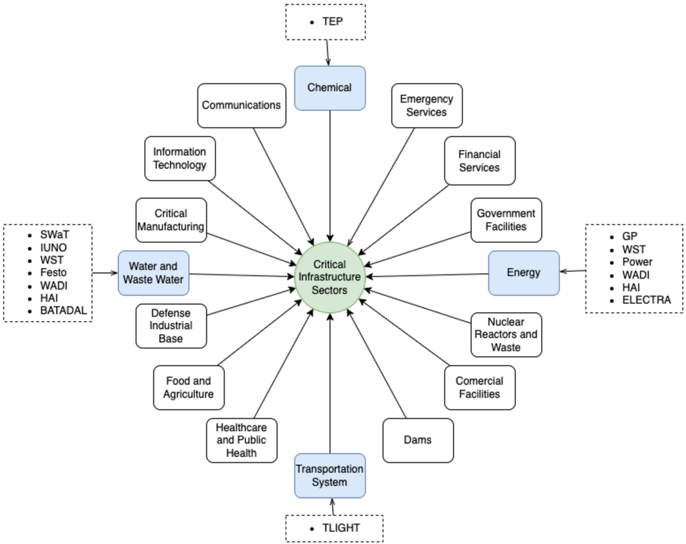
“Tennessee Eastman Process (TEP) simulation This is the oldest publicly available dataset in the ICS environment (Downs & Vogel, 1993).”
MethodA Survey of Data Mining and Machine Learning Methods for Cyber Security Intrusion Detection
Buczak, A. L., & Guven, E. (2016) · IEEE Communications Surveys & Tutorials · doi:10.1109/comst.2015.2494502 · Cited by 3,332
Adversarial machine learning at scale
Kurakin, A., Goodfellow, I., & Bengio, S. (2016) · arXiv · doi:10.48550/arxiv.1611.01236 · Cited by 2,325 · cited 1×
“Adversarial attacks are different from cyber attacks because they aim to confuse ML models into making incorrect classification rather than attacking cyber infrastructures (Kurakin et al., 2016).”
BackgroundStuxnet: Dissecting a cyberwarfare weapon
Langner, R. (2011) · IEEE Security & Privacy Magazine · doi:10.1109/msp.2011.67 · Cited by 1,922 · cited 2×
“One of the most notable early examples of ICS cyber attacks is the attack on the Iranian nuclear facility using the Stuxnet malware (Langner, 2011).”
BackgroundMethodWild patterns: Ten years after the rise of adversarial machine learning
Biggio, B., & Roli, F. (2018) · Pattern Recognition · doi:10.1016/j.patcog.2018.07.023 · Cited by 1,409 · cited 1×
“While adversarial attack in cybersecurity has been a well-known problem for over a decade (Biggio & Roli, 2018), it has only become more prominent in the recent years due to the rise of ML approaches for cybersecurity.”
BackgroundMcHugh, J. (2000) · ACM Transactions on Information and System Security · doi:10.1145/382912.382923 · Cited by 1,309 · cited 1×
“For example, the KDD dataset has been criticised for having redundant records, missing values and outdated attacks (McHugh, 2000).”
BackgroundA Dataset to Support Research in the Design of Secure Water Treatment Systems
Goh, J., Adepu, S., Junejo, K. N., & Mathur, A. (2017) · Lecture Notes in Computer Science · doi:10.1007/978-3-319-71368-7_8 · Cited by 1,045 · cited 3×
“Newer datasets have been introduced for ICS research such as the Missis-sippi State University (MSU) Power, Gas, and Water datasets (Morris, 2018) and Singa-pore University of Technology and Design’s Secure Water Treatment (SWaT) dataset (Goh et al., 2016).”
BackgroundMethodFacing Imbalanced Data--Recommendations for the Use of Performance Metrics
Jeni, L. A., Cohn, J. F., & De La Torre, F. (2013) · 2013 Humaine Association Conference on Affective Computing and Intelligent Interaction · doi:10.1109/acii.2013.47 · Cited by 790 · cited 1×
“It is also known as the harmonic mean of accuracy which is highly recommended for measuring imbalanced datasets (Jeni et al., 2013).”
Background
Research works printed but not linked: 6
- Alexander, O., Belisle, M., & Steele, J. (2020). Mitre att&ck®; for industrial control systems: Design and philosophy. Bedford, MA, USA: The MITRE Corporation.
- Beresford, D. (2011). Exploiting siemens simatic s7 plcs. Black Hat USA, 16(2), 723-733.
- Hettich, S. (1999). Kdd cup 1999 data. The UCI KDD Archive.
- Mo, Y., & Sinopoli, B. (2010). False data injection attacks in control systems. In Preprints of the 1st work- shop on secure control systems (pp. 1-6).
- Shin, H.-K., Lee, W., Yun, J.-H., & Kim, H. (2020). Hai 1.0: Hil-based augmented {ICS} security data- set. In 13Th USENIX workshop on cyber security experimentation and test (CSET 20).
- Swales, A., et al. (1999). Open modbus/tcp specification. Schneider Electric, 29, 3-19.
Cited by
Items 101–159 of 159
MNSSA: Meso-level Network Security Situation Awareness for ICS via Graph Evolution Analysis*
Zhang, S., Zhang, H., Guo, C. G., Luo, H., Wu, M., Chen, H., Ren, Z., Wang, Z., & Liu, Y. (2024) · IEEE International Conference on Automation Science and Engineering (CASE) · doi:10.1109/case59546.2024.10711716
“With the advent of the industrial Internet, industrial control systems (ICSs) face a growing threat of cyber attacks [1].”
BackgroundPrediction of Industrial Cyber Attacks Using Normalizing Flows
Stepashkina, V. P., & Hushchyn, M. I. (2024) · Doklady Mathematics · doi:10.1134/s1064562424602269
“Study [1] highlights the current achievements and challenges of applying AI to ICS security, including limitations related to limited attack scenarios and lack of realistic data to train models.”
Alamleh, H., Clark, U., & Karabacak, B. (2025) · International Conference on Smart and Sustainable Technologies (SpliTech) · doi:10.23919/splitech65624.2025.11091686
“IDSs can be deployed to take advantage of predefined rules [27], statistical [28] analysis, and machine learning [29] to detect abnormal activities, including unusual patterns of wireless traffic indicative of spoofing or activation attempts.”
Adeniyi, A. D., Ajayi, R., & Mebawondu, O. J. (2025) · Journal of Information Security · doi:10.4236/jis.2025.164023
Ensemble Convolutional Neural Networks for Computer Network Security Situation Assessment
Luo, Y. (2025) · International Conference on Intelligent Algorithms for Computational Intelligence Systems (IACIS) · doi:10.1109/iacis65746.2025.11211026
“Koay et al [11] (2023) reviewed the use of machine learning in securing Industrial Control Systems (ICS).”
Zhang, X.-M., Zheng, Q., Hao, R., Xia, Z., Zhou, J., & Xiang, J. (2025) · Proceedings/Proceedings - International Symposium on Software Reliability Engineering · doi:10.1109/issre66568.2025.00017
“In recent years, machine learning-based NIDS, especially those based on Deep Learning (DL-NIDS), have achieved remarkable success [15].”
Nagata, T., & Kuze, N. (2025) · IEICE Transactions on Communications · doi:10.23919/transcom.2025ebt0006
Ensemble Learning-Based Intrusion Detection System for Modbus-Enabled Industrial Networks
Mane, D., Kalmani, V. H., Aundhakar, S., Patil, P., Patil, S. J., & Yadav, T. J. (2025) · International Journal of Wireless and Microwave Technologies · doi:10.5815/ijwmt.2025.06.05
Evaluation tool for assessing an organization’s OT security policy
Eho, O. (2024) · Jyväskylä University Digital Archive (University of Jyväskylä) · Cited by 1
Ανάλυση Κυβερνοαπειλών και Προτεινόμενο Μοντέλο Αρχιτεκτονικής Κυβερνοασφάλειας για Συστήματα SCADA
Skordoulis, F. (2025) · DSpace - NTUA (National Technical University of Athens) · doi:10.26240/heal.ntua.30763
Jayaraman, T., & Shankar, C. G. (2025) · Arabian Journal for Science and Engineering · doi:10.1007/s13369-025-11012-0
Fan, J., Chunguang, Z., Jing, M., Yuhui, X., Yaming, C., Haiming, W., Li, D., & Peng, L. (2025) · International Conference on Advanced Electrical and Energy Systems (AEES) · doi:10.1109/aees66649.2025.11332543
“Based on the rule-based deep data parsing technology, multi-dimensional analysis of protocols, data and commands is conducted to identify and filter abnormal data and unauthorized commands[8].”
Idouglid, L., Tkatek, S., & Fayq, K. E. (2026) · Lecture notes in networks and systems · doi:10.1007/978-3-032-10895-1_32
Yang, H., Yao, Y., Yang, L., & Yang, W. (2026) · IEEE Transactions on Industrial Informatics · doi:10.1109/tii.2026.3650787
“In recent years, data-driven methods have made significant progress in anomaly detection, primarily based on machine learning and deep learning models, which show better detection performance [2].”
Liao, H., Zhang, X., Su, H., Zheng, L., & Shen, X. (2025) · International Conference on Energy Engineering and Power Systems (EEPS) · doi:10.1109/eeps68057.2025.11351896
“However, due to the lack of comprehensive modeling of the system's complex dependencies and temporal changes, their performance in dynamic environments is often unsatisfactory [5].”
Wang, W., & Jin, S. (2025) · IEEE International Conference on Civil Aviation Safety and Information Technology (ICCASIT) · doi:10.1109/iccasit66611.2025.11348824
“Koay et al. [8] conducted a comprehensive analysis of the current status of machine learning applications in ICS security, including application cases and research progress of different machine learning algorithms in attack detection, 1013 ___________________________________…”
Idouglid, L., Tkatek, S., & Fayq, K. E. (2026) · Lecture notes in networks and systems · doi:10.1007/978-3-032-12869-0_20
Козак, О. Ф. (2025) · Scientific Bulletin of Ivano-Frankivsk National Technical University of Oil and Gas · doi:10.31471/1993-9965-2025-2(59)-144-155
Cai, Z., & Wu, Z. (2026) · Journal of Intelligent Information Systems · doi:10.1007/s10844-026-01037-8
“Specifically, we compute the outlier density ( ρ ) and inlier density for each dataset using “Isolation Forest" and “Local Moran’s Index", respectively (Koay et al., 2023).”
Privacy and trust challenges in AI renewable energy systems
Naseem, S., Anwar, M., Farooq, U., & Ahmed, J. (2026) · Elsevier eBooks · doi:10.1016/b978-0-443-40618-8.00005-x · Cited by 1
Qu, X., Wu, F., Zhang, K., Feng, G., Xu, F., Wei, Y., Hu, X., & Tang, Y. (2026) · International Conference on Electrical Automation and Artificial Intelligence (ICEAAI) · doi:10.1109/iceaai68945.2026.11442394
Optimization of Industrial Automation Control Systems Based on Machine Learning
Qi, R., Zhi, Y., & Cai, M. (2025) · International Conference on Computing, Robotics and System Sciences (ICRSS) · doi:10.1109/icrss67786.2025.00025
Heterogeneous Graph Fusion for Multi-Modal Industrial Anomaly Detection
Nahalka, M., Cook, M. M., & Pezaros, D. P. (2026) · IEEE International Conference on Cyber Security and Resilience (CSR) · doi:10.1109/csr69374.2026.11759879
Zhang, X., Su, H., & Zheng, L. (2025) · International Conference on Energy, Power and Grid (ICEPG) · doi:10.1109/icepg67373.2025.11466849
“With the increasing application of Industrial Control Systems (ICS) in critical infrastructures, their security issues have become a global focus of attention [1].”
InfluentialNeal, Z., Davidson, C. C., Ables, J., & Shropshire, J. (2026) · IEEE SoutheastCon · doi:10.1109/southeastcon63549.2026.11476153
“IDSs are used to classify networking activity as normal or anomalous by recognizing trends within the data [1] [9].”
Qiu, Z., Xiao, Y., & Arebi, P. (2026) · Complexity · doi:10.1155/cplx/8861757
Chang, Z., Wang, B., Zhang, Q., He, T., & Shi, X. (2026) · Data & Metadata · doi:10.56294/dm20261457
Malook, A., Mohmand, M. I., Khan, A., & Ahmad, A. (2026) · Scientific Reports · doi:10.1038/s41598-026-54272-y
AI-Driven Cybersecurity for Industrial Control Systems Using Graph and Time-Series Learning
Nadeem, M., al., K. A. E., Khan, M. G. U., Jamal, K. M., & Danish, M. (2026) · The Asian Bulletin of Big Data Management · doi:10.62019/x60tt634
Smart Cities and Cyberattacks in Communication Networks: A Case Study of Water Treatment Plants
Habib, A. K. M. A., Sanchita, S. P., Mahmud, T., Khairul, M. S. I., Hasan, M. K., Abadin, A. Z., & Lei, T. M. T. (2026) · Intelligent infrastructure and construction · doi:10.3390/iic2020007
“Further research on ICS security aims to advance security benefits by refining components, standards, and protocols [15,72,73].”
Firewall Log-Based Rule Extraction and Passive Anomaly Detection for Tobacco ICS Security
Yang, B., Li, Z., Wang, F., Tong, W., Shan, Q., Liu, S., Shi, S., & Yang, B. (2026) · International Conference on Intelligent Computing and Signal Processing (ICSP) · doi:10.1109/icsp69961.2026.11540660
“Although machine learning techniques have been widely applied to anomaly detection in ICSs [2]–[6], their full potential in detecting complex or unknown attacks remains underexplored [7].”
Unsupervised Anomaly Detection Framework for Multimodal Data in Industrial Control Systems
Kim, Y., An, G., Kim, K., & Ha, J. (2026) · Sensors · doi:10.3390/s26123914 · Cited by 1
Villalobos, F. J. A. (2026) · UNED repository
Infrastructure Protection and Industrial Resilience
Moolchandani, K. (2026) · Springer natural hazards · doi:10.1007/978-3-032-17261-7_9
Digital-Twin-Driven Anomaly Detection Using DQN in Industrial Control Systems
Wang, K., Zhou, C., Li, Y., Yang, M., & Yuan, L. (2026) · Lecture notes in computer science · doi:10.1007/978-981-92-2859-1_14
Reservoir Computing Based Anomaly Detection in Industrial Control Systems
Slonopas, A., Olbrych, E., Corley, M., & Strahan, J. (2026) · IEEE International Conference on AI and Data Analytics (ICAD) · doi:10.1109/icad69378.2026.11608670
“These controllers, however, are vulnerable to sophisticated manipulations such as sensor spoofing, drift injection, signal freezing, and timing attacks, which can subvert feedback loops while appearing benign [1, 5].”
InfluentialVillalba, K. M., Pardo, C., & Donado, S. A. (2026) · Future Internet · doi:10.3390/fi18080395
Improved spatio-temporal feature fusion-based anomaly detection in industrial digital twins
Li, J., Lu, B., & Zhang, W. (2026) · International Journal of Critical Infrastructure Protection · doi:10.1016/j.ijcip.2026.100877
Temporal Recurrence Matrix Representation for Anomaly Detection in Industrial Network Traffic
Medeiros, M. D. A., Brandao, D., Silva, M., Ferrari, P., & da Silva, I. M. D. (2026) · IEEE International Workshop on Metrology for Industry 4.0 & IoT (MetroInd4.0&IoT) · doi:10.1109/metroind4.0iot69397.2026.11653137
“Although these strategies can provide fine-grained insight into communication behavior, they usually require prior knowledge of protocol structures [6], [10].”
Toward Intelligent Infrastructure: MAIA, a Modular AI Architecture for Industrial Control Systems
Slunjski, M. (2026) · IEEE Access · doi:10.1109/access.2026.3728856
Laiz-Ibanez, H., Prada, M. A., & Cuervo, C. M. (2026) · International Journal of Critical Infrastructure Protection · doi:10.1016/j.ijcip.2026.100900 · Cited by 1
From Machine Learning to LogBERT: A Survey of Web Log Anomaly Detection for APT and Botnet Threats
Altmimi, S., & Alomari, E. S. (2026) · Al-Noor Journal of Engineering Management and Computer Science · doi:10.71229/7tzh0144
Yang, H. J., Yoon, S.-S., & Euom, I.-C. (2026) · IEEE Access · doi:10.1109/access.2026.3732574
“…security framework should be assessed not only by predictive accuracy but also by its latency, throughput, and memory footprint, consistent with prior work emphasizing that ICS security analytics must satisfy operational and resource constraints in addition to classification performance [37].”
Beaconing detection via timing-based flow metadata analysis: implications for SCADA/ICS
Yilmaz, M. T., Doğan, F., Söğüt, E., Algül, E., & Aksoy, Ç. (2026) · International Journal of Information Security · doi:10.1007/s10207-026-01335-w
“[19–21].”
AI-Assisted Resilience Monitoring for Industrial Control System Security
Mittal, S., Polurouthu, V. K., & Gupta, A. (2026) · IEEE Access · doi:10.1109/access.2026.3732974
“Their output is usually a residual or anomaly score; attribution can remain ambiguous, and flexible reconstructions may conceal abnormal inputs [39], [40], [41], [42], [43].”
Rizzardi, A., Corte, R. D., Moreno, J. F. C., Vivo, S. D., Sicari, S., Cotroneo, D., & Coen‐Porisini, A. (2026) · Computer Networks · doi:10.1016/j.comnet.2026.112775
Kampourakis, K. E., Gkioulos, V., & Katsikas, S. K. (2026) · arXiv (Cornell University) · doi:10.48550/arxiv.2609.29704
Mohammed, I. S. (2026) · Global Academic Journal of Economics and Business · doi:10.36348/gajeb.2026.v08i05.033
Nijsse, J., Su, S., Oholeguy, B., & Tirumala, S. S. (2026) · Information · doi:10.3390/info17111101
A Precision-First Multi-View Temporal Anomaly Detection Framework for Cyber-Physical Systems
Komara, Y. K. S. C., Reddy, P. J. S. P., Kommalapati, N. S., Vayya, V. P., & Singh, S. (2026) · International Conference on Emerging Techniques in Computational Intelligence (ICETCI) · doi:10.1109/icetci71772.2026.11710480
“Other experiments on detecting cyber attacks in industrial control systems also have similar trade-offs between precision and recall according to the level of sensitivity to detect an attack [18].”
Trubienko, O. V., Mityakov, E. S., Лоскутов, А. А., & Куликов, А. Л. (2026) · Russian Technological Journal · doi:10.32362/2500-316x-2026-14-5-41-54
Hybrid cybersecurity architecture: quantum monitoring system based on artificial intelligence
Gordeev-Burgwitz, M. A., Mkrtchian, M. A., & Gordeev-Burgwitz, D. M. (2026) · Vestnik MGSU · doi:10.22227/1997-0935.2026.8.1349-1358
Sechi, F., Siqveland, E. S., & Noori, N. S. (2026) · Communications in computer and information science · doi:10.1007/978-3-032-28454-9_29
Alevcan, V., Tsado, Y., Ali, M. F., Sousa, T., & Campos, L. M. (2026) · IEEE International Conference on Emerging Technologies and Factory Automation (ETFA) · doi:10.1109/etfa68377.2026.11725204
“Centralised deep learning delivers strong detection performance but is structurally incompatible with OT network segmentation and regulatory obligations [1], [2].”
Developing a Systemic Model of Intelligent Industrial Control Using a Grounded Theory Approach
Najafi, M., Keramati, M. A., Moinzad, H., & Nejad, S. M. (n.d.) · Future of Work and Digital Management Journal
Исабаева, С. Н., Рысбаева, А. К., Ибраева, Ж. К., Муссабеков, Н. Р., & Акимжан, Н. Ш. (2026) · INTERNATIONAL JOURNAL OF INFORMATION AND COMMUNICATION TECHNOLOGIES · doi:10.54309/ijict.2026.27.3.027 · Cited by 1
Synchronized Process-Network Datasets for Wireless Attacks in SDN-Enabled Industrial Control Systems
Azeez, M., & Katzenbeisser, S. (2026) · Lecture notes in computer science · doi:10.1007/978-981-92-6843-6_40
Mohammed, A. R. A. (2026) · International Journal of Advanced Research · doi:10.21474/ijar01/24448
Prospective Evaluation of Machine-Learning Intrusion Detection for IEC-104 Microgrid Communications
Hachimi, M. (2026) · Journal of Intelligent Decision Making and Information Science · doi:10.17762/jidmis.v3.5724
Metadata
- Authors
- Koay, A. M. Y., Ko, R. K. L., Hettema, H., & Radke, K.
- Affiliations
- The University of Queensland (AU)
- Corresponding author
- Koay, Abigail M. Y.
- Venue
- Journal of Intelligent Information Systems
- Published
- 2022-10-12
- Volume
- 60
- Issue
- 2
- Pages
- 377-405
- ISSN
- 0925-9902 (ISSN-L)
- 1573-7675
- OpenAlex
- W4304587309
- Cited by
- 131
- References
- 100
- Citations by year
- 2026: 47 · 2025: 42 · 2024: 28 · 2023: 13 · 2022: 1
- FWCI
- 9.43
- Type
- journal article
- Language
- en
- Open access
- hybrid
- doi.org
- Licence
- cc-by
- creativecommons.org/licenses/by/4.0 (tdm)
- creativecommons.org/licenses/by/4.0 (vor)
- Locations
- Journal of Intelligent Information Systems (publishedVersion, cc-by)
- Funders
- The University of Queensland
- Topics
- Physical Sciences › Computer Science › Computer Networks and Communications › Network Security and Intrusion Detection
- Physical Sciences › Engineering › Control and Systems Engineering › Smart Grid Security and Resilience
- Physical Sciences › Computer Science › Artificial Intelligence › Adversarial Robustness in Machine Learning
- Keywords
- industrial control systems, ICS security, cyberattack detection, machine learning classifiers, Industry 4.0, detection accuracy, open problems
About these checks
Registry, retraction, Cites and statistics results are computed, not judged, with one exception: a printed reference that no index lists is read once by a model before it counts as a citation error. Claims are extracted by a model and kept only when their quote appears verbatim in the text; each cited source is then checked, with a model’s help, for whether it says what the claim relies on. Those verdicts can be wrong — read the claim’s quote and the cited source before relying on one.
Statistics and arithmetic are recomputed, not judged.
Confidence bands are shown only for fields calibrated on our annotated test set. None is calibrated yet, so no band is shown.
What counts as a claim ›How we measure confidence ›How we check this ›
Are you an author, or do you see a problem with this page? Request a review
Data sources
Bibliographic data: Semantic Scholar, OpenAlex, Crossref.
Contains information from the Semantic Scholar Academic Graph Datasets, made available under the ODC Attribution License (ODC-BY 1.0).
Semantic Scholar’s data is described in: Kinney, R., et al. (2023). The Semantic Scholar Open Data Platform. arXiv:2301.10140.
