

Machine learning in industrial control system (ICS) security: current landscape, opportunities and challenges
Open accessThe DOI matches its Crossref record; 101 of the 102 references it cites were found in a registry or an index.
Abstract
The advent of Industry 4.0 has led to a rapid increase in cyber attacks on industrial systems and processes, particularly on Industrial Control Systems (ICS). These systems are increasingly becoming prime targets for cyber criminals and nation-states looking to extort large ransoms or cause disruptions due to their ability to cause devastating impact whenever they cease working or malfunction. Although myriads of cyber attack detection systems have been proposed and developed, these detection systems still face many challenges that are typically not found in traditional detection systems. Motivated by the need to better understand these challenges to improve current approaches, this paper aims to (1) understand the current vulnerability landscape in ICS, (2) survey current advancements of Machine Learning (ML) based methods with respect to the usage of ML base classifiers (3) provide insights to benefits and limitations of recent advancement with respect to two performance vectors; detection accuracy and attack variety. Based on our findings, we present key open challenges which will represent exciting research opportunities for the research community.
Overview
The claims and statistics of this paper haven’t been checked yet.
Free: it reads the open-access text and checks the first 5 claims that cite a source we can check. Create a free account to check every claim.
Integrity signals
Registry
Cites
Statistics
Figures
Verification
Claims the paper makes
The claims and statistics of this paper haven’t been checked yet.
Free: it reads the open-access text and checks the first 5 claims that cite a source we can check. Create a free account to check every claim.
Self-check
Percentages, sums and reported differences re-computed from the paper’s own numbers.
The self-check needs the paper’s full text.
Citations
Cites
LeCun, Y., Bengio, Y., & Hinton, G. (2015) · Nature · doi:10.1038/nature14539 · Cited by 84,126
A detailed analysis of the KDD CUP 99 data set
Tavallaee, M., Bagheri, E., Lu, W., & Ghorbani, A. A. (2009) · 2009 IEEE Symposium on Computational Intelligence for Security and Defense Applications · doi:10.1109/cisda.2009.5356528 · Cited by 5,396 · cited 2×
“Apart from having limited attack scenarios, available datasets used for training, testing and evaluations of ML-based approaches in ICS are outdated, unrealistic and may only reflect specific cyber attacks such as the KDDCup’99 (Hettich, 1999) and NSL-KDD (Tavallaee et al., 2009) datasets.”
BackgroundA plant-wide industrial process control problem
Downs, J. J., & Vogel, E. F. (1993) · Computers & Chemical Engineering · doi:10.1016/0098-1354(93)80018-i · Cited by 3,348 · cited 1×
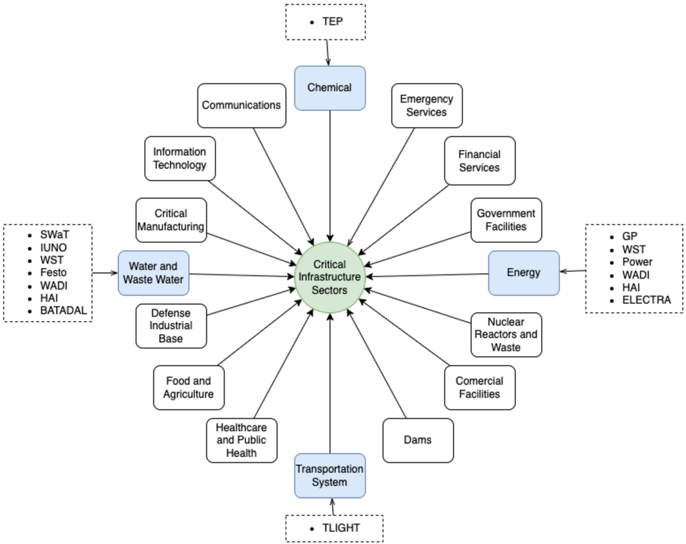
“Tennessee Eastman Process (TEP) simulation This is the oldest publicly available dataset in the ICS environment (Downs & Vogel, 1993).”
MethodA Survey of Data Mining and Machine Learning Methods for Cyber Security Intrusion Detection
Buczak, A. L., & Guven, E. (2016) · IEEE Communications Surveys & Tutorials · doi:10.1109/comst.2015.2494502 · Cited by 3,332
Adversarial machine learning at scale
Kurakin, A., Goodfellow, I., & Bengio, S. (2016) · arXiv · doi:10.48550/arxiv.1611.01236 · Cited by 2,325 · cited 1×
“Adversarial attacks are different from cyber attacks because they aim to confuse ML models into making incorrect classification rather than attacking cyber infrastructures (Kurakin et al., 2016).”
BackgroundStuxnet: Dissecting a cyberwarfare weapon
Langner, R. (2011) · IEEE Security & Privacy Magazine · doi:10.1109/msp.2011.67 · Cited by 1,922 · cited 2×
“One of the most notable early examples of ICS cyber attacks is the attack on the Iranian nuclear facility using the Stuxnet malware (Langner, 2011).”
BackgroundMethodWild patterns: Ten years after the rise of adversarial machine learning
Biggio, B., & Roli, F. (2018) · Pattern Recognition · doi:10.1016/j.patcog.2018.07.023 · Cited by 1,409 · cited 1×
“While adversarial attack in cybersecurity has been a well-known problem for over a decade (Biggio & Roli, 2018), it has only become more prominent in the recent years due to the rise of ML approaches for cybersecurity.”
BackgroundMcHugh, J. (2000) · ACM Transactions on Information and System Security · doi:10.1145/382912.382923 · Cited by 1,309 · cited 1×
“For example, the KDD dataset has been criticised for having redundant records, missing values and outdated attacks (McHugh, 2000).”
BackgroundA Dataset to Support Research in the Design of Secure Water Treatment Systems
Goh, J., Adepu, S., Junejo, K. N., & Mathur, A. (2017) · Lecture Notes in Computer Science · doi:10.1007/978-3-319-71368-7_8 · Cited by 1,045 · cited 3×
“Newer datasets have been introduced for ICS research such as the Missis-sippi State University (MSU) Power, Gas, and Water datasets (Morris, 2018) and Singa-pore University of Technology and Design’s Secure Water Treatment (SWaT) dataset (Goh et al., 2016).”
BackgroundMethodFacing Imbalanced Data--Recommendations for the Use of Performance Metrics
Jeni, L. A., Cohn, J. F., & De La Torre, F. (2013) · 2013 Humaine Association Conference on Affective Computing and Intelligent Interaction · doi:10.1109/acii.2013.47 · Cited by 790 · cited 1×
“It is also known as the harmonic mean of accuracy which is highly recommended for measuring imbalanced datasets (Jeni et al., 2013).”
Background
Research works printed but not linked: 6
- Alexander, O., Belisle, M., & Steele, J. (2020). Mitre att&ck®; for industrial control systems: Design and philosophy. Bedford, MA, USA: The MITRE Corporation.
- Beresford, D. (2011). Exploiting siemens simatic s7 plcs. Black Hat USA, 16(2), 723-733.
- Hettich, S. (1999). Kdd cup 1999 data. The UCI KDD Archive.
- Mo, Y., & Sinopoli, B. (2010). False data injection attacks in control systems. In Preprints of the 1st work- shop on secure control systems (pp. 1-6).
- Shin, H.-K., Lee, W., Yun, J.-H., & Kim, H. (2020). Hai 1.0: Hil-based augmented {ICS} security data- set. In 13Th USENIX workshop on cyber security experimentation and test (CSET 20).
- Swales, A., et al. (1999). Open modbus/tcp specification. Schneider Electric, 29, 3-19.
Cited by
Abdelkader, S., Amissah, J., Kinga, S., Mugerwa, G., Emmanuel, E., Mansour, D.-E. A., Bajaj, M., Blazek, V., & Prokop, L. (2024) · Results in Engineering · doi:10.1016/j.rineng.2024.102647 · Cited by 189
“[56,57] Control system impact.”
A Review of Anomaly Detection Strategies to Detect Threats to Cyber-Physical Systems
Jeffrey, N., Tan, Q., & Villar, J. R. (2023) · Electronics · doi:10.3390/electronics12153283 · Cited by 160
Yu, J., Shvetsov, A. V., & Alsamhi, S. H. (2024) · IEEE Access · doi:10.1109/access.2024.3482987 · Cited by 114
“These algorithms examine a range of data sources, including sensor readings, system logs, and network traffic, in order to identify patterns that could point to cyberattacks [119].”
BackgroundA novel approach for software defect prediction using CNN and GRU based on SMOTE Tomek method
Khleel, N. A. A., & Nehéz, K. (2023) · Journal of Intelligent Information Systems · doi:10.1007/s10844-023-00793-1 · Cited by 89
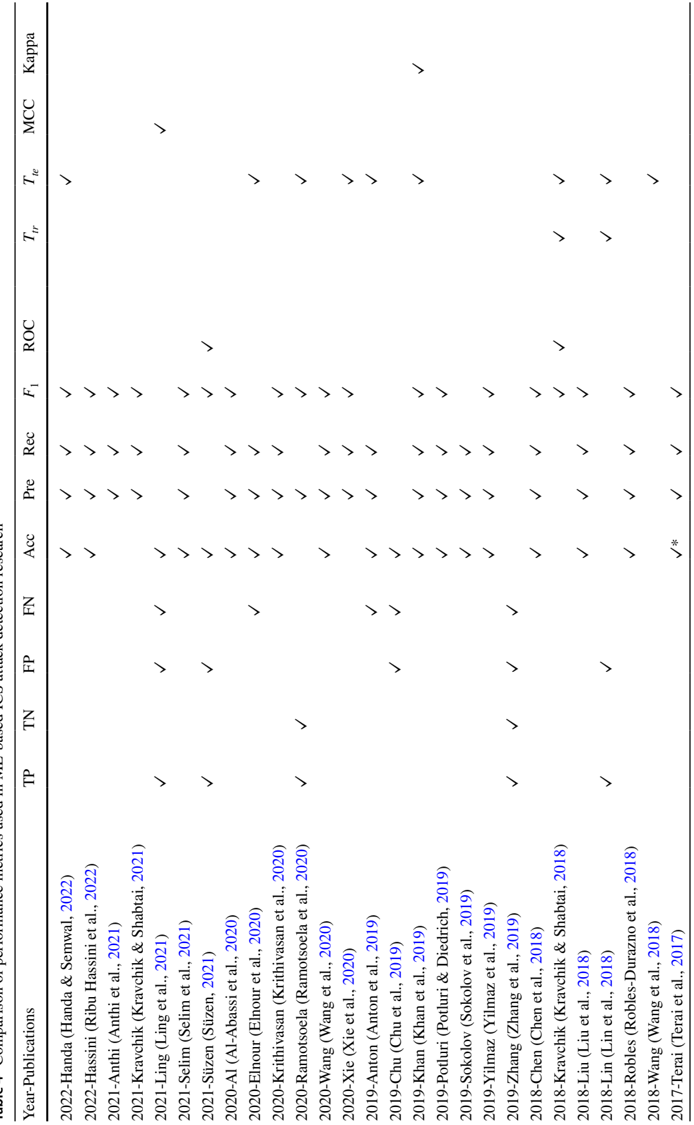
“It presents a report of True Posi-tives (T.P.), False Positives (F.P.), True Negatives (T.N.), and False Negatives (F.N.) (Koay et al., 2022; Napierala & Stefanowski, 2012), as shown in Table 4. where n is the number of observations, x(i) is the actual value, y(i) is the observed or predicted value…”
BackgroundSarker, I. H., Janicke, H., Ferrag, M. A., & Abuadbba, A. (2024) · Internet of Things · doi:10.1016/j.iot.2024.101110 · Cited by 118
Moriano, P., Hespeler, S. C., Li, M., & Mahbub, M. (2025) · Artificial Intelligence Review · doi:10.1007/s10462-025-11292-w · Cited by 94
Mustafa, F. E., Ahmed, I., Basit, A., Alvi, U.-E.-H., Malik, S. H., Mahmood, A., & Ali, P. R. (2023) · International Journal of Critical Infrastructure Protection · doi:10.1016/j.ijcip.2023.100599 · Cited by 79
Network intrusion datasets: A survey, limitations, and recommendations
Goldschmidt, P., & Chudá, D. (2025) · Computers & Security · doi:10.1016/j.cose.2025.104510 · Cited by 106
“We extracted known datasets from existing network intrusion surveys listed in Table 6, resulting in 302 datasets (with duplicates).”
Securing Smart Grid Data With Blockchain and Wireless Sensor Networks: A Collaborative Approach
Almasabi, S., Shaf, A., Ali, T. M., Zafar, M., Irfan, M., & Alsuwian, T. M. (2024) · IEEE Access · doi:10.1109/access.2024.3361752 · Cited by 74
“Machine Learning Techniques (MLTs) [13], [14], [15], [16], [17], [18], [19], [20] anomalies, yet they faced the issue of generating false positives, causing unnecessary alarms and resource inefficiencies.”
BackgroundAslam, M. M., Tufail, A., Apong, R. A. A. H. M., De Silva, L. C., & Raza, M. T. (2024) · IEEE Access · doi:10.1109/access.2024.3394848 · Cited by 51
Govea, J., Gaibor-Naranjo, W., & Villegas-Ch, W. E. (2024) · Systems · doi:10.3390/systems12050165 · Cited by 53
“Additionally, the reliance on third parties to maintain and provide network components increases the risk of attacks through the supply chain.”
BackgroundSecurity of Programmable Logic Controllers and Related Systems: Today and Tomorrow
Alsabbagh, W., & Langendörfer, P. (2023) · IEEE Open Journal of the Industrial Electronics Society · doi:10.1109/ojies.2023.3335976 · Cited by 62
“…to the previous research works showed that until this point, there are 29 surveys discussing PLC-related attacks, vulnerabilities, and security solutions [9], [10], [11], [12], [13], [14], [15], [16], [17], [18], [19], [20], [21], [22], [23], [26], [27], [28], [29], [30], [31], [32], [36], [37].”
A Survey on Programmable Logic Controller Vulnerabilities, Attacks, Detections, and Forensics
Wang, Z., Zhang, Y., Chen, Y., Liu, H., Wang, B., & Wang, C. (2023) · Processes · doi:10.3390/pr11030918 · Cited by 57
Risk Assessment for Cyber Resilience of Critical Infrastructures: Methods, Governance, and Standards
Ardebili, A. A., Lezzi, M., & Pourmadadkar, M. (2024) · Applied Sciences · doi:10.3390/app142411807 · Cited by 56
Bajwa, A., Tonoy, A. A. R., Rana, S., & Ahmed, I. (2025) · doi:10.63125/1cr1kj17 · Cited by 47
Deep learning and ensemble methods for anomaly detection in ICS security
Hossain, M. A., Hasan, T., Karovič, V., Abdeljaber, H. A. M., Haque, M. A., Ahmad, S., Zafar, A., Nazeer, J., & Mishra, B. K. (2024) · International Journal of Information Technology · doi:10.1007/s41870-024-02299-7 · Cited by 33
Aslam, M. M., Tufail, A., Gul, H., Irshad, M. N., & Namoun, A. (2025) · Artificial Intelligence Review · doi:10.1007/s10462-025-11320-9 · Cited by 41
A comprehensive review of machine learning's role in enhancing network security and threat detection
Atadoga, A., Sodiya, E. O., Umoga, U. J., & Amoo, O. O. (2024) · World Journal of Advanced Research and Reviews · doi:10.30574/wjarr.2024.21.2.0501 · Cited by 42
“Addressing the challenges and considerations associated with the use of ML in enhancing network security and threat detection is essential for realizing the full potential of ML-based security systems (Koay et al.,2023; Uchechukwu et al., 2023).”
BackgroundTrivedi, S., Tran, T. A., Faruqui, N., & Hassan, M. M. (2023) · International Conference on Smart Computing and Application (ICSCA) · doi:10.1109/icsca57840.2023.10087713 · Cited by 27
“Due to their widespread use and critical nature, these systems have become prime targets for cybercriminals [6].”
BackgroundProcess-Oriented heterogeneous graph learning in GNN-Based ICS anomalous pattern recognition
Lu, S., Wang, K., Zhang, L., & Wang, B. (2023) · Pattern Recognition · doi:10.1016/j.patcog.2023.109661 · Cited by 26
“In order to effectively extract and utilize the in-depth relationships among distinct data streams, Neural Network (NN) based deep learning approaches have been widely investigated for ICS anomalous pattern recognition [5–7] .”
BackgroundOyedotun, S. A., Oise, G. P., & Ozobialu, C. E. (2025) · Journal of Science Research and Reviews · doi:10.70882/josrar.2025.v2i3.76 · Cited by 31
LSTM-JSO framework for privacy preserving adaptive intrusion detection in federated IoT networks
Sorour, S. E., Aljaafari, M. A. H., Shaker, A. M., & Amin, A. E. (2025) · Scientific Reports · doi:10.1038/s41598-025-95966-z · Cited by 29
Detecting Cybersecurity Threats for Industrial Control Systems Using Machine Learning
Choi, W., Pandey, S., & Kim, J. (2024) · IEEE Access · doi:10.1109/access.2024.3478830 · Cited by 24
“Moreover, the ICS landscape continues to change, and providing tailored IDS solutions for ICS requires continuous exploration and integration of new threats into the system [36].”
BackgroundPourmadadkar, M., Lezzi, M., & Corallo, A. (2024) · IEEE Transactions on Engineering Management · doi:10.1109/tem.2024.3489273 · Cited by 25
Mahmud, M. S., Islam, M. A., Rahman, M. M., Chakraborty, D., Kabir, S., Shufian, A., & Sheikh, P. P. (2024) · Journal of Engineering Research and Reports · doi:10.9734/jerr/2024/v26i31102 · Cited by 18
Seo, J. K., Lee, J., Kim, B., Shim, W., & Seo, J. T. (2025) · Electronics · doi:10.3390/electronics15010020 · Cited by 15
Lightweight federated learning-based intrusion detection system for industrial internet of things
Lee, S.-J., & Lee, I.-G. (2025) · ICT Express · doi:10.1016/j.icte.2025.05.002 · Cited by 16
SCADANet: A novel dataset for SCADA cybersecurity and intrusion detection
Algül, E., Doğan, F., Ahmad, A. A., & Polat, O. (2026) · Computer Networks · doi:10.1016/j.comnet.2026.112087 · Cited by 17
A dataset collected in real-world industrial control systems for network attack detection
Zhou, X., Cheng, Z., Wang, C., Wang, S., Tao, C., Zhou, Z., Chen, X., Luo, J., Wang, D., & Zhou, H. (2026) · Scientific Data · doi:10.1038/s41597-026-06738-x · Cited by 13
Dubovoi, V. M., Yukhymchuk, M. S., Kovtun, V. V., & Grochla, K. (2025) · IEEE Access · doi:10.1109/access.2025.3528828 · Cited by 12
“When controlling processes in the chemical, petrochemical and other industries, neural networks can show greater efficiency (high accuracy, short decision-making time) compared to traditional control methods [24].”
Cybersecurity Digital Twins for Industrial Systems: From Literature Synthesis to Framework Design
Kampourakis, K. E., Gkioulos, V., & Katsikas, S. K. (2026) · Information · doi:10.3390/info17030286 · Cited by 16
“In scenarios where labeled attack data exists, supervised classifiers, say SVMs, Random Forests, and neural networks, are trained to recognize known attack signatures [83].”
Multi-Scale Feature Fusion-Based Real-Time Anomaly Detection in Industrial Control Systems
Xu, L., Shang, K., Zhang, X., Zheng, C., & Pan, L. (2025) · Electronics · doi:10.3390/electronics14081645 · Cited by 12
Abnormal behavior detection in industrial control systems based on CNN
Chen, J., Liu, B., & Zuo, H. (2024) · Alexandria Engineering Journal · doi:10.1016/j.aej.2024.08.109 · Cited by 12
Kuchař, K., & Fujdiak, R. (2025) · Computers & Security · doi:10.1016/j.cose.2025.104395 · Cited by 11
A Holistic Review of Fuzzing for Vulnerability Assessment in Industrial Network Protocols
Reda, A. M., Moustafa, N., & Lakshika, E. (2025) · IEEE Open Journal of the Communications Society · doi:10.1109/ojcoms.2025.3569291 · Cited by 10
“The recent developments in machine learning for identifying cyberattacks in Industrial Control Systems (ICS) are reviewed by Koay et al. [28].”
Ghazi, Y., Tabaa, M., Ennaji, M., & Zaz, G. (2025) · Sensors · doi:10.3390/s25196122 · Cited by 15
Malware Identification Method in Industrial Control Systems Based on Opcode2vec and CVAE-GAN
Huang, Y., Liu, J. L., Xiang, X., Wen, P., Wen, S., Chen, Y., Chen, L., & Zhang, Y. (2024) · Sensors · doi:10.3390/s24175518 · Cited by 12
“However, as highlighted in the literature [3], challenges such as the scarcity of high-quality realistic datasets and the prevalence of adversarial attacks continue to impede ICS security.”
BackgroundInfluentialOise, G. P., Odimayomi, J. A., Unuigbokhai, N. B., Akilo, B. E., & Oyedotun, S. A. (2026) · doi:10.3390/engproc2025117043 · Cited by 10
Machine Learning for Industry 5.0: A Survey
Sarkar, I., Kakarla, J. H. H., Hazra, A., Gupta, K., Kumari, P., & Ambigavathi, M. (2025) · IEEE Internet of Things Journal · doi:10.1109/jiot.2025.3604413 · Cited by 13
“As an instance, Koay et al. [4] and Grosse et al. [5] have investigated cyber–physical system security risks and ML vulnerability, respectively, but stay anchored in Industry 4.0 context.”
InfluentialIntrusion Detection Datasets for IIoT and ICS: A Taxonomic Review with a Decision-Aid Scoring Rubric
Termanini, A., Bourdoucen, H., Al‐Abri, D., & Maashri, A. A. (2026) · Sensors · doi:10.3390/s26134099 · Cited by 9
“Koay et al. [5] conducted a survey of ML in ICS security and found that dataset diversity is an open challenge.”
A Hybrid and Modular Integration Concept for Anomaly Detection in Industrial Control Systems
Goetz, C., & Humm, B. G. (2025) · AI · doi:10.3390/ai6050091 · Cited by 11
Cao, Z., Liu, B., Gao, D., Zhou, D., Han, X., & Cao, J. (2025) · Electronics · doi:10.3390/electronics14091843 · Cited by 7
“Additionally, some literature suggests that relying solely on machine learning methods may not be sufficient to capture the deeper characteristics of industrial traffic [16].”
Qu, M., Li, S., Jiang, T., Fang, Z., Guo, P., & Li, Q. (2026) · Computers in Industry · doi:10.1016/j.compind.2026.104458 · Cited by 8
RADIANT: Reactive Autoencoder Defense for Industrial Adversarial Network Threats
Khan, I., Wali, S. W., & Farrukh, Y. A. (2023) · Computers & Security · doi:10.1016/j.cose.2025.104403 · Cited by 7
A black-box adversarial attack on demand side management
Cramer, E., & Gao, J. Q. (2024) · Computers & Chemical Engineering · doi:10.1016/j.compchemeng.2024.108681 · Cited by 7
The Role of Network Segmentation and Micro-Segmentation in Operational Technology Security
Almulla, Z. T., & Rahman, H. (2025) · 2025 International Conference on Artificial Intelligence in Information and Communication (ICAIIC) · doi:10.1109/icaiic64266.2025.10920695 · Cited by 6
“For instance, in the case of the energy industry, SCADA legacy systems are much more complicated to upgrade, making micro-segmentation very difficult to put in place [14].”
Ellis, T., Hitaj, B., Lindqvist, U., Shands, D., Tinnel, L., & DeBruhl, B. (2023) · AIAA Accelerating Space Commerce, Exploration, and New Discovery Conference (ASCEND) · doi:10.2514/6.2023-4798 · Cited by 6
Anomaly Detection Method Considering PLC Control Logic Structure for ICS Cyber Threat Detection
Lee, J. H., Ji, I. H., Jeon, S. H., & Seo, J. T. (2025) · Applied Sciences · doi:10.3390/app15073507 · Cited by 5
Kavitha, M. S., Sumathy, G., Sarala, B., Hephzipah, J. J., Dhanalakshmi, R., & Subha, T. D. (2024) · International Journal of Critical Infrastructure Protection · doi:10.1016/j.ijcip.2024.100720 · Cited by 5
Hierarchical GNN Message Passing for Node-Level Anomaly Detection in Industrial Control Systems
Lu, S., Wang, K., Liu, Y., & Wang, B. (2025) · IEEE Transactions on Dependable and Secure Computing · doi:10.1109/tdsc.2025.3623299 · Cited by 5
“To tackle this challenge, machine learning approaches are investigated and developed [18], [19].”
Multichain Blockchain Solutions for Ensuring Trust and Transparency in IoT Healthcare Environment
Kumar, A., Guleria, K., Sharma, I., & Khan, A. R. (2024) · International Conference on Circuit, Power and Computing Technologies · doi:10.1109/iccpct61902.2024.10672895 · Cited by 5
“This conversation highlights the importance of Blockchain-based consensus mechanisms (BCMs) in certain IoT scenarios, while also recognizing that BCMs represent just a single component of IoT security solutions [10].”
BackgroundGoranin, N., Čeponis, D., & Čenys, A. (2025) · Applied Sciences · doi:10.3390/app15052316 · Cited by 6
Wang, F., Liu, Y., Qin, Z., & Dong, F. (2025) · Knowledge-Based Systems · doi:10.1016/j.knosys.2025.113725 · Cited by 4
Fine-Tune LLMs for PLC Code Security: An Information-Theoretic Analysis
Chen, P., Liu, X., & Wang, Y. (2025) · Mathematics · doi:10.3390/math13193211 · Cited by 4
“[38] reviews machine learning methods for vulnerability detection, highlighting challenges in accuracy and attack diversity.”
The Evolution and Integration of SCADA and HMI Systems in Industrial Automation
Hasso, E. A. (2025) · Springer eBooks · doi:10.1007/978-981-95-0401-5_2 · Cited by 4
Intrusion Detection Systems in Industrial Control Systems: Landscape, Challenges and Opportunities
Wu, T. S., Zhou, D., Ou, Q., & Luo, F. (2025) · Computers, materials & continua/Computers, materials & continua (Print) · doi:10.32604/cmc.2025.073482 · Cited by 9
“The consequences of these attacks have been significant, affecting the environment, security, and public safety, while also impacting ICS asset owners, governments, and society as a whole [2].”
Hassine, L., Chaibi, H., Saadane, R., & Chehri, A. (2026) · Smart Grids and Sustainable Energy · doi:10.1007/s40866-026-00344-x · Cited by 4
Federated learning from molecules to processes: A perspective
Rittig, J. G., & Kortmann, C. (2026) · Chemical Engineering Research and Design · doi:10.1016/j.cherd.2026.07.011 · Cited by 4
A Reinforcement-Learning-based Agent to discover Safety-Critical States in Smart Grid Environments
Santorsola, A., Maci, A., Delvecchio, P., & Coscia, A. (2023) · International Conference on Electrical, Computer, Communications and Mechatronics Engineering (ICECCME) · doi:10.1109/iceccme57830.2023.10252540 · Cited by 4
“Despite the flourishing perspectives that IT/OT convergence brings, a cyber-security-unaware deployment could be a fertile ground for several threat actors [5].”
BackgroundA Safe and Reliable Bayesian Spiking Neural Network in Industrial Control Systems
Khoei, T. T., & Kaabouch, N. (2024) · IEEE International Conference on Computing and Machine Intelligence (ICMI) · doi:10.1109/icmi60790.2024.10585976 · Cited by 4
Ann, S., Kim, H. J., Park, S., Cho, S.-J., Kim, J., & Cho, H. (2026) · Electronics · doi:10.3390/electronics15020371 · Cited by 3
Rajalakshmi, M., & Velmurugan, T. (2026) · Scientific Reports · doi:10.1038/s41598-026-45677-w · Cited by 6
Mesca, S., Pricop, E., & Stâmâtescu, G. (2026) · Applied Sciences · doi:10.3390/app16147206 · Cited by 3
Enhancing cybersecurity of nonlinear processes via a two-layer control architecture
Khodaverdian, A., Gohil, D., & Christofides, P. D. (2025) · Digital Chemical Engineering · doi:10.1016/j.dche.2025.100233 · Cited by 3
Autonomic Passive IT-OT Device Classification in ICS/SCADA Networks
Rubin, B., Tekeoglu, A., & Rouff, C. (2024) · IEEE International Conference on Cyber Security and Resilience (CSR) · doi:10.1109/csr61664.2024.10679418 · Cited by 3
“Most research that study these datasets do so for detecting anomalies or intrusion attempts [9], [10], [11].”
BackgroundGuan, L., Tao, C., & Chen, P. (2025) · Mathematics · doi:10.3390/math13172703 · Cited by 3
Cabaj, K., Plamowski, S., Chaber, P., Ławryńczuk, M., Marusak, P. M., Nebeluk, R., Wojtulewicz, A., & Zarzycki, K. (2025) · SoftwareX · doi:10.1016/j.softx.2025.102196 · Cited by 5
CYBER INFRASTRUCTURE GUIDE: IT/OT INTEGRATION
İmamoğlu, M. B. (2025) · Ömer Halisdemir Üniversitesi İktisadi ve İdari Bilimler Fakültesi Dergisi · doi:10.25287/ohuiibf.1558269 · Cited by 2
Effective Sample Generation for Industrial Control Systems: A GAN-Based Approach
Qin, Z., Liu, Y., Wang, T., Chen, L., & Song, Y. (2025) · IEEE Transactions on Industrial Informatics · doi:10.1109/tii.2025.3609080 · Cited by 2
“Moreover, the ICS environment is inherently noisy, often corrupting traffic data and even causing partial data loss—situations to which the logic-driven operations of ICS are especially sensitive [5].”
Intelligent Intrusion Detection System for Cybersecurity of Water Utilities
Mesca, S., & Stâmâtescu, G. (2025) · RoEduNet Conference: Networking in Education and Research (RoEduNet) · doi:10.1109/roedunet68395.2025.11208394 · Cited by 2
Lan, J., Chen, C., Cai, J., Ming, X., Li, M., Wang, Y., Zhang, Y., & Song, Y. (2026) · Electronics · doi:10.3390/electronics15061324 · Cited by 2
BDPM: A secure batch dynamic password management scheme in industrial internet environments
Feng, J., Yan, R., Han, G., & Zhang, W. (2024) · Future Generation Computer Systems · doi:10.1016/j.future.2024.03.030 · Cited by 2
Rahman, M. M., Mahmud, J. A., & Ali, M. F. (2025) · Advanced Control for Applications · doi:10.1002/adc2.70003 · Cited by 2
“Another method involves using ML algorithms to classify the prediction error as either normal or anomalous [3] Once a cyberattack has been detected, MPC can be used to mitigate its impact in real time.”
USING MACHINE LEARNING METHODS FOR INDUSTRIAL CONTROL SYSTEMS INTRUSION DETECTION
Shikhaliyev, R. (2023) · Problems of Information Technology · doi:10.25045/jpit.v14.i2.05 · Cited by 2
Adeoye, S. O., Lindberg, H. M., Bagby, B., Brown, A. M., Batarseh, F. A., & Kaufman, E. K. (2024) · NACTA Journal · doi:10.56103/nactaj.v67i1.151 · Cited by 4
“…with related literature, stakeholders acknowledged that many industrial control systems and parts were not originally designed to be connected to the Internet, which means cybersecurity was not a concern at the time of initial production or installation (Koay et al., 2023; Nawrocki et al., 2020).”
BackgroundExploration of Quantum Cryptography Security Applications for Industrial Control Systems
Li, H., Dong, Y., Zhang, Y., & Wang, H. (2024) · Applied Mathematics and Nonlinear Sciences · doi:10.2478/amns-2024-1711 · Cited by 2
Editorial: AI meets cybersecurity
Andresini, G., & Appice, A. (2022) · Journal of Intelligent Information Systems · doi:10.1007/s10844-022-00767-9 · Cited by 2
“L Ko, Hinne Hettema and Kenneth Radke (Koay et al., 2022), focuses on cyber-attacks in the Industrial Control System (ICS) scenario.”
BackgroundAI-Enhanced Anomaly Detection and Automated Root-Cause Analysis for Enterprise Data Platforms
Matla, R. K. (2026) · 2026 5th International Conference on Sentiment Analysis and Deep Learning (ICSADL) · doi:10.1109/icsadl67539.2026.11451830 · Cited by 1
Eco-Secure SCADA: Towards Machine Learning Reliability for Green Cybersecurity
Ahakonye, L. A. C., Mukisa, K. J., Nwakanma, C. I., & Kim, D.-S. (2025) · International Conference on Artificial Intelligence in Information and Communication (ICAIIC) · doi:10.1109/icaiic64266.2025.10920796 · Cited by 1
“Employing machine learning (ML) and deep learning (DL) enables adaptive threat detection [4], but optimizing energy usage is crucial to aligning with green cybersecurity principles, ensuring both security and sustainability [5], [6].”
Quantifying Energy Overhead in SCADA Cybersecurity Using AI-Based Threat Detection Models
Tegegne, T., & Faisal, A. N. (2025) · Ubiquitous Technology Journal · doi:10.71346/utj.v1i2.19 · Cited by 1
Xu, P., Zhou, C., Ouyang, M., Naqvi, S. S. A., Liang, X., & Wang, M. (2025) · Reliability Engineering & System Safety · doi:10.1016/j.ress.2025.111820 · Cited by 1
Adapting IEC 62443 for Steganographic Threat Detection in ICS Environments
Edeh, N. C., Öztürk, E., & Waedt, K. (2025) · Annual Conference of the IEEE Industrial Electronics Society (IECON) · doi:10.1109/iecon58223.2025.11221180 · Cited by 2
“The potential for disastrous economic and infrastructure effects has been shown by well-known cyber-attacks, including Stuxnet, Black Energy, Shamoon, and Cashoverdrive[2][3][4].”
KGL: An Efficient Time Series Anomaly Detection Approach for the Industrial Internet of Things
Wang, B., Tao, Y., Wang, Y., & Zhou, L. (2025) · International Symposium on Machine Learning and Social Computing · doi:10.1145/3778450.3778526 · Cited by 1
“These attacks can cause severe operational disruption, financial losses, and even threats to public safety and national security [2].”
Bakirov, B., Koshekov, K., Koshekov, A., Levchenko, N., Aldamzharov, K., & Togambayev, R. (2025) · RADIOELECTRONIC AND COMPUTER SYSTEMS · doi:10.32620/reks.2025.4.01 · Cited by 1
Case Studies: Real World Applications of AI in Cyber Physical System Security
Kumar, S., Malik, S., Bhullar, J. K., & Shukla, V. (2026) · Engineering cyber-physical systems and critical infrastructures · doi:10.1007/978-3-032-09656-2_11 · Cited by 1
The Impact of Time-Aware Design Choices in ICS Anomaly Detection
Rabbi, K. F., Lou, H. H., & Liu, X. (2026) · IEEE Annual Computing and Communication Workshop and Conference (CCWC) · doi:10.1109/ccwc67433.2026.11393705 · Cited by 1
“Finally, Koay et al. [9] identified critical limitations in ML-based ICS security research, including heavy reliance on outdated or simulated datasets, insufficient coverage of diverse attack scenarios, and inconsistent reporting of evaluation metrics.”
A security control recommender approach with human in the loop for cybersecurity compliance auditing
Tasew, J. M., Samal, P., Pakshad, P., Omar, M., & Dawson, M. E. (2026) · Discover Networks · doi:10.1007/s44354-026-00033-2
Hossain, T. M. S. A., Chowdhury, M. A., Mithon, K. M. M. F., & Mahmud, I. (2026) · International Journal of Multidisciplinary and Innovative Research · doi:10.58806/ijmir.2026.v3i7n12 · Cited by 1
Albarrak, M., & Jagtap, S. (2026) · Applied Sciences · doi:10.3390/app16157646 · Cited by 1
Multi-agent reinforcement learning for DoS mitigation in industrial control systems
McGugan, R., Cook, M. M., & Pezaros, D. P. (2026) · Computer Networks · doi:10.1016/j.comnet.2026.112668 · Cited by 1
Double-Optimized CS-BP Anomaly Prediction for Control Operation Data
Wan, M., Liu, X., & Yang, L. (2023) · Lecture notes in computer science · doi:10.1007/978-3-031-46661-8_34 · Cited by 1
Threat Attribution and Reasoning for Industrial Control System Asset
Zhang, S., Shi, P., Du, T., Su, X., & Han, Y. (2023) · International Journal of Ambient Computing and Intelligence · doi:10.4018/ijaci.333853 · Cited by 1
Kumar, A., & Sharma, I. (2023) · International Conference on Smart Generation Computing, Communication and Networking (SMART GENCON) · doi:10.1109/smartgencon60755.2023.10442421 · Cited by 1
“Despite the plethora of suggested and developed cyber-attack detection systems, they face a multitude of obstacles that are not commonly faced in traditional detection systems [12].”
BackgroundBanda, T. V., Blaauw, D., & Watson, B. W. (2024) · Communications in computer and information science · doi:10.1007/978-3-031-57639-3_5 · Cited by 4
Xiang, J., Zhang, X.-M., Zheng, Q., Deng, L., Zhao, D., & Zhou, J. (2024) · Asia-Pacific Symposium on Internetware · doi:10.1145/3671016.3674812 · Cited by 1
Khanna, A. (2024) · Apress eBooks · doi:10.1007/979-8-8688-1029-9_20 · Cited by 1
A Training Rate and Survival Heuristic for Inference and Robustness Evaluation (Trashfire)
Meyers, C., Sedghpour, M. R. S., Löfstedt, T., & Elmroth, E. (2024) · International Conference on Machine Learning and Cybernetics · doi:10.1109/icmlc63072.2024.10935101 · Cited by 2
“Failure time analysis has been widely explored in other fields [7], from medicine to industrial quality control [20, 27, 41], but there is very little published research in the context of ML.”
Kampourakis, K. E., Kampourakis, V., Gkioulos, V., & Katsikas, S. K. (2026) · arXiv (Cornell University) · doi:10.48550/arxiv.2610.02955 · Cited by 1
Machine Learning-based Intrusion Detection Systems: Deployment Guidelines for Industry
Gopalakrishnan, S., Tuptuk, N., & Hailes, S. M. V. (2023) · UCL Discovery (University College London) · doi:10.5281/zenodo.7854051 · Cited by 2
Metadata
- Authors
- Koay, A. M. Y., Ko, R. K. L., Hettema, H., & Radke, K.
- Affiliations
- The University of Queensland (AU)
- Corresponding author
- Koay, Abigail M. Y.
- Venue
- Journal of Intelligent Information Systems
- Published
- 2022-10-12
- Volume
- 60
- Issue
- 2
- Pages
- 377-405
- ISSN
- 0925-9902 (ISSN-L)
- 1573-7675
- OpenAlex
- W4304587309
- Cited by
- 131
- References
- 100
- Citations by year
- 2026: 47 · 2025: 42 · 2024: 28 · 2023: 13 · 2022: 1
- FWCI
- 9.43
- Type
- journal article
- Language
- en
- Open access
- hybrid
- doi.org
- Licence
- cc-by
- creativecommons.org/licenses/by/4.0 (tdm)
- creativecommons.org/licenses/by/4.0 (vor)
- Locations
- Journal of Intelligent Information Systems (publishedVersion, cc-by)
- Funders
- The University of Queensland
- Topics
- Physical Sciences › Computer Science › Computer Networks and Communications › Network Security and Intrusion Detection
- Physical Sciences › Engineering › Control and Systems Engineering › Smart Grid Security and Resilience
- Physical Sciences › Computer Science › Artificial Intelligence › Adversarial Robustness in Machine Learning
- Keywords
- industrial control systems, ICS security, cyberattack detection, machine learning classifiers, Industry 4.0, detection accuracy, open problems
About these checks
Registry, retraction, Cites and statistics results are computed, not judged, with one exception: a printed reference that no index lists is read once by a model before it counts as a citation error. Claims are extracted by a model and kept only when their quote appears verbatim in the text; each cited source is then checked, with a model’s help, for whether it says what the claim relies on. Those verdicts can be wrong — read the claim’s quote and the cited source before relying on one.
Statistics and arithmetic are recomputed, not judged.
Confidence bands are shown only for fields calibrated on our annotated test set. None is calibrated yet, so no band is shown.
What counts as a claim ›How we measure confidence ›How we check this ›
Are you an author, or do you see a problem with this page? Request a review
Data sources
Bibliographic data: Semantic Scholar, OpenAlex, Crossref.
Contains information from the Semantic Scholar Academic Graph Datasets, made available under the ODC Attribution License (ODC-BY 1.0).
Semantic Scholar’s data is described in: Kinney, R., et al. (2023). The Semantic Scholar Open Data Platform. arXiv:2301.10140.
