

Low-grade inflammation may moderate the effect of behavioral treatment for chronic pain in adults
Open accessThe DOI matches its Crossref record; 45 of the 45 references it cites were found in a registry or an index; 1 of the 16 sources its claims cite were checked for support.
Abstract
The purpose of the present pilot study was to explore the moderating role of basal inflammation on the effects of behavioral pain treatment in 41 patients with long-standing pain. Baseline pro-inflammatory status moderated behavioral treatment outcomes: higher pre-treatment levels of Tumor Necrosis Factor (TNF)-α and Interleukin (IL)-6 were related to less improvement in pain intensity, psychological inflexibility and in mental health-related quality of life. The treatment outcomes improved in the subgroup that had low levels of pro-inflammatory cytokines at baseline, while the subjects with higher pro-inflammatory status did not. Altogether, results indicate that low-grade inflammation may influence the behavioral treatment outcomes and provide a possible explanation of the heterogeneity in treatment response.
Overview
CoChat Summary
## TL;DR
This pilot study in 41 adults with longstanding pain found that baseline pro-inflammatory status moderated behavioral treatment response. Higher pre-treatment TNF-α and IL-6 were linked to less improvement in pain intensity, psychological inflexibility, and mental health-related quality of life.
## Key findings
- In the full sample, behavioral treatment did not have a significant overall effect on self-reported outcomes, though there were trends for psychological inflexibility and physical health-related quality of life (p = .07–.08).
- Behavioral treatment significantly reduced TNF-α from 1.74 ± .67 to 1.65 ± .64 pg/mL (RM ANCOVA on log values: F(1,36) = 6.29, p = .02, η2 = .15), but not IL-6 (F(1,36) = 0.22, p = .88, η2 = .001) or IL-8 (F(1,36) = 0.48, p = .49, η2 = .01).
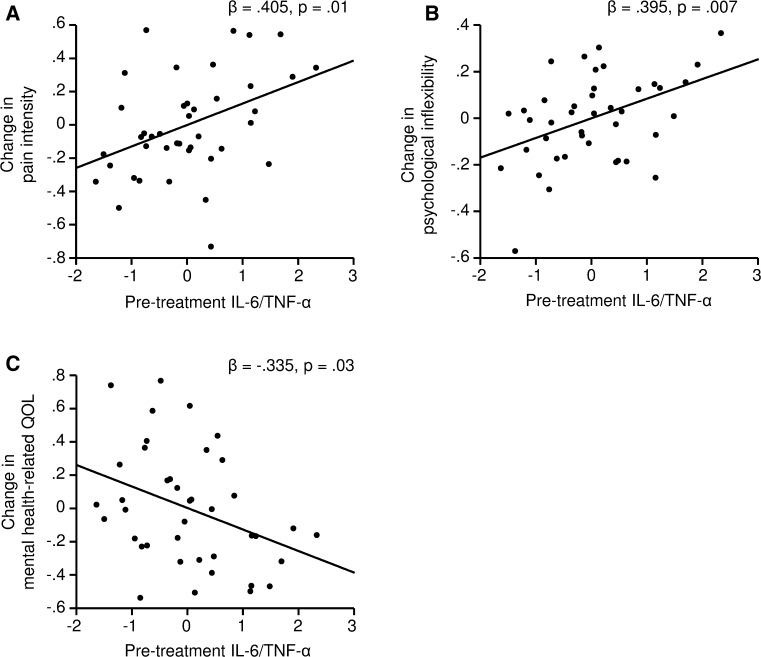
- Higher baseline IL-6/TNF-α composite scores were associated with less improvement in pain intensity and psychological inflexibility, and with worse change in mental health-related quality of life.
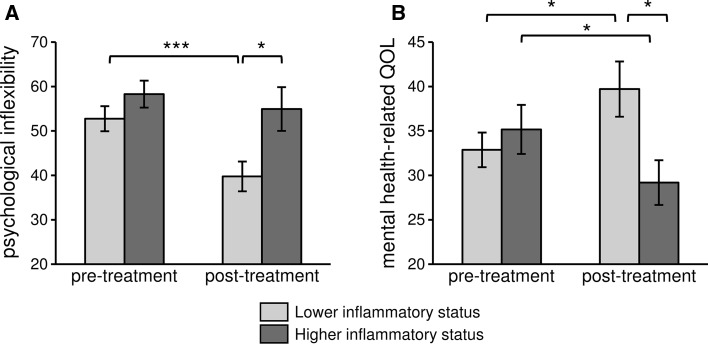
- In the highest vs lowest tertile of the IL-6/TNF-α/IL-8 composite, there were significant treatment-by-inflammatory-status interactions for psychological inflexibility (F(1,22) = 4.6, p = .04, η2 = .17) and mental health-related quality of life (F(1,22) = 10.4, p = .004, η2 = .32); treatment improved these outcomes only in the low-inflammation group.
## Methods
- Pilot randomized controlled study comparing two behavioral treatments for chronic pain: Acceptance and Commitment Therapy (ACT) and Applied Relaxation (AR), delivered in 12 weekly group sessions of 90 minutes.
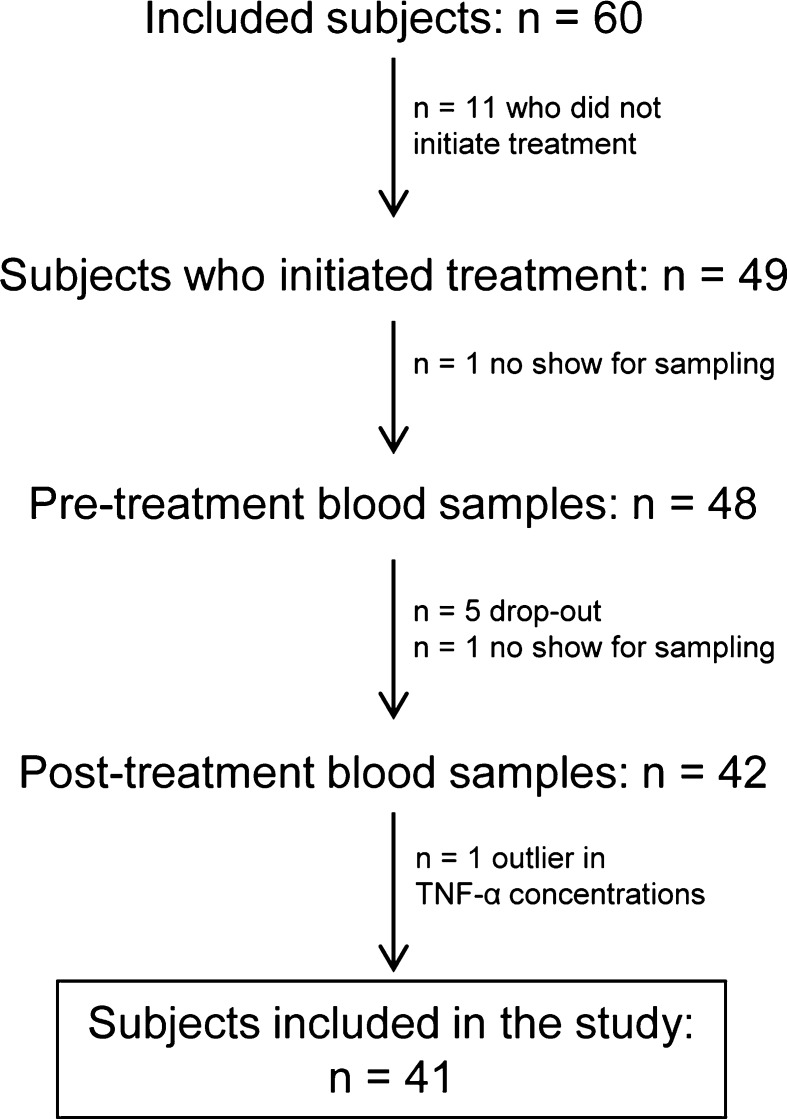
- Sample: 41 analyzed participants with longstanding pain; mean age 40.9 years (range 21–61), 32 women, mean pain duration 11 years (range 1–36); 23 received ACT and 18 AR.
- Main analysis: repeated-measures ANCOVA for treatment effects, and Judd-Kenny-McClelland moderation analyses using baseline cytokine composite scores (IL-6/TNF-α and IL-6/TNF-α/IL-8), adjusting for age, gender, medication changes, and anxiety/depression change scores.
## Limitations
- The paper states that the study was exploratory, with a relatively low number of subjects, reduced statistical power, and many analyses increasing type I error risk.
- The authors note they could not assess confounding or mediation by other factors such as pain duration or comorbidities because of restricted statistical power.
- Evident from the text: blood sampling timing was not standardized, which the authors say is a methodological concern.
- Evident from the text: the sample was mostly women (32/41; 78%), so generalizability to men is limited and sex-specific effects could not be well assessed.
Model-written summary. Check it against the paper before relying on it.
Integrity signals
Registry
Cites
Statistics
Figures
Verification
Claims the paper makes
1 Valid · 0 Not valid · 10 Not checked · 25 Own results and interpretations
A result the paper reports from its own data — it cites no other source for it, so there is none to check. The quote shows it is in the paper.
In the paper
“pre-treatment composite inflammatory scores were negatively associated with the changes in mental health-related quality of life (Fig. 2c).”
- Also stated in: § Moderating effect of baseline inflammation on treatment outcomes · plain
“pre-treatment composite inflammatory scores were negatively associated with the changes in mental health-related quality of life”
§ Low-grade inflammation may moderate the effect of behavioral treatment for chronic pain in adults > Results > Moderating effect of baseline inflammation on treatment outcomes
plainstates an association- Asserted: passes — The authors put it forward as true.
- Checkable: passes — It can be checked against evidence.
- Load-bearing: passes — The paper’s conclusions depend on it.
- Based: passes — The paper gives a reason why it holds.
- Also stated in: § Moderating effect of baseline inflammation on treatment outcomes · plain
A result the paper reports from its own data — it cites no other source for it, so there is none to check. The quote shows it is in the paper.
In the paper
“Behavioral treatment significantly reduced serum TNF-α concentrations (raw values: from 1.74 ± .67 to 1.65 ± .64 pg/mL, RM ANCOVA on log values: F(1,36) = 6.29, p = .02, η2 = .15)”
§ Low-grade inflammation may moderate the effect of behavioral treatment for chronic pain in adults > Results > Effects of behavioral treatment on self-report questionnaires and cytokines
plainstates a cause- Asserted: passes — The authors put it forward as true.
- Checkable: passes — It can be checked against evidence.
- Load-bearing: unclear — It is unclear whether the paper’s conclusions depend on it.
- Based: passes — The paper gives a reason why it holds.
A result the paper reports from its own data — it cites no other source for it, so there is none to check. The quote shows it is in the paper.
In the paper
“A significant interaction effect between behavioral treatment and pre-treatment inflammatory status was found for psychological inflexibility and mental health-related quality of life (respectively, F(1, 22) = 4.6, p = .04, η2 = .17 and F(1, 22) = 10.4, p = .004, η2 = .32).”
§ Low-grade inflammation may moderate the effect of behavioral treatment for chronic pain in adults > Results > Moderating effect of baseline inflammation on treatment outcomes
plainstates an associationn = 14 ·- Asserted: passes — The authors put it forward as true.
- Checkable: passes — It can be checked against evidence.
- Load-bearing: passes — The paper’s conclusions depend on it.
- Based: passes — The paper gives a reason why it holds.
A result the paper reports from its own data — it cites no other source for it, so there is none to check. The quote shows it is in the paper.
In the paper
“a significant association between higher composite score of IL-6 and TNF-α concentrations and lower improvement in psychological inflexibility was found.”
§ Low-grade inflammation may moderate the effect of behavioral treatment for chronic pain in adults > Results > Moderating effect of baseline inflammation on treatment outcomes
plainstates an association- Asserted: passes — The authors put it forward as true.
- Checkable: passes — It can be checked against evidence.
- Load-bearing: passes — The paper’s conclusions depend on it.
- Based: passes — The paper gives a reason why it holds.
A result the paper reports from its own data — it cites no other source for it, so there is none to check. The quote shows it is in the paper.
In the paper
“higher combined concentrations of IL-6 and TNF-α were associated with lesser improvement in pain intensity following treatment.”
§ Low-grade inflammation may moderate the effect of behavioral treatment for chronic pain in adults > Results > Moderating effect of baseline inflammation on treatment outcomes
plainstates an association- Asserted: passes — The authors put it forward as true.
- Checkable: passes — It can be checked against evidence.
- Load-bearing: passes — The paper’s conclusions depend on it.
- Based: passes — The paper gives a reason why it holds.
12 more claims
Create a free account to see all 36 claims and to verify the 15 references still open.
- Probably not a substantial claim. 18
- The quote only partly states this claim. 1
- It may state two separate claims as one. 5
Claims other papers make about this one
Each is checked against this paper’s own text: does it say what the citing paper says it does?
The source backs part of the claim, not all of it — or backs it for a different population, condition or comparison.
In the citing paper
“A composite score based on the mean values of IL-6 and TNF-α levels at baseline were used as a measure of ongoing low-grade systemic inflammation, similar to Lasselin et al. [25].”
From Baseline Pro-Inflammatory Cytokine Levels Moderate Psychological Inflexibility in Behavioral Treatment for Chronic Pain (2022) · cites this paper as [25]
Experimental — accuracy not yet measuredThe cited source says what the claim attributes to it.
In the citing paper
“In our study [25], we also saw a small decrease in inflammatory cytokine levels after treatment, which aligns with a meta-analysis on the effects of behavioral therapy on CRP blood levels [30].”
From Baseline Pro-Inflammatory Cytokine Levels Moderate Psychological Inflexibility in Behavioral Treatment for Chronic Pain (2022) · cites this paper as [25]
The cited source says what the claim attributes to it.
In the citing paper
“The present study follows a previous trial in which a group of chronic pain patients (n = 41) underwent behavioral treatment (ACT or applied relaxation). Results showed that baseline peripheral low-grade inflammation, operationalized as a combination of interleukin (IL)-6 and tumor necrosis factor (TNF)-α levels in the blood, moderated improvements in pain intensity and psychological inflexibility”
From Baseline Pro-Inflammatory Cytokine Levels Moderate Psychological Inflexibility in Behavioral Treatment for Chronic Pain (2022) · cites this paper as [25]
The cited source says what the claim attributes to it.
In the citing paper
“Inflammatory activity has been established as a factor in clinically depressed patients [24] and has recently been highlighted as relevant in the perspective of predicting or moderating treatment outcomes in chronic pain [25] and depression [26].”
From Baseline Pro-Inflammatory Cytokine Levels Moderate Psychological Inflexibility in Behavioral Treatment for Chronic Pain (2022) · cites this paper as [25]
Statistics that don’t add up
Each reported p-value recomputed from its test statistic and degrees of freedom, each partial η² from its F, and each ratio, mean difference or B printed with a p checked against its own confidence interval.
Rated minor: it would not touch a result — a value no result rests on, a p-value that stays on the same side of the significance level, or a conflict that is clerical, resolved elsewhere in the paper, or outside its own findings.
In the paper
“F(1,36) = 0.22, p = .88”
§ Low-grade inflammation may moderate the effect of behavioral treatment for chronic pain in adults > Results > Effects of behavioral treatment on self-report questionnaires and cytokines
Reported p = .88 · recomputed p = .642
Statistics recomputed
Every reported test result, recomputed from its test statistic and degrees of freedom. A result shows as not adding up only once an independent check has confirmed it.
- Doesn’t add upF(1, 36) = 0.22reported p = .88 · recomputed p = .642
“F(1,36) = 0.22, p = .88”
- ConsistentF(1, 36) = 6.29reported p = .02 · recomputed p = .017
“F(1,36) = 6.29, p = .02”
- ConsistentF(1, 36) = 0.48reported p = .49 · recomputed p = .493
“F(1,36) = 0.48, p = .49”
- ConsistentF(1, 22) = 4.6reported p = .04 · recomputed p = .043
“F(1, 22) = 4.6, p = .04”
- ConsistentF(1, 22) = 10.4reported p = .004 · recomputed p = .004
“F(1, 22) = 10.4, p = .004”
Self-check
Percentages, sums and reported differences re-computed from the paper’s own numbers.
Self-check results appear here once an independent check has confirmed them.
Citations
Cites
The Hospital Anxiety and Depression Scale
Zigmond, A. S., & Snaith, R. P. (1983) · Acta Psychiatrica Scandinavica · doi:10.1111/j.1600-0447.1983.tb09716.x · Cited by 47,139
Depression and quality of life in older persons: A review
Sivertsen, H., Bjørkløf, G. H., Engedal, K., Selbæk, G., & Helvik, A.-S. (2015) · Dementia and Geriatric Cognitive Disorders · doi:10.1159/000437299 · Cited by 14,152
From inflammation to sickness and depression: when the immune system subjugates the brain
Dantzer, R., O'Connor, J. C., Freund, G. G., Johnson, R. W., & Kelley, K. W. (2008) · Nature Reviews Neuroscience · doi:10.1038/nrn2297 · Cited by 7,395 · cited 2×
“During acute activation of the immune system, cytokines are known to induce a number of behavioral symptoms, one of which is pain sensitization (Dantzer et al. 2008), and the cytokine interleukin (IL)-8 has been associated with the acute development of hyperalgesia in both rodents and humans (Cunha et al.”
BackgroundSurvey of chronic pain in Europe: Prevalence, impact on daily life, and treatment
Breivik, H., Collett, B., Ventafridda, V., Cohen, R., & Gallacher, D. (2006) · European Journal of Pain · doi:10.1016/j.ejpain.2005.06.009 · Cited by 5,486
Archives of Physical Medicine and Rehabilitation
(1976) · Journal of Sound and Vibration · doi:10.1016/0022-460x(76)90695-7 · Cited by 5,476
(1994) · Medical Entomology and Zoology · Cited by 4,156
Psychological therapies for the management of chronic pain (excluding headache) in adults
Williams, A. C. D. C., Eccleston, C., & Morley, S. (2012) · Cochrane Database of Systematic Reviews · doi:10.1002/14651858.cd007407.pub3 · Cited by 1,634
The prevalence of chronic pain in United States adults: Results of an Internet-based survey
Johannes, C. B., Le, T. K., Zhou, X., Johnston, J. A., & Dworkin, R. H. (2010) · The Journal of Pain · doi:10.1016/j.jpain.2010.07.002 · Cited by 1,252 · cited 1×
“Between 20 and 30 % of the adult population in Europe and in the United States suffer from chronic pain (Breivik et al. 2006; Johannes et al. 2010).”
BackgroundThe Pain Disability Index: psychometric properties
Tait, R. C., Chibnall, J. T., & Krause, S. (1990) · Pain · doi:10.1016/0304-3959(90)90068-o · Cited by 952
Management of fibromyalgia syndrome
Goldenberg, D. L. (2004) · JAMA · doi:10.1001/jama.292.19.2388 · Cited by 850 · cited 1×
“In addition, pharmacological strategies often fail to reduce symptoms or disability to satisfactory levels (Goldenberg et al. 2004; Turk 2002), which has”
Background
Cited by
Montoya, A. K. (2019) · Behavior Research Methods · doi:10.3758/s13428-018-1088-6 · Cited by 291
The association between body fat and musculoskeletal pain: a systematic review and meta-analysis
Walsh, T. P., Arnold, J. B., Evans, A. M., Yaxley, A., Damarell, R. A., & Shanahan, E. M. (2018) · BMC Musculoskeletal Disorders · doi:10.1186/s12891-018-2137-0 · Cited by 181
Vinall, J., Pavlova, M., Asmundson, G., Rasic, N., & Noel, M. (2016) · Children · doi:10.3390/children3040040 · Cited by 183
“Furthermore, it has been shown that among chronic pain patients, higher levels of tumor necrosis factor-α (TNF-α) and interleukin-6 (IL-6) were associated with less improvement in pain intensity, greater psychological inflexibility and lower mental health-related quality of life following a pain intervention, compared…”
BackgroundLasselin, J., Lekander, M., Axelsson, J., & Karshikoff, B. (2018) · Frontiers in Neuroendocrinology · doi:10.1016/j.yfrne.2018.06.005 · Cited by 106
Self-citationLopresti, A. L. (2017) · Australian & New Zealand Journal of Psychiatry · doi:10.1177/0004867417701996 · Cited by 93
“In all of these studies, higher pre-treatment inflammation was associated with a reduced treatment response from CBT (Harley et al., 2010; Lasselin et al., 2016; Zahn et al., 2016).”
BackgroundResultAndrés-Rodríguez, L., Borràs, X., Feliu-Soler, A., Pérez-Aranda, A., Rozadilla-Sacanell, A., Montero-Marin, J., Maes, M., & Luciano, J. V. (2019) · Brain, Behavior, and Immunity · doi:10.1016/j.bbi.2019.02.030 · Cited by 87
Does Low Grade Systemic Inflammation Have a Role in Chronic Pain?
Zhou, W. B. S., Meng, J., & Zhang, J. (2021) · Frontiers in Molecular Neuroscience · doi:10.3389/fnmol.2021.785214 · Cited by 93
Lötsch, J., Sipilä, R., Tasmuth, T., Kringel, D., Estlander, A.-M., Meretoja, T., Kalso, E., & Ultsch, A. (2018) · Breast Cancer Research and Treatment · doi:10.1007/s10549-018-4841-8 · Cited by 68
“Possible physiological moderators include low-grade systemic inflammation and metabolic disorders [7, 29].”
BackgroundPain without inflammation in rheumatic diseases
Lampa, J. (2019) · Best Practice & Research Clinical Rheumatology · doi:10.1016/j.berh.2019.101439 · Cited by 49
Montero‐Marín, J., Andrés‐Rodríguez, L., Tops, M., Luciano, J. V., Navarro‐Gil, M., Feliu‐Soler, A., del Hoyo, Y. L., & García‐Campayo, J. (2019) · Scientific Reports · doi:10.1038/s41598-019-52260-z · Cited by 46
Mazahery, H., Conlon, C. A., Beck, K. L., Mugridge, O., Kruger, M. C., Stonehouse, W., Camargo, C. A., Meyer, B. J., Tsang, B., & von Hurst, P. R. (2020) · Nutrients · doi:10.3390/nu12030661 · Cited by 46
“Finally, further evidence for a role of baseline inflammatory state on treatment response come from trials that investigated the treatment response to a range of types of antidepressants in populations with depression [60], to anti-psychotic treatments in populations with psychosis [61], and to behavioural therapies i…”
BackgroundAcceptance & Commitment Therapy for ME/CFS (Chronic Fatigue Syndrome) – A feasibility study
Jonsjö, M. A., Wicksell, R. K., Holmström, L., Andreasson, A., & Olsson, G. L. (2019) · Journal of Contextual Behavioral Science · doi:10.1016/j.jcbs.2019.02.008 · Cited by 27
Self-citationRoumelioti, M., Steel, J. L., Yabes, J. G., Vowles, K. E., Vodovotz, Y., Beach, S. R., Rollman, B. L., Weisbord, S. D., Unruh, M. L., & Jhamb, M. (2018) · Contemporary Clinical Trials · doi:10.1016/j.cct.2018.09.002 · Cited by 24
The Identification of Blood Biomarkers of Chronic Neuropathic Pain by Comparative Transcriptomics
Islam, B., Stephenson, J. R., Young, B., Manca, M., Buckley, D. A., Radford, H. E., Zis, P., Johnson, M. I., Finn, D. P., & McHugh, P. (2021) · NeuroMolecular Medicine · doi:10.1007/s12017-021-08694-8 · Cited by 30
“, 2005) and other clinical presentations (Lasselin et al., 2016; Sommer et al., 2018).”
Gerdle, B., Bäckryd, E., Falkenberg, T., Lundström, E., & Ghafouri, B. (2019) · Scandinavian Journal of Pain · doi:10.1515/sjpain-2019-0088 · Cited by 22
Ma, H., Xu, J., Li, R., McIntyre, R. S., Teopiz, K. M., Cao, B., & Yang, F. (2022) · Frontiers in Psychiatry · doi:10.3389/fpsyt.2022.844176 · Cited by 22
Dolsen, E. A., & Harvey, A. G. (2021) · Psychoneuroendocrinology · doi:10.1016/j.psyneuen.2021.105241 · Cited by 24
Wulsin, L. R., Henson, S. J. S., Roos, L. G., Wang, D., Jenkins, B. N., Cohen, B. E., Shah, A. J., & Slavich, G. M. (2022) · Psychosomatic Medicine · doi:10.1097/psy.0000000000001051 · Cited by 21
“ing smoking, unhealthy diet, poor sleep, and sedentary behaviors (30); c) unsafe social interactions, including abusive, threatening, and neglectful relationships (31); d) autonomic nervous system imbalance, caused by stress-induced patterns of excessive sympa-”
BackgroundJonsjö, M. A., Åström, J., Jones, M. P., Karshikoff, B., Lodin, K., Holmström, L., Agréus, L., Wicksell, R. K., Axelsson, J., Lekander, M., et al. (2019) · Brain Behavior & Immunity - Health · doi:10.1016/j.bbih.2019.100028 · Cited by 17
Self-citationAnalysis of Epigenetic Age Predictors in Pain-Related Conditions
Kwiatkowska, K. M., Bacalini, M. G., Sala, C., Kaziyama, H. H. S., de Andrade, D. C., Terlizzi, R., Giannini, G., Cevoli, S., Pierangeli, G., Cortelli, P., et al. (2020) · Frontiers in Public Health · doi:10.3389/fpubh.2020.00172 · Cited by 21
Schipholt, I. J. L., Scholten-Peeters, G. G. M., Koop, M. A., Bonnet, P., Bontkes, H. J., & Coppieters, M. W. (2022) · Frontiers in Molecular Neuroscience · doi:10.3389/fnmol.2022.1003821 · Cited by 15
“A better understanding of neuroimmune responses in neck pain may reveal unknown mechanisms of persistent pain and might contribute to personalized and more effective therapies (Lasselin et al., 2016; Chimenti et al., 2018).”
BackgroundSerrat, M., Ferrés, S., Auer, W., Almirall, M., Lluch, E., D’Amico, F., Maes, M. H. J., Lorente, S., Navarrete, J., Montero‐Marín, J., et al. (2022) · Frontiers in Physiology · doi:10.3389/fphys.2022.1046613 · Cited by 18
Conditional process analysis for two-instance repeated-measures designs.
Montoya, A. K. (2024) · Psychological Methods · doi:10.1037/met0000715 · Cited by 24
Effects of the Trier Social Stress Test on the distributions of IL-6 and MAP levels
Medina, D. A. R., Alva, G. L., Trejo, B. D., Pozo, M. D. R. H., Cruz-Albarrán, I. A., Morales-Hernandez, L. A., & Marmolejo‐Ramos, F. (2019) · Heliyon · doi:10.1016/j.heliyon.2019.e01580 · Cited by 14
“For future studies, it is suggested to implement a psychological intervention to decrease sympathetic activity and evaluate its effect on inflammatory activity (Koelsch et al., 2016; Lasselin et al., 2016).”
BackgroundWalsh, T. P., Arnold, J. B., Gill, T. K., Evans, A., Yaxley, A., Hill, C. L., & Shanahan, E. M. (2017) · Rheumatology International · doi:10.1007/s00296-017-3743-0 · Cited by 14
Conditional Process Analysis in Two-Instance Repeated-Measures DesignsPreprint
Montoya, A. K. (2019) · EdArXiv (OSF Preprints) · doi:10.35542/osf.io/a2hxw · Cited by 19
“…Plot of interaction between time and inflammation on psychological inflexibility. . . . . . . . . . . . . . . . . . . . . . . . . . . . . . . . . 81 4.2 Diagram for Lasselin et al. (2016) First-Stage Conditional Process Model. . . . . . . . . . . . . . . . . . . . . . . . . . . . . . . . . . . .”
BackgroundMethodResultInfluentialGiordano, R., Capriotti, C., Gerra, M. C., Kappel, A., Østgaard, S. E., Dallabona, C., Arendt‐Nielsen, L., & Petersen, K. K. (2024) · European Journal of Pain · doi:10.1002/ejp.2254 · Cited by 16
“Such inflammation has been suggested to play a role in the persistence of pain (Zhou et al., 2021), and the prolonged maladaptive cytokines release might potentially be associated with behavioural and cognitive alterations (Lasselin et al., 2016).”
Zhou, W. B. S., Shi, X., Liu, Y., Tran, S. D., Beaudry, F., & Zhang, J. (2022) · Pain · doi:10.1097/j.pain.0000000000002695 · Cited by 10
“2,16,32,40,41,65 Neverthe-less, it remains unclear whether these inflammatory factors are simply correlated with chronic pain or may contribute directly to enhance pain sensitivity.”
Probing Moderation Analysis in Two-Instance Repeated-Measures Designs
Montoya, A. K. (2018) · Multivariate Behavioral Research · doi:10.1080/00273171.2017.1404901 · Cited by 9
“I provide an example using data from clinical psychology examining the efficacy of behavioral treatment for chronic pain as moderated by baseline inflammation (Lasselin et al., 2016).”
MethodObesity in rheumatological practice
Kozakowski, J., Dudek, P., & Zgliczyński, W. (2023) · Reumatologia/Rheumatology · doi:10.5114/reum/170401 · Cited by 11
“Moreover, the higher they are, the less effective is the analgesic treatment [24].”
BackgroundRubione, J., Sbrascini, S. M., Miguel, B., Leiguarda, C., Coronel, M. F., McCarthy, C. J., Montaner, A. D., Villar, M. J., & Brumovsky, P. R. (2023) · Journal of Pain · doi:10.1016/j.jpain.2023.01.013 · Cited by 9
Ferrés, S., Serrat, M., Auer, W., Royuela-Colomer, E., Almirall, M., Lizama-Lefno, A., Nijs, J., Maes, M. H. J., Luciano, J. V., Borràs, X., et al. (2024) · Brain Behavior and Immunity · doi:10.1016/j.bbi.2024.12.149 · Cited by 12
Karshikoff, B., Åström, J., Holmström, L., Lekander, M., Kemani, M. K., & Wicksell, R. K. (2022) · Journal of Clinical Medicine · doi:10.3390/jcm11092285 · Cited by 6
“In our study [25], we also saw a small decrease in inflammatory cytokine levels after treatment, which aligns with a meta-analysis on the effects of behavioral therapy on CRP blood levels [30].”
BackgroundResultInfluentialSelf-citationSimons, L. E., Moayedi, M., Coghill, R. C., Stinson, J., Angst, M. S., Aghaeepour, N., Gaudilliere, B. L., King, C. D., López‐Solà, M., Hoeppli, M., et al. (2022) · BMJ Open · doi:10.1136/bmjopen-2022-061548 · Cited by 7
How Can Experimental Endotoxemia Contribute to Our Understanding of Pain? A Narrative Review
Benson, S., & Karshikoff, B. (2023) · NeuroImmunoModulation · doi:10.1159/000534467 · Cited by 8
“There are not many studies investigating if in fl ammation affect behavioral pain treatment, but three studies suggest that lower baseline in fl ammation predicts better behavioral treatment outcomes [94 – 96].”
Åström, J., Karshikoff, B., Holmström, L., Lekander, M., Kemani, M. K., & Wicksell, R. K. (2024) · Psychoneuroendocrinology · doi:10.1016/j.psyneuen.2024.107094 · Cited by 9
“Other research goals may benefit from compound scores, such as several cytokines representing inflammatory activity (Karshikoff et al., 2022; Lasselin et al., 2016), or several survey measures representing psychological comorbidity (Karshikoff et al., 2023).”
Self-citation|FES-Zaragoza, U. N. A. D. M., Aguirre, S. N. V., & Medina, D. A. R. (2018) · doi:10.22402/j.rdipycs.unam.4.2.2018.183.195-213 · Cited by 4
Cho, I., Jo, J. H., & Park, J. W. (2024) · BMC Oral Health · doi:10.1186/s12903-024-04862-x · Cited by 4
“Acute inflammation generally responds well to treatment in the majority of cases while, chronic pain is more often associated with low-grade inflammation [33].”
BackgroundInflammatory reactivity is unrelated to childhood adversity or provoked modulation of nociception
Bedwell, G. J., Mqadi, L., Kamerman, P. R., Hutchinson, M. R., Parker, R., & Madden, V. J. (2025) · Pain · doi:10.1097/j.pain.0000000000003658 · Cited by 5
“Adults with a history of childhood adversity display elevated interleukin(IL)-6 and tumour necrosis factor(TNF)- [14, 20, 60]—a pro-inflammatory profile that may confer vulnerability to persistent pain [34].”
Circulating cytokine levels in the treatment of comorbid anxiety disorders
Johnson, S. U., Hoffart, A., Tilden, T., Toft, H., Neupane, S. P., Lien, L., & Bramness, J. G. (2020) · Acta Neuropsychiatrica · doi:10.1017/neu.2020.38 · Cited by 4
“Furthermore, it should be investigated whether the inflammatory levels depend on what kind of mechanisms are targeted in therapy (Lasselin et al. 2016)”
BackgroundLifestyle and eating behaviors during the COVID-19 pandemic: a cross-sectional study in Turkey
Caner, C., Can, A., & Yüceer, M. (2025) · Discover Public Health · doi:10.1186/s12982-025-00966-z · Cited by 3
“Ensuring a balanced and nutritious diet remains essential not only for physical health and immune function but also for mental well-being across all life stages [11–13].”
Antici, E. E., Kuhlman, K. R., Treanor, M., & Craske, M. G. (2024) · Brain Behavior and Immunity · doi:10.1016/j.bbi.2024.03.002 · Cited by 4
Pardo, L. C., & Taboada-Iglesias, Y. (2021) · Revista de la Sociedad Española del Dolor · doi:10.20986/resed.2021.3841/2020 · Cited by 5
Regimes and Mechanisms of Inflammation Described by a Reaction–Diffusion System
Hajj, W. E., Khatib, N. E., & Volpert, V. A. (2025) · Mathematical Methods in the Applied Sciences · doi:10.1002/mma.10970 · Cited by 2
Medina, D. A. R. (2018) · Biomedical Journal of Scientific & Technical Research · doi:10.26717/bjstr.2018.04.0001102 · Cited by 3
Medina, D. A. R., & Pozo, M. D. R. H. (2021) · Acta de Investigación Psicológica · doi:10.22201/fpsi.20074719e.2021.1.375 · Cited by 3
Swedish Chronic Pain Biobank: protocol for a multicentre registry and biomarker project
Ghafouri, B., Ernberg, M. M., Andréll, P., Bäckryd, E., Fisher, M. R., Freund‐Levi, Y., Grelz, H., Gräbel, O., Karlsten, R., Kosek, E., et al. (2022) · BMJ Open · doi:10.1136/bmjopen-2022-066834 · Cited by 2
“28 32 It has not yet been considered if activated biological mechanisms may impact on the effect of IPRP.”
Åström, J., Holmström, L., Karshikoff, B., Andréasson, A., & Kemani, M. K. (2021) · Scandinavian Journal of Pain · doi:10.1515/sjpain-2021-0070 · Cited by 2
Self-citationChavarría-Ávila, E., Navarro-Hernández, R. E., Guzmán-Ornelas, M.-O., Corona-Meraz, F.-I., Ruíz-Quezada, S. L., & Mercado, M. V.-D. (2017) · InTech eBooks · doi:10.5772/65444 · Cited by 1
Medina, D. A. R., Ortega, J. J. V., & Alonso-Hernández, G. (2020) · Revista Digital Internacional de Psicología y Ciencia Social · doi:10.22402/10.22402/j.rdipycs.unam.6.2.2020.227.340-354 · Cited by 2
“Es decir, no todas las personas logran aumentar su temperatura periférica, sobre todo si tienen un historial de sucesos traumáticos afectivos y/o si su actividad inflamatoria es elevada (Lasselin et al., 2016).”
BackgroundThe DQB1*03:02 Genotype and Treatment for Pain in People With and Without Multiple Sclerosis
Burkill, S. M., Smith, K. A., Stridh, P., Kockum, I. S., Hillert, J. A., Lindahl, H., Alfredsson, L. S., Olsson, T. P., Piehl, F., Montgomery, S., et al. (2020) · Frontiers in Neurology · doi:10.3389/fneur.2020.00993 · Cited by 1
“Pro-inflammatory cytokine levels have been shown to be associated with the likelihood of pain treatment being successful (23), with individuals with low grade inflammation more TABLE 2b | Adjusted for PCA’s, matching factors, and highest educational attainment.”
BackgroundKontou, M. G., Katartzi, E., Pappás, I. A., Argiriadou, E. A., Monastiridi, S. G., & Lourenço, C. C. V. (2024) · Journal of Advances in Education and Philosophy · doi:10.36348/jaep.2024.v08i01.001 · Cited by 1
Maples‐Keller, J. L., & Michopoulos, V. (2024) · Brain Behavior and Immunity · doi:10.1016/j.bbi.2024.05.032 · Cited by 1
The biological mechanism of cognitive behavioral therapy
Gao, J. H., Wang, P., & Li, Z. (2019) · Advances in Psychological Science · doi:10.3724/sp.j.1042.2019.00522 · Cited by 2
“…6 (interleukin 6, IL-6)以及肿瘤坏死因 子 α (tumor necrosis factor-α, TNF-α)的浓度显著 高于正常对照(Dowlati et al., 2010; Liu, Ho, & Mak, 2012)。而 CBT 在改善抑郁患者临床症状的 同时, 患者血清内 IL-6 的水平同时也下降, 这提 示 CBT可以调节患者外周血内促炎细胞因子水平 (Gazal et al., 2013)。也有研究同样发现经过 CBT 治疗后, MDD 患者血清中 IL-6 和 TNF-α 等促炎细 胞因子的表达明显下调, 患者抑郁症状也得到了…”
Sickness & behavior in ME/CFS (Chronic Fatigue Syndrome)
Jonsjö, M. A. (2019)
Social, R. D. I. D. P. Y. C. (2020) · Revista Digital Internacional de Psicología y Ciencia Social · doi:10.22402/j.rdipycs.unam.6.2.2020.327.245-526
(2020) · Revista Digital Internacional de Psicología y Ciencia Social · doi:10.22402/j.rdipycs.unam.6.2.2020
Lebensstilfaktoren und Schmerzen
Ekström, K. (2023) · Elsevier eBooks · doi:10.1016/b978-3-437-45252-9.00029-8
(2023) · Elsevier eBooks · doi:10.1016/b978-3-437-45252-9.09976-4
Peripheral blood infl ammatory markers as signals of mental disorders in a sample of elderly people
D’Auria, C. (2023) · PNEI REVIEW · doi:10.3280/pnei2023-001007
Supplemental Material for Conditional Process Analysis for Two-Instance Repeated-Measures Designs
Montoya, A. K. (2024) · Psychological Methods · doi:10.1037/met0000715.supp
Ernährung – Physiologie und Pathophysiologie
Herberhold, M., & Dubbeldam, A. (2025) · Elsevier eBooks · doi:10.1016/b978-3-437-45059-4.00003-2
McKernan, L. C., Crofford, L. J., Bruehl, S. P., McGonigle, T., Kelly, A. G., Ryden, A., Sutherland, S. L., Clauw, D. J., Williams, D. A., Dmochowski, R. R., et al. (2025) · Frontiers in Pain Research · doi:10.3389/fpain.2025.1593807 · Cited by 2
Sanchez, B. (2020) · theses.fr (ABES) · doi:10.70675/b32f2bf7z6619z43d0z953bzeabc6cbfb530
Metadata
- Authors
- Lasselin, J., Kemani, M. K., Kanstrup, M., Olsson, G. L., Axelsson, J., Andreasson, A., Lekander, M., & Wicksell, R. K.
- Affiliations
- Stockholm University (SE)
- Karolinska University Hospital (SE)
- Karolinska Institutet (SE)
- Corresponding author
- Lasselin, Julie
- ORCID
- Venue
- Journal of Behavioral Medicine
- Published
- 2016-07-28
- Volume
- 39
- Issue
- 5
- Pages
- 916-924
- ISSN
- 0160-7715 (ISSN-L)
- 1573-3521
- PMC
- PMC5012257
- OpenAlex
- W2486489283
- Semantic Scholar
- 24e952bb38ee379b8c257ec096f7e16189a24a41
- Cited by
- 66
- References
- 45
- Citations by year
- 2025: 5 · 2024: 8 · 2023: 7 · 2022: 8 · 2021: 6 · 2020: 9 · 2019: 11 · 2018: 8 · 2017: 3 · 2016: 1
- FWCI
- 6.21
- Type
- journal article
- Language
- en
- Open access
- hybrid
- doi.org
- Locations
- Journal of Behavioral Medicine (publishedVersion, cc-by)
- Europe PMC (PubMed Central) (publishedVersion, cc-by)
- PubMed Central (publishedVersion, cc-by)
- PubMed (publishedVersion)
- Topics
- Health Sciences › Health Professions › Physical Therapy, Sports Therapy and Rehabilitation › Musculoskeletal pain and rehabilitation
- Health Sciences › Medicine › Physiology (medical) › Pain Mechanisms and Treatments
- Health Sciences › Medicine › Anesthesiology and Pain Medicine › Pain Management and Treatment
- Keywords
- chronic pain, low-grade inflammation, inflammatory cytokines, TNF-α, interleukin-6, behavioral pain treatment, treatment response heterogeneity, psychological inflexibility, mental health-related quality of life, pain intensity
- MeSH terms
- Adult, Behavior Therapy, Female, Humans, Inflammation, Male, Middle Aged, Pilot Projects, Quality of Life, Tumor Necrosis Factor-alpha, Interleukin-6, Treatment Outcome, Chronic Pain, Pain Management
About these checks
Registry, retraction, Cites and statistics results are computed, not judged, with one exception: a printed reference that no index lists is read once by a model before it counts as a citation error. Claims are extracted by a model and kept only when their quote appears verbatim in the text; each cited source is then checked, with a model’s help, for whether it says what the claim relies on. Those verdicts can be wrong — read the claim’s quote and the cited source before relying on one.
The claim verdicts this report counts are experimental: their accuracy is not yet measured.
A language model drew the claims from the paper on 2026-10-11, under version 3 of the claim definition (model deepseek-v4.1-flash, prompt extract-v3).
A second model labelled each claim on 2026-10-11 (model jev-1.13-20260917, definition revision gold-guideline-v0.2).
Statistics and arithmetic are recomputed, not judged.
Confidence bands are shown only for fields calibrated on our annotated test set. None is calibrated yet, so no band is shown.
What counts as a claim ›How we measure confidence ›How we check this ›
Are you an author, or do you see a problem with this page? Request a review
Data sources
Bibliographic data: Semantic Scholar, OpenAlex, Crossref.
Contains information from the Semantic Scholar Academic Graph Datasets, made available under the ODC Attribution License (ODC-BY 1.0).
Semantic Scholar’s data is described in: Kinney, R., et al. (2023). The Semantic Scholar Open Data Platform. arXiv:2301.10140.
