

A Systematic Review of the Effectiveness of Acceptance and Commitment Therapy (ACT) for Body Image Dissatisfaction and Weight Self-Stigma in Adults
Open accessThe DOI matches its Crossref record; 57 of the 57 references it cites were found in a registry or an index.
Abstract
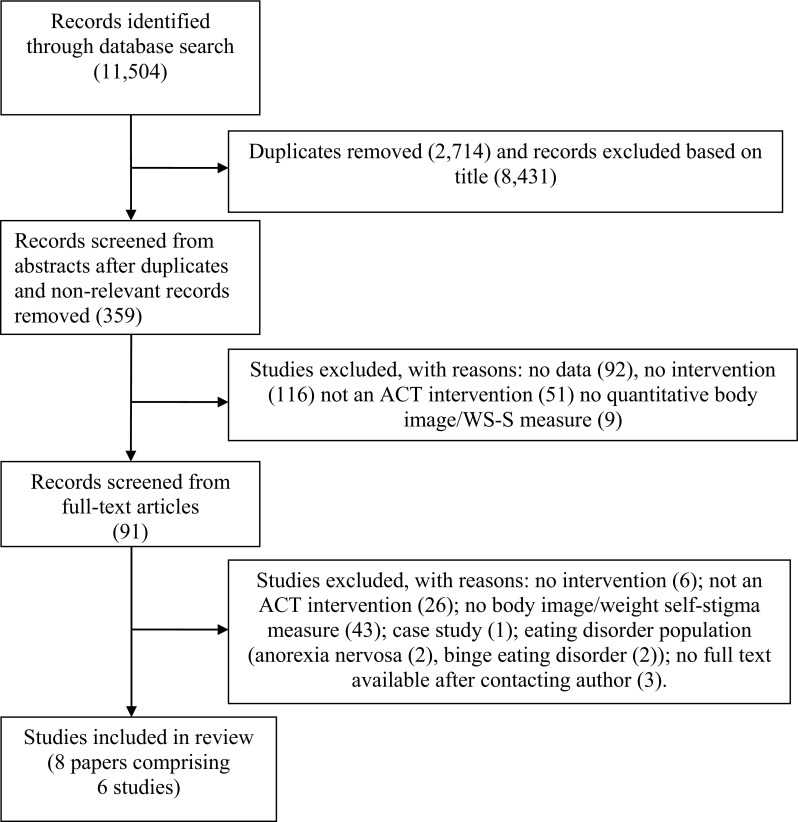
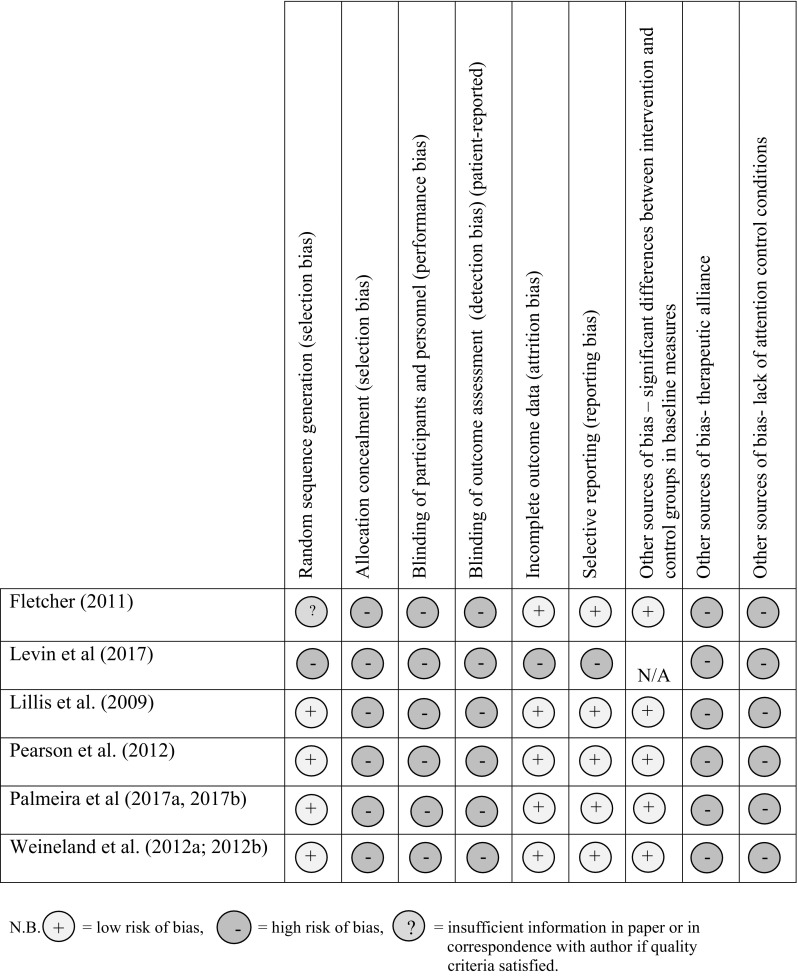
Body image dissatisfaction (BID) and weight self-stigma are prevalent and associated with physical and psychological ill-health. Acceptance and Commitment Therapy (ACT) is increasingly employed for both, yet little is known about its effectiveness. Searches of 12 databases identified six studies using online, face-to-face or self-help ACT interventions for BID or weight self-stigma, of varying duration and intensity. Their effectiveness and quality were evaluated. Two reported improved BID, three improved weight self-stigma, and one reported no impact on weight self-stigma. Methodological issues (small sample sizes, lack of allocation concealment, attention control and long-term follow up) impacted the validity of findings. Due to the small number of studies and poor study quality, the effectiveness of ACT for BID and weight self-stigma remains unclear. Nonetheless findings suggest psychological flexibility may facilitate reduction in BID and weight self-stigma and indicate that brief online as well as lengthy face-to-face delivery may be useful. Suggestions for further research are made.
Overview
The claims and statistics of this paper haven’t been checked yet.
Free: it reads the open-access text and checks the first 5 claims that cite a source we can check. Create a free account to check every claim.
Integrity signals
Registry
Cites
Statistics
Figures
Verification
Claims the paper makes
The claims and statistics of this paper haven’t been checked yet.
Free: it reads the open-access text and checks the first 5 claims that cite a source we can check. Create a free account to check every claim.
Claims other papers make about this one
Each is checked against this paper’s own text: does it say what the citing paper says it does?
The source backs part of the claim, not all of it — or backs it for a different population, condition or comparison.
In the citing paper
“There is evidence that ACT interventions reduce body image dissatisfaction and internalized weight stigma, as well as increase health outcomes, partly because of reductions in experiential avoidance and shame (Fletcher, 2011; Griffiths et al., 2018; Lillis et al., 2005).”
From A Randomized Controlled Trial of an Acceptance and Commitment Therapy-Informed Diabetes Prevention Program Reduces Body Shame and Distress. (2025) · cites this paper as Griffiths et al., 2018
Experimental — accuracy not yet measuredThe source backs part of the claim, not all of it — or backs it for a different population, condition or comparison.
In the citing paper
“ACT has also been found to be effective at reducing self-stigma in contexts where social discrimination is common, including among women of color, those with substance use difficulties, and people struggling with their sexual identity [39].”
From Motherhood and Me (Mom-Me): The Development of an Acceptance-Based Group for Women with Postpartum Mood and Anxiety Symptoms (2022) · cites this paper as [39]
Experimental — accuracy not yet measuredThe cited source says what the claim attributes to it.
In the citing paper
“ACT has a growing evidence base for a range of conditions and populations,20–23 including parenting.24–27”
From Early Parenting Acceptance and Commitment Therapy ‘Early PACT’ for parents of infants with cerebral palsy: a study protocol of a randomised controlled trial (2020) · cites this paper as [20]
The cited source says what the claim attributes to it.
In the citing paper
“A few pilot studies have been conducted on ACT aiming to increase psychological flexibility and reduce internalized stigma, with beneficial results in somatic samples including conditions such as cancer, obesity and human immunodeficiency virus (HIV) (Fishbein et al. 2022;Griffiths et al. 2018;Kaplan et al. 2022;Skinta et al. 2015).”
From Illness Stigma and Shame in People With Chronic Illnesses vs. SARS‐CoV‐2 Survivors: Associations With Psychological Distress Through Psychological Flexibility and Self‐Compassion. (2024) · cites this paper as Griffiths et al. 2018
The cited source says what the claim attributes to it.
In the citing paper
“Theoretically, whilst studies have previously examined ACT-based interventions for body image concerns and weight stigma (Griffiths et al., 2018)”
From An ACT self-help intervention for adults with a visible difference in appearance: A pilot feasibility and acceptability randomized controlled study. (2023) · cites this paper as Griffiths et al., 2018
Self-check
Percentages, sums and reported differences re-computed from the paper’s own numbers.
The self-check needs the paper’s full text.
Citations
Cites
Preferred Reporting Items for Systematic Reviews and Meta-Analyses: the PRISMA statement
Moher, D., Liberati, A., Tetzlaff, J., Altman, D. G., & for the PRISMA Group (2009) · BMJ · doi:10.1136/bmj.b2535 · Cited by 83,823
Statistical power analysis for the behavioral sciences
(1990) · Computers, Environment and Urban Systems · doi:10.1016/0198-9715(90)90050-4 · Cited by 65,269
Preferred reporting items for systematic reviews and meta-analyses: the PRISMA Statement.
(2009) · PubMed Central · Cited by 44,859
Preferred reporting items for systematic reviews and meta-analyses: The PRISMA statement
Moher, D., Liberati, A., Tetzlaff, J., Altman, D. G., & the PRISMA Group* (2009) · Annals of Internal Medicine · doi:10.7326/0003-4819-151-4-200908180-00135 · Cited by 37,554
Statistical Power Analysis for the Behavioral Sciences
Cohen, J. (2013) · doi:10.4324/9780203771587 · Cited by 25,373
Using Self-Report Assessment Methods to Explore Facets of Mindfulness
Baer, R. A., Smith, G. T., Hopkins, J., Krietemeyer, J., & Toney, L. (2006) · Assessment · doi:10.1177/1073191105283504 · Cited by 7,511
Acceptance and commitment therapy: model, processes and outcomes
Hayes, S. C., Luoma, J. B., Bond, F. W., Masuda, A., & Lillis, J. (2006) · Behaviour Research and Therapy · doi:10.1016/j.brat.2005.06.006 · Cited by 6,587 · cited 1×
“ACT aims to increase an individual’s psychological flexibility in how they experience difficult thoughts and feelings about their physical appearance via six core processes of change collectively known as the “ACT Hexaflex”: acceptance, cognitive defusion, contact with the present moment, self-as-context, value-driven…”
BackgroundThe Development and Validation of a Scale to Measure Self-Compassion
NEFF, K. D. (2003) · Self and Identity · doi:10.1080/15298860309027 · Cited by 6,436
Lippa, N. C., & Sanderson, S. C. (2013) · Human Heredity · doi:10.1159/000353712 · Cited by 6,078
(1999) · Cited by 5,934
Research works printed but not linked: 2
- Fletcher, L. (2011). A Mindfulness and Acceptance-based Intervention for Increasing Physical Activity and Reducing Obesity (unpublished doctoral dissertation). University of Nevada, Reno.
- Lillis J Dahl J Weineland SM The diet trap: Feed your psychological needs and end the weight loss struggle using acceptance and commitment therapy 2014 Oakland New Harbinger Publications
Cited by
The Role of Emotion Regulation in Eating Disorders: A Network Meta-Analysis Approach
Leppänen, J., Brown, D., McLinden, H., Tchanturia, K., & Williams, S. (2022) · Frontiers in Psychiatry · doi:10.3389/fpsyt.2022.793094 · Cited by 214
“Furthermore, a systematic review examining the use of ACT to treat body image disturbance and weight dissatisfaction reported that they could not determine the effectiveness of ACT due to the poor quality of current evidence (168).”
BackgroundThe psychosocial impact of facial palsy: A systematic review
Hotton, M., Huggons, E., Hamlet, C., Shore, D., Johnson, D., Norris, J. H., Kilcoyne, S., & Dalton, L. (2020) · British Journal of Health Psychology · doi:10.1111/bjhp.12440 · Cited by 141
Romano, K. A., Heron, K. E., & Henson, J. M. (2021) · Body Image · doi:10.1016/j.bodyim.2021.01.006 · Cited by 111
Levinson, C. A., Hunt, R. A., Keshishian, A. C., Brown, M. L., Vanzhula, I., Christian, C., Brosof, L. C., & Williams, B. M. (2021) · Journal of Eating Disorders · doi:10.1186/s40337-021-00504-7 · Cited by 100
Macri, J. A., & Rogge, R. D. (2024) · Clinical Psychology Review · doi:10.1016/j.cpr.2024.102432 · Cited by 89
Differences in weight stigma between gay, bisexual, and heterosexual men
Austen, E., Greenaway, K. H., & Griffiths, S. (2020) · Body Image · doi:10.1016/j.bodyim.2020.08.002 · Cited by 84
Bevan, N., O’Brien, K., Lin, C., Latner, J. D., Vandenberg, B., Jeanes, R., Puhl, R. M., Chen, I., Moss, S. A., & Rush, G. (2021) · International Journal of Environmental Research and Public Health · doi:10.3390/ijerph18199957 · Cited by 82
“For example, acceptance commitment therapy shows promise in this regard, but more research on the effectiveness of this sort of approach is needed [43].”
BackgroundShepherd, L., Reynolds, D. P., Turner, A., O’Boyle, C. P., & Thompson, A. R. (2019) · Burns · doi:10.1016/j.burns.2018.11.015 · Cited by 59
Romano, K. A., Heron, K. E., Sandoval, C. M., Howard, L. M., MacIntyre, R. I., & Mason, T. B. (2022) · Clinical Psychology Review · doi:10.1016/j.cpr.2022.102127 · Cited by 47
Iturbe, I., Echeburúa, E., & Maíz, E. (2021) · Clinical Psychology & Psychotherapy · doi:10.1002/cpp.2695 · Cited by 57
Stynes, G., Leão, C. S., & McHugh, L. (2022) · Journal of Contextual Behavioral Science · doi:10.1016/j.jcbs.2022.01.006 · Cited by 39
Fang, S., Ding, D., Ji, P., Huang, M., & Hu, K. (2022) · International Journal of Environmental Research and Public Health · doi:10.3390/ijerph192416519 · Cited by 33
Gori, A., & Topino, E. (2023) · Journal of Personalized Medicine · doi:10.3390/jpm13010152 · Cited by 42
“In fact, although alexithymia and body image concern showed positive responses to therapy [89,90], the results of this study highlight the importance of working above all on self-esteem levels to limit the effect of these factors on social media addiction.”
ResultAtkinson, M. J., Stock, N. M., Alleva, J. M., Jankowski, G. S., Piran, N., Riley, S. C. E., Calogero, R. M., Clarke, A. M., Rumsey, N., Slater, A., et al. (2019) · Body Image · doi:10.1016/j.bodyim.2019.10.006 · Cited by 44
Self-citationBevan, N., O’Brien, K., Latner, J. D., Lin, C., Vandenberg, B., Jeanes, R., & Fung, X. C. C. (2022) · International Journal of Environmental Research and Public Health · doi:10.3390/ijerph192316370 · Cited by 41
“For example, Acceptance Commitment Therapy has shown some promise in reducing the impact of weight stigma on body image and weight stigma internalization [45], and may demonstrate utility within the PA and sport context.”
BackgroundNutter, S., Saunders, J. F., & Waugh, R. (2024) · Journal of Eating Disorders · doi:10.1186/s40337-024-01058-0 · Cited by 37
“Other systematic reviews have examined the impact of acceptance and commitment therapy on internalized weight stigma [30], as well as the changes in internalized or experienced weight stigma after bariatric surgery [31].”
BackgroundMeneguzzo, P., Behrens, S. C., Favaro, A., Tenconi, E., Vindigni, V., Teufel, M., Skoda, E., Lindner, M., Quirós-Ramírez, M. A., Mohler, B. J., et al. (2021) · Obesity Surgery · doi:10.1007/s11695-020-05166-z · Cited by 37
Haley, E. N., Dolbier, C. L., Carels, R. A., & Whited, M. C. (2021) · Journal of Contextual Behavioral Science · doi:10.1016/j.jcbs.2021.12.001 · Cited by 33
Felske, A. N., Williamson, T. M., Scurrey, S. R. M., Telfer, J. A., Campbell, T. S., & Rash, J. A. (2020) · Obesity Surgery · doi:10.1007/s11695-020-05097-9 · Cited by 29
“Acceptance-based therapy may also help improve internalized weight bias [59, 61], thereby conveying additional benefit to bariatric patients with low weight-related self-esteem, and significant concerns over shape and weight prior to surgery.”
BackgroundStock, N. M., Zucchelli, F., Hudson, N., Kiff, J. D., & Hammond, V. (2019) · The Cleft Palate-Craniofacial Journal · doi:10.1177/1055665619868331 · Cited by 39
“However, ACT has shown promise in its effects on mental health (Ost, 2014), body image dissatisfaction (Griffiths et al., 2018), parenting children with chronic conditions, and disease self-management (Graham et al., 2016).”
BackgroundSelf-citationBody Compassion Scale: A Validation Study in the Italian Context
Policardo, G. R., Nerini, A., Gesto, C. D., & Matera, C. (2021) · European Journal of Health Psychology · doi:10.1027/2512-8442/a000088 · Cited by 27
Austen, E., & Griffiths, S. (2021) · Body Image · doi:10.1016/j.bodyim.2021.10.006 · Cited by 29
Ruan, J., Wu, L., & Zhou, Y. (2020) · Asian Nursing Research · doi:10.1016/j.anr.2020.07.006 · Cited by 27
Austen, E., Pearl, R. L., & Griffiths, S. (2020) · Body Image · doi:10.1016/j.bodyim.2020.12.002 · Cited by 26
“Facets of IWS addressed by some, but not all, definitions include one’s awareness of their stigmatized identity (Pearl & Puhl, 2018; Puhl, Himmelstein, & Quinn, 2018), and anticipated stigmatization from others (Griffiths et al., 2018; Lillis et al., 2010).”
BackgroundPhelan, S. M. (2018) · Current Opinion in Endocrinology Diabetes and Obesity · doi:10.1097/med.0000000000000431 · Cited by 25
Whittingham, K., Sheffield, J., Mak, C., Dickinson, C., & Boyd, R. N. (2020) · BMJ Open · doi:10.1136/bmjopen-2020-037033 · Cited by 20
Gopan, H., Rajkumar, E., Gopi, A., & Romate, J. (2023) · British Journal of Health Psychology · doi:10.1111/bjhp.12710 · Cited by 28
Donahue, M. L., Levin, M. E., Olson, K. L., Panza, E. A., & Lillis, J. (2022) · Journal of Behavioral Medicine · doi:10.1007/s10865-022-00378-3 · Cited by 20
“There is growing literature indicating Acceptance and Commitment Therapy (ACT; Hayes, Strosahl & Wilson, 2012) can reduce weight self-stigma among adults with overweight/obesity (see review by Griffiths et al., 2018).”
BackgroundEvaluation of a culturally adapted cognitive behavior therapy-based, third-wave therapy manual
Phiri, P., Clarke, I., Baxter, L., Zeng, Y.-T., JIAN-QING, S., Tang, X., Rathod, S., Soomro, M. G., Delanerolle, G., & Naeem, F. (2023) · World Journal of Psychiatry · doi:10.5498/wjp.v13.i1.15 · Cited by 17
Grunberg, V. A., Geller, P. A., Durham, K., Bonacquisti, A., & Barkin, J. L. (2022) · Journal of Clinical Medicine · doi:10.3390/jcm11092345 · Cited by 16
“ACT has also been found to be effective at reducing self-stigma in contexts where social discrimination is common, including among women of color, those with substance use difficulties, and people struggling with their sexual identity [39].”
BackgroundHendricks, E., Jenkinson, E., Falconer, L., & Griffiths, C. (2023) · Body Image · doi:10.1016/j.bodyim.2023.08.004 · Cited by 22
Self-citationMcCallum, M., Ho, A. S., May, C. N., Behr, H., Mitchell, E. S., & Michealides, A. (2021) · International Journal of Environmental Research and Public Health · doi:10.3390/ijerph182413358 · Cited by 21
Brochu, P. M., Veillette, L. A. S., Serrano, J., & Seidl, M. (2021) · Stigma and Health · doi:10.1037/sah0000264 · Cited by 41
Bloom, E. L., Ramsey, S. E., Abrantes, A. M., Hunt, L., Wing, R. R., Kahler, C. W., Molino, J., & Brown, R. A. (2020) · Nicotine & Tobacco Research · doi:10.1093/ntr/ntaa026 · Cited by 13
Selvi, K., Parling, T., Ljótsson, B., Welch, E., & Ghaderi, A. (2021) · Scandinavian Journal of Psychology · doi:10.1111/sjop.12684 · Cited by 12
“…results all support the previous findings indicating that ACT might be effective for reducing body image dissatisfaction (Fogelkvist et al., 2020; see also Griffiths et al., 2018 for a review) and those suggesting self-help is a viable option for improving body image (e.g., Jarry & Berardi, 2004).”
ResultHaley, E. N., Dolbier, C. L., Campbell, L. C., Carels, R. A., & Braciszewski, J. M. (2024) · International Journal of Behavioral Medicine · doi:10.1007/s12529-024-10297-z · Cited by 17
“This finding is consistent with other intervention studies that have targeted IWB directly through various modalities [22, 23, 25, 26].”
Mensinger, J. L., Shepherd, B. F., Schapiro, S., Aware, Y., Brochu, P. M., Calogero, R. M., & Tylka, T. L. (2023) · Eating Behaviors · doi:10.1016/j.eatbeh.2023.101730 · Cited by 14
Ozbek, S., Greville, W. J., & Hooper, N. (2024) · Psychology of Popular Media · doi:10.1037/ppm0000464 · Cited by 18
Ghost Fat: Altered Female Body Perception After Bariatric Surgery
Souza, A. L. L., de Souza, P. M., Mota, B. E. F., Xavier, C. L. F., Santiago, F. G., Oliveira, J. S., Borges, S. A., Bearzoti, E., Gama, E. F., & Souza, G. G. L. (2022) · Perceptual and Motor Skills · doi:10.1177/00315125221133868 · Cited by 15
“Other authors also found that a vast majority of women with obesity demonstrated greater dissatisfaction with their body image when compared to groups of non-obese women, but, different from our findings, other authors drew attention to a lack of association between body dissatisfaction and actual body mass index (Gri…”
BackgroundResultPowell, L. D., Vasiliou, V. S., & Thompson, A. R. (2023) · Body Image · doi:10.1016/j.bodyim.2023.101637 · Cited by 11
“Theoretically, whilst studies have previously examined ACT-based interventions for body image concerns and weight stigma (Griffiths et al., 2018), this is the first study to show that a scalable ACT-based self-help intervention, delivered digitally, is efficacious for heterogeneous adults with…”
BackgroundCurran, F., Brennan, C., Matthews, J. J., & O’Donoghue, G. (2023) · Obesity Science & Practice · doi:10.1002/osp4.721 · Cited by 11
“…therapy has been indicated to help individuals to develop coping skills in other chronic conditions 75,76 and obesity acceptance and management, 77,78 while narrative inquiry and development of counter ‐ narratives have the potential to assist adults with obesity to resist damaged social…”
BackgroundAcceptance and Commitment Therapy for Obesity
Schumacher, L. M., Miller, N. A., Jennings, E. L. M., Chabria, R. S., & Butryn, M. L. (2025) · Current Obesity Reports · doi:10.1007/s13679-025-00634-y · Cited by 16
“…dissatisfaction and internalized weight stigma found that medium to large effect sizes were observed in 4 of 6 studies (several of which are discussed above), emphasizing that ACT shows promise in supporting individuals with obesity at developing more positive relationships with their bodies [55].”
Carels, R. A., Miller, J. C., Shonrock, A. T., Byrd, R., & Haley, E. N. (2021) · Journal of Contextual Behavioral Science · doi:10.1016/j.jcbs.2021.07.005 · Cited by 13
Iturbe, I., Pereda, E. P., Echeburúa, E., & Maíz, E. (2021) · International Journal of Environmental Research and Public Health · doi:10.3390/ijerph18094396 · Cited by 15
Petersen, J. M., Durward, C. M., & Levin, M. E. (2021) · Bulletin of the Menninger Clinic · doi:10.1521/bumc.2021.85.3.316 · Cited by 12
“…and commitment therapy (ACT), an intervention targeting psychological inflexibility generally, for weight self-stigma suggests that decreasing weight-related psychological inflexibility overall may help in reducing weight self-stigma (Griffiths, Williamson, Zucchelli, Paraskeva, & Moss, 2018).”
Cox, J. S., Iturbe, I., Searle, A., Maíz, E., & Hinton, E. C. (2023) · Journal of Contextual Behavioral Science · doi:10.1016/j.jcbs.2023.11.004 · Cited by 8
Body Image Distortion Following Social Rejection or Acceptance Cues
Mu, W., Schoenleber, M. L., Castro, A. A., & Berenbaum, H. (2019) · Journal of Social and Clinical Psychology · doi:10.1521/jscp.2019.38.5.395 · Cited by 7
Berglund, S., Danielsson, A., Jakobsson Støre, S., Carreiras, D., Carvalho, S. A., Blomqvist‐Storm, M., Pinto, H., Palmeira, L., Pereira, M., & Trindade, I. A. (2024) · Clinical Psychology & Psychotherapy · doi:10.1002/cpp.70009 · Cited by 6
Acceptance and Commitment Therapy for Body Dissatisfaction: A Systematic Review and Meta‐Analysis
Boyle, S., Dorfan, N. M., & Sepehry, A. A. (2025) · Journal of Clinical Psychology · doi:10.1002/jclp.70021 · Cited by 7
Sexual and reproductive health cancer screening avoidance: The role of body image
Winter, V. R., Hood, A. J., Sorensen, B. L., & Trout, K. E. (2023) · Body Image · doi:10.1016/j.bodyim.2023.04.001 · Cited by 8
Xu, W., Xiang, L., Wang, S., Zhu, Y., Zheng, M., & Wan, H. (2024) · BMJ Open · doi:10.1136/bmjopen-2024-085551 · Cited by 9
“39 On the other hand, ACT interventions contain a combination of treatment modules that attempt to modify the effects of maladjustment, and modular treatments have the benefits of standardisation and the ability to provide individualised therapies based on theory and empirical evidence.”
Haghayeghi, M., & Moghadamzadeh, A. (2023) · Journal of Public Health · doi:10.1007/s10389-023-01998-y · Cited by 7
“Significant discrepancies between ideal and actual self-image can contribute to dissatisfaction with life, resulting in long-term mental health problems (Griffiths et al. 2018).”
Iturbe, I., Urkia-Susín, I., Echeburúa, E., Barbón, A. M., & Maíz, E. (2024) · Journal of Contextual Behavioral Science · doi:10.1016/j.jcbs.2024.100827 · Cited by 9
Psychosocial Characteristics of Patients Evaluated for Kidney, Liver, or Heart Transplantation
Gronewold, N., Schunn, F., Ihrig, A., Mayer, G., Wohnsland, S., Wagenlechner, P., Leuschner, M., Kreußer, M. M., Sommerer, C., Rupp, C., et al. (2022) · Psychosomatic Medicine · doi:10.1097/psy.0000000000001142 · Cited by 6
“of the two major health concepts of self-efficacy and SoC, particularly in the pretransplant situation of patients evaluated for HTx and therefore propose complementation of resource-oriented interventions with SoC-oriented therapy, as, for example, acceptance and commitment therapy, which has been shown to be benefic…”
BackgroundTorkian, A., Zanjani, Z., Pourkmali, Z., & Omidi, A. (2022) · Research Square · doi:10.21203/rs.3.rs-1416093/v1 · Cited by 9
Li, Q., Shao, L., Li, H., Zhu, Y., & Li, Y. (2025) · Frontiers in Psychology · doi:10.3389/fpsyg.2025.1655699 · Cited by 7
“Our findings suggest that when individuals internalize negative verbal (Griffiths et al., 2018).”
Zucchelli, F., Persson, M., Argyrides, M., Bigaki, M., Donnelly, O., Drevenšek, M., Holeva, V., Jagomägi, T., Mousoulidou, M., Nguyen, V. T., et al. (2023) · European Journal of Health Communication · doi:10.47368/ejhc.2023.304 · Cited by 4
“Interventions that target domain-specific psychological flexibility (e.g., accepting thoughts and feelings specifically related to one’s appearance) are likely to yield stronger therapeutic effect than those that do not (Griffiths et al., 2018).”
BackgroundSelf-citationMalary, M., Hamzehgardeshi, Z., Keramat, A., Yunesian, M., & Farjamfar, M. (2023) · Health Science Reports · doi:10.1002/hsr2.1720 · Cited by 4
“Some notable interventions include cognitive ‐ behavioral therapy, 26 – 28 acceptance and commitment therapy, 27,29 self ‐ compassion, 30 and mindfulness ‐ based interventions.”
BackgroundPitil, P. P., & Ghazali, S. R. (2022) · Psychological Reports · doi:10.1177/00332941221149172 · Cited by 8
“In addition, the ACT ’ s effectiveness has been observed to decrease self-stigma (Grif fi ths et al., 2018), binge eating frequency (Manlick et al., 2013), chronic pain (Lin et al., 2019), and substance abuse (Osaji et al., 2020).”
zarei, F., Ph.D Student, D. O. C. A. G., Asadpour, E., Assistant Professor, D. O. C. A. G., Mohsenzadeh, F., & Assistant Professor, D. O. C. A. G. (2021) · The Journal Of Psychological Science · doi:10.52547/jps.20.105.1493 · Cited by 4
“They use linguistic values in the context of relationships, they feel more control over the situation and living conditions, and this also increases marital satisfaction (Griffiths et al., 2018).”
BackgroundLipsett, M., & Berkman, E. (2025) · Health Psychology · doi:10.1037/hea0001434 · Cited by 3
“There is evidence that ACT interventions reduce body image dissatisfaction and internalized weight stigma, as well as increase health outcomes, partly because of reductions in experiential avoidance and shame (Fletcher, 2011; Grif fi ths et al., 2018; Lillis et al., 2005).”
Männistö, S. A., Pietiläinen, K. H., Muotka, J. S., Suojanen, L.-U., Lappalainen, R. I., & Korpela, R. (2025) · Journal of Medical Internet Research · doi:10.2196/60436 · Cited by 4
Yeterince kaslı değilim, kaslarımı daha fazla geliştirmeliyim: Kas dismorfisine detaylı bir bakış
Selvi, K. (2023) · Klinik Psikoloji Dergisi · doi:10.57127/kpd.26024438m0000116 · Cited by 3
Hartog, K., Peters, R. M. H., & Jordans, M. J. D. (2020) · Foundations of Science · doi:10.1007/s10699-020-09706-9 · Cited by 5
“Furthermore, Acceptance and Commitment Therapy (ACT) and Cognitive Behavioural Therapy (CBT) are used to diminish self-stigma, such as in HIV (Tshabalala and Visser 2011) or weight self-stigma (Griffiths et al. 2018).”
Department of Educational Sciences, F. O. E. S. A. P., Pourfarahani, M., Shareh, H., Department of Educational Sciences, F. O. L. A. H., Haji Arbabi, F., & Department of Educational Sciences, F. O. E. S. A. P. (2023) · Iranian Journal of Psychiatry and Clinical Psychology · doi:10.32598/ijpcp.29.1.225.13 · Cited by 2
Zhao, W. X., Liu, X., Deng, Y., & Wu, A. M. S. (2024) · Journal of Contextual Behavioral Science · doi:10.1016/j.jcbs.2024.100848 · Cited by 2
Brochu, P. M., Georgia, E. J., Jubran, M., Robbins, M., West, K., Crocker, J., Schmidt, A. M., Rinaldi, K., Joseph, E., & Roddy, M. K. (2025) · Frontiers in Psychiatry · doi:10.3389/fpsyt.2025.1576406 · Cited by 3
Distinguishing the theoretical components of positive body image via expert consensus
Nair, K., Murray, K., Fardouly, J., & Farrer, L. M. (2026) · Body Image · doi:10.1016/j.bodyim.2026.102072 · Cited by 2
Acceptance and Commitment Therapy for Eating Disorders
Merwin, R. M., Moskovich, A. A., & Scheiber, F. A. (2025) · Psychiatric Clinics of North America · doi:10.1016/j.psc.2025.02.007 · Cited by 4
A Systematic Review of Psychosocial Interventions on Women’s Body Image
Zhao, Y.-F., & Yin, M. X. C. (2024) · International perspectives on social policy, administration, and practice · doi:10.1007/978-3-031-69602-2_10 · Cited by 1
Shariati, S., Abbasi, G., & Mirzaian, B. (2022) · journal of Adolescent and Youth Psychological Studies · doi:10.52547/jspnay.3.1.232 · Cited by 1
Acceptance and Commitment Therapy
Kangas, M. (2019) · Springer eBooks · doi:10.1007/978-1-4614-6439-6_101978-1 · Cited by 1
Karyo, V. S., & Bintari, D. R. (2019) · International Conference on Intervention and Applied Psychology (ICIAP) · doi:10.2991/iciap-18.2019.41
The potential benefits of death reflection for improving women’s body image
Alleva, J. M., Atkinson, M. J., Schwarten, S., Theden, A., Waldén, M. I., & Martijn, C. (2020) · Body Image · doi:10.1016/j.bodyim.2020.09.004 · Cited by 1
Getting Present with the Discomfort (Session 5)
White, R. G., Bethell, A., Charnock, L., Leckey, S., & Penpraze, V. (2021) · Springer eBooks · doi:10.1007/978-3-030-64942-5_8
The Postpartum Associations between Depression, Anxiety, Body Image and Weight
Hartley, E. (2019) · Deakin Research Online (Deakin University)
Acceptance and Commitment Therapy
Kangas, M. (2020) · Springer eBooks · doi:10.1007/978-3-030-39903-0_101978
Efeitos de uma intervenção breve na flexibilidade da imagem corporal em universitárias
Campos, G., Alencastro, M. E., Weydmann, G. J., Machado, W. D. L., & Pacheco, J. T. B. (2023) · Revista Brasileira de Terapia Comportamental e Cognitiva · doi:10.31505/rbtcc.v25i1.1773 · Cited by 2
“…da imagem corporal salienta a necessidade de mais estudos focados na efetivi-dade e na aceitabilidade de intervenções com imagem corporal, sobretudo no contexto brasileiro e com públicos alvos diversos (Griffiths et al., 2018; Guest et al., 2019; Laus et al., 2014; Linardon et al., 2019).”
BackgroundShariati, S., Abbasi, G., & Mirzaian, B. (2022) · doi:10.61838/kman.jayps.3.1.19
Alokandeh, R. S. (2024) · Journal of Assessment and Research in Applied Counseling · doi:10.61838/kman.jarac.6.2.22 · Cited by 4
Mirror Reflections: The Influence of Body Perception on Obesity Bias among University StudentsPreprint
Onay, E., & Bozkır, Ç. (2024) · Research Square · doi:10.21203/rs.3.rs-4848294/v1
Explorando a relação entre medidas de imagem corporal e conexão social
Ferreira, G. D., Weydmann, G. J., & Pacheco, J. T. B. (2024) · Psico · doi:10.15448/1980-8623.2024.1.41546
Coimbra, M., Cunha, M. I. V. A., Ganho-Ávila, A., & Ferreira, C. (2025) · Eating Behaviors · doi:10.1016/j.eatbeh.2025.101969
Effectiveness Of Acceptance And Commitment Therapy In Body Dysmorphic Disorder: A Systematic Review
Genç, M., & Alkar, Ö. Y. (2025) · Anemon Muş Alparslan Üniversitesi Sosyal Bilimler Dergisi · doi:10.18506/anemon.1525427
“In recent years, ‘Acceptance and Commitment Therapy’ (ACT), which is one of the therapies called the third-wave therapy school, is frequently used in the treatment of BDD and has been mentioned more and more frequently (Griffiths et al., 2018; Linde et al., 2023).”
Wojcik, L. R., & Masuda, T. (2025) · Frontiers in Psychology · doi:10.3389/fpsyg.2025.1596710
Ahmadi, S., Khalatbari, A., & Arab, S. (2025) · Middle East Journal of Rehabilitation and Health Studies · doi:10.5812/mejrh-166808
“The results of this study showed that ACT, compared with the control group and PPT, led to improved body image in women with body dysmorphic disorder, a finding that is also consistent with previous research (15, 17, 30-33).”
Nutter, S., Saunders, J. F., & Waugh, R. (2024) · Figshare · doi:10.6084/m9.figshare.26308993
Levinson, C. A., Hunt, R. A., Keshishian, A. C., Brown, M. L., Vanzhula, I. A., Christian, C., Brosof, L. C., & Williams, B. M. (2021) · Figshare · doi:10.6084/m9.figshare.16935533
Differences in weight stigma between gay, bisexual, and heterosexual menPreprint
Griffiths, S., & Austen, E. (2020) · OSF Preprints (OSF Preprints)
Parga, M. X. F., & Pascual, U. A. (2026) · APUNTES DE PSICOLOGÍA · doi:10.70478/apuntes.psi.2026.44.04
曹帆帆, Wen, H., Tan, X., Hua, N., Wu, Q., & Sun, M. T. (2026) · Systematic Reviews · doi:10.1186/s13643-026-03205-x
“While one review has examined the effectiveness of ACT on weight self-stigma, its impact remains uncertain due to limitations in study quality and sample size [27].”
InfluentialAcceptance and Commitment Therapy in Addressing Anorexia Nervosa: A Case Study
Gökçen, G. (2026) · Türk Psikolojik Danışma ve Rehberlik Dergisi · doi:10.17066/tpdrd.1633059
Miller, H. H., Garcia, J. M., & Hahs‐Vaughn, D. L. (2026) · International Journal of Sport Communication · doi:10.1123/ijsc.2026-0058 · Cited by 1
Does exposure to thin ideal bodies increase self-disgust?
Rabarbari, E., Ascione, M., Meschberger‐Annweiler, F., Mendoza, M. T., Porras-García, B., Riva, G., & Gutiérrez‐Maldonado, J. (2026) · Europe’s Journal of Psychology · doi:10.5964/ejop.18423
“…based on acceptance and commitment therapy and mindfulness have shown promise in reducing body image concerns by encouraging individuals to disengage from harm ful thought patterns and develop a more accepting attitude toward their appearance (Albertson et al., 2015; Griffiths et al., 2018).”
Zhao, B., Wu, Q., Zhou, Y., Xue, E., Yu, J., Du, H., & Shao, J. (2026) · doi:10.2196/preprints.112447
Kelly, D. A. (2026) · Digital Commons - DU (University of Denver) · doi:10.56902/etdcrp.2026.164
Mathialagan, S., Lau, P. L., & Lian, A. E. Z. (2026) · Psychology Health & Medicine · doi:10.1080/13548506.2026.2746781
Metadata
- Authors
- Griffiths, C., Williamson, H., Zucchelli, F., Paraskeva, N., & Moss, T.
- Affiliations
- University of the West of England (GB)
- Corresponding author
- Griffiths, Catrin
- Williamson, Heidi
- Zucchelli, Fabio
- Paraskeva, Nicole
- Venue
- Journal of Contemporary Psychotherapy
- Published
- 2018-02-21
- Volume
- 48
- Issue
- 4
- Pages
- 189-204
- ISSN
- 0022-0116 (ISSN-L)
- 1573-3564
- PMC
- PMC6182714
- OpenAlex
- W2790825727
- Cited by
- 96
- References
- 57
- Citations by year
- 2026: 9 · 2025: 10 · 2024: 12 · 2023: 16 · 2022: 13 · 2021: 14 · 2020: 14 · 2019: 6 · 2018: 2
- FWCI
- 1.52
- Type
- journal article
- Language
- en
- Open access
- hybrid
- doi.org
- Licence
- cc-by
- creativecommons.org/licenses/by/4.0 (tdm)
- Locations
- Journal of Contemporary Psychotherapy (publishedVersion, cc-by)
- Europe PMC (PubMed Central) (publishedVersion, cc-by)
- PubMed Central (publishedVersion, cc-by)
- PubMed (publishedVersion)
- Cronfa (Swansea University) (acceptedVersion)
- UWE Research Repository (UWE Bristol) (submittedVersion, cc-by)
- Topics
- Social Sciences › Psychology › Clinical Psychology › Mindfulness and Compassion Interventions
- Social Sciences › Psychology › Clinical Psychology › Eating Disorders and Behaviors
- Health Sciences › Medicine › Public Health, Environmental and Occupational Health › Obesity and Health Practices
- Keywords
- acceptance and commitment therapy, body dissatisfaction, weight self-stigma, psychological flexibility, online intervention, self-help intervention, treatment effectiveness, methodological quality, adults
About these checks
Registry, retraction, Cites and statistics results are computed, not judged, with one exception: a printed reference that no index lists is read once by a model before it counts as a citation error. Claims are extracted by a model and kept only when their quote appears verbatim in the text; each cited source is then checked, with a model’s help, for whether it says what the claim relies on. Those verdicts can be wrong — read the claim’s quote and the cited source before relying on one.
Statistics and arithmetic are recomputed, not judged.
Confidence bands are shown only for fields calibrated on our annotated test set. None is calibrated yet, so no band is shown.
What counts as a claim ›How we measure confidence ›How we check this ›
Are you an author, or do you see a problem with this page? Request a review
Data sources
Bibliographic data: Semantic Scholar, OpenAlex, Crossref.
Contains information from the Semantic Scholar Academic Graph Datasets, made available under the ODC Attribution License (ODC-BY 1.0).
Semantic Scholar’s data is described in: Kinney, R., et al. (2023). The Semantic Scholar Open Data Platform. arXiv:2301.10140.
