

Are You on My Wavelength? Interpersonal Coordination in Dyadic Conversations
Open accessThe DOI matches its Crossref record; 56 of the 57 references it cites were found in a registry or an index.
Abstract
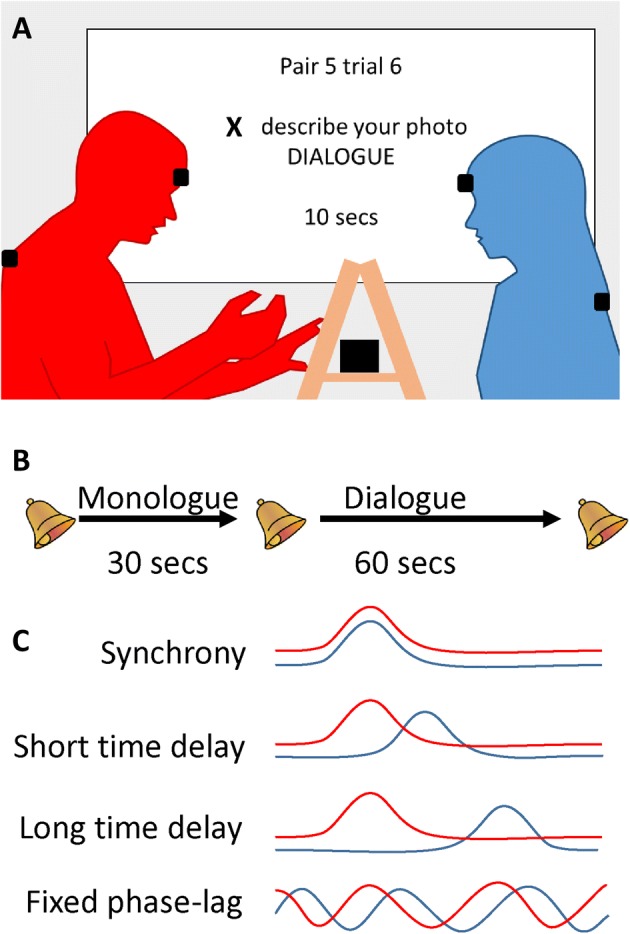
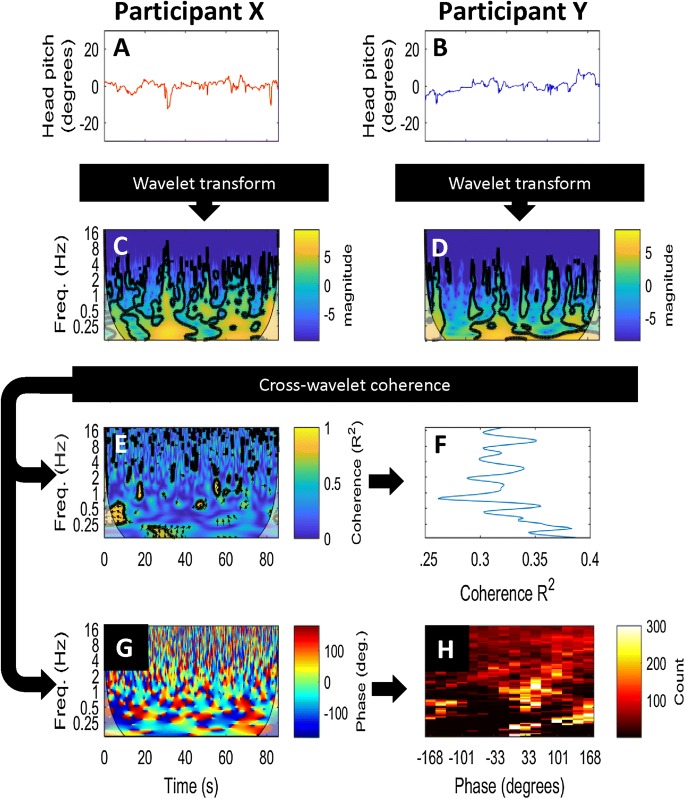
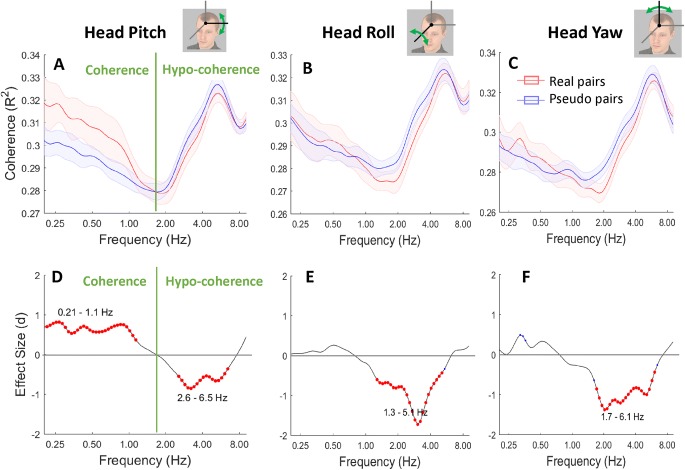
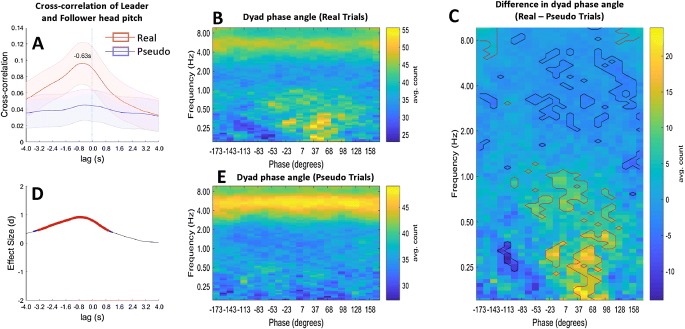
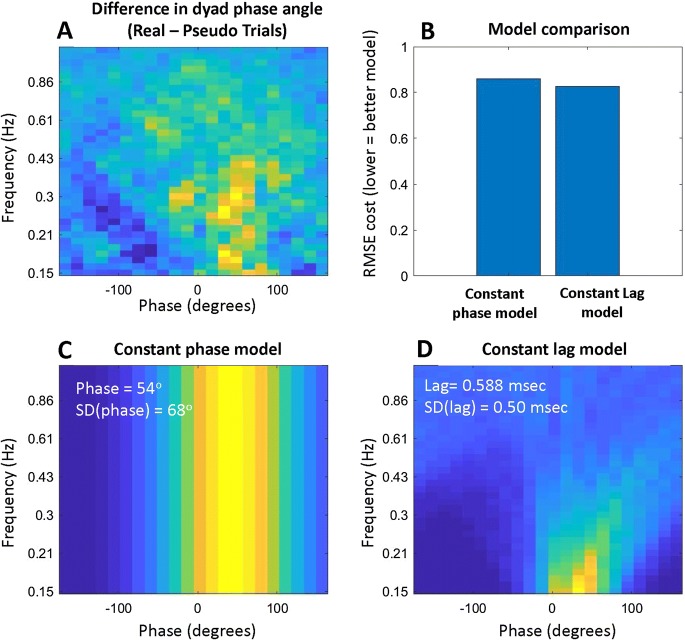
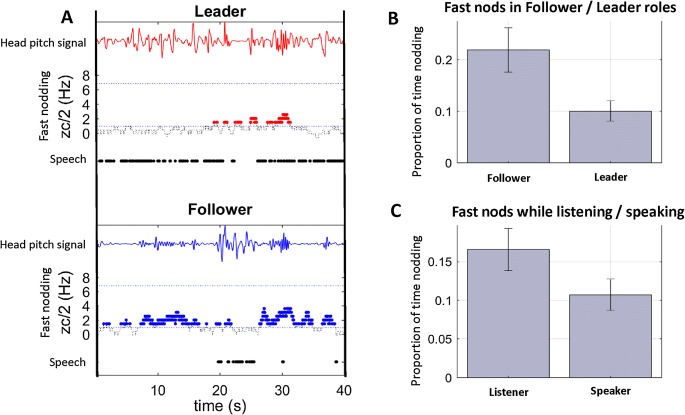
Conversation between two people involves subtle nonverbal coordination in addition to speech. However, the precise parameters and timing of this coordination remain unclear, which limits our ability to theorize about the neural and cognitive mechanisms of social coordination. In particular, it is unclear if conversation is dominated by synchronization (with no time lag), rapid and reactive mimicry (with lags under 1 s) or traditionally observed mimicry (with several seconds lag), each of which demands a different neural mechanism. Here we describe data from high-resolution motion capture of the head movements of pairs of participants (n = 31 dyads) engaged in structured conversations. In a pre-registered analysis pathway, we calculated the wavelet coherence of head motion within dyads as a measure of their nonverbal coordination and report two novel results. First, low-frequency coherence (0.2–1.1 Hz) is consistent with traditional observations of mimicry, and modeling shows this behavior is generated by a mechanism with a constant 600 ms lag between leader and follower. This is in line with rapid reactive (rather than predictive or memory-driven) models of mimicry behavior, and could be implemented in mirror neuron systems. Second, we find an unexpected pattern of lower-than-chance coherence between participants, or hypo-coherence, at high frequencies (2.6–6.5 Hz). Exploratory analyses show that this systematic decoupling is driven by fast nodding from the listening member of the dyad, and may be a newly identified social signal. These results provide a step towards the quantification of real-world human behavior in high resolution and provide new insights into the mechanisms of social coordination.
Overview
The claims and statistics of this paper haven’t been checked yet.
Free: it reads the open-access text and checks the first 5 claims that cite a source we can check. Create a free account to check every claim.
Integrity signals
Registry
Cites
Statistics
Figures
Verification
Claims the paper makes
The claims and statistics of this paper haven’t been checked yet.
Free: it reads the open-access text and checks the first 5 claims that cite a source we can check. Create a free account to check every claim.
Claims other papers make about this one
Each is checked against this paper’s own text: does it say what the citing paper says it does?
The cited source says what the claim attributes to it.
In the citing paper
“Recently, cross-wavelets were used to analyse movement features from dyads in conversation, and revealed how people tend to synchronise with one another at specific frequencies [14, 23, 24].”
From Using Wearable Sensors to Measure Interpersonal Synchrony in Actors and Audience Members During a Live Theatre Performance (2023) · cites this paper as [24]
Self-check
Percentages, sums and reported differences re-computed from the paper’s own numbers.
The self-check needs the paper’s full text.
Citations
Cites
Controlling the False Discovery Rate: A Practical and Powerful Approach to Multiple Testing
Benjamini, Y., & Hochberg, Y. (1995) · Journal of the Royal Statistical Society Series B: Statistical Methodology · doi:10.1111/j.2517-6161.1995.tb02031.x · Cited by 109,482 · cited 2×
“We correct for multiple comparisons using FDR (Benjamini and Hochberg 1995) and plot the results both in terms of mean coherence levels and effect sizes for head pitch, yaw, and roll (see Fig.”
BackgroundMethodClark, H. H. (1996) · doi:10.1017/cbo9780511620539 · Cited by 5,123
The chameleon effect: the perception–behavior link and social interaction
Chartrand, T. L., & Bargh, J. A. (1999) · Journal of Personality and Social Psychology · doi:10.1037/0022-3514.76.6.893 · Cited by 3,674
Using language: Communicative acts
Clark, H. H. (1996) · Cited by 2,721
Using language: Index of names
Clark, H. H. (1996) · Cited by 2,720
Cortical mechanisms of human imitation
Iacoboni, M., Woods, R. P., Brass, M., Bekkering, H., Mazziotta, J. C., & Rizzolatti, G. (1999) · Science · doi:10.1126/science.286.5449.2526 · Cited by 2,683 · cited 2×
“Thus, our finding provides support for the claim that mirror neuron systems (Iacoboni et al. 1999) or general visuomotor priming mechanisms (Heyes 2011) are sufficient to implement mimicry of real-world head movements in conversation.”
BackgroundResultToward a second-person neuroscience
Schilbach, L., Timmermans, B., Reddy, V., Costall, A., Bente, G., Schlicht, T., & Vogeley, K. (2013) · Behavioral and Brain Sciences · doi:10.1017/s0140525x12000660 · Cited by 1,510
The Duchenne smile: Emotional expression and brain physiology: II.
Ekman, P., Davidson, R. J., & Friesen, W. V. (1990) · Journal of Personality and Social Psychology · doi:10.1037/0022-3514.58.2.342 · Cited by 1,371
Neuroscience Needs Behavior: Correcting a Reductionist Bias
Krakauer, J. W., Ghazanfar, A. A., Gomez-Marin, A., MacIver, M. A., & Poeppel, D. (2017) · Neuron · doi:10.1016/j.neuron.2016.12.041 · Cited by 1,358
It's All in the Timing: Interpersonal Synchrony Increases Affiliation
Hove, M. J., & Risen, J. L. (2009) · Social Cognition · doi:10.1521/soco.2009.27.6.949 · Cited by 1,334
Cited by
Eye contact marks the rise and fall of shared attention in conversation
Wohltjen, S., & Wheatley, T. (2021) · Proceedings of the National Academy of Sciences · doi:10.1073/pnas.2106645118 · Cited by 102
“Finally, a study investigating interpersonal coordination during conversation found that dyads decoupled their head movements during conversation in a way that tracked with their status as a speaker or listener (62).”
BackgroundNonverbal communication in virtual reality: Nodding as a social signal in virtual interactions
Aburumman, N., Gillies, M. F. P., Ward, J. A., & Hamilton, A. F. D. C. (2022) · International Journal of Human-Computer Studies · doi:10.1016/j.ijhcs.2022.102819 · Cited by 115
“The study presented by (Hale et al., 2020) employed motion capture technology to investigate head nodding in the human-human dyadic social interaction (31 dyads), where cross-wavelet analysis was used to examine the data.”
InfluentialSelf-citationSpontaneous dyadic behavior predicts the emergence of interpersonal neural synchrony
Koul, A., Ahmar, D., Iannetti, G. D., & Novembre, G. (2023) · NeuroImage · doi:10.1016/j.neuroimage.2023.120233 · Cited by 75
Synchronized affect in shared experiences strengthens social connection
Cheong, J. H., Molani, Z., Sadhukha, S., & Chang, L. J. (2023) · Communications Biology · doi:10.1038/s42003-023-05461-2 · Cited by 75
“This can be observed in “ chameleon ” effects, in which individuals mutually adapt to each other ’ s behaviors during an interaction 42 – 52 .”
A review of theories and methods in the science of face-to-face social interaction
Hadley, L. V., Naylor, G., & Hamilton, A. F. D. C. (2022) · Nature Reviews Psychology · doi:10.1038/s44159-021-00008-w · Cited by 104
“For example, in their study on communicative blinking, Hömke et al. 140”
BackgroundSelf-citationQuantifying the interplay of conversational devices in building mutual understanding.
Dideriksen, C., Christiansen, M. H., Tylén, K., Dingemanse, M., & Fusaroli, R. (2023) · Journal of Experimental Psychology General · doi:10.1037/xge0001301 · Cited by 97
Body synchrony in triadic interaction
Dale, R. A. C., Bryant, G. A., Manson, J. H., & Gervais, M. M. (2020) · Royal Society Open Science · doi:10.1098/rsos.200095 · Cited by 58
Fujiwara, K., & Yokomitsu, K. (2021) · Behavior Research Methods · doi:10.3758/s13428-021-01612-7 · Cited by 58
“Separate analyses of the motions of each body part could establish certain clear patterns in the relative phase (e.g., head movement; Hale et al., 2020).”
BackgroundRelationship between cardiac cycle and the timing of actions during action execution and observation
Palser, E. R., Glass, J., Fotopoulou, A., & Kilner, J. M. (2021) · Cognition · doi:10.1016/j.cognition.2021.104907 · Cited by 37
Ayache, J., Connor, A. M., Marks, S., Kuss, D. J., Rhodes, D., Sumich, A. L., & Heym, N. (2021) · Frontiers in Psychology · doi:10.3389/fpsyg.2021.718237 · Cited by 47
Immersive machine learning for social attitude detection in virtual reality narrative games
Dobre, G. C., Gillies, M. F. P., & Pan, X. (2022) · Virtual Reality · doi:10.1007/s10055-022-00644-4 · Cited by 48
“We decided on this frequency as it has been used in the literature for low-level and subtle behaviour such as fast head nods (Hale et al. 2020).”
Trujillo, J. P., & Holler, J. (2021) · Brain Sciences · doi:10.3390/brainsci11080996 · Cited by 38
Goldstein, P., Losin, E. A. R., Anderson, S. R., Schelkun, V. R., & Wager, T. D. (2020) · The Journal of Pain · doi:10.1016/j.jpain.2020.03.001 · Cited by 36
“Also, we recognize that artificial synchrony is complex—for example, if participants realize they are being mimicked then the effects could be substantially altered—and that the parameters that govern optimal synchronization in dyadic settings require further research.(63) Finally, we did not try to infer a causal rel…”
BackgroundSynchrony within Triads using Virtual Reality
Miller, M. R., Sonalkar, N., Mabogunje, A., LEIFER, L. J., & Bailenson, J. N. (2021) · Proceedings of the ACM on Human-Computer Interaction · doi:10.1145/3479544 · Cited by 41
“With more advanced techniques, such as computer vision [59, 42] or magnetic tracking [28], synchrony measures have included matching motion in individual body parts and facial expressions.”
BackgroundMethodSun, Y., Greaves, D. A., Orgs, G., de C. Hamilton, A. F., Day, S., & Ward, J. A. (2023) · Proceedings of the ACM on Interactive Mobile Wearable and Ubiquitous Technologies · doi:10.1145/3580781 · Cited by 35
“Recently, cross-wavelets were used to analyse movement features from dyads in conversation, and revealed how people tend to synchronise with one another at specific frequencies [14, 23, 24].”
Self-citationCollins, H. K. (2022) · Current Opinion in Psychology · doi:10.1016/j.copsyc.2022.101402 · Cited by 44
Key, A. P. F., Yan, Y., Metelko, M., Chang, C., Kang, H., Pilkington, J., & Corbett, B. A. (2022) · Frontiers in Human Neuroscience · doi:10.3389/fnhum.2021.790085 · Cited by 39
“Studies in typical adults demonstrated that successful interactions involve alignment of behavior (Richardson et al., 2007; Konvalinka et al., 2010; Hale et al., 2019) and physiology (heart rate: Konvalinka et al.”
BackgroundComparing Manual and Automated Coding Methods of Nonverbal Synchrony
Fujiwara, K., Bernhold, Q. S., Dunbar, N. E., Otmar, C. D., & Hansia, M. (2020) · Communication Methods and Measures · doi:10.1080/19312458.2020.1846695 · Cited by 37
“As is the case for head movement, it is not easy to distinguish nodding and other head movements, but some studies developed a nodding detector using a mathematical algorithm (i.e., zero-crossing algorithm; Hale et al., 2020).”
MethodNeural mechanisms for emotional contagion and spontaneous mimicry of live facial expressions
Hirsch, J., Zhang, X., Noah, J. A., & Bhattacharya, A. (2023) · Philosophical Transactions of the Royal Society B Biological Sciences · doi:10.1098/rstb.2021.0472 · Cited by 34
Synchronized affect in shared experiences strengthens social connectionPreprint
Cheong, J. H., Molani, Z., Sadhukha, S., & Chang, L. J. (2020) · doi:10.31234/osf.io/bd9wn · Cited by 28
Blink as you sync: uncovering eye and nod synchrony in conversation using wearable sensing
Gupta, A., Strivens, F. L., Tag, B., Kunze, K., & Ward, J. A. (2019) · Proceedings of the 23rd International Symposium on Wearable Computers · doi:10.1145/3341163.3347736 · Cited by 27
Self-citationHadley, L. V., & Ward, J. A. (2021) · PLoS ONE · doi:10.1371/journal.pone.0258247 · Cited by 31
“While we are not able to further probe the basis of this very quick movement behaviour, we suggest that it could relate to the high-frequency backchannelling behaviour reported by Hale and colleagues [12].”
BackgroundInfluentialSelf-citationHead movement and its relation to hearing
Higgins, N. C., Pupo, D. A., Ozmeral, E. J., & Eddins, D. A. (2023) · Frontiers in Psychology · doi:10.3389/fpsyg.2023.1183303 · Cited by 29
“Of the synchronized behaviors and mimicry used to facilitate social interaction, head nodding acts as one of the primary means for conversational back-channeling, a term used to describe activity that confirms attention and encourages the talker to continue, and confirms mutual interest (Kendon, 1970; Lakin et al., 20…”
BackgroundConnecting cues: The role of nonverbal cues in perceived responsiveness
Carmichael, C. L., & Mizrahi, M. (2023) · Current Opinion in Psychology · doi:10.1016/j.copsyc.2023.101663 · Cited by 49
Scheidt, C. E., Pfänder, S., Ballati, A., Schmidt, S., & Lahmann, C. (2021) · Frontiers in Psychology · doi:10.3389/fpsyg.2021.696448 · Cited by 32
Cao, Y., He, Y., Chen, Y., Chen, M., You, S., Qiu, Y., Liu, M.-L., Luo, C., Chen, Z., Tong, X., et al. (2025) · ACM International Conference on Intelligent User Interfaces (IUI) · doi:10.1145/3708359.3712142 · Cited by 20
“While emotional signal transmission is crucial for interpersonal coordination [54, 59, 119], autistic children’s difculties with social afordances [57, 58, 60, 82] lead to challenges in social adaptation and independent living [24, 44, 66, 120].”
Quantifying the interplay of conversational devices in building mutual understandingPreprint
Dideriksen, C., Christiansen, M. H., Tylén, K., Dingemanse, M., & Fusaroli, R. (2020) · doi:10.31234/osf.io/a5r74 · Cited by 17
Fu, D., Incio-Serra, N., Motta‐Ochoa, R., & Blain‐Moraes, S. (2021) · Frontiers in Psychology · doi:10.3389/fpsyg.2021.749710 · Cited by 16
“Cross-wavelet analysis and wavelet coherence are measures that have been adopted by several studies to detect co-synchrony of signals in the time-frequency domain (Fujiwara and Daibo, 2016; Ward et al., 2018; Gupta et al., 2019; Fujiwara et al., 2020; Hale et al., 2020).”
MethodPan, Y., Wen, Y., Wang, Y., Schilbach, L., & Ji, C. (2023) · Psychoradiology · doi:10.1093/psyrad/kkad002 · Cited by 18
“…populations such as video recordings of interpersonal interactions, tracking of motor movements, psycho-physiological measurements (e.g. breathing, heart rate, and skin response), and neuroimaging (Cornejo et al. , 2017; Hale et al. , 2020; Lahnakoski et al. , 2020; Pan and Cheng, 2020).”
BackgroundHype, hyperscanning and embodied social neurosciencePreprint
Hamilton, A. F. D. C. (2020) · PsyArXiv (OSF Preprints) · doi:10.31234/osf.io/rc9wp · Cited by 14
Self-citationCalmResponses: Displaying Collective Audience Reactions in Remote Communication
Maeda, K., Arakawa, R., & Rekimoto, J. (2022) · ACM International Conference on Interactive Media Experiences · doi:10.1145/3505284.3529959 · Cited by 13
“In face-to-face communication, nodding has various meanings and functions [26, 56].”
BackgroundWhy behaviour matters: Studying inter-brain coordination during child-caregiver interaction
Haresign, I. M., Phillips, E., & Wass, S. V. (2024) · Developmental Cognitive Neuroscience · doi:10.1016/j.dcn.2024.101384 · Cited by 12
“These different routes may operate through quite distinct neural mechanisms (e.g., Hale et al., 2020; Heyes et al., 2021).”
Learning with others: teacher–learner brain synchrony depends on mutual gaze and joint attention
Felice, S. D., Ciò, F. D., Tompkins, D., Hakim, U., Pinti, P., Vigliocco, G., & Hamilton, A. F. D. C. (2025) · Cerebral Cortex · doi:10.1093/cercor/bhaf323 · Cited by 13
“To identify when participants performed nods , we analyzed head-movement data using the same method described by Hale and colleagues (Hale et al. 2020).”
Self-citationLongitudinal changes in infants' rhythmic arm movements during rattle-shaking play with mothers
Laudańska, Z., Pérez, D. L., Kozioł, A., Radkowska, A., Babis, K., Malinowska‐Korczak, A., & Tomalski, P. (2022) · Frontiers in Psychology · doi:10.3389/fpsyg.2022.896319 · Cited by 10
“To assess the degree of coordination between the infants’ two arms, we used wavelet coherence, which captures information on a range of constituent frequencies of the signals across the recorded interaction (e.g., Grinsted et al., 2004; Hale et al., 2020).”
MethodBloch, C., Tepest, R., Koeroglu, S., Feikes, K. I., Jording, M., Vogeley, K. T., & Falter, C. M. (2024) · European Archives of Psychiatry and Clinical Neuroscience · doi:10.1007/s00406-023-01750-3 · Cited by 11
Kappas, A., Stower, R. E., & Vanman, E. J. (2020) · Springer eBooks · doi:10.1007/978-3-030-34964-6_8 · Cited by 11
Yu, X., & Bao, Y. (2020) · PsyCh Journal · doi:10.1002/pchj.390 · Cited by 9
From unimodal to multimodal dynamics of verbal and nonverbal cues during unstructured conversation
Fauviaux, T., Marín, L., Parisi, M., Schmidt, R. C., & Mostafaoui, G. (2024) · PLoS ONE · doi:10.1371/journal.pone.0309831 · Cited by 11
Towards a characterisation of emotional intent during scripted scenes using in-ear movement sensors
Frohn, S. A. L., Matharu, J. S., & Ward, J. A. (2020) · International Symposium on Wearable Computers · doi:10.1145/3410531.3414292 · Cited by 7
“1 For each of the three dyad pairings, the ++ and - - trials are compared in twoways: 1) overall dyadmovement energy, and 2) wavelet coherence analysis, a spectral method of capturing synchronicity [6, 9].”
BackgroundMethodSelf-citationNon-invasive optical imaging of brain function with fNIRS: Current status and way forward
Pinti, P., Tachtsidis, I., Burgess, P. W., & Hamilton, A. F. D. C. (2023) · Elsevier eBooks · doi:10.1016/b978-0-12-820480-1.00028-0 · Cited by 15
Self-citationTowards Context-Aware Facial Emotion Reaction Database for Dyadic Interaction Settings
Sham, A. H., Khan, A. N., Lamas, D., Tikka, P., & Anbarjafari, G. (2023) · Sensors · doi:10.3390/s23010458 · Cited by 8
Predicting Autism from Head Movement Patterns during Naturalistic Social Interactions
McDonald, D. Q., Sarıyanidi, E., Zampella, C., Dejardin, E., Herrington, J. D., Schultz, R. T., & Tunç, B. (2023) · International Conference on Medical and Health Informatics (ICMHI) · doi:10.1145/3608298.3608309 · Cited by 10
“A growing body of work has demonstrated the utility of computational behavior analysis during screen–based tasks ( e.g., participant watching videos or looking at images) [22] and, less commonly, live social interactions [13].”
BackgroundHead Movement Patterns during Face-to-Face Conversations Vary with Age
McDonald, D. Q., Zampella, C., Sarıyanidi, E., Manakiwala, A., Dejardin, E., Herrington, J. D., Schultz, R. T., & Tunç, B. (2022) · INTERNATIONAL CONFERENCE ON MULTIMODAL INTERACTION · doi:10.1145/3536220.3563366 · Cited by 6
“interpersonal coordination [15] – the tendency for social partners to match the form and timing of one another’s verbal and nonverbal cues – which has been found to be critical for positive social interaction, and reduced in certain mental health conditions [8, 26, 41].”
BackgroundComparison of Human Experts and AI in Predicting Autism from Facial Behavior.
Sarıyanidi, E., Zampella, C., Dejardin, E., Herrington, J. D., Schultz, R. T., & Tunç, B. (2023) · PubMed · Cited by 14
It takes two, not one: context-aware nonverbal behaviour generation in dyadic interactions
Tuyen, N. T. V., & Çeliktutan, O. (2023) · Advanced Robotics · doi:10.1080/01691864.2023.2279595 · Cited by 7
“From human behaviour studies, interpersonal coordination in dyadic interactions can be observed either in the same time window or with several seconds lag [33–35].”
BackgroundCognitive Mechanisms of Being Imitated
Wicher, P., Farmer, H., & Hamilton, A. F. D. C. (2024) · Springer eBooks · doi:10.1007/978-3-031-62634-0_14 · Cited by 6
Self-citationTruth-tellers' and liars' synchrony during attitude-inconsistent conversations
Dunbar, N. E., Fujiwara, K., & Bernhold, Q. S. (2023) · Frontiers in Communication · doi:10.3389/fcomm.2023.921446 · Cited by 5
Farley, S. D. (2019) · Journal of Nonverbal Behavior · doi:10.1007/s10919-019-00323-0 · Cited by 5
Investigating the Perceived Strengths and Limitations of Free-Viewpoint Video
MacQuarrie, A., & Steed, A. J. (2020) · Frontiers in Virtual Reality · doi:10.3389/frvir.2020.00011 · Cited by 10
“As a result, a lack of such subtle gestures of acknowledgment is not only an issue in FVV, but still presents challenges in other forms of XR content (e.g., avatars), despite their ability to respond to events in real-time (Hale et al., 2020).”
BackgroundDaily Routine Recognition for Hearing Aid Personalization
Kuebert, T., Puder, H., & Koeppl, H. (2021) · SN Computer Science · doi:10.1007/s42979-021-00538-3 · Cited by 5
Quantifying Social Connection With Verbal and Non-Verbal Behaviors in Virtual Reality Conversations
Kim, H., & Lee, J. (2025) · CHI Conference on Human Factors in Computing Systems · doi:10.1145/3706598.3713674 · Cited by 7
“There also have been reports suggesting that nodding can play different roles depending on its frequency band [35, 37].”
InfluentialNishimura, K., Ito, K., Fujiwara, K., Fujita, K., & Itoh, Y. (2023) · Quality and User Experience · doi:10.1007/s41233-023-00063-6 · Cited by 4
Testing the causal relationship between interpersonal closeness and inter-brain synchrony
Fornari, L., Janssen, T. W. P., Davidesco, I., Krabbendam, L., & van Atteveldt, N. (2026) · Scientific Reports · doi:10.1038/s41598-026-36958-5 · Cited by 4
“This finding is consistent with previous research showing that motor synchrony arises spontaneously during social interaction, likely driven by automatic motor mimicry processes 64–66 .”
Psycholinguistic perspectives on face-to-face conversation
Holler, J., & Kuhlen, A. K. (2026) · Nature Reviews Psychology · doi:10.1038/s44159-026-00538-1 · Cited by 7
Interactive alignment as an allostatic process: A literature review
Niño, D., Rodríguez, S., Herrera, D. A., Ramírez, M. B., Valencia, S. M., & Cárdenas, J. C. V. (2023) · New Ideas in Psychology · doi:10.1016/j.newideapsych.2023.101030 · Cited by 5
Shrivastava, A. (2023) · Journal of Marketing Communications · doi:10.1080/13527266.2022.2164792 · Cited by 3
“The customer-salesperson dyad is a joint activity between individuals by which inter-locutors share information Narteh et al. (2013); Wang, Tai, and Grover (2013); Hale et al. (2020).”
BackgroundKodama, K., Shimizu, D., & Fujiwara, K. (2024) · Frontiers in Psychology · doi:10.3389/fpsyg.2024.1296521 · Cited by 4
“Similarly, listeners also move their heads to show their understanding and agreement (i.e., nodding; Hale et al., 2020).”
BackgroundTeacher-Student Inter-Brain and Behavioral Synchronies in Remote Education
You, J., Jung, M., Shin, Y., & Kim, K. K. (2025) · IEEE Access · doi:10.1109/access.2025.3569961 · Cited by 2
“For example, BS is typically measured using expensive systems that require time-consuming analyses such as manual observation and coding by individuals [60], [61], whereas the methodology employed in this study can automatically extract data relevant to the educational context from videos.”
Gvirts, H. Z., Sharma, M., Gutman, I., Dahan, A., Pan, Y., Stotler, J., & Wilcox, T. (2023) · Journal of Visualized Experiments · doi:10.3791/65347 · Cited by 5
From social effort to social behavior: An integrated neural model for social motivation
Kanterman, A., & Shamay‐Tsoory, S. (2025) · Neuroscience & Biobehavioral Reviews · doi:10.1016/j.neubiorev.2025.106170 · Cited by 4
Widianto, S., & Wilderom, C. P. M. (2021) · Journal of Asia Business Studies · doi:10.1108/jabs-05-2020-0175 · Cited by 6
Head Nodding and Hand Coordination Across Dyads in Different Conversational ContextsPreprint
Falk, P., Cañigueral, R., Ward, J. A., & Hamilton, A. F. D. C. (2023) · Research Square · doi:10.21203/rs.3.rs-3526068/v1 · Cited by 2
Self-citationThe effects of teacher nodding: exploring mimicry, engagement, and wellbeing in the EFL classroom
Kennedy, O., Kuwahara, N., Noble, T., & Fukada, C. (2024) · Frontiers in Education · doi:10.3389/feduc.2024.1361965 · Cited by 3
Heart rate synchrony in minimal social interactions in relation to mimicry
Wicher, P., Murata, A., Kumano, S., & Hamilton, A. F. D. C. (2026) · Royal Society Open Science · doi:10.1098/rsos.251436 · Cited by 1
“This alignment manifests across multiple levels, ranging from observable actions [1,2] and choices [3,4] to the involuntary coupling of autonomic signals such as heartbeats [5], electrodermal activity [6] or respiration [7].”
Self-citationEditorial: Physical and psychological proximity in humans: From the body to the mind and vice-versa
Fini, C., Bolis, D., Moreau, Q., & Era, V. (2023) · Frontiers in Psychology · doi:10.3389/fpsyg.2023.1113851 · Cited by 2
“In these contexts, where two or more individuals coordinate their actions, thoughts, or words, and continuously predict, monitor, and adapt to each other’s behavior (e.g., Vesper et al., 2010; Hale et al., 2020; Moreau et al., 2020, 2022; Boukarras et al., 2021, 2022; Boukarras et al.; Era et al., 2022; Sacheli et al.…”
BackgroundBloch, C., Tepest, R., Koeroglu, S., Feikes, K. I., Jording, M., Vogeley, K. T., & Falter‐Wagner, C. M. (2023) · doi:10.31219/osf.io/ukh9c · Cited by 1
Sound Feedback for Social Distance: The Case for Public Interventions during a Pandemic
Primett, W., Silva, H., & Gamboa, H. F. S. (2022) · Electronics · doi:10.3390/electronics11142151 · Cited by 1
Structural complexity of the long-term collective rhythm of naturalistic conversations.Preprint
Farrera, A., Rascón, C., & Ramos‐Fernández, G. (2022) · SocArXiv (OSF Preprints) · doi:10.31235/osf.io/n2x4s
Viaud‐Delmon, I. (2023) · Perception · doi:10.1177/03010066231204815
“However, readers familiar with experimental approaches to perception in interaction, such as those discussed by Hale et al. (2020), may regret that the book does not attempt to bridge the gap to these methodologies.”
BackgroundCrone, C., Richardson, M. J., & Kallen, R. W. (2025) · Research Square · doi:10.21203/rs.3.rs-6333739/v1
Mehr als Reden: Embodiment im Coaching
Tschacher, W. (2026) · Organisationsberatung Supervision Coaching · doi:10.1007/s11613-026-00990-1
“Synchronisierte Interaktionen waren in Studien oft mit prosozialen Gefühlen und positivem Affekt verknüpft (Chartrand und Lakin 2013; Mogan et al. 2017) und waren ausgeprägter zwischen Personen, die sich besser kannten (Dirker et al. im Druck; Hale et al. 2020).”
Communication: Basic Properties and Their Relevance to Relationship Research
SILLARS, A. L., & Vangelisti, A. L. (2026) · Cambridge University Press eBooks · doi:10.1017/9781009381949.018
Béres, L., Nagy, P., Pólya, T., Weiss, B., Boncz, A., & Winkler, I. (2026) · Frontiers in Psychology · doi:10.3389/fpsyg.2026.1655164 · Cited by 1
“…and prosodic features; Brennan and Clark, 1996; Branigan et al., 2007; Levitan and Hirschberg, 2011), postural sway (Shockley et al., 2003), head motion (Hale et al., 2020; Fujiwara and Daibo, 2016), and gaze direction (Richardson and Dale, 2005) when communicating face-to-face with each other.”
GRAB-HAI : Generating Reciprocally Adaptive Behavior for Human-Agent Interaction
Woo, J. (2023) · theses.fr (ABES) · doi:10.70675/7456411dzb289z4b12za36bz2d598a386069
Spoken disagreement is more constructive than written disagreement
Bevis, B., Schroeder, J., & Yeomans, M. (2026) · Nature Communications · doi:10.1038/s41467-026-71669-5 · Cited by 3
“For example, in speech, active listening is expressed in turn from non-verbal and verbal cues 43 – 46 .”
Observation of a third person promotes speaker’s role performance during dyadic communication
Amano, S.-I., & Ogawa, K. (2026) · Frontiers in Communication · doi:10.3389/fcomm.2026.1735595
A transdiagnostic AI-based measure of interpersonal coordination in autism and other conditions
Yankowitz, L. D., Zampella, C., Pandey, J., Bartley, G. K., Parish‐Morris, J., Brodkin, E. S., Herrington, J. D., Tunç, B., Schultz, R. T., & Sarıyanidi, E. (2026) · Molecular Autism · doi:10.1186/s13229-026-00722-3
“Wavelet-based methods [43, 44] can overcome some limitations of linear WCC and phase-based approaches by decomposing behavioral signals into component frequencies and assessing phase alignment at different timescales.”
Сергеевна, В. Е. (2026) · Manuscript · doi:10.30853/mns20260111
Attenuated adaptive growth of interpersonal synchrony in autismPreprint
Kwon, J., & Kotani, H. (2026) · bioRxiv (Cold Spring Harbor Laboratory) · doi:10.64898/2026.06.02.729457
“…filtered using a fourth-order zero-phase Butterworth filter with cutoffs of 0.1-5 Hz to capture conversational head movement rhythms, including nodding-related oscillations, while removing slow drift and high-frequency noise (Fujiwara et al., 2020; Hale et al., 2020; Yokozuka et al., 2018).”
InfluentialDynamics of Connection of Electroencephalograms Patterns in a Computer Game
Zhukova, O. V., & Dick, O. E. (2026) · BIOPHYSICS · doi:10.1134/s0006350926700107
Movement synchrony and familiarity in dyadic and four-person conversations
Dirker, D., Stukenbrock, A., & Tschacher, W. (2026) · Frontiers in Psychology · doi:10.3389/fpsyg.2026.1744354 · Cited by 1
Joint Agency and Co-creativity in Shared Diminished Reality
Vuarnesson, L., Laroche, J., & Bachrach, A. (2026) · SN Computer Science · doi:10.1007/s42979-026-05346-1
“It can be associated with a more general turn-taking coordination pattern one also finds in conversations [24], games [33], and other social encounters [43 ].”
Head Nodding and Hand Coordination Across Dyads in Different Conversational Contexts
Falk, P., Cañigueral, R., Ward, J., & Hamilton, A. F. D. C. (2026) · Journal of Nonverbal Behavior · doi:10.1007/s10919-026-00532-4 · Cited by 2
Self-citation
Metadata
- Authors
- Hale, J., Ward, J. A., Buccheri, F., Oliver, D., & Hamilton, A. F. D. C.
- Affiliations
- University College London (GB)
- Corresponding author
- Hamilton, Antonia F. de C.
- Venue
- Journal of Nonverbal Behavior
- Published
- 2019-10-15
- Volume
- 44
- Issue
- 1
- Pages
- 63-83
- ISSN
- 0191-5886 (ISSN-L)
- 1573-3653
- PMC
- PMC7054373
- OpenAlex
- W2966251175
- Cited by
- 83
- References
- 57
- Citations by year
- 2026: 15 · 2025: 6 · 2024: 6 · 2023: 22 · 2022: 11 · 2021: 11 · 2020: 10 · 2019: 2
- FWCI
- 10.68
- Type
- journal article
- Language
- en
- Open access
- hybrid
- doi.org
- Licence
- cc-by
- creativecommons.org/licenses/by/4.0 (tdm)
- creativecommons.org/licenses/by/4.0 (vor)
- Locations
- Journal of Nonverbal Behavior (publishedVersion, cc-by)
- PubMed Central (publishedVersion, cc-by)
- PubMed (publishedVersion)
- Goldsmiths (University of London) (acceptedVersion)
- UCL Discovery (University College London) (submittedVersion)
- Funders
- European Research Council (313398)
- Defence Science and Technology Laboratory
- Leverhulme Trust (RPG-2016-251)
- Topics
- Social Sciences › Psychology › Social Psychology › Action Observation and Synchronization
- Social Sciences › Arts and Humanities › Language and Linguistics › Language, Discourse, Communication Strategies
- Social Sciences › Psychology › Social Psychology › Health, Education, and Physical Culture
- Keywords
- interpersonal coordination, dyadic conversation, mimicry, wavelet coherence, head movement, nodding, mirror neuron system, social coordination, social signals
About these checks
Registry, retraction, Cites and statistics results are computed, not judged, with one exception: a printed reference that no index lists is read once by a model before it counts as a citation error. Claims are extracted by a model and kept only when their quote appears verbatim in the text; each cited source is then checked, with a model’s help, for whether it says what the claim relies on. Those verdicts can be wrong — read the claim’s quote and the cited source before relying on one.
Statistics and arithmetic are recomputed, not judged.
Confidence bands are shown only for fields calibrated on our annotated test set. None is calibrated yet, so no band is shown.
What counts as a claim ›How we measure confidence ›How we check this ›
Are you an author, or do you see a problem with this page? Request a review
Data sources
Bibliographic data: Semantic Scholar, OpenAlex, Crossref.
Contains information from the Semantic Scholar Academic Graph Datasets, made available under the ODC Attribution License (ODC-BY 1.0).
Semantic Scholar’s data is described in: Kinney, R., et al. (2023). The Semantic Scholar Open Data Platform. arXiv:2301.10140.
