

School-Based Interventions Improve Body Image and Media Literacy in Youth: A Systematic Review and Meta-Analysis
Open accessThe DOI matches its Crossref record; 64 of the 65 references it cites were found in a registry or an index.
Abstract
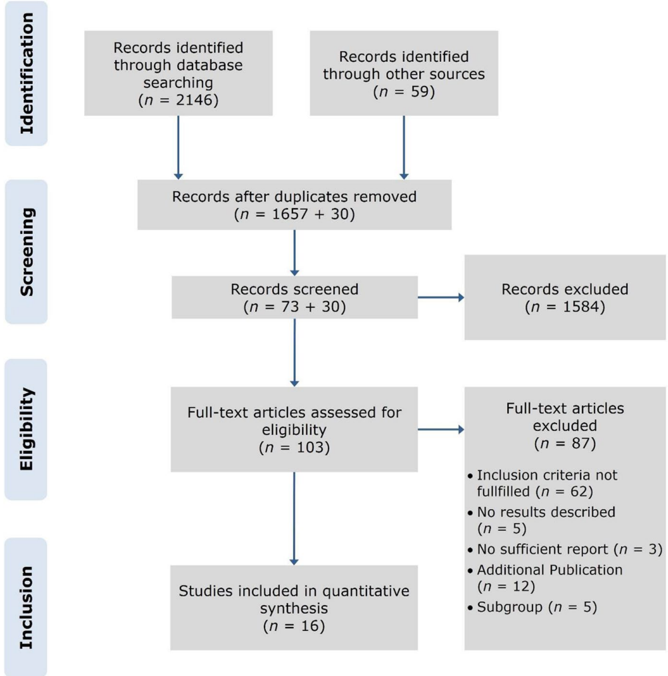
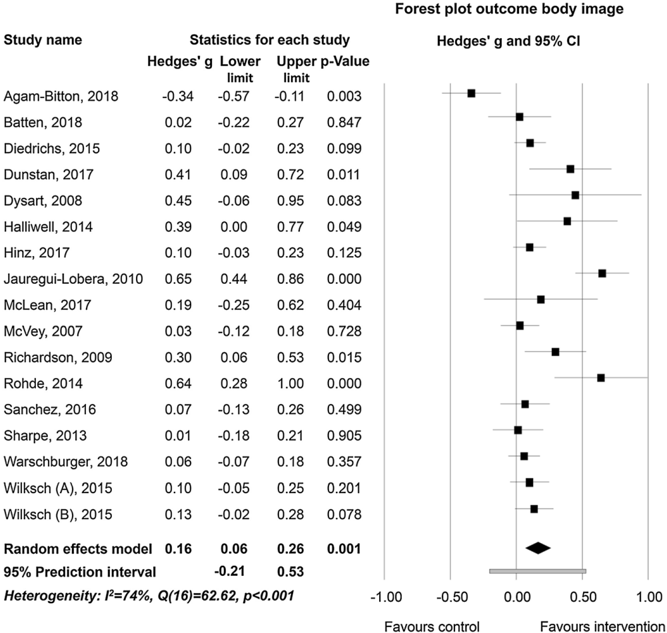
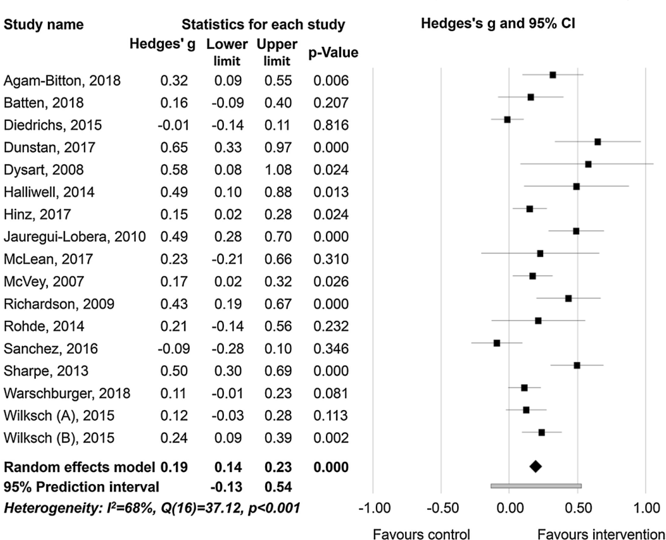
Body ideals conveyed by the media and by body comparisons often result in body dissatisfaction, which can cause risky health behaviours and eating disorders, especially in adolescents. We conducted a meta-analytic review of existing school-based interventions designed to enhance media literacy in order to reduce body dissatisfaction and to promote a positive body image. We included controlled trials examining children and adolescents from grade five to nine (age 10–15 years) after a manual search and a comprehensive literature search using PsycINFO, Medline, Web of Science, and CENTRAL. We computed average weighted effect sizes (Hedges’ g) with the help of a random effects model and identified seventeen different programme evaluations with 7392 participants. We found a significantly larger effect on positive body image and media literacy in the intervention compared to control groups. However, heterogeneity was substantial for both outcomes. Results suggest that media literacy interventions have the potential to improve media literacy and reduce body dissatisfaction. Interventions that worked with the principle of induction of cognitive dissonance were the most effective.
Overview
The claims and statistics of this paper haven’t been checked yet.
Free: it reads the open-access text and checks the first 5 claims that cite a source we can check. Create a free account to check every claim.
Integrity signals
Registry
Cites
Statistics
Figures
Verification
Claims the paper makes
The claims and statistics of this paper haven’t been checked yet.
Free: it reads the open-access text and checks the first 5 claims that cite a source we can check. Create a free account to check every claim.
Claims other papers make about this one
Each is checked against this paper’s own text: does it say what the citing paper says it does?
The source backs part of the claim, not all of it — or backs it for a different population, condition or comparison.
In the citing paper
“Reassuringly, studies show comparable benefits between general media and social media literacy programs.317,318”
From Digital Ecosystems, Children, and Adolescents: Technical Report (2026) · cites this paper as [317]
Experimental — accuracy not yet measured
Self-check
Percentages, sums and reported differences re-computed from the paper’s own numbers.
The self-check needs the paper’s full text.
Citations
Cites
Diagnostic and Statistical Manual of Mental Disorders
American Psychiatric Association (2013) · doi:10.1176/appi.books.9780890425596 · Cited by 116,369
Measuring inconsistency in meta-analyses
Higgins, J. P. T., Thompson, S. G., Deeks, J. J., & Altman, D. G. (2003) · BMJ · doi:10.1136/bmj.327.7414.557 · Cited by 63,139
Bias in meta-analysis detected by a simple, graphical test
Egger, M., Smith, G. D., Schneider, M., & Minder, C. (1997) · BMJ · doi:10.1136/bmj.315.7109.629 · Cited by 56,722
Meta-analysis in clinical trials
DerSimonian, R., & Laird, N. (1986) · Controlled Clinical Trials · doi:10.1016/0197-2456(86)90046-2 · Cited by 39,552
RoB 2: a revised tool for assessing risk of bias in randomised trials
Sterne, J. A. C., Savović, J., Page, M. J., Elbers, R. G., Blencowe, N. S., Boutron, I., Cates, C. J., Cheng, H.-Y., Corbett, M. S., Eldridge, S. M., et al. (2019) · BMJ · doi:10.1136/bmj.l4898 · Cited by 34,787
The Ecology of Human Development: Experiments by Nature and Design
Bronfenbrenner, U. (1979) · Harvard University Press eBooks · doi:10.4159/9780674028845 · Cited by 26,084
A Theory of Cognitive Dissonance
Festinger, L. (1957) · doi:10.1515/9781503620766 · Cited by 24,241
ROBINS-I: a tool for assessing risk of bias in non-randomised studies of interventions
Sterne, J. A., Hernán, M. A., Reeves, B. C., Savović, J., Berkman, N. D., Viswanathan, M., Henry, D., Altman, D. G., Ansari, M. T., Boutron, I., et al. (2016) · BMJ · doi:10.1136/bmj.i4919 · Cited by 20,329
(1985) · Medical Entomology and Zoology · Cited by 19,180
Duval, S., & Tweedie, R. (2000) · Biometrics · doi:10.1111/j.0006-341x.2000.00455.x · Cited by 14,099
Research works printed but not linked: 5
- 6. Bartholomew, L. K., Parcel, G. S., Kok, G., & Gottlieb, N. H. (2006). Planning health promotion pro- grammes: An intervention mapping approach. Jossey-Bass.
- 7. Batten, S. B. R. (2018). Incorporating asset-building into a shared risk factor approach to schoolbased eating disorder and obesity prevention (Dissertation). Retrieved from EBSCOhost psych database (Accession No. 2017-36664-105).
- 35. Kurz, M., & Berger, U. (2019). School-based media literacy prevention programmes for body dissatisfac- tion: A systematic review; PROSPERO 2019 CRD42019128824. Available from: http:// www. crd. york. ac. uk/ PROSP ERO/ displ ay_ record. php? ID= CRD42 01912 8824
- 55. Schaefer, L. M., Burke, N. L., Thompson, J. K., Dedrick, R. F., Heinberg, L. J., Calogero, R. M., Bar- done-Cone, A. M., Higgins, M. K., Frederick, D. A., Kelly, M., Anderson, D. A., Schaumberg, K., Nerini, A., Stefanile, C., Dittmar, H., Clark, E., Adams, Z., Macwana, S., Klump, K. L., … Swami, V. (2015). Development and validation of the sociocultural attitudes towards appearance question- naire-4 (SATAQ-4). Psychological Assessment, 27(1), 54-67. https:// doi. org/ 10. 1037/ a0037 917 · DOI · Paper page
- 69. Wertheim, E. H., Paxton, S. J., & Blaney, S. (2009). Body image in girls body image, eating disorders, and obesity in youth: Assessment, prevention, and treatment (2nd ed., pp. 47-76). American Psy- chological Association.
Cited by
Mougharbel, F., Chaput, J., Sampasa‐Kanyinga, H., Hamilton, H. A., Colman, I., Leatherdale, S. T., & Goldfield, G. S. (2023) · Frontiers in Public Health · doi:10.3389/fpubh.2023.1190390 · Cited by 93
Eyal, K., & Te’eni-Harari, T. (2023) · Journal of Children and Media · doi:10.1080/17482798.2023.2265510 · Cited by 48
“In the next stage, the authors discussed the findings to reach consistent conclusions for inclusion in the overall review, in a process similar to that described by Bellon-Harn et al. (2020), Kurz et al. (2022), and See et al. (2020).”
The healthy eating movement on social media and its psychological effects on body image
Zaharia, A., & Gonța, I. (2024) · Frontiers in Nutrition · doi:10.3389/fnut.2024.1474729 · Cited by 46
The media literacy theory of change and the message interpretation process model
Austin, E. W., & Domgaard, S. (2024) · Communication Theory · doi:10.1093/ct/qtae018 · Cited by 42
Rodgers, R. F., Gordon, A. R., Burke, N. L., & Ciao, A. C. (2024) · Eating Disorders · doi:10.1080/10640266.2024.2366546 · Cited by 29
“Relatedly, parents may help children to develop media literacy skills that have been shown to be helpful in reducing risk factors for eating disorders (Chua et al., 2020; Kurz et al., 2022).”
Boraita, R. J., Ibort, E. G., Torres, J. M. D., & Alsina, D. A. (2023) · Clinical Child Psychology and Psychiatry · doi:10.1177/13591045231200661 · Cited by 28
Wang, Y., Gu, X. M., Geng, J., Wei, X., & Lei, L. (2024) · Cyberpsychology Journal of Psychosocial Research on Cyberspace · doi:10.5817/cp2024-1-2 · Cited by 24
“Recently, a systematic review and meta-analysis revealed that media literacy interventions have the potential to improve media literacy and reduce body dissatisfaction (Kurz et al., 2022).”
BackgroundA Systematic Review Exploring the Effectiveness of Body Image Interventions Among Boys
Ahuja, L., Schneider, J., Budhraja, M., Diedrichs, P. C., & Williamson, H. (2024) · Adolescent Research Review · doi:10.1007/s40894-024-00246-y · Cited by 25
“Some reviews have focused on the effectiveness of specific therapeutic approaches to mitigate body dissatisfaction, such as media literacy and physical activity interventions (Andermo et al., 2020; Kurz et al., 2022).”
Brichacek, A. L., Neill, J. T., Murray, K., Rieger, E., & Watsford, C. R. (2025) · Adolescent Research Review · doi:10.1007/s40894-024-00256-w · Cited by 21
“…intervention controls) in the present study were also comparable to that reported for other body image intervention programs (Alleva et al., 2015; Kurz et al., 2022; Le et al., 2017; Stice et al., 2019), lending further support to body image flexibility as a potentially viable prevention…”
Lin, Y., Chen, L., Huang, Z., Barnhart, W. R., Cui, T., & He, J. (2023) · Body Image · doi:10.1016/j.bodyim.2023.03.006 · Cited by 20
The relationship between media literacy and well-being: A systematic review and meta-analysis
Gordon, C. S., Ferber, K. A., Notley, T., Rodgers, R., Bradshaw, E. L., Basarkod, G., Anderson, J., McLean, S. A., Mizzi, S., Jarman, H. K., et al. (2025) · Educational Research Review · doi:10.1016/j.edurev.2025.100731 · Cited by 20
Mahon, C., Hamburger, D., Yager, Z., Almaraz, M., Mooney, J. T., Tran, T., O’Dowd, O., Bauert, L., Smith, K., Gomez-Trejo, V., et al. (2023) · Body Image · doi:10.1016/j.bodyim.2023.101636 · Cited by 18
Wang, H., Alivi, M. A., & Mustafa, S. E. (2025) · Body Image · doi:10.1016/j.bodyim.2025.101895 · Cited by 19
Effects of social media on body dissatisfaction in junior high school girls in Japan
Hosokawa, R., Kawabe, K., Nakachi, K., Soga, J., Horiuchi, F., & Ueno, S. (2022) · Eating Behaviors · doi:10.1016/j.eatbeh.2022.101685 · Cited by 18
A mobile-based educational intervention on media health literacy: A quasi-experimental study
Nazarnia, M., Zarei, F., & Roozbahani, N. (2023) · Health Promotion Perspectives · doi:10.34172/hpp.2023.28 · Cited by 17
Lin, L.-C., Chang, F., Huang, T.-F., Chen, T., Chiu, C., Chen, P.-H., Miao, N., Chuang, H., & Chen, H. (2024) · Behavioral Sciences · doi:10.3390/bs14111023 · Cited by 16
“While studies [31,32] have established a link between media exposure and body dissatisfaction, and research [27] suggests that media literacy can improve adolescents’ body image, there remains a significant gap in research on educational interventions addressing the digital marketing of…”
Sharp, G., Bilal, M., Fernando, A. N., & de Boer, K. (2023) · Body Image · doi:10.1016/j.bodyim.2023.06.004 · Cited by 16
Digital Ecosystems, Children, and Adolescents: Technical Report
Munzer, T., Milkovich, L. M., Madigan, S., Tomopoulos, S., Parga-Belinkie, J., Ajumobi, T., Cross, C., Gerwin, R., Council on Communications and Media, Radesky, J., et al. (2026) · Pediatrics · doi:10.1542/peds.2025-075321 · Cited by 14
Comprehensive Scoping Review on Body Image Perceptions and Influences in Children and Adolescents
Zanlorenci, S., Gonçalves, L., Moraes, M. S., Santiago, L. N., Pedroso, M. S., & Silva, D. A. S. (2024) · European Journal of Investigation in Health Psychology and Education · doi:10.3390/ejihpe14100179 · Cited by 13
“Interventions can improve with regard to evaluating the effectiveness of intervention programs [39], improving body image assessment [47], the need for more research with men [41,45], and the need for more studies on media literacy approaches that consider different cultures with different…”
BackgroundInfluentialGenital body image: A brief review and future directions
Sharp, G., & McGrath, I. (2025) · Body Image · doi:10.1016/j.bodyim.2025.101929 · Cited by 13
Poli, S., Salerno, L., Delvecchio, E., Muscolino, A., Tona, A. L., Ghizzoni, G., Nembrini, G., Brugnera, A., & Donisi, V. (2025) · Current Addiction Reports · doi:10.1007/s40429-025-00694-z · Cited by 13
“Moreover, when considering additional variables associated to problematic social media use, a recent review suggests that enhancing media literacy among children and adolescents through school-based interventions may play a role in reducing body dissatisfaction [87].”
Paraskeva, N., Haywood, S., Anquandah, J. S., White, P., Budhraja, M., Diedrichs, P. C., & Williamson, H. (2025) · Journal of Medical Internet Research · doi:10.2196/66625 · Cited by 12
“In addition, another systematic review and meta-analysis looking at body image and media literacy interventions for young people found that interventions that induced and provided opportunities to resolve cognitive dissonance in participants were the most effective [90].”
Sabiston, C. M., Prichard, I. J., & Thøgersen‐Ntoumani, C. (2025) · Psychology of sport and exercise · doi:10.1016/j.psychsport.2025.102959 · Cited by 12
The Impact of TikTok on Body Image: A Narrative Review of the Literature
Alamyar, I. H., & Khotimah, K. (2023) · JKOMDIS Jurnal Ilmu Komunikasi Dan Media Sosial · doi:10.47233/jkomdis.v3i3.1265 · Cited by 12
Chowdhury, A. M., & bin Ahsan, W. (2024) · Userhub Journal · doi:10.58947/journal.fzra78 · Cited by 12
Associations between Body Image and Self-Perceived Physical Fitness in Future Spanish Teachers
Rojo-Ramos, J., Gómez-Paniagua, S., Carlos‐Vivas, J., Barrios-Fernández, S., Vega-Muñoz, A., Mañanas-Iglesias, C., Contreras-Barraza, N., & Adsuar, J. C. (2022) · Children · doi:10.3390/children9060811 · Cited by 12
“As a result, public health organisations and universities should design supports to improve future teachers’ BI by providing PA programs, education and individualised psychological attention [82,83].”
BackgroundBrichacek, A. L., Neill, J. T., Murray, K., Rieger, E., & Watsford, C. R. (2024) · Body Image · doi:10.1016/j.bodyim.2024.101726 · Cited by 11
Samari, E., Vaingankar, J. A., Tan, B. C. W., Chang, S. S. H., Tan, Y. W. B., Archana, S., Chua, Y. C., Tang, C. Y. Z., Lee, Y. P., Chew, C. S. E., et al. (2025) · Frontiers in Psychiatry · doi:10.3389/fpsyt.2025.1505161 · Cited by 10
“Interactive media literacy education could help youth critically evaluate social media content and beauty standards (90, 91), with these programs extending into post-secondary education institutions to ensure continued support during crucial developmental periods.”
Pascual, S., Martini, A., Gambito, J., Gemar, C., Bell, E., Delucio, K., & Ciao, A. C. (2024) · Eating Disorders · doi:10.1080/10640266.2024.2328402 · Cited by 10
“…a 2022 meta-analysis on school-based media literacy body image interventions for children ages 10–15 reported on just 17 controlled studies (Kurz et al., 2022), and a 2020 meta-analysis with a slightly broader scope (universal body image interventions among children ages 5–17) identified…”
BackgroundInfluentialMann, R. B. (2024) · Journal of Media Literacy Education · doi:10.23860/jmle-2024-16-1-1 · Cited by 10
Digital technology in national curricula: a dialogue among Iberoamerican countries
de Araújo, A. C., Xavier, K. D. S., Moya-Mata, I., da Costa, A. Q., Canon-Buitrago, E. A., de Oliveira, B. N., & de Carvalho, R. S. (2024) · Frontiers in Sports and Active Living · doi:10.3389/fspor.2024.1355967 · Cited by 10
The effectiveness of an instagram intervention targeted at men to reduce body dissatisfaction
Stiff, C., & Cutts, M. (2023) · Current Psychology · doi:10.1007/s12144-023-05060-8 · Cited by 10
“Media literacy training encourages critical thinking and analysis (Kurz et al., 2021).”
Li, C., Zhang, M., & Xie, K. (2025) · Information Communication & Society · doi:10.1080/1369118x.2025.2584142 · Cited by 8
“…revealed small yet statistically significant effects (SMD = 0.16, 95% CI: [0.07, 0.25]), consistent in magnitude with previous meta-analyses of media literacy interventions (e.g., Jeong et al., 2012: Cohen’s d = 0.37, 95% CI: [0.25, 0.49]; Kurz et al., 2022: Hedges’ g = 0.24, 95% CI: [0.15, 0.34]).”
InfluentialPérez-Vázquez, J., González‐Roz, A., & Vázquez, I. A. (2023) · Journal of Prevention · doi:10.1007/s10935-023-00751-1 · Cited by 8
“Similarly, universal prevention programs developed for adolescents based on media literacy have produced positive results in body and weight concerns (Kurz et al., 2021; Le et al., 2017).”
BackgroundDeveloping and Validating a 15-Item True/False Measure of News Literacy Knowledge
Maksl, A., Boedeker, P., Vraga, E. K., Craft, S., Tully, M., & Ashley, S. (2024) · Communication Research · doi:10.1177/00936502241284406 · Cited by 8
Lacroix, E., Wilson, S., McGue, M. K., Iacono, W. G., & von Ranson, K. M. (2023) · Clinical Psychological Science · doi:10.1177/21677026231192271 · Cited by 8
“According to reviews, many interventions designed to target body image among children are delivered between ages 11 and 15 (Kurz et al., 2022).”
The Impact of Social Media Use on the Development of Eating Disorders
Gerwin, R. L., & Ashraf, S. (2024) · Pediatric Clinics of North America · doi:10.1016/j.pcl.2024.07.036 · Cited by 7
The importance of hair satisfaction in appearance evaluation among black adolescent girls
Lisse, A. A., & Milan, S. (2024) · Body Image · doi:10.1016/j.bodyim.2024.101792 · Cited by 7
Maes, C., Vanherle, R., Fardouly, J., & Vandenbosch, L. (2025) · Communication Research · doi:10.1177/00936502251338901 · Cited by 7
Mahon, C., Hamburger, D., Yager, Z., Webb, J. B., Brown, G., & Fitzgerald, A. (2025) · Body Image · doi:10.1016/j.bodyim.2025.101905 · Cited by 7
US State Policies Regarding Social Media: Do Policies Match the Evidence?
Thimm-Kaiser, M., & Keyes, K. M. (2025) · Milbank Quarterly · doi:10.1111/1468-0009.70021 · Cited by 7
Mahon, C., Hamburger, D., Webb, J. B., Yager, Z., Howard, E., Booth, A., & Fitzgerald, A. (2023) · BMC Public Health · doi:10.1186/s12889-023-17002-x · Cited by 8
“…considerable evidence that such cognitive dissonance approaches [19], which involve publicly criticising unrealistic body ideals reduce the pursuit (internalisation) and comparison with these ideals, are effective in reducing adolescent body dissatisfaction in school-based trials [14, 15, 20, 21].”
BackgroundImplementasi Gerakan Literasi Melalui Program Pojok Baca pada Siswa Kelas IV SD Negeri 2 Margodadi
Mardhatila, A., Khoirunnisa, D., Ismiati, M., Azhara, N. A., & Jannah, U. A. N. (2024) · Jurnal Pendidikan Guru Sekolah Dasar · doi:10.47134/pgsd.v1i2.252 · Cited by 7
Fabris, M. A., & Longobardi, C. (2023) · Elsevier eBooks · doi:10.1016/b978-0-323-96023-6.00012-9 · Cited by 7
The experience of treatment for eating disorders as told by content creators on TikTok
Kells, M. R., Davis, H. A., Roske, C., Holzman, S. A., & Wildes, J. E. (2024) · Eating Disorders · doi:10.1080/10640266.2024.2401669 · Cited by 6
“…have shown initial promise, including interventions that focus on improving body image and preventing eating disorder symptoms; however, best practice for how to deliver these interventions, and in what setting, remains to be established (Gordon et al., 2021; Kurz et al., 2022; Mora et al., 2015).”
A Digital Training Program Fostering Media Sign Literacy in Preschool Children. An Evaluation Study
Gerigk, Y., Freudenberger, F., Hunze, M. S., Valtin, G., Nieding, G., & Ohler, P. (2025) · Media Psychology · doi:10.1080/15213269.2025.2531418 · Cited by 7
“Drawing on the findings from meta-analyses on the effectiveness of media literacy interventions (Jeong et al., 2012; Kurz et al., 2022; Vahedi et al., 2018), we proposed that the training group would exhibit a higher MSL score after the training compared to the control group, which received no…”
Viner, R., Michalopoulou, S., Hudson, L. D., Hope, S., Lloyd-Houldey, O., Sundaram, N., Scott, S., Nicholls, D., & Bonell, C. P. (2025) · Public Health Research · doi:10.3310/ffhr7745 · Cited by 6
“Sessions include media literacy, understanding social comparisons and understanding the normal range of body types Self-esteem; body image; body esteem; media literacy Chua 2020, 35 Kurz 2022, 44 Kusina 2019, 45 Yager 2013, 6 Zuair 2022, 57”
Ferreira, A. J., Blackwood, L. M., Soyer, M. M.-B., Fairchild, G., & Atkinson, M. (2025) · Journal of Eating Disorders · doi:10.1186/s40337-025-01432-6 · Cited by 2
“Media literacy interventions have shown preventative effects for EDs [20], and future work should examine whether these tools could support long-term recovery.”
Granfield, P., Kemps, E., Johnson, C., Seekis, V., & Prichard, I. J. (2024) · Body Image · doi:10.1016/j.bodyim.2024.101821 · Cited by 5
Zhao, Y.-F., Yin, M. X. C., Huang, M.-Y., & Chen, X.-Y. (2025) · Body Image · doi:10.1016/j.bodyim.2024.101843 · Cited by 5
Ferdowsi, M. H., & Shahvalipoor, Z. (2023) · Iranian Journal Of Health Sciences · doi:10.32598/ijhs.11.3.589.1 · Cited by 5
Daniels, E. A., Ward, L. M., Grower, P. L., & Rowley, S. J. (2024) · Psychology of Women Quarterly · doi:10.1177/03616843231225760 · Cited by 5
“Media literacy prevention programs focused on body image concerns often aim to disrupt the internalization of the thin-ideal, which is commonly displayed and rewarded in media (Kurz et al., 2021).”
BackgroundMethodYoga as a therapeutic intervention for body image in the pediatric population: a systematic review
Bullard, N., Rupani, N., Renteria, J. A., Miller, J. R., & Kaliebe, K. (2025) · Journal of Eating Disorders · doi:10.1186/s40337-025-01386-9 · Cited by 4
“However, these programs often show greater efficacy among adolescent girls, with limited research evaluating their impact on boys or younger children, underscoring the need for inclusive and developmentally tailored approaches [16, 17].”
Bodega, P., Fernández-Alvira, J. M., de Cos-Gandoy, A., Moreno, L. A., de Miguel, M., Rodríguez, C., Martínez‐Gómez, J., Santos, E. P. L., Castro‐Barquero, S., Estruch, R., et al. (2025) · Nutrients · doi:10.3390/nu17243882 · Cited by 5
“Policies could include mandating age-appropriate BI and media-literacy curricula and supporting teacher training in body-positive health education [71,72].”
Social media literacy and body image resilience: A curriculum intervention for college students
Schaben, J. A., Furness, S., & Ruegsegger, G. N. (2026) · Journal of American College Health · doi:10.1080/07448481.2026.2616511 · Cited by 4
“28 However, these programs have primarily targeted adolescent girls (ages 10–15), with limited extension to the college student population.”
Pornography Consumption, Body Image, and Sexual Schemas Among Incel and Non-Incel Men
Sparks, B., & Mooney, R. (2026) · Journal of Sex & Marital Therapy · doi:10.1080/0092623x.2026.2628651 · Cited by 4
“While pornography literacy programs have been developed to address associated body image issues and have been effective in doing so, none have been created to exclusively cater to men (Kurz et al., 2022; Vandenbosch & Van Oosten, 2017), let alone incel men.”
Body image in eating disorders: Integrating aesthetic and functional body experience
Rekkers, M. E. (2024) · Utrecht University Repository (Utrecht University) · doi:10.33540/2109 · Cited by 4
Excessive smartphone use, smartphone dependency and body image distortion in Korean adolescents
Cho, Y. G. (2025) · Korean Journal of Family Medicine · doi:10.4082/kjfm.46.2e.2 · Cited by 4
“School-based interventions to enhance media literacy are significantly effective in reducing body dissatisfaction, body image concerns, eating concerns, and thin internalization attitudes among adolescents [13,14].”
Provision of brand information and critical reasoning predict advertising literacy
Yao, E. Z., & List, A. (2025) · Journal of Media Literacy Education · doi:10.23860/jmle-2025-17-1-2 · Cited by 3
Tie, B., Maheux, A. J., Xu, Y. V., Peng, Y., Wang, P., He, J., & Qiu, J. (2025) · Body Image · doi:10.1016/j.bodyim.2025.102006 · Cited by 3
Uddin, M. S., Sofija, E., Rahman, N., Hossain, S., & Harris, P. (2026) · International Journal of Health Promotion and Education · doi:10.1080/14635240.2026.2649630 · Cited by 3
Body Dissatisfaction and Health Risk Behaviors Among Middle School Girls
Perniciaro, K., Moore, M., Zeglin, R. J., & Terrell, K. R. (2024) · Journal of School Health · doi:10.1111/josh.13440 · Cited by 3
da Silva, L. G., de Almeida, N. M. G. S., & Machado, S. P. (2024) · Contribuciones a las Ciencias Sociales · doi:10.55905/revconv.17n.5-018 · Cited by 3
Mental Health and Physical Fitness during Adolescence in a Region of Southeastern Spain
Gómez-Paniagua, S., García-Guillén, M. J., Galán-Arroyo, C., & Rojo-Ramos, J. (2024) · Psychiatry International · doi:10.3390/psychiatryint5030035 · Cited by 3
“This involves challenging traditional beauty ideals and significantly improving students’ physical self-perception and, therefore, their LS [60].”
Robson, C. W., Fismen, A., Skogen, J. C., & Haug, E. (2025) · Scientific Reports · doi:10.1038/s41598-025-00439-y · Cited by 3
Training of media sign literacy and intelligence: Effects on preschoolers’ cognitive skills
Hunze, M. S., Freudenberger, F., Gerigk, Y., Ohler, P., & Nieding, G. (2025) · Cognitive Development · doi:10.1016/j.cogdev.2025.101582 · Cited by 3
Prevention of Eating Disorders
Le, L. K., Tan, E. J., & Wilksch, S. M. (2023) · Springer eBooks · doi:10.1007/978-3-030-97416-9_52-1 · Cited by 3
Sauerwein, J. (2025) · doi:10.11575/prism/50184 · Cited by 3
Zengin, A. N., & GÜLLÜHAN, N. Ü. (2025) · International Journal of Art & Design Education · doi:10.1111/jade.12600 · Cited by 2
Andres, F. E., Thornborrow, T., Bowie, W. N., Hebbert, V. T., Moses, J. A., Gonzalez, M., Calero, E., Evans, E. H., & Boothroyd, L. G. (2025) · Body Image · doi:10.1016/j.bodyim.2025.101970 · Cited by 2
Body image perception and dieting among “screenagers” in Poland
Dzielska, A., Mazur, J., Lewtak, K., Kopčáková, J., & Kleszczewska, D. W. (2025) · International Journal of Occupational Medicine and Environmental Health · doi:10.13075/ijomeh.1896.02643 · Cited by 2
“The findings emphasise the significance of promoting media literacy among adolescents as a means of mitigating the internalisation of unrealistic appearance ideals that are reinforced by digital media [52].”
Combining social media literacy with self-compassion: Testing the SoSelf mHealth training
Buehler, M. R., Kolar, D. R., Ertl, S., Mata, J., & Blechert, J. (2026) · Body Image · doi:10.1016/j.bodyim.2026.102041 · Cited by 2
Prevention of eating disorders: 2022 in review
Levine, M. P. (2023) · Eating Disorders · doi:10.1080/10640266.2023.2191476 · Cited by 2
“In another consideration of sociocultural factors, negative affect, and the maladaptive “body projects” of some males, Le et al. (2022) conducted the first study to use an intersectional framework for investigating Asian American men’s muscularity-oriented DE (MODE).”
BackgroundIndustry and Individuals: Branding, Labelling, and Marketing of Food Products
Gardan, D. A., Bryła, P., Dumitru, I., & Gardan, I. P. (2025) · Frontiers research topics · doi:10.3389/978-2-8325-5991-8 · Cited by 2
Eating Disorders and Social Media
Gerwin, R. L., & Latif, F. (2025) · Psychiatric Annals · doi:10.3928/00485713-20250916-02 · Cited by 2
Exploration of parental consent for adolescent involvement in genital body image education research
Sharp, G., Kellermann, V., Mehta, Y., Fernando, A. N., & West, M. L. (2024) · Body Image · doi:10.1016/j.bodyim.2024.101717 · Cited by 2
Hussain, M. S., Bahl, G., Saraswat, N., Agarwal, M., Bisht, A. S., Sharma, R., Singh, G., & Kumar, R. (2024) · Current Psychiatry Research and Reviews · doi:10.2174/0126660822295146240523114116 · Cited by 1
Zijderveld, H., Baudet, F., van Vark, A., Moelker, R., Dado, E., & Vuijk, R. (2025) · Leiden University Press eBooks · doi:10.24415/9789087284763 · Cited by 1
Unpacking the indirect association between problematic short-form video use and appearance anxiety
Hou, X., He, M., Han, Z., Liu, X., Li, S., Hou, X., & Li, D. (2026) · Journal of Eating Disorders · doi:10.1186/s40337-026-01549-2 · Cited by 1
“Interventions that strengthen media literacy has shown promise in reducing appearance-related distress and may be relevant to prevention efforts in short-form video contexts [58].”
Kuş, A. B., & Barutçu, A. (2026) · International Journal of Adolescent Medicine and Health · doi:10.1515/ijamh-2025-0241 · Cited by 1
“These observations suggest that SM functions not merely as a communication tool but as an important behavioral and environmental determinant of child and adolescent health [38].”
Adolescents’ Social Media use and Body Image
Choukas‐Bradley, S. (2026) · The MIT Press eBooks · doi:10.7551/mitpress/15949.003.0006 · Cited by 1
Body dissatisfaction and adolescence suicidality – results from the Danish national birth cohort
Ørstavik, E. K., Strandberg‐Larsen, K., Nordentoft, M., Karstoft, K., & Madsen, T. (2026) · Journal of Psychiatric Research · doi:10.1016/j.jpsychires.2026.06.038 · Cited by 1
Day, S., Hinz, A., Ali, K., Fassnacht, D. B., Mulgrew, K. E., Esparza, K., Rowlands, D., & Houlihan, C. (2026) · Australian Psychologist · doi:10.1080/00050067.2026.2696317 · Cited by 1
“…has been included in many existing programmes that aim to prevent body image concerns and eating disorders in young people (Koreshe et al., 2023), and school-based media literacy interventions positively impacted body image and media literacy in a meta-analysis of 17 programmes (Kurz et al., 2022).”
Lima, I. D. S., Bertaglia, T., Machado, B. R. M., Camargo, D. L. Q., Vieira, H. S. M., Passos, M. L. P., Cardoso, R. A., Fernandes, E. P., Lobo, C. H., Ortiz, M. A., et al. (2026) · Revista Tópicos · doi:10.70773/revistatopicos/785202692 · Cited by 1
Annotated Bibliography of Research in the Teaching of English
Brodeur, K., Crampton, A. E., Faase, C., Israelson, M. H., Madison, S. M., O’Byrne, W. I., Ortmann, L. L., Stutelberg, E. B., Allen, K. L., Beach, R. W., et al. (2023) · Research in the Teaching of English · doi:10.58680/rte202332358 · Cited by 1
Ramallo‐Fariña, Y., del Pino‐Sedeño, T., Robayna, B. P., Capafons-Sosa, J. I., Cuesta-Rubio, M., Bello, M. Á. G., Torres‐Castaño, A., Vallejo‐Torres, L., Brito, N. B., Corral, J. M., et al. (2025) · BMJ Open · doi:10.1136/bmjopen-2025-104014 · Cited by 1
Prevention of Eating Disorders
Le, L. K., Tan, E. J., & Wilksch, S. M. (2024) · Springer eBooks · doi:10.1007/978-3-031-46096-8_52 · Cited by 1
Advancing Prevention Science: Three Years of the Journal of Prevention
Sanchez, Z. M. (2025) · Journal of Prevention · doi:10.1007/s10935-025-00838-x · Cited by 1
“Among the most accessed articles, a systematic review by Kurz et al. (2022) on school-based interventions to improve body image and media literacy in youth was viewed over 16,000 times last year.”
Understanding Body Image and Eating Disorder Risk Across Development
HANSON, L. (2025) · Durham e-Theses (Durham University) · Cited by 1
Alonso, R. A. (2023) · Queensland University of Technology · doi:10.5204/thesis.eprints.246036
Ideal bodies, images and ‘Instafame’
Widdows, H., & MacCallum, F. (2024) · Bloomsbury Publishing Plc eBooks · doi:10.5040/9781350401327.0014
Reflexión y (re)acción: trabajando los valores de las imágenes
Fuentes-Torres, Á., & Chinchilla, M. D. C. (2024) · doi:10.24981/16470508.19.8
Lee, J.-Y., & Song, Y. (2025) · Journal of Korean Academy of Nursing · doi:10.4040/jkan.24050
Cheng, W., Nhan, N. D., Xuan, N. T. M., & Dao, P. Q. (2025) · Current Psychology · doi:10.1007/s12144-025-08275-z
“School-based intervention studies have shown that media literacy education and critical reflec - tion on the influence of social media are effective strategies for improving body satisfaction among adolescents and young adults (Kurz et al., 2022; Mathews, 2016).”
Irmer, A., & Schmiedek, F. (2025) · PsyArXiv (OSF Preprints) · doi:10.31234/osf.io/auvts_v1
Evolving Perspectives on Eating Disorders: From Diagnosis to Digital Therapies
Donnelly, C., & Nicholls, D. (2025) · Cambridge University Press eBooks · doi:10.1017/9781009110266.016
Utami, K. H. (2024) · Didaktika Jurnal Kependidikan · doi:10.58230/27454312.1159
“Inserting school-based intervention regarding body image dissatisfaction could help answer adolescents' concerns regarding their bodies and health (Kurz et al., 2022).”
Mahon, C., Hamburger, D., Webb, J. B., Yager, Z., Howard, E., Booth, A., & Fitzgerald, A. (2024) · Figshare · doi:10.6084/m9.figshare.26639833
Mahon, C., Hamburger, D., Webb, J. B., Yager, Z., Howard, E., Booth, A., & Fitzgerald, A. (2024) · Figshare · doi:10.6084/m9.figshare.26639836
Metadata
- Authors
- Kurz, M., Rosendahl, J., Rodeck, J., Muehleck, J., & Berger, U.
- Affiliations
- Jena University Hospital (DE)
- Corresponding author
- Berger, Uwe
- Venue
- Journal of Prevention
- Published
- 2021-12-28
- Volume
- 43
- Issue
- 1
- Pages
- 5-23
- ISSN
- 2731-5533 (ISSN-L)
- 2731-5541
- OpenAlex
- W4200388924
- Cited by
- 110
- References
- 65
- Citations by year
- 2026: 29 · 2025: 31 · 2024: 30 · 2023: 18 · 2022: 2
- FWCI
- 1.66
- Type
- journal article
- Language
- en
- Open access
- hybrid
- doi.org
- Licence
- cc-by
- creativecommons.org/licenses/by/4.0 (tdm)
- creativecommons.org/licenses/by/4.0 (vor)
- Locations
- Journal of Prevention (publishedVersion, cc-by)
- PubMed (publishedVersion)
- Informationszentrum Lebenswissenschaften (ZB MED) (submittedVersion, cc-by)
- Common Library Network (Der Gemeinsame Bibliotheksverbund) (submittedVersion, cc-by)
- Funders
- Friedrich-Schiller-Universität Jena
- Topics
- Social Sciences › Psychology › Clinical Psychology › Eating Disorders and Behaviors
- Health Sciences › Nursing › Nutrition and Dietetics › Nutrition, Health and Food Behavior
- Social Sciences › Psychology › Clinical Psychology › Body Image and Dysmorphia Studies
- Keywords
- body image, media literacy, body dissatisfaction, school-based intervention, adolescents, cognitive dissonance, eating disorders, body ideals, media influence
- MeSH terms
- Literacy, Body Dissatisfaction, Adolescent, Feeding and Eating Disorders, Body Image, Child, Humans, Schools
About these checks
Registry, retraction, Cites and statistics results are computed, not judged, with one exception: a printed reference that no index lists is read once by a model before it counts as a citation error. Claims are extracted by a model and kept only when their quote appears verbatim in the text; each cited source is then checked, with a model’s help, for whether it says what the claim relies on. Those verdicts can be wrong — read the claim’s quote and the cited source before relying on one.
Statistics and arithmetic are recomputed, not judged.
Confidence bands are shown only for fields calibrated on our annotated test set. None is calibrated yet, so no band is shown.
What counts as a claim ›How we measure confidence ›How we check this ›
Are you an author, or do you see a problem with this page? Request a review
Data sources
Bibliographic data: Semantic Scholar, OpenAlex, Crossref.
Contains information from the Semantic Scholar Academic Graph Datasets, made available under the ODC Attribution License (ODC-BY 1.0).
Semantic Scholar’s data is described in: Kinney, R., et al. (2023). The Semantic Scholar Open Data Platform. arXiv:2301.10140.
