

Algorithmic Fairness in Mortgage Lending: from Absolute Conditions to Relational Trade-offs
Open accessThe DOI matches its Crossref record; 42 of the 43 references it cites were found in a registry or an index.
Abstract
To address the rising concern that algorithmic decision-making may reinforce discriminatory biases, researchers have proposed many notions of fairness and corresponding mathematical formalizations. Each of these notions is often presented as a one-size-fits-all, absolute condition; however, in reality, the practical and ethical trade-offs are unavoidable and more complex. We introduce a new approach that considers fairness—not as a binary, absolute mathematical condition—but rather, as a relational notion in comparison to alternative decisionmaking processes. Using US mortgage lending as an example use case, we discuss the ethical foundations of each definition of fairness and demonstrate that our proposed methodology more closely captures the ethical trade-offs of the decision-maker, as well as forcing a more explicit representation of which values and objectives are prioritised.
Overview
The claims and statistics of this paper haven’t been checked yet.
Free: it reads the open-access text and checks the first 5 claims that cite a source we can check. Create a free account to check every claim.
Integrity signals
Registry
Cites
Statistics
Figures

Verification
Claims the paper makes
The claims and statistics of this paper haven’t been checked yet.
Free: it reads the open-access text and checks the first 5 claims that cite a source we can check. Create a free account to check every claim.
Self-check
Percentages, sums and reported differences re-computed from the paper’s own numbers.
The self-check needs the paper’s full text.
Citations
Cites
Black Feminist Thought: Knowledge, Consciousness, and the Politics of Empowerment.
Brewer, R. M., & Collins, P. H. (1992) · Contemporary Sociology · doi:10.2307/2074808 · Cited by 19,445
"Why Should I Trust You?": Explaining the Predictions of Any Classifier
Ribeiro, M. T., Singh, S., & Guestrin, C. (2016) · Proceedings of the 22nd ACM SIGKDD International Conference on Knowledge Discovery and Data Mining · doi:10.1145/2939672.2939778 · Cited by 17,555
Crenshaw, K. (2018) · Feminist Legal Theory · doi:10.4324/9780429500480-5 · Cited by 9,510
Finance and Growth: Schumpeter Might Be Right
King, R. G., & Levine, R. (1993) · The Quarterly Journal of Economics · doi:10.2307/2118406 · Cited by 8,657 · cited 2×
“An increase in access to credit represents the lender’s growth in market share, as well as being a global development goal due to its importance for the economy and for individuals’ upward mobility (Demirguc-Kunt and Klapper 2012; King and Levine 1993).”
Supervised Machine Learning: A Review of Classification Techniques
Kotsiantis, S. B. (2007) · Informatica · Cited by 6,202
Lipton, Z. C. (2018) · Queue · doi:10.1145/3236386.3241340 · Cited by 5,427 · cited 1×
“While these methods are not without their challenges in bridging the gap between real-life and machinelearning objectives (Lipton 2018), they could be used to help interrogate the drivers of each individual prediction regardless of model complexity.”
Dwork, C., Hardt, M., Pitassi, T., Reingold, O., & Zemel, R. (2012) · Proceedings of the 3rd Innovations in Theoretical Computer Science Conference · doi:10.1145/2090236.2090255 · Cited by 3,501 · cited 2×
“Various measures of individual fairness have been introduced, in which similar individuals should receive similar outcomes (Dwork et al. 2012).”
Barocas, S., & Selbst, A. D. (2014) · doi:10.2139/ssrn.2477899 · Cited by 3,048 · cited 1×
“Algorithms can discover patterns in data that predict the desired outcome “that are really just preexisting patterns of exclusion and inequality,” which cannot be resolved computationally (Barocas and Selbst 2016).”
Equality of Opportunity in Supervised Learning
Hardt, M., Price, E., & Srebro, N. (2016) · arXiv · doi:10.48550/arxiv.1610.02413 · Cited by 2,536 · cited 3×
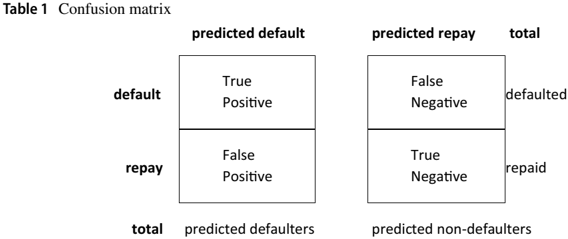
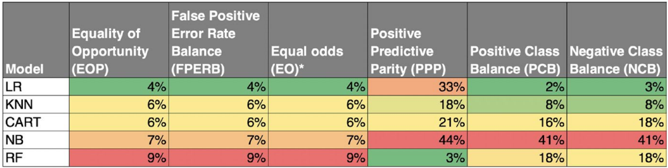
“3 First, the following are the error rates used in the metrics, with the examples from mortgage lending provided in the Confusion Matrix in Table 1: • Equal opportunity/false negative error rate balance (Hardt et al. 2016) Equal FNR.”
BackgroundMethodFair prediction with disparate impact: a study of bias in recidivism prediction instruments
Chouldechova, A. (2017) · Big Data · doi:10.1089/big.2016.0047 · Cited by 2,159 · cited 6×
“Electronic copy available at: https://ssrn.com/abstract=3559407 • Equal odds (Hardt et al. 2016) Equal TPR and FPR, meeting both of the above conditions; • Positive predictive parity (Chouldechova 2017) Equal PPV.”
Influential
Cited by
The Ethics of Artificial Intelligence: Principles, Challenges, and Opportunities
Floridi, L. (2023) · doi:10.1093/oso/9780198883098.001.0001 · Cited by 507
Self-citationGiovanola, B., & Tiribelli, S. (2023) · AI & SOCIETY · doi:10.1007/s00146-022-01455-6 · Cited by 193
“…recruiting and employment (Kim 2017), university admissions (Simonite 2020), housing (Barocas and Selbst, 2016), credit lending (Deville, 2013; Lobosco 2013; Sengh Ah Lee and Floridi 2020), criminal justice (Berk et al. 2018; Abebe et al. 2020) and policing (Ferguson 2017), just to name a few.”
BackgroundA sociotechnical view of algorithmic fairness
Dolata, M., Feuerriegel, S., & Schwabe, G. (2022) · Information Systems Journal · doi:10.1111/isj.12370 · Cited by 160
Policy advice and best practices on bias and fairness in AI
Álvarez, J. M., Colmenarejo, A. B., Elobaid, A., Fabbrizzi, S., Fahimi, M., Ferrara, A., Ghodsi, S., Mougan, C., Papageorgiou, I. T., Lobo, P. R., et al. (2024) · Ethics and Information Technology · doi:10.1007/s10676-024-09746-w · Cited by 163
“…is, without doubts, challenging (Scantamburlo, 2021), and likely to require domain-specific approaches (Lee & Floridi, 2021; Chen et al., 2023b) and the ability to distinguish whether and when to use AI (Lin et al., 2020), or how to enhance and extend human capabilities with AI (…”
The Ethics of Algorithms: Key Problems and SolutionsPreprint
Tsamados, A., Aggarwal, N., Cowls, J., Morley, J., Roberts, H., Taddeo, M., & Floridi, L. (2020) · SSRN Electronic Journal · doi:10.2139/ssrn.3662302 · Cited by 101
Self-citationAlgorithmic discrimination in the credit domain: what do we know about it?
García, A. C. B., García, M., & C, R. R. B. (2023) · AI & Society · doi:10.1007/s00146-023-01676-3 · Cited by 174
“(3) Increasing demand or surplus fairness always reduces social welfare Lee and Floridi (2021) Various fairness definitions in the literature Impossibility to address all fairness definitions at the same time.”
Fairness issues, current approaches, and challenges in machine learning models
Jui, T. D., & Rivas, P. (2024) · International Journal of Machine Learning and Cybernetics · doi:10.1007/s13042-023-02083-2 · Cited by 135
Lee, M. S. A., Floridi, L., & Singh, J. (2021) · AI and Ethics · doi:10.1007/s43681-021-00067-y · Cited by 71
Self-citationAlgorithmic fairness in credit scoring
Bono, T., Croxson, K., & Giles, A. (2021) · Oxford Review of Economic Policy · doi:10.1093/oxrep/grab020 · Cited by 42
The Fairness of Credit Scoring Models
Hurlin, C., Pérignon, C., & Saurin, S. (2021) · Management Science · doi:10.1287/mnsc.2022.03888 · Cited by 123
Survey on fairness notions and related tensions
Alves, G. T., Bernier, F., Couceiro, M., Makhlouf, K., Palamidessi, C., & Zhioua, S. (2023) · EURO Journal on Decision Processes · doi:10.1016/j.ejdp.2023.100033 · Cited by 59
A Systematic Review of Fairness in Artificial Intelligence Algorithms
Xivuri, K., & Twinomurinzi, H. (2021) · Lecture notes in computer science · doi:10.1007/978-3-030-85447-8_24 · Cited by 52
Machine learning and credit risk: Empirical evidence from small- and mid-sized businesses
Bitetto, A., Cerchiello, P., Filomeni, S., Tanda, A., & Tarantino, B. (2023) · Socio-Economic Planning Sciences · doi:10.1016/j.seps.2023.101746 · Cited by 54
Constructing a Fair Classifier with Generated Fair Data
Jang, T., Zheng, F., & Wang, X. (2021) · Proceedings of the AAAI Conference on Artificial Intelligence · doi:10.1609/aaai.v35i9.16965 · Cited by 52
Weapons of moral construction? On the value of fairness in algorithmic decision-making
Giovanola, B., & Tiribelli, S. (2022) · Ethics and Information Technology · doi:10.1007/s10676-022-09622-5 · Cited by 44
“…(Kim, 2017), university admissions (Simonite, 2020), housing (Barocas and Selbst, 2016), credit lending (Devill, 2013; Lobosco, 2013; Sengh Ah Lee & Floridi, 2020), criminal justice (Abebe et al., 2020; Berk et al., 2018), policing (Ferguson, 2017), and healthcare (Buhmann et al., 2019;…”
BackgroundLewicki, K., Lee, M. S. A., Cobbe, J., & Singh, J. (2023) · Proceedings of the 2023 CHI Conference on Human Factors in Computing Systems · doi:10.1145/3544548.3581463 · Cited by 30
“This is referred to as ‘representation bias’ (see [87, 140]), or an unintended skewing of model outcomes due to the dataset’s representativeness.”
BackgroundInfluentialSelf-citationTowards Fair AI: Mitigating Bias in Credit Decisions—A Systematic Literature Review
Vieira, J. R. D. C., Barboza, F., Cajueiro, D. O., & Kimura, H. (2025) · Journal of risk and financial management · doi:10.3390/jrfm18050228 · Cited by 69
“Finally, there is a clear consensus that achieving fairness in machine learning is an ongoing challenge that requires continuing research and development (Badar & Fisichella, 2024; Chen et al., 2024; Y. Huang et al., 2023; Kozodoi et al., 2022; Lee & Floridi, 2021).”
InfluentialAlgorithmic decision making methods for fair credit scoring
Moldovan, D. (2023) · IEEE Access · doi:10.1109/access.2023.3286018 · Cited by 28
Das, S. R., Stanton, R., & Wallace, N. E. (2023) · Annual Review of Financial Economics · doi:10.1146/annurev-financial-110921-125930 · Cited by 66
The Fairness of Credit Scoring Models
Hurlin, C., Perignon, C., & Saurin, S. (2021) · SSRN Electronic Journal · doi:10.2139/ssrn.3785882 · Cited by 26
“…years in computer science, machine learning, criminology, and economics, each aiming to capture di⁄erent dimensions of fairness (see Hardt et al. (2016), Verma and Rubin (2018), Kleinberg et al. (2018), Bellamy et al. (2019), Barocas et al. (2020), Lee and Floridi (2020), or Berk et al. (2021)).”
BackgroundMethodMeasuring responsible artificial intelligence (RAI) in banking: a valid and reliable instrument
Ratzan, J., & Rahman, N. (2023) · AI and Ethics · doi:10.1007/s43681-023-00321-5 · Cited by 46
Studying Up Machine Learning Data: Why Talk About Bias When We Mean Power?Preprint
Miceli, M., Posada, J., & Yang, T. (2021) · arXiv (Cornell University) · doi:10.48550/arxiv.2109.08131 · Cited by 25
“Studies on data and algorithmic biases have demonstrated how data-driven systems can enhance discriminatory practices and result in exclusionary experiences in various domains, including credit [25, 58] and algorithmic filtering [4, 70].”
BackgroundKirat, T., Tambou, O., Do, V., & Tsoukiàs, A. (2023) · EURO Journal on Decision Processes · doi:10.1016/j.ejdp.2023.100036 · Cited by 43
A review of causality-based fairness machine learning
Su, C., Yu, G., Wang, J., Yan, Z., & Cui, L. (2022) · Intelligence & Robotics · doi:10.20517/ir.2022.17 · Cited by 37
Ravindranath, R., Stein, J. D., Hernandez‐Boussard, T., Fisher, A. C., Wang, S. Y., Amin, S. R., Edwards, P. A., Srikumaran, D. S., Woreta, F. A., Schultz, J. S., et al. (2024) · Ophthalmology Science · doi:10.1016/j.xops.2024.100596 · Cited by 32
Acknowledging Sustainability in the Framework of Ethical Certification for AI
Genovesi, S., & Mönig, J. M. (2022) · Sustainability · doi:10.3390/su14074157 · Cited by 29
“…and post-marketing phases of a given product might lead companies to release software that discriminates against minorities and vulnerable social groups, replicating racist and sexist biases in application fields such as risk scoring in justice [30] or credit scoring for mortgage lending [31].”
BackgroundBrüggen, E. C., Gianni, R., de Haan, F., Hogreve, J., Meacham, D., Post, T., & van der Werf, M. M. B. (2025) · Journal of Public Policy & Marketing · doi:10.1177/07439156241302279 · Cited by 34
“Lee and Floridi (2021) Investigate trade-offs between fairness and discriminatory biases in mortgage algorithms”
Individualized help for at-risk students using model-agnostic and counterfactual explanations
Smith, B. I., Chimedza, C., & Bührmann, J. H. (2021) · Education and Information Technologies · doi:10.1007/s10639-021-10661-6 · Cited by 33
“Fields that have seen application of interpretable ML include the medical (Ghosh & Kandasamy, 2020; Bibault & Xing, 2020), criminal justice (Chiao, 2019; Green & Chen, 2019) and financial (Lee & Floridi, 2020) fields.”
BackgroundGenovesi, S., Mönig, J. M., Schmitz, A., Poretschkin, M., Akila, M., Kahdan, M., Kleiner, R., Krieger, L., & Zimmermann, A. (2024) · AI and Ethics · doi:10.1007/s43681-023-00291-8 · Cited by 19
“…of distributive justice and is broadly referred to as unbiased distribution of access to services and goods—e.g., access to treatments in healthcare [39, 81] or access to credit [65]—and as absence of discrimination, understood as unjustified unequal treatment of groups or individuals [72, 76].”
Poor Data Quality in Sub-Saharan Africa and Implications on Ethical AI Development
Vibbi, L. F. (2024) · SpringerBriefs in applied sciences and technology · doi:10.1007/978-3-031-52962-7_7 · Cited by 23
Toward A Two-Sided Fairness Framework in Search and Recommendation
Liu, J. (2023) · Conference on Human Information Interaction and Retrieval · doi:10.1145/3576840.3578332 · Cited by 27
Adegoke, T. I., Ofodile, O. C., Ochuba, N. A., & Akinrinola, O. (2024) · GSC Advanced Research and Reviews · doi:10.30574/gscarr.2024.18.3.0104 · Cited by 54
“These disparities not only reflect historical inequities in lending practices but also highlight systemic biases embedded within credit scoring algorithms (Lee and Floridi, 2021).”
BackgroundEthical AI in HR: A Case Study of Tech Hiring
Rao, S., & Zhao, T. (2025) · Journal of Computer Information Systems · doi:10.1080/08874417.2024.2446954 · Cited by 25
Edwards, W., & Magill, K. R. (2022) · Policy Futures in Education · doi:10.1177/14782103221101762 · Cited by 25
Digital Revolution, Artificial Intelligence, and Ethical Challenges
Kumar, S., Verma, A. K., & Mirza, A. (2024) · Frontiers of artificial intelligence, ethics and multidisciplinary applications. · doi:10.1007/978-981-97-5656-8_11 · Cited by 27
McCormack, L., & Bendechache, M. (2024) · AI and Ethics · doi:10.1007/s43681-024-00590-8 · Cited by 22
“For the use case of mortgage lending, the remaining principles can be evaluated using the proposed criteria in this paper, with high level considerations outlined in table3.”
Kahouadji, N. (2024) · Information · doi:10.3390/info15050252 · Cited by 13
Tertiary Review on Explainable Artificial Intelligence: Where Do We Stand?
van Mourik, F., Jutte, A., Berendse, S. E., Bukhsh, F. A., & Ahmed, F. (2024) · Machine Learning and Knowledge Extraction · doi:10.3390/make6030098 · Cited by 20
Sulastri, R. E., Janssen, M., van de Poel, I., & Ding, A. Y. (2024) · Government Information Quarterly · doi:10.1016/j.giq.2024.101979 · Cited by 23
Trust and transparency in AI: industry voices on data, ethics, and compliance
McCormack, L., Bendechache, M., Lewis, D., & Huyskes, D. (2025) · AI & Society · doi:10.1007/s00146-025-02654-7 · Cited by 33
“Lee and Floridi ([33]) expanded on the concept of treading fairness not as a binary condition, but instead as a relational trade-off.”
Developing a Novel Fair-Loan Classifier through a Multi-Sensitive Debiasing Pipeline: DualFair
Singh, A., Singh, J., Khan, A., & Gupta, A. D. (2022) · Machine Learning and Knowledge Extraction · doi:10.3390/make4010011 · Cited by 16
“also presented a theoretical discussion of mortgage domain fairness through relational trade-off optimization [32].”
BackgroundRuggieri, S., Álvarez, J. M., Pugnana, A., State, L., & Turini, F. (2023) · Proceedings of the AAAI Conference on Artificial Intelligence · doi:10.1609/aaai.v37i13.26798 · Cited by 46
“The issue of engineering fairness is challenging (Scant-amburlo 2021), and likely to require domain-specific approaches (Lee and Floridi 2021).”
BackgroundUsing (Un)Fair Algorithms in an Unjust World
Lippert‐Rasmussen, K. (2022) · Res Publica · doi:10.1007/s11158-022-09558-z · Cited by 9
Recommender Systems: Legal and Ethical Issues
Genovesi, S., Kaesling, K., & Robbins, S. (2023) · The International library of ethics, law and technology · doi:10.1007/978-3-031-34804-4 · Cited by 15
Baesens, B., & Smedts, K. (2023) · The British Accounting Review · doi:10.1016/j.bar.2023.101241 · Cited by 19
“Lee and Floridi (2021) consider fairness in a relational way and use US mortgage data to illustrate how their methodology better captures ethical trade-offs.”
Differentially Private Hierarchical Heavy Hitters
Biswas, A., Cormode, G., Kanza, Y., Srivastava, D., & Zhou, Z. (2024) · Proceedings of the ACM on Management of Data · doi:10.1145/3695826 · Cited by 10
“Consider checking for evidence of discrimination in mortgage lending decisions, as discussed in Lee and Floridi [2021].”
BackgroundWIGNN: An adaptive graph-structured reasoning model for credit default prediction
Yan, Z., Qu, H., Chen, C., Lv, X., Zuo, E., Wang, K., & Cai, X. (2024) · Engineering Applications of Artificial Intelligence · doi:10.1016/j.engappai.2024.109597 · Cited by 7
Lee, M. S. A., Floridi, L., & Singh, J. (2020) · SSRN Electronic Journal · doi:10.2139/ssrn.3679975 · Cited by 10
Self-citationRisk Identification Questionnaire for Unintended Bias in Machine Learning Development LifecyclePreprint
Lee, M. S. A., & Singh, J. P. (2021) · SSRN Electronic Journal · doi:10.2139/ssrn.3777093 · Cited by 6
Self-citationTaxonomizing Representational Harms using Speech Act Theory
Corvi, E., Washington, H., Reed, S., Atalla, C., Chouldechova, A., Dow, P. A., Garcia-Gathright, J., Pangakis, N. J., Sheng, E., Vann, D., et al. (2025) · Findings of the Association for Computational Linguistics: ACL 2025 · doi:10.18653/v1/2025.findings-acl.202 · Cited by 6
A Unified Framework of Ethical Principles for AI
Floridi, L. (2023) · Oxford University Press eBooks · doi:10.1093/oso/9780198883098.003.0004 · Cited by 11
Self-citationLong-Term Fair Decision Making through Deep Generative Models
Hu, Y., Wu, Y., & Zhang, L. (2024) · Proceedings of the AAAI Conference on Artificial Intelligence · doi:10.1609/aaai.v38i20.30215 · Cited by 7
Multi-Objective Fairness in Team Assembly
Borges, R., Sahlgren, O., Koivunen, S., Stefanidis, K., Olsson, T., & Laitinen, A. (2023) · Communications in computer and information science · doi:10.1007/978-3-031-42941-5_10 · Cited by 4
“First, decisionmakers often have multiple objectives that need to be balanced simultaneously [12].”
BackgroundA Review of Gender Bias Mitigation in Credit Scoring Models
Corrales-Barquero, R., Marín‐Raventós, G., & Barrantes, E. G. (2021) · doi:10.1109/ee-rds53766.2021.9708589 · Cited by 11
Introduction: Digital Technologies and Human Decision-Making
Bonicalzi, S., De, M., & Giovanola, B. (2023) · Topoi · doi:10.1007/s11245-023-09939-w · Cited by 5
“…and employment (Kim 2017), university admissions (Simonite 2020), housing (Barocas and Selbst 2016), credit lending (Devill 2013; Lobosco 2013; Lee and Floridi 2020), criminal justice (Berk et al. 2018), policing (Ferguson 2017), and healthcare (Danks and London 2017; Robbins 2019;…”
BackgroundPresent: AI as a New Form of Agency, Not Intelligence
Floridi, L. (2023) · Oxford University Press eBooks · doi:10.1093/oso/9780198883098.003.0002 · Cited by 6
Self-citationQuantitative fairness—A framework for the design of equitable cybernetic societies
Riehl, K., Kouvelas, A., & Makridis, M. (2025) · Computers in Human Behavior Artificial Humans · doi:10.1016/j.chbah.2025.100236 · Cited by 7
“Striking a balance between ensuring fair access to loans and managing financial risk is a complex challenge that requires innovative approaches and ongoing evaluation (Lee and Floridi, 2021).”
Who decides what online and beyond: freedom of choice in predictive machine-learning algorithms
Tiribelli, S. (2024) · Elsevier eBooks · doi:10.1016/b978-0-443-18851-0.00012-3 · Cited by 5
Fair-Over-Time Distributed Energy Resource Coordination
Moring, H., Farrell, X., & Mathieu, J. L. (2024) · Allerton Conference on Communication, Control, and Computing · doi:10.1109/allerton63246.2024.10735316 · Cited by 3
“For example, this metric can be used to ensure that the proportion of applicants approved for loans from a bank is the same for white and black communities relative to applicant pool demographics [19].”
MethodDigital Labor as a Structural Fairness Issue in Recommender Systems
Genovesi, S. (2023) · The International library of ethics, law and technology · doi:10.1007/978-3-031-34804-4_5 · Cited by 2
From Principles to Practices: The Risks of Being Unethical
Floridi, L. (2023) · Oxford University Press eBooks · doi:10.1093/oso/9780198883098.003.0005 · Cited by 2
Self-citationKumar, S. M. (2023) · Springer eBooks · doi:10.1007/978-981-19-4166-5_14 · Cited by 3
Lee, M. S. A., Floridi, L., & Singh, J. (2022) · Digital ethics lab yearbook · doi:10.1007/978-3-031-09846-8_11 · Cited by 3
Self-citationFuture: The Foreseeable Development of AI
Floridi, L. (2023) · Oxford University Press eBooks · doi:10.1093/oso/9780198883098.003.0003 · Cited by 2
Self-citationAI and the UN Sustainable Development Goals
Floridi, L. (2023) · Oxford University Press eBooks · doi:10.1093/oso/9780198883098.003.0012 · Cited by 2
Self-citationStriking a Balance in Fairness for Dynamic Systems Through Reinforcement Learning
Hu, Y., Lear, J., & Zhang, L. (2023) · IEEE International Conference on Big Data (BigData) · doi:10.1109/bigdata59044.2023.10386299 · Cited by 7
“Machine learning algorithms are increasingly being widely used in high-stakes decision-making applications, such as college admissions [1], [2], bank loans [3], [4], employment [5], recidivism risk assessment [6], etc.”
MethodBilişimsel Propaganda Farkındalık Ölçeği ve Kamuoyu Üzerindeki Etkisi
AKÇAY, E., & Sütçü, C. (2024) · Türkiye İletişim Araştırmaları Dergisi · doi:10.17829/turcom.1489518 · Cited by 2
Discrimination Exposed? On the Reliability of Explanations for Discrimination Detection
Skirzyński, J., Danks, D. J., & Ustun, B. (2025) · ACM Conference on Fairness, Accountability, and Transparency (FAccT) · doi:10.1145/3715275.3732167 · Cited by 7
Algorithmic Decision-Making and Human Autonomy in Finance: A Systematic Review of AI Ethics Research
Bhatti, T. (2026) · Journal of Statistical Theory and Applications · doi:10.1007/s44199-026-00175-w · Cited by 11
“A growing body of research shows that while AI systems may improve efficiency and predictive performance, they may also reproduce or amplify discrimination, opacity, proxy bias, privacy risks, and accountability gaps if not designed and governed carefully [16, 29, 33 , 44 , 47 ].”
A Sociotechnical View of Algorithmic Fairness
Dolata, M., Feuerriegel, S., & Schwabe, G. (2021) · Zurich Open Repository and Archive (University of Zurich) · doi:10.48550/arxiv.2110.09253 · Cited by 1
AI and Social Impact: A Review of Current Use Cases and Broader Implications
Moore, S., Brown, S. M., & Butler, W. (2022) · Advances in information security, privacy, and ethics book series · doi:10.4018/978-1-7998-8693-8.ch008 · Cited by 3
Soft Ethics and the Governance of AI
Floridi, L. (2023) · Oxford University Press eBooks · doi:10.1093/oso/9780198883098.003.0006 · Cited by 1
Self-citationData Analytics for Credit Risk Models in Retail Banking: a new era for the banking system
Perrotta, A., Monaco, A., & Bliatsios, G. (2023) · Risk Management Magazine · doi:10.47473/2020rmm0132 · Cited by 4
A Literature Review on Enterprise Credit Assessment Using Random Forest
Guamán-Lloacana, H., Muzo-Bombón, A., Sánchez-Briceño, C., & Varela-Aldás, J. (2024) · IEEE Ecuador Technical Chapters Meeting (ETCM) · doi:10.1109/etcm63562.2024.10746188 · Cited by 1
Algorithm Transparency through the Fair Credit Reporting Act (FCRA)
Schmeckpeper, K., Roberts, S. F., Ouellet, M., Malencia, M., Jain, D., Gosrich, W., & Bromberg, V. (2021) · Journal of Science Policy & Governance · doi:10.38126/jspg180415 · Cited by 1
A Meta-Analysis Evaluating the Performance of Machine Learning Models on Probability of Loan Default
Hahami, E., & Piper, D. (2022) · Journal of Student Research · doi:10.47611/jsrhs.v11i2.2726 · Cited by 1
Floridi, L. (2023) · Oxford University Press eBooks · doi:10.1093/oso/9780198883098.002.0003 · Cited by 1
Self-citationDeveloping a novel fair-loan-predictor through a multi-sensitive debiasing pipeline: DualFair.Preprint
Singh, A., Singh, J., Khan, A., & Gupta, A. D. (2021) · arXiv (Cornell University)
Kumar, S. M. (2022) · Springer eBooks · doi:10.1007/978-981-33-4016-9_14-1 · Cited by 1
The Causes and Effects of Algorithmic Decision Making
Saluja, S., Kethar, J., Appavu, R., & Ahorta, M. (2022) · Journal of Student Research · doi:10.47611/jsrhs.v11i4.3327
Floridi, L. (2023) · Oxford University Press eBooks · doi:10.1093/oso/9780198883098.002.0009
Self-citationFloridi, L. (2023) · Oxford University Press eBooks · doi:10.1093/oso/9780198883098.003.0001
Self-citationFloridi, L. (2023) · Oxford University Press eBooks · doi:10.1093/oso/9780198883098.002.0004
Self-citationMapping the Ethics of Algorithms
Floridi, L. (2023) · Oxford University Press eBooks · doi:10.1093/oso/9780198883098.003.0007
Self-citationHow to Deliver a Good AI Society: Some Recommendations
Floridi, L. (2023) · Oxford University Press eBooks · doi:10.1093/oso/9780198883098.003.0010
Self-citationFloridi, L. (2023) · Oxford University Press eBooks · doi:10.1093/oso/9780198883098.002.0007
Self-citationBad Practices: The Misuse of AI for Social Evil
Floridi, L. (2023) · Oxford University Press eBooks · doi:10.1093/oso/9780198883098.003.0008
Self-citationList of Most Common Abbreviations and Acronyms
Floridi, L. (2023) · Oxford University Press eBooks · doi:10.1093/oso/9780198883098.002.0011
Self-citationThe Gambit: AI Impact on Climate Change
Floridi, L. (2023) · Oxford University Press eBooks · doi:10.1093/oso/9780198883098.003.0011
Self-citationFloridi, L. (2023) · Oxford University Press eBooks · doi:10.1093/oso/9780198883098.002.0010
Self-citationGood Practices: The Proper Use of AI for Social Good
Floridi, L. (2023) · Oxford University Press eBooks · doi:10.1093/oso/9780198883098.003.0009
Self-citationFloridi, L. (2023) · Oxford University Press eBooks · doi:10.1093/oso/9780198883098.002.0005
Self-citationConclusion: The Green and the Blue
Floridi, L. (2023) · Oxford University Press eBooks · doi:10.1093/oso/9780198883098.003.0013
Self-citationGabdoulline, G., Kern, C. J., & Krönung, J. (2023) · HMD Praxis der Wirtschaftsinformatik · doi:10.1365/s40702-023-01027-2
Manes, P. (2024) · LCF studies in commercial and financial law · doi:10.1007/978-3-031-28497-7_47
Liberal Democracy, Society and the Digital Revolution
Zeller, B., & Atherton, M. (2025) · Liverpool Law Review · doi:10.1007/s10991-025-09380-6 · Cited by 2
“This process consists of algorithms that are machine learning models applying past examples to predict a future outcome (Seng Ah Lee and Floridi 2021).”
Forecasting the Impact of Interest Rates on Homebuyer Demand using Machine Learning
Doshi, P. (2025) · International Conference on Self Sustainable Artificial Intelligence Systems (ICSSAS) · doi:10.1109/icssas66150.2025.11081098
“Practice providers should ensure models are tested not just for technical validity but also for fairness and equity of application [9].”
Creative Evaluators: When Machines Evaluate Us
Bossou, K., & Ackerman, M. (2025) · New Generation Computing · doi:10.1007/s00354-025-00302-8
“Mort-gage application evaluative system has also been known to amplify biases of race, gender, etc. which are present in the data the system has been trained on [46].”
Fairness by Design: Machine Learning and Interpretable Mortgage LendingPreprint
Bell, S., Kakhbod, A., Stanton, R., & Wallace, N. E. (2026) · SSRN Electronic Journal · doi:10.2139/ssrn.6053914
Hybrid processing for algorithmic fairness
da Silva, G. A. (2022) · theses.fr (ABES) · doi:10.70675/a9ac6c2az2ccbz4386z901ez6e5b0993ccf6
Metadata
- Authors
- Lee, M. S. A., & Floridi, L.
- Affiliations
- University of Cambridge (GB)
- University of Oxford (GB)
- Corresponding author
- Lee, Michelle Seng Ah
- Venue
- Minds and Machines
- Published
- 2020-06-09
- Volume
- 31
- Issue
- 1
- Pages
- 165-191
- ISSN
- 0924-6495 (ISSN-L)
- 1572-8641
- OpenAlex
- W3013532257
- Cited by
- 106
- References
- 37
- Citations by year
- 2026: 9 · 2025: 8 · 2024: 20 · 2023: 42 · 2022: 13 · 2021: 12 · 2020: 2
- FWCI
- 23.51
- Type
- journal article
- Language
- en
- Open access
- hybrid
- doi.org
- Licence
- cc-by
- creativecommons.org/licenses/by/4.0 (tdm)
- creativecommons.org/licenses/by/4.0 (vor)
- Locations
- Minds and Machines (publishedVersion, cc-by)
- PhilPapers (PhilPapers Foundation) (submittedVersion, cc-by)
- PhilPapers (PhilPapers Foundation) (submittedVersion)
- Apollo (University of Cambridge) (submittedVersion, cc-by)
- Apollo (cc-by)
- Apollo
- Topics
- Physical Sciences › Computer Science › Artificial Intelligence › Ethics and Social Impacts of AI
- Physical Sciences › Computer Science › Artificial Intelligence › Explainable Artificial Intelligence (XAI)
- Social Sciences › Law › Discrimination and Equality Law
- Keywords
- algorithmic fairness, mortgage lending, algorithmic discrimination, ethical trade-offs, fairness definitions, automated decision-making, value prioritization
About these checks
Registry, retraction, Cites and statistics results are computed, not judged, with one exception: a printed reference that no index lists is read once by a model before it counts as a citation error. Claims are extracted by a model and kept only when their quote appears verbatim in the text; each cited source is then checked, with a model’s help, for whether it says what the claim relies on. Those verdicts can be wrong — read the claim’s quote and the cited source before relying on one.
Statistics and arithmetic are recomputed, not judged.
Confidence bands are shown only for fields calibrated on our annotated test set. None is calibrated yet, so no band is shown.
What counts as a claim ›How we measure confidence ›How we check this ›
Are you an author, or do you see a problem with this page? Request a review
Data sources
Bibliographic data: Semantic Scholar, OpenAlex, Crossref.
Contains information from the Semantic Scholar Academic Graph Datasets, made available under the ODC Attribution License (ODC-BY 1.0).
Semantic Scholar’s data is described in: Kinney, R., et al. (2023). The Semantic Scholar Open Data Platform. arXiv:2301.10140.
