

Algorithmic Fairness in Mortgage Lending: from Absolute Conditions to Relational Trade-offs
Open accessThe DOI matches its Crossref record; 42 of the 43 references it cites were found in a registry or an index.
Abstract
To address the rising concern that algorithmic decision-making may reinforce discriminatory biases, researchers have proposed many notions of fairness and corresponding mathematical formalizations. Each of these notions is often presented as a one-size-fits-all, absolute condition; however, in reality, the practical and ethical trade-offs are unavoidable and more complex. We introduce a new approach that considers fairness—not as a binary, absolute mathematical condition—but rather, as a relational notion in comparison to alternative decisionmaking processes. Using US mortgage lending as an example use case, we discuss the ethical foundations of each definition of fairness and demonstrate that our proposed methodology more closely captures the ethical trade-offs of the decision-maker, as well as forcing a more explicit representation of which values and objectives are prioritised.
Overview
The claims and statistics of this paper haven’t been checked yet.
Free: it reads the open-access text and checks the first 5 claims that cite a source we can check. Create a free account to check every claim.
Integrity signals
Registry
Cites
Statistics
Figures

Verification
Claims the paper makes
The claims and statistics of this paper haven’t been checked yet.
Free: it reads the open-access text and checks the first 5 claims that cite a source we can check. Create a free account to check every claim.
Self-check
Percentages, sums and reported differences re-computed from the paper’s own numbers.
The self-check needs the paper’s full text.
Citations
Cites
Black Feminist Thought: Knowledge, Consciousness, and the Politics of Empowerment.
Brewer, R. M., & Collins, P. H. (1992) · Contemporary Sociology · doi:10.2307/2074808 · Cited by 19,445
"Why Should I Trust You?": Explaining the Predictions of Any Classifier
Ribeiro, M. T., Singh, S., & Guestrin, C. (2016) · Proceedings of the 22nd ACM SIGKDD International Conference on Knowledge Discovery and Data Mining · doi:10.1145/2939672.2939778 · Cited by 17,555
Crenshaw, K. (2018) · Feminist Legal Theory · doi:10.4324/9780429500480-5 · Cited by 9,510
Finance and Growth: Schumpeter Might Be Right
King, R. G., & Levine, R. (1993) · The Quarterly Journal of Economics · doi:10.2307/2118406 · Cited by 8,657 · cited 2×
“An increase in access to credit represents the lender’s growth in market share, as well as being a global development goal due to its importance for the economy and for individuals’ upward mobility (Demirguc-Kunt and Klapper 2012; King and Levine 1993).”
Supervised Machine Learning: A Review of Classification Techniques
Kotsiantis, S. B. (2007) · Informatica · Cited by 6,202
Lipton, Z. C. (2018) · Queue · doi:10.1145/3236386.3241340 · Cited by 5,427 · cited 1×
“While these methods are not without their challenges in bridging the gap between real-life and machinelearning objectives (Lipton 2018), they could be used to help interrogate the drivers of each individual prediction regardless of model complexity.”
Dwork, C., Hardt, M., Pitassi, T., Reingold, O., & Zemel, R. (2012) · Proceedings of the 3rd Innovations in Theoretical Computer Science Conference · doi:10.1145/2090236.2090255 · Cited by 3,501 · cited 2×
“Various measures of individual fairness have been introduced, in which similar individuals should receive similar outcomes (Dwork et al. 2012).”
Barocas, S., & Selbst, A. D. (2014) · doi:10.2139/ssrn.2477899 · Cited by 3,048 · cited 1×
“Algorithms can discover patterns in data that predict the desired outcome “that are really just preexisting patterns of exclusion and inequality,” which cannot be resolved computationally (Barocas and Selbst 2016).”
Equality of Opportunity in Supervised Learning
Hardt, M., Price, E., & Srebro, N. (2016) · arXiv · doi:10.48550/arxiv.1610.02413 · Cited by 2,536 · cited 3×
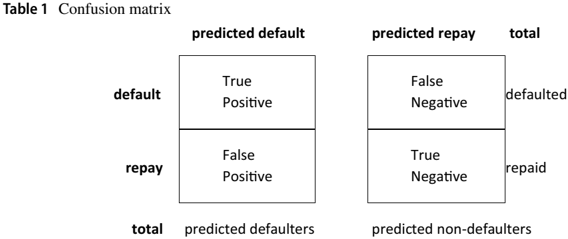
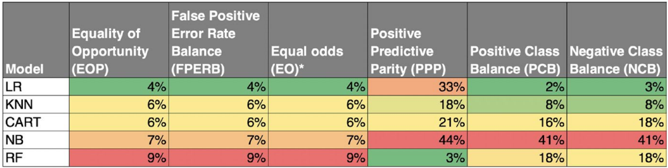
“3 First, the following are the error rates used in the metrics, with the examples from mortgage lending provided in the Confusion Matrix in Table 1: • Equal opportunity/false negative error rate balance (Hardt et al. 2016) Equal FNR.”
BackgroundMethodFair prediction with disparate impact: a study of bias in recidivism prediction instruments
Chouldechova, A. (2017) · Big Data · doi:10.1089/big.2016.0047 · Cited by 2,159 · cited 6×
“Electronic copy available at: https://ssrn.com/abstract=3559407 • Equal odds (Hardt et al. 2016) Equal TPR and FPR, meeting both of the above conditions; • Positive predictive parity (Chouldechova 2017) Equal PPV.”
InfluentialCertifying and Removing Disparate Impact
Feldman, M., Friedler, S. A., Moeller, J., Scheidegger, C., & Venkatasubramanian, S. (2015) · Proceedings of the 21th ACM SIGKDD International Conference on Knowledge Discovery and Data Mining · doi:10.1145/2783258.2783311 · Cited by 1,827 · cited 3×
“(2015) have formalised the approach to identifying disparate impact, but their methodology for pre-processing the data to remove the bias has shown instability in performance of the technique (Feldman et al. 2015).”
InfluentialBellamy, R. K. E., Dey, K., Hind, M., Hoffman, S. C., Houde, S., Kannan, K., Lohia, P., Martino, J., Mehta, S., Mojsilovic, A., et al. (2018) · arXiv · doi:10.48550/arxiv.1810.01943 · Cited by 1,581
Hill Collins, P. (2002) · Routledge · doi:10.4324/9780203900055 · Cited by 1,532 · cited 1×
“It would be myopic to view the potentially higher black default risk in isolation from the intersectional discrimination faced by those already marginalised in society (Crenshaw 1989) and the interconnectivity of gender and racial discrimination (Collins 2002).”
Measuring Financial Inclusion: The Global Findex Database
Demirguc-Kunt, A., & Klapper, L. (2012) · World Bank, Washington, DC eBooks · doi:10.1596/1813-9450-6025 · Cited by 1,440 · cited 1×
“An increase in access to credit represents the lender’s growth in market share, as well as being a global development goal due to its importance for the economy and for individuals’ upward mobility (Demirguc-Kunt and Klapper 2012; King and Levine 1993).”
Fairness definitions explained
Verma, S., & Rubin, J. (2018) · Proceedings of the International Workshop on Software Fairness · doi:10.1145/3194770.3194776 · Cited by 1,124 · cited 3×
“To counteract this, some scholars (Verma and Rubin 2018) have used a credit scoring data and defined FN, for example, as the probability of someone with a good credit score being incorrectly being assigned a bad credit score.”
Counterfactual explanations without opening the black box: automated decisions and the GDPR
Wachter, S., Mittelstadt, B., & Russell, C. (2017) · SSRN Electronic Journal · doi:10.2139/ssrn.3063289 · Cited by 1,061
Mortgage Lending in Boston: Interpreting HMDA Data
Munnell, A. H., Tootell, G. M. B., Browne, L. E., & McEneaney, J. P. (1992) · American Economic Review · Cited by 996
Kusner, M. J., Loftus, J. R., Russell, C., & Silva, R. (2017) · arXiv · doi:10.48550/arxiv.1703.06856 · Cited by 995 · cited 2×
“Counterfactual fairness condition is whether the loan decision is the same in the actual world as it would be in a counterfactual world in which the individual belonged to a different racial group (Kusner et al. 2017).”
Inherent Trade-Offs in the Fair Determination of Risk Scores
Kleinberg, J., Mullainathan, S., & Raghavan, M. (2016) · arXiv · doi:10.48550/arxiv.1609.05807 · Cited by 941 · cited 4×
“Among credit-worthy applicants, the probability of predicting repayment is the same regardless of race; • Positive class balance (Kleinberg, Mullainathan, and Raghavan, 2016): both credit-worthy white and black applicants who repay their loans have an equal average probability score; and 3…”
BackgroundInfluentialAI Fairness 360: An extensible toolkit for detecting and mitigating algorithmic bias
Bellamy, R. K. E., Dey, K., Hind, M., Hoffman, S. C., Houde, S., Kannan, K., Lohia, P., Martino, J., Mehta, S., Mojsilović, A., et al. (2019) · IBM Journal of Research and Development · doi:10.1147/jrd.2019.2942287 · Cited by 884
Predictably Unequal? The Effects of Machine Learning on Credit Markets
FUSTER, A., GOLDSMITH‐PINKHAM, P., RAMADORAI, T., & WALTHER, A. (2022) · The Journal of Finance · doi:10.1111/jofi.13090 · Cited by 872
Predictably Unequal? The Effects of Machine Learning on Credit Markets
Fuster, A., Goldsmith-Pinkham, P. S., Ramadorai, T., & Walther, A. (2017) · doi:10.2139/ssrn.3072038 · Cited by 769 · cited 6×
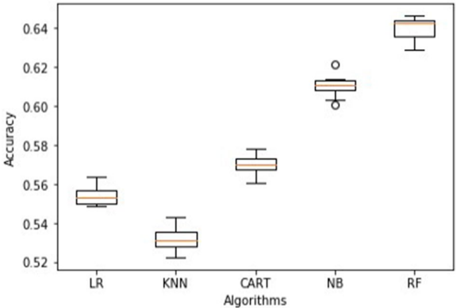
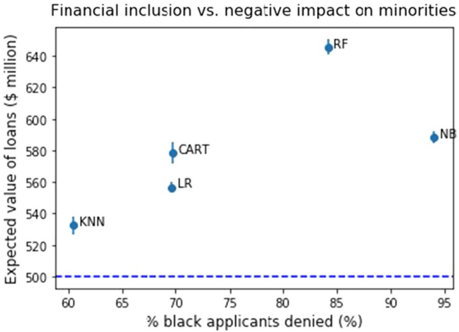
“found, using the full HMDA 2011 data, that RF returned greater outcome disparity between black and white loan applicants than LR (Fuster et al. 2017).”
InfluentialAequitas: A Bias and Fairness Audit Toolkit
Saleiro, P., Kuester, B., Hinkson, L., London, J., Stevens, A., Anisfeld, A., Rodolfa, K. T., & Ghani, R. (2018) · arXiv · doi:10.48550/arxiv.1811.05577 · Cited by 496 · cited 2×
“Existing attempts at operationalising fairness tests, such as AI 360 Fairness by IBM (Bellamy et al. 2018) and Aequitas Project by UChicago (Saleiro et al 2018), produce reports with pass/fail results of a combination of the above metrics by using an error threshold (e.g. parity of less than 10%).”
The Measure and Mismeasure of Fairness
Corbett-Davies, S., Gaebler, J. D., Nilforoshan, H., Shroff, R., & Goel, S. (2018) · arXiv · doi:10.48550/arxiv.1808.00023 · Cited by 444 · cited 4×
“The attempt to “repair” the proxies through pre-processing the data to remove the racial bias has been shown to be impractical and ineffective when the predictors are correlated to the protected characteristic; even strong covariates are often legitimate factors for decisions (Corbett-Davies and Goel 2018).”
InfluentialEvidence on Discrimination in Mortgage Lending
Ladd, H. F. (1998) · Journal of Economic Perspectives · doi:10.1257/jep.12.2.41 · Cited by 380 · cited 7×
“Legally, lenders are required to make lending decisions “as if they had no information about the applicant’s race, regardless of whether race is or is not a good proxy for risk factors not easily observed by a lender” (Ladd 1998).”
InfluentialKleinberg, J., Ludwig, J., Mullainathan, S., & Rambachan, A. (2018) · AEA Papers and Proceedings · doi:10.1257/pandp.20181018 · Cited by 278
Assessing Countries’ Financial Inclusion Standing - A New Composite Index
Amidžić, G., Massara, A., & Mialou, A. (2014) · IMF Working Paper · doi:10.5089/9781475569681.001 · Cited by 276
On the (im)possibility of fairness
Friedler, S. A., Scheidegger, C., & Venkatasubramanian, S. (2016) · arXiv · doi:10.48550/arxiv.1609.07236 · Cited by 247 · cited 1×
“They conclude from their analysis that “if there is structural bias in the decision pipeline, no [group fairness] mechanism can guarantee fairness” (Friedler et al. 2016).”
Grgic-Hlaca, N., Redmiles, E. M., Gummadi, K. P., & Weller, A. (2018) · Proceedings of the 2018 World Wide Web Conference on World Wide Web - WWW '18 · doi:10.1145/3178876.3186138 · Cited by 207
On Formalizing Fairness in Prediction with Machine Learning
Gajane, P., & Pechenizkiy, M. (2017) · arXiv (Cornell University) · doi:10.48550/arxiv.1710.03184 · Cited by 150 · cited 3×
“This problem is shared by the ex ante fairness definitions (Gajane 2017).”
BackgroundInfluentialA Moral Framework for Understanding Fair ML through Economic Models of Equality of Opportunity
Heidari, H., Loi, M., Gummadi, K. P., & Krause, A. (2019) · Proceedings of the Conference on Fairness, Accountability, and Transparency · doi:10.1145/3287560.3287584 · Cited by 139
Fairness Through Computationally-Bounded Awareness
Kim, M. P., Reingold, O., & Rothblum, G. N. (2018) · arXiv · doi:10.48550/arxiv.1803.03239 · Cited by 97 · cited 2×
“The challenge of this approach is: how to define “similarity” that is independent of race (Kim et al. 2018).”
Mortgage lending in Chicago and Los Angeles: A paired testing study of the pre-application process
Ross, S. L., Turner, M. A., Godfrey, E. B., & Smith, R. R. (2007) · Journal of Urban Economics · doi:10.1016/j.jue.2007.07.006 · Cited by 89 · cited 6×
“Past mortgage studies (Ross et al. 2008; Mun-nell et al. 1996) have shown the greatest disparity in approval rates and treatment between these two groups; Electronic copy available at: https://ssrn.com/abstract=3559407 • Loan records with missing data are removed, given they are from exceptional…”
InfluentialGrgić-Hlača, N., Redmiles, E. M., Gummadi, K. P., & Weller, A. (2018) · arXiv · doi:10.48550/arxiv.1802.09548 · Cited by 75
Sunstein, C. R. (1994) · Michigan Law Review · doi:10.2307/1289999 · Cited by 67 · cited 1×
“In anti-discrimination philosophy, Cass Sunstein writes, “ without good reason , social and legal structures should not turn differences that are both highly visible and irrelevant from the moral point of view into systematic social disadvantages” [emphasis added] (Sunstein 1994).”
Mortgage Discrimination and FHA Loan Performance
Berkovec, J. A., Canner, G. B., Gabriel, S. A., & Hannan, T. H. (2018) · Routledge eBooks · doi:10.4324/9780429448522-7 · Cited by 57 · cited 1×
“Some scholars have argued that higher denial rates may simply be reflecting the higher risk: because black borrowers’ default rates are higher on average than those of white borrowers with similar features, the lenders are not discriminating based on taste (Berkovec et al. 1996).”
Use Privacy in Data-Driven Systems: Theory and Experiments with Machine Learnt Programs
Datta, A., Fredrikson, M., Ko, G., Mardziel, P., & Sen, S. (2017) · Proceedings of the 2017 ACM SIGSAC Conference on Computer and Communications Security · doi:10.1145/3133956.3134097 · Cited by 55 · cited 2×
“Some have suggested removing the proxies as well as the protected characteristics (Datta et al. 2017).”
Ethnic and racial disparities in saving behavior
Borgo, M. D. (2018) · The Journal of Economic Inequality · doi:10.1007/s10888-018-9400-3 · Cited by 33 · cited 2×
“While this is open to interpretation, several regression studies demonstrated that black borrowers have lower approval rates for mortgage than white Americans, which cannot be explained by other legitimate loan or borrower characteristics.”
Background(2017) · doi:10.4230/lipics.forc.2020.6 · Cited by 27 · cited 3×
“Some have suggested removing the proxies as well as the protected characteristics (Datta et al. 2017).”
BackgroundRace, Gender, and Familial Status: Discrimination in One US Mortgage Lending Market
Robinson, J. K. (2002) · Feminist Economics · doi:10.1080/13545700210167323 · Cited by 25 · cited 1×
“Indeed, mortgage discrimination based on gender and familial status may vary by the applicant’s race (Robinson 2002).”
Context-conscious fairness in using machine learning to make decisions
Lee, M. S. A. (2019) · AI Matters · doi:10.1145/3340470.3340477 · Cited by 12 · cited 2×
“It is challenging to imbue each definition with ethical values when the definitions do not meet the core assumptions of the moral reasoning (Lee 2019).”
Self-citationModel-based discrimination analysis: a position paper
Ramadan, Q., Ahmadian, A. S., Strüber, D., Jürjens, J., & Staab, S. (2018) · doi:10.1145/3194770.3194775 · Cited by 9 · cited 1×
“There is no simple mathematical solution to unfairness; the proxy dependencies must be addressed on the systemic level (Ramadan et al. 2018).”
Assessing Countries’ Financial Inclusion Standing - A New Composite Index
Amidži, G., Massara, A., & Mialou, A. (2014) · doi:10.5089/9781475569681.001.a001 · Cited by 6
Cited by
The Ethics of Artificial Intelligence: Principles, Challenges, and Opportunities
Floridi, L. (2023) · doi:10.1093/oso/9780198883098.001.0001 · Cited by 507
Self-citationGiovanola, B., & Tiribelli, S. (2023) · AI & SOCIETY · doi:10.1007/s00146-022-01455-6 · Cited by 193
“…recruiting and employment (Kim 2017), university admissions (Simonite 2020), housing (Barocas and Selbst, 2016), credit lending (Deville, 2013; Lobosco 2013; Sengh Ah Lee and Floridi 2020), criminal justice (Berk et al. 2018; Abebe et al. 2020) and policing (Ferguson 2017), just to name a few.”
BackgroundA sociotechnical view of algorithmic fairness
Dolata, M., Feuerriegel, S., & Schwabe, G. (2022) · Information Systems Journal · doi:10.1111/isj.12370 · Cited by 160
Policy advice and best practices on bias and fairness in AI
Álvarez, J. M., Colmenarejo, A. B., Elobaid, A., Fabbrizzi, S., Fahimi, M., Ferrara, A., Ghodsi, S., Mougan, C., Papageorgiou, I. T., Lobo, P. R., et al. (2024) · Ethics and Information Technology · doi:10.1007/s10676-024-09746-w · Cited by 163
“…is, without doubts, challenging (Scantamburlo, 2021), and likely to require domain-specific approaches (Lee & Floridi, 2021; Chen et al., 2023b) and the ability to distinguish whether and when to use AI (Lin et al., 2020), or how to enhance and extend human capabilities with AI (…”
The Ethics of Algorithms: Key Problems and SolutionsPreprint
Tsamados, A., Aggarwal, N., Cowls, J., Morley, J., Roberts, H., Taddeo, M., & Floridi, L. (2020) · SSRN Electronic Journal · doi:10.2139/ssrn.3662302 · Cited by 101
Self-citation
Metadata
- Authors
- Lee, M. S. A., & Floridi, L.
- Affiliations
- University of Cambridge (GB)
- University of Oxford (GB)
- Corresponding author
- Lee, Michelle Seng Ah
- Venue
- Minds and Machines
- Published
- 2020-06-09
- Volume
- 31
- Issue
- 1
- Pages
- 165-191
- ISSN
- 0924-6495 (ISSN-L)
- 1572-8641
- OpenAlex
- W3013532257
- Cited by
- 106
- References
- 37
- Citations by year
- 2026: 9 · 2025: 8 · 2024: 20 · 2023: 42 · 2022: 13 · 2021: 12 · 2020: 2
- FWCI
- 23.51
- Type
- journal article
- Language
- en
- Open access
- hybrid
- doi.org
- Licence
- cc-by
- creativecommons.org/licenses/by/4.0 (tdm)
- creativecommons.org/licenses/by/4.0 (vor)
- Locations
- Minds and Machines (publishedVersion, cc-by)
- PhilPapers (PhilPapers Foundation) (submittedVersion, cc-by)
- PhilPapers (PhilPapers Foundation) (submittedVersion)
- Apollo (University of Cambridge) (submittedVersion, cc-by)
- Apollo (cc-by)
- Apollo
- Topics
- Physical Sciences › Computer Science › Artificial Intelligence › Ethics and Social Impacts of AI
- Physical Sciences › Computer Science › Artificial Intelligence › Explainable Artificial Intelligence (XAI)
- Social Sciences › Law › Discrimination and Equality Law
- Keywords
- algorithmic fairness, mortgage lending, algorithmic discrimination, ethical trade-offs, fairness definitions, automated decision-making, value prioritization
About these checks
Registry, retraction, Cites and statistics results are computed, not judged, with one exception: a printed reference that no index lists is read once by a model before it counts as a citation error. Claims are extracted by a model and kept only when their quote appears verbatim in the text; each cited source is then checked, with a model’s help, for whether it says what the claim relies on. Those verdicts can be wrong — read the claim’s quote and the cited source before relying on one.
Statistics and arithmetic are recomputed, not judged.
Confidence bands are shown only for fields calibrated on our annotated test set. None is calibrated yet, so no band is shown.
What counts as a claim ›How we measure confidence ›How we check this ›
Are you an author, or do you see a problem with this page? Request a review
Data sources
Bibliographic data: Semantic Scholar, OpenAlex, Crossref.
Contains information from the Semantic Scholar Academic Graph Datasets, made available under the ODC Attribution License (ODC-BY 1.0).
Semantic Scholar’s data is described in: Kinney, R., et al. (2023). The Semantic Scholar Open Data Platform. arXiv:2301.10140.
