

Algorithmic Fairness in Mortgage Lending: from Absolute Conditions to Relational Trade-offs
Open accessThe DOI matches its Crossref record; 42 of the 43 references it cites were found in a registry or an index.
Abstract
To address the rising concern that algorithmic decision-making may reinforce discriminatory biases, researchers have proposed many notions of fairness and corresponding mathematical formalizations. Each of these notions is often presented as a one-size-fits-all, absolute condition; however, in reality, the practical and ethical trade-offs are unavoidable and more complex. We introduce a new approach that considers fairness—not as a binary, absolute mathematical condition—but rather, as a relational notion in comparison to alternative decisionmaking processes. Using US mortgage lending as an example use case, we discuss the ethical foundations of each definition of fairness and demonstrate that our proposed methodology more closely captures the ethical trade-offs of the decision-maker, as well as forcing a more explicit representation of which values and objectives are prioritised.
Overview
The claims and statistics of this paper haven’t been checked yet.
Free: it reads the open-access text and checks the first 5 claims that cite a source we can check. Create a free account to check every claim.
Integrity signals
Registry
Cites
Statistics
Figures

Verification
Claims the paper makes
The claims and statistics of this paper haven’t been checked yet.
Free: it reads the open-access text and checks the first 5 claims that cite a source we can check. Create a free account to check every claim.
Self-check
Percentages, sums and reported differences re-computed from the paper’s own numbers.
The self-check needs the paper’s full text.
Citations
Cites
Black Feminist Thought: Knowledge, Consciousness, and the Politics of Empowerment.
Brewer, R. M., & Collins, P. H. (1992) · Contemporary Sociology · doi:10.2307/2074808 · Cited by 19,445
"Why Should I Trust You?": Explaining the Predictions of Any Classifier
Ribeiro, M. T., Singh, S., & Guestrin, C. (2016) · Proceedings of the 22nd ACM SIGKDD International Conference on Knowledge Discovery and Data Mining · doi:10.1145/2939672.2939778 · Cited by 17,555
Crenshaw, K. (2018) · Feminist Legal Theory · doi:10.4324/9780429500480-5 · Cited by 9,510
Finance and Growth: Schumpeter Might Be Right
King, R. G., & Levine, R. (1993) · The Quarterly Journal of Economics · doi:10.2307/2118406 · Cited by 8,657 · cited 2×
“An increase in access to credit represents the lender’s growth in market share, as well as being a global development goal due to its importance for the economy and for individuals’ upward mobility (Demirguc-Kunt and Klapper 2012; King and Levine 1993).”
Supervised Machine Learning: A Review of Classification Techniques
Kotsiantis, S. B. (2007) · Informatica · Cited by 6,202
Lipton, Z. C. (2018) · Queue · doi:10.1145/3236386.3241340 · Cited by 5,427 · cited 1×
“While these methods are not without their challenges in bridging the gap between real-life and machinelearning objectives (Lipton 2018), they could be used to help interrogate the drivers of each individual prediction regardless of model complexity.”
Dwork, C., Hardt, M., Pitassi, T., Reingold, O., & Zemel, R. (2012) · Proceedings of the 3rd Innovations in Theoretical Computer Science Conference · doi:10.1145/2090236.2090255 · Cited by 3,501 · cited 2×
“Various measures of individual fairness have been introduced, in which similar individuals should receive similar outcomes (Dwork et al. 2012).”
Barocas, S., & Selbst, A. D. (2014) · doi:10.2139/ssrn.2477899 · Cited by 3,048 · cited 1×
“Algorithms can discover patterns in data that predict the desired outcome “that are really just preexisting patterns of exclusion and inequality,” which cannot be resolved computationally (Barocas and Selbst 2016).”
Equality of Opportunity in Supervised Learning
Hardt, M., Price, E., & Srebro, N. (2016) · arXiv · doi:10.48550/arxiv.1610.02413 · Cited by 2,536 · cited 3×
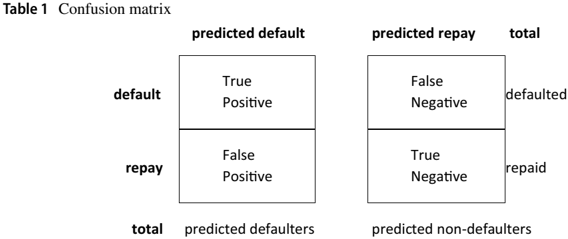
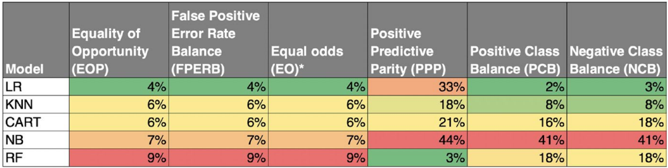
“3 First, the following are the error rates used in the metrics, with the examples from mortgage lending provided in the Confusion Matrix in Table 1: • Equal opportunity/false negative error rate balance (Hardt et al. 2016) Equal FNR.”
BackgroundMethodFair prediction with disparate impact: a study of bias in recidivism prediction instruments
Chouldechova, A. (2017) · Big Data · doi:10.1089/big.2016.0047 · Cited by 2,159 · cited 6×
“Electronic copy available at: https://ssrn.com/abstract=3559407 • Equal odds (Hardt et al. 2016) Equal TPR and FPR, meeting both of the above conditions; • Positive predictive parity (Chouldechova 2017) Equal PPV.”
Influential
Cited by
The Ethics of Artificial Intelligence: Principles, Challenges, and Opportunities
Floridi, L. (2023) · doi:10.1093/oso/9780198883098.001.0001 · Cited by 507
Self-citationGiovanola, B., & Tiribelli, S. (2023) · AI & SOCIETY · doi:10.1007/s00146-022-01455-6 · Cited by 193
“…recruiting and employment (Kim 2017), university admissions (Simonite 2020), housing (Barocas and Selbst, 2016), credit lending (Deville, 2013; Lobosco 2013; Sengh Ah Lee and Floridi 2020), criminal justice (Berk et al. 2018; Abebe et al. 2020) and policing (Ferguson 2017), just to name a few.”
BackgroundA sociotechnical view of algorithmic fairness
Dolata, M., Feuerriegel, S., & Schwabe, G. (2022) · Information Systems Journal · doi:10.1111/isj.12370 · Cited by 160
Policy advice and best practices on bias and fairness in AI
Álvarez, J. M., Colmenarejo, A. B., Elobaid, A., Fabbrizzi, S., Fahimi, M., Ferrara, A., Ghodsi, S., Mougan, C., Papageorgiou, I. T., Lobo, P. R., et al. (2024) · Ethics and Information Technology · doi:10.1007/s10676-024-09746-w · Cited by 163
“…is, without doubts, challenging (Scantamburlo, 2021), and likely to require domain-specific approaches (Lee & Floridi, 2021; Chen et al., 2023b) and the ability to distinguish whether and when to use AI (Lin et al., 2020), or how to enhance and extend human capabilities with AI (…”
The Ethics of Algorithms: Key Problems and SolutionsPreprint
Tsamados, A., Aggarwal, N., Cowls, J., Morley, J., Roberts, H., Taddeo, M., & Floridi, L. (2020) · SSRN Electronic Journal · doi:10.2139/ssrn.3662302 · Cited by 101
Self-citation
Metadata
- Authors
- Lee, M. S. A., & Floridi, L.
- Affiliations
- University of Cambridge (GB)
- University of Oxford (GB)
- Corresponding author
- Lee, Michelle Seng Ah
- Venue
- Minds and Machines
- Published
- 2020-06-09
- Volume
- 31
- Issue
- 1
- Pages
- 165-191
- ISSN
- 0924-6495 (ISSN-L)
- 1572-8641
- OpenAlex
- W3013532257
- Cited by
- 106
- References
- 37
- Citations by year
- 2026: 9 · 2025: 8 · 2024: 20 · 2023: 42 · 2022: 13 · 2021: 12 · 2020: 2
- FWCI
- 23.51
- Type
- journal article
- Language
- en
- Open access
- hybrid
- doi.org
- Licence
- cc-by
- creativecommons.org/licenses/by/4.0 (tdm)
- creativecommons.org/licenses/by/4.0 (vor)
- Locations
- Minds and Machines (publishedVersion, cc-by)
- PhilPapers (PhilPapers Foundation) (submittedVersion, cc-by)
- PhilPapers (PhilPapers Foundation) (submittedVersion)
- Apollo (University of Cambridge) (submittedVersion, cc-by)
- Apollo (cc-by)
- Apollo
- Topics
- Physical Sciences › Computer Science › Artificial Intelligence › Ethics and Social Impacts of AI
- Physical Sciences › Computer Science › Artificial Intelligence › Explainable Artificial Intelligence (XAI)
- Social Sciences › Law › Discrimination and Equality Law
- Keywords
- algorithmic fairness, mortgage lending, algorithmic discrimination, ethical trade-offs, fairness definitions, automated decision-making, value prioritization
About these checks
Registry, retraction, Cites and statistics results are computed, not judged, with one exception: a printed reference that no index lists is read once by a model before it counts as a citation error. Claims are extracted by a model and kept only when their quote appears verbatim in the text; each cited source is then checked, with a model’s help, for whether it says what the claim relies on. Those verdicts can be wrong — read the claim’s quote and the cited source before relying on one.
Statistics and arithmetic are recomputed, not judged.
Confidence bands are shown only for fields calibrated on our annotated test set. None is calibrated yet, so no band is shown.
What counts as a claim ›How we measure confidence ›How we check this ›
Are you an author, or do you see a problem with this page? Request a review
Data sources
Bibliographic data: Semantic Scholar, OpenAlex, Crossref.
Contains information from the Semantic Scholar Academic Graph Datasets, made available under the ODC Attribution License (ODC-BY 1.0).
Semantic Scholar’s data is described in: Kinney, R., et al. (2023). The Semantic Scholar Open Data Platform. arXiv:2301.10140.
