

The DOI matches its Crossref record; 39 of the 40 references it cites were found in a registry or an index.
Improved functionalization of oleic acid-coated iron oxide nanoparticles for biomedical applications
Open accessAbstract
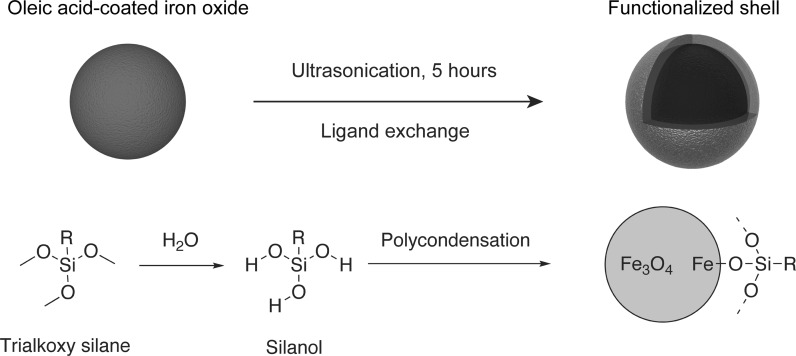
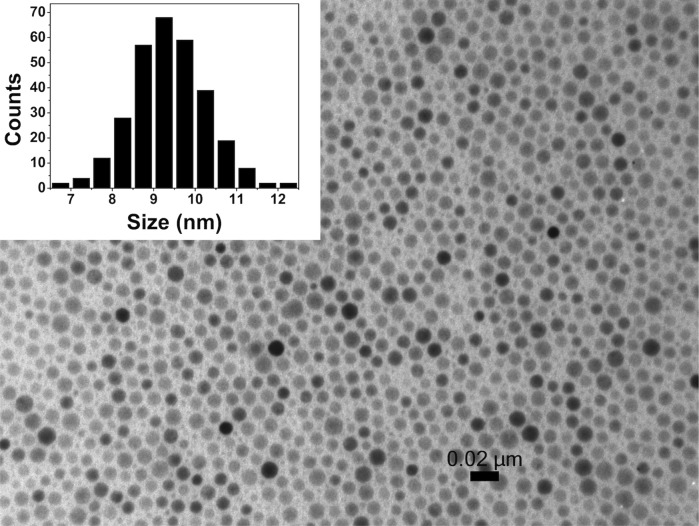
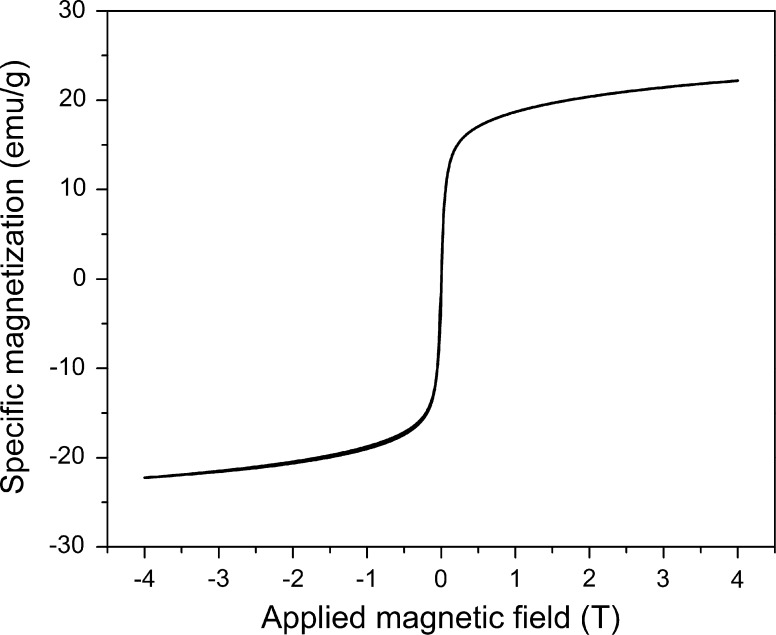
Superparamagnetic iron oxide nanoparticles can provide multiple benefits for biomedical applications in aqueous environments such as magnetic separation or magnetic resonance imaging. To increase the colloidal stability and allow subsequent reactions, the introduction of hydrophilic functional groups onto the particles' surface is essential. During this process, the original coating is exchanged by preferably covalently bonded ligands such as trialkoxysilanes. The duration of the silane exchange reaction, which commonly takes more than 24 h, is an important drawback for this approach. In this paper, we present a novel method, which introduces ultrasonication as an energy source to dramatically accelerate this process, resulting in high-quality water-dispersible nanoparticles around 10 nm in size. To prove the generic character, different functional groups were introduced on the surface including polyethylene glycol chains, carboxylic acid, amine, and thiol groups. Their colloidal stability in various aqueous buffer solutions as well as human plasma and serum was investigated to allow implementation in biomedical and sensing applications. ELECTRONIC SUPPLEMENTARY MATERIAL: The online version of this article (doi:10.1007/s11051-012-1100-5) contains supplementary material, which is available to authorized users.
Overview
The claims and statistics of this paper haven’t been checked yet.
Run the check — free, no account needed. It reads the open-access text and checks the sources it cites.
Integrity signals
Registry
Cites
Statistics
Figures
Verification
Claims the paper makes
The claims and statistics of this paper haven’t been checked yet.
Run the check — free, no account needed. It reads the open-access text and checks the sources it cites.
Claims other papers make about this one
Each is checked against this paper’s own text: does it say what the citing paper says it does?
In the citing paper
“Prototypic examples of materials used to coat iron oxide nanoparticles are polymers [28, 47, 50], fatty acids (like oleic acid, stearic acid, lauric acid and dodecylphosphonic acid) [51–55], amino acids (like phenyl alanine, tyrosine, arginine, lysine and cysteine) [56–58],_metals (like gold, gadolinium and silver) [59–61] and oxides (like silica and TiO2) [62–64].”
From Iron oxide nanoparticles: Diagnostic, therapeutic and theranostic applications (2019) · cites this paper as [53]
Self-check
Percentages, sums and reported differences re-computed from the paper’s own numbers.
The self-check needs the paper’s full text.
Citations
Cites
Cornell, R. M., & Schwertmann, U. (2003) · Wiley eBooks · doi:10.1002/3527602097 · Cited by 8,042
Laurent, S., Forge, D., Port, M., Roch, A., Robic, C., Vander Elst, L., & Muller, R. N. (2008) · Chemical Reviews · doi:10.1021/cr068445e · Cited by 6,852
Ultra-large-scale syntheses of monodisperse nanocrystals
Park, J., An, K., Hwang, Y., Park, J.-G., Noh, H.-J., Kim, J.-Y., Park, J.-H., Hwang, N.-M., & Hyeon, T. (2004) · Nature Materials · doi:10.1038/nmat1251 · Cited by 4,076
Monodisperse MFe2O4 (M = Fe, Co, Mn) Nanoparticles
Sun, S., Zeng, H., Robinson, D., Raoux, S., Rice, P. M., Wang, S. X., & Li, G. (2003) · Journal of the American Chemical Society · doi:10.1021/ja0380852 · Cited by 3,484
Schwertmann, P. D. D. H. C. U., & Cornell, R. M. (2007) · Wiley-VCH eBooks · doi:10.1002/9783527613229.ch01 · Cited by 2,445
The preparation of magnetic nanoparticles for applications in biomedicine
Tartaj, P., Morales, M. P., Veintemillas-Verdaguer, S., o, T. G. L.-C., & Serna, C. J. (2003) · Journal of Physics D Applied Physics · doi:10.1088/0022-3727/36/13/202 · Cited by 1,963
Mason, T. J., & Lorimer, J. P. (2002) · Wiley eBooks · doi:10.1002/352760054x · Cited by 1,508
Harder, P., Grunze, M., Dahint, R., Whitesides, G. M., & Laibinis, P. E. (1998) · The Journal of Physical Chemistry B · doi:10.1021/jp972635z · Cited by 1,291
Imaging and drug delivery using theranostic nanoparticles
Janib, S. M., Moses, A. S., & MacKay, J. A. (2010) · Advanced Drug Delivery Reviews · doi:10.1016/j.addr.2010.08.004 · Cited by 1,278
Surface modification of superparamagnetic magnetite nanoparticles and their intracellular uptake
Zhang, Y., Kohler, N., & Zhang, M. (2002) · Biomaterials · doi:10.1016/s0142-9612(01)00267-8 · Cited by 1,266
Research works printed but not linked: 1
- Sun J, Zhou S, Hou P, Yang Y (2006) Synthesis and characterization of biocompatible Fe3O4 nanoparticles. J Biomed Mater Res, pp 333–341. doi: 10.1002/jbm.a · DOI
Cited by
Sorted by citations
Iron oxide nanoparticles: Diagnostic, therapeutic and theranostic applications
Dadfar, S. M., Roemhild, K., Drude, N. I., von Stillfried, S., Knüchel, R., Kiessling, F., & Lammers, T. (2019) · Advanced Drug Delivery Reviews · doi:10.1016/j.addr.2019.01.005 · Cited by 1,181
A review of current coupling agents for modification of metal oxide nanoparticles
Mallakpour, S. E., & Madani, M. (2015) · Progress in Organic Coatings · doi:10.1016/j.porgcoat.2015.05.023 · Cited by 313
Barrow, M., Taylor, A., Murray, P. A., Rosseinsky, M. J., & Adams, D. J. (2015) · Chemical Society Reviews · doi:10.1039/c5cs00331h · Cited by 204
Dupont, D., Brullot, W., Bloemen, M., Verbiest, T., & Binnemans, K. (2014) · ACS Applied Materials & Interfaces · doi:10.1021/am406027y · Cited by 184
Al-Mawali, K. S., Osman, A. I., Al-Muhtaseb, A. H., Mehta, N., Jamil, F., Mjalli, F., Vakili-Nezhaad, G. R., & Rooney, D. W. (2021) · Renewable Energy · doi:10.1016/j.renene.2021.02.027 · Cited by 158
Metadata
- Authors
- Bloemen, M., Brullot, W., Luong, T. T., Geukens, N., Gils, A., & Verbiest, T.
- Affiliations
- KU Leuven (BE)
- Corresponding author
- Bloemen, Maarten
- Venue
- Journal of Nanoparticle Research
- Published
- 2012-08-07
- Volume
- 14
- Issue
- 9
- Pages
- 1100-1100
- ISSN
- 1388-0764 (ISSN-L)
- 1572-896X
- PMC
- PMC3460177
- OpenAlex
- W2008890153
- Cited by
- 206
- References
- 40
- Citations by year
- 2026: 8 · 2025: 12 · 2024: 10 · 2023: 15 · 2022: 13 · 2021: 18 · 2020: 19 · 2019: 14 · 2018: 14 · 2017: 24 · 2016: 25 · 2015: 16 · 2014: 14 · 2013: 4
- FWCI
- 6.20
- Type
- journal article
- Language
- en
- Open access
- hybrid
- doi.org
- Licence
- cc-by
- Locations
- Journal of Nanoparticle Research (publishedVersion, cc-by)
- PubMed Central (publishedVersion, cc-by)
- PubMed (publishedVersion)
- Lirias (submittedVersion, other-oa)
- Funders
- Fonds Wetenschappelijk Onderzoek
- KU Leuven
- Vlaamse regering
- Topics
- Physical Sciences › Engineering › Biomedical Engineering › Characterization and Applications of Magnetic Nanoparticles
- Physical Sciences › Materials Science › Materials Chemistry › Magnetic Properties and Synthesis of Ferrites
- Physical Sciences › Materials Science › Biomaterials › Nanoparticle-Based Drug Delivery
- Keywords
- superparamagnetic iron oxide nanoparticles, oleic acid coating, surface functionalization, sonication, colloidal stability, polyethylene glycol, carboxylic acids, amines, sulfhydryl groups, magnetic separation, magnetic resonance imaging, water-dispersible nanoparticles
About these checks
Registry, retraction, Cites and statistics results are computed, not judged, with one exception: a printed reference that no index lists is read once by a model before it counts as a citation error. Claims are extracted by a model and kept only when their quote appears verbatim in the text; each cited source is then checked, with a model’s help, for whether it says what the claim relies on. Those verdicts can be wrong — read the claim’s quote and the cited source before relying on one.
Statistics and arithmetic are recomputed, not judged.
Confidence bands are shown only for fields calibrated on our annotated test set. None is calibrated yet, so no band is shown.
What counts as a claim ›How we measure confidence ›How we check this ›
Are you an author, or do you see a problem with this page? Request a review
