

Bioavailability and biodistribution of differently charged polystyrene nanoparticles upon oral exposure in rats
Open accessThe DOI matches its Crossref record; 44 of the 44 references it cites were found in a registry or an index.
Abstract
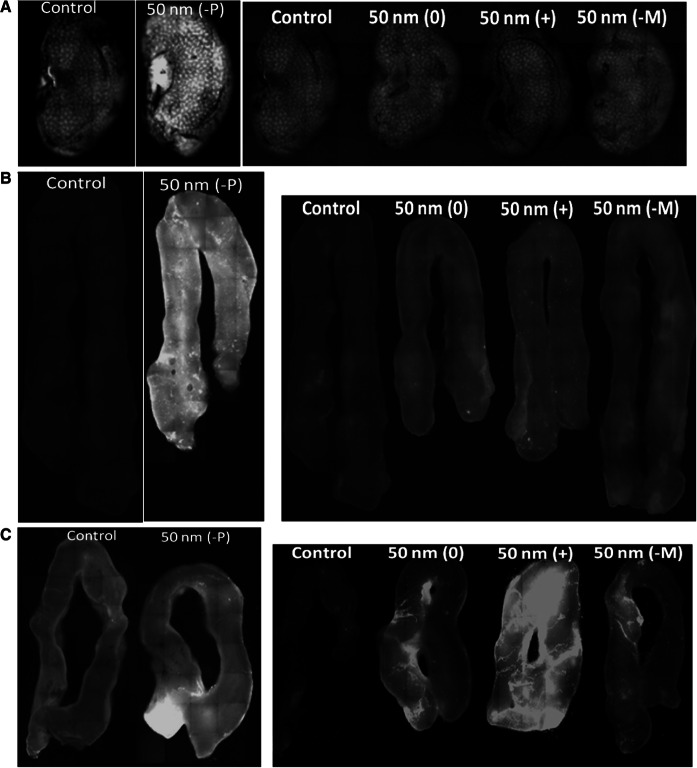
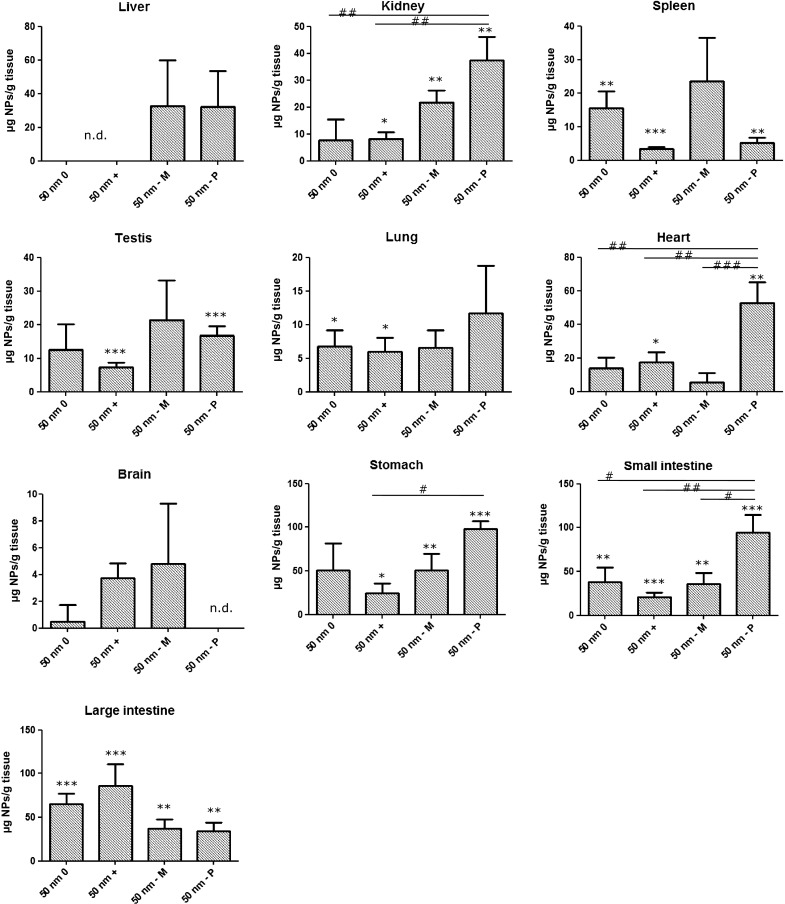
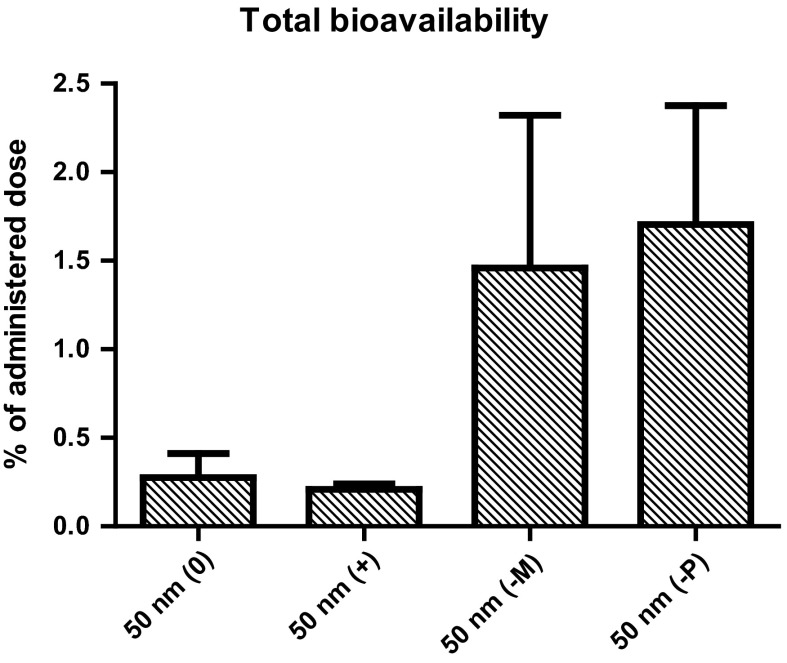
The likelihood of oral exposure to nanoparticles (NPs) is increasing, and it is necessary to evaluate the oral bioavailability of NPs. In vitro approaches could help reducing animal studies, but validation against in vivo studies is essential. Previously, we assessed the translocation of 50 nm polystyrene NPs of different charges (neutral, positive and negative) using a Caco-2/HT29-MTX in vitro intestinal translocation model. The NPs translocated in a surface charge-dependent manner. The present study aimed to validate this in vitro intestinal model by an in vivo study. For this, rats were orally exposed to a single dose of these polystyrene NPs and the uptake in organs was determined. A negatively charged NP was taken up more than other NPs, with the highest amounts in kidney (37.4 µg/g tissue), heart (52.8 µg/g tissue), stomach wall (98.3 µg/g tissue) and small intestinal wall (94.4 µg/g tissue). This partly confirms our in vitro findings, where the same NPs translocated to the highest extent. The estimated bioavailability of different types of NPs ranged from 0.2 to 1.7 % in vivo, which was much lower than in vitro (1.6-12.3 %). Therefore, the integrated in vitro model cannot be used for a direct prediction of the bioavailability of orally administered NPs. However, the model can be used for prioritizing NPs before further in vivo testing for risk assessment.
Overview
The claims and statistics of this paper haven’t been checked yet.
Free: it reads the open-access text and checks the first 5 claims that cite a source we can check. Create a free account to check every claim.
Integrity signals
Registry
Cites
Statistics
Figures
Verification
Claims the paper makes
The claims and statistics of this paper haven’t been checked yet.
Free: it reads the open-access text and checks the first 5 claims that cite a source we can check. Create a free account to check every claim.
Claims other papers make about this one
Each is checked against this paper’s own text: does it say what the citing paper says it does?
The cited source says what the claim attributes to it.
In the citing paper
“Studies in animal models suggest that the physicochemical features of different MNPs influence whether they reach distant organs.30,31”
From Microplastics and Nanoplastics in Atheromas and Cardiovascular Events (2024) · cites this paper as [30]
In the citing paper
“MNPs have been found in drinking water, a large range of foods, cosmetic products, and air, also in a form bound to fine, inhalable particulate matter with an aerodynamic diameter of 2.5 μm or less (PM 2.5 ) and transported long distances by wind.5,6,29,30”
From Microplastics and Nanoplastics in Atheromas and Cardiovascular Events (2024) · cites this paper as [30]
Self-check
Percentages, sums and reported differences re-computed from the paper’s own numbers.
The self-check needs the paper’s full text.
Citations
Cites
Principles of Fluorescence Spectroscopy
Lakowicz, J. R. (1999) · Springer eBooks · doi:10.1007/978-1-4757-3061-6 · Cited by 26,947 · cited 1×
“After sample treatment, all samples still were slightly turbid, which could have distorted the fluorescent signal from these samples potentially resulting in an increased detection limit (Lakowicz 2007).”
BackgroundApplications and implications of nanotechnologies for the food sector
Chaudhry, Q., Scotter, M., Blackburn, J., Ross, B., Boxall, A., Castle, L., Aitken, R., & Watkins, R. (2008) · Food Additives & Contaminants: Part A · doi:10.1080/02652030701744538 · Cited by 1,051
Xiao, K., Li, Y., Luo, J., Lee, J. S., Xiao, W., Gonik, A. M., Agarwal, R. G., & Lam, K. S. (2011) · Biomaterials · doi:10.1016/j.biomaterials.2011.01.021 · Cited by 1,039
Nanoparticle Uptake by the Rat Gastrointestinal Mucosa: Quantitation and Particle Size Dependency
Jani, P., Halbert, G. W., Langridge, J., & Florence, A. T. (1990) · Journal of Pharmacy and Pharmacology · doi:10.1111/j.2042-7158.1990.tb07033.x · Cited by 920 · cited 5×
“5 % reported for the liver, spleen and stomach wall of 300 nm PS-NP-treated animals, respectively (Jani et al. 1990).”
BackgroundInfluentialKulkarni, S. A., & Feng, S.-S. (2013) · Pharmaceutical Research · doi:10.1007/s11095-012-0958-3 · Cited by 768
van der Zande, M., Vandebriel, R. J., Van Doren, E., Kramer, E., Herrera Rivera, Z., Serrano-Rojero, C. S., Gremmer, E. R., Mast, J., Peters, R. J. B., Hollman, P. C. H., et al. (2012) · ACS Nano · doi:10.1021/nn302649p · Cited by 707
Self-citationHillyer, J. F., & Albrecht, R. M. (2001) · Journal of Pharmaceutical Sciences · doi:10.1002/jps.1143 · Cited by 706 · cited 1×
“The results from these studies highlight the dependence of uptake and accumulation of PS-NPs on several factors, including the size, surface charge and type of coating material (Araujo et al. 1999; Hillery et al. 1994; Hillyer and Albrecht 2001; Hussain and Florence 1998; Hussain et al. 1997; Jani et al. 1989).”
BackgroundHussain, N. (2001) · Advanced Drug Delivery Reviews · doi:10.1016/s0169-409x(01)00152-1 · Cited by 680 · cited 1×
“Effects of size, surface chemistry and the properties of the in vitro monolayer on PS-NP translocation have also been reported by others (Hussain et al. 2001; Szentkuti 1997; des Rieux et al. 2005; Fazlollahi et al. 2011; Mahler et al. 2012).”
Project on Emerging Nanotechnologies
Breggin, L. K., & Pendergrass, J. A. (2007) · Cited by 601
The kinetics of the tissue distribution of silver nanoparticles of different sizes
Lankveld, D. P. K., Oomen, A. G., Krystek, P., Neigh, A., Troost – de Jong, A., Noorlander, C. W., Van Eijkeren, J. C. H., Geertsma, R. E., & De Jong, W. H. (2010) · Biomaterials · doi:10.1016/j.biomaterials.2010.07.045 · Cited by 512 · cited 1×
“Neither PS-NPs were detected in blood at any time point, even with the intervals of half an hour, most likely due to a rapid transport of PS-NPs from the blood circulation to the organs, as shown before (Fabian et al. 2008; Lankveld et al. 2010; Geraets et al. 2014).”
Background
Cited by
Items 101–197 of 197
Marcellus, K. A., Prescott, D., Scur, M., Ross, N., & Gill, S. (2025) · Nanomaterials · doi:10.3390/nano15040267 · Cited by 46
“Furthermore, exposure to MNPLs is likely to be continuous and varied; hence, further studies using a variety of plastic particles with different sizes, shapes, and polymer types are needed to elucidate the potential effects of human MNPL exposure.”
InfluentialBusch, M., Brouwer, H., Aalderink, G., Bredeck, G., Kämpfer, A. A. M., Schins, R. P. F., & Bouwmeester, H. (2023) · Frontiers in Toxicology · doi:10.3389/ftox.2023.1112212 · Cited by 37
Self-citationDistribution and toxicity of submicron plastic particles in mice
Tsou, T.-Y., Lee, S.-H., Kuo, T.-H., Chien, C., Chen, H., & Cheng, T. (2022) · Environmental Toxicology and Pharmacology · doi:10.1016/j.etap.2022.104038 · Cited by 32
Zhang, M., Jin, Y., Fan, C., Xu, Y., Li, J., Pan, W., Lou, Z., Chen, H., & Jin, B. (2024) · Environmental Pollution · doi:10.1016/j.envpol.2024.124426 · Cited by 33
Shukla, S., Khanna, S., & Khanna, K. (2024) · Toxicology Reports · doi:10.1016/j.toxrep.2024.101844 · Cited by 53
Yu, C., Takhistov, P., Alocilja, E. C., Reyes-De-Corcuera, J. I., Frey, M. W., Gomes, C. L., Mao, Y., McLamore, E. S., Lin, M., Tsyusko, O. V., et al. (2022) · Analytical and Bioanalytical Chemistry · doi:10.1007/s00216-022-04069-5 · Cited by 36
“Researches have shown that NP could permeate through tissue membranes and affect cell functions [160, 161]; it could even reach the brain [162] with the potential to cross the blood–brain barrier [163].”
BackgroundCui, M., He, Q., Wang, Z., Yu, Y., Gao, H., Liu, Z., Peng, H., Wang, H., Zhang, X., Li, D., et al. (2023) · Environmental Pollution · doi:10.1016/j.envpol.2023.121808 · Cited by 32
Cui, H., Yang, W., Cui, Y., Qi, L., Jiang, X., & Li, M. (2023) · Environmental Science and Pollution Research · doi:10.1007/s11356-022-24918-1 · Cited by 31
Zhang, L., Wan, B., Zheng, J., Chen, L., Ye, X., Zhang, R., Chen, Z., Hu, C., Zhang, Y., & Yan, C. (2024) · The Science of The Total Environment · doi:10.1016/j.scitotenv.2024.170700 · Cited by 33
Ruggieri, F., Battistini, B., Sorbo, A., Senofonte, M., Leso, V., Iavicoli, I., & Bocca, B. (2024) · Food and Chemical Toxicology · doi:10.1016/j.fct.2024.115209 · Cited by 34
Lopez, G. L., & Lamarre, A. (2025) · Reproductive Toxicology · doi:10.1016/j.reprotox.2025.108951 · Cited by 31
Connolly, M., Hernández‐Moreno, D., Conde, E., et al. (2022) · Environmental Sciences Europe · doi:10.1186/s12302-021-00581-0 · Cited by 27
“Studies have shown rapid agglomeration of citrate-stabilised NPs in synthetic simulated gastric fluids forming large NP-pepsin complexes [19, 39].”
BackgroundKim, J. E., Sonar, N. S., Thakuri, L. S., Park, J. W., Kim, K., & Rhyu, D. Y. (2025) · NanoImpact · doi:10.1016/j.impact.2025.100549 · Cited by 28
Mortensen, N. P., Johnson, L. M., Grieger, K., Ambroso, J. L., & Fennell, T. R. (2019) · Reproductive Toxicology · doi:10.1016/j.reprotox.2019.08.016 · Cited by 27
Wright, S., Levermore, J. M., & Ishikawa, Y. (2023) · Applied Spectroscopy · doi:10.1177/00037028231199772 · Cited by 27
Chen, D., Wang, G., Song, W., & Zhang, Q. (2015) · Journal of Nanoparticle Research · doi:10.1007/s11051-015-3217-9 · Cited by 25
“…of drugs by reducing their degradation rate, improving cellular uptake, allowing targeting and control of drug release, and reducing side effects (Mottaghitalab et al. 2015; Schulte et al. 2013; Walczak et al. 2015; Huang et al. 2014; Mukherjee et al. 2014a, b; Zhao and Riediker 2014).”
BackgroundUnraveling the micro- and nanoplastic predicament: A human-centric insight
Boever, S. D., Devisscher, L., & Vinken, M. (2024) · The Science of The Total Environment · doi:10.1016/j.scitotenv.2024.170262 · Cited by 26
Uncovering layer by layer the risk of nanoplastics to the environment and human health
Antunes, J., Sobral, P., Branco, V., & Martins, M. (2024) · Journal of Toxicology and Environmental Health Part B · doi:10.1080/10937404.2024.2424156 · Cited by 21
Du, W., Xu, K., Wang, S., Gao, X. F., Jiang, M., Lv, X., Zhou, Q., Ma, P., Yang, X., Wang, S., et al. (2025) · Environmental Pollution · doi:10.1016/j.envpol.2025.126009 · Cited by 24
Acute Toxicity Assessment of Orally Administered Microplastic Particles in Adult Male Wistar Rats
Stojanović, I. G., Drakulić, D., Todorović, A., Martinović, J., Filipović, N., & Stojanović, Z. S. (2024) · Toxics · doi:10.3390/toxics12030167 · Cited by 28
“…[23,24], as well as their translocation from the gut cavity to various organs, including the testicles, liver, blood, and, strikingly, to the brain [10,23,25], potentially causing behavioral disruptions, including anxiogenic effects, depression-like behaviors, and altered cognitive functions [23].”
BackgroundInfluentialMa, J., Ladd, D. M., Kaval, N., & Wang, H. (2025) · Food and Chemical Toxicology · doi:10.1016/j.fct.2025.115489 · Cited by 30
Wang, Z., Shi, R., Wang, R., Ma, Z., Jiang, S., Zhang, F., & Wu, W. (2025) · Ecotoxicology and Environmental Safety · doi:10.1016/j.ecoenv.2025.118056 · Cited by 22
Application of Polymeric Nano-Materials in Management of Inflammatory Bowel Disease
Minakshi, P., Kumar, R., Ghosh, M., Brar, B., Barnela, M., & Lakhani, P. (2020) · Current Topics in Medicinal Chemistry · doi:10.2174/1568026620666200320113322 · Cited by 18
Weissberg, D. (2013) · PubMed · Cited by 26
The histopathological and functional consequences of microplastic exposure
Lee, Y., Sung, M. K., Sung, S., Choi, J.-H., Kang, K., Park, J. W., Kim, Y., & Lee, S. (2025) · Discover Applied Sciences · doi:10.1007/s42452-025-06470-y · Cited by 27
“PE MPs cause hypertrophy and hyperplasia in the gastric mucosa, and orally administered PS MPs become integrated into the stomach, liver, and kidneys [28, 77].”
Chen, D., Song, X., Wang, K., Guo, C., Yu, Y., Fan, H., & Zhao, F. (2017) · Journal of Nanoparticle Research · doi:10.1007/s11051-017-4076-3 · Cited by 18
Shruti, V. C., & Kutralam-Muniasamy, G. (2025) · Environmental Science & Technology · doi:10.1021/acs.est.5c05922 · Cited by 16
Vailionytė, A., Uogintė, I., Pajarskienė, J., Bagdonas, E., Jelinskas, T., Ignatjev, I., Byčenkienė, S., & Aldonytė, R. (2025) · Environmental Pollution · doi:10.1016/j.envpol.2025.126186 · Cited by 17
Cellular and Systemic Effects of Micro- and Nanoplastics in Mammals—What We Know So Far
Grote, K., Brüstle, F., & Vlacil, A.-K. (2023) · Materials · doi:10.3390/ma16083123 · Cited by 17
“Walczak [69] polystyrene 50 nm 125 mg/kg; 25 mg/mL, A Magsphere (Pasadena, CA, USA), Polysciences Inc.”
Nanotechnological approaches toward cancer chemotherapy
Rajagopalan, R., & Yakhmi, J. V. (2017) · Elsevier eBooks · doi:10.1016/b978-0-323-46144-3.00008-8 · Cited by 21
Environmental microplastics and nanoplastics: Effects on cardiovascular system
Chowdhury, S. R., Dey, A., Mondal, S., & Gautam, M. K. (2023) · Annales de Toxicologie Analytique · doi:10.1016/j.toxac.2023.11.006 · Cited by 27
Barboza, L. G. A., Lourenço, S. C., Aleluia, A., Senes, G. P., Otero, X. L., & Guilhermino, L. M. (2024) · Environmental Research · doi:10.1016/j.envres.2024.119694 · Cited by 16
Hepatic and metabolic outcomes induced by sub-chronic exposure to polystyrene microplastics in mice
Lee, S.-H., Lin, T.-A., Yan, Y., Chien, C., & Cheng, T. (2024) · Archives of Toxicology · doi:10.1007/s00204-024-03847-7 · Cited by 19
“The micron-, submicron-, and nano-sized MPs have been observed in diverse organs, including the intestine, liver, lung, kidney, heart, stomach, spleen, brain, testis, and ovaries (Ding et al. 2021; Walczak et al. 2015; Xu et al. 2021).”
Human health effects of airborne microplastics
Chen, G., Li, Y., & Wang, J. (2022) · Comprehensive analytical chemistry · doi:10.1016/bs.coac.2022.07.008 · Cited by 23
Liebgott, C., Chaïb, I., Doyen, P., Robert, H., Eutamène, H., Duflos, G., Reynaud, S., Grassl, B., & Mercier‐Bonin, M. (2023) · TrAC Trends in Analytical Chemistry · doi:10.1016/j.trac.2023.117175 · Cited by 15
Stojković, M., Stojković, P., & Stanković, K. M. (2020) · Environmental Pollution · doi:10.1016/j.envpol.2020.116144 · Cited by 15
Polystyrene microplastic-induced pathophysiology is driven by disruption of efferocytosis
Codo, A. C., Romero-Pichardo, J. E., Wang, Z., Aufiero, M. A., Lazarov, T., Rojas, W. S., Walker, N. S., Nair, A., Cole, R. F., Adkins, S., et al. (2026) · Immunity · doi:10.1016/j.immuni.2026.01.009 · Cited by 18
Disposition of [ 14 C]-polystyrene microplastics after oral administration to lactating sheep
Shelver, W. L., McGarvey, A. M., & Billey, L. O. (2024) · Food Additives & Contaminants Part A · doi:10.1080/19440049.2024.2379382 · Cited by 12
“Bioavailability can be influenced by particle size, charge, dose (single or multiple) and was summarized by Walczak et al. (2015, Table 2).”
InfluentialLi, X., Li, Y., Liu, B., Sui, G., Liu, S., & Song, G. (2024) · Journal of Hazardous Materials · doi:10.1016/j.jhazmat.2024.136865 · Cited by 16
The combined effects of polystyrene of different sizes and cadmium in mouse kidney tissues
Zhang, Q., Li, S., Fang, J., Hao, Y., Lu, J., Zhang, L., Zhang, M., Zhang, L., Wang, Y., Zhang, Y. L., et al. (2024) · Ecotoxicology and Environmental Safety · doi:10.1016/j.ecoenv.2024.116660 · Cited by 11
Nanoplastics induces arrhythmia in human stem-cells derived cardiomyocytes
Chia, S. P. S., Pang, J. K. S., Winanto, W., & Soh, B.-S. (2025) · Ecotoxicology and Environmental Safety · doi:10.1016/j.ecoenv.2024.117657 · Cited by 15
Brouwer, H., Oijen, F. L. N. V., & Bouwmeester, H. (2022) · Elsevier eBooks · doi:10.1016/b978-0-12-819470-6.00014-7 · Cited by 11
Self-citationBibi, A., Can, A., Pant, U., Hardiman, G., Hill, D., Elliott, C. T., & Cao, C. (2023) · Comprehensive analytical chemistry · doi:10.1016/bs.coac.2022.11.003 · Cited by 14
Analysis of oligomers to assess exposure to microplastics from foods. A perspective
Tsochatzis, E., Theodoridis, G. A., & Corredig, M. (2023) · Frontiers in Nutrition · doi:10.3389/fnut.2023.1186951 · Cited by 10
Surveillance of Seafood for Microplastics
Kögel, T., Refosco, A., & Maage, A. (2020) · Springer eBooks · doi:10.1007/978-3-030-10618-8_28-1 · Cited by 10
Liu, H., Tan, X., Li, X., Wu, Y., Lei, S., & Wang, Z. (2024) · The Science of The Total Environment · doi:10.1016/j.scitotenv.2024.174766 · Cited by 7
Liebgott, C., Mobley, M., Miguel, S., Bézirard, V., Beaufrand, C., Lamana, J. J., Dages, R., Tremblay‐Franco, M., Gautier, R., Denis, J., et al. (2026) · Environmental Science Nano · doi:10.1039/d5en00866b · Cited by 9
A critical review of micro- and nanoplastic permeation in the human body
Pan, Y., Janjua, T. I., Thomas, K. V., Shepherd, C. E., & Rauert, C. (2026) · Microplastics and Nanoplastics · doi:10.1186/s43591-026-00177-6 · Cited by 17
“Walczak, Hendriksen [82] demonstrated that when rats are fed PS nanoparticles, carboxyl surface modified (negatively charged) 50 nm PS showed significantly higher uptake into the kidney, heart, stomach and small intestine walls than neutral and amine surface modified (positively charged) 50 nm PS.”
Lopez, G. L., Adda-Bouchard, Y., Laulhé, X., Chamberlain, G., Bourguignon, L., Charpentier, T., Cyr, D. G., & Lamarre, A. (2025) · Journal of Hazardous Materials · doi:10.1016/j.jhazmat.2025.137316 · Cited by 7
Oral Exposure to Nylon-11 and Polystyrene Nanoplastics During Early-Life in Rats
Mortensen, N. P., Caffaro, M. M. M., Krovi, S. A., Kim, J., Watson, S. L., Snyder, R. W., Patel, P. R., Fennell, T. R., & Johnson, L. M. (2025) · Nanomaterials · doi:10.3390/nano15060465 · Cited by 7
Schreiner, J., Rindt, C., Wächter, J., Jung, N., Vogel‐Kindgen, S., & Windbergs, M. (2023) · International Journal of Pharmaceutics · doi:10.1016/j.ijpharm.2023.123483 · Cited by 6
Shelver, W. L., McGarvey, A. M., Billey, L. O., & Singh, A. (2025) · The Science of The Total Environment · doi:10.1016/j.scitotenv.2025.180633 · Cited by 4
Li, H., Wang, N., & Mao, X. (2025) · Nano Research · doi:10.26599/nr.2025.94908055 · Cited by 7
Medina-Ramírez, I. E., Jiménez-Chávez, A., & Vizcaya‐Ruíz, A. D. (2022) · Elsevier eBooks · doi:10.1016/b978-0-12-821637-8.00006-7 · Cited by 5
Geppner, L., Grammatidis, S., Wilfing, H., & Henjakovic, M. (2024) · Microplastics · doi:10.3390/microplastics3030026 · Cited by 8
“Furthermore, it has been shown that following single or continuous exposure to nano-and very small microplastics, heightened concentrations of the particles can be detected in animal blood, organs, and hearts [20–23].”
BackgroundInfluentialBreach of Security? Placental Uptake of Micro- and Nanoplastic Particles
Schmidt, S. (2022) · Environmental Health Perspectives · doi:10.1289/ehp12180 · Cited by 4
Pajarskienė, J., Vailionytė, A., Uogintė, I., Byčenkienė, S., Pociūtė, A., Bagdonas, E., & Aldonytė, R. (2025) · Food and Chemical Toxicology · doi:10.1016/j.fct.2025.115762 · Cited by 4
Rajak, S., Shahi, A., Yadav, A., Medhe, P., & Sinha, R. A. (2025) · World Journal of Hepatology · doi:10.4254/wjh.v17.i12.111198 · Cited by 4
Vogel, A., Sieg, H., Böhmert, L., van den Berg, A. E. T., Fessard, V., Ferraris, F., Pieters, R. H. H., Cubadda, F., & Haase, A. (2026) · Food and Chemical Toxicology · doi:10.1016/j.fct.2026.116041 · Cited by 4
Engineered Nanoparticles and Food: Exposure, Toxicokinetics, Hazards and Risks
de Jong, W. H., Oomen, A. G., Tran, L., Chaudhry, Q., & Lefebvre, D. E. (2017) · Royal Society of Chemistry eBooks · doi:10.1039/9781782626879-00200 · Cited by 4
Henry, T. B., Bucknall, D. G., Catarino, A. I., Gillanders, B. M., Haave, M., Kaminski, N. E., Völker, C., & Wootton, N. (2025) · Environmental Science & Technology Letters · doi:10.1021/acs.estlett.5c00551 · Cited by 3
Singh, G., Velasquez, L., Mason, C., Scur, M., Marcellus, K. A., & Gill, S. (2026) · Microplastics · doi:10.3390/microplastics5010002 · Cited by 2
Johari, A. S., Budihardjo, M. A., Syafrudin, Puspita, A. S., Chegenizadeh, A., & Saputro, A. B. (2026) · Hybrid Advances · doi:10.1016/j.hybadv.2026.100669 · Cited by 2
Nanoparticle Design to Improve Transport Across the Intestinal Barrier
Chou, W.-H., Lühmann, T. C., Meinel, L., & Morales, J. O. (2020) · Environmental chemistry for a sustainable world · doi:10.1007/978-3-030-47120-0_9 · Cited by 3
Surveillance of Seafood for Microplastics
Kögel, T., Refosco, A., & Maage, A. (2022) · Springer eBooks · doi:10.1007/978-3-030-39041-9_28 · Cited by 4
Current systems biology approaches in hazard assessment of nanoparticlesPreprint
Ehrhart, F., Evelo, C. T., & Willighagen, E. (2015) · bioRxiv (Cold Spring Harbor Laboratory) · doi:10.1101/028811 · Cited by 2
Physiological stress response of the Wistar albino rats orally exposed to polystyrene nanoparticlesPreprint
Babaei, A. A., Rafiee, M., Khodagholi, F., Ahmadpour, E., & Amereh, F. (2020) · doi:10.21203/rs.3.rs-23042/v1 · Cited by 2
“It is somewhat surprising that translocation of uorescent polystyrene nanoparticles from gastrointestinal tract to kidney has been previously reported in rats [58], and also possibly in our work.”
Cellular and Animal Toxicities of Micro- and Nanoplastics
Dunna, M., Tulasi, C. D. S. L. N., & Chepuri, K. (2023) · Springer eBooks · doi:10.1007/978-3-031-21195-9_12 · Cited by 1
Bashir, D. W., Rashad, M. M., Hassan, N. H., Galal, M. K., & Ahmed, Y. H. (2025) · Environmental Toxicology · doi:10.1002/tox.70022 · Cited by 1
Lee, S.-H., Chang, H., Yan, Y., Chien, C.-C., & Cheng, T. (2026) · Environmental Pollution · doi:10.1016/j.envpol.2026.127957 · Cited by 2
Detection and characterization of MPs in the human stool: an observational study in Bushehr, Iran
Ghasemi, F. F., Dehghani, M., Dobaradaran, S., Hoseini, M., Kalantarhormozi, M., & Samaei, M. R. (2026) · Scientific Reports · doi:10.1038/s41598-025-33204-2 · Cited by 3
“Particle size is a key factor influencing the toxicity of particulate matter within the body 52,53 .”
Shen, J., Song, Z., Wang, Y., Ma, Y., He, X., Zheng, L., Wang, M., Feng, W., & Zhang, Z. (2026) · Environment & Health · doi:10.1021/envhealth.5c00862 · Cited by 1
Verma, S. K., Mishra, S., Simnani, F. Z., Sinha, A., Kaushik, A., Ghosh, A., & Mishra, Y. K. (2026) · Results in Chemistry · doi:10.1016/j.rechem.2026.103297 · Cited by 3
Sun, Z., Wen, X., Zhan, C., & Liu, W. (2026) · Journal of Hazardous Materials Plastics · doi:10.1016/j.hazmp.2026.100067 · Cited by 3
Environmental effects of microplastics and nanoplastics exposure
Yadav, B., Chavan, S., Atmakuri, A., Tyagi, R. D., & Drogui, P. (2022) · Elsevier eBooks · doi:10.1016/b978-0-323-99908-3.00008-7 · Cited by 2
Ude, V. C. (2018) · Cited by 1
Tissue translocation, multigenerational and population effects of microplastics in Daphnia magna
Schür, C. (2021) · Publication Server of Goethe University Frankfurt am Main (Goethe University Frankfurt) · doi:10.21248/gups.64585 · Cited by 1
Liang, B., Zhong, Y., Huang, Y., Lin, X., Liu, J., Li, L., Hu, M., Jiang, J., Dai, M., Wang, B., et al. (2021) · Figshare · doi:10.6084/m9.figshare.14746318
Assessment of the Accumulation and Potential Toxicity of Polystyrene Microplastics in Rats
Makhdoumi, P., Meshabaz, R. A., Amin, A. A., Hossini, H., Pirsaheb, M., Ahmadimanesh, M., Zirak, M. R., Danaei, S., Massahi, T., Limoee, M., et al. (2024) · Journal of Hazardous Toxic and Radioactive Waste · doi:10.1061/jhtrbp.hzeng-1377
Tokunaga, Y., Tanaka, K., Suzuki, G., Shimizu, N., Ikenaka, Y., Nakayama, S. M. M., & Ishizuka, M. (2025) · Journal of Hazardous Materials Letters · doi:10.1016/j.hazl.2025.100166 · Cited by 1
Liang, B., Zhong, Y., Huang, Y., Lin, X., Liu, J., Lin, L., Hu, M., Jiang, J., Dai, M., Wang, B., et al. (2021) · Figshare · doi:10.6084/m9.figshare.14746315
Other Industrial Chemicals and Microplastics
Fromme, H. (2026) · Springer eBooks · doi:10.1007/978-3-032-10036-8_6
Ajeeb, R., Joshi, H. A., Mehrabani, M. G., Pierce, C., & Clegg, J. R. (2026) · Journal of Biomedical Materials Research Part A · doi:10.1002/jbm.a.70072 · Cited by 1
Gao, Y., Wang, M.-Z., Wang, L. S., Du, Z., Xie, Y.-H., Xu, W.-Q., Wang, Y., Li, R.-H., Guo, D.-B., Zheng, H.-Y., et al. (2026) · Free Radical Biology and Medicine · doi:10.1016/j.freeradbiomed.2026.05.016 · Cited by 1
Toxicity of Environmentally Relevant Micro- and Nanoplastic Exposure on Liver Cell Models
Marcellus, K. A., Scur, M., Wade, M. G., & Gill, S. (2026) · Microplastics · doi:10.3390/microplastics5020086
Microplastics in Human Consumption: Pathways, Risks, and Public Health Implication
Bhosale, S., & Gunjal, A. B. (2026) · Lecture notes in nanoscale science and technology · doi:10.1007/978-3-032-17963-0_10
Valerii, M. C., Fabbri, E., Spigarelli, R., Bernacchi, A., Valbonesi, P., Turroni, S., D’Amico, F., & Spisni, E. (2026) · Environmental Pollution · doi:10.1016/j.envpol.2026.128418 · Cited by 1
Huang, J., Zhang, W., Cao, J., yang, X., 黄爱毅, & Liu, H. (2026) · Aquatic Toxicology · doi:10.1016/j.aquatox.2026.107875
Eid, N. A. S. (2026) · World Journal of Hepatology · doi:10.4254/wjh.118615
Radu, E.-T., Palade, N. A., Solomon, C. C., Somcutian, O. G., Pumnea, M. P., Totan, M., Mihuţ, C.-M., Georgescu, C., Atasie, D., Arseniu, A. M., et al. (2026) · Life · doi:10.3390/life16091412
“Similarly, PE MPs have been shown to cause hypertrophy and hyperplasia in the gastric mucosa, while orally administered PS MPs can integrate directly into the tissue matrices of the stomach, liver, and kidneys [20,21].”
Ou, C., Wu, H., Chen, Y., Yang, Z., Wang, J., & Zhou, E. (2026) · Toxicology Letters · doi:10.1016/j.toxlet.2026.113187
The Biotechnological Applications of Marine Bacteria
Jiang, L., Wright, R., Raudonis, R., BANSKOTA, A. H., Glick, B. R., Mitchell, R. J., Scur, M., Wang, Z., Zhang, W., Zhang, T., et al. (2026) · Biology · doi:10.3390/biology15171546
“In addition, effects such as weathering [252], surface chemistry [253] and the ability for MNPs to bind other potentially toxic chemicals in the environment [254] add even more confounding factors that require thorough evaluation of their toxicity before policy decisions can be taken.”
Qi, Z., Teng, Y., Duan, Z., Wu, G., Han, J., Liu, M., Guo, S., & Zhang, T. (2026) · Ecotoxicology and Environmental Safety · doi:10.1016/j.ecoenv.2026.120772
Lu, B., Wang, J., Roelofsen, D., Minnema, J., de Winter, D. A. M., Delmaar, C. J. E., Hendriks, A. J., Zillien, C., & Ragas, A. M. J. (2026) · Computational Toxicology · doi:10.1016/j.comtox.2026.100451
Size-dependent plastic exposure disrupts macrophage function and tissue-specific metabolism
Makdissi, N., Viola, M. F., Steinheuer, L. M., Blank-Stein, N., Kardinal, R., Musacchio, F., Taveras, E. F., Aliprandi, V., Sieckmann, K., Abdulkadyrov, A., et al. (2026) · Nature Metabolism · doi:10.1038/s42255-026-01615-8 · Cited by 2
Yi, H., Zhang, Y., Jia, H., Chen, J., & Huang, Z. (2026) · Nanomaterials · doi:10.3390/nano16201278
“Organ-level studies likewise cannot identify the intestinal route through which particles enter the circulation [47].”
Metadata
- Authors
- Walczak, A. P., Hendriksen, P. J. M., Woutersen, R. A., van der Zande, M., Undas, A. K., Helsdingen, R., van den Berg, H. H. J., Rietjens, I. M. C. M., & Bouwmeester, H.
- Affiliations
- Wageningen University & Research (NL)
- Netherlands Organisation for Applied Scientific Research (NL)
- Corresponding author
- Bouwmeester, Hans
- Venue
- Journal of Nanoparticle Research
- Published
- 2015-05
- Volume
- 17
- Issue
- 5
- Pages
- 231-231
- ISSN
- 1388-0764 (ISSN-L)
- 1572-896X
- PMC
- PMC4440892
- OpenAlex
- W1854530815
- Semantic Scholar
- 3117dab88c700320648e912c7fbac6c7a08a2fbe
- Cited by
- 198
- References
- 44
- Citations by year
- 2026: 27 · 2025: 27 · 2024: 32 · 2023: 23 · 2022: 32 · 2021: 21 · 2020: 16 · 2019: 7 · 2018: 2 · 2017: 7 · 2016: 1 · 2015: 2
- FWCI
- 1.62
- Type
- journal article
- Language
- en
- Open access
- hybrid
- doi.org
- Locations
- Journal of Nanoparticle Research (publishedVersion, cc-by)
- Europe PMC (PubMed Central) (publishedVersion, cc-by)
- PubMed Central (publishedVersion, cc-by)
- PubMed (publishedVersion)
- Socio-Environmental Systems Modeling (acceptedVersion, cc-by)
- TNO Repository (submittedVersion)
- Repository hosted by TU Delft Library (TU Delft) (submittedVersion)
- Data Archiving and Networked Services (DANS) (submittedVersion)
- Data Archiving and Networked Services (DANS) (submittedVersion, cc-by)
- Funders
- ZonMw
- Wageningen University and Research
- Topics
- Physical Sciences › Materials Science › Materials Chemistry › Nanoparticles: synthesis and applications
- Physical Sciences › Materials Science › Biomaterials › Nanoparticle-Based Drug Delivery
- Life Sciences › Pharmacology, Toxicology and Pharmaceutics › Pharmaceutical Science › Drug Solubulity and Delivery Systems
- Keywords
- polystyrene nanoparticles, nanoparticle surface charge, oral bioavailability, tissue distribution, intestinal translocation, in vitro-in vivo correlation, kidney, small intestine, stomach wall, heart
About these checks
Registry, retraction, Cites and statistics results are computed, not judged, with one exception: a printed reference that no index lists is read once by a model before it counts as a citation error. Claims are extracted by a model and kept only when their quote appears verbatim in the text; each cited source is then checked, with a model’s help, for whether it says what the claim relies on. Those verdicts can be wrong — read the claim’s quote and the cited source before relying on one.
Statistics and arithmetic are recomputed, not judged.
Confidence bands are shown only for fields calibrated on our annotated test set. None is calibrated yet, so no band is shown.
What counts as a claim ›How we measure confidence ›How we check this ›
Are you an author, or do you see a problem with this page? Request a review
Data sources
Bibliographic data: Semantic Scholar, OpenAlex, Crossref.
Contains information from the Semantic Scholar Academic Graph Datasets, made available under the ODC Attribution License (ODC-BY 1.0).
Semantic Scholar’s data is described in: Kinney, R., et al. (2023). The Semantic Scholar Open Data Platform. arXiv:2301.10140.
