

Bioavailability and biodistribution of differently charged polystyrene nanoparticles upon oral exposure in rats
Open accessThe DOI matches its Crossref record; 44 of the 44 references it cites were found in a registry or an index.
Abstract
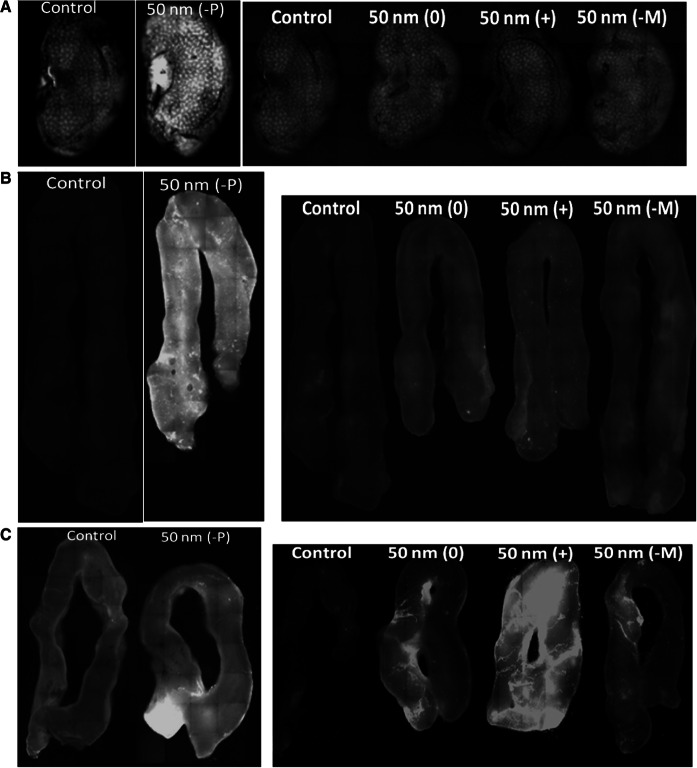
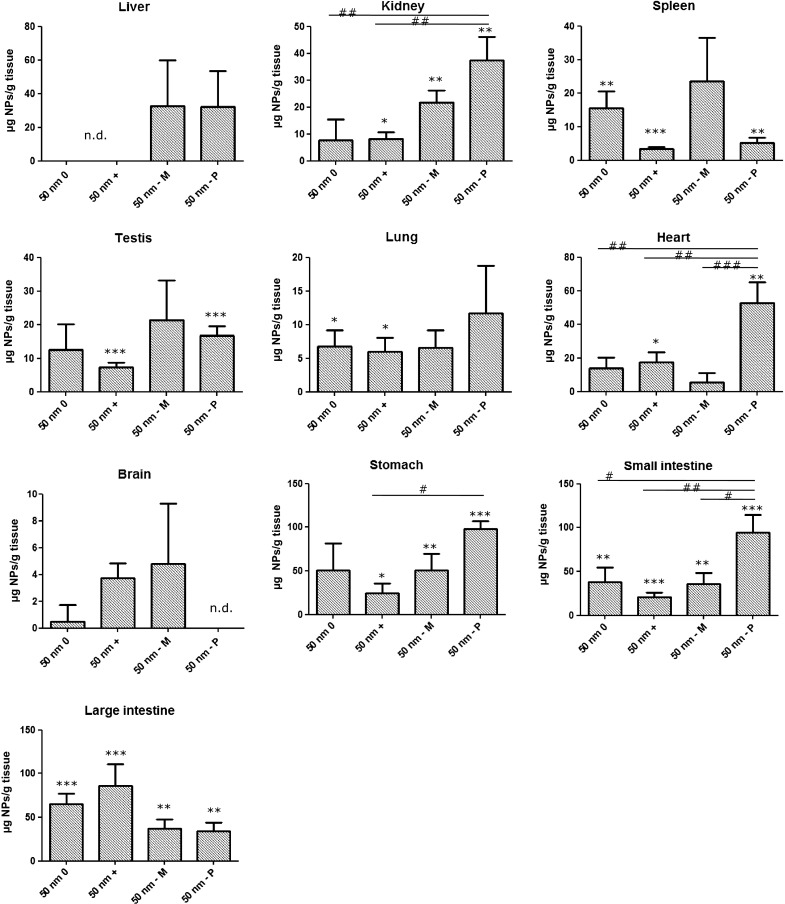
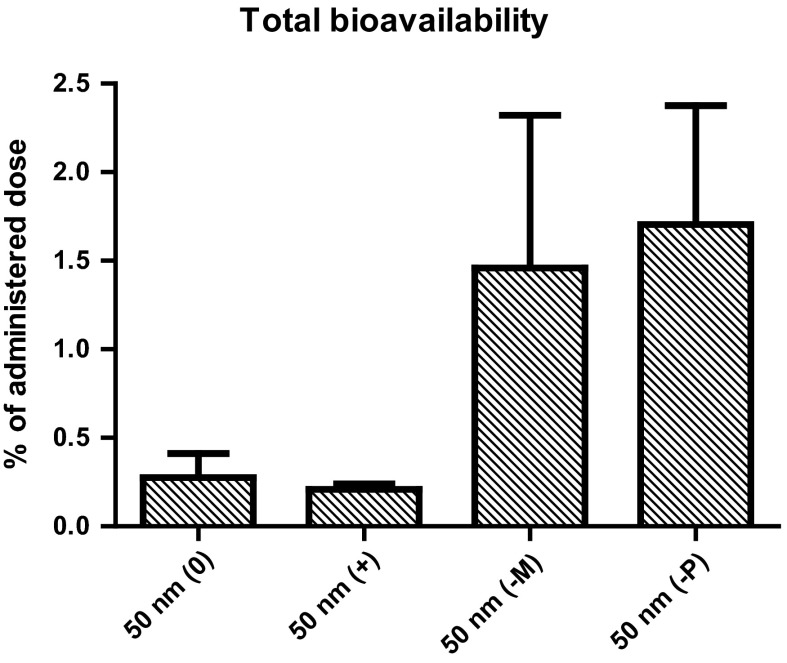
The likelihood of oral exposure to nanoparticles (NPs) is increasing, and it is necessary to evaluate the oral bioavailability of NPs. In vitro approaches could help reducing animal studies, but validation against in vivo studies is essential. Previously, we assessed the translocation of 50 nm polystyrene NPs of different charges (neutral, positive and negative) using a Caco-2/HT29-MTX in vitro intestinal translocation model. The NPs translocated in a surface charge-dependent manner. The present study aimed to validate this in vitro intestinal model by an in vivo study. For this, rats were orally exposed to a single dose of these polystyrene NPs and the uptake in organs was determined. A negatively charged NP was taken up more than other NPs, with the highest amounts in kidney (37.4 µg/g tissue), heart (52.8 µg/g tissue), stomach wall (98.3 µg/g tissue) and small intestinal wall (94.4 µg/g tissue). This partly confirms our in vitro findings, where the same NPs translocated to the highest extent. The estimated bioavailability of different types of NPs ranged from 0.2 to 1.7 % in vivo, which was much lower than in vitro (1.6-12.3 %). Therefore, the integrated in vitro model cannot be used for a direct prediction of the bioavailability of orally administered NPs. However, the model can be used for prioritizing NPs before further in vivo testing for risk assessment.
Overview
The claims and statistics of this paper haven’t been checked yet.
Free: it reads the open-access text and checks the first 5 claims that cite a source we can check. Create a free account to check every claim.
Integrity signals
Registry
Cites
Statistics
Figures
Verification
Claims the paper makes
The claims and statistics of this paper haven’t been checked yet.
Free: it reads the open-access text and checks the first 5 claims that cite a source we can check. Create a free account to check every claim.
Claims other papers make about this one
Each is checked against this paper’s own text: does it say what the citing paper says it does?
The cited source says what the claim attributes to it.
In the citing paper
“Studies in animal models suggest that the physicochemical features of different MNPs influence whether they reach distant organs.30,31”
From Microplastics and Nanoplastics in Atheromas and Cardiovascular Events (2024) · cites this paper as [30]
In the citing paper
“MNPs have been found in drinking water, a large range of foods, cosmetic products, and air, also in a form bound to fine, inhalable particulate matter with an aerodynamic diameter of 2.5 μm or less (PM 2.5 ) and transported long distances by wind.5,6,29,30”
From Microplastics and Nanoplastics in Atheromas and Cardiovascular Events (2024) · cites this paper as [30]
Self-check
Percentages, sums and reported differences re-computed from the paper’s own numbers.
The self-check needs the paper’s full text.
Citations
Cites
Principles of Fluorescence Spectroscopy
Lakowicz, J. R. (1999) · Springer eBooks · doi:10.1007/978-1-4757-3061-6 · Cited by 26,947 · cited 1×
“After sample treatment, all samples still were slightly turbid, which could have distorted the fluorescent signal from these samples potentially resulting in an increased detection limit (Lakowicz 2007).”
BackgroundApplications and implications of nanotechnologies for the food sector
Chaudhry, Q., Scotter, M., Blackburn, J., Ross, B., Boxall, A., Castle, L., Aitken, R., & Watkins, R. (2008) · Food Additives & Contaminants: Part A · doi:10.1080/02652030701744538 · Cited by 1,051
Xiao, K., Li, Y., Luo, J., Lee, J. S., Xiao, W., Gonik, A. M., Agarwal, R. G., & Lam, K. S. (2011) · Biomaterials · doi:10.1016/j.biomaterials.2011.01.021 · Cited by 1,039
Nanoparticle Uptake by the Rat Gastrointestinal Mucosa: Quantitation and Particle Size Dependency
Jani, P., Halbert, G. W., Langridge, J., & Florence, A. T. (1990) · Journal of Pharmacy and Pharmacology · doi:10.1111/j.2042-7158.1990.tb07033.x · Cited by 920 · cited 5×
“5 % reported for the liver, spleen and stomach wall of 300 nm PS-NP-treated animals, respectively (Jani et al. 1990).”
BackgroundInfluentialKulkarni, S. A., & Feng, S.-S. (2013) · Pharmaceutical Research · doi:10.1007/s11095-012-0958-3 · Cited by 768
van der Zande, M., Vandebriel, R. J., Van Doren, E., Kramer, E., Herrera Rivera, Z., Serrano-Rojero, C. S., Gremmer, E. R., Mast, J., Peters, R. J. B., Hollman, P. C. H., et al. (2012) · ACS Nano · doi:10.1021/nn302649p · Cited by 707
Self-citationHillyer, J. F., & Albrecht, R. M. (2001) · Journal of Pharmaceutical Sciences · doi:10.1002/jps.1143 · Cited by 706 · cited 1×
“The results from these studies highlight the dependence of uptake and accumulation of PS-NPs on several factors, including the size, surface charge and type of coating material (Araujo et al. 1999; Hillery et al. 1994; Hillyer and Albrecht 2001; Hussain and Florence 1998; Hussain et al. 1997; Jani et al. 1989).”
BackgroundHussain, N. (2001) · Advanced Drug Delivery Reviews · doi:10.1016/s0169-409x(01)00152-1 · Cited by 680 · cited 1×
“Effects of size, surface chemistry and the properties of the in vitro monolayer on PS-NP translocation have also been reported by others (Hussain et al. 2001; Szentkuti 1997; des Rieux et al. 2005; Fazlollahi et al. 2011; Mahler et al. 2012).”
Project on Emerging Nanotechnologies
Breggin, L. K., & Pendergrass, J. A. (2007) · Cited by 601
The kinetics of the tissue distribution of silver nanoparticles of different sizes
Lankveld, D. P. K., Oomen, A. G., Krystek, P., Neigh, A., Troost – de Jong, A., Noorlander, C. W., Van Eijkeren, J. C. H., Geertsma, R. E., & De Jong, W. H. (2010) · Biomaterials · doi:10.1016/j.biomaterials.2010.07.045 · Cited by 512 · cited 1×
“Neither PS-NPs were detected in blood at any time point, even with the intervals of half an hour, most likely due to a rapid transport of PS-NPs from the blood circulation to the organs, as shown before (Fabian et al. 2008; Lankveld et al. 2010; Geraets et al. 2014).”
Background
Cited by
Plastic and Human Health: A Micro Issue?
Wright, S. L., & Kelly, F. J. (2017) · Environmental Science & Technology · doi:10.1021/acs.est.7b00423 · Cited by 3,413
Microplastics and Nanoplastics in Atheromas and Cardiovascular Events
Marfella, R., Prattichizzo, F., Sardu, C., Fulgenzi, G., Graciotti, L., Spadoni, T., D’Onofrio, N., Scisciola, L., La Grotta, R., Frigé, C., et al. (2024) · New England Journal of Medicine · doi:10.1056/nejmoa2309822 · Cited by 1,223
Polystyrene microplastics induced male reproductive toxicity in mice
Jin, H., Ma, T., Sha, X., Liu, Z., Zhou, Y., Meng, X., Chen, Y., Han, X., & Ding, J. (2021) · Journal of Hazardous Materials · doi:10.1016/j.jhazmat.2020.123430 · Cited by 653
Uptake and effects of orally ingested polystyrene microplastic particles in vitro and in vivo
Stock, V., Böhmert, L., Lisicki, E., Block, R., Cara-Carmona, J., Pack, L. K., Selb, R., Lichtenstein, D., Voss, L., Henderson, C. J., et al. (2019) · Archives of Toxicology · doi:10.1007/s00204-019-02478-7 · Cited by 617
Micro- and nanoplastic toxicity on aquatic life: Determining factors
Kögel, T., Bjorøy, Ø., Toto, B., Bienfait, A. M., & Sanden, M. (2020) · Science of The Total Environment · doi:10.1016/j.scitotenv.2019.136050 · Cited by 518
Liang, B., Zhong, Y., Huang, Y., Lin, X., Liu, J., Lin, L., Hu, M., Jiang, J., Dai, M., Wang, B., et al. (2021) · Particle and Fibre Toxicology · doi:10.1186/s12989-021-00414-1 · Cited by 508
“Many factors affect particle absorption, such as particle size [22, 35], material [36], surface charge [22] and hydrophilicity [17].”
BackgroundMicro- and nanoplastic induced cellular toxicity in mammals: A review
Banerjee, A., & Shelver, W. L. (2021) · Science of The Total Environment · doi:10.1016/j.scitotenv.2020.142518 · Cited by 492
Polystyrene microplastics induced female reproductive toxicity in mice
Liu, Z., Zhuan, Q., Zhang, L., Meng, L., Fu, X., & Hou, Y. (2022) · Journal of Hazardous Materials · doi:10.1016/j.jhazmat.2021.127629 · Cited by 444
“styrene nanoparticles (PS-NPs) could accumulate in the heart, liver, spleen, lung, kidney, brain, stomach, testis, large intestine and small intestine (Walczak et al., 2015).”
BackgroundMethodXu, G., Cheng, H., Jones, R., Feng, Y., Gong, K., Li, K., Fang, X., Tahir, M. A., Valev, V. K., & Zhang, L. (2020) · Environmental Science & Technology · doi:10.1021/acs.est.0c02317 · Cited by 366
Nanotechnology in healthcare, and its safety and environmental risks
Ma, X., Tian, Y., Yang, R., Wang, H., Allahou, L. W., Chang, J., Williams, G., Knowles, J. C., & Poma, A. (2024) · Journal of Nanobiotechnology · doi:10.1186/s12951-024-02901-x · Cited by 332
Amereh, F., Babaei, M., Eslami, A., Fazelipour, S., & Rafiee, M. (2020) · Environmental Pollution · doi:10.1016/j.envpol.2020.114158 · Cited by 321
Wang, X., Zheng, H., Zhao, J., Luo, X., Wang, Z., & Xing, B. (2020) · Environmental Science & Technology · doi:10.1021/acs.est.9b07016 · Cited by 288
Micro- and nanoplastics – current state of knowledge with the focus on oral uptake and toxicity
Paul, M. B., Stock, V., Cara-Carmona, J., Lisicki, E., Shopova, S., Fessard, V., Braeuning, A., Sieg, H., & Böhmert, L. (2020) · Nanoscale Advances · doi:10.1039/d0na00539h · Cited by 277
van Raamsdonk, L. W. D., van der Zande, M., Koelmans, A. A., Hoogenboom, R. L. A. P., Peters, R. J. B., Groot, M. J., Peijnenburg, A. A. C. M., & Weesepoel, Y. J. A. (2020) · Foods · doi:10.3390/foods9010072 · Cited by 275
“7% depending on the charge of the particles [50].”
BackgroundMicro- and nanoplastics: A new cardiovascular risk factor?
Zhu, X., Wang, C., Duan, X., Liang, B., Genbo Xu, E., & Huang, Z. (2023) · Environment International · doi:10.1016/j.envint.2022.107662 · Cited by 273
Dong, X., Liu, X., Hou, Q., & Wang, Z. (2023) · Science of The Total Environment · doi:10.1016/j.scitotenv.2022.158686 · Cited by 264
Uptake and cellular effects of PE, PP, PET and PVC microplastic particles
Stock, V., Laurisch, C., Franke, J., Dönmez, M. H., Voss, L., Böhmert, L., Braeuning, A., & Sieg, H. (2021) · Toxicology in Vitro · doi:10.1016/j.tiv.2020.105021 · Cited by 258
Physical Properties of Nanoparticles That Result in Improved Cancer Targeting
Zein, R., Sharrouf, W., & Selting, K. (2020) · Journal of Oncology · doi:10.1155/2020/5194780 · Cited by 243
“[46] Polystyrene NPs 50 nm Negative (−7, 7mV) positive NPs and neutral High uptake of negatively charged NPs than the neutral and positive one Kidney> heart> stomach> small intestine”
BackgroundMeng, X., Zhang, J., Wang, W., Gonzalez-Gil, G., Vrouwenvelder, J. S., & Li, Z. (2022) · Chemosphere · doi:10.1016/j.chemosphere.2021.132631 · Cited by 242
Huang, T., Zhang, W., Lin, T., Liu, S., Sun, Z., Liu, F., Yuan, Y., Xiang, X., Kuang, H., Yang, B., et al. (2022) · Food and Chemical Toxicology · doi:10.1016/j.fct.2021.112803 · Cited by 193
Schür, C., Rist, S., Baun, A., Mayer, P., Hartmann, N. B., & Wagner, M. (2019) · Environmental Toxicology and Chemistry · doi:10.1002/etc.4436 · Cited by 199
Consequences of nano and microplastic exposure in rodent models: the known and unknown
da Silva Brito, W. A., Mutter, F., Wende, K., Cecchini, A. L., Schmidt, A., & Bekeschus, S. (2022) · Particle and Fibre Toxicology · doi:10.1186/s12989-022-00473-y · Cited by 195
“1, Table 1), although it was independent of the functionalized surface coating in high concentration [52].”
BackgroundInfluentialMicroplastics and human health: Integrating pharmacokinetics
Prata, J. C. (2023) · Critical Reviews in Environmental Science and Technology · doi:10.1080/10643389.2023.2195798 · Cited by 193
“Oral administration of microplastics resulted in an internalization of the initial dose of 0.10–0.36% for 0.2, 1, 6 µm PS in mice (Keinänen et al., 2021), or 0.2–1.7% for 0.05 µm PS in rats (Walczak et al., 2015).”
BackgroundInfluentialHealth risk of human exposure to microplastics: a review
Tang, K. H. D., Li, R., Li, Z., & Wang, D. (2024) · Environmental Chemistry Letters · doi:10.1007/s10311-024-01727-1 · Cited by 181
Guerrera, M. C., Aragona, M., Porcino, C., Fazio, F., Laurà, R., Levanti, M., Montalbano, G., Germanà, G., Abbate, F., & Germanà, A. (2021) · Applied Sciences · doi:10.3390/app11135768 · Cited by 179
Rauert, C., Charlton, N., Bagley, A., Dunlop, S. A., Symeonides, C., & Thomas, K. V. (2025) · Environmental Science & Technology · doi:10.1021/acs.est.4c12599 · Cited by 165
Neurobehavioral assessment of rats exposed to pristine polystyrene nanoplastics upon oral exposure
Rafiee, M., Dargahi, L., Eslami, A., Beirami, E., Jahangiri-rad, M., Sabour, S., & Amereh, F. (2018) · Chemosphere · doi:10.1016/j.chemosphere.2017.11.076 · Cited by 165
Key mechanisms of micro- and nanoplastic (MNP) toxicity across taxonomic groups
Matthews, S., Mai, L., Jeong, C.-B., Lee, J.-S., Zeng, E. Y., & Xu, E. G. (2021) · Comparative Biochemistry and Physiology Part C: Toxicology & Pharmacology · doi:10.1016/j.cbpc.2021.109056 · Cited by 160
Yang, Z., DeLoid, G. M., Zarbl, H., Baw, J., & Demokritou, P. (2023) · NanoImpact · doi:10.1016/j.impact.2023.100481 · Cited by 184
Micro-nanoplastics and cardiovascular diseases: evidence and perspectives
Prattichizzo, F., Ceriello, A., Pellegrini, V., Grotta, R. L., Graciotti, L., Olivieri, F., Paolisso, P., D’Agostino, B., Iovino, P., Balestrieri, M. L., et al. (2024) · European Heart Journal · doi:10.1093/eurheartj/ehae552 · Cited by 188
“45,47,57,67 59 The ability of MNPs to alter the cardiac structure was also confirmed in human-derived organoids.”
Alijagić, A., Suljević, D., Fočak, M., Sulejmanović, J., Šehović, E., Särndahl, E., & Engwall, M. (2024) · Environment International · doi:10.1016/j.envint.2024.108736 · Cited by 179
Chen, K., Tang, R., Luo, Y., Chen, Y., El‐Naggar, A., Du, J., Bu, A., Yan, Y., Lu, X., Cai, Y., et al. (2021) · Journal of Hazardous Materials · doi:10.1016/j.jhazmat.2021.128176 · Cited by 155
Recent progress of microplastic toxicity on human exposure base on in vitro and in vivo studies
Liu, Z., & You, X. (2023) · The Science of The Total Environment · doi:10.1016/j.scitotenv.2023.166766 · Cited by 165
Tang, J., Bu, W., Hu, W., Zhao, Z., Liu, L., Luo, C., Wang, R., Fan, S., Yu, S., Wu, Q., et al. (2023) · ACS Nano · doi:10.1021/acsnano.2c09729 · Cited by 151
Zhou, Y., Wu, Q., Li, Y., Feng, Y., Wang, Y., & Cheng, W. (2023) · Environment International · doi:10.1016/j.envint.2023.108171 · Cited by 149
Guo, S., Liang, Y., Liu, L., Yin, M., Wang, A., Sun, K., Li, Y., & Shi, Y. (2021) · Journal of Nanobiotechnology · doi:10.1186/s12951-021-00770-2 · Cited by 133
“found that, following oral delivery, the absorption of smaller NPs was higher than that of larger ones [57].”
BackgroundMicro(nano)-plastics in the environment and risk of carcinogenesis: Insight into possible mechanisms
Alimba, C. G., Faggio, C., Sivanesan, S., Ogunkanmi, A. L., & Krishnamurthi, K. (2021) · Journal of Hazardous Materials · doi:10.1016/j.jhazmat.2021.126143 · Cited by 131
Key knowledge gaps for One Health approach to mitigate nanoplastic risks
Dang, F., Wang, Q., Huang, Y., Wang, Y., & Xing, B. (2022) · Eco-Environment & Health · doi:10.1016/j.eehl.2022.02.001 · Cited by 139
Vecchione, R., Quagliariello, V., Calabria, D., Calcagno, V., Luca, E. D., Iaffaioli, R. V., & Netti, P. A. (2016) · Journal of Controlled Release · doi:10.1016/j.jconrel.2016.05.004 · Cited by 129
Microplastics in food: scoping review on health effects, occurrence, and human exposure
Udovički, B., Andjelković, M., Veličković, T. Ć., & Rajković, A. (2022) · International Journal of Food Contamination · doi:10.1186/s40550-022-00093-6 · Cited by 138
Advanced epithelial lung and gut barrier models demonstrate passage of microplastic particles
Donkers, J. M., Höppener, E. M., Grigoriev, I., Will, L., Melgert, B. N., van der Zaan, B., van de Steeg, E., & Kooter, I. M. (2022) · Microplastics and Nanoplastics · doi:10.1186/s43591-021-00024-w · Cited by 108
“Despite the frequently reported observations on an activated pro-inflammatory immune response upon MNP exposure, there are also studies that did not find such inflammatory responses [20, 72, 73].”
BackgroundAssessment of Human Health Risks Posed by Nano-and Microplastics Is Currently Not Feasible
Brachner, A., Fragouli, D., Duarte, I. F., Farias, P. M. A., Dembski, S., Ghosh, M., Barisic, I., Zdzieblo, D., Vanoirbeek, J., Schwabl, P., et al. (2020) · International Journal of Environmental Research and Public Health · doi:10.3390/ijerph17238832 · Cited by 110
Microplastics: A Matter of the Heart (and Vascular System)
Persiani, E., Cecchettini, A., Ceccherini, E., Gisone, I., Morales, M. A., & Vozzi, F. (2023) · Biomedicines · doi:10.3390/biomedicines11020264 · Cited by 137
“Studies found in heart PS-MPs (30 mg/kg body weight) [69] or PS-MPs differently charged (125 mg/kg body weight) after oral administration [70].”
BackgroundMethodUde, V. C., Brown, D. M., Viale, L., Kanase, N., Stone, V., & Johnston, H. J. (2017) · Particle and Fibre Toxicology · doi:10.1186/s12989-017-0211-7 · Cited by 107
“Translocation of NMs (polystyrene) across the intestinal barrier has been observed in vivo [71], however NM penetration (excluding nanocarriers) across the intestinal barrier has not been widely studied in vitro, despite the extensive use of the differentiated Caco-2 model to study the translocation of pharmaceuticals…”
BackgroundMicroplastic consumption induces inflammatory signatures in the colon and prolongs a viral arthritis
Rawle, D. J., Dumenil, T. D., Tang, B., Bishop, C., Yan, K., Le, T. T., & Suhrbier, A. (2021) · The Science of The Total Environment · doi:10.1016/j.scitotenv.2021.152212 · Cited by 112
Ferrante, M. C., Monnolo, A., Piano, F. D., Raso, G. M., & Meli, R. (2022) · Antioxidants · doi:10.3390/antiox11020193 · Cited by 114
Nanoplastic Toxicity: Insights and Challenges from Experimental Model Systems
Schröter, L., & Ventura, N. (2022) · Small · doi:10.1002/smll.202201680 · Cited by 99
Wang, X., Liu, L., Zheng, H., Wang, M., Fu, Y., Luo, X., Li, F., & Wang, Z. (2020) · Marine Pollution Bulletin · doi:10.1016/j.marpolbul.2019.110660 · Cited by 99
Polystyrene microplastic particles induce endothelial activation
Vlacil, A.-K., Bänfer, S., Jacob, R., Trippel, N., Kuzu, I., Schieffer, B., & Grote, K. (2021) · PLoS ONE · doi:10.1371/journal.pone.0260181 · Cited by 114
“This observation is consistent with other studies showing hepatoxic effects of orally administered polystyrene in mice and rats [8, 23].”
BackgroundResultTang, R., Zhu, D., Luo, Y., He, D., Zhang, H., El‐Naggar, A., Palansooriya, K. N., Chen, K., Yan, Y., Lu, X., et al. (2022) · Journal of Hazardous Materials · doi:10.1016/j.jhazmat.2022.130034 · Cited by 102
Potential health risks of the interaction of microplastics and lung surfactant
Shi, W., Cao, Y., Chai, X., Zhao, Q., Geng, Y., Liu, D., & Tian, S. (2021) · Journal of Hazardous Materials · doi:10.1016/j.jhazmat.2021.128109 · Cited by 100
Amereh, F., Eslami, A., Fazelipour, S., Rafiee, M., Zibaii, M. I., & Babaei, M. (2019) · Toxicology Research · doi:10.1039/c9tx00147f · Cited by 90
Shiu, H. T., Pan, X., Liu, Q., Long, K., Cheng, K. K. Y., Ko, B. C. B., Fang, J. K., & Zhu, Y. (2022) · Journal of Hazardous Materials · doi:10.1016/j.jhazmat.2022.129698 · Cited by 91
Nikolić, S., Gazdic, M., Rosic, G. L., Kovačević, M. M., Jovicic, N. U., Nestorović, N. M., Stojković, P., Filipović, N., Milošević-Djordjević, O., Selaković, D., et al. (2022) · Environmental Pollution · doi:10.1016/j.envpol.2022.119206 · Cited by 92
Roshanzadeh, A., Oyunbaatar, N., Ganjbakhsh, S. E., Park, S., Kim, D., Kanade, P. P., Lee, S., Lee, D., & Kim, E. (2021) · Biomaterials · doi:10.1016/j.biomaterials.2021.121175 · Cited by 84
Gouin, T., Ellis-Hutchings, R., Thornton Hampton, L. M., Lemieux, C. L., & Wright, S. L. (2022) · Microplastics and Nanoplastics · doi:10.1186/s43591-021-00023-x · Cited by 77
“7%, which was lower than that observed in their in vitro study [47].”
BackgroundChoi, Y. J., Park, J. W., Lim, Y., Seo, S., & Hwang, D. Y. (2021) · Nanotoxicology · doi:10.1080/17435390.2021.1996650 · Cited by 85
Du, B., Li, T., He, H., Xu, X., Zhang, C., Lu, X., Wang, Y., Cao, J., Lu, Y., Liu, Y., et al. (2024) · International Journal of Nanomedicine · doi:10.2147/ijn.s466258 · Cited by 88
“–37 Among them, particle size is one of the most effective factors affecting the biodistribution and toxicity.”
BackgroundHazas, M. L. D. L., Boughanem, H., & Dávalos, A. (2021) · Advances in Nutrition · doi:10.1093/advances/nmab154 · Cited by 88
Gao, L., Xiong, X., Chen, C., Luo, P., Li, J., Gao, X., Huang, L., & Li, L. (2023) · Ecotoxicology and Environmental Safety · doi:10.1016/j.ecoenv.2023.115618 · Cited by 88
Campisi, L., Motta, C. L., & Napierska, D. (2025) · The Science of The Total Environment · doi:10.1016/j.scitotenv.2024.178276 · Cited by 84
Rodrigues, A. C. B., de Jesus, G. P., Waked, D., Gomes, G. L., Silva, T. M., Yariwake, V. Y., da Silva, M. P., Magaldi, A. J., & Veras, M. M. (2022) · Toxics · doi:10.3390/toxics10060308 · Cited by 91
“In contrast, in another study, a negative load of polystyrene nanoparticles (PS-NPs) in the lungs, testis, spleen, kidney and heart of an animal model after oral administration was observed [49].”
ResultHarnessing PET to track micro- and nanoplastics in vivo
Keinänen, O. M., Dayts, E. J., Rodríguez, C. M. A., Sarrett, S. M., Brennan, J. M., Sarparanta, M. P., & Zeglis, B. M. (2021) · Scientific Reports · doi:10.1038/s41598-021-90929-6 · Cited by 74
Wang, L., Pei, W., Li, J., Feng, Y., Gao, X., Jiang, P., Wu, Q., & Li, L. (2024) · Ecotoxicology and Environmental Safety · doi:10.1016/j.ecoenv.2024.115970 · Cited by 79
Babaei, A. A., Rafiee, M., Khodagholi, F., Ahmadpour, E., & Amereh, F. (2021) · Environmental Science and Pollution Research · doi:10.1007/s11356-021-15920-0 · Cited by 79
“It is somewhat surprising that translocation of fluorescent PS-NPs from gastrointestinal tract to kidney has been previously reported in rats (Walczak et al. 2015), and also possibly in our work (Fig.”
ResultXiao, M., Li, X., Zhang, X., Duan, X., Lin, H., Liu, S., & Sui, G. (2023) · Science of The Total Environment · doi:10.1016/j.scitotenv.2022.159306 · Cited by 68
Hua, X., & Wang, D. (2022) · Reviews of Environmental Contamination and Toxicology · doi:10.1007/s44169-022-00013-x · Cited by 106
“PERK selectively phosphorylates the α subunit of eukaryotic initiation factor 2 (eIF2α), and further activates transcription factors ATF4 (Wek and Cavener 2007; Walter and Ron 2011).”
BackgroundBanerjee, A., & Shelver, W. L. (2021) · Journal of Food Protection · doi:10.4315/jfp-21-117 · Cited by 78
Zhang, Y., Gao, Q., Gao, Q., Xu, M., Fang, N., Mu, L., Han, X., Yu, H., Zhang, S., Li, Y., et al. (2025) · Journal of Hazardous Materials · doi:10.1016/j.jhazmat.2025.137624 · Cited by 80
Do’s and don’ts of microplastic research: a comprehensive guide
Prata, J. C., Padrão, J., Khan, M. T., & Walker, T. R. (2024) · Water Emerging Contaminants & Nanoplastics · doi:10.20517/wecn.2023.61 · Cited by 100
Polystyrene micro- and nanoplastics affect locomotion and daily activity of Drosophila melanogaster
Matthews, S., Xu, E. G., Dumont, E. R., Meola, V., Pikuda, O., Cheong, R. S., Guo, M., Tahara, R., Larsson, H. C. E., & Tufenkji, N. (2021) · Environmental Science Nano · doi:10.1039/d0en00942c · Cited by 88
Bruno, A., Dovizio, M., Milillo, C., Aruffo, E., Pesce, M., Gatta, M., Chiacchiaretta, P., Carlo, P. D., & Ballerini, P. (2024) · Cancers · doi:10.3390/cancers16173079 · Cited by 77
Salimi, A., Alavehzadeh, A., Ramezani, M., & Pourahmad, J. (2022) · Toxicology and Industrial Health · doi:10.1177/07482337211065832 · Cited by 63
“The particles in the submicron range have shown the highest uptake and transport, while particles with a size of 3 μm were present in the liver (Jani et al., 1990; Sarlo et al., 2009; Walczak et al., 2015).”
BackgroundNanoplastic Impact on the Gut-Brain Axis: Current Knowledge and Future Directions
Grodzicki, W., Dziendzikowska, K., Gromadzka-Ostrowska, J., & Kruszewski, M. K. (2021) · International Journal of Molecular Sciences · doi:10.3390/ijms222312795 · Cited by 68
“Fischer rat Pristine/positively/negatively charged PS NPs (50 nm) Single-dose orally (125 mg/kg bw) NPs accumulation in the gut [58]”
BackgroundThe gut barrier and the fate of engineered nanomaterials: a view from comparative physiology
van der Zande, M., Kokalj, A. J., Spurgeon, D. J., Loureiro, S., Silva, P. V., Khodaparast, Z., Drobne, D., Clark, N. J., van den Brink, N. W., Baccaro, M., et al. (2020) · Environmental Science Nano · doi:10.1039/d0en00174k · Cited by 79
Self-citationCollin‐Faure, V., Vitipon, M., Torres, A., Tanyeres, O., Dalzon, B., & Rabilloud, T. (2023) · Frontiers in Immunology · doi:10.3389/fimmu.2023.1092743 · Cited by 64
“in (86, 87) argues in favor of a situation close to the one encountered for dermal macrophages.”
BackgroundNano- and microplastic PBK modeling in the context of human exposure and risk assessment
Wardani, I., Nor, N. H. M., Wright, S., Kooter, I. M., & Koelmans, A. A. (2024) · Environment International · doi:10.1016/j.envint.2024.108504 · Cited by 62
Microplastics in animal nutrition: Occurrence, spread, and hazard in animals
Khan, A. A., Qadeer, A., Wajid, A., Ullah, Q., Rahman, S. U., Ullah, K., Safi, S. Z., Ticha, L., Skalíčková, S., Chilala, P., et al. (2024) · Journal of Agriculture and Food Research · doi:10.1016/j.jafr.2024.101258 · Cited by 80
Micro- and Nanoplastics’ Effects on Protein Folding and Amyloidosis
Windheim, J., Colombo, L., Battajni, N. C., Russo, L., Cagnotto, A., Diomede, L., Bigini, P., Vismara, E., Fiumara, F., Gabbrielli, S., et al. (2022) · International Journal of Molecular Sciences · doi:10.3390/ijms231810329 · Cited by 61
“This indicates the urge for additional studies, on larger populations, to shed more light on these effects [43,59,60].”
BackgroundNanoplastics as an Invisible Threat to Humans and the Environment
Joksimović, N., Selaković, D., Jovicic, N. U., Janković, N., Pradeepkumar, P., Eftekhari, A., & Rosic, G. L. (2022) · Journal of Nanomaterials · doi:10.1155/2022/6707819 · Cited by 68
“The highest translocation has been denoted for negatively charged particles [80, 81].”
BackgroundHuang, J., Sun, X., Wang, Y., Su, J., Li, G., Wang, X., Yang, Y., Zhang, Y., Li, B., Zhang, G., et al. (2023) · Ecotoxicology and Environmental Safety · doi:10.1016/j.ecoenv.2023.115447 · Cited by 58
Tsochatzis, E., Gika, H., Theodoridis, G. A., Maragou, N. C., Τhomaidis, Ν. S., & Corredig, M. (2024) · Heliyon · doi:10.1016/j.heliyon.2024.e32261 · Cited by 61
“Transcellular transport of the plastic NPs has been related to various mechanisms, such as diffusion, phagocytosis, and endocytosis, by which the particles are transported through the cell and released at the basolateral membrane [56 – 58].”
BackgroundNanoparticle vaccines against viral infections
Sulczewski, F. B., Liszbinski, R. B., Romão, P. R. T., & Rodrigues, L. C. (2018) · Archives of Virology · doi:10.1007/s00705-018-3856-0 · Cited by 60
Cellular response of THP-1 macrophages to polystyrene microplastics exposure
Koner, S., Florance, I., Mukherjee, A., & Chandrasekaran, N. (2022) · Toxicology · doi:10.1016/j.tox.2022.153385 · Cited by 58
Cui, Y., Wu, Y., Shi, P., Ni, Y., Zeng, H., Zhang, Z., Zhao, C., Sun, W., & Yi, Q. (2025) · Redox Biology · doi:10.1016/j.redox.2025.103688 · Cited by 58
“The toxicity of microplastics is affected by particle size, concentration, and exposure duration [56,57].”
Suman, A., Mahapatra, A., Gupta, P., Ray, S. S., & Singh, R. K. (2023) · Comparative Biochemistry and Physiology Part C Toxicology & Pharmacology · doi:10.1016/j.cbpc.2023.109699 · Cited by 71
Microplastics as emerging carcinogens: from environmental pollutants to oncogenic drivers
Mishra, S. K., Sanyal, T., Kundu, P., Kumar, R., Ghosh, D., Chakrabarti, G., Sikdar, N., Bhattacharya, S., Paul, S., & Das, A. K. (2025) · Molecular Cancer · doi:10.1186/s12943-025-02409-4 · Cited by 70
“However, much like with micro-plastics, there is no simple or direct relationship between the size and structure of nanoplastics and their absorption rates [147].”
Chen, C., & Lin, Z. (2024) · Environment International · doi:10.1016/j.envint.2024.108617 · Cited by 53
Micro/nano-plastics impacts in cardiovascular systems across species
Liang, J., Ji, F., Abdullah, A. L. B., Qin, W., Zhu, T., Tay, Y. J., Li, Y., & Han, M. (2024) · The Science of The Total Environment · doi:10.1016/j.scitotenv.2024.173770 · Cited by 51
Ahmed, Y. H., El‐Naggar, M. E., Rashad, M. M., Youssef, A. M., Galal, M. K., & Bashir, D. W. (2022) · Cell and Tissue Research · doi:10.1007/s00441-022-03581-5 · Cited by 53
Zhao, X., Sun, J., Zhou, L., Teng, M., Zhao, L., Li, Y., & Wu, F. (2023) · Environmental Science Nano · doi:10.1039/d3en00491k · Cited by 60
A systematic review of the potential neurotoxicity of micro-and nanoplastics: the known and unknown
Vojnits, K., de León, A., Gibon, J., Barker, P. A., Mahmoudi, M., & Pakpour, S. (2025) · Particle and Fibre Toxicology · doi:10.1186/s12989-025-00647-4 · Cited by 61
“…water administration, the main limitations are unknown particle intake calculations, inefficient for low-density polymers, such as PP and PE, considering particle sedimentation over time, and bioavailability, which was estimated to range from 0.2 to 1.7% with different types of MNPs in vivo [334].”
InfluentialHe, W., Gu, A., & Wang, D. (2023) · Toxics · doi:10.3390/toxics11060511 · Cited by 44
“More importantly, once bioavail-able, nanoplastics can further cross primary biological barriers to reach other tissues and system circulation [13,14].”
BackgroundLuo, W.-Q., Cao, M.-T., Sun, C.-X., Wang, J.-J., Gao, M.-X., He, X.-R., Dang, L.-N., Geng, Y.-Y., Li, B.-L., Li, J., et al. (2025) · Journal of Hazardous Materials · doi:10.1016/j.jhazmat.2025.137701 · Cited by 55
Ude, V. C., Brown, D. M., Stone, V., & Johnston, H. J. (2019) · Journal of Nanobiotechnology · doi:10.1186/s12951-019-0503-1 · Cited by 49
Usmani, S. M., Bremer‐Hoffmann, S., Cheyns, K., Cubadda, F., Dumit, V. I., Escher, S. E., Fessard, V., Gutleb, A. C., Léger, T., Liu, Y., et al. (2024) · EFSA Supporting Publications · doi:10.2903/sp.efsa.2024.en-8826 · Cited by 59
Surface charge tunable nanoparticles for TNF-α siRNA oral delivery for treating ulcerative colitis
Iqbal, S., Du, X., Wang, J., Li, H., Yuan, Y., & Wang, J. (2018) · Nano Research · doi:10.1007/s12274-017-1918-3 · Cited by 40
“The therapeutic efficacy and bioavailability of orally delivered NPs are significantly affected by their physicochemical properties [28].”
BackgroundRahman, M. A., Haque, M. M., & Tareq, S. M. (2024) · Physics and Chemistry of the Earth Parts A/B/C · doi:10.1016/j.pce.2024.103573 · Cited by 45
Nnoruka, U. C., Okonkwo, C. J., Ilechukwu, I., Okonkwo, C. J., & Belonwu, D. C. (2022) · Environmental Analysis Health and Toxicology · doi:10.5620/eaht.2022024 · Cited by 41
“[41] in their study earlier reported that the bioavailability of polystyrene particles can range from 0.”
BackgroundMicroplastics dysregulate innate immunity in the SARS-CoV-2 infected lung
Bishop, C., Yan, K., Nguyen, W., Rawle, D. J., Tang, B., Larcher, T., & Suhrbier, A. (2024) · Frontiers in Immunology · doi:10.3389/fimmu.2024.1382655 · Cited by 38
Metadata
- Authors
- Walczak, A. P., Hendriksen, P. J. M., Woutersen, R. A., van der Zande, M., Undas, A. K., Helsdingen, R., van den Berg, H. H. J., Rietjens, I. M. C. M., & Bouwmeester, H.
- Affiliations
- Wageningen University & Research (NL)
- Netherlands Organisation for Applied Scientific Research (NL)
- Corresponding author
- Bouwmeester, Hans
- Venue
- Journal of Nanoparticle Research
- Published
- 2015-05
- Volume
- 17
- Issue
- 5
- Pages
- 231-231
- ISSN
- 1388-0764 (ISSN-L)
- 1572-896X
- PMC
- PMC4440892
- OpenAlex
- W1854530815
- Semantic Scholar
- 3117dab88c700320648e912c7fbac6c7a08a2fbe
- Cited by
- 198
- References
- 44
- Citations by year
- 2026: 27 · 2025: 27 · 2024: 32 · 2023: 23 · 2022: 32 · 2021: 21 · 2020: 16 · 2019: 7 · 2018: 2 · 2017: 7 · 2016: 1 · 2015: 2
- FWCI
- 1.62
- Type
- journal article
- Language
- en
- Open access
- hybrid
- doi.org
- Locations
- Journal of Nanoparticle Research (publishedVersion, cc-by)
- Europe PMC (PubMed Central) (publishedVersion, cc-by)
- PubMed Central (publishedVersion, cc-by)
- PubMed (publishedVersion)
- Socio-Environmental Systems Modeling (acceptedVersion, cc-by)
- TNO Repository (submittedVersion)
- Repository hosted by TU Delft Library (TU Delft) (submittedVersion)
- Data Archiving and Networked Services (DANS) (submittedVersion)
- Data Archiving and Networked Services (DANS) (submittedVersion, cc-by)
- Funders
- ZonMw
- Wageningen University and Research
- Topics
- Physical Sciences › Materials Science › Materials Chemistry › Nanoparticles: synthesis and applications
- Physical Sciences › Materials Science › Biomaterials › Nanoparticle-Based Drug Delivery
- Life Sciences › Pharmacology, Toxicology and Pharmaceutics › Pharmaceutical Science › Drug Solubulity and Delivery Systems
- Keywords
- polystyrene nanoparticles, nanoparticle surface charge, oral bioavailability, tissue distribution, intestinal translocation, in vitro-in vivo correlation, kidney, small intestine, stomach wall, heart
About these checks
Registry, retraction, Cites and statistics results are computed, not judged, with one exception: a printed reference that no index lists is read once by a model before it counts as a citation error. Claims are extracted by a model and kept only when their quote appears verbatim in the text; each cited source is then checked, with a model’s help, for whether it says what the claim relies on. Those verdicts can be wrong — read the claim’s quote and the cited source before relying on one.
Statistics and arithmetic are recomputed, not judged.
Confidence bands are shown only for fields calibrated on our annotated test set. None is calibrated yet, so no band is shown.
What counts as a claim ›How we measure confidence ›How we check this ›
Are you an author, or do you see a problem with this page? Request a review
Data sources
Bibliographic data: Semantic Scholar, OpenAlex, Crossref.
Contains information from the Semantic Scholar Academic Graph Datasets, made available under the ODC Attribution License (ODC-BY 1.0).
Semantic Scholar’s data is described in: Kinney, R., et al. (2023). The Semantic Scholar Open Data Platform. arXiv:2301.10140.
