

Long-term follow up of patients with WHO grade 2 oligodendroglioma
Open accessThe DOI matches its Crossref record; 45 of the 45 references it cites were found in a registry or an index.
Abstract
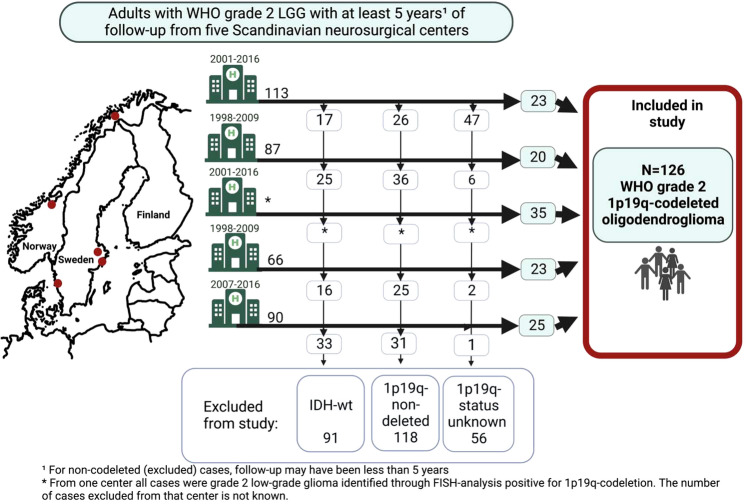
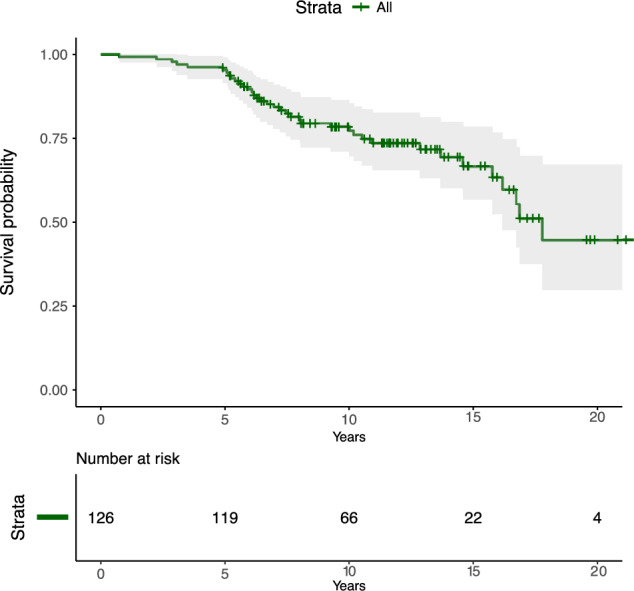
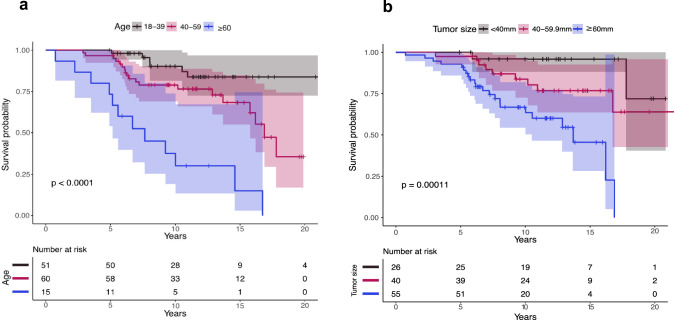
Purpose: Since the introduction of the molecular definition of oligodendrogliomas based on isocitrate dehydrogenase (IDH)-status and the 1p19q-codeletion, it has become increasingly evident how this glioma entity differs much from other diffuse lower grade gliomas and stands out with longer survival and often better responsiveness to adjuvant therapy. Therefore, apart from using a molecular oligodendroglioma definition, an extended follow-up time is necessary to understand the nature of this slow growing, yet malignant condition. The aim of this study was to describe the long-term course of the oligodendroglioma disease in a population-based setting and to determine which factors affect outcome in terms of survival. Methods: All adults with WHO-grade 2 oligodendrogliomas with known 1p19q-codeletion from five Scandinavian neurosurgical centers and with a follow-up time exceeding 5 years, were analyzed regarding survival and factors potentially affecting survival. Results: 126 patients diagnosed between 1998 and 2016 were identified. The median follow-up was 12.0 years, and the median survival was 17.8 years (95% CI 16.0–19.6). Factors associated with shorter survival in multivariable analysis were age (HR 1.05 per year; CI 1.02–1.08, p < 0.001), tumor diameter (HR 1.05 per millimeter; CI 1.02–1.08, p < 0.001) and poor preoperative functional status (KPS < 80) (HR 4.47; CI 1.70–11.78, p = 0.002). In our material, surgical strategy was not associated with survival. Conclusion: Individuals with molecularly defined oligodendrogliomas demonstrate long survival, also in a population-based setting. This is important to consider for optimal timing of therapies that may cause long-term side effects. Advanced age, large tumors and poor function before surgery are predictors of shorter survival. Graphical Abstract:
Overview
The claims and statistics of this paper haven’t been checked yet.
Free: it reads the open-access text and checks the first 5 claims that cite a source we can check. Create a free account to check every claim.
Integrity signals
Registry
Cites
Statistics
Figures
Verification
Claims the paper makes
The claims and statistics of this paper haven’t been checked yet.
Free: it reads the open-access text and checks the first 5 claims that cite a source we can check. Create a free account to check every claim.
Claims other papers make about this one
Each is checked against this paper’s own text: does it say what the citing paper says it does?
The source backs part of the claim, not all of it — or backs it for a different population, condition or comparison.
In the citing paper
“However, the grading criteria in the current classification schema for oligodendrogliomas continues to predominantly rely upon histopathologic examination; the differentiating criterion between grade 2 and grade 3 oligodendrogliomas are the presence of conspicuous microvascular proliferation and/or 6 mitoses per 10 high-power field [3,4,5,6,7,8,9,10,11].”
From BPC 157 Therapy of Myotendinous Junction Injury in Rats (2025) · cites this paper as [8]
Experimental — accuracy not yet measuredThe source backs part of the claim, not all of it — or backs it for a different population, condition or comparison.
In the citing paper
“Recent studies suggest that an older age cutoff (45, >50, or ≥60) is a more reliable indicator for identifying high-risk LGG patients [8,16,31].”
From BPC 157 Therapy of Myotendinous Junction Injury in Rats (2025) · cites this paper as [8]
Experimental — accuracy not yet measured
Self-check
Percentages, sums and reported differences re-computed from the paper’s own numbers.
The self-check needs the paper’s full text.
Citations
Cites
The 2021 WHO classification of tumors of the central nervous system: a summary
Louis, D. N., Perry, A., Wesseling, P., Brat, D. J., Cree, I. A., Figarella-Branger, D., Hawkins, C., Ng, H. K., Pfister, S. M., Reifenberger, G., et al. (2021) · Neuro-Oncology · doi:10.1093/neuonc/noab106 · Cited by 12,273
Comprehensive, Integrative Genomic Analysis of Diffuse Lower-Grade Gliomas
The Cancer Genome Atlas Research Network (2015) · New England Journal of Medicine · doi:10.1056/nejmoa1402121 · Cited by 3,148
A Randomized Trial of Bevacizumab for Newly Diagnosed Glioblastoma
Gilbert, M. R., Dignam, J. J., Armstrong, T. S., Wefel, J. S., Blumenthal, D. T., Vogelbaum, M. A., Colman, H., Chakravarti, A., Pugh, S., Won, M., et al. (2014) · New England Journal of Medicine · doi:10.1056/nejmoa1308573 · Cited by 2,834
Cairncross, J. G., Ueki, K., Zlatescu, M. C., Lisle, D. K., Finkelstein, D. M., Hammond, R. R., Silver, J. S., Stark, P. C., Macdonald, D. R., Ino, Y., et al. (1998) · JNCI: Journal of the National Cancer Institute · doi:10.1093/jnci/90.19.1473 · Cited by 1,610 · cited 2×
“It could also be that these tumors are more responsive to other treatment, affecting the overall surgical impact [21].”
BackgroundResultDouw, L., Klein, M., Fagel, S. S., van den Heuvel, J., Taphoorn, M. J., Aaronson, N. K., Postma, T. J., Vandertop, W. P., Mooij, J. J., Boerman, R. H., et al. (2009) · The Lancet Neurology · doi:10.1016/s1474-4422(09)70204-2 · Cited by 757
Neurosurgical Outcomes in a Modern Series of 400 Craniotomies for Treatment of Parenchymal Tumors
Sawaya, R., Hammoud, M., Schoppa, D., Hess, K. R., Wu, S. Z., Shi, W.-M., & WiIdrick, D. M. (1998) · Neurosurgery · doi:10.1097/00006123-199805000-00054 · Cited by 644
Wijnenga, M. M. J., French, P. J., Dubbink, H. J., Dinjens, W. N. M., Atmodimedjo, P. N., Kros, J. M., Smits, M., Gahrmann, R., Rutten, G.-J., Verheul, J. B., et al. (2018) · Neuro-Oncology · doi:10.1093/neuonc/nox176 · Cited by 334
Progression-Free Survival: Meaningful or Simply Measurable?
Booth, C. M., & Eisenhauer, E. A. (2012) · Journal of Clinical Oncology · doi:10.1200/jco.2011.38.7571 · Cited by 324
Prognostic relevance of genetic alterations in diffuse lower-grade gliomas
Aoki, K., Nakamura, H., Suzuki, H., Matsuo, K., Kataoka, K., Shimamura, T., Motomura, K., Ohka, F., Shiina, S., Yamamoto, T., et al. (2018) · Neuro-Oncology · doi:10.1093/neuonc/nox132 · Cited by 307 · cited 1×
“The strong correlation between Extent of resection (EOR)/Gross total resection (GTR) and survival often found in studies involving astrocytomas, seems to be less apparent (even if sometimes present) for patients with 1p19q-codeleted oligodendrogliomas [7, 10, 14, 17, 19, 26, 28, 29, 32, 39], although contrary results…”
ResultSurgical resection versus watchful waiting in low-grade gliomas
Jakola, A. S., Skjulsvik, A. J., Myrmel, K. S., Sjåvik, K., Unsgård, G., Torp, S. H., Aaberg, K., Berg, T., Dai, H. Y., Johnsen, K., et al. (2017) · Annals of Oncology · doi:10.1093/annonc/mdx230 · Cited by 306 · cited 2×
“For 1p19q detection we accepted fluorescence in situ hybridization (FISH), multiplex ligation-dependent probe amplification (MLPA) and methylation analysis as described earlier [12, 13].”
MethodSelf-citationOligodendroglioma: pathology, molecular mechanisms and markers
Wesseling, P., van den Bent, M., & Perry, A. (2015) · Acta Neuropathologica · doi:10.1007/s00401-015-1424-1 · Cited by 226 · cited 1×
“As seen in our results, and as previously known from earlier studies with molecularly defined oligodendrogliomas, the survival times clearly exceed those of other diffuse gliomas [10, 17, 21, 22].”
ResultHervey-Jumper, S. L., Zhang, Y., Phillips, J. J., Morshed, R. A., Young, J. S., McCoy, L., Lafontaine, M., Luks, T., Ammanuel, S., Kakaizada, S., et al. (2023) · Journal of Clinical Oncology · doi:10.1200/jco.21.02929 · Cited by 175 · cited 7×
“The correlation was however not reported in another recent large cohort study [10].”
BackgroundResultInfluentialSelf-citationKawaguchi, T., Sonoda, Y., Shibahara, I., Saito, R., Kanamori, M., Kumabe, T., & Tominaga, T. (2016) · Journal of Neuro-Oncology · doi:10.1007/s11060-016-2201-2 · Cited by 166 · cited 1×
“The less prominent effect of surgical resection in oligodendrogliomas may be due to data immaturity, since, in many studies, the number of events may come in single digits for the oligodendroglioma subgroup [17, 18, 27, 31] or reflect only the first few years in a disease course expected to last for almost two decades…”
BackgroundLawrie, T. A., Gillespie, D., Dowswell, T., Evans, J., Erridge, S., Vale, L., Kernohan, A., & Grant, R. (2019) · Cochrane Database of Systematic Reviews · doi:10.1002/14651858.cd013047.pub2 · Cited by 125
A basic review on systemic treatment options in WHO grade II-III gliomas
Mair, M. J., Geurts, M., van den Bent, M. J., & Berghoff, A. S. (2020) · Cancer Treatment Reviews · doi:10.1016/j.ctrv.2020.102124 · Cited by 101 · cited 3×
“The shorter survival associated with impaired performance status (KPS < 80) seen in the current work is unsurprising and confirms earlier studies, even if it is not entirely clear whether it stands for advanced disease or serious comorbidities that were not adjusted for [7, 28].”
BackgroundResultExtent of Surgical Resection in Lower-Grade Gliomas: Differential Impact Based on Molecular Subtype
Patel, S. H., Bansal, A. G., Young, E. B., Batchala, P. P., Patrie, J. T., Lopes, M. B. S., Jain, R., Fadul, C. E., & Schiff, D. (2019) · American Journal of Neuroradiology · doi:10.3174/ajnr.a6102 · Cited by 97
Influences on cognitive outcomes in adult patients with gliomas: A systematic review
Kirkman, M. A., Hunn, B. H. M., Thomas, M. S. C., & Tolmie, A. K. (2022) · Frontiers in Oncology · doi:10.3389/fonc.2022.943600 · Cited by 88
Kavouridis, V. K., Boaro, A., Dorr, J., Cho, E. Y., Iorgulescu, J. B., Reardon, D. A., Arnaout, O. M., & Smith, T. R. (2019) · Journal of neurosurgery · doi:10.3171/2019.6.jns19972 · Cited by 87 · cited 4×
“The less prominent effect of surgical resection in oligodendrogliomas may be due to data immaturity, since, in many studies, the number of events may come in single digits for the oligodendroglioma subgroup [17, 18, 27, 31] or reflect only the first few years in a disease course expected to last for almost two decades…”
InfluentialProgression-free survival: it is time for a new name
Gyawali, B., Eisenhauer, E. A., Tregear, M., & Booth, C. M. (2022) · The Lancet Oncology · doi:10.1016/s1470-2045(22)00015-8 · Cited by 68
Extent of resection and survival for oligodendroglioma: a U.S. population-based study
Kinslow, C. J., Garton, A. L. A., Rae, A. I., Marcus, L. P., Adams, C. M., McKhann, G. M., Sisti, M. B., Connolly, E. S., Bruce, J. N., Neugut, A. I., et al. (2019) · Journal of Neuro-Oncology · doi:10.1007/s11060-019-03261-5 · Cited by 65
DNA methylation profiling for molecular classification of adult diffuse lower-grade gliomas
Vega, S. F., Bontell, T. O., Corell, A., Smits, A., Jakola, A. S., & Carén, H. (2021) · Clinical Epigenetics · doi:10.1186/s13148-021-01085-7 · Cited by 65
Self-citationOligodendroglioma resection: a Surveillance, Epidemiology, and End Results (SEER) analysis
Alattar, A. A., Brandel, M. G., Hirshman, B. R., Dong, X., Carroll, K. T., Ali, M. A., Carter, B. S., & Chen, C. C. (2017) · Journal of neurosurgery · doi:10.3171/2016.11.jns161974 · Cited by 64 · cited 1×
“Conflicting results particularly for the role of subtotal resections (STR) among these studies, and in relation to other studies based on the same registries, have been reported, possibly due partly to different interpretations of the codes used for extent of resection [23, 29, 34, 35, 40, 41].”
Surgical management of lower-grade glioma in the spotlight of the 2016 WHO classification system
Delev, D., Heiland, D. H., Franco, P., Reinacher, P. C., Mader, I., Staszewski, O., Laßmann, S., Grau, S., & Schnell, O. (2018) · Journal of Neuro-Oncology · doi:10.1007/s11060-018-03030-w · Cited by 62 · cited 1×
“The strong correlation between Extent of resection (EOR)/Gross total resection (GTR) and survival often found in studies involving astrocytomas, seems to be less apparent (even if sometimes present) for patients with 1p19q-codeleted oligodendrogliomas [7, 10, 14, 17, 19, 26, 28, 29, 32, 39], although contrary results…”
ResultThe Misclassification of Diffuse Gliomas: Rates and Outcomes
Iorgulescu, J. B., Torre, M., Harary, M., Smith, T. R., Aizer, A. A., Reardon, D. A., Barnholtz‐Sloan, J. S., & Perry, A. (2019) · Clinical Cancer Research · doi:10.1158/1078-0432.ccr-18-3101 · Cited by 54
Extent of resection, molecular signature, and survival in 1p19q-codeleted gliomas
Garton, A. L. A., Kinslow, C. J., Rae, A. I., Mehta, A. M., Pannullo, S. C., Magge, R., Ramakrishna, R. R., McKhann, G. M., Sisti, M. B., Bruce, J. N., et al. (2020) · Journal of neurosurgery · doi:10.3171/2020.2.jns192767 · Cited by 54 · cited 3×
“There are also several oligodendroglioma studies with data from large American cancer registries (National Cancer Database/NCBD and SEER/Surveillance, Epidemiology and End Results) that have shown correlations between GTR and prolonged survival when compared to biopsy/no surgery [34, 35], especially in anaplastic olig…”
Halani, S. H., Yousefi, S., Velazquez Vega, J., Rossi, M. R., Zhao, Z., Amrollahi, F., Holder, C. A., Baxter-Stoltzfus, A., Eschbacher, J., Griffith, B., et al. (2018) · npj Precision Oncology · doi:10.1038/s41698-018-0067-9 · Cited by 50
WHO Grade Loses Its Prognostic Value in Molecularly Defined Diffuse Lower-Grade Gliomas
Carstam, L., Corell, A., Smits, A., Dénes, A., Barchéus, H., Modin, K., Sjögren, H., Vega, S. F., Bontell, T. O., Carén, H., et al. (2022) · Frontiers in Oncology · doi:10.3389/fonc.2021.803975 · Cited by 48 · cited 3×
“The less prominent effect of surgical resection in oligodendrogliomas may be due to data immaturity, since, in many studies, the number of events may come in single digits for the oligodendroglioma subgroup [17, 18, 27, 31] or reflect only the first few years in a disease course expected to last for almost two decades…”
Self-citationde Albuquerque, L. A. F., Almeida, J. P., Filho, L. D. M., Joaquim, A. F., & Duffau, H. (2020) · Neurosurgical Review · doi:10.1007/s10143-020-01362-8 · Cited by 47
Scherer, M., Ahmeti, H., Roder, C., Gessler, F. A., Jungk, C., Paľa, A., Mayer, B., Senft, C., Tatagiba, M. S., Synowitz, M., et al. (2019) · Neurosurgery · doi:10.1093/neuros/nyz397 · Cited by 44
Jakola, A. S., Pedersen, L. K., Skjulsvik, A. J., Myrmel, K., Sjåvik, K., & Solheim, O. S. (2022) · Journal of neurosurgery · doi:10.3171/2022.1.jns212514 · Cited by 40 · cited 1×
“The strong correlation between Extent of resection (EOR)/Gross total resection (GTR) and survival often found in studies involving astrocytomas, seems to be less apparent (even if sometimes present) for patients with 1p19q-codeleted oligodendrogliomas [7, 10, 14, 17, 19, 26, 28, 29, 32, 39], although contrary results…”
Self-citationLatini, F., Fahlström, M., Hesselager, G., Zetterling, M., & Ryttlefors, M. (2020) · Cancer Medicine · doi:10.1002/cam4.3216 · Cited by 28
Self-citationWeller, J., Katzendobler, S., Karschnia, P., Lietke, S., Egensperger, R., Thon, N., Weller, M., Suchorska, B., & Tonn, J. (2021) · Journal of Neuro-Oncology · doi:10.1007/s11060-021-03765-z · Cited by 27 · cited 1×
“The less prominent effect of surgical resection in oligodendrogliomas may be due to data immaturity, since, in many studies, the number of events may come in single digits for the oligodendroglioma subgroup [17, 18, 27, 31] or reflect only the first few years in a disease course expected to last for almost two decades…”
BackgroundHarary, M., Kavouridis, V. K., Torre, M., Zaidi, H. A., Chukwueke, U. N., Reardon, D. A., Smith, T. R., & Iorgulescu, J. B. (2019) · Neuro-Oncology · doi:10.1093/neuonc/noz168 · Cited by 26 · cited 3×
“There are also several oligodendroglioma studies with data from large American cancer registries (National Cancer Database/NCBD and SEER/Surveillance, Epidemiology and End Results) that have shown correlations between GTR and prolonged survival when compared to biopsy/no surgery [34, 35], especially in anaplastic olig…”
BackgroundResultAchey, R. L., Khanna, V., Ostrom, Q. T., Kruchko, C. A., & Barnholtz‐Sloan, J. S. (2017) · Journal of Neuro-Oncology · doi:10.1007/s11060-017-2414-z · Cited by 22 · cited 1×
“Since oligodendrogliomas are rare tumors, large cohorts with detailed individual level data are needed but still few [9].”
BackgroundPrognostic Value of Preoperative MRI Metrics for Diffuse Lower-Grade Glioma Molecular Subtypes
Darvishi, P., Batchala, P. P., Patrie, J. T., Poisson, L., Lopes, M. B. S., Jain, R., Fadul, C. E., Schiff, D., & Patel, S. H. (2020) · American Journal of Neuroradiology · doi:10.3174/ajnr.a6511 · Cited by 20 · cited 1×
“Studies on 1p19q-codeleted tumors presenting data on pre-operative tumor size have almost consequently shown a correlation between larger tumor size and worse prognosis [10, 14, 17, 19, 34, 36, 38].”
Bush, N. A. O., Young, J. S., Zhang, Y., Ore, C. L. D., Molinaro, A. M., Taylor, J. W., Clarke, J. L., Prados, M. D., Braunstein, S. E., Raleigh, D. R., et al. (2021) · Journal of Neuro-Oncology · doi:10.1007/s11060-021-03781-z · Cited by 19 · cited 1×
“The less prominent effect of surgical resection in oligodendrogliomas may be due to data immaturity, since, in many studies, the number of events may come in single digits for the oligodendroglioma subgroup [17, 18, 27, 31] or reflect only the first few years in a disease course expected to last for almost two decades…”
BackgroundIs the anatomical distribution of low-grade gliomas linked to regions of gliogenesis?
Skjulsvik, A. J., Bø, H. K., Jakola, A. S., Berntsen, E. M., Bø, L. E., Reinertsen, I., Myrmel, K. S., Sjåvik, K., Åberg, K., Berg, T., et al. (2020) · Journal of Neuro-Oncology · doi:10.1007/s11060-020-03409-8 · Cited by 16
Self-citationSeizures in patients with IDH-mutated lower grade gliomas
Carstam, L., Rydén, I., & Jakola, A. S. (2022) · Journal of Neuro-Oncology · doi:10.1007/s11060-022-04158-6 · Cited by 16
Self-citationLu, V. M., Alvi, M. A., Bydon, M., Quiñones‐Hinojosa, A., & Chaichana, K. L. (2019) · Clinical Neurology and Neurosurgery · doi:10.1016/j.clineuro.2019.04.027 · Cited by 14
Yeboa, D. N., Yu, J. B., Liao, E. A., Huse, J. T., Peñas-Prado, M., Kann, B. H., Sulman, E. P., Grosshans, D. R., & Contessa, J. N. (2018) · Clinical and Translational Radiation Oncology · doi:10.1016/j.ctro.2018.12.003 · Cited by 13 · cited 1×
“The less prominent effect of surgical resection in oligodendrogliomas may be due to data immaturity, since, in many studies, the number of events may come in single digits for the oligodendroglioma subgroup [17, 18, 27, 31] or reflect only the first few years in a disease course expected to last for almost two decades…”
BackgroundOligodendroglioma confers higher risk of radiation necrosis
Ahmad, H., Martin, D. N., Patel, S. H., Donahue, J., Lopes, B., Purow, B. W., Schiff, D., & Fadul, C. E. (2019) · Journal of Neuro-Oncology · doi:10.1007/s11060-019-03297-7 · Cited by 13
Prognosis of Oligodendroglioma Patients Stratified by Age: A SEER Population-Based Analysis
Jin, K., Zhang, S., Li, L., Zou, Y., Wu, B., Xia, L., & Sun, C.-X. (2021) · International Journal of General Medicine · doi:10.2147/ijgm.s337227 · Cited by 9 · cited 1×
“Conflicting results particularly for the role of subtotal resections (STR) among these studies, and in relation to other studies based on the same registries, have been reported, possibly due partly to different interpretations of the codes used for extent of resection [23, 29, 34, 35, 40, 41].”
Characteristics of Anaplastic Oligodendrogliomas Short-Term Survivors: A POLA Network Study
Garnier, L., Vidal, C., Chinot, O. L., Moyal, E. C., Djelad, A., Bronnimann, C., Bekaert, L., Taillandier, L., Frenel, J., Langlois, O., et al. (2022) · The Oncologist · doi:10.1093/oncolo/oyac023 · Cited by 8
Lin, A. J., Kane, L. T., Molitoris, J. K., Smith, D. R., Dahiya, S. M., Badiyan, S. N., Wang, T. J. C., Kruser, T. J., & Huang, J. (2019) · Journal of Neuro-Oncology · doi:10.1007/s11060-019-03344-3 · Cited by 7 · cited 2×
“The shorter survival associated with impaired performance status (KPS < 80) seen in the current work is unsurprising and confirms earlier studies, even if it is not entirely clear whether it stands for advanced disease or serious comorbidities that were not adjusted for [7, 28].”
BackgroundResultCurrent and Future Frontiers of Molecularly Defined Oligodendrogliomas
Rincón-Torroella, J., Rakovec, M., Materi, J., Raj, D., Vivas-Buitrago, T. G. M., Ferrés, A., Reyes-Serpa, W., Redmond, K. J., Holdhoff, M., Bettegowda, C., et al. (2022) · Frontiers in Oncology · doi:10.3389/fonc.2022.934426 · Cited by 7 · cited 2×
“For oligodendrogliomas, predictors for an unfavorable clinical course are particularly at risk for being concealed in merged analyses due to dominant effects from tumor subtypes with shorter time to event, such as astrocytomas and IDH-wildtype (IDH-wt) LGG, all being part of older LGG cohorts [2].”
Background
Cited by
van den Bent, M. J., French, P. J., Brat, D., Tonn, J. C., Touat, M., Ellingson, B. M., Young, R. J., Pallud, J., von Deimling, A., Sahm, F., et al. (2024) · Neuro-Oncology · doi:10.1093/neuonc/noae107 · Cited by 88
“11,19,20 A study on grade 3 and 4 IDH-mutant glioma found a more pronounced association with age in grade 3 oligodendroglioma patients, using the observed median (49.5 years).”
BackgroundInfluentialvan der Vaart, T., Wijnenga, M. M. J., van Garderen, K. A., Dubbink, H. J., French, P. J., Smits, M., Dirven, C. M. F., Kros, J. M., Vincent, A. J. P. E., & van den Bent, M. J. (2024) · Clinical Cancer Research · doi:10.1158/1078-0432.ccr-24-0901 · Cited by 31
Clinical utility of a blood based assay for the detection of IDH1.R132H-mutant gliomas
Batool, S. M., Escobedo, A. K., Hsia, T., Ekanayake, E., Khanna, S. K., Gamblin, A. S., Zheng, H., Skog, J., Miller, J. J., Stemmer-Rachamimov, A. O., et al. (2024) · Nature Communications · doi:10.1038/s41467-024-51332-7 · Cited by 24
Brat, D. J., Aldape, K., French, P. J., Louis, D. N., Nasrallah, M. P., Reifenberger, G., Reuß, D., Touat, M., van den Bent, M. J., Wesseling, P., et al. (2026) · Neuro-Oncology · doi:10.1093/neuonc/noag108 · Cited by 27
McAlpine, H., Rosier, M., Rozario, J., Wang, X., Wimmer, V. C., Guzulaitis, R., Guan, H., Hu, Y., Chirlov, L., Davey, C. M., et al. (2025) · Nature Neuroscience · doi:10.1038/s41593-025-02149-0 · Cited by 18
Metadata
- Authors
- Carstam, L., Latini, F., Solheim, O., Bartek, J., Pedersen, L. K., Zetterling, M., Beniaminov, S., Sjåvik, K., Ryttlefors, M., Jensdottir, M., Rydenhag, B., Smits, A., & Jakola, A. S.
- Affiliations
- Sahlgrenska University Hospital (SE)
- Uppsala University Hospital (SE)
- Norwegian University of Science and Technology (NO)
- Karolinska University Hospital (SE)
- University Hospital of North Norway (NO)
- Corresponding author
- Carstam, Louise
- ORCID
- Venue
- Journal of Neuro-Oncology
- Published
- 2023-08
- Volume
- 164
- Issue
- 1
- Pages
- 65-74
- ISSN
- 0167-594X (ISSN-L)
- 1573-7373
- PMC
- PMC10462563
- OpenAlex
- W4386019319
- Cited by
- 31
- References
- 45
- Citations by year
- 2026: 6 · 2025: 12 · 2024: 12
- FWCI
- 5.18
- Type
- journal article
- Language
- en
- Open access
- hybrid
- doi.org
- Licence
- cc-by
- creativecommons.org/licenses/by/4.0 (tdm)
- creativecommons.org/licenses/by/4.0 (vor, 20 d)
- Locations
- Journal of Neuro-Oncology (publishedVersion, cc-by)
- PubMed Central (publishedVersion, cc-by)
- PubMed (publishedVersion)
- KTH Publication Database DiVA (KTH Royal Institute of Technology) (submittedVersion, cc-by)
- NORA - Norwegian Open Research Archives (submittedVersion, cc-by)
- Funders
- Government and the county councils (Avtal om Läkarutbildning och Forskning (ALF)), the ALF-agreement in the form of ALF-Grant (ALFGBG-965622)
- the Swedish Research Council (2017–00944)
- University of Gothenburg
- Topics
- Health Sciences › Medicine › Oncology › Glioma Diagnosis and Treatment
- Health Sciences › Medicine › Oncology › Ovarian cancer diagnosis and treatment
- Health Sciences › Medicine › Clinical Neurology › Meningioma and schwannoma management
- Keywords
- 1p/19q codeletion, long-term survival, prognostic factors, age, tumor diameter, Karnofsky performance status, surgical strategy
- MeSH terms
- Adult, Combined Modality Therapy, Follow-Up Studies, Glioma, Humans, Oligodendroglioma, World Health Organization
About these checks
Registry, retraction, Cites and statistics results are computed, not judged, with one exception: a printed reference that no index lists is read once by a model before it counts as a citation error. Claims are extracted by a model and kept only when their quote appears verbatim in the text; each cited source is then checked, with a model’s help, for whether it says what the claim relies on. Those verdicts can be wrong — read the claim’s quote and the cited source before relying on one.
Statistics and arithmetic are recomputed, not judged.
Confidence bands are shown only for fields calibrated on our annotated test set. None is calibrated yet, so no band is shown.
What counts as a claim ›How we measure confidence ›How we check this ›
Are you an author, or do you see a problem with this page? Request a review
Data sources
Bibliographic data: Semantic Scholar, OpenAlex, Crossref.
Contains information from the Semantic Scholar Academic Graph Datasets, made available under the ODC Attribution License (ODC-BY 1.0).
Semantic Scholar’s data is described in: Kinney, R., et al. (2023). The Semantic Scholar Open Data Platform. arXiv:2301.10140.
