

The DOI matches its Crossref record; 3 of the 3 references it cites were found in a registry or an index.
Yes, we can: motivate Dutch citizens to engage in self-protective behavior with regard to flood risks
Overview
The claims and statistics of this paper haven’t been checked yet.
Run the check — free, no account needed. It reads the open-access text and checks the sources it cites.
Integrity signals
Registry
Cites
Statistics
Figures

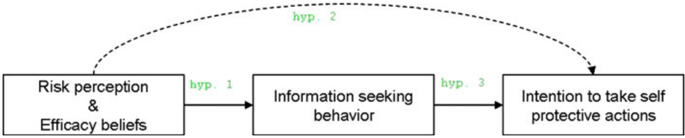
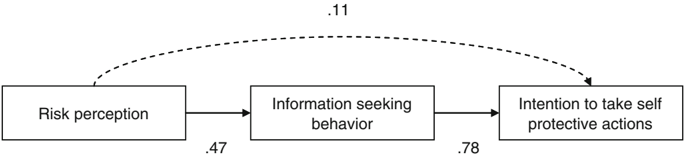
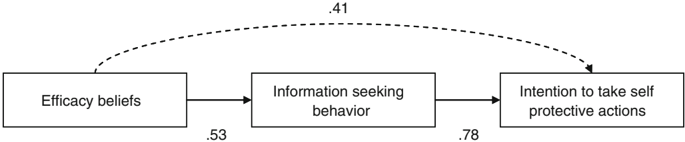
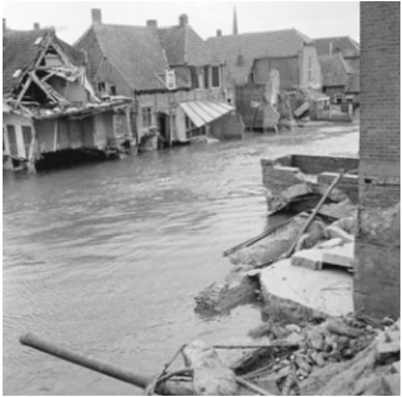

Verification
Claims the paper makes
The claims and statistics of this paper haven’t been checked yet.
Run the check — free, no account needed. It reads the open-access text and checks the sources it cites.
Claims other papers make about this one
Each is checked against this paper’s own text: does it say what the citing paper says it does?
The source backs part of the claim, not all of it — or backs it for a different population, condition or comparison.
In the citing paper
“Kievik and Gutteling defined self-efficacy as the ability to successfully address a threat by seeking information that will help the person take adequate self-protective measures.”
From Risk Information Seeking Behavior in Disaster Resettlement: A Case Study of Ankang City, China (2020) · cites this paper as [48]
Experimental — accuracy not yet measuredThe source backs part of the claim, not all of it — or backs it for a different population, condition or comparison.
In the citing paper
“Previous studies have found that perceived information-gathering capacity was an influential factor driving information seeking behavior.”
From Risk Information Seeking Behavior in Disaster Resettlement: A Case Study of Ankang City, China (2020) · cites this paper as [48]
Experimental — accuracy not yet measuredThe cited source says what the claim attributes to it.
In the citing paper
“They also proposed that self-efficacy is a trigger that can stimulate the public’s motivation to seek risk information [48].”
From Risk Information Seeking Behavior in Disaster Resettlement: A Case Study of Ankang City, China (2020) · cites this paper as [48]
In the citing paper
“The stronger the perceived information-gathering capacity was, the more confident people were that they could get the needed information, and the stronger their desire was to search for the information [20,29,48].”
From Risk Information Seeking Behavior in Disaster Resettlement: A Case Study of Ankang City, China (2020) · cites this paper as [48]
Self-check
Percentages, sums and reported differences re-computed from the paper’s own numbers.
The self-check needs the paper’s full text.
Citations
Cites
Putting the fear back into fear appeals: the extended parallel process model
Witte, K. (1992) · Communication Monographs · doi:10.1080/03637759209376276 · Cited by 3,880
A Meta-Analysis of Fear Appeals: Implications for Effective Public Health Campaigns
Witte, K., & Allen, M. (2000) · Health Education & Behavior · doi:10.1177/109019810002700506 · Cited by 3,216
Griffin, R. J., Dunwoody, S., & Neuwirth, K. (1999) · Environmental Research · doi:10.1006/enrs.1998.3940 · Cited by 1,187
Research works printed but not linked: 24
- Bandura A (1997) Self-efficacy: the exercise of control. Freeman, New York
- Baron RM, Kenny DA (1986) The moderator-mediator variable distinction in social psychological research: conceptual, strategic, and statistical considerations. J Pers Soc Psychol 6:1173–1182 · DOI · Paper page
- Case DO, Andrews JE, Johnson DE, Allard SL (2005) Avoiding versus seeking: the relationship of information seeking to avoidance, blunting, coping, dissonance, and related concepts. J Med Libr As 93:353–362
- De Wit MS, van der Most H, Gutteling JM, Bockarjova M (2008) Governance of flood risks in the Netherlands: interdisciplinary research into and meaning of risk perception. In: Martorell S et al (eds) Safety, reliability and risk analysis: theories, methods and applications. Taylor & Francis group, London, pp 1585–1593
- Fink A, Ulbrich U, Engel H (1996) Aspects of the January 1995 flood in Germany. Weather 51:34–39 · DOI
- Griffin RJ, Yang Z, ter Huurne EFJ, Boerner F, Ortiz S, Dunwoody S (2008) After the flood: anger, attribution, and the seeking of information. Sci Commun 29:285–315 · DOI · Paper page
- Grothmann T, Reusswig F (2006) People at risk of flooding: why some residents take precautionary action while others do not. Nat Hazards 38:101–120 · DOI
- Gutteling JM, Baan M, Kievik M, Stone K (2010) Risicocommunicatie in de ogen van de burger: ‘Geen paniek!’. In: van der Most H, de Wit S, Broekhans B, Roos W (eds) Kijk op waterveiligheid. Eburon, Delft
- Kahlor LA (2007) An augmented risk information seeking model: the case of global warming. Media Psychol 10:414–435 · DOI
- Krasovskaia I (2005) Perception of flood hazard in countries of the north sea region of Europe (No. FLOWS WP2A–1). Norwegian Water Resources and Energy Directorate, Oslo
- Lindell MK, Perry RW (2000) Household adjustment to earthquake hazard: a review of research. Environment & Behavior 32:590–630 · DOI
- Maaskant B, Jonkman SN, Bouwer LM (2009) Future risk of flooding: an analysis of changes in potential loss of life in South Holland (the Netherlands). Environ Sci Policy 12:157–169 · DOI
- Miceli R, Sotgiu I, Settanni M (2007) Disaster preparedness and perception of flood risk: a study in an alpine valley in Italy. J Environ Psychol 28:164–173 · DOI
- Miller SM (1987) Monitoring and blunting: validation of a questionnaire to assess styles of information seeking under threat. J Pers Soc Psychol 52:345–353 · DOI
- Rimal RN (2001) Perceived risk and self efficacy as motivators: understanding Individuals’ long term use of health information. J Commun 51:634–654 · DOI
- Rimal RN, Real K (2003) Perceived risk and efficacy beliefs as motivators of change: use of the risk perception attitude (RPA) framework to understand health behaviors. Hum Commun Res 29:370–399
- Sjoberg L (2002) Risk communication between experts and the public: perceptions and Intentions. Quest de Commun 2:19–35 · DOI
- Smith RA, Ferrara M, Witte K (2007) Social sides of health risks: stigma and collective efficacy. Health Commun 21:55–64 · DOI
- Ter Huurne EFJ (2008) Information seeking in a risky World. The theoretical and empirical development of FRIS: a framework of risk information seeking. Dissertation, University of Twente
- Ter Huurne EFJ, Gutteling JM (2008) Information needs and risk perception as predictors of risk information seeking. J Risk Res 11:847–862 · DOI · Paper page
- Terpstra T (2010) Flood preparedness. Thoughts, feelings and intentions of the Dutch public. Dissertation, University of Twente
- Terpstra T, Gutteling JM (2008) Households’ perceived responsibilities in flood risk management in the Netherlands. Int J Water Resour 24:555–565 · DOI
- Terpstra T, Lindell MK, Gutteling JM (2009) Does communicating (flood) risk affect (flood) risk perceptions? Results of a quasi-experimental study. Risk Anal 29:1141–1155 · DOI
- Zaalberg R, Midden C, Meijnders A, McCalley T (2009) Prevention, adaptation, and threat denial: flooding experiences in the Netherlands. Risk Anal 29:1759–1778 · DOI
Cited by
Sorted by citations
Risk Information Seeking Behavior in Disaster Resettlement: A Case Study of Ankang City, China
Shi, J., Hu, X., Guo, X., & Lian, C. (2020) · International Journal of Environmental Research and Public Health · doi:10.3390/ijerph17197352 · Cited by 17
Metadata
- Authors
- Kievik, M., & Gutteling, J. M.
- Venue
- Natural Hazards
- Published
- 2011-05-28
- Volume
- 59
- Issue
- 3
- Pages
- 1475-1490
- ISSN
- 0921-030X
- 1573-0840
- Cited by
- 141
- References
- 3
- Language
- en
About these checks
Registry, retraction, Cites and statistics results are computed, not judged, with one exception: a printed reference that no index lists is read once by a model before it counts as a citation error. Claims are extracted by a model and kept only when their quote appears verbatim in the text; each cited source is then checked, with a model’s help, for whether it says what the claim relies on. Those verdicts can be wrong — read the claim’s quote and the cited source before relying on one.
Statistics and arithmetic are recomputed, not judged.
Confidence bands are shown only for fields calibrated on our annotated test set. None is calibrated yet, so no band is shown.
What counts as a claim ›How we measure confidence ›How we check this ›
Are you an author, or do you see a problem with this page? Request a review
