

The DOI matches its Crossref record; 41 of the 43 references it cites were found in a registry or an index.
Development of a self-report measure of capability wellbeing for adults: the ICECAP-A
Open accessAbstract
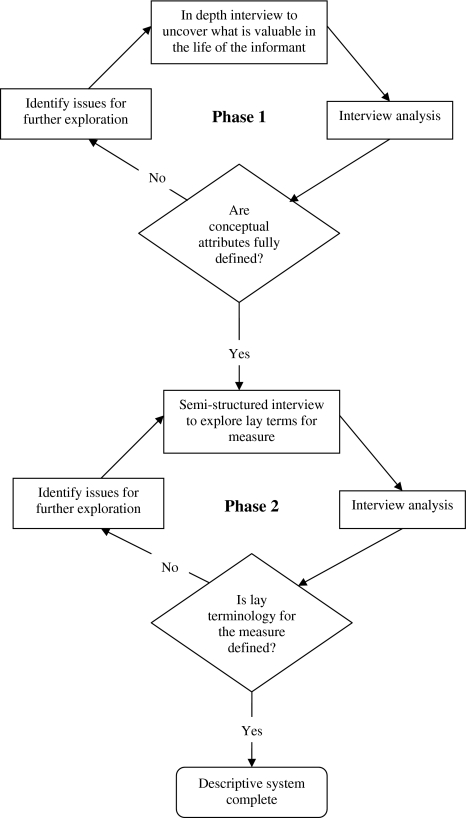
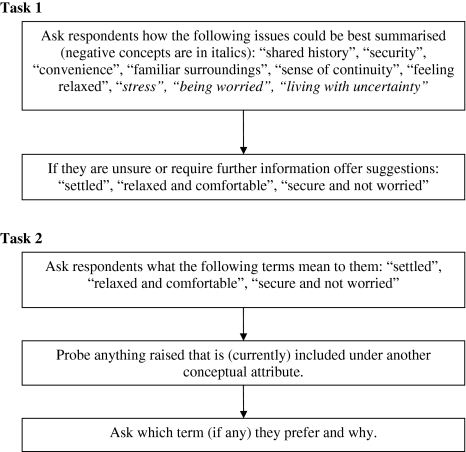
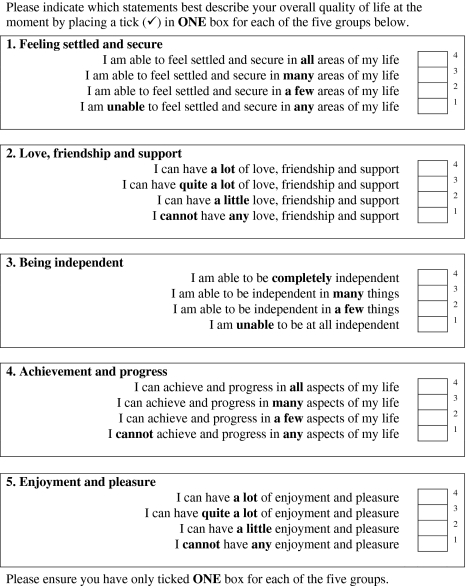
PURPOSE: The benefits of health and social care are not confined to patient health alone and therefore broader measures of wellbeing may be useful for economic evaluation. This paper reports the development of a simple measure of capability wellbeing for adults (ICECAP-A). METHODS: In-depth, informant-led, interviews to identify the attributes of capability wellbeing were conducted with 36 adults in the UK. Eighteen semi-structured, repeat interviews were carried out to develop a capability-based descriptive system for the measure. Informants were purposively selected to ensure variation in socio-economic status, age, sex, ethnicity and health. Data analysis was carried out inductively and iteratively alongside interviews, and findings were used to shape the questions in later interviews. RESULTS: Five over-arching attributes of capability wellbeing were identified for the measure: "stability", "attachment", "achievement", "autonomy" and "enjoyment". One item, with four response categories, was developed for each attribute for the ICECAP-A descriptive system. CONCLUSIONS: The ICECAP-A capability measure represents a departure from traditional health economics outcome measures, by treating health status as an influence over broader attributes of capability wellbeing. Further work is required to value and validate the attributes and test the sensitivity of the ICECAP-A to healthcare interventions.
Overview
The claims and statistics of this paper haven’t been checked yet.
Run the check — free, no account needed. It reads the open-access text and checks the sources it cites.
Integrity signals
Registry
Cites
Statistics
Figures
Verification
Claims the paper makes
The claims and statistics of this paper haven’t been checked yet.
Run the check — free, no account needed. It reads the open-access text and checks the sources it cites.
Claims other papers make about this one
Each is checked against this paper’s own text: does it say what the citing paper says it does?
The check wasn’t confident either way, so it gives no verdict — never disputed.
In the citing paper
“Meta-analyses indicate that support from a coach can enhance weight-loss effects of digital interventions, but further evidence from randomized trials is needed [19].”
From Supporting Weight Management during COVID-19: A Randomized Controlled Trial of a Web-Based, ACT-Based, Guided Self-Help Intervention (2022) · cites this paper as [19]
Experimental — accuracy not yet measuredThe check wasn’t confident either way, so it gives no verdict — never disputed.
In the citing paper
“Evidence suggests self-help interventions are effective for weight loss [18] and that technology-mediated interventions can result in clinically significant weight loss [19].”
From Supporting Weight Management during COVID-19: A Randomized Controlled Trial of a Web-Based, ACT-Based, Guided Self-Help Intervention (2022) · cites this paper as [19]
Experimental — accuracy not yet measured
Self-check
Percentages, sums and reported differences re-computed from the paper’s own numbers.
The self-check needs the paper’s full text.
Citations
Cites
Happiness is everything, or is it? Explorations on the meaning of psychological well-being.
Ryff, C. D. (1989) · Journal of Personality and Social Psychology · doi:10.1037/0022-3514.57.6.1069 · Cited by 14,847
Subjective well-being: Three decades of progress.
Diener, E., Suh, E. M., Lucas, R. E., & Smith, H. L. (1999) · Psychological Bulletin · doi:10.1037/0033-2909.125.2.276 · Cited by 12,910
Women and Human Development: The Capabilities Approach
Nussbaum, M. C. (2000) · Cambridge University Press · doi:10.1017/cbo9780511841286 · Cited by 6,103
The Constant Comparative Method of Qualitative Analysis
Glaser, B. G. (1965) · Social Problems · doi:10.2307/798843 · Cited by 4,937
(1997) · doi:10.1097/00005650-199711000-00002 · Cited by 4,544
Seabright, P. (1993) · Oxford University Press eBooks · doi:10.1093/0198287976.001.0001 · Cited by 4,253
Sugden, R., & Sen, A. (1986) · The Economic Journal · doi:10.2307/2232999 · Cited by 4,081
Sen, A. (1993) · Oxford University Press eBooks · doi:10.1093/0198287976.003.0003 · Cited by 3,887
Women and human development: the capabilities approach
(2000) · Choice Reviews Online · doi:10.5860/choice.38-0369 · Cited by 3,718
Usher, D., & Sen, A. (1987) · Canadian Journal of Economics/Revue canadienne d économique · doi:10.2307/135247 · Cited by 3,280
The Significance of Saturation
Morse, J. M. (1995) · Qualitative Health Research · doi:10.1177/104973239500500201 · Cited by 2,663
(2004) · Choice Reviews Online · doi:10.5860/choice.42-2286 · Cited by 2,569
Foundations of Cost-Effectiveness Analysis for Health and Medical Practices
Weinstein, M. C., & Stason, W. B. (1977) · New England Journal of Medicine · doi:10.1056/nejm197703312961304 · Cited by 2,133
Sen, A. K. (2007) · Cambridge University Press eBooks · doi:10.1017/cbo9780511819025.019 · Cited by 1,876
Health as a Theoretical Concept
Boorse, C. (1977) · Philosophy of Science · doi:10.1086/288768 · Cited by 1,786
Alkire, S. (2002) · doi:10.1093/0199245797.001.0001 · Cited by 1,265
Qualitative research and content validity: developing best practices based on science and experience
Brod, M. I., Tesler, L. E., & Christensen, T. L. (2009) · Quality of Life Research · doi:10.1007/s11136-009-9540-9 · Cited by 1,080
Measuring and Valuing Health Benefits for Economic Evaluation
Brazier, J. E., Ratcliffe, J., Salomon, J. A., & Tsuchiya, A. (2016) · Oxford University Press eBooks · doi:10.1093/med/9780198725923.001.0001 · Cited by 1,051
Hawthorne, G., Richardson, J. R. J., & Osborne, R. H. (1999) · Quality of Life Research · doi:10.1023/a:1008815005736 · Cited by 799
Best–worst scaling: What it can do for health care research and how to do it
Flynn, T. N., Louviere, J. J., Peters, T. J., & Coast, J. (2006) · Journal of Health Economics · doi:10.1016/j.jhealeco.2006.04.002 · Cited by 787
Self-citationEconomics of coronary artery bypass grafting.
Williams, A. (1985) · BMJ · doi:10.1136/bmj.291.6491.326 · Cited by 718
Valuing the ICECAP capability index for older people
Coast, J., Flynn, T. N., Natarajan, L., Sproston, K., Lewis, J., Louviere, J. J., & Peters, T. J. (2008) · Social Science & Medicine · doi:10.1016/j.socscimed.2008.05.015 · Cited by 560
Self-citationDrummond, M., Schwartz, J. S., Jönsson, B., Luce, B. R., Neumann, P. J., Siebert, U., & Sullivan, S. D. (2008) · International Journal of Technology Assessment in Health Care · doi:10.1017/s0266462308080343 · Cited by 489
Measuring and Valuing Health Benefits for Economic Evaluation
Brazier, J. E., Ratcliffe, J., Salomon, J. A., & Tsuchiya, A. (2007) · OUP Catalogue · Cited by 439
Grewal, I., Lewis, J., Flynn, T., Brown, J., Bond, J., & Coast, J. (2006) · Social Science & Medicine · doi:10.1016/j.socscimed.2005.08.023 · Cited by 402
Selecting Capabilities for Quality of Life Measurement
Robeyns, I. (2005) · Social Indicators Research · doi:10.1007/s11205-005-6524-1 · Cited by 347
Stevens, K. J. (2009) · Quality of Life Research · doi:10.1007/s11136-009-9524-9 · Cited by 325
Stevens, K. J. (2010) · Qualitative Health Research · doi:10.1177/1049732309358328 · Cited by 209
Capabilities and achievements: An empirical study
Anand, P., & van Hees, M. (2006) · The Journal of Socio-Economics · doi:10.1016/j.socec.2005.11.003 · Cited by 180
Ryan, M., Netten, A., Skåtun, D., & Smith, P. (2006) · Journal of Health Economics · doi:10.1016/j.jhealeco.2006.01.001 · Cited by 176
Coast, J., Peters, T. J., Natarajan, L., Sproston, K., & Flynn, T. N. (2008) · Quality of Life Research · doi:10.1007/s11136-008-9372-z · Cited by 160
Self-citationShould the capability approach be applied in Health Economics?
Coast, J., Smith, R., & Lorgelly, P. K. (2008) · Health Economics · doi:10.1002/hec.1359 · Cited by 144
Self-citationChisholm, D., Healey, A., & Knapp, M. R. J. (1997) · Social Psychiatry and Psychiatric Epidemiology · doi:10.1007/bf00788923 · Cited by 127
Should QALYs be programme-specific?
Donaldson, C., Atkinson, A., Bond, J., & Wright, K. (1988) · Journal of Health Economics · doi:10.1016/0167-6296(88)90027-6 · Cited by 87
Health-related quality of life research and the capability approach of Amartya Sen.
Verkerk, M. A., Busschbach, J. J. V., & Karssing, E. D. (2001) · Quality of Life Research · doi:10.1023/a:1016652515418 · Cited by 71
Using Conjoint Analysis and Choice Experiments to Estimate QALY Values
Flynn, T. N. (2010) · PharmacoEconomics · doi:10.2165/11535660-000000000-00000 · Cited by 64
Assessing the benefits of health care: how far should we go?
Ryan, M., & Shackley, P. (1995) · BMJ Quality & Safety · doi:10.1136/qshc.4.3.207 · Cited by 48
Cost‐effective public health guidance: asking questions from the decision‐maker's viewpoint
Chalkidou, K., Culyer, A. J., Naidoo, B., & Littlejohns, P. (2007) · Health Economics · doi:10.1002/hec.1277 · Cited by 47
Coast, J., Flynn, T. N., Sutton, E. J., Al‐Janabi, H., Vosper, J., Lavender, S., Louviere, J. J., & Peters, T. (2008) · Journal of Health Services Research & Policy · doi:10.1258/jhsrp.2008.008024 · Cited by 40
Self-citationCaring: the neglected health outcome? or input?
Wiseman, V. L. (1997) · Health Policy · doi:10.1016/s0168-8510(96)00848-2 · Cited by 22
Commentary on “Health-related quality-of-life research and the capability approach of Amartya Sen”
Hurley, J. (2001) · Quality of Life Research · doi:10.1023/a:1016637414132 · Cited by 5
Cited by
Sorted by citations
Linton, M.-J., Dieppe, P., & Medina-Lara, A. (2016) · BMJ Open · doi:10.1136/bmjopen-2015-010641 · Cited by 638
Skivington, K., Matthews, L., Simpson, S. A., Craig, P., Baird, J., Blazeby, J. M., Boyd, K., Craig, N. J., French, D., McIntosh, E., et al. (2021) · Health Technology Assessment · doi:10.3310/hta25570 · Cited by 585
Best-Worst Scaling: Theory, Methods and Applications
Louviere, J. J., Flynn, T. N., & Marley, A. A. J. (2015) · Thammasat University Digital Collections · Cited by 434
Treating Patients as Persons: A Capabilities Approach to Support Delivery of Person-Centered Care
Entwistle, V. A., & Watt, I. S. (2013) · The American Journal of Bioethics · doi:10.1080/15265161.2013.802060 · Cited by 396
Scoring the Icecap‐a Capability Instrument. Estimation of a UK General Population Tariff
Flynn, T. N., Huynh, E. K., Peters, T. J., Al‐Janabi, H., Clemens, S., Moody, A., & Coast, J. (2013) · Health Economics · doi:10.1002/hec.3014 · Cited by 266
Self-citation
Metadata
- Authors
- Al-Janabi, H., N Flynn, T., & Coast, J.
- Affiliations
- University of Birmingham (GB)
- ORCID
- Coast, Joanna
- Venue
- Quality of Life Research
- Published
- 2011-05-20
- Volume
- 21
- Issue
- 1
- Pages
- 167-176
- ISSN
- 0962-9343 (ISSN-L)
- 1573-2649
- PMC
- PMC3254872
- OpenAlex
- W2011644590
- Cited by
- 666
- References
- 43
- Citations by year
- 2026: 34 · 2025: 75 · 2024: 70 · 2023: 54 · 2022: 76 · 2021: 83 · 2020: 58 · 2019: 46 · 2018: 33 · 2017: 35 · 2016: 32 · 2015: 27 · 2014: 18 · 2013: 13 · 2012: 7
- FWCI
- 34.76
- Type
- journal article
- Language
- en
- Open access
- hybrid
- doi.org
- Licence
- Locations
- Quality of Life Research (publishedVersion, cc-by-nc)
- PubMed Central (publishedVersion, cc-by-nc)
- PubMed (publishedVersion)
- University of Birmingham Institutional Research Archive (University of Birmingham) (acceptedVersion)
- UniSA Research Outputs Repository (University of South Australia) (acceptedVersion)
- Adelaide Research & Scholarship (AR&S) (University of Adelaide) (submittedVersion)
- UTS ePRESS (University of Technology Sydney) (submittedVersion)
- University of Birmingham Research Portal (University of Birmingham) (submittedVersion)
- Funders
- London School of Economics and Political Science
- Medical Research Council (G0701027)
- Topics
- Social Sciences › Economics, Econometrics and Finance › Economics and Econometrics › Health Systems, Economic Evaluations, Quality of Life
- Social Sciences › Economics, Econometrics and Finance › Economics and Econometrics › Economic and Environmental Valuation
- Health Sciences › Nursing › Research and Theory › Health Education and Validation
- Keywords
- ICECAP-A, self-report measure development, capability approach, economic evaluation, stability, attachment, achievement, autonomy, enjoyment, health status
- MeSH terms
- Adolescent, Adult, Aged, Female, Humans, Interviews as Topic, Male, Middle Aged, Personal Satisfaction, Quality of Life, Young Adult, Self Report
About these checks
Registry, retraction, Cites and statistics results are computed, not judged, with one exception: a printed reference that no index lists is read once by a model before it counts as a citation error. Claims are extracted by a model and kept only when their quote appears verbatim in the text; each cited source is then checked, with a model’s help, for whether it says what the claim relies on. Those verdicts can be wrong — read the claim’s quote and the cited source before relying on one.
Statistics and arithmetic are recomputed, not judged.
Confidence bands are shown only for fields calibrated on our annotated test set. None is calibrated yet, so no band is shown.
What counts as a claim ›How we measure confidence ›How we check this ›
Are you an author, or do you see a problem with this page? Request a review
