

Post retraction citations in context: a case study
Open accessThe DOI matches its Crossref record; 38 of the 39 references it cites were found in a registry or an index.
Abstract
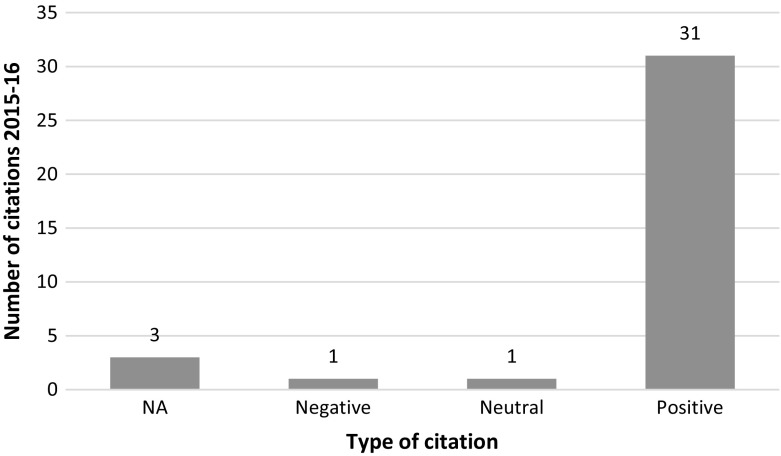
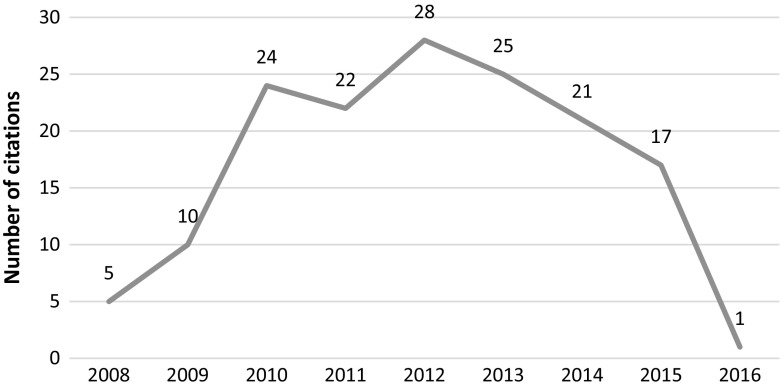
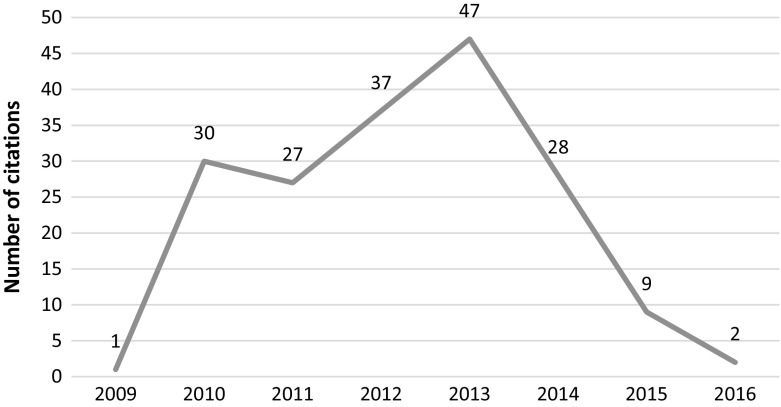
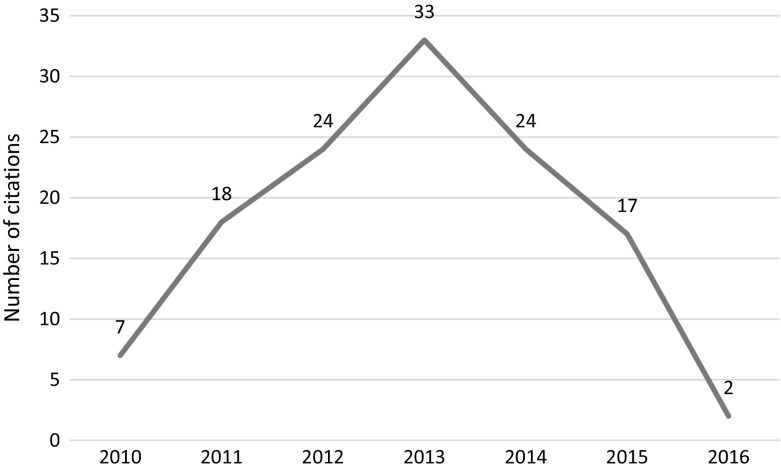
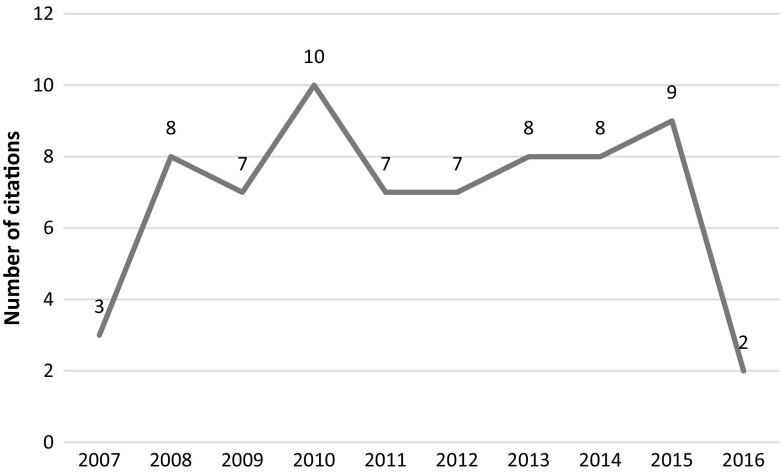
This study examines the nature of citations to articles that were retracted in 2014. Out of 987 retracted articles found in ScienceDirect, an Elsevier full text database, we selected all articles that received more than 10 citations between January 2015 and March 2016. Since the retraction year was known for only about 83% of the retracted articles, we chose to concentrate on recent citations, that for certain appeared after the cited paper was retracted. Overall, we analyzed 238 citing documents and identified the context of each citation as positive, negative or neutral. Our results show that the vast majority of citations to retracted articles are positive despite of the clear retraction notice on the publisher's platform and regardless of the reason for retraction. Positive citations can be also seen to articles that were retracted due to ethical misconduct, data fabrication and false reports. In light of these results, we listed some recommendations for publishers that could potentially minimize the referral to retracted studies as valid.
Overview
The claims and statistics of this paper haven’t been checked yet.
Free: it reads the open-access text and checks the first 5 claims that cite a source we can check. Create a free account to check every claim.
Integrity signals
Registry
Cites
Statistics
Figures
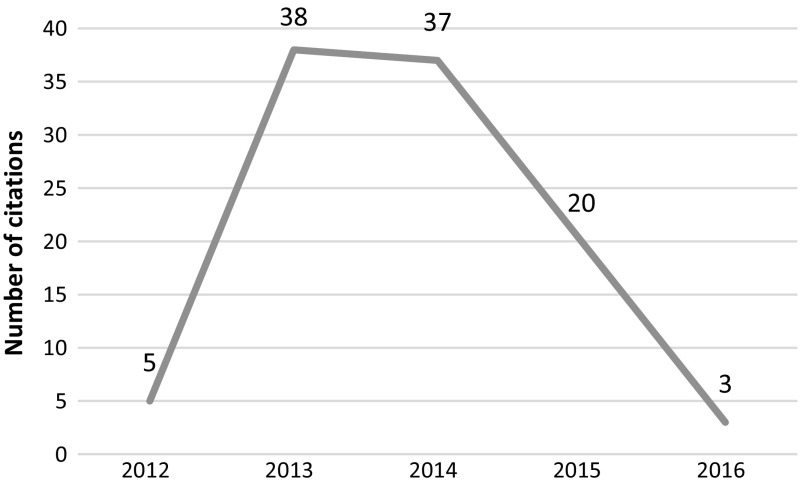
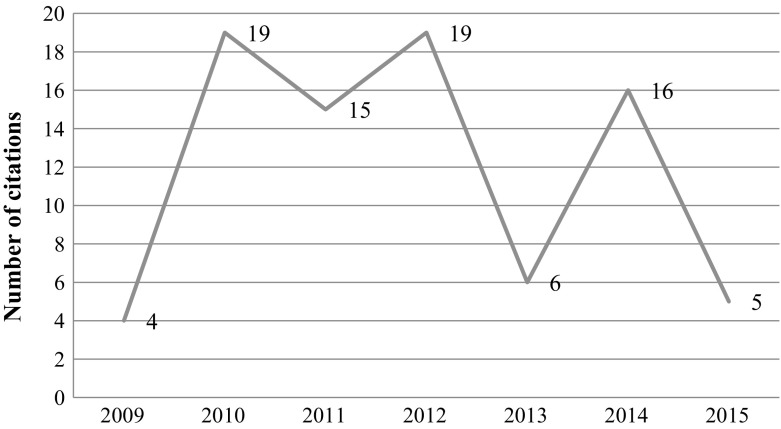
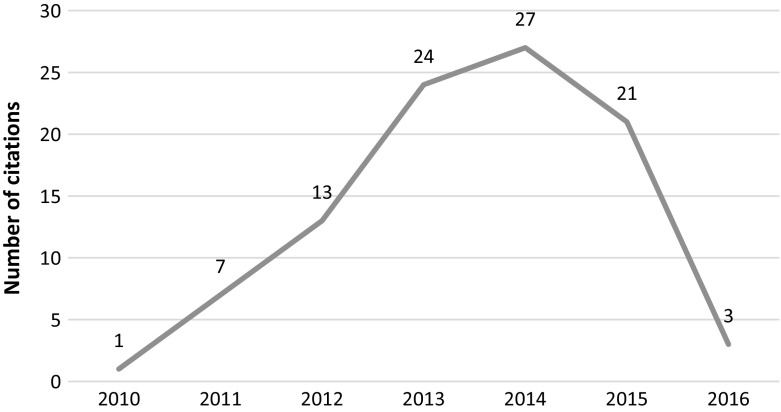
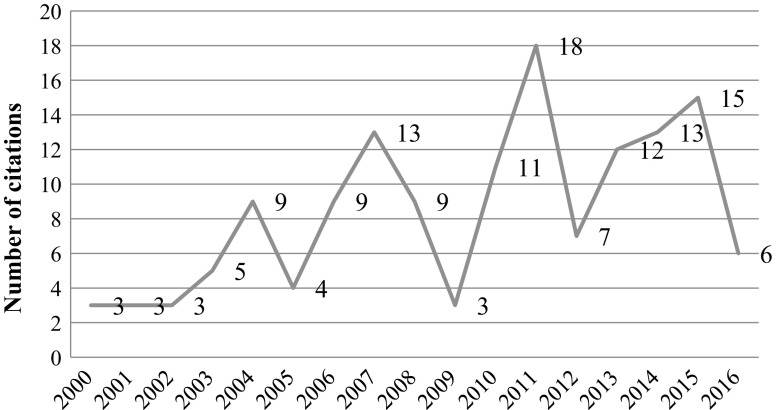
Verification
Claims the paper makes
The claims and statistics of this paper haven’t been checked yet.
Free: it reads the open-access text and checks the first 5 claims that cite a source we can check. Create a free account to check every claim.
Claims other papers make about this one
Each is checked against this paper’s own text: does it say what the citing paper says it does?
The source backs part of the claim, not all of it — or backs it for a different population, condition or comparison.
In the citing paper
“Within the digital publishing era, the longest documented instance of positive post-retraction citation we are aware of is 9years: Bar-Ilan and Halevi documented an article both published and retracted in 2007 receiving only positive post-retraction citations in 2015 and 2016 (Bar-Ilan and Halevi 2017)”
From Continued post-retraction citation of a fraudulent clinical trial report, 11 years after it was retracted for falsifying data (2020) · cites this paper as Bar-Ilan and Halevi 2017
Experimental — accuracy not yet measuredThe source backs part of the claim, not all of it — or backs it for a different population, condition or comparison.
In the citing paper
“These results align well with literature on case studies [7, 8], specific disciplines [9] and the broader literature [10], which identify that at least 80% of retracted articles receive positive post-retraction citations.”
From Media and social media attention to retracted articles according to Altmetric (2021) · cites this paper as [7]
Experimental — accuracy not yet measuredThe cited source says what the claim attributes to it.
In the citing paper
“Although retraction is intended to remove published research from the citable literature, retraction does not stop the diffusion of the retracted paper. Empirical studies have shown that papers continue to be cited after being retracted”
From Continued use of retracted papers: Temporal trends in citations and (lack of) awareness of retractions shown in citation contexts in biomedicine (2021) · cites this paper as Bar-Ilan & Halevi, 2017
The cited source says what the claim attributes to it.
In the citing paper
“Several studies indicate that retracted articles remain to be actively cited even after published retraction, with most citing articles including a positive overview of retracted research. 12-16”
From Manuscript Referencing Errors and Their Impact on Shaping Current Evidence (2020) · cites this paper as [15]
Self-check
Percentages, sums and reported differences re-computed from the paper’s own numbers.
The self-check needs the paper’s full text.
Citations
Cites
1 retracted
Retraction rates are on the rise
Cokol, M., Ozbay, F., & Rodriguez‐Esteban, R. (2008) · The EMBO Reports · doi:10.1038/sj.embor.7401143 · Cited by 149 · cited 1×
“Recent studies on retracted articles show that the number of retracted articles is increasing in relative measure to the overall growth in scientific publications (Cokol et al. 2008; Marcus and Oransky 2014).”
BackgroundRetractedMisconduct accounts for the majority of retracted scientific publications
Fang, F. C., Steen, R. G., & Casadevall, A. (2012) · Proceedings of the National Academy of Sciences · doi:10.1073/pnas.1212247109 · Cited by 1,232 · cited 3×
“and error (Fang et al. 2012; Steen 2011a).”
BackgroundMayne, S. T. (2003) · The Journal of Nutrition · doi:10.1093/jn/133.3.933s · Cited by 568
Why has the number of scientific retractions increased?
Steen, R. G., Casadevall, A., & Fang, F. C. (2013) · PLoS ONE · doi:10.1371/journal.pone.0068397 · Cited by 415 · cited 1×
“Temporal aspects were also studied, for example by Fanelli (2013) and Steen et al. (2013).”
BackgroundRetractions in the scientific literature: is the incidence of research fraud increasing?
Steen, R. G. (2011) · Journal of Medical Ethics · doi:10.1136/jme.2010.040923 · Cited by 405 · cited 4×
“and error (Fang et al. 2012; Steen 2011a).”
BackgroundInfluentialWernersson, A.-S., Carere, M., Maggi, C., Tusil, P., Soldan, P., James, A., Sanchez, W., Dulio, V., Broeg, K., Reifferscheid, G., et al. (2015) · Environmental Sciences Europe · doi:10.1186/s12302-015-0039-4 · Cited by 353
Why Growing Retractions Are (Mostly) a Good Sign
Fanelli, D. (2013) · PLoS Medicine · doi:10.1371/journal.pmed.1001563 · Cited by 272 · cited 1×
“Temporal aspects were also studied, for example by Fanelli (2013) and Steen et al. (2013).”
BackgroundWhy and how do journals retract articles? An analysis of Medline retractions 1988–2008
Wager, E., & Williams, P. (2011) · Journal of Medical Ethics · doi:10.1136/jme.2010.040964 · Cited by 263 · cited 1×
“Another study by Wager and Williams (2011) was also based on biomedical retracted articles, and like Steen (2011a) found that error was most prevalent.”
BackgroundThe effects of authentic leadership and organizational commitment on turnover intention
Ausar, K., Kang, H. J. A., & Kim, J. S. (2016) · Leadership & Organization Development Journal · doi:10.1108/lodj-05-2014-0090 · Cited by 190
The Continued Use of Retracted, Invalid Scientific Literature
Pfeifer, M. P. (1990) · JAMA: The Journal of the American Medical Association · doi:10.1001/jama.1990.03440100140020 · Cited by 188 · cited 1×
“Other early studies include works by Pfeifer and Snodgrass (1990) and by Garfield and Welljams-Dorof (1990).”
Research works printed but not linked: 1
- Retraction Watch (2014). Leadership journal to retract five papers from FIU scholar. Retraction Watch. http://retractionwatch.com/2014/02/07/leadership-journal-to-retract-five-papers-from-fiu-scholar/.
Cited by
Items 101–200 of 232
Do male leading authors retract more articles than female leading authors?
Zheng, E., Fu, H., Thelwall, M. A., & Fang, Z. (2025) · Journal of Informetrics · doi:10.1016/j.joi.2025.101682 · Cited by 8
Context Analysis of Top Seven Retracted Articles: Should Retraction Watch Revisit the List?
Jan, R., Bano, S., Rehman, I. U., & Mehraj, M. (2018) · Library philosophy and practice · Cited by 8
Sperling, D. (2021) · Journal of Empirical Research on Human Research Ethics · doi:10.1177/15562646211005253 · Cited by 8
Use of inactive Cochrane reviews in academia: A citation analysis
Hoffmeyer, B., Fonnes, S., Andresen, K., & Rosenberg, J. (2023) · Scientometrics · doi:10.1007/s11192-023-04691-9 · Cited by 8
Bad Science: Retractions and Media CoveragePreprint
Alabrese, E. (2023) · SSRN Electronic Journal · doi:10.2139/ssrn.4324218 · Cited by 8
Bakker, C., Theis-Mahon, N. R., Brown, S. J., & Zeegers, M. P. (2023) · Systematic Reviews · doi:10.1186/s13643-023-02316-z · Cited by 7
Retraction trends in Indonesian research: misconduct, AI risks, and policy gaps
Samala, A. D., Ferdian, F., Fiandra, Y. A., Hanafiah, M. H., Rawas, S., & Asad, M. M. (2025) · Quality & Quantity · doi:10.1007/s11135-025-02453-8 · Cited by 7
The trend and ripple effects of retractions in primary health care: A bibliometric analysis
Lin, K.-C., Chen, Y.-C., Lin, M.-H., & Chen, T. (2024) · Journal of the Chinese Medical Association · doi:10.1097/jcma.0000000000001149 · Cited by 7
Systematic examination of post‐ and pre‐citation of Indian‐authored retracted papers
Palla, I. A., Singson, M., & Thiyagarajan, S. (2023) · Learned Publishing · doi:10.1002/leap.1572 · Cited by 7
A data mining-based study on academic publication retractions in the 21st Century
Shen, Q., Gao, X., & Xiong, X. (2025) · Accountability in Research · doi:10.1080/08989621.2025.2528064 · Cited by 7
Lendvai, G. F., & Sasvári, P. (2026) · Journal of Information Science · doi:10.1177/01655515251362383 · Cited by 6
“…articles can continue to exert influence over the scholarly record, especially if their citations persist in literature reviews, meta-analyses [21,26] or potentially, with the more and more frequent use of AI in academic research, even through algorithmically generated recommendations (though AI…”
Wang, P. (2023) · Conference on Human Information Interaction and Retrieval · doi:10.1145/3576840.3578281 · Cited by 6
Exploring the Influence of Publication Retraction on Citations in Psychology Science
Yang, S., Qi, F., & Diao, H. (2020) · ACM/IEEE Joint Conference on Digital Libraries · doi:10.1145/3383583.3398583 · Cited by 6
Misreferencing Practice of Scientists: Inside Researchers’ Sociological and Bibliometric Profiles
Sauvayre, R. (2022) · Social Epistemology · doi:10.1080/02691728.2021.2022807 · Cited by 6
Scientific text citation analysis using CNN features and ensemble learning model
Alnowaiser, K. (2024) · PLoS ONE · doi:10.1371/journal.pone.0302304 · Cited by 6
Sánchez, C., Ortega, J. L., Delgado‐Quirós, L., Becerra-Rodero, E., García, A. C., & Moreno, C. (2026) · Journal of Information Science · doi:10.1177/01655515251398723 · Cited by 6
Scientific retractions: causes, processes, and implications for research integrity
Giray, L., Fabros, B. G., & Xavierine, J. (2026) · Naunyn-Schmiedeberg s Archives of Pharmacology · doi:10.1007/s00210-026-05410-w · Cited by 6
The Pernicious Effects of Compression Plagiarism on Scholarly Argumentation
Dougherty, M. V. (2019) · Argumentation · doi:10.1007/s10503-019-09481-3 · Cited by 6
Slaying the undead: How long does it take to kill zombie papers?
Joëts, M., & Mignon, V. (2025) · Research Policy · doi:10.1016/j.respol.2025.105401 · Cited by 6
Context Analysis of Continued Citation of Retracted Manuscripts Published in Anesthesiology Journals
Frasco, P. E., Smith, B. B., Murray, A. W., Khurmi, N. S., Mueller, J. T., & Poterack, K. A. (2022) · Anesthesia & Analgesia · doi:10.1213/ane.0000000000006195 · Cited by 5
Usman, M., & Balke, W. (2023) · Lecture notes in computer science · doi:10.1007/978-3-031-43849-3_11 · Cited by 5
Testing the Keystone Framework by Analyzing Positive Citations to Wakefield’s 1998 Paper
Addepalli, A., Subin, K. A., & Schneider, J. (2022) · Lecture notes in computer science · doi:10.1007/978-3-030-96957-8_9 · Cited by 5
Hansson, S. O. (2023) · Theoria · doi:10.1111/theo.12510 · Cited by 5
Devanath, P. R., & Rupesh Kumar, A. (2026) · Scientometrics · doi:10.1007/s11192-025-05527-4 · Cited by 5
Characteristics of retracted articles in ophthalmology
Er‐Reguyeg, Y., Boudry, C., & Mouriaux, F. (2024) · Heliyon · doi:10.1016/j.heliyon.2024.e35460 · Cited by 5
Disinformation in Science: Ethical Considerations for Citing Retracted Works
Million, A. J., & Budd, J. M. (2024) · Proceedings of the Association for Information Science and Technology · doi:10.1002/pra2.1025 · Cited by 5
Citing documents of Wakefield’s retracted article: the domino effect of authors and journals
Leta, J., de Araújo, K. M., & Treiber, S. (2022) · Scientometrics · doi:10.1007/s11192-022-04353-2 · Cited by 5
Recensements et mesures de la publication scientifique : l’article scientifique comme donnée
Egret, D. (2021) · Histoire de la recherche contemporaine · doi:10.4000/hrc.6388 · Cited by 5
Dinh, L., Cheng, Y., & Parulian, N. N. (2019) · ACM/IEEE Joint Conference on Digital Libraries · doi:10.1109/jcdl.2019.00092 · Cited by 5
تحلیل استنادی و دلایل سلباعتبار آثار در کشورهای خاورمیانه
قربی, ع., فر, س. ف., & نوروزی, ع. (2021) · پژوهش نامه علم سنجی · doi:10.22070/rsci.2021.13819.1472 · Cited by 5
Nag, S. N., Roy, A., & Sudhier, K. G. (2025) · Global Knowledge, Memory and Communication · doi:10.1108/gkmc-09-2024-0582 · Cited by 4
García-Romero, A., lez-Mancebo, S. G. A., Espallardo, C., & Concepción, M. A. (2026) · Scientometrics · doi:10.1007/s11192-026-05699-7 · Cited by 4
Amiri, M., & Sotudeh, H. (2025) · Scientometrics · doi:10.1007/s11192-025-05231-3 · Cited by 4
Engineering Literature Retractions: Applications to Scholarly Communications Training
Solomon, D., & Heckman, C. (2024) · ASEE Annual Conference & Exposition · doi:10.18260/1-2--37068 · Cited by 4
Reducing the inadvertent spread of retracted science: Shaping a research and implementation agenda
Schneider, J., Woods, N. D., Proescholdt, R., Fu, Y., & The RISRS Team (2021) · doi:10.7490/f1000research.1118546.1 · Cited by 4
Jointly valuing journal visibility and author citation count: An axiomatic approach
Haley, M. R., & McGee, M. K. (2019) · Journal of Informetrics · doi:10.1016/j.joi.2019.100988 · Cited by 4
Retractions as a Bitter Pill Corrective Measure to Eliminate Flawed Science
Joshi, P. B., & Minirani, S. (2024) · Springer eBooks · doi:10.1007/978-981-97-4060-4_18 · Cited by 3
Impacts of Social Media Sentiments on Retractions of Scholarly Literature
Toney, A., & Abdulla, S. (2023) · International Conference on Science, Technology and Innovation Indicators (STI) · doi:10.55835/6442fd75a5ee6c319d79499f · Cited by 3
An analysis of availability and implications of unlabeled retracted articles on Sci-Hub
Biju, V. V., Jose, S., Franklin, J., & Jasimudeen, S. (2025) · Accountability in Research · doi:10.1080/08989621.2024.2446558 · Cited by 3
An Overview of Retraction Status and Reasons of Non-Cochrane Systematic Reviews in MedicinePreprint
Shi, Q., Wang, Z., Zhou, Q. X., Hou, R., Gao, X., He, S.-E., Zhao, S., Ma, Y., Zhang, X., Guan, Q., et al. (2020) · medRxiv · doi:10.1101/2020.10.10.20210666 · Cited by 3
Dougherty, M. V. (2023) · Vivarium · doi:10.1163/15685349-06103001 · Cited by 3
Characteristics of correction practice and its citation in library and information science journals
Yang, S., Diao, H., Zou, Y., & Xiao, A. (2022) · Journal of Librarianship and Information Science · doi:10.1177/09610006221124623 · Cited by 3
The Academic Midas Touch: A citation-based indicator of research excellence
Rosenfeld, A., Alexi, A., Mushiev, L., & Lazebnik, T. (2025) · Journal of Data and Information Science · doi:10.2478/jdis-2025-0038 · Cited by 3
Rubbo, P. (2018) · Americanae (AECID Library) · Cited by 3
Xu, Q., Lin, Z., Fan, Q., & Zhu, M. (2026) · Scientometrics · doi:10.1007/s11192-026-05551-y · Cited by 2
Heikkilä, T. (2026) · Public Understanding of Science · doi:10.1177/09636625261470329 · Cited by 2
Peterson, C., Anderson, C., Berdine, G. G., & NUGENT, K. M. (2026) · Journal of Electronic Resources in Medical Libraries · doi:10.1080/15424065.2026.2626575 · Cited by 2
Yaghtin, M., Sotudeh, H., Hoseini, M., & Amiri, M. A. (2026) · Online Information Review · doi:10.1108/oir-04-2025-0270 · Cited by 2
How Do Retractions Influence the Citations of Retracted Articles?
Yang, S., & Qi, F. (2020) · Lecture notes in computer science · doi:10.1007/978-3-030-64452-9_12 · Cited by 2
Temporal shifts in retraction reasons
Xia, J. (2025) · Journal of Documentation · doi:10.1108/jd-07-2025-0185 · Cited by 2
Hensel, P. G. (2022) · Strategic Organization · doi:10.1177/14761270211067162 · Cited by 2
Javed, F., & Almās, K. (2026) · Photodiagnosis and Photodynamic Therapy · doi:10.1016/j.pdpdt.2026.105514 · Cited by 2
The origin, consequence, and visibility of criticism in sciencePreprint
Chen, B., Murray, D., Liu, Y., & Barabási, A.-Ĺ. (2024) · arXiv (Cornell University) · doi:10.48550/arxiv.2412.02809 · Cited by 2
Beyond the Published Retraction
Dougherty, M. V. (2018) · Research ethics forum · doi:10.1007/978-3-319-99435-2_8 · Cited by 2
Fahimifar, S., Ghorbi, A., & Ausloos, M. (2022) · arXiv (Cornell University) · doi:10.48550/arxiv.2201.09090 · Cited by 2
Reducing the inadvertent spread of retracted science: Shaping a research and implementation agenda
Schneider, J., Woods, N. D., Proescholdt, R., Fu, Y., & The RISRS Team (2021) · doi:10.7490/f1000research.1118522.1 · Cited by 2
Analysis of Retracted Articles in the Field of Immunology: A Scientometric Study
Hami, A., Niazi, M., & Khazaee‐Nasirabadi, M. H. (2023) · Journal of Medical Library and Information Science · doi:10.22037/jmlis.v4i.42936 · Cited by 2
Characteristics of retracted biomedical research papers from Latin American institutions
Ramos‐Castaneda, J. A., Candal‐Pedreira, C., Pérez‐Ríos, M., Teijeiro, A., Ruano‐Raviña, A., & García, G. (2025) · Revista de Saúde Pública · doi:10.11606/s1518-8787.2025059006328 · Cited by 2
Retracted articles on stem cells are continuously cited in publications and used by ChatGPT
Zhang, X., Gu, T., Loganathan, S., Xie, Y., & Chen, J. (2025) · Scientometrics · doi:10.1007/s11192-025-05484-y · Cited by 1
“While continued citation of retracted articles by human researchers is well-documented (Bar-Ilan & Halevi, 2017; Schmidt, 2024; Schneider et al., Extended author information available on the last page of the article 2020), the emergence of large language models (LLMs) as research tools introduces…”
RetractedPalla, I. A., & Singson, M. (2026) · Information Discovery and Delivery · doi:10.1108/idd-09-2025-0221 · Cited by 1
Pan, Z., & Hutchins, B. I. (2026) · bioRxiv (Cold Spring Harbor Laboratory) · doi:10.64898/2026.06.26.734852 · Cited by 1
Sivakumar, I., Sivakumar, A., Gadde, P., Buzayan, M. M., Sharan, J., & Kamaraj, B. (2026) · Science Editing · doi:10.6087/kcse.391 · Cited by 1
Investigating Scientific Misinformation Originating from Retracted Publications and Their Perception
Stiller, J., Terner, S., & Trkulja, V. (2023) · Proceedings of the Association for Information Science and Technology · doi:10.1002/pra2.969 · Cited by 1
Yu, Y. (2026) · doi:10.2196/preprints.111260 · Cited by 1
Author response: Four erroneous beliefs thwarting more trustworthy research
Yarborough, M. A., Nadon, R., & Karlin, D. (2019) · eLife · doi:10.7554/elife.45261.003 · Cited by 1
Pozitivist-Ampirik Araştırmalarda İnsan: Yanıltmacanın Dünü, Bugünü ve Yarını - 2
Yüksel, A. (2020) · Seyahat ve Otel İşletmeciliği Dergisi · doi:10.24010/soid.720112 · Cited by 1
Metric capital: how academic indicators become interactional resource
Remisiewicz, Ł. (2026) · Scientometrics · doi:10.1007/s11192-026-05848-y · Cited by 1
Hensel, P. G., & Kacprzak, A. (2024) · Journal of Organizational Change Management · doi:10.1108/jocm-10-2023-0436 · Cited by 1
Sharma, K., & Khurana, P. (2025) · International Conference on Scientometrics and Informetrics (ISSI) · doi:10.51408/issi2025_064 · Cited by 1
Haley, M. R. (2025) · Collnet Journal of Scientometrics and Information Management · doi:10.47974/cjsim-2024-11003 · Cited by 1
Publicações Sobre COVID-19: Uma Análise Semântica Sobre Artigos Retratados
Duca, H., Pacheco, I., Lopes, G. R., Campos, M. L. M., & Oliveira, J. (2022) · iSys - Brazilian Journal of Information Systems · doi:10.5753/isys.2022.2413 · Cited by 1
Reflections following the ASAPbio Peer-Review conferencePreprint
Lidsky, P. V. (2018) · LISSA (OSF Preprints) · doi:10.31229/osf.io/9sq7t · Cited by 1
A flexible functional method for jointly valuing journal visibility and author citation count
Haley, M. R., & McGee, M. K. (2023) · Scientometrics · doi:10.1007/s11192-023-04727-0 · Cited by 1
Location and Sentiment of Citations to Retracted Publications in Dental Research
Bakker, C., & Theis-Mahon, N. R. (2020) · Illinois Digital Environment for Access to Learning and Scholarship (University of Illinois at Urbana-Champaign) · Cited by 1
The Impact of International Collaborations with Highly Publishing Countries in Computer SciencePreprint
Espés, A. G., Faerber, M., & Jatowt, A. (2025) · arXiv (Cornell University) · doi:10.48550/arxiv.2505.09776 · Cited by 1
Hsiao, T.-K. (2023) · Illinois Digital Environment for Access to Learning and Scholarship (University of Illinois at Urbana-Champaign) · doi:10.5281/zenodo.8370892 · Cited by 1
Scientific ghosts: Life after retraction – A case of Nature Index journals
Akbulut, M. (2026) · Journal of Information Science · doi:10.1177/01655515261424867
Hussain, A., Ahmad, A., Rahman, A., & Ahmad, K. (2026) · Serials Review · doi:10.1080/00987913.2026.2663516
Retrakcie vo vedeckom publikovaní
Stožická, Z., & Dobbersteinová, J. (2023) · ITlib Informačné technológie a knižnice · doi:10.52036/1335793x.2023.sc.34-49
Fabrication, Falsification and Spin
Crombie, I. (2021) · Wiley eBooks · doi:10.1002/9781394322183.ch6
From discovery to disrepute: a study of retractions in biological research
Bhat, M., & Malik, B. A. (2026) · Global Knowledge, Memory and Communication · doi:10.1108/gkmc-06-2025-0414
Retraction Analysis in Social Media Research: A Scopus Based Data From 2011 to 2025
Koçyiğit, B. F., Mukhamediyarov, M., Qumar, A. B., Fedorchenko, Y., & Zimba, O. (2026) · Journal of Korean Medical Science · doi:10.3346/jkms.2026.41.e235
Saikia, S., Nisha, F., & Verma, M. K. (2025) · Applied Environmental Education & Communication · doi:10.1080/1533015x.2025.2599330
Retractions in Scholarly Publishing: Causes, Consequences, and the Path Forward
Negm, A. M., Farhan, S. H., & Singh, R. (2026) · Trends in Scholarly Publishing · doi:10.21124/tsp.2026.15.22
Retractions in Psychology and Psychiatry in Web of Science: A Bioethical Perspective
Faúndez, O. A., Saracini, C., & Muñoz-Quezada, M. T. (2026) · Journal of Bioethical Inquiry · doi:10.1007/s11673-026-10581-5
الأبحاث المصرية المسحوبة من النشر: دراسة ببليومترية تحليلية
عثمان, إ. ر. (2022) · المجلة المصرية لعلوم المعلومات · doi:10.21608/jesi.2021.96329.1038
العدد كاملا من المجلة المصرية لعلوم المعلومات، مج 9، ع2، اكتوبر 2022
يوسف, أ. د. ر. (2022) · المجلة المصرية لعلوم المعلومات · doi:10.21608/jesi.2022.315659
Zhou, Z., Lu, X., & Yang, L. (2026) · Journal of Data and Information Science · doi:10.1515/jdis-2026-0069
Wang, J. J., Wei, S., Yuan, X., & Ye, F. Y. (2026) · Scientometrics · doi:10.1007/s11192-026-05741-8
Altunışık, E. (2026) · Clinical Neurology and Neurosurgery · doi:10.1016/j.clineuro.2026.109578
Tursynali, A., Орынбасарова, К. К., Abdrakhmanova, Z., & Raushanova, A. (2026) · Central Asian Journal of Medical Hypotheses and Ethics · doi:10.47316/cajmhe.2026.7.3.13
Jacobsen, P. C., & Lautarescu, A. (2025) · Cambridge University Press eBooks · doi:10.1017/9781009028967.002
Schneider, J., Woods, N. D., & Proescholdt, R. (2022) · Figshare · doi:10.6084/m9.figshare.21162748
Post-publication corrections of rheumatology articles: a comprehensive analysis
Torun, B., & Kaya, E. (2026) · Revista Brasileira de Reumatologia · doi:10.1186/s42358-026-00537-z
Retraction Notices in Non-English Articles: A Short Report
Alexander, R. L., Peterson, C., & NUGENT, K. M. (2025) · Journal of Electronic Resources in Medical Libraries · doi:10.1080/15424065.2025.2496624
Khan, N., Ullah, M., Khan, W., Ahmad, B., & Ahmad, S. (2025) · World Journal of Urology · doi:10.1007/s00345-025-05803-1
Retraction Trends in Top 10 NIRF-Ranked Indian Universities: A Web of Science Analysis
Bhat, M., Malla, R. A., Ahmad, P., & Nisa, R. U. (2026) · The International Information & Library Review · doi:10.1080/10572317.2026.2680708
Retractions in the field of pregnancy and pain: bibliometric characteristics, reasons, and trends
Yerlanova, D., Zimba, O., Khojakulova, U., Nurmashev, B., Qumar, A. B., & Koçyiğit, B. F. (2026) · Rheumatology International · doi:10.1007/s00296-026-06319-6
Porel, P., & Khan, S. (2026) · International Journal For Multidisciplinary Research · doi:10.36948/ijfmr.2026.v08i04.86849
Metadata
- Authors
- Bar-Ilan, J., & Halevi, G.
- Affiliations
- Icahn School of Medicine at Mount Sinai (US)
- Corresponding author
- Halevi, Gali
- ORCID
- Halevi, Gali
- Venue
- Scientometrics
- Published
- 2017-03-03
- Volume
- 113
- Issue
- 1
- Pages
- 547-565
- ISSN
- 0138-9130 (ISSN-L)
- 1588-2861
- PMC
- PMC5629243
- OpenAlex
- W2594541205
- Cited by
- 191
- References
- 39
- Citations by year
- 2026: 27 · 2025: 20 · 2024: 11 · 2023: 23 · 2022: 27 · 2021: 23 · 2020: 20 · 2019: 25 · 2018: 15
- FWCI
- 14.71
- Type
- journal article
- Language
- en
- Open access
- hybrid
- doi.org
- Locations
- Scientometrics (publishedVersion, cc-by)
- Europe PMC (PubMed Central) (publishedVersion, cc-by)
- PubMed Central (publishedVersion, cc-by)
- PubMed (publishedVersion)
- RePEc: Research Papers in Economics (submittedVersion)
- Topics
- Social Sciences › Library and Information Sciences › scientometrics and bibliometrics research
- Social Sciences › Education › Academic integrity and plagiarism
- Social Sciences › Library and Information Sciences › Academic Publishing and Open Access
- Keywords
- retracted article, citation behavior, citation context, retraction reasons, research misconduct, data fabrication, false reporting, ScienceDirect
About these checks
Registry, retraction, Cites and statistics results are computed, not judged, with one exception: a printed reference that no index lists is read once by a model before it counts as a citation error. Claims are extracted by a model and kept only when their quote appears verbatim in the text; each cited source is then checked, with a model’s help, for whether it says what the claim relies on. Those verdicts can be wrong — read the claim’s quote and the cited source before relying on one.
Statistics and arithmetic are recomputed, not judged.
Confidence bands are shown only for fields calibrated on our annotated test set. None is calibrated yet, so no band is shown.
What counts as a claim ›How we measure confidence ›How we check this ›
Are you an author, or do you see a problem with this page? Request a review
Data sources
Bibliographic data: Semantic Scholar, OpenAlex, Crossref.
Contains information from the Semantic Scholar Academic Graph Datasets, made available under the ODC Attribution License (ODC-BY 1.0).
Semantic Scholar’s data is described in: Kinney, R., et al. (2023). The Semantic Scholar Open Data Platform. arXiv:2301.10140.
