

Gaming the metrics: bibliometric anomalies in global university rankings and the research integrity risk index (RI2)
Open accessThe DOI matches its Crossref record; 97 of the 98 references it cites were found in a registry or an index.
Abstract
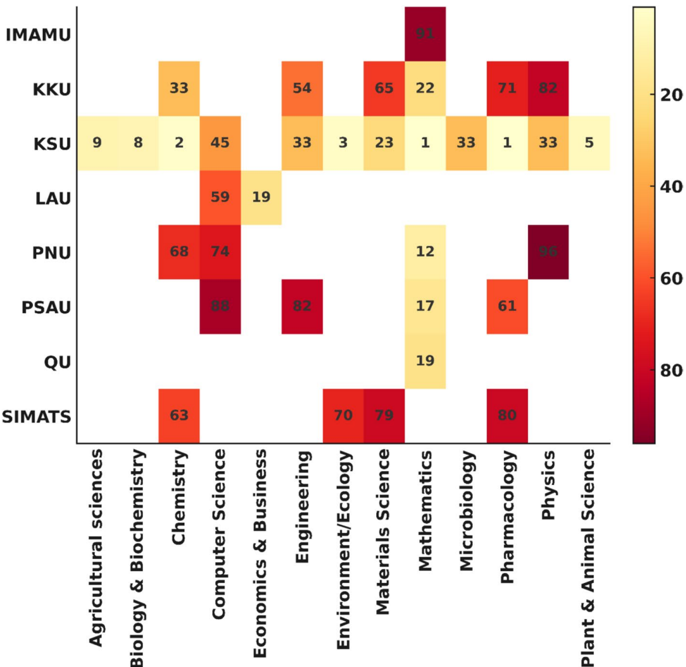
The expansion of university rankings has intensified competition among institutions and reshaped research priorities worldwide. Bibliometric indicators underpin many of these rankings, and their growing influence has raised concerns about systemic distortions in scholarly behavior. This study investigates publication and authorship patterns among the world’s 88 fastest-growing research universities across two periods (2018–2019 and 2023–2024) to assess whether rapid rank mobility coincides with bibliometric anomalies indicative of metric-driven practices. The analysis identified 21 institutions with trajectories sharply diverging from global and regional norms, characterized by steep declines in first and corresponding authorship, disproportionate surges in STEM output, rising numbers of hyper-prolific authors, and elevated exposure to integrity-related risks. To systematically identify and quantify such risks, the study introduces the Research Integrity Risk Index (RI 2 ). This field-normalized composite metric integrates publications in delisted journals, retractions, and self-citation shares, and classifies institutions across five integrity-risk tiers. Applied to the study cohort, RI 2 clearly distinguishes high-risk from benchmark institutions, providing a transparent framework for detecting systemic vulnerabilities, strengthening accountability in global research evaluation, and shifting the focus from performance maximization to integrity-sensitive assessment and governance.
Overview
The claims and statistics of this paper haven’t been checked yet.
Free: it reads the open-access text and checks the first 5 claims that cite a source we can check. Create a free account to check every claim.
Integrity signals
Registry
Cites
Statistics
Figures
Verification
Claims the paper makes
The claims and statistics of this paper haven’t been checked yet.
Free: it reads the open-access text and checks the first 5 claims that cite a source we can check. Create a free account to check every claim.
Claims other papers make about this one
Each is checked against this paper’s own text: does it say what the citing paper says it does?
The cited source says what the claim attributes to it.
In the citing paper
“The parallel Research Integrity Risk Index uses similar signal categories”
From Artificial intelligence to enhance research integrity in evidence-based medicine: toward scalable trustworthiness assessment (2026) · cites this paper as Meho, 2025
Self-check
Percentages, sums and reported differences re-computed from the paper’s own numbers.
The self-check needs the paper’s full text.
Citations
Cites
3 retracted
Abalkina, A. (2023) · Learned Publishing · doi:10.1002/leap.1574 · Cited by 101 · cited 3×
“…2024; Li et al., 2019; Silva et al., 2020) to authorship abuses, such as gift, guest, ghost, and sold authorship and multi-affiliation inflation (Abalkina, 2023; Chirico & Bramstedt, 2023; Halevi et al., 2023; Hottenrott et al., 2021; Kuan et al., 2024; Morreim & Winer, 2023; Pruschak & Hopp,…”
RetractedCandal-Pedreira, C., Guerra-Tort, C., Ruano-Ravina, A., Freijedo-Farinas, F., Rey-Brandariz, J., Ross, J. S., & Pérez-Ríos, M. (2024) · Journal of Clinical Epidemiology · doi:10.1016/j.jclinepi.2024.111397 · Cited by 33 · cited 3×
“Measures the proportion of an institution’s research output that has been retracted, serving as a critical marker of research integrity (Candal-Pedreira et al., 2024; Fang et al., 2012; Feng et al., 2024; Gedik et al., 2024; Ioannidis et al., 2025).”
RetractedSebo, P., & Sebo, M. (2025) · Accountability in Research · doi:10.1080/08989621.2025.2465621 · Cited by 7 · cited 1×
“• Retraction Watch Database (Crossref) was the principal source for identifying retracted publications (Sebo & Sebo, 2025a, 2025b).”
RetractedDiMaggio, P. J., & Powell, W. W. (1983) · American Sociological Review · doi:10.2307/2095101 · Cited by 38,435 · cited 1×
“This tendency is reinforced by institutional isomorphism (DiMaggio & Powell, 1983), whereby institutions emulate perceived leaders even when such strategies conflict with local missions or capacities.”
Web of Science (WoS) and Scopus: The Titans of Bibliographic Information in Today’s Academic World
Pranckutė, R. (2021) · Publications · doi:10.3390/publications9010012 · Cited by 2,696 · cited 2×
“Metadata deficiencies such as missing affiliation and DOI data further undermine reliability (Chinchilla-Rodríguez et al., 2024; Culbert et al., 2025; Liu & Wang, 2025; Pranckutė, 2021; Singh et al., 2024).”
The Journal Coverage of Web of Science, Scopus and Dimensions: A Comparative Analysis
Singh, V. K., Singh, P., Karmakar, M., Leta, J., & Mayr, P. (2021) · Scientometrics · doi:10.1007/s11192-021-03948-5 · Cited by 2,342 · cited 2×
“…and Web of Science—exhibit well-documented asymmetries by coverage, document type, discipline, and language, with database choice considerably altering publication counts, field distributions, and national shares (Alshrai-deh & Abdelgawad, 2025; Li, 2025; Singh et al., 2021; Visser et al., 2021).”
Baas, J., Schotten, M., Plume, A., Côté, G., & Karimi, R. (2020) · Quantitative Science Studies · doi:10.1162/qss_a_00019 · Cited by 2,093 · cited 1×
“• Scopus and Web of Science served as primary sources for publication and citation data, retractions, and publications in delisted journals (Baas et al., 2020; Birkle et al., 2020; Pranckutė, 2021).”
Web of Science as a Data Source for Research on Scientific and Scholarly Activity
Birkle, C., Pendlebury, D. A., Schnell, J., & Adams, J. (2020) · Quantitative Science Studies · doi:10.1162/qss_a_00018 · Cited by 1,283 · cited 1×
“• Scopus and Web of Science served as primary sources for publication and citation data, retractions, and publications in delisted journals (Baas et al., 2020; Birkle et al., 2020; Pranckutė, 2021).”
Misconduct accounts for the majority of retracted scientific publications
Fang, F. C., Steen, R. G., & Casadevall, A. (2012) · Proceedings of the National Academy of Sciences · doi:10.1073/pnas.1212247109 · Cited by 1,232 · cited 2×
“Measures the proportion of an institution’s research output that has been retracted, serving as a critical marker of research integrity (Candal-Pedreira et al., 2024; Fang et al., 2012; Feng et al., 2024; Gedik et al., 2024; Ioannidis et al., 2025).”
Visser, M., van Eck, N. J., & Waltman, L. (2021) · Quantitative Science Studies · doi:10.1162/qss_a_00112 · Cited by 865 · cited 1×
“…and Web of Science—exhibit well-documented asymmetries by coverage, document type, discipline, and language, with database choice considerably altering publication counts, field distributions, and national shares (Alshrai-deh & Abdelgawad, 2025; Li, 2025; Singh et al., 2021; Visser et al., 2021).”
Over-optimization of academic publishing metrics: observing Goodhart's Law in action
Fire, M., & Guestrin, C. (2019) · GigaScience · doi:10.1093/gigascience/giz053 · Cited by 351 · cited 1×
“These developments exemplify Goodhart’s Law : once bibliometric measures become targets, they lose diagnostic value and invite optimization over substance (Fire & Guestrin, 2019).”
Ratings and Rankings: Voodoo or Science?
Paruolo, P., Saisana, M., & Saltelli, A. (2013) · Journal of the Royal Statistical Society Series A: Statistics in Society · doi:10.1111/j.1467-985x.2012.01059.x · Cited by 349 · cited 1×
“…maximizes transparency, interpretability, and resistance to arbitrary assumptions about component importance, particularly in the absence of robust empirical evidence justifying a differential weighting (Bellantuono et al., 2022; Fauzi et al., 2020; Paruolo et al., 2013; Saisana et al., 2011).”
Rickety numbers: Volatility of university rankings and policy implications
Saisana, M., d’Hombres, B., & Saltelli, A. (2011) · Research Policy · doi:10.1016/j.respol.2010.09.003 · Cited by 318 · cited 1×
“…maximizes transparency, interpretability, and resistance to arbitrary assumptions about component importance, particularly in the absence of robust empirical evidence justifying a differential weighting (Bellantuono et al., 2022; Fauzi et al., 2020; Paruolo et al., 2013; Saisana et al., 2011).”
Thousands of scientists publish a paper every five days
Ioannidis, J. P. A., Klavans, R., & Boyack, K. W. (2018) · Nature · doi:10.1038/d41586-018-06185-8 · Cited by 241 · cited 2×
“Ioannidis et al. (2018) defined hyper-prolific authors (HPAs) as those with 72 or more publications in a calendar year, noting that 70% acknowledged not meeting the International Committee of Medical Journal Editors’ (ICMJE) criteria in over a quarter of their publications.”
Xie, Y., Wang, K., & Kong, Y. (2021) · Science and Engineering Ethics · doi:10.1007/s11948-021-00314-9 · Cited by 205 · cited 1×
“…Silva et al., 2020) to authorship abuses, such as gift, guest, ghost, and sold authorship and multi-affiliation inflation (Abalkina, 2023; Chirico & Bramstedt, 2023; Halevi et al., 2023; Hottenrott et al., 2021; Kuan et al., 2024; Morreim & Winer, 2023; Pruschak & Hopp, 2022; Xie et al., 2021).”
Regional disparities in Web of Science and Scopus journal coverage
Asubiaro, T., Onaolapo, S., & Mills, D. (2024) · Scientometrics · doi:10.1007/s11192-024-04948-x · Cited by 187 · cited 1×
“At the same time, persistent biases favoring English-language journals from North America and Europe continue to underrepresent scholarship from the Global South (Asubiaro et al., 2024; Singh et al., 2021).”
Impact of the COVID-19 pandemic on publication dynamics and non-COVID-19 research production
Raynaud, M., Goutaudier, V., Louis, K., Al-Awadhi, S., Dubourg, Q., Truchot, A., Brousse, R., Saleh, N., Giarraputo, A., Debiais, C., et al. (2021) · BMC Medical Research Methodology · doi:10.1186/s12874-021-01404-9 · Cited by 183 · cited 1×
“The study analyzed institutional publication patterns across two separate intervals, 2018–2019 and 2023–2024, to capture recent, rapid shifts while minimizing distortions associated with the COVID-19 period (Ioannidis et al., 2021; Raynaud et al., 2021; Zam-marchi et al., 2024).”
Reference coverage analysis of OpenAlex compared to Web of Science and Scopus
Culbert, J. H., Hobert, A., Jahn, N., Haupka, N., Schmidt, M., Donner, P., & Mayr, P. (2025) · Scientometrics · doi:10.1007/s11192-025-05293-3 · Cited by 168 · cited 1×
“Metadata deficiencies such as missing affiliation and DOI data further undermine reliability (Chinchilla-Rodríguez et al., 2024; Culbert et al., 2025; Liu & Wang, 2025; Pranckutė, 2021; Singh et al., 2024).”
Academic Misconduct, Misrepresentation and Gaming: A ReassessmentPreprint
Biagioli, M., Kenney, M. F., Martin, B. R., & Walsh, J. P. (2018) · SSRN Electronic Journal · doi:10.1016/j.respol.2018.10.025 · Cited by 146 · cited 1×
“…study asks whether bibliometric anomalies can serve as reliable signals for identifying universities whose publication and citation patterns reflect the gamification of rankings (Biagioli et al., 2019; Ioannidis & Maniadis, 2024; Li et al., 2023; Proserpio et al., 2025; Rhein & Nanni, 2023).”
The rapid, massive growth of COVID-19 authors in the scientific literature
Ioannidis, J. P. A., Salholz-Hillel, M., Boyack, K. W., & Baas, J. (2021) · Royal Society Open Science · doi:10.1098/rsos.210389 · Cited by 107 · cited 1×
“The study analyzed institutional publication patterns across two separate intervals, 2018–2019 and 2023–2024, to capture recent, rapid shifts while minimizing distortions associated with the COVID-19 period (Ioannidis et al., 2021; Raynaud et al., 2021; Zam-marchi et al., 2024).”
The rapid, massive growth of COVID-19 authors in the scientific literature
Ioannidis, J. P. A., Salholz-Hillel, M., Boyack, K. W., & Baas, J. (2020) · doi:10.1101/2020.12.15.422900 · Cited by 107
Saudi Universities Offer Cash in Exchange for Academic Prestige
Bhattacharjee, Y. (2011) · Science · doi:10.1126/science.334.6061.1344 · Cited by 106 · cited 1×
“…means of modernization and competitiveness, often at the expense of broader academic missions (Ahlers & Christmann-Budian, 2023; Alhuthali & Sayed, 2022; Ali, 2025; Bhattacharjee, 2011; Li et al., 2023; Lin et al., 2025; Proserpio et al., 2025; Rhein & Nanni, 2023; Shen et al., 2023; Stack, 2021).”
And the credit goes to … - Ghost and honorary authorship among social scientists
Pruschak, G., & Hopp, C. (2022) · PLoS ONE · doi:10.1371/journal.pone.0267312 · Cited by 104 · cited 1×
“…Silva et al., 2020) to authorship abuses, such as gift, guest, ghost, and sold authorship and multi-affiliation inflation (Abalkina, 2023; Chirico & Bramstedt, 2023; Halevi et al., 2023; Hottenrott et al., 2021; Kuan et al., 2024; Morreim & Winer, 2023; Pruschak & Hopp, 2022; Xie et al., 2021).”
The rise of multiple institutional affiliations in academia
Hottenrott, H., Rose, M. E., & Lawson, C. (2021) · Journal of the Association for Information Science and Technology · doi:10.1002/asi.24472 · Cited by 99
Citation manipulation through citation mills and pre-print servers
Ibrahim, H., Liu, F., Zaki, Y., & Rahwan, T. (2025) · Scientific Reports · doi:10.1038/s41598-025-88709-7 · Cited by 85 · cited 2×
“Such patterns echo documented practices of citation cartels and coordinated citation schemes designed to inflate impact metrics artificially (Baccini & Petrovich, 2023; Catanzaro, 2024; Chawla, 2024; Ibrahim et al., 2025; Ioannidis & Maniadis, 2024; Kojaku et al., 2021).”
Quantitative research assessment: using metrics against gamed metrics
Ioannidis, J. P. A., & Maniadis, Z. (2023) · Internal and Emergency Medicine · doi:10.1007/s11739-023-03447-w · Cited by 77 · cited 3×
“Such patterns echo documented practices of citation cartels and coordinated citation schemes designed to inflate impact metrics artificially (Baccini & Petrovich, 2023; Catanzaro, 2024; Chawla, 2024; Ibrahim et al., 2025; Ioannidis & Maniadis, 2024; Kojaku et al., 2021).”
Last and corresponding authorship practices in ecology
Duffy, M. A. (2017) · Ecology and Evolution · doi:10.1002/ece3.3435 · Cited by 73 · cited 1×
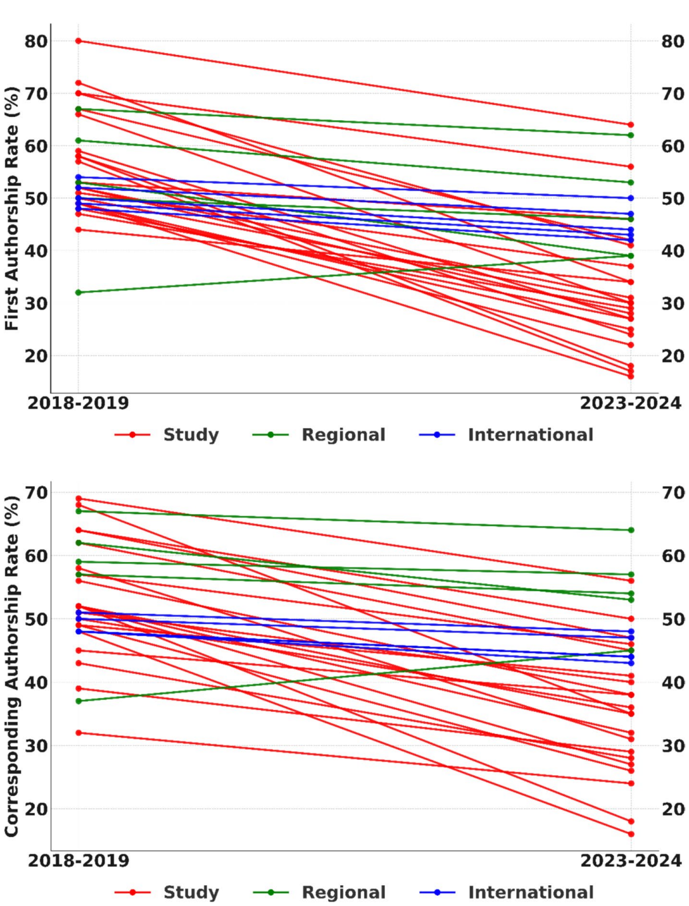
“Within these 88 outliers, 21 universities exhibited sharp declines in first and corresponding authorship rates—two recognized indicators of intellectual contribution and leadership (Chinchilla-Rodríguez et al., 2024; Duffy, 2017; Hashimoto et al., 2025; Kharasch et al., 2021).”
The politics of university rankings in China
Ahlers, A. L., & Christmann-Budian, S. (2023) · Higher Education · doi:10.1007/s10734-023-01014-y · Cited by 66 · cited 1×
“…toward improving bibliometric performance as a means of modernization and competitiveness, often at the expense of broader academic missions (Ahlers & Christmann-Budian, 2023; Alhuthali & Sayed, 2022; Ali, 2025; Bhattacharjee, 2011; Li et al., 2023; Lin et al., 2025; Proserpio et al., 2025;…”
Evolving patterns of extreme publishing behavior across science
Ioannidis, J. P. A., Collins, T. A., & Baas, J. (2024) · Scientometrics · doi:10.1007/s11192-024-05117-w · Cited by 65 · cited 1×
“…2025; Maisonneuve, 2025; Teixeira da Silva, 2024), and a proliferation of questionable practices, from hyper-prolific authorship (Conroy, 2024; Ioannidis et al., 2024; Meho & Akl, 2025; Moreira et al., 2023) and citation clustering (Feng et al., 2024; Li et al., 2019; Silva et al., 2020) to…”
‘Stamp out paper mills’ — science sleuths on how to fight fake research
Abalkina, A., Aquarius, R., Bik, E., Bimler, D., Bishop, D., Byrne, J., Cabanac, G., Day, A., Labbé, C., & Wise, N. (2025) · Nature · doi:10.1038/d41586-025-00212-1 · Cited by 59 · cited 2×
“The same dynamics have additionally fueled the rise of paper mills and citation cartels (Abalkina, 2023; Abalkina et al., 2025; Candal-Pedreira et al., 2024; Ibrahim et al., 2025; Maisonneuve, 2025; Teixeira da Silva & Nazarovets, 2023).”
Li, H., & Yin, Z. (2022) · Journal of Librarianship and Information Science · doi:10.1177/09610006221106178 · Cited by 58
Research Handbook on University Rankings
Erkkilä, T., & Piironen, O. (2021) · Edward Elgar Publishing eBooks · doi:10.4337/9781788974981 · Cited by 55
A global exploratory comparison of country self-citations 1996-2019
Baccini, A., & Petrovich, E. (2023) · PLoS ONE · doi:10.1371/journal.pone.0294669 · Cited by 54 · cited 1×
“Such patterns echo documented practices of citation cartels and coordinated citation schemes designed to inflate impact metrics artificially (Baccini & Petrovich, 2023; Catanzaro, 2024; Chawla, 2024; Ibrahim et al., 2025; Ioannidis & Maniadis, 2024; Kojaku et al., 2021).”
Detecting anomalous citation groups in journal networks
Kojaku, S., Livan, G., & Masuda, N. (2021) · Scientific Reports · doi:10.1038/s41598-021-93572-3 · Cited by 53 · cited 1×
“Such patterns echo documented practices of citation cartels and coordinated citation schemes designed to inflate impact metrics artificially (Baccini & Petrovich, 2023; Catanzaro, 2024; Chawla, 2024; Ibrahim et al., 2025; Ioannidis & Maniadis, 2024; Kojaku et al., 2021).”
Ioannidis, J. P. A., Pezzullo, A. M., Cristiano, A., Boccia, S., & Baas, J. (2025) · PLOS Biology · doi:10.1371/journal.pbio.3002999 · Cited by 51 · cited 2×
“Measures the proportion of an institution’s research output that has been retracted, serving as a critical marker of research integrity (Candal-Pedreira et al., 2024; Fang et al., 2012; Feng et al., 2024; Gedik et al., 2024; Ioannidis et al., 2025).”
Dowsett, L. (2020) · Journal of Higher Education Policy and Management · doi:10.1080/1360080x.2019.1701853 · Cited by 48 · cited 1×
“Over the past two decades, global university rankings have become powerful instruments shaping institutional priorities, strategic planning, and resource allocation (Downing et al., 2021; Dowsett, 2020; Hazelkorn & Mihut, 2021; Véliz & Marshall, 2022).”
Territorial bias in university rankings: a complex network approach
Bellantuono, L., Monaco, A., Amoroso, N., Aquaro, V., Bardoscia, M., Loiotile, A. D., Lombardi, A., Tangaro, S., & Bellotti, R. (2022) · Scientific Reports · doi:10.1038/s41598-022-08859-w · Cited by 48 · cited 1×
“…maximizes transparency, interpretability, and resistance to arbitrary assumptions about component importance, particularly in the absence of robust empirical evidence justifying a differential weighting (Bellantuono et al., 2022; Fauzi et al., 2020; Paruolo et al., 2013; Saisana et al., 2011).”
Examining the quality of the corresponding authorship field in Web of Science and Scopus
Chinchilla‐Rodríguez, Z., Costas, R., Robinson‐García, N., & Larivière, V. (2024) · Quantitative Science Studies · doi:10.1162/qss_a_00288 · Cited by 46 · cited 2×
“Within these 88 outliers, 21 universities exhibited sharp declines in first and corresponding authorship rates—two recognized indicators of intellectual contribution and leadership (Chinchilla-Rodríguez et al., 2024; Duffy, 2017; Hashimoto et al., 2025; Kharasch et al., 2021).”
Darwin, S., & Barahona, M. (2023) · Higher Education · doi:10.1007/s10734-023-01007-x · Cited by 43
University rankings in the context of research evaluation: A state-of-the-art review
Kochetkov, D. M. (2024) · Quantitative Science Studies · doi:10.1162/qss_a_00317 · Cited by 43 · cited 2×
“These weaknesses, in turn, continue to distort the structure of global research evaluation (Depo, 2024; Fauzi et al., 2020; Kochetkov, 2024; Li, 2025).”
Cortegiani, A., Ippolito, M., Ingoglia, G., Manca, A., Cugusi, L., Severin, A., Strinzel, M., Panzarella, V., Campisi, G., Manoj, L., et al. (2020) · F1000Research · doi:10.12688/f1000research.23847.2 · Cited by 40
Frietsch, R., Gruber, S., & Bornmann, L. (2025) · Scientometrics · doi:10.1007/s11192-024-05158-1 · Cited by 38 · cited 2×
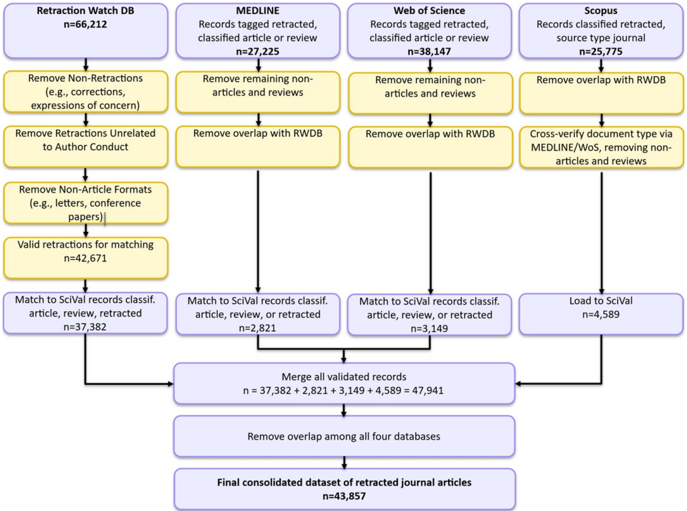
“2 Workflow for retraction data compilation and validation than the top 1% benchmark commonly used in global rankings, such as Clarivate’s annual Highly Cited Researchers (Frietsch et al., 2025).”
Olive, R., Townsend, S., & Phillips, M. G. (2022) · International Review for the Sociology of Sport · doi:10.1177/10126902221107467 · Cited by 37 · cited 1×
“It argues that analyzing such anomalies collectively can illuminate how performance pressures reshape institutional practices, widening the gap between what is counted and what truly counts (Abalkina et al., 2025; Olive et al., 2023).”
The Impact of Higher Education Ranking Systems on Universities
Downing, K. J., Loock, P. J., & Gravett, S. J. (2021) · Routledge eBooks · doi:10.4324/9781003002543 · Cited by 35 · cited 1×
“Over the past two decades, global university rankings have become powerful instruments shaping institutional priorities, strategic planning, and resource allocation (Downing et al., 2021; Dowsett, 2020; Hazelkorn & Mihut, 2021; Véliz & Marshall, 2022).”
Abalkina, A. (2021) · arXiv · doi:10.48550/arxiv.2112.13322 · Cited by 35
Meho, L. I., & Akl, E. A. (2025) · Quantitative Science Studies · doi:10.1162/qss_a_00339 · Cited by 34 · cited 3×
“…2025; Teixeira da Silva, 2024), and a proliferation of questionable practices, from hyper-prolific authorship (Conroy, 2024; Ioannidis et al., 2024; Meho & Akl, 2025; Moreira et al., 2023) and citation clustering (Feng et al., 2024; Li et al., 2019; Silva et al., 2020) to authorship abuses, such…”
Self-citationAn Analysis of Discontinued Journals by Scopus
Krauskopf, E. (2018) · Scientometrics · doi:10.1007/s11192-018-2808-5 · Cited by 33 · cited 3×
“…Web of Science often exhibit clear warning signs long before their removal, including abnormally short review times, geographic or institutional clustering, poor editorial transparency, and aggressive solicitation practices (Cortegiani et al., 2020; Krauskopf, 2018; Wilches-Visbal et al., 2024).”
Reciprocity and impact in academic careers
Li, W., Aste, T., Caccioli, F., & Livan, G. (2019) · EPJ Data Science · doi:10.1140/epjds/s13688-019-0199-3 · Cited by 33 · cited 1×
“…hyper-prolific authorship (Conroy, 2024; Ioannidis et al., 2024; Meho & Akl, 2025; Moreira et al., 2023) and citation clustering (Feng et al., 2024; Li et al., 2019; Silva et al., 2020) to authorship abuses, such as gift, guest, ghost, and sold authorship and multi-affiliation inflation (Abalkina,…”
Authorship and Publication Matters: Credit and Credibility
Kharasch, E. D., Avram, M. J., Bateman, B. T., Clark, J. D., Culley, D. J., Davidson, A. J., Houle, T. T., Jiang, Y., Levy, J. H., London, M. J., et al. (2021) · Anesthesiology · doi:10.1097/aln.0000000000003830 · Cited by 32 · cited 1×
“Within these 88 outliers, 21 universities exhibited sharp declines in first and corresponding authorship rates—two recognized indicators of intellectual contribution and leadership (Chinchilla-Rodríguez et al., 2024; Duffy, 2017; Hashimoto et al., 2025; Kharasch et al., 2021).”
Surge in number of ‘extremely productive’ authors concerns scientists
Conroy, G. (2023) · Nature · doi:10.1038/d41586-023-03865-y · Cited by 32 · cited 1×
“…(Hladchenko, 2025; Maisonneuve, 2025; Teixeira da Silva, 2024), and a proliferation of questionable practices, from hyper-prolific authorship (Conroy, 2024; Ioannidis et al., 2024; Meho & Akl, 2025; Moreira et al., 2023) and citation clustering (Feng et al., 2024; Li et al., 2019; Silva et…”
Guest authorship as research misconduct: definitions and possible solutions
Morreim, E. H., & Winer, J. C. (2021) · BMJ Evidence-Based Medicine · doi:10.1136/bmjebm-2021-111826 · Cited by 31 · cited 1×
“…Silva et al., 2020) to authorship abuses, such as gift, guest, ghost, and sold authorship and multi-affiliation inflation (Abalkina, 2023; Chirico & Bramstedt, 2023; Halevi et al., 2023; Hottenrott et al., 2021; Kuan et al., 2024; Morreim & Winer, 2023; Pruschak & Hopp, 2022; Xie et al., 2021).”
Integrity at stake: confronting “publish or perish” in the developing world and emerging economies
Vásconez-González, J., Izquierdo‐Condoy, J. S., Naranjo-Lara, P., García-Bereguiain, M. Á., & Ortiz‐Prado, E. (2024) · Frontiers in Medicine · doi:10.3389/fmed.2024.1405424 · Cited by 31 · cited 1×
“…lead authorship shares, the magnitude of these declines more closely resembles patterns associated with questionable authorship practices, including gift and guest authorship, authorship-for-sale schemes, and the growing influence of paper mills (Abalkina, 2023; Vasconez-Gonzalez et al., 2024).”
Transparency, bias, and reproducibility across science: a meta-research view
Ioannidis, J. P. A. (2024) · Journal of Clinical Investigation · doi:10.1172/jci181923 · Cited by 29 · cited 2×
“…2025; Maisonneuve, 2025; Teixeira da Silva, 2024), and a proliferation of questionable practices, from hyper-prolific authorship (Conroy, 2024; Ioannidis et al., 2024; Meho & Akl, 2025; Moreira et al., 2023) and citation clustering (Feng et al., 2024; Li et al., 2019; Silva et al., 2020) to…”
Five problems plaguing publishing in the life sciences—and one common cause
Wright, D. E. (2024) · FEBS Letters · doi:10.1002/1873-3468.15018 · Cited by 28 · cited 1×
“Collectively, the three components provide empirical signals of institutional exposure to research-integrity risks, including fraudulent authorship, publication in questionable venues, paper mills, citation cartels, and other forms of metric manipulation (Ioannidis & Maniadis, 2024; Wright, 2024).”
Singh, P., Singh, V. K., & Kanaujia, A. (2024) · Journal of Scientometric Research · doi:10.5530/jscires.20041144 · Cited by 27 · cited 1×
“Metadata deficiencies such as missing affiliation and DOI data further undermine reliability (Chinchilla-Rodríguez et al., 2024; Culbert et al., 2025; Liu & Wang, 2025; Pranckutė, 2021; Singh et al., 2024).”
Fernandez, F., Chykina, V., & Lin, Y. C. (2024) · PLoS ONE · doi:10.1371/journal.pone.0298370 · Cited by 26 · cited 1×
“The result is a global convergence toward metric-centric behavior that amplifies systemic vulnerabilities and undermines research integrity (Fernandez et al., 2024).”
Sebo, P., & Sebo, M. (2025) · Accountability in Research · doi:10.1080/08989621.2025.2484555 · Cited by 25 · cited 1×
“• Retraction Watch Database (Crossref) was the principal source for identifying retracted publications (Sebo & Sebo, 2025a, 2025b).”
Rhein, D. L., & Nanni, A. (2021) · Globalisation Societies and Education · doi:10.1080/14767724.2021.2016375 · Cited by 23 · cited 3×
“…study asks whether bibliometric anomalies can serve as reliable signals for identifying universities whose publication and citation patterns reflect the gamification of rankings (Biagioli et al., 2019; Ioannidis & Maniadis, 2024; Li et al., 2023; Proserpio et al., 2025; Rhein & Nanni, 2023).”
Ukrainian universities in QS World University Rankings: when the means become ends
Hladchenko, M. (2025) · Scientometrics · doi:10.1007/s11192-024-05165-2 · Cited by 22 · cited 1×
“…2025; Candal-Pedreira et al., 2024; Lovakov & Teixeira da Silva, 2025; Teixeira da Silva, 2024), increased publishing in questionable venues (Hladchenko, 2025; Maisonneuve, 2025; Teixeira da Silva, 2024), and a proliferation of questionable practices, from hyper-prolific authorship (Conroy,…”
Alshraideh, H. A., & Abdelgawad, M. O. (2025) · Scientometrics · doi:10.1007/s11192-025-05266-6 · Cited by 22
Authorship commerce: Bylines for sale
Chirico, F., & Bramstedt, K. A. (2021) · Accountability in Research · doi:10.1080/08989621.2021.1982705 · Cited by 19 · cited 1×
“…2019; Silva et al., 2020) to authorship abuses, such as gift, guest, ghost, and sold authorship and multi-affiliation inflation (Abalkina, 2023; Chirico & Bramstedt, 2023; Halevi et al., 2023; Hottenrott et al., 2021; Kuan et al., 2024; Morreim & Winer, 2023; Pruschak & Hopp, 2022; Xie et al.,…”
Saudi Universities Rapid Escalation in Academic Ranking Systems: Implications and Challenges
Alhuthali, S., & Sayed, A. A. (2022) · Journal of Controversial Ideas · doi:10.35995/jci02010008 · Cited by 19 · cited 3×
“…performance as a means of modernization and competitiveness, often at the expense of broader academic missions (Ahlers & Christmann-Budian, 2023; Alhuthali & Sayed, 2022; Ali, 2025; Bhattacharjee, 2011; Li et al., 2023; Lin et al., 2025; Proserpio et al., 2025; Rhein & Nanni, 2023; Shen et al.,…”
Lovakov, A. V., & da Silva, J. A. T. (2025) · Scientometrics · doi:10.1007/s11192-025-05269-3 · Cited by 19 · cited 1×
“These incentives have, in turn, been linked to rising retraction rates (Bayanbayeva, 2025; Candal-Pedreira et al., 2024; Lovakov & Teixeira da Silva, 2025; Teixeira da Silva, 2024), increased publishing in questionable venues (Hladchenko, 2025; Maisonneuve, 2025; Teixeira da Silva, 2024), and a…”
Bayanbayeva, A. (2025) · Higher Education · doi:10.1007/s10734-025-01512-1 · Cited by 19 · cited 1×
“These incentives have, in turn, been linked to rising retraction rates (Bayanbayeva, 2025; Candal-Pedreira et al., 2024; Lovakov & Teixeira da Silva, 2025; Teixeira da Silva, 2024), increased publishing in questionable venues (Hladchenko, 2025; Maisonneuve, 2025; Teixeira da Silva, 2024), and a…”
The rise of hyperprolific authors in computer science: characterization and implications
Moreira, E., Meira, W., Gonçalves, M. A., & Laender, A. H. F. (2023) · Scientometrics · doi:10.1007/s11192-023-04676-8 · Cited by 17 · cited 3×
“Moreira et al. (2023) characterized HPAs as “anomalous,” citing unsustainable productivity patterns often linked to concentrated collaborative networks or recurring use of specific publication venues.”
Véliz, D., & Marshall, P. (2021) · Higher Education Quarterly · doi:10.1111/hequ.12333 · Cited by 16
Citation network analysis of retractions in molecular biology field
Feng, S., Feng, L., Han, F., Zhang, Y., Ren, Y., Wang, L., & Yuan, J. (2024) · Scientometrics · doi:10.1007/s11192-024-05101-4 · Cited by 16 · cited 2×
“Measures the proportion of an institution’s research output that has been retracted, serving as a critical marker of research integrity (Candal-Pedreira et al., 2024; Fang et al., 2012; Feng et al., 2024; Gedik et al., 2024; Ioannidis et al., 2025).”
Red alert: Millions of “homeless” publications in Scopus should be resettled
Liu, W., & Wang, H. (2025) · Journal of the Association for Information Science and Technology · doi:10.1002/asi.25011 · Cited by 16 · cited 1×
“Metadata deficiencies such as missing affiliation and DOI data further undermine reliability (Chinchilla-Rodríguez et al., 2024; Culbert et al., 2025; Liu & Wang, 2025; Pranckutė, 2021; Singh et al., 2024).”
Jamali, D., Samara, G., & Meho, L. I. (2023) · Management Review Quarterly · doi:10.1007/s11301-023-00365-1 · Cited by 14 · cited 1×
“…tied institutional standing and funding to bibliometric performance (Gupta et al., 2025), and in the United Arab Emirates and Morocco, where publication counts were incorporated into annual appraisal and salary increment systems (Betouil et al., 2025; Boufarss & Laakso, 2023; Jamali et al., 2024).”
Self-citationSaudi Arabia research: academic insights and trend analysis
Al-Jamimi, H. A., BinMakhashen, G. M., Bornmann, L., & Al-Wajih, Y. A. (2023) · Scientometrics · doi:10.1007/s11192-023-04797-0 · Cited by 14 · cited 1×
“The initiative was accompanied by substantial state investment in laboratories, digital infrastructure, and mega-projects (Abdulfasi, 2024; Alhuthali & Sayed, 2022; Al-Jamimi et al., 2023).”
Depo, G. (2024) · Daedalus · doi:10.1162/daed_a_02081 · Cited by 14 · cited 1×
“These weaknesses, in turn, continue to distort the structure of global research evaluation (Depo, 2024; Fauzi et al., 2020; Kochetkov, 2024; Li, 2025).”
A scientometric analysis of the effect of COVID-19 on the spread of research outputs
Zammarchi, G., Carta, A., Columbu, S., Frigau, L., & Musio, M. (2023) · Quality & Quantity · doi:10.1007/s11135-023-01742-4 · Cited by 13
Shen, W., Zha, Q., & Liu, C. (2023) · Policy Reviews in Higher Education · doi:10.1080/23322969.2023.2209655 · Cited by 12 · cited 1×
“…means of modernization and competitiveness, often at the expense of broader academic missions (Ahlers & Christmann-Budian, 2023; Alhuthali & Sayed, 2022; Ali, 2025; Bhattacharjee, 2011; Li et al., 2023; Lin et al., 2025; Proserpio et al., 2025; Rhein & Nanni, 2023; Shen et al., 2023; Stack, 2021).”
Evaluation of retracted articles in the field of emergency medicine on the web of science database
Gedik, M. S., Kaya, E., & Kilci, A. İ. (2024) · The American Journal of Emergency Medicine · doi:10.1016/j.ajem.2024.05.016 · Cited by 12 · cited 1×
“Measures the proportion of an institution’s research output that has been retracted, serving as a critical marker of research integrity (Candal-Pedreira et al., 2024; Fang et al., 2012; Feng et al., 2024; Gedik et al., 2024; Ioannidis et al., 2025).”
da Silva, J. A. T. (2024) · Journal of Information Science · doi:10.1177/01655515241269499 · Cited by 12 · cited 3×
“…Arab University Rankings voting syndicate, in which proven manipulation resulted in merely neutralized votes rather than institutional exclusion, exemplifies this tolerance and the broader accountability gap it exposes (Agrawal, 2024; Singh & Rao, 2024; Teixeira da Silva, 2024; Watkins, 2024).”
Google Scholar is manipulatable
Ibrahim, H., Liu, F., Zaki, Y., & Rahwan, T. (2024) · arXiv · doi:10.48550/arxiv.2402.04607 · Cited by 12
da Silva, J. A. T., & Nazarovets, S. (2023) · Journal of Data and Information Science · doi:10.2478/jdis-2023-0009 · Cited by 11 · cited 1×
“The same dynamics have additionally fueled the rise of paper mills and citation cartels (Abalkina, 2023; Abalkina et al., 2025; Candal-Pedreira et al., 2024; Ibrahim et al., 2025; Maisonneuve, 2025; Teixeira da Silva & Nazarovets, 2023).”
Multi-affiliation: a growing problem of scientific integrity
Halevi, G., Rogers, G., Guerrero‐Bote, V. P., & Anegón, F. D. M. (2023) · El Profesional de la Informacion · doi:10.3145/epi.2023.jul.01 · Cited by 11 · cited 1×
“…Silva et al., 2020) to authorship abuses, such as gift, guest, ghost, and sold authorship and multi-affiliation inflation (Abalkina, 2023; Chirico & Bramstedt, 2023; Halevi et al., 2023; Hottenrott et al., 2021; Kuan et al., 2024; Morreim & Winer, 2023; Pruschak & Hopp, 2022; Xie et al., 2021).”
Arnout, B. A., AlQahtani, T. S., & Melweth, H. A. L. (2024) · PLoS ONE · doi:10.1371/journal.pone.0302887 · Cited by 11 · cited 2×
“At King Khalid University, financial rewards were integrated into faculty KPIs, promotion reviews, and performance appraisals (Arnout et al., 2024).”
Hashimoto, H., Sekine, M., Nishizaki, Y., Aune, D., Mizuno, A., Homma, Y., Kiyama, Y., Sanada, S., & Aoki, S. (2025) · Clinical and Translational Science · doi:10.1111/cts.70157 · Cited by 11 · cited 1×
“Within these 88 outliers, 21 universities exhibited sharp declines in first and corresponding authorship rates—two recognized indicators of intellectual contribution and leadership (Chinchilla-Rodríguez et al., 2024; Duffy, 2017; Hashimoto et al., 2025; Kharasch et al., 2021).”
Dubious cross-national affiliations obscure the assessment of international research collaboration
Kuan, C., Chen, D., & Huang, M. (2024) · Journal of Informetrics · doi:10.1016/j.joi.2024.101496 · Cited by 10 · cited 1×
“…Silva et al., 2020) to authorship abuses, such as gift, guest, ghost, and sold authorship and multi-affiliation inflation (Abalkina, 2023; Chirico & Bramstedt, 2023; Halevi et al., 2023; Hottenrott et al., 2021; Kuan et al., 2024; Morreim & Winer, 2023; Pruschak & Hopp, 2022; Xie et al., 2021).”
Citation manipulation found to be rife in math
Catanzaro, M. (2024) · Science · doi:10.1126/science.ado3859 · Cited by 10 · cited 1×
“Such patterns echo documented practices of citation cartels and coordinated citation schemes designed to inflate impact metrics artificially (Baccini & Petrovich, 2023; Catanzaro, 2024; Chawla, 2024; Ibrahim et al., 2025; Ioannidis & Maniadis, 2024; Kojaku et al., 2021).”
Betouil, A., Haddouti, S. E., & Chaoui, H. (2025) · Electronics · doi:10.3390/electronics14122314 · Cited by 10 · cited 1×
“…tied institutional standing and funding to bibliometric performance (Gupta et al., 2025), and in the United Arab Emirates and Morocco, where publication counts were incorporated into annual appraisal and salary increment systems (Betouil et al., 2025; Boufarss & Laakso, 2023; Jamali et al., 2024).”
Higher Education in the Arab World
(2020) · Springer eBooks · doi:10.1007/978-3-030-37834-9 · Cited by 9
Li, H. (2024) · Scientometrics · doi:10.1007/s11192-024-05214-w · Cited by 9 · cited 2×
“These weaknesses, in turn, continue to distort the structure of global research evaluation (Depo, 2024; Fauzi et al., 2020; Kochetkov, 2024; Li, 2025).”
Unpacking Inconsistencies in the NIRF Rankings
Singh, A., & Rao, V. R. (2024) · Current Science · doi:10.18520/cs/v126/i11/1321-1324 · Cited by 9
Self-citations in around a dozen countries are unusually high
Chawla, D. S. (2024) · Nature · doi:10.1038/d41586-024-00090-z · Cited by 8
Proserpio, L., Howson, C. K., & Lall, M. (2024) · Asia Pacific Education Review · doi:10.1007/s12564-024-10012-3 · Cited by 8 · cited 3×
“…study asks whether bibliometric anomalies can serve as reliable signals for identifying universities whose publication and citation patterns reflect the gamification of rankings (Biagioli et al., 2019; Ioannidis & Maniadis, 2024; Li et al., 2023; Proserpio et al., 2025; Rhein & Nanni, 2023).”
Revues prédatrices et paper mills mettent en péril la gestion des savoirs
Maisonneuve, H. (2024) · Bulletin du Cancer · doi:10.1016/j.bulcan.2024.12.002 · Cited by 8 · cited 3×
“This divergence underscores a critical distinction between integrity-sensitive capacity building and expansion primarily driven by ranking optimization (Maisonneuve, 2025).”
Ali, M. F. (2025) · Scientometrics · doi:10.1007/s11192-025-05257-7 · Cited by 8 · cited 1×
“…means of modernization and competitiveness, often at the expense of broader academic missions (Ahlers & Christmann-Budian, 2023; Alhuthali & Sayed, 2022; Ali, 2025; Bhattacharjee, 2011; Li et al., 2023; Lin et al., 2025; Proserpio et al., 2025; Rhein & Nanni, 2023; Shen et al., 2023; Stack, 2021).”
Gupta, S., Sushil, S., & Gulati, K. (2025) · International Journal of Productivity and Performance Management · doi:10.1108/ijppm-10-2023-0576 · Cited by 6 · cited 1×
“Comparable policies were identified in India, where NIRF tied institutional standing and funding to bibliometric performance (Gupta et al., 2025), and in the United Arab Emirates and Morocco, where publication counts were incorporated into annual appraisal and salary increment systems (Betouil et…”
Lee, S. J., Kim, S., Park, S., & Shin, J. C. (2025) · Scientometrics · doi:10.1007/s11192-024-05223-9 · Cited by 6 · cited 1×
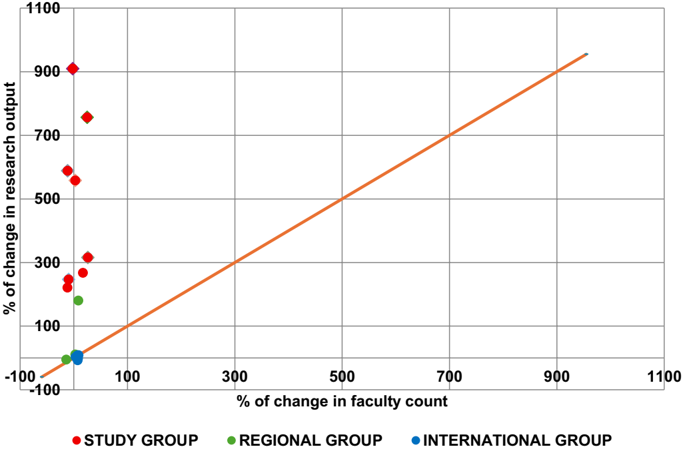
“…strategic investments can catalyze research, the pronounced mismatch between publication volume and faculty capacity, coupled with a steep decline in first-and corresponding-authorship, points to a systemic transformation in the organization and governance of research production (Lee et al., 2025).”
Boufarss, M., & Laakso, M. (2023) · Quantitative Science Studies · doi:10.1162/qss_a_00256 · Cited by 5 · cited 2×
“Research centers of excellence were established in priority STEM areas, such as artificial intelligence, nanotechnology, and renewable energy, and were frequently supported by administrative offices that assisted with grant applications and manuscript submissions (Boufarss & Laakso, 2023).”
University Rankings in Sport Science: A True Reflection of Excellence?
Girard, I. M., & Girard, O. (2024) · International Journal of Sports Physiology and Performance · doi:10.1123/ijspp.2024-0109 · Cited by 5
Silva, J., Aparício, D., Ribeiro, P., & Silva, F. (2020) · ACM Symposium on Applied Computing · doi:10.1145/3341105.3373991 · Cited by 4 · cited 1×
“…(Conroy, 2024; Ioannidis et al., 2024; Meho & Akl, 2025; Moreira et al., 2023) and citation clustering (Feng et al., 2024; Li et al., 2019; Silva et al., 2020) to authorship abuses, such as gift, guest, ghost, and sold authorship and multi-affiliation inflation (Abalkina, 2023; Chirico &…”
The Transformative Patent Landscape in Saudi Arabia Since the Saudi Vision 2030 Announcement
Fasi, M. A. (2024) · Publications · doi:10.3390/publications12040047 · Cited by 3 · cited 1×
“The initiative was accompanied by substantial state investment in laboratories, digital infrastructure, and mega-projects (Abdulfasi, 2024; Alhuthali & Sayed, 2022; Al-Jamimi et al., 2023).”
University Ranking Games in East Asia: Triggers and Consequences
Li, X., Horta, H., & Jung, J. (2023) · Springer eBooks · doi:10.1007/978-981-19-6887-7_91 · Cited by 2
Lin, J., Xu, Y., & Zhang, J. (2025) · Sustainability · doi:10.3390/su17177795 · Cited by 2 · cited 1×
“…means of modernization and competitiveness, often at the expense of broader academic missions (Ahlers & Christmann-Budian, 2023; Alhuthali & Sayed, 2022; Ali, 2025; Bhattacharjee, 2011; Li et al., 2023; Lin et al., 2025; Proserpio et al., 2025; Rhein & Nanni, 2023; Shen et al., 2023; Stack, 2021).”
Research works printed but not linked: 2
- 37. Fauzi, M. A., Tan, C. N. L., Daud, M., & Awalludin, M. M. N. (2020). University rankings: A review of methodological flaws. Issues in Educational Research, 30(1), 79-96.
- 91. Stack, M. (2021). Global university rankings and the politics of knowledge [Book]. University of Toronto Press. https:// www. scopus. com/ inward/ record. uri? eid=2-s2.0-85116 04791 6& partn erID= 40& md5= 9bcce 848c8 b033b 600d8 084dc a1c30 c7
Cited by
Eltaybani, S. (2026) · Intensive and Critical Care Nursing · doi:10.1016/j.iccn.2026.104387 · Cited by 5
Jiménez, R. S., Rodríguez, J., Guerrero‐Bote, V. P., & de Moya-Anegon, F. (2026) · Journal of Informetrics · doi:10.1016/j.joi.2026.101803 · Cited by 3
Makhmetov, A., & Yessenbekova, K. (2026) · Asian Education and Development Studies · doi:10.1108/aeds-08-2025-0424 · Cited by 3
Beyond Retractions: A Topic-Based Analysis of the Impact and Lifespan of Retracted Papers
Lou, Y., Zhou, Z., & Li, M. (2026) · Journal of Data and Information Science · doi:10.1515/jdis-2026-0064 · Cited by 2
“Retraction count and retraction rate have thus emerged as primary indicators for assessing research integrity (Fang et al. 2012; Van Noorden 2023; Li and Shen 2024; Zhou et al. 2026; Meho 2025; Lou et al. 2026b).”
Mo, M., Arora, R., Cao, C., Tricco, A. C., & Moher, D. (2026) · Frontiers in Research Metrics and Analytics · doi:10.3389/frma.2026.1833223
“The parallel Research Integrity Risk Index uses similar signal categories (Meho, 2025).”
Metadata
- Authors
- Meho, L. I.
- Affiliations
- American University of Beirut (LB)
- Corresponding author
- Meho, Lokman I.
- ORCID
- Meho, Lokman I.
- Venue
- Scientometrics
- Published
- 2025-11
- Volume
- 130
- Issue
- 11
- Pages
- 6683-6726
- ISSN
- 0138-9130 (ISSN-L)
- 1588-2861
- OpenAlex
- W4416199265
- Semantic Scholar
- 3a519ccc055ec1666d37a47269c8f00c97013329
- Cited by
- 27
- References
- 95
- Citations by year
- 2026: 27
- FWCI
- 17.36
- Type
- journal article
- Language
- en
- Open access
- hybrid
- doi.org
- Licence
- cc-by
- creativecommons.org/licenses/by/4.0 (tdm)
- creativecommons.org/licenses/by/4.0 (vor, 11 d)
- Locations
- Scientometrics (publishedVersion, cc-by)
- Topics
- Social Sciences › Library and Information Sciences › scientometrics and bibliometrics research
- Social Sciences › Education › Academic integrity and plagiarism
- Physical Sciences › Computer Science › Information Systems › Web visibility and informetrics
- Keywords
- university rankings, research integrity, publication metrics, authorship patterns, retraction, self-citation, research evaluation, research governance
About these checks
Registry, retraction, Cites and statistics results are computed, not judged, with one exception: a printed reference that no index lists is read once by a model before it counts as a citation error. Claims are extracted by a model and kept only when their quote appears verbatim in the text; each cited source is then checked, with a model’s help, for whether it says what the claim relies on. Those verdicts can be wrong — read the claim’s quote and the cited source before relying on one.
Statistics and arithmetic are recomputed, not judged.
Confidence bands are shown only for fields calibrated on our annotated test set. None is calibrated yet, so no band is shown.
What counts as a claim ›How we measure confidence ›How we check this ›
Are you an author, or do you see a problem with this page? Request a review
Data sources
Bibliographic data: Semantic Scholar, OpenAlex, Crossref.
Contains information from the Semantic Scholar Academic Graph Datasets, made available under the ODC Attribution License (ODC-BY 1.0).
Semantic Scholar’s data is described in: Kinney, R., et al. (2023). The Semantic Scholar Open Data Platform. arXiv:2301.10140.
