

An adaptive decision-making system supported on user preference predictions for human–robot interactive communication
Open accessThe DOI matches its Crossref record; 72 of the 72 references it cites were found in a registry or an index.
Abstract
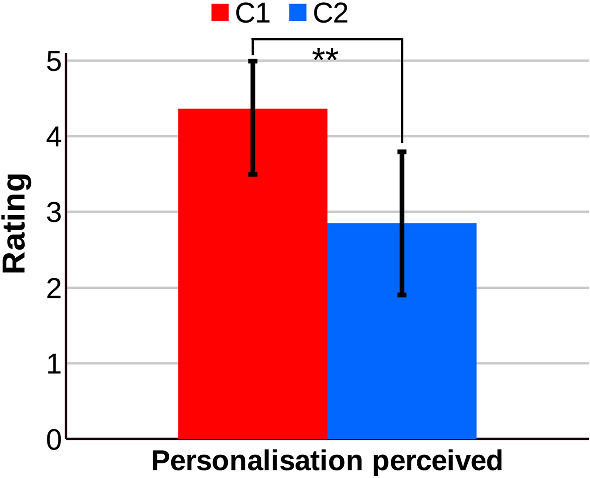
Adapting to dynamic environments is essential for artificial agents, especially those aiming to communicate with people interactively. In this context, a social robot that adapts its behaviour to different users and proactively suggests their favourite activities may produce a more successful interaction. In this work, we describe how the autonomous decision-making system embedded in our social robot Mini can produce a personalised interactive communication experience by considering the preferences of the user the robot interacts with. We compared the performance of Top Label as Class and Ranking by Pairwise Comparison, two promising algorithms in the area, to find the one that best predicts the user preferences. Although both algorithms provide robust results in preference prediction, we decided to integrate Ranking by Pairwise Comparison since it provides better estimations. The method proposed in this contribution allows the autonomous decision-making system of the robot to work on different modes, balancing activity exploration with the selection of the favourite entertaining activities. The operation of the preference learning system is shown in three real case studies where the decision-making system works differently depending on the user the robot is facing. Then, we conducted a human–robot interaction experiment to investigate whether the robot users perceive the personalised selection of activities more appropriate than selecting the activities at random. The results show how the study participants found the personalised activity selection more appropriate, improving their likeability towards the robot and how intelligent they perceive the system. query Please check the edit made in the article title.
Overview
The claims and statistics of this paper haven’t been checked yet.
Free: it reads the open-access text and checks the first 5 claims that cite a source we can check. Create a free account to check every claim.
Integrity signals
Registry
Cites
Statistics
Figures







Verification
Claims the paper makes
The claims and statistics of this paper haven’t been checked yet.
Free: it reads the open-access text and checks the first 5 claims that cite a source we can check. Create a free account to check every claim.
Claims other papers make about this one
Each is checked against this paper’s own text: does it say what the citing paper says it does?
The cited source says what the claim attributes to it.
In the citing paper
“This was previously suggested by the developers of the MINI robot [23,24] regarding personalisation of human–robot interaction.”
Self-check
Percentages, sums and reported differences re-computed from the paper’s own numbers.
The self-check needs the paper’s full text.
Citations
Cites
Breiman, L. (2001) · Machine Learning · doi:10.1023/a:1010933404324 · Cited by 133,538 · cited 3×
“Nonetheless, this survey does not contain any reference to LR in combination with random forest (Breiman 2001).”
BackgroundMethodIntroduction to Information Retrieval
Manning, C. D., Raghavan, P., & Schütze, H. (2008) · doi:10.1017/cbo9780511809071 · Cited by 11,288
Correlation Coefficients: Appropriate Use and Interpretation
Schober, P., Boer, C., & Schwarte, L. A. (2018) · Anesthesia & Analgesia · doi:10.1213/ane.0000000000002864 · Cited by 10,986 · cited 1×
“7 moderate, and weak otherwise (Corder and Foreman 2011; Schober et al. 2018).”
Bartneck, C., Kulić, D., Croft, E., & Zoghbi, S. (2009) · International Journal of Social Robotics · doi:10.1007/s12369-008-0001-3 · Cited by 3,193 · cited 1×
“Following the ad hoc questions, the second questionnaire consisted of the well-known Godspeed questionnaire (Bartneck et al. 2008), used for evaluating different attributes of social robots.”
MethodBobadilla, J., Ortega, F., Hernando, A., & Gutiérrez, A. (2013) · Knowledge-Based Systems · doi:10.1016/j.knosys.2013.03.012 · Cited by 3,158 · cited 1×
“LR applications range from information retrieval (Schütze et al. 2008) to search engines and recommender systems (Burke et al. 2011; Bobadilla et al. 2013).”
BackgroundDuan, Y., Edwards, J. S., & Dwivedi, Y. K. (2019) · International Journal of Information Management · doi:10.1016/j.ijinfomgt.2019.01.021 · Cited by 2,628 · cited 1×
“Autonomous decision-making is an emerging field that is gaining importance in applications such as military (Prelipcean et al. 2010; Goztepe 2015), economics (Parkes and Wellman 2015), or artificial intelligence (Duan et al. 2019).”
BackgroundImproved Use of Continuous Attributes in C4.5
Quinlan, J. R. (1996) · Journal of Artificial Intelligence Research · doi:10.1613/jair.279 · Cited by 1,846
The proof and measurement of association between two things
Spearman, C. (2010) · International Journal of Epidemiology · doi:10.1093/ije/dyq191 · Cited by 1,681 · cited 8×
“Table 2d shows the results obtained for Spearman’s ρ rank correlation.”
BackgroundMethodInfluentialSocial Robots for Long-Term Interaction: A Survey
Leite, I., Martinho, C., & Paiva, A. (2013) · International Journal of Social Robotics · doi:10.1007/s12369-013-0178-y · Cited by 871 · cited 1×
“AsLeiteetal.”
THE TREATMENT OF TIES IN RANKING PROBLEMS
KENDALL, M. G. (1945) · Biometrika · doi:10.1093/biomet/33.3.239 · Cited by 809 · cited 3×
“Kendall’s τ -b (Kendall 1945) developed this nonparametric measure of correlation between two rankingsπ andπ ′, like Eq.”
MethodDeep Learning for Extreme Multi-label Text Classification
Liu, J., Chang, W.-C., Wu, Y., & Yang, Y. (2017) · Proceedings of the 40th International ACM SIGIR Conference on Research and Development in Information Retrieval · doi:10.1145/3077136.3080834 · Cited by 676 · cited 1×
“Combined with deep learning, label ranking has been broadly used in text classification (Liu et al. 2017; You et al. 2019; Gargiulo et al. 2019; Wang et al. 2021).”
The Proof and Measurement of Association Between Two Things.
Spearman, C. (1961) · Studies in individual differences: The search for intelligence. · doi:10.1037/11491-005 · Cited by 665
Label ranking by learning pairwise preferences
Hüllermeier, E., Fürnkranz, J., Cheng, W., & Brinker, K. (2008) · Artificial Intelligence · doi:10.1016/j.artint.2008.08.002 · Cited by 536 · cited 1×
“In this case, the example ranks the categories multimedia, games, and information according to the user’s preferences 3.1 Label ranking forest Hüllermeier et al. (2008) formulates LR as the prediction, for any instance x in an instance space X , of a preference relation of the type (cid:4) x ∈ L…”
BackgroundInfluentialSyarif, I., Prugel-Bennett, A., & Wills, G. (2016) · TELKOMNIKA (Telecommunication Computing Electronics and Control) · doi:10.12928/telkomnika.v14i4.3956 · Cited by 524 · cited 1×
“Hyperparameter optimisation was carried out using a grid search method (Syarif et al. 2016), so we defined the optimisation ranges of each parameter according to Table 1.”
MethodTapus, A., Ţăpuş, C., & Matarić, M. J. (2008) · Intelligent Service Robotics · doi:10.1007/s11370-008-0017-4 · Cited by 402
Modeling motivations and emotions as a basis for intelligent behavior
Cañamero, D. (1997) · Proceedings of the first international conference on Autonomous agents - AGENTS '97 · doi:10.1145/267658.267688 · Cited by 271 · cited 1×
“Similarly, Cañamero obtained remarkable results in robot adaptation (Cañamero 1997, 2005).”
ResultCercignani, C. (1988) · Applied mathematical sciences · doi:10.1007/978-1-4612-1039-9_2 · Cited by 269
Economic reasoning and artificial intelligence
Parkes, D. C., & Wellman, M. P. (2015) · Science · doi:10.1126/science.aaa8403 · Cited by 235 · cited 1×
“Autonomous decision-making is an emerging field that is gaining importance in applications such as military (Prelipcean et al. 2010; Goztepe 2015), economics (Parkes and Wellman 2015), or artificial intelligence (Duan et al. 2019).”
BackgroundPairwise Preference Learning and Ranking
Fürnkranz, J., & Hüllermeier, E. (2003) · Lecture Notes in Computer Science · doi:10.1007/978-3-540-39857-8_15 · Cited by 226 · cited 6×
“Pairwise learning (Fürnkranz and Hüllermeier 2003; Fürnkranz et al. 2009) follows two approaches: training a model M ij for each pair of labels expressed in a preference relation of the type λ i > x λ j for each instance x or by training models M i to separate each class λ i from class λ j being…”
BackgroundMethodResultInfluentialCart: Classification and Regression Trees
Steinberg, D. (2009) · Chapman & Hall/CRC Data Mining and Knowledge Discovery Series · doi:10.1201/9781420089653.ch10 · Cited by 203
DeepRank: A New Deep Architecture for Relevance Ranking in Information Retrieval
Pang, L., Lan, Y., Guo, J., Xu, J., Xu, J., & Cheng, X. (2017) · Proceedings of the 2017 ACM on Conference on Information and Knowledge Management · doi:10.1145/3132847.3132914 · Cited by 197 · cited 1×
“Finally, LR algorithms with deep learning classification are in information retrieval (Pang et al. 2017), disease diagnosis (Zhou et al. 2021), or in Internet of Things (Alkhabbas et al. 2020).”
MethodComparative Power of Student T Test and Mann-Whitney U Test for Unequal Sample Sizes and Variances
Zimmerman, D. W. (1987) · The Journal of Experimental Education · doi:10.1080/00220973.1987.10806451 · Cited by 195 · cited 1×
“The statistical analysis of the Personalisation perceived, presented in Table 4, befell using the Mann–Whitney’s U (Zimmerman 1987) nonparametric statistic since the data did not follow a normal distribution and the sample is relatively small.”
MethodOnline user survey on current mobile augmented reality applications
Olsson, T., & Salo, M. (2011) · 2011 10th IEEE International Symposium on Mixed and Augmented Reality · doi:10.1109/ismar.2011.6092372 · Cited by 185 · cited 2×
“Like similar studies (Olsson and Salo 2011; Bouza and Bernstein 2014), we opted for spreading an online survey for building the datasets .”
MethodPreference Learning and Ranking by Pairwise Comparison
Fürnkranz, J., & Hüllermeier, E. (2010) · Springer eBooks · doi:10.1007/978-3-642-14125-6_4 · Cited by 182 · cited 4×
“Literature usually classifies preference learning in LR , instance ranking and object ranking (Fürnkranz J. 2010).”
BackgroundMethodInfluentialUser profiling and behavioral adaptation for HRI: A survey
Rossi, S., Ferland, F., & Tapus, A. (2017) · Pattern Recognition Letters · doi:10.1016/j.patrec.2017.06.002 · Cited by 179 · cited 2×
“Like in our contribution, Rossi et al. (2017) retrieved information about the robot users to adapt the interaction to them.”
BackgroundSearch Engines that Learn from Implicit Feedback
Joachims, T., & Radlinski, F. (2007) · Computer · doi:10.1109/mc.2007.289 · Cited by 174 · cited 2×
“These websites employ autonomous decisionmaking engines which actuate according to feedback obtained from user’s clicking data (Joachims and Radlinski 2007; Zheng et al. 2008).”
MethodPreference Learning: An Introduction
Fürnkranz, J., & Hüllermeier, E. (2010) · Springer eBooks · doi:10.1007/978-3-642-14125-6_1 · Cited by 171
Label Ranking Algorithms: A Survey
Vembu, S., & Gärtner, T. (2010) · Springer eBooks · doi:10.1007/978-3-642-14125-6_3 · Cited by 168 · cited 3×
“Focusing on LR problems, Vembu and Gärtner (2010) provide a thorough revision of LR algorithms and their applications.”
MethodLong-term evaluation of a social robot in real homes
de Graaf, M. M. A., Ben Allouch, S., & van Dijk, J. A. G. M. (2016) · Interaction Studies. Social Behaviour and Communication in Biological and Artificial Systems · doi:10.1075/is.17.3.08deg · Cited by 161
Meta analysis of the usage of the Godspeed Questionnaire Series
Weiss, A., & Bartneck, C. (2015) · 2015 24th IEEE International Symposium on Robot and Human Interactive Communication (RO-MAN) · doi:10.1109/roman.2015.7333568 · Cited by 150 · cited 2×
“Since the public aim of the study was Spaniards, we used the official translation provided in (Weiss and Bartneck 2015).”
MethodEmotion understanding from the perspective of autonomous robots research
Cañamero, L. D. (2005) · Neural Networks · doi:10.1016/j.neunet.2005.03.003 · Cited by 149 · cited 1×
“Similarly, Cañamero obtained remarkable results in robot adaptation (Cañamero 1997, 2005).”
ResultMini: A New Social Robot for the Elderly
Salichs, M. A., Castro-González, Á., Salichs, E., Fernández-Rodicio, E., Maroto-Gómez, M., Gamboa-Montero, J. J., Marques-Villarroya, S., Castillo, J. C., Alonso-Martín, F., & Malfaz, M. (2020) · International Journal of Social Robotics · doi:10.1007/s12369-020-00687-0 · Cited by 145 · cited 3×
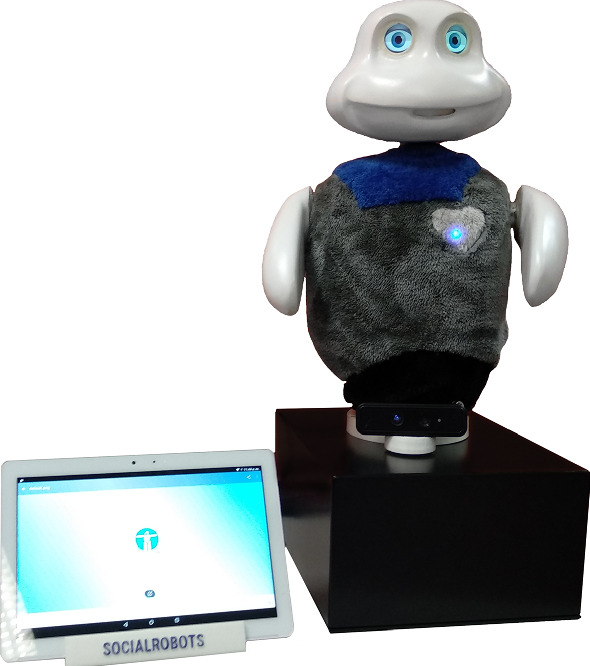
“Thesurveycontainsquestionsaboutsocio-demographic,habits,interests,andpreferencesaboutspecificattributesrelatedtoour social robot Mini (Salichs et al. 2020) (see Appendix A).”
BackgroundInfluentialSelf-citationDeep neural network for hierarchical extreme multi-label text classification
Gargiulo, F., Silvestri, S., Ciampi, M., & de Pietro, G. (2019) · Applied Soft Computing · doi:10.1016/j.asoc.2019.03.041 · Cited by 143 · cited 1×
“Combined with deep learning, label ranking has been broadly used in text classification (Liu et al. 2017; You et al. 2019; Gargiulo et al. 2019; Wang et al. 2021).”
Adaptive Social Robot for Sustaining Social Engagement during Long-Term Children–Robot Interaction
Ahmad, M. I., Mubin, O., & Orlando, J. (2017) · International Journal of Human–Computer Interaction · doi:10.1080/10447318.2017.1300750 · Cited by 108 · cited 1×
“Inscenarios involvinglong-termchild–robotinteractions,robotadaptationisessentialtomaintain engagement (Ahmad et al. 2017).”
Multi-Label Active Learning Algorithms for Image Classification: Overview and Future Promise
Wu, J., Sheng, V. S., Zhang, J., Li, H., Dadakova, T., Swisher, C. L., Cui, Z., & Zhao, P. (2020) · ACM Computing Surveys · doi:10.1145/3379504 · Cited by 108
Random forest for label ranking
Zhou, Y., & Qiu, G. (2018) · Expert Systems with Applications · doi:10.1016/j.eswa.2018.06.036 · Cited by 103
Multilabel Image Classification via Feature/Label Co-Projection
Wen, S., Liu, W., Yang, Y., Zhou, P., Guo, Z., Yan, Z., Chen, Y., & Huang, T. (2020) · IEEE Transactions on Systems Man and Cybernetics Systems · doi:10.1109/tsmc.2020.2967071 · Cited by 102 · cited 1×
“Numerous works reveal excellent results in LR problems using deep learning models for image classification (Cevikalp et al. 2020; Wu et al. 2020; Wen et al. 2020; Dery 2021; Lei et al. 2021).”
BackgroundSemi-supervised robust deep neural networks for multi-label image classification
Çevıkalp, H., Benlıgıray, B., & Gerek, Ö. N. (2019) · Pattern Recognition · doi:10.1016/j.patcog.2019.107164 · Cited by 88 · cited 2×
“Numerous works reveal excellent results in LR problems using deep learning models for image classification (Cevikalp et al. 2020; Wu et al. 2020; Wen et al. 2020; Dery 2021; Lei et al. 2021).”
BackgroundHow to Shape the Humor of a Robot - Social Behavior Adaptation Based on Reinforcement Learning
Weber, K., Ritschel, H., Aslan, I., Lingenfelser, F., & André, E. (2018) · Proceedings of the 20th ACM International Conference on Multimodal Interaction · doi:10.1145/3242969.3242976 · Cited by 85 · cited 2×
“2017;Weberetal.2018).”
BackgroundCathexis: a computational model of emotions
Velásquez, J. D., & Maes, P. (1997) · doi:10.1145/267658.267808 · Cited by 82
Binary Decomposition Methods for Multipartite Ranking
Fürnkranz, J., Hüllermeier, E., & Vanderlooy, S. (2009) · Lecture notes in computer science · doi:10.1007/978-3-642-04180-8_41 · Cited by 81 · cited 2×
“Pairwise learning (Fürnkranz and Hüllermeier 2003; Fürnkranz et al. 2009) follows two approaches: training a model Mi j for each pair of labels expressed in a”
BackgroundA novel reasoning mechanism for multi-label text classification
Wang, R., Ridley, R., Su, X., Qu, W., & Dai, X. (2021) · Information Processing & Management · doi:10.1016/j.ipm.2020.102441 · Cited by 76 · cited 1×
“Combined with deep learning, label ranking has been broadly used in text classification (Liu et al. 2017; You et al. 2019; Gargiulo et al. 2019; Wang et al. 2021).”
Schneider, S., & Kümmert, F. (2020) · International Journal of Social Robotics · doi:10.1007/s12369-020-00629-w · Cited by 69 · cited 2×
“…using human– machine interactions (Long et al. 2016; Chen et al. 2017; Woodworth et al. 2018; Alkhabbas et al. 2020; Adinolf et al. 2020; Schneider and Kummert 2021; Kubota and Riek 2021), any current works addresses how to estimate the initial preferences of new users that interact…”
BackgroundThe Impact of Personalisation on Human-Robot Interaction in Learning Scenarios
Churamani, N., Anton, P., Brügger, M., Fließwasser, E., Hummel, T., Mayer, J., Mustafa, W., Ng, H. G., Nguyen, T. L. C., Nguyen, Q., et al. (2017) · Proceedings of the 5th International Conference on Human Agent Interaction · doi:10.1145/3125739.3125756 · Cited by 67 · cited 1×
“We decided to include customised questions considering previous similar works in the evaluation of social robots (Churamani et al. 2017; Tozadore et al. 2018).”
MethodUser-Adaptive Interaction in Social Robots: A Survey Focusing on Non-physical Interaction
Martins, G. S., Santos, L., & Dias, J. M. M. (2018) · International Journal of Social Robotics · doi:10.1007/s12369-018-0485-4 · Cited by 67 · cited 1×
“Similarly, Martins et al. (2019) review how social robots can adapt to different users but focus on the non-123 physical component of the interaction.”
BackgroundKhamassi, M., Velentzas, G., Tsitsimis, T., & Tzafestas, C. S. (2018) · IEEE Transactions on Cognitive and Developmental Systems · doi:10.1109/tcds.2018.2843122 · Cited by 51 · cited 1×
“To attain user engagement in social robotics, adaptive mechanisms are essential, as Khamassi et al. (2018) postulate.”
BackgroundA Comparison of Multi-Label Feature Selection Methods Using the Random Forest Paradigm
Gharroudi, O., Elghazel, H., & Aussem, A. (2014) · Lecture notes in computer science · doi:10.1007/978-3-319-06483-3_9 · Cited by 45 · cited 2×
“The integration of random forest classifiers (Breiman 2001) in LR algorithms is called LRF (Gharroudi et al. 2014; de Sá et al. 2017; Zhou and Qiu 2018), a method that produces outstanding results even when the dataset is small.”
MethodToward Affordance Detection and Ranking on Novel Objects for Real-World Robotic Manipulation
Chu, F.-J., Xu, R., Seguin, L., & Vela, P. A. (2019) · IEEE Robotics and Automation Letters · doi:10.1109/lra.2019.2930364 · Cited by 41 · cited 1×
“Similarly, LR has been used to rank affordances of a group of novel objects to assist with manipulation tasks (Chu et al. 2019).”
MethodActive Deep Learning for Hyperspectral Image Classification With Uncertainty Learning
Zhao, L., Zeng, Y., Liu, P., & Su, X. (2021) · IEEE Geoscience and Remote Sensing Letters · doi:10.1109/lgrs.2020.3045437 · Cited by 41 · cited 2×
“Numerous works reveal excellent results in LR problems using deep learning models for image classification (Cevikalp et al. 2020; Wu et al. 2020; Wen et al. 2020; Dery 2021; Lei et al. 2021).”
BackgroundTackling the supervised label ranking problem by bagging weak learners
Aledo, J. A., Gámez, J. A., & Molina, D. (2016) · Information Fusion · doi:10.1016/j.inffus.2016.09.002 · Cited by 40 · cited 3×
“As a starting point in LRF, Aledo et al. (2017) used weak learners based on random forest in their LR tree algorithm.”
MethodReal-Time Robot Personality Adaptation based on Reinforcement Learning and Social Signals
Ritschel, H., & André, E. (2017) · ACM/IEEE International Conference on Human-Robot Interaction (HRI) · doi:10.1145/3029798.3038381 · Cited by 40 · cited 1×
“In robot adaptation, Ritschel and André (2017) presented a robot that modulates its personality in real time depending on social cues.”
Backgroundde Sá, C. R., Soares, C., Knobbe, A., & Cortez, P. C. (2016) · Expert Systems · doi:10.1111/exsy.12166 · Cited by 40 · cited 2×
“The integration of random forest classifiers (Breiman 2001) in LR algorithms is called LRF (Gharroudi et al. 2014; de Sá et al. 2017; Zhou and Qiu 2018), a method that produces outstanding results even when the dataset is small.”
MethodBeyond majority: Label ranking ensembles based on voting rules
Werbin-Ofir, H., Dery, L., & Shmueli, E. (2019) · Expert Systems with Applications · doi:10.1016/j.eswa.2019.06.022 · Cited by 40
Modelling Multimodal Dialogues for Social Robots Using Communicative Acts
Fernández-Rodicio, E., Castro-González, Á., Alonso-Martín, F., Maroto-Gómez, M., & Salichs, M. Á. (2020) · Sensors · doi:10.3390/s20123440 · Cited by 37 · cited 1×
“The human–robot interaction system (see (Fernández-Rodicio et al. 2020) for further details) controls the interaction with the user.”
Self-citationGómez, M. M., Castro‐González, Á., Castillo, J. C., Malfáz, M., & Salichs, M. A. (2018) · Sensors · doi:10.3390/s18082691 · Cited by 33 · cited 3×
“Mini’s behaviour depends on an internal biologically inspired system (see (Maroto-Gómez et al. 2018)) that represents artificial variables”
BackgroundMethodInfluentialSelf-citationMethods for Robot Behavior Adaptation for Cognitive Neurorehabilitation
Kubota, A., & Riek, L. D. (2021) · Annual Review of Control Robotics and Autonomous Systems · doi:10.1146/annurev-control-042920-093225 · Cited by 32 · cited 2×
“…interactions (Long et al. 2016; Chen et al. 2017; Woodworth et al. 2018; Alkhabbas et al. 2020; Adinolf et al. 2020; Schneider and Kummert 2021; Kubota and Riek 2021), any current works addresses how to estimate the initial preferences of new users that interact with a social robot using data…”
BackgroundA Framework for User Adaptation and Profiling for Social Robotics in Rehabilitation
Martín, A. G., Pulido, J. C., González, J. C., García‐Olaya, Á., & Suárez-Mejías, C. (2020) · Sensors · doi:10.3390/s20174792 · Cited by 27 · cited 1×
“Following a similar line, Martín et al. (2020) presented a novel framework devised for user adaptation and profiling in rehabilitation tasks.”
MethodBrinker, K., & Hüllermeier, E. (2006) · Lecture notes in computer science · doi:10.1007/11871842_53 · Cited by 19 · cited 4×
“Finally, Local Rank Aggregation (Brinker and Hüllermeier 2006, 2007) generates predictions from nearest-neighbour aggregations from similar estimations.”
BackgroundMethodInfluentialSocial Robotics in Therapy of Apraxia of Speech
Castillo, J. C., Álvarez-Fernández, D., Alonso-Martín, F., Marqués-Villarroya, S., & Salichs, M. A. (2018) · Journal of Healthcare Engineering · doi:10.1155/2018/7075290 · Cited by 18 · cited 1×
“They are used in tasks related to healthcare (Olaronke et al. 2017; Castillo et al. 2018), education (Bertel andHannibal 2016), and entertainment (AlonsoMartín et al.”
Self-citationActivity recognition and user preference learning for automated configuration of IoT environments
Alkhabbas, F., Alawadi, S., Spalazzese, R., & Davidsson, P. (2020) · International Conference on the Internet of Things (IoT) · doi:10.1145/3410992.3411003 · Cited by 16 · cited 3×
“…present active techniques to learn user preferences using human– machine interactions (Long et al. 2016; Chen et al. 2017; Woodworth et al. 2018; Alkhabbas et al. 2020; Adinolf et al. 2020; Schneider and Kummert 2021; Kubota and Riek 2021), any current works addresses how to estimate the…”
BackgroundMethodMy Little Robot: User Preferences in Game Agent Customization
Adinolf, S., Wyeth, P. A., Brown, R. A., & Harman, J. (2020) · Annual Symposium on Computer-Human Interaction in Play · doi:10.1145/3410404.3414241 · Cited by 16 · cited 2×
“…to learn user preferences using human– machine interactions (Long et al. 2016; Chen et al. 2017; Woodworth et al. 2018; Alkhabbas et al. 2020; Adinolf et al. 2020; Schneider and Kummert 2021; Kubota and Riek 2021), any current works addresses how to estimate the initial preferences of new…”
BackgroundHierarchical preference learning for light control from user feedback
Khalili, A. H., Wu, C., & Aghajan, H. K. (2010) · 2009 IEEE Computer Society Conference on Computer Vision and Pattern Recognition Workshops · doi:10.1109/cvprw.2010.5543265 · Cited by 14 · cited 1×
“Similarly to our work, Khalili et al. (2010) proposed an intelligent system for light control, making hierarchical decisions using preferences.”
BackgroundTowards Adaptation and Personalization in Task Based on Human-Robot Interaction
Tozadore, D. C., Valentini, J. P. H., Rodrigues, V. H., Vendrameto, F. M. L., Zavarizz, R. G., & Romero, R. A. F. (2018) · Latin American Robotics Symposium, Brazilian Symposium on Robotics and Workshop on Robotics in Education (LARS/SBR/WRE) · doi:10.1109/lars/sbr/wre.2018.00075 · Cited by 14 · cited 1×
“We decided to include customised questions considering previous similar works in the evaluation of social robots (Churamani et al. 2017; Tozadore et al. 2018).”
MethodBertel, L. B., & Hannibal, G. (2015) · Tidsskriftet Læring og Medier (LOM) · doi:10.7146/lom.v8i14.22057 · Cited by 11
Domain-specific user preference prediction based on multiple user activities
Long, Y., Lu, Q., Xiao, Y., Li, M., & Huang, C. (2016) · IEEE International Conference on Big Data (BigData) · doi:10.1109/bigdata.2016.7841066 · Cited by 11
Pütten, A. M. R.-V. D., & Abrams, A. M. H. (2020) · Lecture notes in computer science · doi:10.1007/978-3-030-50334-5_27 · Cited by 11 · cited 1×
“Finally, and considering the study presented in (Rosenthal-von der Pütten and Abrams 2020), it is worthy of mentioning that user adaptation may consider the social dynamics of people when operating in a different human environment and the consequences derived from this adaptation.”
MethodSource identification of infectious diseases in networks via label ranking
Zhou, J., Jiang, Y., & Huang, B. (2021) · PLoS ONE · doi:10.1371/journal.pone.0245344 · Cited by 11 · cited 1×
“Finally, LR algorithms with deep learning classification are in information retrieval (Pang et al. 2017), disease diagnosis (Zhou et al. 2021), or in Internet of Things (Alkhabbas et al. 2020).”
MethodUsing a Social Robot as a Gaming Platform
Alonso-Martín, F., González-Pacheco, V., Castro‐González, Á., Ramey, A., Yébenes, M., & Salichs, M. A. (2010) · Lecture notes in computer science · doi:10.1007/978-3-642-17248-9_4 · Cited by 8
Self-citationFrom hand-perspective visual information to grasp type probabilities
Han, M., Günay, S. Y., Potter, İ. Y., Bonato, P., Onal, C. D., Padır, T., Schirner, G., & Deniz Erdogmus, B. (2019) · International Conference on PErvasive Technologies Related to Assistive Environments (PETRA) · doi:10.1145/3316782.3316794 · Cited by 8 · cited 1×
“In robotics, LR has been used with deep learning to estimate a ranking about the optimal grasping of different objects using images (Han et al. 2019).”
MethodGao, N., Bagdouri, M., & Oard, D. W. (2016) · International ACM SIGIR Conference on Research and Development in Information Retrieval (SIGIR) · doi:10.1145/2911451.2914728 · Cited by 7 · cited 1×
“Unlike other correlation metrics such as Pearson’s coefficient (Gao et al. 2016), Spearman’s ρ does not assume a normal distribution of the data, which makes it more suitable to our self-built dataset.”
Method(Partial) user preference similarity as classification-based model similarity
Bouza, A., & Bernstein, A. (2014) · Semantic Web · doi:10.3233/sw-130099 · Cited by 5 · cited 2×
“Like similar studies (Olsson and Salo 2011; Bouza and Bernstein 2014), we opted for spreading an online survey for building the datasets .”
MethodGiakoumis, D., Peleka, G., Vasileiadis, M., Kostavelis, I., & Tzovaras, D. K. (2019) · Computer communications and networks · doi:10.1007/978-3-030-25590-9_10 · Cited by 4 · cited 1×
“Giakoumis et al. (2020) presented a service robot that adapts its behaviour depending on the patient’s mood.”
Background
Research works printed but not linked: 13
- Aiolli, F., Sperduti, A.: Learning preferences for multiclass problems. Adv. Neural Info. Process. Syst., pp 17–24 (2005)
- Brinker, K., Hüllermeier, E.: Case-based multilabel ranking. In: IJCAI, pp 702–707 (2007)
- Burke R Felfernig A Göker MH Recommender systems: an overview Ai Mag. 2011 32 3 13 18
- Chen, Y., Zhang, J., Guo, M., Cao, J.: Learning user preference from heterogeneous information for store-type recommendation. IEEE Trans. Serv. Comput. (2017)
- Cohen, W.W., Schapire, R.E., Singer, Y.: Learning to order things. Adv. Neural Info. Process. Syst., pp 451–457 (1998)
- Dery, L.: Multi-label ranking: Mining multi-label and label ranking data. arXiv preprint arXiv:210100583 (2021)
- Efron B Student’s t-test under symmetry conditions J. Am. Stat. Assoc. 1969 64 328 1278 1302
- Goztepe K New directions in military and security studies: artificial intelligence and military decision making process Int. J. Info. Security Sci. 2015 4 2 69 80
- Olaronke I Oluwaseun O Rhoda I State of the art: a study of human-robot interaction in healthcare Int. J. Info. Eng. Elect. Bus. 2017 9 3 43
- Prelipcean, G., Boscoianu, M., Moisescu, F.: New ideas on the artificial intelligence support in military applications. In: Proceedings of the 9th WSEAS international conference on Artificial intelligence, knowledge engineering and data bases, World Scientific and Engineering Academy and Society (WSEAS), pp 34–39 (2010)
- Woodworth, B., Ferrari, F., Zosa, T.E., Riek, L.D.: Preference learning in assistive robotics: Observational repeated inverse reinforcement learning. In: Machine learning for healthcare conference, PMLR, pp 420–439 (2018)
- You R Zhang Z Wang Z Dai S Mamitsuka H Zhu S Attentionxml: label tree-based attention-aware deep model for high-performance extreme multi-label text classification Adv. Neural Info. Process. Syst. 2019 32 5820 5830
- Zheng, Z., Zha, H., Zhang, T., Chapelle, O., Chen, K., Sun, G.: A general boosting method and its application to learning ranking functions for web search. Adv. Neural Info. Process. Syst., pp 1697–1704 (2008)
Cited by
Remote Sensing Image Classification: A Comprehensive Review and Applications
Mehmood, M., Shahzad, A., Zafar, B., Shabbir, A., & Ali, N. (2022) · Mathematical Problems in Engineering · doi:10.1155/2022/5880959 · Cited by 251
Gómez, M. M., Alonso-Martín, F., Malfáz, M., Castro‐González, Á., Castillo, J. C., & Salichs, M. A. (2023) · International Journal of Social Robotics · doi:10.1007/s12369-023-00977-3 · Cited by 84
Self-citationGenerative Artificial Intelligence: Fundamentals
Corchado, J. M., Sebastian López, F., V., J., Raul Garcia, S., & Chamoso, P. (2023) · ADCAIJ ADVANCES IN DISTRIBUTED COMPUTING AND ARTIFICIAL INTELLIGENCE JOURNAL · doi:10.14201/adcaij.31704 · Cited by 62
Chang, W.-C., & Hasanzadeh, S. (2025) · Advanced Engineering Informatics · doi:10.1016/j.aei.2025.103110 · Cited by 25
Llama 2: Early Adopters' Utilization of Meta's New Open-Source Pretrained ModelPreprint
Roumeliotis, K. I., Tselikas, N. D., & Nasiopoulos, D. Κ. (2023) · Preprints.org · doi:10.20944/preprints202307.2142.v1 · Cited by 40
Metadata
- Authors
- Maroto-Gómez, M., Castro-González, Á., Castillo, J. C., Malfaz, M., & Salichs, M. Á.
- Affiliations
- Universidad Carlos III de Madrid (ES)
- ORCID
- Venue
- User Modeling and User-Adapted Interaction
- Published
- 2022-04-09
- Volume
- 33
- Issue
- 2
- Pages
- 359-403
- ISSN
- 0924-1868 (ISSN-L)
- 1573-1391
- PMC
- PMC8994572
- OpenAlex
- W4224292998
- Cited by
- 37
- References
- 72
- Citations by year
- 2026: 6 · 2025: 9 · 2024: 10 · 2023: 9 · 2022: 3
- FWCI
- 7.32
- Type
- journal article
- Language
- en
- Open access
- hybrid
- doi.org
- Licence
- cc-by
- creativecommons.org/licenses/by/4.0 (tdm)
- creativecommons.org/licenses/by/4.0 (vor)
- Locations
- User Modeling and User-Adapted Interaction (publishedVersion, cc-by)
- PubMed Central (publishedVersion, cc-by)
- PubMed (publishedVersion)
- e-Archivo (Carlos III University of Madrid) (submittedVersion, cc-by)
- e-Archivo (Carlos III University of Madrid) (submittedVersion, cc-by-nc-nd)
- Funders
- Ministerio de Ciencia, Innovación y Universidades
- Topics
- Social Sciences › Psychology › Social Psychology › Social Robot Interaction and HRI
- Physical Sciences › Computer Science › Information Systems › Recommender Systems and Techniques
- Physical Sciences › Computer Science › Artificial Intelligence › Speech and dialogue systems
- Keywords
- user preference prediction, social robots, human-robot interaction, adaptive decision-making, preference learning, robot likeability, small robots
About these checks
Registry, retraction, Cites and statistics results are computed, not judged, with one exception: a printed reference that no index lists is read once by a model before it counts as a citation error. Claims are extracted by a model and kept only when their quote appears verbatim in the text; each cited source is then checked, with a model’s help, for whether it says what the claim relies on. Those verdicts can be wrong — read the claim’s quote and the cited source before relying on one.
Statistics and arithmetic are recomputed, not judged.
Confidence bands are shown only for fields calibrated on our annotated test set. None is calibrated yet, so no band is shown.
What counts as a claim ›How we measure confidence ›How we check this ›
Are you an author, or do you see a problem with this page? Request a review
Data sources
Bibliographic data: Semantic Scholar, OpenAlex, Crossref.
Contains information from the Semantic Scholar Academic Graph Datasets, made available under the ODC Attribution License (ODC-BY 1.0).
Semantic Scholar’s data is described in: Kinney, R., et al. (2023). The Semantic Scholar Open Data Platform. arXiv:2301.10140.
