

Economics of carbon dioxide capture and utilization—a supply and demand perspective
Open accessThe DOI matches its Crossref record; 29 of the 29 references it cites were found in a registry or an index.
Abstract
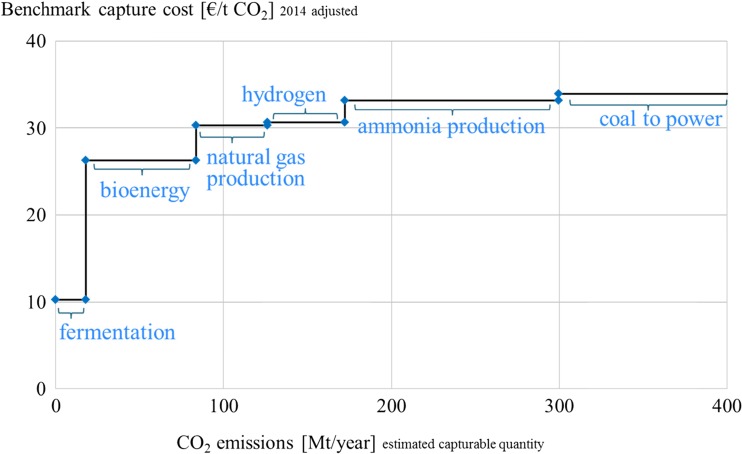
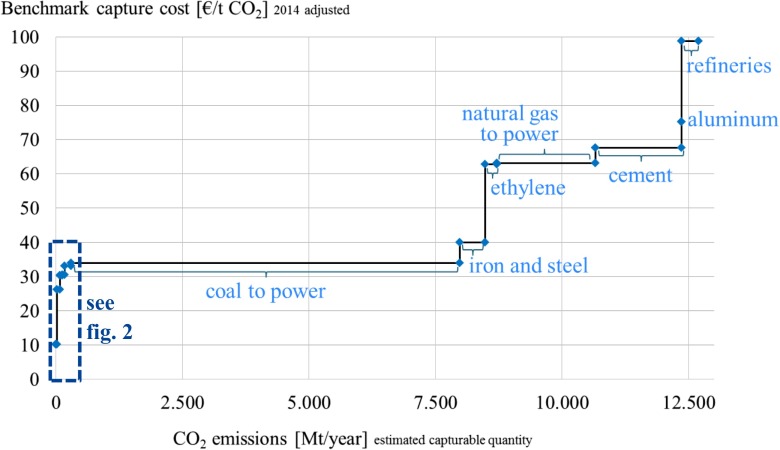
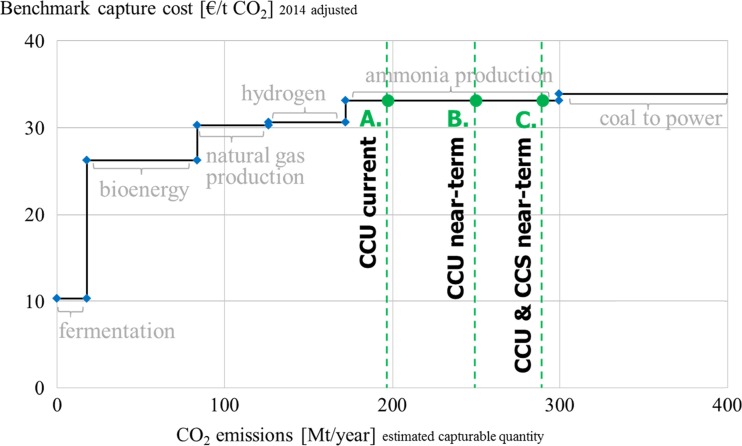
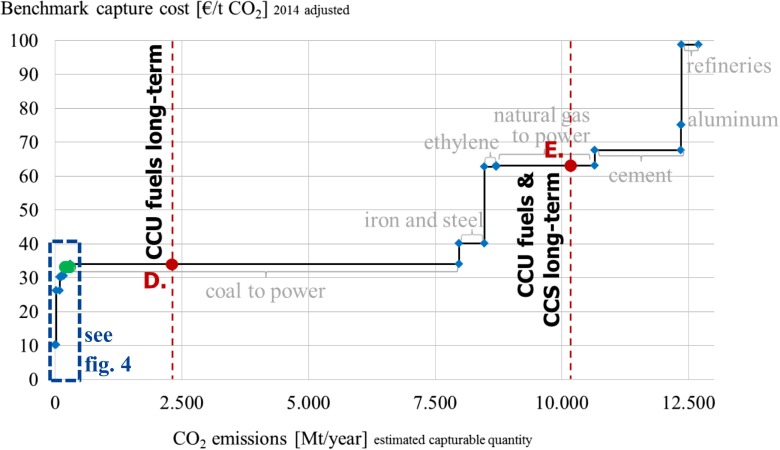
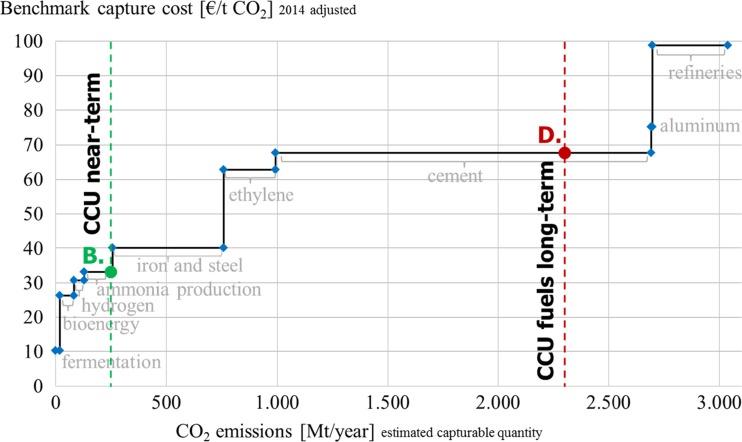
Lately, the technical research on carbon dioxide capture and utilization (CCU) has achieved important breakthroughs. While single CO2-based innovations are entering the markets, the possible economic effects of a large-scale CO2 utilization still remain unclear to policy makers and the public. Hence, this paper reviews the literature on CCU and provides insights on the motivations and potential of making use of recovered CO2 emissions as a commodity in the industrial production of materials and fuels. By analyzing data on current global CO2 supply from industrial sources, best practice benchmark capture costs and the demand potential of CO2 utilization and storage scenarios with comparative statics, conclusions can be drawn on the role of different CO2 sources. For near-term scenarios the demand for the commodity CO2 can be covered from industrial processes, that emit CO2 at a high purity and low benchmark capture cost of approximately 33 €/t. In the long-term, with synthetic fuel production and large-scale CO2 utilization, CO2 is likely to be available from a variety of processes at benchmark costs of approx. 65 €/t. Even if fossil-fired power generation is phased out, the CO2 emissions of current industrial processes would suffice for ambitious CCU demand scenarios. At current economic conditions, the business case for CO2 utilization is technology specific and depends on whether efficiency gains or substitution of volatile priced raw materials can be achieved. Overall, it is argued that CCU should be advanced complementary to mitigation technologies and can unfold its potential in creating local circular economy solutions.
Overview
The claims and statistics of this paper haven’t been checked yet.
Free: it reads the open-access text and checks the first 5 claims that cite a source we can check. Create a free account to check every claim.
Integrity signals
Registry
Cites
Statistics
Figures

Verification
Claims the paper makes
The claims and statistics of this paper haven’t been checked yet.
Free: it reads the open-access text and checks the first 5 claims that cite a source we can check. Create a free account to check every claim.
Claims other papers make about this one
Each is checked against this paper’s own text: does it say what the citing paper says it does?
The source backs part of the claim, not all of it — or backs it for a different population, condition or comparison.
In the citing paper
“In the short term, the creation of products from concentrated CO 2 , as in step L (albeit, CO 2 conversion is not a necessary requirement for utilization), could leverage the industrial capture of flue gases following the extraction and combustion of fossil fuels (KC) 27 .”
From The technological and economic prospects for CO2 utilization and removal (2019) · cites this paper as [27]
Experimental — accuracy not yet measured
Self-check
Percentages, sums and reported differences re-computed from the paper’s own numbers.
The self-check needs the paper’s full text.
Citations
Cites
The teraton challenge. A review of fixation and transformation of carbon dioxide
Mikkelsen, M., Jørgensen, M., & Krebs, F. C. (2010) · Energy Environ. Sci. · doi:10.1039/b912904a · Cited by 2,157 · cited 2×
“In the best case Brecycling of CO2 from anthropogenic sources provides a renewable, inexhaustible carbon source and could allow the continued use of derived carbon fuels in an environmentally friendly, carbon neutral way^ (Mikkelsen et al. 2010).”
BackgroundCO2 emissions from fuel combustion: highlights
Eng, P. (2009) · Cited by 1,609
Natural Gas Processing with Membranes: An Overview
Baker, R. W., & Lokhandwala, K. (2008) · Industrial & Engineering Chemistry Research · doi:10.1021/ie071083w · Cited by 1,381 · cited 1×
“While raw natural gas can contain CO2 in different concentrations depending on the respective source, the processing of the gas to achieve pipeline quality often includes carbon dioxide separation (Baker and Lokhandwala 2008).”
BackgroundLe Quéré, C., Moriarty, R., Andrew, R. M., Peters, G. P., Ciais, P., Friedlingstein, P., Jones, S. D., Sitch, S., Tans, P., Arneth, A., et al. (2015) · Earth System Science Data · doi:10.5194/essd-7-47-2015 · Cited by 755
MUELLERLANGER, F., TZIMAS, E., KALTSCHMITT, M., & PETEVES, S. (2007) · International Journal of Hydrogen Energy · doi:10.1016/j.ijhydene.2007.05.027 · Cited by 590
The changing paradigm in CO2 utilization
Aresta, M., Dibenedetto, A., & Angelini, A. (2013) · Journal of CO2 Utilization · doi:10.1016/j.jcou.2013.08.001 · Cited by 482 · cited 6×
“The conversion of CO2 with a catalyst evolved in the 1970s, when chemical engineers first succeeded in developing catalysis processes inspired by nature’s CO2 conversion cycles (Aresta and Dibenedetto 2010; Aresta et al. 2013).”
BackgroundMethodInfluentialThe urgency of the development of CO 2 capture from ambient air
Lackner, K. S., Brennan, S., Matter, J. M., Park, A.-H. A., Wright, A., & van der Zwaan, B. (2012) · Proceedings of the National Academy of Sciences · doi:10.1073/pnas.1108765109 · Cited by 449
Life-cycle assessment of carbon dioxide capture and utilization: avoiding the pitfalls
von der Assen, N., Jung, J., & Bardow, A. (2013) · Energy & Environmental Science · doi:10.1039/c3ee41151f · Cited by 447 · cited 1×
“Since the utilized CO2 in most cases is reemitted at a later point in time a simple aggregation of the used volumes of CO2 is not an indicator of ecologic performance (von der Assen et al. 2013).”
Backgroundvon der Assen, N., & Bardow, A. (2014) · Green Chem. · doi:10.1039/c4gc00513a · Cited by 399 · cited 1×
“A recent example illustrates how for polyols used for the production of foams up to 3 t of CO2 emissions can be avoided per tonne of CO2 used compared to a conventional production process (von der Assen and Bardow 2014).”
BackgroundGreenhouse gas emissions in Norway: do carbon taxes work?
Bruvoll, A., & Larsen, B. M. (2004) · Energy Policy · doi:10.1016/s0301-4215(03)00151-4 · Cited by 364 · cited 1×
“…example, the relatively old as well as high Norwegian carbon tax, especially for offshore petroleum businesses of up to 69 €/t CO2 in 2014 (World Bank 2014) has led to several investments by the affected players into CCS (de Coninck and Benson 2014) and energy efficiency (Bruvoll and Larsen 2004).”
Background
Research works printed but not linked: 7
- Bogner J Metz B Davidson OR Bosch PR Dave R Meyer LA Waste management Climate Change 2007: Mitigation 2007 Cambridge Cambridge University Press 585 618
- California Carbon Dashboard Carbon price. California Carbon Dashboard 2015
- Carbon Visuals CCS: a 2 degree solution: a film by carbon visuals—methodology 2014
- Faulstich M Leipprand A Eggenstein U Bilitewski B Urban AI Faulstich M Relevance of CCS technology for waste incineration Thermic waste treatment 2009 Kassel Kassel University Press 73 86
- IEA (2013) Technology roadmap: Carbon capture and storage—2013 edition. OECD/ IEA. http://www.iea.org/publications/freepublications/publication/technologyroadmapcarboncaptureandstorage.pdf. Accessed May 27, 2015
- Metz B, Davidson O, De Coninck H, Loos M, Meyer L (2005) IPCC special report on carbon dioxide capture and storage. Cambridge University Press. http://www.ipcc.ch/pdf/special-reports/srccs/srccs_wholereport.pdf. Accessed February 11, 2015
- Pfeifer H Fischedick M Görner K Thomeczek M Iron and steel industry CO2: Capture, storage, utilization: Holistic evaluation for the energy sector and industry 2015 Berlin Springer 375 384
Cited by
Items 101–200 of 241
Valorisation of CO2-rich off-gases to biopolymers through biotechnological process
Garcia‐Gonzalez, L., & Wever, H. D. (2017) · FEMS Microbiology Letters · doi:10.1093/femsle/fnx196 · Cited by 33
Ethylene Selectivity in CO Electroreduction when using Cu Oxides: An In Situ ATR‐SEIRAS Study
Lee, S., & Lee, J. (2017) · ChemElectroChem · doi:10.1002/celc.201700892 · Cited by 36
Jena, H. S., Krishnaraj, C., Schmidt, J., Leus, K., Hecke, K. V., & Voort, P. V. D. (2019) · Chemistry - A European Journal · doi:10.1002/chem.201903926 · Cited by 32
Vân, Đ. T. C., Nguyen, N. T. T., Tran, T. D., Pham, M. H. T., & Pham, T. Y. T. (2020) · Biochemical Engineering Journal · doi:10.1016/j.bej.2020.107858 · Cited by 34
Aliabadi, D. E. (2020) · Journal of Cleaner Production · doi:10.1016/j.jclepro.2020.121100 · Cited by 31
Madaleno, M., & Moutinho, V. (2017) · Environmental Science and Pollution Research · doi:10.1007/s11356-017-8547-y · Cited by 30
“Naims (2016) argues that at current economic conditions, the business case for CO2 utilization is technology specific and depends on whether efficiency gains or substitution of volatile raw material like oil can be achieved.”
BackgroundLignocellulosic Waste Treatment in Biorefinery Concept: Challenges and Opportunities
Krátký, L. (2022) · Energy, environment, and sustainability · doi:10.1007/978-981-16-8682-5_3 · Cited by 29
Minimum marginal abatement cost curves (Mini-MAC) for CO2 emissions reduction planning
Lameh, M., Al‐Mohannadi, D. M., & Linke, P. (2021) · Clean Technologies and Environmental Policy · doi:10.1007/s10098-021-02095-y · Cited by 27
Potential CO2 utilisation in Germany: An analysis of theoretical CO2 demand by 2030
Schmid, C., & Hahn, A. (2021) · Journal of CO2 Utilization · doi:10.1016/j.jcou.2021.101580 · Cited by 28
Aromada, S. A., Eldrup, N. H., & Øi, L. E. (2022) · Energies · doi:10.3390/en15020425 · Cited by 27
Morimoto, S., Kitagawa, N., Bensebaa, F., Kumar, A., Kataoka, S., & Taniguchi, S. (2023) · Journal of Cleaner Production · doi:10.1016/j.jclepro.2023.136763 · Cited by 27
Kim, S., Ko, D., Mun, J., Kim, T., & Kim, J. (2017) · Korean Journal of Chemical Engineering · doi:10.1007/s11814-017-0261-4 · Cited by 26
Ali, G., Anbren, S., & Bashir, M. K. (2017) · Environmental Science and Pollution Research · doi:10.1007/s11356-017-0607-9 · Cited by 24
Isah, M., Farooq, W., Khan, A. A., Razzak, S. A., Zahid, U., Ahmed, U., & Jameel, A. G. A. (2024) · Arabian Journal for Science and Engineering · doi:10.1007/s13369-024-09601-6 · Cited by 23
“These projections are based on CO 2 data till 2016 [25] and projected CO 2 data for the following ten years [26].”
Sharma, D., Sharma, R., Chand, D., & Chaudhary, A. (2022) · Environmental Nanotechnology Monitoring & Management · doi:10.1016/j.enmm.2022.100671 · Cited by 27
Integrated CO2 Capture and Utilization Using Non-Thermal Plasmolysis
Moss, M. S., Reed, D. G., Allen, R. W. K., & Styring, P. (2017) · Frontiers in Energy Research · doi:10.3389/fenrg.2017.00020 · Cited by 23
“This composition sits well within the range expected as an output from coal fired power stations, for example, found in the UK (Naims, 2016; von der Assen et al., 2016).”
BackgroundZimmerman, A., Müller, L. J., & Wang, Y. (2020) · Deep Blue (University of Michigan) · doi:10.3998/2027.42/162573 · Cited by 31
Metabolic Engineering for Large‐Scale Environmental Bioremediation
Nikel, P. I., & de Lorenzo, V. (2021) · Metabolic Engineering · doi:10.1002/9783527823468.ch22 · Cited by 22
Bargiacchi, E., Thonemann, N., Geldermann, J., Antonelli, M., & Desideri, U. (2020) · Energies · doi:10.3390/en13174579 · Cited by 22
Han, X., Ostrikov, K., Chen, J., Zheng, Y., & Xu, X. (2023) · Energy & Fuels · doi:10.1021/acs.energyfuels.3c02204 · Cited by 20
Prospective life cycle assessment of CO2 conversion by photocatalytic reaction
Wang, J., Liu, X., Ma, J., Zhang, S., Liu, H., Dong, Y., & Yang, Q. (2023) · Green Chemical Engineering · doi:10.1016/j.gce.2023.10.003 · Cited by 20
Techno-economic evaluation of squalene recovery from oil deodorizer distillates
Bouriakova, A., Mendes, P. S. F., Elst, K., Clercq, J. D., & Thybaut, J. W. (2019) · Process Safety and Environmental Protection · doi:10.1016/j.cherd.2019.12.003 · Cited by 20
Spiers Memorial Lecture: CO 2 utilization: why, why now, and how?
Sick, V. (2021) · Faraday Discussions · doi:10.1039/d1fd00029b · Cited by 25
Development of CCUS clusters in Croatia
Vulin, D., Močilac, I. K., Jukić, L. V., Arnaut, M., Vodopić, F., Saftić, B., Sedlar, D. K., & Cvetković, M. (2023) · International journal of greenhouse gas control · doi:10.1016/j.ijggc.2023.103857 · Cited by 20
Techno-economic assessment of CO2-containing polyurethane rubbers
Buchner, G. A., Wulfes, N., & Schomäcker, R. (2019) · Journal of CO2 Utilization · doi:10.1016/j.jcou.2019.11.010 · Cited by 20
“The capture cost, including purification to ≥99,95 vol%, is calculated from Naims [34] and adjusted for inflation to 84.65 $/t.”
MethodInfluentialRenewable energies and circular economies: A systematic literature review before the ChatGPT boom
Barahona, I., & Almulhim, T. S. (2024) · Energy Reports · doi:10.1016/j.egyr.2024.02.027 · Cited by 19
Overcoming Barriers to Successfully Commercializing Carbon Dioxide Utilization
Kant, M. (2017) · Frontiers in Energy Research · doi:10.3389/fenrg.2017.00022 · Cited by 22
“The sustainability effect of CO2 utilization is reflected by the fact that the use of CO2 as a raw material may not only be a dooropener for large emission abatement technologies but may also be a potent resource efficiency technology because it feeds CO2 back into the carbon-based economic system (Armstrong and Styri…”
BackgroundNewman, A. J. K., & Styring, P. (2023) · Frontiers in Sustainability · doi:10.3389/frsus.2022.1057476 · Cited by 19
“Costs between 5 USD−180 USD per ton CO2 are reported (a small number of sectors exceed this) (Metz, 2005; Zero Emission Platform, 2011; Henriette, 2016).”
BackgroundHerz, G., Müller, N., Adam, P., Megel, S., Reichelt, E., & Jahn, M. (2020) · Chemie Ingenieur Technik · doi:10.1002/cite.202000012 · Cited by 17
Designing an innovation system to support profitable electro- and bio-catalytic carbon upgrade
Ruttinger, A. W., Tavakkoli, S., Shen, H. F., Wang, C., & Jordaan, S. M. (2022) · Energy & Environmental Science · doi:10.1039/d1ee03753f · Cited by 17
Ountaksinkul, K., Vas‐Umnuay, P., Kasempremchit, N., Bumroongsakulsawat, P., Kim‐Lohsoontorn, P., Jiwanuruk, T., & Assabumrungrat, S. (2019) · Chemical Engineering and Processing - Process Intensification · doi:10.1016/j.cep.2019.01.009 · Cited by 17
Rojas‐Rueda, D., McAuliffe, K., & Morales-Zamora, E. (2024) · Current Environmental Health Reports · doi:10.1007/s40572-024-00447-6 · Cited by 17
Gao, Q., Jiang, X., Wang, Z., Yang, Z., Trivedi, J. J., Xu, X., Mmbuji, A. O., & Patel, V. (2025) · Fuel · doi:10.1016/j.fuel.2025.134631 · Cited by 16
Oppong, A., Ma, J., Acheampong, K. N., & Agyei-Sakyi, M. (2020) · Journal of Cleaner Production · doi:10.1016/j.jclepro.2019.119777 · Cited by 17
Aklilu, E. G., & Bounahmidi, T. (2025) · Energy · doi:10.1016/j.energy.2025.136486 · Cited by 15
A geographical source-sink matching for carbon capture and utilization deployment in Taiwan
Chauvy, R., Lai, Y.-Y., & Chen, P. (2022) · International journal of greenhouse gas control · doi:10.1016/j.ijggc.2022.103722 · Cited by 15
Tan, W. J., & Gunawan, P. (2023) · Inorganics · doi:10.3390/inorganics11120464 · Cited by 15
Nordic GTL: A pre-feasibility study on sustainable aviation fuel from biogas, hydrogen and CO2
Rennuit-Mortensen, A. W., Wenzel, H., Rasmussen, K. D., Justesen, S. S., Wormslev, E. C., & Porsgaard, M. (2019) · Cited by 14
Manjusha, A., Lal, B., & Singh, B. (2025) · ACS Omega · doi:10.1021/acsomega.5c06557 · Cited by 13
Raja, B., Sarathi, R., & Vinu, R. (2020) · Energy Technology · doi:10.1002/ente.202000535 · Cited by 13
Imteyaz, B. A., Tahir, F., & Habib, M. A. (2020) · Journal of Energy Resources Technology · doi:10.1115/1.4049463 · Cited by 13
How CO2-to-Diesel Technology Could Help Reach Net-Zero Emissions Targets: A Canadian Case Study
Ruttinger, A. W., Kannangara, M., Shadbahr, J., Luna, P. D., & Bensebaa, F. (2021) · Energies · doi:10.3390/en14216957 · Cited by 13
Morimoto, S., Kitagawa, N., Thủy, N. T., Ozawa, A., Rustandi, R. A., & Kataoka, S. (2022) · Journal of CO2 Utilization · doi:10.1016/j.jcou.2022.101935 · Cited by 12
Pazdera, J., Issayeva, D., Titus, J., Gläser, R. J., Deutschmann, O., & Jentys, A. (2022) · ChemCatChem · doi:10.1002/cctc.202200620 · Cited by 12
Corn Stover Pretreatment with Na2CO3 Solution from Absorption of Recovered CO2
García‐Negrón, V., & Toht, M. J. (2022) · Fermentation · doi:10.3390/fermentation8110600 · Cited by 12
Hassanzadeh, A., & Sabzi, F. (2021) · Structural Chemistry · doi:10.1007/s11224-021-01743-9 · Cited by 12
Techno-economic assessment of decarbonization pathways for a gas to liquid facility: A review
Awani, K., Hanak, D. P., Kumar, V., & Nabavi, S. A. (2024) · Journal of CO2 Utilization · doi:10.1016/j.jcou.2024.102994 · Cited by 13
Perumal, M., Karunakaran, N. R., Balraj, A., Jayaraman, D., Krishnan, J., Prakash, A. B. J., Arumugam, J., & Muthukumar, V. P. (2020) · Environmental Science and Pollution Research · doi:10.1007/s11356-020-10562-0 · Cited by 11
“…3 and 4 °C by 2100 if the carbon emissions continue at their current rate (https:// www.britannica.com/science/global-warming) to meet the countries’ energy demand by burning fossil fuels (https:// www.britannica.com/science/global-warming) (Sabouni et al. 2014; Deng et al. 2020; Naims 2016).”
BackgroundConflicting expectations on carbon dioxide utilisation
Palm, E., & Nikoleris, A. (2020) · Technology Analysis and Strategic Management · doi:10.1080/09537325.2020.1810225 · Cited by 11
Aromada, S. A., Eldrup, N. H., & Øi, L. E. (2023) · International journal of greenhouse gas control · doi:10.1016/j.ijggc.2023.103932 · Cited by 10
Climate performance of liquefied biomethane with carbon dioxide utilization or storage
Gustafsson, M., Cordova, S. S., Svensson, N., & Eklund, M. (2023) · Renewable and Sustainable Energy Reviews · doi:10.1016/j.rser.2023.114239 · Cited by 10
“Although this biogenic gas is considered climate neutral, applying CO ₂ capture and utilization (CCU) or storage (CCS) to biogas upgrading could mitigate overall atmospheric CO ₂ emissions and substitute fossil-based products [11,12].”
Bieniek, A., Sun, S., Jerzak, W., Wu, C., & Magdziarz, A. (2023) · Journal of Environmental Management · doi:10.1016/j.jenvman.2023.118201 · Cited by 10
Power-to-X for Renewable-Based Hybrid Energy Systems
Davoudi, S., Khalili‐Garakani, A., & Kashefi, K. (2022) · Power systems · doi:10.1007/978-3-030-87653-1_2 · Cited by 11
Photosynthetic cell factories, a new paradigm for carbon dioxide (CO2) valorization
Nag, B., Makaranga, A., Kareya, M. S., Nesamma, A. A., & Jutur, P. P. (2023) · Elsevier eBooks · doi:10.1016/b978-0-323-99429-3.00027-8 · Cited by 8
Miranda, M. W., Ogland-Hand, J., Bielicki, J. M., Moghanloo, R. G., Daneshfar, J., & Middleton, R. S. (2023) · Greenhouse Gases Science and Technology · doi:10.1002/ghg.2244 · Cited by 8
Technoeconomic perspectives on sustainable CO2 capture and utilization
Karimi, I. A., & Kawi, S. (2016) · Environmental Science and Pollution Research · doi:10.1007/s11356-016-7838-z · Cited by 8
Carbon dioxide condensation: Theory, phenomenon and application
Bian, J., Yu, B., Cao, H., Bai, H., Cao, X., & Guo, D. (2025) · Chemical Engineering Journal Advances · doi:10.1016/j.ceja.2025.100954 · Cited by 7
Ali, A., Raza, A., Aziz, M., Mahmoud, M. E., Ali, U., & Alshammari, A. M. (2025) · Carbon Capture Science & Technology · doi:10.1016/j.ccst.2025.100551 · Cited by 12
Carbon capture and utilization
Mohamed, A. O., Gamal, M. M. E., Hameedi, S. M., & Paleologos, E. K. (2023) · Elsevier eBooks · doi:10.1016/b978-0-12-823418-1.00001-9 · Cited by 7
Li, Y., ONeal, R., Whitezell, M., & Kovscek, A. R. (2024) · SPE Journal · doi:10.2118/218884-pa · Cited by 7
Optimizing Injection Well Trajectory to Maximize Storage Security and Minimize Geomechanical Risk
Li, Y., ONeal, R., Whitezell, M., & Kovscek, A. R. (2024) · SPE Western Regional Meeting · doi:10.2118/218884-ms · Cited by 7
Afif, M. B., Afif, A. B., Apostoleris, H., Gandhi, K., Dadlani, A. L., Ghaferi, A. A. A., Torgersen, J., & Chiesa, M. (2022) · Energies · doi:10.3390/en15145181 · Cited by 10
Tripartite equilibrium strategy for a carbon tax setting problem in air passenger transport
Xu, J., Qiu, R., Tao, Z., & Xie, H. (2018) · Environmental Science and Pollution Research · doi:10.1007/s11356-017-1163-z · Cited by 7
Allocation of Common-Pool Resources in an Unmonitored Open System
Majumder, S., Agalgaonkar, A. P., Khaparde, S. A., Ciufo, P., Perera, S., & Kulkarni, S. V. (2019) · IEEE Transactions on Power Systems · doi:10.1109/tpwrs.2019.2901389 · Cited by 8
Krátký, L., Ledakowicz, S., Ślężak, R., Bělohlav, V., Peciar, P., Petrik, M., Jirout, T., Peciar, M., Siménfalvi, Z. K., Šulc, R., et al. (2024) · Sustainability · doi:10.3390/su16031201 · Cited by 8
The Nature of Hydrogen Bonding in Adsorbed CO2 and H2O on Solid Amines in CO2 Capture
Zhai, Y., Wang, S., & Chuang, S. S. C. (2019) · Royal Society of Chemistry eBooks · doi:10.1039/9781788016490-00503 · Cited by 6
Рыжков, А. Ф., Богатова, Т. Ф., Масленников, Г. Е., Osipov, P., & Nizov, V. A. (2020) · Journal of Physics Conference Series · doi:10.1088/1742-6596/1677/1/012115 · Cited by 6
“The distribution of CO 2 consumption by the refining process operation pressure is very complex, significantly overlapping the energy sector pressure ranges [12, 13, 14].”
BackgroundStandortplanung für die Herstellung CO2‐basierter Chemikalien am Beispiel der Olefinproduktion
Thonemann, N., Stießel, S., Maga, D., Hiebel, M., Dresen, B., Hunstock, B., Deerberg, G., & Weidner, E. (2019) · Chemie Ingenieur Technik · doi:10.1002/cite.201800147 · Cited by 7
Allo, P. T., Rezaee, R., & Clennell, M. B. (2025) · Eng—Advances in Engineering · doi:10.3390/eng6110303 · Cited by 4
A strategic insight into the market for carbon management capacity
Fikru, M. G., Shen, T., Brodmann, J., & Ma, H. (2024) · Sustainable Futures · doi:10.1016/j.sftr.2024.100374 · Cited by 4
Lee, J., Changsun, J., Shin, K. N., & Ahn, J. W. (2019) · Sustainability · doi:10.3390/su11133613 · Cited by 4
Zhai, Y., Jin, H., & Chuang, S. S. C. (2019) · Elsevier eBooks · doi:10.1016/b978-0-12-817813-3.00007-9 · Cited by 6
Magadum, T., Murgod, S., Garg, K., Yadav, V., Kushwaha, O., Mittal, H. N., Kushwaha, O. S., Mittal, H. N., & Kushwaha, O. S. (2025) · doi:10.36227/techrxiv.174286456.68122223/v1 · Cited by 4
Leveraging experimental and computational tools for advancing carbon capture adsorbents research
Niranjan, R., Raj, A. J. L. P., Akula, V. V., & Palani, K. N. (2024) · Environmental Science and Pollution Research · doi:10.1007/s11356-024-34838-x · Cited by 3
“Further CO 2 sequestration in coal seams to simultaneously enhance methane recovery (Fan et al. 2023; Zheng et al. 2020) (Naims 2016).”
Low Cost CO2 Capture: Dream or Reality?
Nasr, A. S. E., Geuzebroek, F., & Singh, P. (2018) · Abu Dhabi International Petroleum Exhibition & Conference (ADIPEC) · doi:10.2118/192726-ms · Cited by 3
Pavan, M. (2022) · Biofuel and biorefinery technologies · doi:10.1007/978-3-031-01241-9_19 · Cited by 8
Utilizing CO2 from biomethane production : Sustainability and climate performance
Cordova, S. S. (2023) · Linköping studies in science and technology. Thesis · doi:10.3384/9789180752114 · Cited by 4
卢冠初, 王喆, Bhatti, U. H., & 范先锋 (2023) · Clean Energy Science and Technology · doi:10.18686/cncest.v1i1.62 · Cited by 3
Technoenergetic and Economic Analysis of CO2 Conversion
Vasudevan, S., Aggarwal, S., Farooq, S., Karimi, I. A., & Quah, M. C. G. (2019) · Springer eBooks · doi:10.1007/978-3-030-15868-2_12 · Cited by 3
Location Planning for the Production of CO2‐Based Chemicals Using the Example of Olefin Production
Thonemann, N., Stießel, S., Maga, D., Dresen, B., Hiebel, M., Hunstock, B., Deerberg, G., & Weidner, E. (2019) · Chemical Engineering & Technology · doi:10.1002/ceat.201900670 · Cited by 3
Mittal, H. N., Sehrawat, A., & Kushwaha, O. S. (2025) · Preprints.org · doi:10.20944/preprints202506.0691.v1 · Cited by 3
Emborg, M., Kisieliene, L., Thonemann, N., Eftekhari, A. A., & Olsen, S. I. (2025) · Sustainable Production and Consumption · doi:10.1016/j.spc.2025.09.015 · Cited by 6
García-Hernández, A. E., Contreras‐Zarazúa, G., Sánchez‐Ramírez, E., Juárez-García, M., & Segovia‐Hernández, J. G. (2025) · Industrial & Engineering Chemistry Research · doi:10.1021/acs.iecr.5c02324 · Cited by 2
Bao, C., Fan, Z., Zhang, C., & Zhang, Z. (2025) · Precision Chemistry · doi:10.1021/prechem.5c00207 · Cited by 2
Kickstarting Carbon Capture and Storage adoption: Tailoring subsidies to emitters’ needs
Nicolle, A., Lowing, D., & Cebreros-Saettone, D. M. (2026) · Energy Economics · doi:10.1016/j.eneco.2026.109246 · Cited by 2
Heterogenized Catalyst for the Hydrogenation of CO 2 to Formic Acid or Its Derivatives
Park, K., Gunasekar, G. H., & Yoon, S. (2021) · Wiley eBooks · doi:10.1002/9783527824113.ch6 · Cited by 2
Briday, R. (2024) · UGA Éditions eBooks · doi:10.4000/books.ugaeditions.33872 · Cited by 2
Sustainable Carboxylation of Diamines with Hydrogen Carbonate
Forte, G., Chiarotto, I., Richter, F., Trieu, V., & Feroci, M. (2018) · Organic Process Research & Development · doi:10.1021/acs.oprd.8b00229 · Cited by 2
Corporate Strategies for a Circular Economy: A Comparative Study of Energy Companies
de Selliers, D. (2019) · The Proceedings of the International Conference on Applied Research in Management, Economics and Accounting. · doi:10.33422/2nd.iarmea.2019.06.1052 · Cited by 5
The economics of possible CO2 utilization pathways in a highly decarbonized European energy system
Lux, B., Poslowsky, S., & Pfluger, B. (2019) · International Conference on the European Energy Market (EEM) · doi:10.1109/eem.2019.8916453 · Cited by 4
“In some industrial synthesis processes, captured CO2 can directly serve as a carbon source, too [5]-[7].”
BackgroundJafari, S. A., Osfouri, S., & Azin, R. (2020) · Korean Journal of Chemical Engineering · doi:10.1007/s11814-020-0501-x · Cited by 2
Ssebadduka, R., Sasaki, K., & Sugai, Y. (2020) · International Journal of Energy Economics and Policy · doi:10.32479/ijeep.8800 · Cited by 2
“The cost of CO2 capture is approximately equivalent to an average of US$43-54 per ton-CO2 (Naims, 2016).”
BackgroundMolecular Dynamics Simulation of CO2 Adsorption and Diffusion in UTSA-16
GHASEMİNEJAD, H., & Sabzi, F. (2021) · International Journal of Thermodynamics · doi:10.5541/ijot.955760 · Cited by 2
Buchner, G. A. (2020) · DepositOnce · doi:10.14279/depositonce-10436 · Cited by 2
“…180 USD/tCO2 (Metz et al., 2005; Zero Emission Platform, 2011; Lackner et al., 2012; Wilcox, 2012; de Coninck and Benson, 2014; Smit et al., 2014; Naims, 2016; Leeson et al., 2017), while the EU Prodcom database reports an EU-28 market average value of 78 EUR/tCO2 (70 USD/tCO2) for 2016…”
BackgroundFernandes, I., Antunes, D., Martins, R., Mendes, M. J., & Machado, A. S. R. (2024) · Heliyon · doi:10.1016/j.heliyon.2024.e26442 · Cited by 3
“Strategies to achieve this objective are: the use of renewable energy sources; CO 2 Capture and Storage (CCS) technologies [1 – 3]; and CO 2 Capture and Utilization (CCU) technologies [1,2,4].”
MethodCarbon Capture, Utilization, and Storage Technologies Needed to Decarbonize the Economy
Dong, S. T. (2025) · Palgrave Studies in Energy Transitions · doi:10.1007/978-3-031-04196-9_38-1 · Cited by 2
Middleton, E. J., Miranda, M., & Mehdi, Q. (2025) · Journal of Climate Resilience and Justice · doi:10.1162/crcj_a_00016 · Cited by 3
Heng, X., Zhang, Z., Ge, Y., Yang, L., Han, D., Liu, F., Li, Y., Li, Q., & Liu, K. (2025) · Industrial & Engineering Chemistry Research · doi:10.1021/acs.iecr.5c00583 · Cited by 1
Sustainable design of a biogas‐SOFC power production system
Uday, V., & Jogwar, S. S. (2025) · AIChE Journal · doi:10.1002/aic.70118 · Cited by 1
autumn: A Python library for dynamic modelling of captured CO~2~ cost potential curves
Ruiz, E. S. A., Wulff, N., Fuchs, B., & Hu, W. (2021) · The Journal of Open Source Software · doi:10.21105/joss.03203 · Cited by 1
“Figure 1: Marginal cost estimates for capturing CO2 from different industries in Germany against exemplary reference cost (Naims, 2016) and potential as they are used in (Fröhlich et al.”
BackgroundMethod
Metadata
- Authors
- Naims, H.
- Affiliations
- Research Institute for Sustainability at GFZ (DE)
- Corresponding author
- Naims, Henriette
- ORCID
- Naims, Henriette
- Venue
- Environmental Science and Pollution Research
- Published
- 2016-05-18
- Volume
- 23
- Issue
- 22
- Pages
- 22226-22241
- ISSN
- 0944-1344 (ISSN-L)
- 1614-7499
- PMC
- PMC5101260
- OpenAlex
- W2400312588
- Semantic Scholar
- b29791261a6c8171f61bdbb128a51d698cbcbb97
- Cited by
- 221
- References
- 29
- Citations by year
- 2026: 6 · 2025: 19 · 2024: 15 · 2023: 24 · 2022: 34 · 2021: 23 · 2020: 35 · 2019: 34 · 2018: 13 · 2017: 17 · 2016: 1
- FWCI
- 19.27
- Type
- journal article
- Language
- en
- Open access
- hybrid
- doi.org
- Locations
- Environmental Science and Pollution Research (publishedVersion, cc-by)
- PubMed Central (publishedVersion, cc-by)
- PubMed (publishedVersion)
- Publication Database GFZ (GFZ German Research Centre for Geosciences) (submittedVersion)
- Publication Database IASS (Institute for Advanced Sustainability Studies (IASS)) (submittedVersion, other-oa)
- Funders
- Covestro
- Topics
- Physical Sciences › Chemical Engineering › Filtration and Separation › Carbon Dioxide Capture Technologies
- Social Sciences › Economics, Econometrics and Finance › Economics and Econometrics › Climate Change Policy and Economics
- Physical Sciences › Environmental Science › Environmental Engineering › CO2 Sequestration and Geologic Interactions
- Keywords
- CO2 capture cost, synthetic fuels, CO2 utilization, industrial CO2 emissions, CO2 sequestration, circular economy, climate change mitigation
- MeSH terms
- Air Pollutants, Carbon Dioxide, Conservation of Natural Resources, Industry, Government Regulation, Green Chemistry Technology, Climate Change, Renewable Energy
About these checks
Registry, retraction, Cites and statistics results are computed, not judged, with one exception: a printed reference that no index lists is read once by a model before it counts as a citation error. Claims are extracted by a model and kept only when their quote appears verbatim in the text; each cited source is then checked, with a model’s help, for whether it says what the claim relies on. Those verdicts can be wrong — read the claim’s quote and the cited source before relying on one.
Statistics and arithmetic are recomputed, not judged.
Confidence bands are shown only for fields calibrated on our annotated test set. None is calibrated yet, so no band is shown.
What counts as a claim ›How we measure confidence ›How we check this ›
Are you an author, or do you see a problem with this page? Request a review
Data sources
Bibliographic data: Semantic Scholar, OpenAlex, Crossref.
Contains information from the Semantic Scholar Academic Graph Datasets, made available under the ODC Attribution License (ODC-BY 1.0).
Semantic Scholar’s data is described in: Kinney, R., et al. (2023). The Semantic Scholar Open Data Platform. arXiv:2301.10140.
