

The Impact of the COVID-19 Pandemic on Mental Health, Occupational Functioning, and Professional Retention Among Health Care Workers and First Responders
Open accessPublished version of a preprint
The DOI matches its Crossref record; 46 of the 49 references it cites were found in a registry or an index.
Abstract
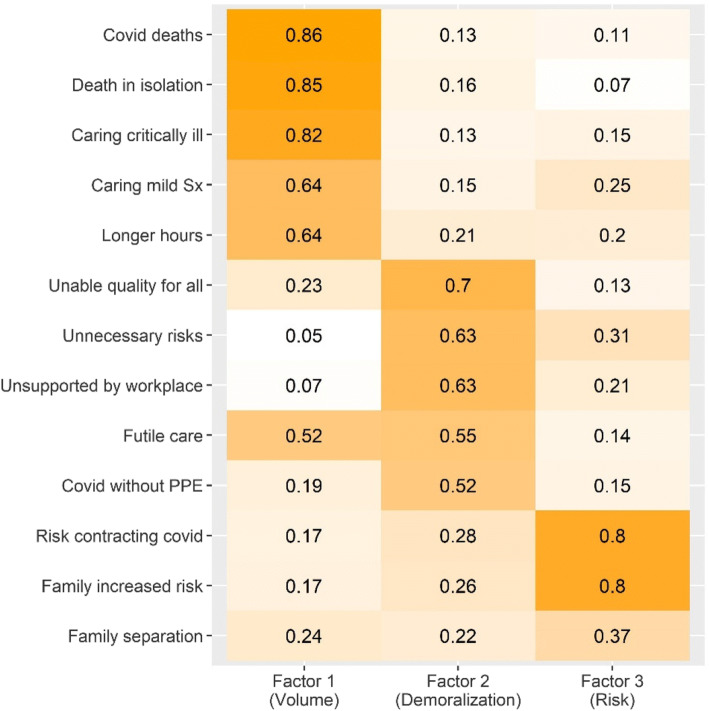
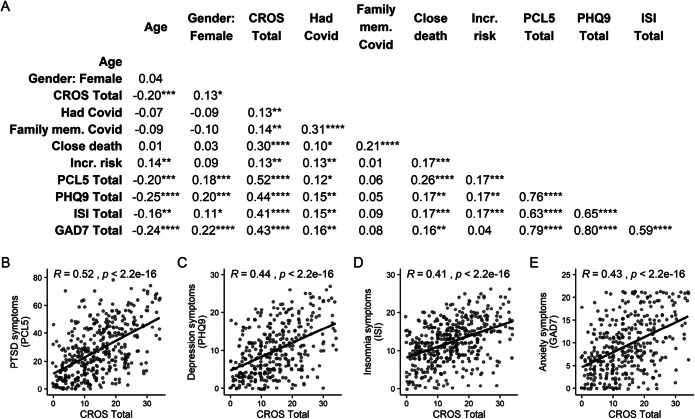
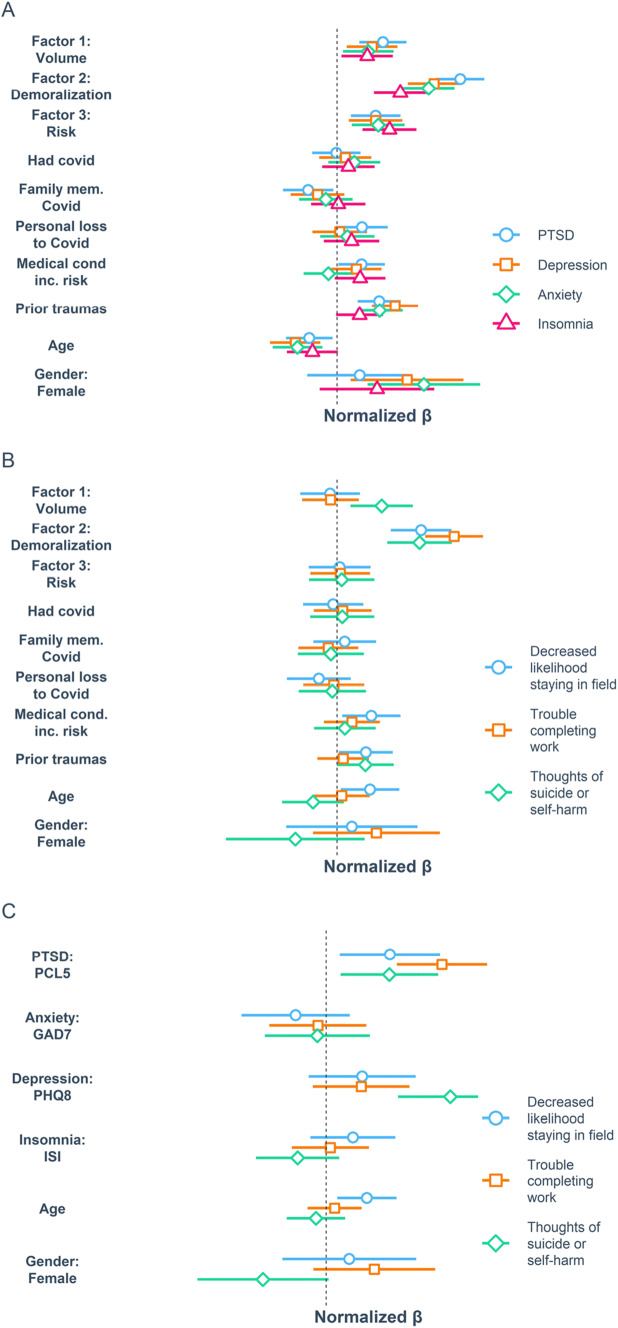
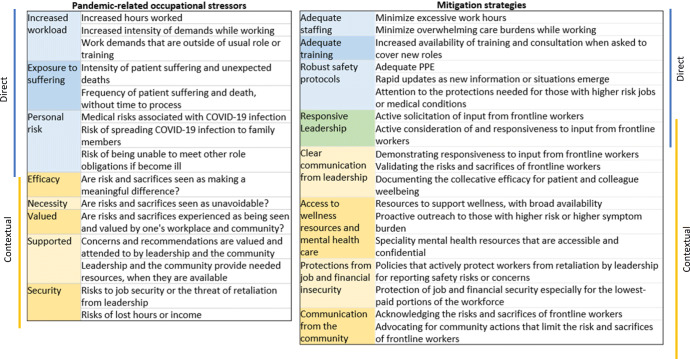
Background: The COVID-19 pandemic has greatly affected front-line health care workers (HCW) and first responders (FR). The specific components of COVID-19 related occupational stressors (CROS) associated with psychiatric symptoms and reduced occupational functioning or retention remain poorly understood. Objectives: Examine the relationships between total and factored CROS, psychiatric symptoms, and occupational outcomes. Design: Observational, self-report, single time-point online assessment. Participants: A total of 510 US HCW ( N = 301) and FR ( N = 200) with occupational duties affected by the COVID-19 pandemic. Main Outcomes and Measures: CROS were assessed using a custom 17-item questionnaire. Post-traumatic stress disorder (PTSD), depression, insomnia, and generalized anxiety symptoms were assessed using the PTSD Checklist-5 (PCL5), Patient Health Questionnaire-9 (PHQ9), Insomnia Severity Index (ISI), and General Anxiety Disorder-7 (GAD7). Respondents’ likelihood of leaving current field and occupational functioning were assessed with 2-item PROMIS subscales. Relationships were modeled using multivariable regression. Open-ended responses were coded using rapid template analysis. Results: CROS total scores correlated significantly with all four psychiatric symptom domains ( R ’s = .42–.53), likelihood of leaving one’s current occupation ( R = .18), and trouble doing usual work ( R = .28), all p’ s < .001. Half of HCW indicated a decreased likelihood of staying in their current occupation as a result of the pandemic. CROS were fit to a 3-factor model consisting of risk, demoralization, and volume factors. All CROS factors were associated with psychiatric symptom burden, but demoralization was most prominently associated with psychiatric symptoms and negative occupational outcomes. Among psychiatric symptoms, PTSD symptoms were most strongly associated with negative occupational outcomes. Open-ended statements emphasized lack of protection and support, increased occupational demands, and emotional impact of work duties. Conclusions and Relevance: These results demonstrate potentially treatable psychiatric symptoms in HCW and FR experiencing CROS, impacting both wellbeing and the health care system. Mitigating CROS, particularly by addressing factors driving demoralization, may improve HCW and FR mental health, occupational functioning, and retention.
Overview
The claims and statistics of this paper haven’t been checked yet.
Free: it reads the open-access text and checks the first 5 claims that cite a source we can check. Create a free account to check every claim.
Integrity signals
Registry
Cites
Statistics
Figures
Verification
Claims the paper makes
The claims and statistics of this paper haven’t been checked yet.
Free: it reads the open-access text and checks the first 5 claims that cite a source we can check. Create a free account to check every claim.
Claims other papers make about this one
Each is checked against this paper’s own text: does it say what the citing paper says it does?
The cited source says what the claim attributes to it.
In the citing paper
“Working during the COVID-19 pandemic has taken a significant emotional and psychological as well as physical toll on the health care workforce.[682][683][684]”
From 2023 Alzheimer's disease facts and figures (2023) · cites this paper as [683]
The cited source says what the claim attributes to it.
In the citing paper
“Working during the COVID‐19 pandemic has also taken a significant emotional and psychological toll on the health care workforce.”
From 2024 Alzheimer's disease facts and figures (2024) · cites this paper as [817]
Self-check
Percentages, sums and reported differences re-computed from the paper’s own numbers.
The self-check needs the paper’s full text.
Citations
Cites
The PHQ-9: Validity of a brief depression severity measure
Kroenke, K., Spitzer, R. L., & Williams, J. B. W. (2001) · Journal of General Internal Medicine · doi:10.1046/j.1525-1497.2001.016009606.x · Cited by 44,910
A Brief Measure for Assessing Generalized Anxiety Disorder: The GAD-7
Spitzer, R. L., Kroenke, K., Williams, J. B. W., & Löwe, B. (2006) · Archives of Internal Medicine · doi:10.1001/archinte.166.10.1092 · Cited by 31,765
ggplot2: Elegant Graphics for Data Analysis
Wickham, H. (2009) · doi:10.1007/978-0-387-98141-3 · Cited by 14,447
Lai, J., Ma, S., Wang, Y., Cai, Z., Hu, J., Wei, N., Wu, J., Du, H., Chen, T., Li, R., et al. (2020) · JAMA Network Open · doi:10.1001/jamanetworkopen.2020.3976 · Cited by 8,015
Morin, C. M., Belleville, G., Bélanger, L., & Ivers, H. (2011) · Sleep · doi:10.1093/sleep/34.5.601 · Cited by 4,620
Pappa, S., Ntella, V., Giannakas, T., Giannakoulis, V. G., Papoutsi, E., & Katsaounou, P. (2020) · Brain Behavior and Immunity · doi:10.1016/j.bbi.2020.05.026 · Cited by 3,617
The Utility of Template Analysis in Qualitative Psychology Research
Brooks, J., McCluskey, S., Turley, E., & King, N. (2015) · Qualitative Research in Psychology · doi:10.1080/14780887.2014.955224 · Cited by 1,923
Executive Leadership and Physician Well-being
Shanafelt, T. D., & Noseworthy, J. H. (2017) · Mayo Clinic Proceedings · doi:10.1016/j.mayocp.2016.10.004 · Cited by 1,776
Controlled Interventions to Reduce Burnout in Physicians: A Systematic Review and Meta-analysis
Panagioti, M., Panagopoulou, E., Bower, P., Lewith, G., Kontopantelis, E., Chew-Graham, C., Dawson, S., van Marwijk, H., Geraghty, K., & Esmail, A. (2017) · JAMA Internal Medicine · doi:10.1001/jamainternmed.2016.7674 · Cited by 1,395
Xiao, H., Zhang, Y., Kong, D., Li, S., & Yang, N. (2020) · Medical Science Monitor · doi:10.12659/msm.923549 · Cited by 1,385
Cited by
2023 Alzheimer's disease facts and figures
(2023) · Alzheimer's & Dementia · doi:10.1002/alz.13016 · Cited by 3,212
2024 Alzheimer's disease facts and figures
(2024) · Alzheimer's & Dementia · doi:10.1002/alz.13809 · Cited by 2,536
Jahrami, H. A., Alhaj, O. A., Humood, A. M., Alenezi, A. F., Fekih-Romdhane, F., AlRasheed, M. M., Saif, Z. Q., Bragazzi, N. L., Pandi-Perumal, S. R., BaHammam, A. S., et al. (2022) · Sleep Medicine Reviews · doi:10.1016/j.smrv.2022.101591 · Cited by 335
Al-Rasheed, M. M., Fekih‐Romdhane, F., Jahrami, H., Pires, G. N., Saif, Z., Alenezi, A. F., Humood, A. M., Chen, W., Dai, H., Bragazzi, N. L., et al. (2022) · Sleep Medicine · doi:10.1016/j.sleep.2022.06.020 · Cited by 104
“, 2020 [84] United States n 1⁄4 694; Population 1⁄4 Multiple.”
Groves, S., Lascelles, K. M., & Hawton, K. E. (2023) · Journal of Affective Disorders · doi:10.1016/j.jad.2023.03.027 · Cited by 97
de Vries, N., Maniscalco, L., Matranga, D., Bouman, J., & de Winter, P. (2024) · PLoS ONE · doi:10.1371/journal.pone.0300377 · Cited by 89
Huang, G., Chu, H., Chen, R., Liu, D., Banda, K. J., O’Brien, A. P., Jen, H.-J., Chiang, K.-J., Chiou, J.-F., & Chou, K.-R. (2022) · Journal of Global Health · doi:10.7189/jogh.12.05028 · Cited by 64
Vagni, M., Maiorano, T., Giostra, V., Pajardi, D., & Bartone, P. T. (2022) · Frontiers in Psychology · doi:10.3389/fpsyg.2022.918788 · Cited by 66
“Recent studies have also found that COVID related stress is linked to a range of psychiatric symptoms as well as intentions to quit the occupation for health care workers and also first responders including firefighters and police (Hendrickson et al., 2022).”
BackgroundBack, A. L., Freeman-Young, T. K., Morgan, L., Sethi, T., Baker, K. K., Myers, S., McGregor, B. A., Harvey, K., Tai, M., Kollefrath, A. W., et al. (2024) · JAMA Network Open · doi:10.1001/jamanetworkopen.2024.49026 · Cited by 58
Joshi, S. P., Wong, A.-K. I., Brucker, A., Ardito, T. A., Chow, S., Vaishnavi, S., & Lee, P. J. (2022) · JAMA Network Open · doi:10.1001/jamanetworkopen.2022.31917 · Cited by 63
“However, participants had high levels of clinical burnout55 (MBI emotional exhaustion subscore: median [IQR], 29 [23-37] points), mild depression (PHQ-9 score: median [IQR], 7 [4-10] points), subthreshold insomnia (ISI score: median [IQR], 10 [7-14] points), and mild anxiety (GAD-7 score: median [IQR], 5 [3-10] points…”
BackgroundArena, A. F. A., Gregory, M., Collins, D., Vilus, B., Bryant, R. A., Harvey, S. B., & Deady, M. (2025) · Clinical Psychology Review · doi:10.1016/j.cpr.2025.102622 · Cited by 50
Pandemic Experience of First Responders: Fear, Frustration, and Stress
McAlearney, A. S., Gaughan, A. A., MacEwan, S. R., Gregory, M. E., Rush, L. J., Volney, J., & Panchal, A. R. (2022) · International Journal of Environmental Research and Public Health · doi:10.3390/ijerph19084693 · Cited by 46
“[10], and further exacerbate burnout, which was already a concern prior to the pandemic [29].”
BackgroundMedvec, B. R., Marriott, D. J., Khadr, L., Ridge, L. J., Lee, K. A., Friese, C. R., & Titler, M. G. (2023) · Medical Care · doi:10.1097/mlr.0000000000001837 · Cited by 33
“14 Importantly, nurses reported helplessness and traumatic feelings with these increasingly challenging situations and sought institutional leadership for assistance 15,16 ; their calls for help went largely unanswered.”
Prevalence of sleep disorders among first responders for medical emergencies: A meta-analysis
Huang, G., Lee, T., Banda, K. J., Pien, L., Jen, H., Chen, R., Liu, D., Hsiao, S. S., & Chou, K. (2022) · Journal of Global Health · doi:10.7189/jogh.12.04092 · Cited by 36
Challenges for the Beleaguered Health Care Workforce During COVID-19
Cutler, D. M. (2022) · JAMA Health Forum · doi:10.1001/jamahealthforum.2022.0143 · Cited by 25
Turning to ‘Trusted Others’: A Narrative Review of Providing Social Support to First Responders
Tjin, A., Traynor, A., Doyle, B., Mulhall, C. M., Eppich, W., & O’Toole, M. (2022) · International Journal of Environmental Research and Public Health · doi:10.3390/ijerph192416492 · Cited by 34
Lin, Y., Chen, J., Huang, P., Lu, M.-Y., Strong, C., Lin, C., Griffiths, M. D., & Ko, N. (2022) · BMC Public Health · doi:10.1186/s12889-022-14557-z · Cited by 26
Aita, S. L., Kondrath, S. R., Owen, T., Borgogna, N. C., & Usset, T. J. (2023) · Current Treatment Options in Psychiatry · doi:10.1007/s40501-023-00292-8 · Cited by 21
Post-Traumatic Growth of Nurses in COVID-19 Designated Hospitals in Korea
Han, S. J., Chun, J., & Bae, H.-J. (2022) · International Journal of Environmental Research and Public Health · doi:10.3390/ijerph20010056 · Cited by 27
“3% of nurses had symptoms of PTSD [51].”
BackgroundStyra, R., Hawryluck, L., McGeer, A., Dimas, M., Lam, E., Giacobbe, P., Lorello, G., Dattani, N., Sheen, J., Rac, V. E., et al. (2022) · Health Promotion and Chronic Disease Prevention in Canada · doi:10.24095/hpcdp.42.10.01 · Cited by 16
Demoralization: Where it stands-and where we can take it: A bibliometric analysis
Zheng, Q., Xiong, L., Li, H., Liu, M., Xu, J., & Luo, X. (2022) · Frontiers in Psychology · doi:10.3389/fpsyg.2022.1016601 · Cited by 18
“, 2020) and inpatients and medical caregivers under the COVID-19 epidemic (Talebi-Azar et al., 2020; Ferrario et al., 2021; Mumoli et al., 2021; Hendrickson et al., 2022).”
BackgroundThe Female Emergency Medical Services Experience: A Mixed Methods Study
Pineo, M. M., Keating, M. L., McEvoy, T., Schwartz, M., Schwartz, R. M., Washko, J. D., Wuestman, E., & Berkowitz, J. (2024) · Prehospital Emergency Care · doi:10.1080/10903127.2024.2306248 · Cited by 19
Trauma‐informed organizational climate and its impact on first responder burnout during COVID ‐19
Headley, A. M., Witkowski, K. G. K., Remington, C. L., Ganapati, N. E., & Contreras, S. L. (2023) · Public Administration Review · doi:10.1111/puar.13764 · Cited by 18
Meese, K. A., Boitet, L. M., Sweeney, K. L., Gorman, C. A., Nassetta, L. B., Patel, N., & Rogers, D. A. (2024) · Journal of Multidisciplinary Healthcare · doi:10.2147/jmdh.s437816 · Cited by 25
“10,11 Thus, understanding what other non-monetary factors may facilitate recruitment and retention of this workforce is vital.”
BackgroundRelationship between Income and Mental Health during the COVID-19 Pandemic in China
Li, M., Zhou, B., & Hu, B. (2022) · International Journal of Environmental Research and Public Health · doi:10.3390/ijerph19158944 · Cited by 14
Lessons on the COVID-19 pandemic: who are the most affected
Xie, J., Piao, X., & Managi, S. (2023) · Scientific Reports · doi:10.1038/s41598-023-36493-7 · Cited by 16
Raposa, M. E., Mullin, G., Murray, R. M., Shepler, L. J., Castro, K. C., Fisher, A. B., Gallogly, V. H., Davis, A. L., Resick, C. J., Lee, J., et al. (2022) · Journal of Occupational and Environmental Medicine · doi:10.1097/jom.0000000000002745 · Cited by 18
Physician Posttraumatic Stress Disorder During COVID-19: A Systematic Review and Meta-Analysis
Kamra, M., Dhaliwal, S., Li, W., Acharya, S., Wong, A., Zhu, A., Vemulakonda, J., Wilson, J., Gibb, M. A., Maskerine, C., et al. (2024) · JAMA Network Open · doi:10.1001/jamanetworkopen.2024.23316 · Cited by 21
Shore, L. M., Coyle‐Shapiro, J. A., & Cnop, A. (2024) · Annual Review of Organizational Psychology and Organizational Behavior · doi:10.1146/annurev-orgpsych-110622-065549 · Cited by 14
First Responders During COVID-19: Career Calling, PTSD, and Work Self-Efficacy
Seidman, A. J., Born, W. K., & Corriveau, E. (2024) · American Journal of Preventive Medicine · doi:10.1016/j.amepre.2024.01.001 · Cited by 14
Schwartz, M., Berkowitz, J., & Pineo, M. M. (2024) · Prehospital Emergency Care · doi:10.1080/10903127.2024.2319139 · Cited by 10
“Third, the COVID-19 pandemic has undoubtedly impacted the health and wellbeing of all healthcare professionals, including EMS clinicians (55, 56).”
BackgroundRacial and Ethnic Disparities in Attendance to Well-Child Visit Recommendations during COVID-19
Abdus, S., & Selden, T. M. (2024) · Academic Pediatrics · doi:10.1016/j.acap.2024.04.003 · Cited by 14
Registered Nurses’ Well-Being, Michigan, 2022
Titler, M. G., Medvec, B. R., Marriott, D. J., Khadr, L., & Friese, C. R. (2024) · American Journal of Public Health · doi:10.2105/ajph.2023.307376 · Cited by 17
Yang, D., Hu, B., Ren, Z., & Li, M. (2022) · Frontiers in Psychology · doi:10.3389/fpsyg.2022.977609 · Cited by 11
“(2022) studied the mental health status of first responders (including police, firefighters, and emergency medical services) and their influencing factors during the pandemic, and many similar studies have been conducted in the literature (Cohen Veterans Network, 2020; Stogner et al., 2020; Hendrickson et al., 2022).”
BackgroundIn harm’s way: moral injury and the erosion of trust for emergency responders in the United Kingdom
Bell, V., Murray, E., Muñoz, L. C., & Krahé, C. (2025) · European Journal of Psychotraumatology · doi:10.1080/20008066.2025.2513107 · Cited by 13
Factors influencing medium- and long-term occupational impact following COVID-19
O’Sullivan, O., Houston, A. D., Ladlow, P., Barker-Davies, R. M., Chamley, R. R., Bennett, A. N., Nicol, E. D., & Holdsworth, D. (2023) · Occupational Medicine · doi:10.1093/occmed/kqad041 · Cited by 9
Schneider, R. H., Travis, F., & Nader, T. (2023) · Heart and Mind · doi:10.4103/hm.hm-d-23-00013 · Cited by 10
Lessons Learned from a Global Perspective of Coronavirus Disease-2019
Kaul, V., Chahal, J., Schrarstzhaupt, I. N., Geduld, H. I., Shen, Y., Cecconi, M., Siqueira, A. M., Markoski, M. M., & Kawano-Dourado, L. B. (2022) · Clinics in Chest Medicine · doi:10.1016/j.ccm.2022.11.020 · Cited by 8
“8% of nurses at a hospital in Egypt reported no intention to leave their current job.(51,52) As institutions recover in the aftermath of the pandemic, workforce retention, and well-being will prove to be an uphill battle while providing quality care to the community making workforce satisfaction and well-being a top p…”
Scarfe, M. L., Belisario, K. L., Gillard, J., DeJesus, J., Frey, B. N., Ameringen, M. V., McKinnon, M. C., Bird, B. M., Gohari, M. R., Busse, J. W., et al. (2023) · Psychiatry Research · doi:10.1016/j.psychres.2023.115496 · Cited by 9
Current and future workforce of general internal medicine in Switzerland: a cross-sectional study
Reinhard, L., Clarfeld, L., Gobin, N., Knoblauch, C., Järgen, P., Boudec, J. L., Merker, M., Rimensberger, C., Roulet, C., Schaub, N., et al. (2024) · Swiss Medical Weekly · doi:10.57187/s.3861 · Cited by 9
“…focus on the effects of the COVID-19 pandemic on the workforce, it should be noted that the pandemic’s long-term impact on health care is still largely unknown, but its toll on mental health, demoralisation and the wish to leave the profession should increase efforts to protect the workforce [18].”
BackgroundAbdallah, H. M. M., Amin, S. M., Hammouda, E. Y., Atta, M. H. R., El‐Monshed, A. H., & Hamad, N. I. (2025) · Nursing in Critical Care · doi:10.1111/nicc.70119 · Cited by 9
“PTSD rates increased as a result of pandemic-related stresses, highlighting the critical need for supportive interventions and measures catered to a variety of populations and changing care environments [25].”
Mental Health of Emergency Department Healthcare Workers During COVID-19 in Brooklyn, New York
Gustafson, D., Yucel, R. M., Apple, S. J., Cirrone, G., Gao, H., Huang, A. J., Ma, X., Saad, A., Wilson, J., Kabariti, S., et al. (2022) · Medical Research Archives · doi:10.18103/mra.v10i7.2903 · Cited by 10
MRAYYAN, M. T., Khait, A. F. A., Al‐Mrayat, Y. D., Alkhawaldeh, J. M., Alfayoumi, I. H., Algunmeeyn, A., Kutah, O. A., Abunab, H. Y., Hamdan, M. S., & Alhabashneh, H. (2024) · Journal of Health Psychology · doi:10.1177/13591053241249634 · Cited by 9
COVID-19–Related Medical Vulnerability and Mental Health Outcomes Among US First Responders
Lebeaut, A., Zegel, M., Leonard, S. J., Healy, N. A., Anderson-Fletcher, E. A., & Vujanovic, A. A. (2023) · Journal of Occupational and Environmental Medicine · doi:10.1097/jom.0000000000002811 · Cited by 8
“In addition, in two studies using mixed samples of first responders and health care workers, symptoms of depression, anxiety, and posttraumatic stress disorder were all elevated because of COVID-19–related occupational burdens and stressors.(20,21) Similarly, other research has found higher levels of occupational burn…”
ResultSirait, S. R., Sinaga, B. Y. M., Tarigan, A. P., & Wahyuni, A. S. (2024) · Narra J · doi:10.52225/narra.v4i1.658 · Cited by 6
“While the COVID-19 pandemic impacts all populations, healthcare workers (HCWs) experience a greater burden of work-related stress compared to other occupations [11-13].”
BackgroundZhou, P., Zhang, B., Long, Z., Shi, J., Meng, S., Fang, X., Gao, L., & Li, Y. (2025) · American Journal of Infection Control · doi:10.1016/j.ajic.2025.09.016 · Cited by 4
Melnikov, S., Fridman, S., Aboav, A., Moore, F., & Cohen, Y. (2022) · Journal of Nursing Management · doi:10.1111/jonm.13629 · Cited by 3
Lee, B.-H. J., Holleman, A., & Proeschold‐Bell, R. J. (2024) · Social Science & Medicine · doi:10.1016/j.socscimed.2024.116651 · Cited by 6
“…et al., 2020; Kim et al., 2021; Magnavita et al., 2020; Shah et al., 2020; Vizheh et al., 2020; Asaoka et al., 2021; Kok et al., 2021; Roberts et al., 2021; Sampaio et al., 2021; Varghese et al., 2021; Hendrickson et al., 2022; Petrie et al., 2022; Wagner et al., 2023; Umbetkulova et al., 2023).”
Stryker, S. D., Hargraves, D., Velásquez, V., Gottschlich, M., Cafferty, P. W., Vale, D., Schlaudecker, J., Pallerla, H., & Rich, M. (2024) · BMC Medical Education · doi:10.1186/s12909-024-05559-z · Cited by 4
“” “ F o r m e i t w a s h e l p f u l t o h a v e t h e m o d u l e s t h a t I c o u l d p i e c e h e r e a n d t h e r e a n d i n - b e t w ee n a n d t h e n t o h a v e t h e fl e x i b i l i t y o f t h e s e l f - s t u d y t i m e t o m o v e t h i n g s a r o u n d .”
Chan, S. C., Jenkins, J. L., Zhang, A. W., Everly, G. S., Roemer, E. C., Hsu, E. B., Han, G., Sharma, R., Asenso, E., Bidmead, D., et al. (2025) · Journal of Emergency Medicine · doi:10.1016/j.jemermed.2025.09.004 · Cited by 5
Kim, B., Kim, H. R., Yoo, J., & Han, M. A. (2024) · Healthcare · doi:10.3390/healthcare12141401 · Cited by 3
“Nurses reported experiencing severe anxiety and depression due to the burden of infection and fear of transmission [2,3].”
BackgroundFaria, S., Fonseca, S. M., Marques, A. J., & Queirós, C. M. L. (2025) · Healthcare · doi:10.3390/healthcare13121434 · Cited by 7
“In fact, recent literature results showed that frontline workers had heightened burnout levels during the COVID-19 pandemic [2,5,15,33–35].”
COVID-19 and Lessons to Improve Preparedness for the Next Pandemic—Reply
Nuzzo, J. B., & Gostin, L. O. (2022) · JAMA · doi:10.1001/jama.2022.4169 · Cited by 3
Baker, J. C., Bhola, S., Tabares, J. V., Beckman, D., Martin, C. G., Khazem, L. R., Bryan, A. O., & Bryan, C. J. (2023) · Military Medicine · doi:10.1093/milmed/usad200 · Cited by 3
Conceptualising the quality experience for independent medical examinations: A narrative review
Currey, J., & Sprogis, S. K. (2024) · Injury · doi:10.1016/j.injury.2024.111965 · Cited by 3
HAZARDS RELATED TO ACTIVITIES OF FIRE-RESCUE DEPARTMENT MEMBERS DURING THE COVID-19 PANDEMIC
Tomašková, M., Balažiková, M., & KRAJŇÁK, J. (2022) · Scientific Journal of Silesian University of Technology Series Transport · doi:10.20858/sjsutst.2022.117.17 · Cited by 3
Joncic, G., Jain, M., Chattu, V. K., Gohar, B., & Nowrouzi‐Kia, B. (2023) · BMJ Open · doi:10.1136/bmjopen-2023-074384 · Cited by 4
Ketamine-Assisted Therapy Outcomes for First Responders With Comorbid Mental Health Diagnoses
Tsang, V. W. L., Kennedy, M. K., Walia, T., Arksey, E., Dames, S., & Kryskow, P. (2025) · Journal of Occupational and Environmental Medicine · doi:10.1097/jom.0000000000003579 · Cited by 4
Zarei, E., Safari, M., Zamani, Z., & Kakemam, E. (2026) · Scandinavian Journal of Trauma Resuscitation and Emergency Medicine · doi:10.1186/s13049-026-01567-8 · Cited by 2
“Personal health status, particularly [8, 19, 20, 28, 31, 34, 35, 37].”
Frodsham, C., Harvey, S. B., Collins, D., Krakue, K., Dalgaard, V. L., Lipscomb, R., Hotopf, M. H., Deady, M., Bryant, R. A., & Gayed, A. (2026) · Frontiers in Public Health · doi:10.3389/fpubh.2026.1735552 · Cited by 2
Impacts of Trauma-Informed Approaches on Healthcare Workers: A Scoping Review
Kobina, A., & Preston, A. J. (2026) · Workplace Health & Safety · doi:10.1177/21650799261457914 · Cited by 3
Utilizing telehealth to enhance nursing care and reduce burnout
Lindgren, L. (2022) · Nursing Made Incredibly Easy! · doi:10.1097/01.nme.0000884120.79831.10 · Cited by 2
Hendrickson, R. C., McCall, C., Rosser, A. F., Pagulayan, K. F., Chang, B., Sano, E. D., Thomas, R. G., & Raskind, M. A. (2023) · Sleep Medicine X · doi:10.1016/j.sleepx.2023.100067 · Cited by 3
“COVID-19 related occupational stressors were quantified using a previously published 13item scale [1].”
InfluentialSelf-citationWerkmeister, B. J., Haase, A. M., Fleming, T. M., & Officer, T. N. (2024) · International Journal of Telemedicine and Applications · doi:10.1155/2024/8835933 · Cited by 6
Uddin, M. A., Shimul, S. N., Tulon, K. M. N. I., Kabir, M. I. U., Noman, A., Sultana, F., Hoque, M. A., Islam, M. A., Munmun, S. T., & Amin, S. (2024) · Social Science & Medicine · doi:10.1016/j.socscimed.2024.117538 · Cited by 3
Newnham, E. A., Mergelsberg, E. L. P., Stanley, S. H., Hood, S. D., Tearne, J. E., Celenza, A., Stevenson, T., Mavaddat, N., Demore, G., Kavanagh, H., et al. (2024) · BJPsych Open · doi:10.1192/bjo.2024.809 · Cited by 2
Cognitive functions and anxiety among blue-collar workers in hospitals during COVID-19 pandemic
Mohammadi, A., Ghavamabadi, L. I., Silavi, M., & Dehaghi, B. F. (2022) · Frontiers in Public Health · doi:10.3389/fpubh.2022.869699 · Cited by 2
“pandemic anxiety had a negative effect on mental health and performance among health care workers (33).”
BackgroundWhat happens when leaders burnout? Nine ways to counter leadership burnout
Arora, V. M., Overholser, B., & Spector, N. D. (2022) · Journal of Hospital Medicine · doi:10.1002/jhm.12992 · Cited by 5
Yamamoto, R., Yamazaki, H., Kobara, S., Iizuka, H., Hijikata, Y., Miyashita, J., Kataoka, Y., Yajima, N., Miyata, T., Hamaguchi, S., et al. (2023) · Journal of General Internal Medicine · doi:10.1007/s11606-023-08028-3 · Cited by 4
Gesi, C., Cafaro, R., Cerioli, M., Achilli, F., Boscacci, M., Cirnigliaro, G., & Dell’Osso, B. M. (2024) · Journal of Clinical Medicine · doi:10.3390/jcm13195821 · Cited by 1
“Another study conducted in US HWs found a predictive role of PTSD and depressive symptoms, but not anxiety, on work functioning [37].”
BackgroundResilience among family physicians during the COVID-19 pandemic in Canada
Snowdon, A. W., Ly, C., & Wright, A. (2024) · Healthcare Management Forum · doi:10.1177/08404704241302717 · Cited by 3
Physical and mental health of behavioural health certified peer specialists in four US states
Cook, J. Α., Burke-Miller, J. K., Pelot, M., Jonikas, J. A., & Ostrow, L. (2025) · BMJ Mental Health · doi:10.1136/bmjment-2025-301788 · Cited by 1
“35 Related to high rates of physical multimorbidity is access to and quality of healthcare.”
Suicidal ideation, suicide planning, and suicide attempt among nurses
Kreuze, E. J. (2025) · Nursing Outlook · doi:10.1016/j.outlook.2025.102616 · Cited by 3
Hendrickson, R. C., Cheah, C. S., Tai, M. L., Pagulayan, K. F., Liang, K. J., McCall, C., Schindler, A. G., Hart, K. L., Rosser, A. F., & Oakley, J. C. (2025) · Chronic Stress · doi:10.1177/24705470251407210 · Cited by 3
Self-citationSchambow, R. A., Perez, A. D., Santiago, R. E. R., Alarcón, L. V., Pradhananga, A. K., & Perez, A. M. (2026) · PLoS ONE · doi:10.1371/journal.pone.0342159 · Cited by 2
Plaitano, E. G., Frumkin, M. R., Jacobson, N. C., Gray, J. J., Panchal, A. R., Watson, P., & Marsch, L. A. (2026) · npj Mental Health Research · doi:10.1038/s44184-026-00201-w · Cited by 1
Harris, N. A., Mulkey, E. K., Rezazadeh, S., Smitley, M. C., & Montalvo, A. M. (2024) · Journal of Athletic Training · doi:10.4085/1062-6050-0508.23 · Cited by 1
Griffin, C., Sousa, K. H., Jones, J., Ozkaynak, M., & Horton‐Deutsch, S. (2024) · International Journal for Human Caring · doi:10.20467/ijhc-2023-0020 · Cited by 1
Sta-Ali, I., Bentayeb, N., Jaimes, A., Borvil, A. D., Gagnon, M. M., & Gautier, L. (2024) · Journal of Organizational Psychology · doi:10.33423/jop.v24i4.7470 · Cited by 1
Lai, K. P., Chong, S. C., & Lin, B. (2025) · Journal of International Food & Agribusiness Marketing · doi:10.1080/08974438.2025.2465291 · Cited by 1
COVID ‐19 impacts on emergency responder resilience in Bergen and London
Eid, J., Kelman, I., Bergheim, K., Espevik, R., Brattebø, G., Hansen, A. L., Shahzad, L., & Pescaroli, G. (2025) · Disasters · doi:10.1111/disa.12683 · Cited by 1
Gallow, S., Rena, R., & Kharub, M. (2025) · International Journal of Healthcare Management · doi:10.1080/20479700.2025.2518065 · Cited by 1
“The urgency of this issue has intensified in the wake of COVID-19, as burnout, labor shortages, and competition for skilled personnel continue to mount [17].”
Nurses' roles in caring for themselves to care for the global population
Oruche, U. M., & Agor, D. C. (2022) · Archives of Psychiatric Nursing · doi:10.1016/j.apnu.2022.04.009 · Cited by 1
Pickett, A. D. (2023) · Health Security · doi:10.1089/hs.2023.0034 · Cited by 1
Goldman, C. C., & Marchalik, D. (2022) · Urology · doi:10.1016/j.urology.2022.01.072
Mikell, I. M., Hoggard, C. L. S., & Schmidt, H. (2023) · The AMA Journal of Ethic · doi:10.1001/amajethics.2023.179
Al-Rasheedi, K. F., Al-Rasheedi, N. A., Al-Rasheedi, F. S., Al-Mansour, M. S., & Al-Harbi, M. A. (2023) · مجلة العلوم الطبية و الصيدلانية · doi:10.26389/ajsrp.g261222
Chang, Q., Yan, Z., Xia, Y., Su, H., Yan, S., Gao, Y., Zhang, X., Zhang, Y., Liu, C., & Zhao, Y. (2023) · Research Square · doi:10.21203/rs.3.rs-2706961/v1
Impacto da pandemia COVID-19 nos profissionais de emergência médica: revisão da literatura
Faria, S., Fonseca, S. M., Cunha, S., CAMPOS, R. C., & Queirós, C. M. L. (2023) · Territorium · doi:10.14195/1647-7723_30-1_12 · Cited by 1
Psychological Impact of COVID-19 on individuals: Through Active Choices and Passive Adaption
Fang, J., Lau, C. K. M., & Cheng, Y. (2024) · Frontiers research topics · doi:10.3389/978-2-8325-4481-5
The impact of COVID-19 on first responders
Montague, B. T., Pisney, L. M., & Simões, E. A. F. (2024) · Elsevier eBooks · doi:10.1016/b978-0-323-95646-8.00031-7
El-Zeiny, N. A. E.-M., Darwish, E. A. F., Elweshahi, H. M. T., & Michael, A. M. T. (2024) · Alexandria Journal of Medicine · doi:10.1080/20905068.2024.2369734
“Moreover, another study conducted in USA in 2022 identified other risk factors for stress such as lack of support and increased work duties and occupational demands [20].”
Myrskykari, H., & Nordquist, H. (2024) · BMC Emergency Medicine · doi:10.1186/s12873-024-01072-0 · Cited by 4
“…Medical Services (EMS) personnel, including paramedics working in prehospital emergency care, experienced a significant increase in stress [10, 13] due to several reasons, such as the lack of protection and support, increased demands, lack of personnel, fear of exposure to COVID-19 during…”
BackgroundLekchiri, S., & Moats, J. (2025) · European journal of training and development · doi:10.1108/ejtd-08-2024-0114
Cognitive impairments, depression and quality of life 1 year after COVID-19 hospital discharge
Poyraz, C. A., Bostan, B. U., Ersungur, E. B., Aydın, İ. H., Kırpınar, M. M., Poyraz, B. Ç., Demirel, Ö. F., & Karaali, R. (2025) · Çukurova medical journal (Online)/Çukurova medical journal · doi:10.17826/cumj.1619283
Sripada, R. K., Garlick, J., Hemphill, N., Walters, H., Ganoczy, D. A., Kim, H. M., Zivin, K., Nevedal, A., Avallone, K. M., Cigrang, J. A., et al. (2025) · Contemporary Clinical Trials · doi:10.1016/j.cct.2025.108174
Prevalence of Stress, Anxiety, and Depression Among Public Sector Healthcare Workers in Kosovo
Jemini-Gashi, L., Fetahu, D., Rexhepi, A., Visoka, D., & Perçuku, V. (2025) · SAGE Open · doi:10.1177/21582440251400543 · Cited by 1
“…which show a concerning prevalence of mental health issues among this subgroup, particularly when compared to other healthcare worker groups (Hendrickson et al., 2022; Kumar et al., 2021; Wong et al., 2021; empirical insights drawn, including prevalence and predicted and reported…”
Miller, A., Driscoll, P., & Brown, L. W. (2026) · Community Work & Family · doi:10.1080/13668803.2026.2619057
Flint, J. A., Marcynuk, P., Bilandzic, A., White, J. H., Housen, T., Dürrheim, D. N., Kirk, M. D., & Laberge, K. (2026) · Frontiers in Public Health · doi:10.3389/fpubh.2026.1777134 · Cited by 3
“The impact of the pandemic on other frontline responders and health workers has been well documented, with high rates of post-traumatic stress disorder, depression, anxiety and insomnia linked to heavy workloads, moral distress and demoralization (56–58).”
Howard, K. L., Sliger, S., Zhang, Y. (., Dailey, S. L., & Lemoine, J. E. (2026) · Journal of Health Organization and Management · doi:10.1108/jhom-10-2025-0670
“…concepts should not be used interchangeably (Lee et al ., 2017), and the focus has more recently been on why people stay, rather than why people leave (Hom et al ., 2017; Lee et al ., 2017; S � anchez-Cardona et al. , 2023; for an example in the healthcare sector, see Hendrickson et al ., 2022).”
Metadata
- Authors
- Hendrickson, R. C., Slevin, R. A., Hoerster, K. D., Chang, B. P., Sano, E., McCall, C. A., Monty, G. R., Thomas, R. G., & Raskind, M. A.
- Affiliations
- University of Washington (US)
- VA Puget Sound Health Care System (US)
- Columbia University Irving Medical Center (US)
- University of California System (US)
- Corresponding author
- Hendrickson, Rebecca C.
- ORCID
- Venue
- Journal of General Internal Medicine
- Published
- 2021-12-16
- Volume
- 37
- Issue
- 2
- Pages
- 397-408
- ISSN
- 0884-8734 (ISSN-L)
- 1525-1497
- PMC
- PMC8675543
- OpenAlex
- W4200270411
- Semantic Scholar
- d5256a7de7109dd10e4c8277b8b869607f769b5c
- Cited by
- 102
- References
- 49
- Citations by year
- 2026: 10 · 2025: 17 · 2024: 30 · 2023: 19 · 2022: 26
- FWCI
- 12.95
- Type
- journal article
- Language
- en
- Open access
- hybrid
- doi.org
- Licence
- cc-by
- creativecommons.org/licenses/by/4.0 (tdm)
- creativecommons.org/licenses/by/4.0 (vor)
- Locations
- Journal of General Internal Medicine (publishedVersion, cc-by)
- medRxiv (acceptedVersion)
- PubMed Central (publishedVersion, cc-by)
- PubMed (publishedVersion)
- Funders
- Veterans Affairs Puget Sound Health Care System (R&D Seed Grant)
- VA Clinical Sciences Research and Development (IK2CX001774)
- VA Northwest Network MIRECC
- Foundation for the National Institutes of Health (R01 HL 141811, HL R01 HL 146911)
- VA Health Services Research & Development
- Topics
- Social Sciences › Psychology › Clinical Psychology › COVID-19 and Mental Health
- Health Sciences › Health Professions › General Health Professions › Healthcare professionals’ stress and burnout
- Health Sciences › Medicine › Public Health, Environmental and Occupational Health › Occupational Health and Burnout
- Keywords
- COVID-19 pandemic, healthcare workers, first responders, occupational stressors, psychiatric symptoms, post-traumatic stress disorder, depression, insomnia, generalized anxiety disorder, occupational functioning, career retention, demoralization, job demands
- MeSH terms
- COVID-19, SARS-CoV-2, Anxiety, Depression, Health Personnel, Humans, Occupations, Occupational Health, Pandemics, Emergency Responders
About these checks
Registry, retraction, Cites and statistics results are computed, not judged, with one exception: a printed reference that no index lists is read once by a model before it counts as a citation error. Claims are extracted by a model and kept only when their quote appears verbatim in the text; each cited source is then checked, with a model’s help, for whether it says what the claim relies on. Those verdicts can be wrong — read the claim’s quote and the cited source before relying on one.
Statistics and arithmetic are recomputed, not judged.
Confidence bands are shown only for fields calibrated on our annotated test set. None is calibrated yet, so no band is shown.
What counts as a claim ›How we measure confidence ›How we check this ›
Are you an author, or do you see a problem with this page? Request a review
Data sources
Bibliographic data: Semantic Scholar, OpenAlex, Crossref.
Contains information from the Semantic Scholar Academic Graph Datasets, made available under the ODC Attribution License (ODC-BY 1.0).
Semantic Scholar’s data is described in: Kinney, R., et al. (2023). The Semantic Scholar Open Data Platform. arXiv:2301.10140.
