

Impact of an Artificial Intelligence-Based Solution on Clinicians’ Clinical Documentation Experience: Initial Findings Using Ambient Listening Technology
Open accessThe DOI matches its Crossref record; 6 of the 6 references it cites were found in a registry or an index.
Abstract
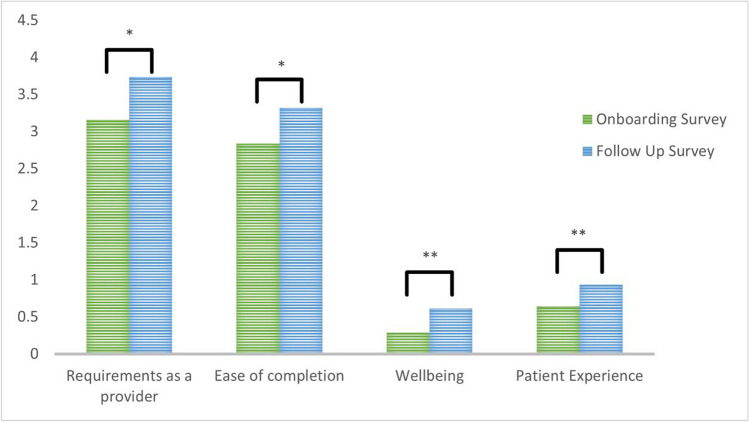
We administered a voluntary web-based survey to a convenience sample of 117 clinicians at Emory Healthcare, a large, urban integrated academic medical institution, at the time of pilot onboarding and 60 days after. The four survey questions addressed three domains: usability, clinician wellness, and patient experience. The follow-up survey contained additional questions on likelihood of recommending this technology, impact on productivity, and intentions for future use. Usability was assessed with a Likert scale with scores ranging from 1 to 5. Well-being and patient experience were assessed by comparing the proportion of negative responses. Statistical analysis was performed in Stata 14 (StataCorp, LLC, College Station, TX) comparing means of the pre- and post-intervention groups using paired-sample two-tailed t -tests, with an alpha of 0.05 determining significance. This study was not deemed to be human subjects research by the Emory University Institutional Review Board. The onboarding survey received 117 unique responses. The follow-up survey received 55 unique responses, with an overall response rate of 47%. In total, 31 participants completed both the onboarding and follow-up surveys with 58.1% identifying as male, 64.5% as white, 48.4% between the ages of 20 and 39, mean tenure as 8.4 years, and 32.3% being a primary care clinician (Table 1 ). For participants who completed both surveys, when asked if their current documentation process meets their requirements as a provider, 41.9% responded positively compared to 71% post-intervention ( p = 0.034). Concerning the ease of their current documentation process, 32.3% responded positively compared to 48.4% post-intervention ( p = 0.023). When asked about the impact of their current documentation process on their well-being, 71% responded negatively compared to 38.7% post-intervention ( p = 0.010). When asked about the impact of their current documentation process on the patient experience, 35.5% responded negatively compared to 6.5% post-intervention ( p = 0.005) (Fig. 1 ). Additionally, 35.5% of participants responded they would be highly likely to recommend this documentation solution to a colleague, 58.1% agreed that it increases their productivity, and 29.0% responded they intend to use it for the majority of their notes. Mean comparison of paired participant survey responses. “My current documentation process meets my requirements as a provider” and “my current documentation is easy for me to complete” were assessed with a Likert scale with scores ranging from 1 to 5. Well-being and patient experience were assessed by comparing the proportion of negative responses. Improvements in each area are indicated by an increase in the score. Statistically significant differences are noted with one asterisk for p < 0.05 and two asterisks for p < 0.01.
Overview
The claims and statistics of this paper haven’t been checked yet.
Free: it reads the open-access text and checks the first 5 claims that cite a source we can check. Create a free account to check every claim.
Integrity signals
Registry
Cites
Statistics
Figures
Verification
Claims the paper makes
The claims and statistics of this paper haven’t been checked yet.
Free: it reads the open-access text and checks the first 5 claims that cite a source we can check. Create a free account to check every claim.
Claims other papers make about this one
Each is checked against this paper’s own text: does it say what the citing paper says it does?
The source backs part of the claim, not all of it — or backs it for a different population, condition or comparison.
In the citing paper
“decreased burnout”
From Evaluation of an Ambient Artificial Intelligence Documentation Platform for Clinicians (2025) · cites this paper as [8]
Experimental — accuracy not yet measuredThe cited source says what the claim attributes to it.
In the citing paper
“Initial survey results showed significant improvements in self-reported documentation aspects, such as a reduction in task load,10 ease of processes,8 improved clinician wellness (including overall well-being8 and decreased burnout), and a perceived impact on patient experience8 after ambient AI.”
From Evaluation of an Ambient Artificial Intelligence Documentation Platform for Clinicians (2025) · cites this paper as [8]
The cited source says what the claim attributes to it.
In the citing paper
“improved clinician wellness (including overall well-being8 and decreased burnout)”
From Evaluation of an Ambient Artificial Intelligence Documentation Platform for Clinicians (2025) · cites this paper as [8]
The cited source says what the claim attributes to it.
In the citing paper
“a perceived impact on patient experience8 after ambient AI”
From Evaluation of an Ambient Artificial Intelligence Documentation Platform for Clinicians (2025) · cites this paper as [8]
The cited source says what the claim attributes to it.
In the citing paper
“ease of processes,8”
From Evaluation of an Ambient Artificial Intelligence Documentation Platform for Clinicians (2025) · cites this paper as [8]
2 more claims about this paper
Create a free account to see every claim other papers make about this one.
Self-check
Percentages, sums and reported differences re-computed from the paper’s own numbers.
The self-check needs the paper’s full text.
Citations
Cites
Physician stress and burnout: the impact of health information technology
Gardner, R. L., Cooper, E., Haskell, J., Harris, D. A., Poplau, S., Kroth, P. J., & Linzer, M. (2019) · Journal of the American Medical Informatics Association · doi:10.1093/jamia/ocy145 · Cited by 566
Shanafelt, T. D., West, C. P., Dyrbye, L. N., Trockel, M., Tutty, M., Wang, H., Carlasare, L. E., & Sinsky, C. (2022) · Mayo Clinic Proceedings · doi:10.1016/j.mayocp.2022.09.002 · Cited by 558
ChatGPT's Ability to Assist with Clinical Documentation: A Randomized Controlled Trial
Baker, H. P., Dwyer, E., Kalidoss, S., Hynes, K., Wolf, J., & Strelzow, J. A. (2024) · Journal of the American Academy of Orthopaedic Surgeons · doi:10.5435/jaaos-d-23-00474 · Cited by 115
Eschenroeder, H. C., Manzione, L. C., Adler-Milstein, J., Bice, C., Cash, R., Duda, C., Joseph, C., Lee, J. S., Maneker, A., Poterack, K. A., et al. (2021) · Journal of the American Medical Informatics Association · doi:10.1093/jamia/ocab053 · Cited by 89
Interfacing With the Electronic Health Record (EHR): A Comparative Review of Modes of Documentation
Avendano, J. P., Gallagher, D. O., Hawes, J., Boyle, J., Glasser, L., Aryee, J. N. A., & Katt, B. M. (2022) · Cureus · doi:10.7759/cureus.26330 · Cited by 43
Abridge: A mission driven approach to machine learning for healthcare conversation
Konam, S., & Rao, S. N. T. (2021) · Journal of Commercial Biotechnology · doi:10.5912/jcb994 · Cited by 5
Cited by
Duggan, M. J., Gervase, J., Schoenbaum, A., Hanson, W., Howell, J. T., Sheinberg, M., & Johnson, K. B. (2025) · JAMA Network Open · doi:10.1001/jamanetworkopen.2024.60637 · Cited by 249
Poon, E. G., Lemak, C. H., Rojas, J. C., Guptill, J., & Classen, D. (2025) · Journal of the American Medical Informatics Association · doi:10.1093/jamia/ocaf065 · Cited by 143
Evaluation of an Ambient Artificial Intelligence Documentation Platform for Clinicians
Stults, C. D., Deng, S., Martinez, M. C., Wilcox, J., Szwerinski, N., Chen, K. H., Driscoll, S., Washburn, J., & Jones, V. G. (2025) · JAMA Network Open · doi:10.1001/jamanetworkopen.2025.8614 · Cited by 147
Artificial Intelligence (AI) – Powered Documentation Systems in Healthcare: A Systematic Review
Bracken, A., Reilly, C., Feeley, A., Sheehan, E., Merghani, K., & Feeley, I. (2025) · Journal of Medical Systems · doi:10.1007/s10916-025-02157-4 · Cited by 113
Ambient Documentation Technology in Clinician Experience of Documentation Burden and Burnout
You, J. G.-T., Dbouk, R. H., Landman, A., Ting, D., Dutta, S., Wang, J. C., Centi, A. J., Macfarlane, M., Bechor, E., Letourneau, J., et al. (2025) · JAMA Network Open · doi:10.1001/jamanetworkopen.2025.28056 · Cited by 111
Self-citationAI Scribes in Health Care: Balancing Transformative Potential With Responsible Integration
Leung, T. I., Coristine, A. J., & Benis, A. (2025) · JMIR Medical Informatics · doi:10.2196/80898 · Cited by 99
“…relevant articles published in the last 10 years (Multimedia Appendix 1); of the most relevant articles (ie, based on their titles), 7 have been published in 2025 (as of the search date) [12,13,17,18,23-25], 8 were published in 2024 [14,15,26-31], and 3 were published in 2023 [10,32,33].”
Clinical Implementation of Artificial Intelligence Scribes in Health Care: A Systematic Review
Hassan, H., Zipursky, A. R., Rabbani, N., You, J. G.-T., Tse, G., Orenstein, E. W., Ray, M., Parsons, C. R., Shin, S., Lawton, G., et al. (2025) · Applied Clinical Informatics · doi:10.1055/a-2597-2017 · Cited by 81
“No human subjects were involved in the project.”
How Artificial Intelligence is altering the nursing workforce
Yakusheva, O., Bouvier, M. J., & Hagopian, C. O. P. (2024) · Nursing Outlook · doi:10.1016/j.outlook.2024.102300 · Cited by 67
Kanaparthy, N. S., Villuendas-Rey, Y., Bakare, T., Diao, Z., Iscoe, M., Loza, A., Wright, D., Safranek, C., Faustino, I. V., Brackett, A., et al. (2025) · JMIR AI · doi:10.2196/76743 · Cited by 57
“While patient satisfaction metrics did not show significant differences, 1 study reported an improvement in patients’ perception of their experience [31].”
InfluentialGuo, Y., Wang, J., Hu, D., Tam, S., Gilman, C., Chow, E., Perret, D., Pandita, D., & Zheng, K. (2026) · Journal of the American Medical Informatics Association · doi:10.1093/jamia/ocaf180 · Cited by 43
Pelletier, J. H., Watson, K. L., Michel, J., McGregor, R. S., & Rush, S. Z. (2025) · JAMIA Open · doi:10.1093/jamiaopen/ooaf068 · Cited by 47
Razaghi, M., Hafez, A. H., Farina, J., Scalia, I. G., Pereyra, M., Abdelfattah, F. E., Sheashaa, H., Awad, K., Lester, S. J., Ayoub, C., et al. (2026) · Cardiovascular Diagnosis and Therapy · doi:10.21037/cdt-2025-454 · Cited by 39
“Supporting these findings, Balloch et al. reported that 87% of patients felt fully attended to when AI tools were utilized, compared to 75% with the EHR alone (18), while Galloway et al. found that 91.4% of patients agreed providers spent less time on the computer (27).”
InfluentialZhao, J., Liu, H., Chen, Y., & Song, F. (2025) · BMC Medical Informatics and Decision Making · doi:10.1186/s12911-025-03324-w · Cited by 34
“Of the 23 studies included, 12 were non-randomised studies with a parallel control group [26, 27, 31–35, 40, 41, 44–46], while 11 employed a before-and-after comparison design [7, 25, 28–30, 36−39, 42, 43].”
Shin, H. S., Williams, H., Braykov, N. P., Jahan, A., Meller, J., & Orenstein, E. W. (2025) · Applied Clinical Informatics · doi:10.1055/a-2657-8087 · Cited by 27
Ambient Artificial Intelligence Scribes in Pediatric Primary Care: A Mixed Methods Study
Rabbani, N., Ray, M., Verhagen, E., Hatoun, J., Patane, L. B., & Vernacchio, L. (2025) · Applied Clinical Informatics · doi:10.1055/a-2625-0750 · Cited by 29
Evaluating an artificial intelligence scribe for clinical documentation
Alpert, J. M., Saper, R. B., Boose, E., Ruff, J. M., Hopkins, K., Gaskins, D., Guo, N., Schneider, J. P., Scibona, A. G., Gutierrez, J., et al. (2025) · Digital Health · doi:10.1177/20552076251395588 · Cited by 20
Chowdhury, A., Casey, M., Wilson, J. A., Pollak, K. I., Goldstein, B. A., Bedoya, A., & Poon, E. G. (2026) · Journal of the American Medical Informatics Association · doi:10.1093/jamia/ocag018 · Cited by 19
From de‐skilling to up‐skilling: How artificial intelligence will augment the modern physician
Oettl, F. C., Pruneski, J. A., Zsidai, B., Yu, Y., Fendrich, D., Tischer, T., Hirschmann, M. T., Zaffagnini, S., Samuelsson, K., & ESSKA Artificial Intelligence Working Group (2026) · Journal of Experimental Orthopaedics · doi:10.1002/jeo2.70677 · Cited by 20
AI and Technology Enabled Clinical Workflow Redesign
Schwamm, L. H., Pletcher, S., & Erskine, A. (2024) · Telemedicine Reports · doi:10.1089/tmr.2024.0079 · Cited by 16
Moura, L. M. V. R., Mishuris, R. G., Metlay, J. P., Habib, M., Ting, D., Gallagher, K. L., Brodney, S., Rieu‐Werden, M. L., & Haas, J. S. (2025) · Journal of General Internal Medicine · doi:10.1007/s11606-025-09979-5 · Cited by 15
Memon, S., Brand, A., Taylor, B., Michael, A., & Smithson, R. (2026) · BMC Health Services Research · doi:10.1186/s12913-025-13954-5 · Cited by 16
“This finding aligns with other studies investigating the impact of ambient listening technology on patient experience [9, 11, 21, 22].”
Artificial intelligence and physician burnout: A productivity paradox
Goodson, D. A., Garcia, B., Hogarth, M. A., & Tu, S.-P. (2025) · Learning Health Systems · doi:10.1002/lrh2.70013 · Cited by 16
“9,11,13,16,17 For example, Liu et al. found that clinicians using AI scribes reported more time savings than non-users.”
The Emergence of Applied Artificial Intelligence in the Realm of Value Based Musculoskeletal Care
Hunter, J., Dentino, P., & Jayakumar, P. (2025) · Current Reviews in Musculoskeletal Medicine · doi:10.1007/s12178-025-09982-7 · Cited by 9
“In an environment where up to 50% of a visit can be used for documentation, this technology is critical to ensure clinicians conduct quality engagements with patients , [59, 67, 69].”
Artificial intelligence medical scribes in allied health: a solution in search of evidence?
Ryan, L., & Hattingh, L. (2025) · Australian Health Review · doi:10.1071/ah25064 · Cited by 7
How limited english proficiency impacts patient engagement with telemedicine: a systematic review
Huang, A., Geracitano, J., Coffel, M., Seashore, C. J., & Khairat, S. (2025) · npj Digital Medicine · doi:10.1038/s41746-025-02090-3 · Cited by 7
“Additional researchcould look at the effectiveness of ambient listening with real-time automated translation compared to professional interpreters, which might eliminate the need for an interpreter to be present in the virtual visits 48 – 50 .”
Interviews with clinicians about an ambient artificial intelligence documentation platform
Stults, C. D., Martinez, M., Szwerinski, N., Rabbani, N., & Jones, V. G. (2026) · Journal of the American Medical Informatics Association · doi:10.1093/jamia/ocag021 · Cited by 6
The Ethics of AI Scribes as Epistemic Agents
Ursin, F., & Salloch, S. (2026) · JMIR Medical Informatics · doi:10.2196/88235 · Cited by 6
Zhang, Z., Gupta, P., Song, J., Zolnoori, M., & Topaz, M. (2025) · Journal of Nursing Scholarship · doi:10.1111/jnu.70039 · Cited by 5
Tracing the Pen: Electronic Health Records Amid the Rise of Generative AI
Nargesi, A. A., You, J. G.-T., Bitterman, D. S., Succi, M. D., Mishuris, R. G., Poon, E. G., & Landman, A. (2026) · npj Digital Medicine · doi:10.1038/s41746-026-02508-6 · Cited by 4
Validating Digital Scribes: A Scoping Review of Evaluation Practices and Clinical Use
Kerimoğlu, E., Notermans, F. V., Silkens, M., de Mul, M., Ahaus, K., & van der Boon, R. M. A. (2026) · Journal of Medical Systems · doi:10.1007/s10916-026-02392-3 · Cited by 3
“Two of these studies used pre-and post-usage surveys to evaluate user experience [5, 11], while the other two relied primarily on pre-and post-usage real-time model testing was done in one study [12 ].”
InfluentialWaken, R. J., Lou, S. S., Hofford, M. R., Eiden, E., Burk, C., Kim, S., Esker, J., Zhang, L., Maddox, T. M., Abraham, J., et al. (2026) · Journal of the American Medical Informatics Association · doi:10.1093/jamia/ocag151 · Cited by 4
Bouterse, A., Pruneski, J. A., Oettl, F. C., Zsidai, B., Tischer, T., Longo, U. G., Seil, R., Hirschmann, M. T., & Samuelsson, K. (2026) · Knee Surgery Sports Traumatology Arthroscopy · doi:10.1002/ksa.70339 · Cited by 2
“…ef fi ciency with several platforms yielding reductions to note ‐ writing time, after ‐ hours documentation, and overall encounters times — all of which have correlated with improved job satisfaction, decreased mental demand, and declining metrics of burnout amongst clinicians [2, 7, 28, 68].”
Bali, A. S., Dilmaghani, S., Hashash, J. G., Shukla, R., Picco, M. F., Kinnucan, J. A. R., Kaur, M., Kane, S. V., & Farraye, F. A. (2026) · Digestive Diseases and Sciences · doi:10.1007/s10620-026-09781-1 · Cited by 2
“For example, multiple health systems have recently assessed ambient-listening technologies as a tool intended to ease the documentation burden of providers, with mixed results [30–32].”
Xiao, N., Li, H., Chen, L., Liu, S., Xiang, Q., & Wang, P. (2026) · Frontiers in Psychology · doi:10.3389/fpsyg.2026.1840884 · Cited by 3
“…2023; Albrecht et al., 2025; van Linschoten et al., 2026; Van Tiem et al., 2026; Furrukh et al., 2025; Wendt et al., 2025; Pelletier et al., 2025; Galloway et al., 2024; Shah et al., 2025a; Lee et al., 2025; Stults et al., 2026; Omon et al., 2025; Lukac et al., 2025; Duggan et al., 2025; Harvey…”
InfluentialDoing Justice to the Patient’s Words: the Ethics of AI Scribes
Salloch, S. (2026) · The American Journal of Bioethics · doi:10.1080/15265161.2025.2608636 · Cited by 2
“The use of AI scribes is increasingly widespread, especially with General Practitioners, and there is initial evidence that the systems might have a positive impact on physicians’ documentation burden and the related clinician burnouts (Galloway et al. 2024; Olson et al. 2025).”
Poon, E. G., Rosenberg, A. L., Landman, A., & Gandhi, T. K. (2025) · The Joint Commission Journal on Quality and Patient Safety · doi:10.1016/j.jcjq.2025.07.007 · Cited by 2
Patient and caregiver perspectives on AI scribes: An evidence synthesis
Kumah, E. (2026) · Health Policy and Technology · doi:10.1016/j.hlpt.2026.101273 · Cited by 1
Acceptance of AI scribes within hospital allied health settings: A mixed methods study
Ryan, L., Hattingh, L., Wall, D., Stanich, H., Ross, N., Cal, J. D., Milne, E., & Wenke, R. (2026) · Digital Health · doi:10.1177/20552076261437234 · Cited by 1
Adoption and utility of digital scribes in clinical practice – A scoping review
Yu, S. H. T., Li, J., Carland, J. E., Ritchie, A., Dunn, A., & Baysari, M. T. (2026) · International Journal of Medical Informatics · doi:10.1016/j.ijmedinf.2026.106630 · Cited by 2
PRACTALL 2025: Artificial intelligence—application of allergy and immunology to patient care
Shamji, M. H., Rider, N. L., Adcock, I. M., Pongdee, T., Giacco, S. D., Chang, C., Jaen, M. T., & Williams, P. V. (2026) · Journal of Allergy and Clinical Immunology · doi:10.1016/j.jaci.2026.04.031 · Cited by 1
Emerging Perioperative Uses of Artificial Intelligence to Aid in Performing Clinical Work
Zuhn, H., & Mroch, J. M. (2025) · AORN Journal · doi:10.1002/aorn.70003 · Cited by 1
Hot topics in artificial intelligence
Henry, S. B., & Poon, E. G. (2025) · Journal of the American Medical Informatics Association · doi:10.1093/jamia/ocae324 · Cited by 1
Davis, D., Wray, J., Oldham, G., Elkeles, D., Borham, T., Gough, P., Tomlinson, M., James, N., Hill, A., Sullivan, E., et al. (2025) · medRxiv · doi:10.64898/2025.11.27.25340564 · Cited by 1
Opportunities for using artificial intelligence in air pollution and health research
Peng, R. D., & Chambliss, S. (2024) · Journal of Allergy and Clinical Immunology · doi:10.1016/j.jaci.2024.09.022
Large Language Models (LLMs) for Healthcare: A Practical Guide to Their Process and Evaluation
Harper, J. R. (2025) · Productivity Press eBooks · doi:10.4324/9781003541769
Lessons From One FQHC’s Experience With Artificial Intelligence
Wang, G., Kennedy, S. H., Johnson, M. L., & Avellino, L. (2025) · Journal of Ambulatory Care Management · doi:10.1097/jac.0000000000000541
Li, H., Khanna, V. V., Apathy, N. C., Holmgren, A. J., Loza, A. J., & Melnick, E. R. (2026) · JAMIA Open · doi:10.1093/jamiaopen/ooag018
Alsaleh, H., Singhal, A., Mehrotra, A., Kurucz, A., & Giudice, M. D. (2026) · Journal of Global Information Management · doi:10.4018/jgim.405162 · Cited by 1
Irgang, L., Svedberg, P., Nygren, J., & Petersson, L. (2026) · BMJ Open · doi:10.1136/bmjopen-2025-110553 · Cited by 1
“19 20 While the implementation of AI in healthcare can contribute to increased quality, efficiency and improved working environments, 21 realising these benefits requires careful consideration of how AI technologies reshape professional roles, relationships and work processes.”
Bouterse, A., Pruneski, J. A., Oettl, F. C., Zsidai, B., Longo, U. G., Tischer, T., Hirschmann, M. T., & Samuelsson, K. (2026) · Knee Surgery Sports Traumatology Arthroscopy · doi:10.1002/ksa.70428
Zhou, Z., Geracitano, J., Hatoum, S., Yu, F., & Khairat, S. (2026) · International Journal of Medical Informatics · doi:10.1016/j.ijmedinf.2026.106609
Moura, L. M. V. R., Mishuris, R. G., Metlay, J. P., Habib, M., You, J. G.-T., Gallagher, K. L., Brodney, S., Rieu‐Werden, M. L., & Haas, J. S. (2026) · JAMIA Open · doi:10.1093/jamiaopen/ooag155
“11,12,22,24,26 These outcomes provide a reliable, high-resolution view of documentation burden and efficiency.”
Kim, S., Kang, J. Y., Yun, H., Park, J., Cha, W. C., Kim, T., & Yoo, H. (2026) · doi:10.2196/preprints.109836
Zhu, X., Cui, H., Zhang, L., Zhang, G., Ning, S., & Peng, Y. (2026) · Scientific Reports · doi:10.1038/s41598-026-67825-y
Measuring toxicity better: patient-reported outcome-informed calibration for CTCAE assessment
Lee, M. K., Mutter, R. W., & Mandrekar, S. J. (2026) · Translational Cancer Research · doi:10.21037/tcr-2026-1394
“Approaches such as passive or ambient data collection, including conversational or ambient listening systems embedded within clinical encounters, offer the potential to capture patient symptom narratives with enhanced reliability (33,34).”
Effect of Ambient Listening Technology on E&M Codes in Orthopaedic Surgery
Arias, J., O'Beirne, E., Gardner, L. S. S., Rizk, P. A., Aziz, K. T., Sherman, C. E., & Springer, B. D. (2026) · Journal of the American Academy of Orthopaedic Surgeons · doi:10.5435/jaaos-d-26-00442
Human-Centered Evaluation of Ambient Artificial Intelligence Clinical Documentation
Guo, Y. (2026) · eScholarship (California Digital Library)
Comparative evaluation of ambient digital scribe systems in clinical documentation
Weiss, E., Zsenits, B., Nasar, F., Phillips, M., Mudgundi, V., Salhab, T., Muth, A., Zhu, K., Kolosko, J., Hansen, S., et al. (2026) · Journal of the American Medical Informatics Association · doi:10.1093/jamia/ocag157
Human-Centric Wearable AI: Defining an Emerging Form of Human-Computer InteractionPreprint
Pedersen, I. (2026) · SSRN Electronic Journal · doi:10.2139/ssrn.7541966
Brumer, M., Vandersteen, L., Duquet, N., Strauven, G., Sadeleer, E. D., Meyer, G. R. Y. D., & Loof, H. D. (2026) · Exploratory Research in Clinical and Social Pharmacy · doi:10.1016/j.rcsop.2026.100752
Boustani, S., Staras, C. O., Rich, A., Griffin, A., & Wilson, A. J. (2026) · medRxiv · doi:10.64898/2026.10.08.26365036
Ryan, L., Hattingh, L., Wall, D., Stanich, H., Ross, N., Cal, J. D., Milne, E., & Wenke, R. (2026) · Journal of Medical Internet Research · doi:10.2196/88088
“Additionally, this research has been largely situated within medical disciplines [11,14-16].”
Zellner, K. A., Malhotra, K., Szerencsy, A. C., Dove, G., & Lawrence, K. S. (2026) · JAMIA Open · doi:10.1093/jamiaopen/ooag208
Artificial intelligence: Physicians and patients’ communication
Meo, S. A. (2026) · Elsevier eBooks · doi:10.1016/b978-0-443-45973-3.00016-6
KI-basierte Entscheidungsunterstützung in der Beobachtung und Pflegediagnostik
Sumerauer, S., & Kramer, D. (2026) · Springer eBooks · doi:10.1007/978-3-662-73432-2_5
Metadata
- Authors
- Galloway, J. L., Munroe, D., Vohra-Khullar, P. D., Holland, C., Solis, M. A., Moore, M. A., & Dbouk, R. H.
- Affiliations
- Emory University (US)
- Emory Healthcare (US)
- Corresponding author
- Dbouk, Reema H.
- ORCID
- Venue
- Journal of General Internal Medicine
- Published
- 2024-07-09
- Volume
- 39
- Issue
- 13
- Pages
- 2625-2627
- ISSN
- 0884-8734 (ISSN-L)
- 1525-1497
- PMC
- PMC11436573
- OpenAlex
- W4400456006
- Cited by
- 56
- References
- 6
- Citations by year
- 2026: 28 · 2025: 25 · 2024: 3
- FWCI
- 17.11
- Type
- journal article
- Language
- en
- Open access
- hybrid
- doi.org
- Licence
- cc-by
- creativecommons.org/licenses/by/4.0 (tdm)
- creativecommons.org/licenses/by/4.0 (vor)
- Locations
- Journal of General Internal Medicine (publishedVersion, cc-by)
- PubMed Central (publishedVersion, cc-by)
- PubMed (publishedVersion)
- Topics
- Health Sciences › Health Professions › Health Information Management › Electronic Health Records Systems
- Health Sciences › Medicine › Health Informatics › Artificial Intelligence in Healthcare and Education
- Health Sciences › Nursing › Research and Theory › Nursing Diagnosis and Documentation
- Keywords
- clinical documentation, artificial intelligence, speech recognition, clinician well-being, usability, patient experience, clinician productivity, technology adoption, provider satisfaction, health technology implementation, primary care providers, academic medical centers, intention to use technology
- MeSH terms
- Artificial Intelligence, Documentation, Humans, Electronic Health Records
About these checks
Registry, retraction, Cites and statistics results are computed, not judged, with one exception: a printed reference that no index lists is read once by a model before it counts as a citation error. Claims are extracted by a model and kept only when their quote appears verbatim in the text; each cited source is then checked, with a model’s help, for whether it says what the claim relies on. Those verdicts can be wrong — read the claim’s quote and the cited source before relying on one.
Statistics and arithmetic are recomputed, not judged.
Confidence bands are shown only for fields calibrated on our annotated test set. None is calibrated yet, so no band is shown.
What counts as a claim ›How we measure confidence ›How we check this ›
Are you an author, or do you see a problem with this page? Request a review
Data sources
Bibliographic data: Semantic Scholar, OpenAlex, Crossref.
Contains information from the Semantic Scholar Academic Graph Datasets, made available under the ODC Attribution License (ODC-BY 1.0).
Semantic Scholar’s data is described in: Kinney, R., et al. (2023). The Semantic Scholar Open Data Platform. arXiv:2301.10140.
