

Establishment and validation of cell pools using primary muscle cells derived from satellite cells of pig skeletal muscle
Open accessThe DOI matches its Crossref record; 27 of the 27 references it cites were found in a registry or an index.
Abstract
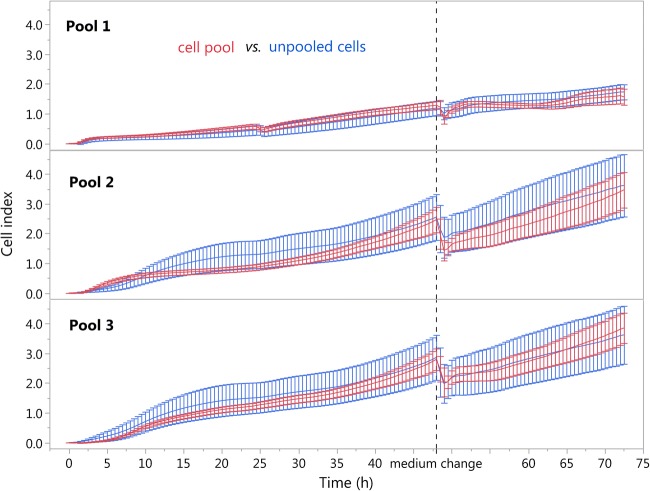
Primary cell cultures derived from satellite cells of skeletal muscle provide an appropriate in vitro model for proliferating myoblasts and differentiating myotubes for muscle biological research. These cell cultures may consist of harvested cells per animal or of a cell pool made of cells from several animals. However, cell pooling reduces the biological variability of the different cell donors. On the other hand, the use of cell pools offers an opportunity to use less donor tissue and to perform long-term projects with a broad spectrum of analysis and replications. In the literature, information about the donors of cell pools, the procedure used for pooling, and the characterization/validation of cell pools is often lacking. In this study, we established three cell pools consisting of M. rhomboideus or M. longissimus from ten or six piglets, each with one gender and medium birth weight. Real-time impedimetric monitoring was used to evaluate the proliferative growth behavior of myoblasts for the cell pools in comparison to their corresponding unpooled cells over a period of 72 h, with a measurement being taken every 30 min. For each of the tested cell pools, cell index, slope, and doubling time did not differ between the cell pool and the unpooled cells of the donor animals. Differentiation capacity and mRNA expression of PAX7 , MYOD and MYOG remained unchanged between the cell pool and the unpooled cells. Current results support that the use of cell pools is an appropriate method to reflect the average proliferative growth behavior of unpooled cells.
Overview
The claims and statistics of this paper haven’t been checked yet.
Free: it reads the open-access text and checks the first 5 claims that cite a source we can check. Create a free account to check every claim.
Integrity signals
Registry
Cites
Statistics
Figures
Verification
Claims the paper makes
The claims and statistics of this paper haven’t been checked yet.
Free: it reads the open-access text and checks the first 5 claims that cite a source we can check. Create a free account to check every claim.
Claims other papers make about this one
Each is checked against this paper’s own text: does it say what the citing paper says it does?
The source backs part of the claim, not all of it — or backs it for a different population, condition or comparison.
In the citing paper
“This strategy has been shown to significantly reduce variability in proliferation, differentiation, metabolic activity, and other cellular responses, thereby improving experimental reproducibility (Stoddart et al. 2012;Metzger et al. 2020;Kannan et al. 2024).”
From Primary cell cultures versus immortalized cell lines: critical comparative insights into biological fidelity and translational applications (2026) · cites this paper as Metzger et al. 2020
Experimental — accuracy not yet measured
Self-check
Percentages, sums and reported differences re-computed from the paper’s own numbers.
The self-check needs the paper’s full text.
Citations
Cites
SATELLITE CELL OF SKELETAL MUSCLE FIBERS
Mauro, A. (1961) · The Journal of Cell Biology · doi:10.1083/jcb.9.2.493 · Cited by 3,683 · cited 2×
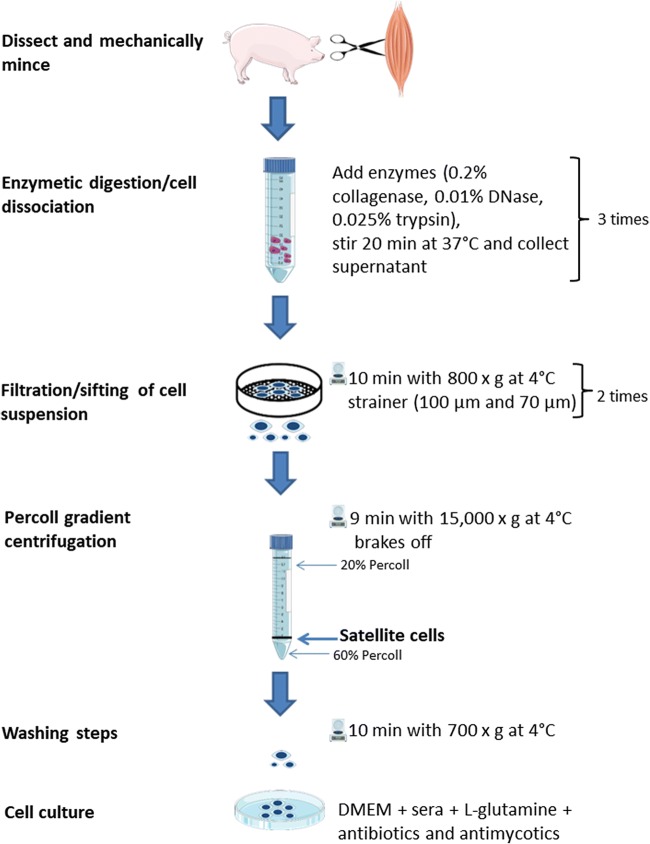
“The discovery of satellite cells (Mauro 1961) from skeletal muscle, their isolation, and their subsequent cultivation as proliferating and differentiating progenies (myoblasts and myotubes) provides a unique model for muscle biology research.”
A morphological biosensor for mammalian cells
Giaever, I., & Keese, C. R. (1993) · Nature · doi:10.1038/366591a0 · Cited by 770 · cited 2×
“Impedance as a cellular readout was previously established (Giaever and Keese 1993) and previously used for primary skeletal muscle myoblasts (Sente et al.”
Proliferation of muscle satellite cells on intact myofibers in culture
Bischoff, R. (1986) · Developmental Biology · doi:10.1016/0012-1606(86)90234-4 · Cited by 402 · cited 1×
“…Biology, Leibniz Institute for Farm Animal Biology (FBN), Wilhelm-Stahl-Allee 2, D-18196, Dummerstorf, Germany pioneered by Bekoff and Betz (1977) and Bischoff (1986) using rat skeletal muscle and was later performed with goat and pig muscle fibers (Yamanouchi et al. 2009; Wilschut et al. 2010).”
Looking back to the embryo: defining transcriptional networks in adult myogenesis
Parker, M. H., Seale, P., & Rudnicki, M. A. (2003) · Nature Reviews Genetics · doi:10.1038/nrg1109 · Cited by 366 · cited 2×
“It is known that the adult myogenesis occurring after the activation of satellite cells can be viewed as a suitable model for embryonic myogenesis and that their programmed transcriptional profiles are similar (Parker et al. 2003).”
Replicating myoblasts express a muscle-specific phenotype.
Kaufman, S. J., & Foster, R. F. (1988) · Proceedings of the National Academy of Sciences · doi:10.1073/pnas.85.24.9606 · Cited by 207 · cited 2×
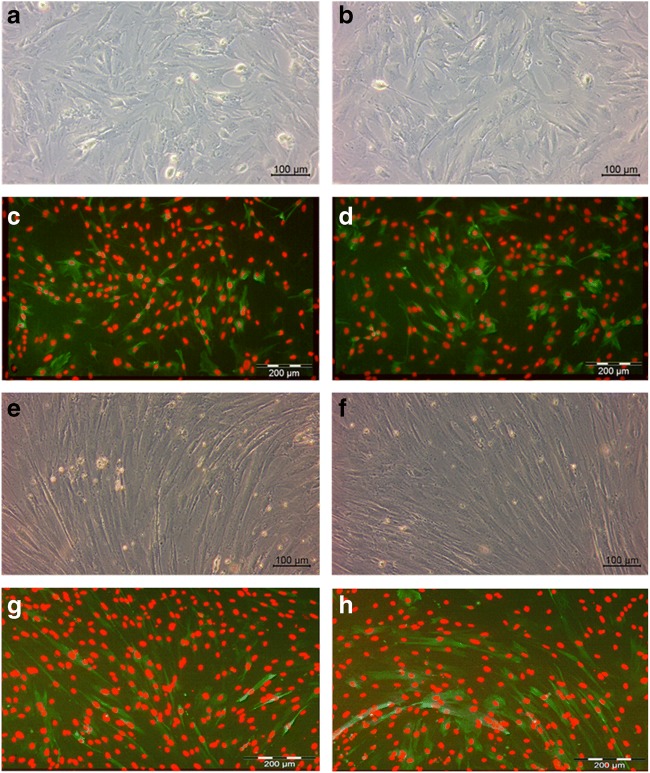
“…of the percentage of myogenic cells by immunostaining using an antibody against desmin (D1033 mouse monoclonal anti-desmin antibody, SigmaAldrich), which is characteristic of replicating myoblasts (Kaufman and Foster 1988) and 4,6-diami-dino-2phenylindole (DAPI, Carl Roth) for the nuclei.”
Enzymatic liberation of myogenic cells from adult rat muscle
Bischoff, R. (1974) · The Anatomical Record · doi:10.1002/ar.1091800410 · Cited by 190 · cited 1×
“This method was established by Bischoff (1974) using rat muscle and subsequently adapted for farm animals, such as sheep (Dodson et al. 1986), chicken (Yablonka-Reuveni et al. 1987), cattle (Dodson et al. 1987), turkeys (McFarland et al. 1988), fish (Powell et al. 1989), pigs (Doumit and Merkel…”
Isolation and clonal analysis of satellite cells from chicken pectoralis muscle
Yablonka-Reuveni, Z., Quinn, L. S., & Nameroff, M. (1987) · Developmental Biology · doi:10.1016/0012-1606(87)90226-0 · Cited by 165 · cited 2×
“…method was established by Bischoff (1974) using rat muscle and subsequently adapted for farm animals, such as sheep (Dodson et al. 1986), chicken (Yablonka-Reuveni et al. 1987), cattle (Dodson et al. 1987), turkeys (McFarland et al. 1988), fish (Powell et al. 1989), pigs (Doumit and Merkel…”
Properties of isolated adult rat muscle fibres maintained in tissue culture.
Bekoff, A., & Betz, W. J. (1977) · The Journal of Physiology · doi:10.1113/jphysiol.1977.sp012013 · Cited by 111 · cited 1×
“…4 Institute of Genome Biology, Leibniz Institute for Farm Animal Biology (FBN), Wilhelm-Stahl-Allee 2, D-18196, Dummerstorf, Germany pioneered by Bekoff and Betz (1977) and Bischoff (1986) using rat skeletal muscle and was later performed with goat and pig muscle fibers (Yamanouchi et al. 2009;…”
Conditions for isolation and culture of porcine myogenic satellite cells
Doumit, M. E., & Merkel, R. A. (1992) · Tissue and Cell · doi:10.1016/0040-8166(92)90098-r · Cited by 105 · cited 3×
“…(1974) using rat muscle and subsequently adapted for farm animals, such as sheep (Dodson et al. 1986), chicken (Yablonka-Reuveni et al. 1987), cattle (Dodson et al. 1987), turkeys (McFarland et al. 1988), fish (Powell et al. 1989), pigs (Doumit and Merkel 1992), and horses (Greene and Raub 1992).”
Atienzar, F. A., Tilmant, K., Gerets, H. H., Toussaint, G., Speeckaert, S., Hanon, E., Depelchin, O., & Dhalluin, S. (2011) · SLAS Discovery · doi:10.1177/1087057111402825 · Cited by 105 · cited 1×
“Most publications using impedance-based label-free technology have focused on the effects of various compounds on cellular adhesion and proliferation (Atienzar et al. 2011; Will et al. 2012).”
Cited by
Current Issues and Technical Advances in Cultured Meat Production: A Review
Hong, T. K., Shin, D., Choi, J., Tae, J., & Han, S. G. (2021) · Food Science of Animal Resources · doi:10.5851/kosfa.2021.e14 · Cited by 119
Bioprocessing technology of muscle stem cells: implications for cultured meat
Guan, X., Zhou, J., Du, G., & Chen, J. (2021) · Trends in biotechnology · doi:10.1016/j.tibtech.2021.11.004 · Cited by 87
Gu, H., Zhou, Y., Yang, J., Li, J., Peng, Y., Zhang, X., Miao, Y., Jiang, W. J., Bu, G., Hou, L., et al. (2021) · The FASEB Journal · doi:10.1096/fj.202001812rr · Cited by 83
Ma, Y., Deng, B., He, R., & Huang, P. (2024) · Heliyon · doi:10.1016/j.heliyon.2024.e24593 · Cited by 79
Samad, M. A., Saiman, M. Z., Majid, N. B. A., Karsani, S. A., & Yaacob, J. S. (2021) · Molecules · doi:10.3390/molecules26020376 · Cited by 71
Metadata
- Authors
- Metzger, K., Tuchscherer, A., Palin, M.-F., Ponsuksili, S., & Kalbe, C.
- Affiliations
- Research Institute for Farm Animal Biology (FBN) (DE)
- Agriculture and Agri-Food Canada (CA)
- Corresponding author
- Kalbe, Claudia
- Venue
- In Vitro Cellular & Developmental Biology - Animal
- Published
- 2019-12-23
- Volume
- 56
- Issue
- 3
- Pages
- 193-199
- ISSN
- 1071-2690 (ISSN-L)
- 1543-706X
- PMC
- PMC7186252
- OpenAlex
- W2996611931
- Cited by
- 32
- References
- 27
- Citations by year
- 2026: 2 · 2025: 2 · 2024: 5 · 2023: 6 · 2022: 5 · 2021: 9 · 2020: 3
- FWCI
- 1.41
- Type
- journal article
- Language
- en
- Open access
- hybrid
- doi.org
- Licence
- cc-by
- creativecommons.org/licenses/by/4.0 (tdm)
- creativecommons.org/licenses/by/4.0 (vor)
- Locations
- In Vitro Cellular & Developmental Biology - Animal (publishedVersion, cc-by)
- PubMed Central (publishedVersion, cc-by)
- PubMed (publishedVersion)
- Funders
- Leibniz-Institut für Nutztierbiologie
- Leibniz-Gemeinschaft
- Topics
- Life Sciences › Biochemistry, Genetics and Molecular Biology › Molecular Biology › Muscle Physiology and Disorders
- Life Sciences › Agricultural and Biological Sciences › Animal Science and Zoology › Meat and Animal Product Quality
- Life Sciences › Biochemistry, Genetics and Molecular Biology › Molecular Biology › Pluripotent Stem Cells Research
- Keywords
- satellite cells, pig skeletal muscle, myoblast proliferation, myotube differentiation, Pax7, MyoD, myogenin, in vitro muscle model
- MeSH terms
- Animals, Cells, Cultured, Phenotype, Swine, Time Factors, Muscle, Skeletal, Cell Culture Techniques, Muscle Development, Satellite Cells, Skeletal Muscle
About these checks
Registry, retraction, Cites and statistics results are computed, not judged, with one exception: a printed reference that no index lists is read once by a model before it counts as a citation error. Claims are extracted by a model and kept only when their quote appears verbatim in the text; each cited source is then checked, with a model’s help, for whether it says what the claim relies on. Those verdicts can be wrong — read the claim’s quote and the cited source before relying on one.
Statistics and arithmetic are recomputed, not judged.
Confidence bands are shown only for fields calibrated on our annotated test set. None is calibrated yet, so no band is shown.
What counts as a claim ›How we measure confidence ›How we check this ›
Are you an author, or do you see a problem with this page? Request a review
How to cite
Cite CoChat for the checks on this page, and the paper for its own findings.
- This page
- CoChat. (2026). Citation check: Establishment and validation of cell pools using primary muscle cells derived from satellite cells of pig skeletal muscle. https://app.cochat.ai/papers/10.1007/s11626-019-00428-2
- The paper
- Metzger, K., Tuchscherer, A., Palin, M.-F., Ponsuksili, S., & Kalbe, C. (2020). Establishment and validation of cell pools using primary muscle cells derived from satellite cells of pig skeletal muscle. In Vitro Cellular & Developmental Biology - Animal. https://doi.org/10.1007/s11626-019-00428-2
Data sources
Bibliographic data: Semantic Scholar, OpenAlex, Crossref.
Contains information from the Semantic Scholar Academic Graph Datasets, made available under the ODC Attribution License (ODC-BY 1.0).
Semantic Scholar’s data is described in: Kinney, R., et al. (2023). The Semantic Scholar Open Data Platform. arXiv:2301.10140.
