

Taking advantage of drug resistance, a new approach in the war on cancer
Open accessThe DOI matches its Crossref record; 32 of the 32 references it cites were found in a registry or an index.
Abstract
Identification of the driver mutations in cancer has resulted in the development of a new category of molecularly targeted anti-cancer drugs. However, as was the case with conventional chemotherapies, the effectiveness of these drugs is limited by the emergence of drug-resistant variants. While most cancer therapies are given in combinations that are designed to avoid drug resistance, we discuss here therapeutic approaches that take advantage of the changes in cancer cells that arise upon development of drug resistance. This approach is based on notion that drug resistance comes at a fitness cost to the cancer cell that can be exploited for therapeutic benefit.We discuss the development of sequential drug therapies in which the first therapy is not given with curative intent, but to induce a major new sensitivity that can be targeted with a second drug that selectively targets the acquired vulnerability. This concept of collateral sensitivity has hitherto not been used on a large scale in the clinic and holds great promise for future cancer therapy.
Overview
The claims and statistics of this paper haven’t been checked yet.
Free: it reads the open-access text and checks the first 5 claims that cite a source we can check. Create a free account to check every claim.
Integrity signals
Registry
Cites
Statistics
Figures
Verification
Claims the paper makes
The claims and statistics of this paper haven’t been checked yet.
Free: it reads the open-access text and checks the first 5 claims that cite a source we can check. Create a free account to check every claim.
Claims other papers make about this one
Each is checked against this paper’s own text: does it say what the citing paper says it does?
The cited source says what the claim attributes to it.
In the citing paper
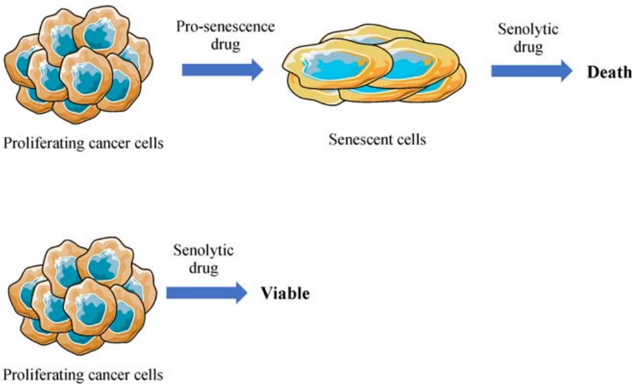
“It has been proposed that a two-step combination of senescence-inducing anti-cancer agents followed by senolytics could be an improved strategy to treat cancer 43.”
From Cardiac glycosides are broad-spectrum senolytics (2019) · cites this paper as [43]
Self-check
Percentages, sums and reported differences re-computed from the paper’s own numbers.
The self-check needs the paper’s full text.
Citations
Cites
Inhibition of Mutated, Activated BRAF in Metastatic Melanoma
Flaherty, K. T., Puzanov, I., Kim, K. B., Ribas, A., McArthur, G. A., Sosman, J. A., O'Dwyer, P. J., Lee, R. J., Grippo, J. F., Nolop, K., et al. (2010) · New England Journal of Medicine · doi:10.1056/nejmoa1002011 · Cited by 3,103
Cellular senescence: from physiology to pathology
Muñoz-Espín, D., & Serrano, M. (2014) · Nature Reviews Molecular Cell Biology · doi:10.1038/nrm3823 · Cited by 2,818
Rb-mediated heterochromatin formation and silencing of E2F target genes during cellular senescence
Narita, M., Nuñez, S., Heard, E., Narita, M., Lin, A. W., Hearn, S. A., Spector, D. L., Hannon, G. J., & Lowe, S. W. (2003) · Cell · doi:10.1016/s0092-8674(03)00401-x · Cited by 2,278
Improved Survival with MEK Inhibition in BRAF-Mutated Melanoma
Flaherty, K. T., Robert, C., Hersey, P., Nathan, P., Garbe, C., Milhem, M., Demidov, L. V., Hassel, J. C., Rutkowski, P., Mohr, P., et al. (2012) · New England Journal of Medicine · doi:10.1056/nejmoa1203421 · Cited by 2,160
Unresponsiveness of colon cancer to BRAF(V600E) inhibition through feedback activation of EGFR
Prahallad, A., Sun, C., Huang, S., Di Nicolantonio, F., Salazar, R., Zecchin, D., Beijersbergen, R. L., Bardelli, A., & Bernards, R. (2012) · Nature · doi:10.1038/nature10868 · Cited by 2,051
Self-citationDependency of a therapy-resistant state of cancer cells on a lipid peroxidase pathway
Viswanathan, V. S., Ryan, M. J., Dhruv, H. D., Gill, S., Eichhoff, O. M., Seashore-Ludlow, B., Kaffenberger, S. D., Eaton, J. K., Shimada, K., Aguirre, A. J., et al. (2017) · Nature · doi:10.1038/nature23007 · Cited by 2,011
Clearance of senescent cells by ABT263 rejuvenates aged hematopoietic stem cells in mice
Chang, J., Wang, Y., Shao, L., Laberge, R.-M., Demaria, M., Campisi, J., Janakiraman, K., Sharpless, N. E., Ding, S., Feng, W., et al. (2016) · Nature Medicine · doi:10.1038/nm.4010 · Cited by 1,819
Drug-tolerant persister cancer cells are vulnerable to GPX4 inhibition
Hangauer, M. J., Viswanathan, V. S., Ryan, M. J., Bole, D., Eaton, J. K., Matov, A., Galeas, J., Dhruv, H. D., Berens, M. E., Schreiber, S. L., et al. (2017) · Nature · doi:10.1038/nature24297 · Cited by 1,799
Addiction to Oncogenes--the Achilles Heal of Cancer
Weinstein, I. B. (2002) · Science · doi:10.1126/science.1073096 · Cited by 1,728
Improved survival with MEK Inhibition in BRAF-mutated melanoma for the METRIC Study Group
Flaherty, K. T., Robert, C., Hersey, P., Nathan, P., Garbe, C., Milhem, M. M., Демидов, Л. В., Hassel, J. C., Rutkowski, P. L., Mohr, P., et al. (2012) · Zurich Open Repository and Archive (University of Zurich) · doi:10.5167/uzh-63198 · Cited by 1,330
Cited by
Resistance mechanisms to osimertinib in EGFR-mutated non-small cell lung cancer
Leonetti, A., Sharma, S., Minari, R., Perego, P., Giovannetti, E., & Tiseo, M. (2019) · British Journal of Cancer · doi:10.1038/s41416-019-0573-8 · Cited by 1,409
Exploiting senescence for the treatment of cancer
Wang, L., Lankhorst, L., & Bernards, R. (2022) · Nature Reviews Cancer · doi:10.1038/s41568-022-00450-9 · Cited by 867
Self-citationEvolving therapeutic landscape of advanced hepatocellular carcinoma
Yang, C., Zhang, H., Zhang, L., Zhu, A. X., Bernards, R., Qin, W., & Wang, C. (2023) · Nature Reviews Gastroenterology & Hepatology · doi:10.1038/s41575-022-00704-9 · Cited by 727
Self-citationCardiac glycosides are broad-spectrum senolytics
Guerrero, A., Herranz, N., Sun, B., Wagner, V., Gallage, S., Guiho, R., Wolter, K., Pombo, J., Irvine, E. E., Innes, A. J., et al. (2019) · Nature Metabolism · doi:10.1038/s42255-019-0122-z · Cited by 359
Patient-derived micro-organospheres enable clinical precision oncology
Ding, S., Hsu, C., Wang, Z., Natesh, N. R., Millen, R., Negrete, M., Giroux, N., Rivera, G. O., Dohlman, A., Bose, S., et al. (2022) · Cell Stem Cell · doi:10.1016/j.stem.2022.04.006 · Cited by 228
Senescence as a therapeutic target in cancer and age-related diseases
McHugh, D., Durán, I., & Gil, J. (2025) · Nature Reviews Drug Discovery · doi:10.1038/s41573-024-01074-4 · Cited by 197
“The ‘one–two punch’ approach, wherein tumours are induced to senesce and subsequently exposed to senolytics that clear away the residual senescent cancer cells, has been proposed for cancer therapy 178 (Fig.”
Recent advances in MOF-based nanoplatforms generating reactive species for chemodynamic therapy
Zhong, Y., Li, X., Chen, J., Wang, X., Wei, L., Fang, L., Kumar, A., Zhuang, S., & Liu, J. (2020) · Dalton Transactions · doi:10.1039/d0dt01882a · Cited by 158
Senescence and the tumor-immune landscape: Implications for cancer immunotherapy
Chibaya, L., Snyder, J. T., & Ruscetti, M. A. (2022) · Seminars in Cancer Biology · doi:10.1016/j.semcancer.2022.02.005 · Cited by 161
Fighting Drug Resistance through the Targeting of Drug-Tolerant Persister Cells
De Conti, G., Dias, M. H., & Bernards, R. (2021) · Cancers · doi:10.3390/cancers13051118 · Cited by 111
“Such a “collateral sensitivity” approach has been successfully used to target drug-tolerant persister cells [30] as well as cells that have progressed to full-blown drug resistance [81].”
BackgroundSelf-citationBoron Quantum Dots for Photoacoustic Imaging-Guided Photothermal Therapy
Guo, T., Tang, Q., Guo, Y., Qiu, H., Dai, J., Xing, C., Zhuang, S., & Huang, G. (2020) · ACS Applied Materials & Interfaces · doi:10.1021/acsami.0c21198 · Cited by 112
Targeting senescence as an anticancer therapy
Bousset, L., & Gil, J. (2022) · Molecular Oncology · doi:10.1002/1878-0261.13312 · Cited by 105
Drug repurposing to overcome resistance to various therapies for colorectal cancer
Fong, W., & To, K. K. W. (2019) · Cellular and Molecular Life Sciences · doi:10.1007/s00018-019-03134-0 · Cited by 81
Waller, N. J. E., Cheung, C., Cook, G. M., & McNeil, M. B. (2023) · Nature Communications · doi:10.1038/s41467-023-37184-7 · Cited by 84
Programmable Drug Release from a Dual-Stimuli Responsive Magnetic Metal–Organic Framework
Akbar, M. U., Badar, M., & Zaheer, M. (2022) · ACS Omega · doi:10.1021/acsomega.2c04144 · Cited by 53
Du, M., Sun, L., Guo, J. J., & Lv, H. (2024) · Pharmacological Research · doi:10.1016/j.phrs.2024.107198 · Cited by 57
Benítez, S., Cordero, A., Santamaría, P. G., Redondo-Pedraza, J., Rocha, A. S., Collado-Solé, A., Jimenez, M., Sanz-Moreno, A., Yoldi, G., Santos, J. C., et al. (2021) · Developmental Cell · doi:10.1016/j.devcel.2021.04.022 · Cited by 41
“Several senolytic drugs, such as ABT263 (navitoclax), have been shown to preferentially kill senescent cells with a wide range of beneficial effects (Baker et al., 2011; Wang and Bernards, 2018; Zhu et al., 2016, 2015).”
BackgroundFatty acid synthase ( FASN ) signalome: A molecular guide for precision oncology
Menéndez, J. A., Cuyàs, E., Encinar, J. A., Steen, T. V., Verdura, S., Llop‐Hernández, À., López, J., Serrano‐Hervás, E., Osuna, S., Martín-Castillo, B., et al. (2024) · Molecular Oncology · doi:10.1002/1878-0261.13582 · Cited by 46
Wang, X., Jowsey, W. J., Cheung, C., Smart, C. J., Klaus, H. R., Seeto, N. E. J., Waller, N. J. E., Chrisp, M. T., Peterson, A. L., Ofori-Anyinam, B., et al. (2024) · Nature Communications · doi:10.1038/s41467-024-54072-w · Cited by 33
“Genomic DNA was harvested on days 5, 10 and 14 and used to generate amplicon libraries for deep sequencing.”
SMARCA4 regulates the NK-mediated killing of senescent cells
Reen, V., D’Ambrosio, M., Søgaard, P. P., Tyson, K., Leeke, B. J., Clément, I., Dye, I. C., Pombo, J., Kuba, A., Lan, Y., et al. (2025) · Science Advances · doi:10.1126/sciadv.adn2811 · Cited by 33
“In addition, “one-two punch” therapies, which combine chemotherapy, radiotherapy, or targeted drugs able to induce senescence with senolytics, have been postulated as a promising anticancer approach ( 17 ).”
Cherradi, S., Garambois, V., Marines, J., Andrade, A. F., Fauvre, A., Morand, O., Fargal, M., Mancouri, F., Ayrolles-Torro, A., Vié, N., et al. (2023) · Cell & Bioscience · doi:10.1186/s13578-023-01015-5 · Cited by 23
“induction of CLDN1 expression by oxaliplatin treatment) that occur during drug resistance development [55].”
BackgroundPlaying cancer at its own game: activating mitogenic signaling as a paradoxical intervention
Dias, M. H., & Bernards, R. (2021) · Molecular Oncology · doi:10.1002/1878-0261.12979 · Cited by 23
Self-citationSobeai, H. M. A., Alohaydib, M. H., Alhoshani, A., Alhazzani, K., Almutairi, M. M., Saleh, T., Gewirtz, D. A., & Alotiabi, M. R. (2021) · Saudi Pharmaceutical Journal · doi:10.1016/j.jsps.2021.12.004 · Cited by 20
Targeting cellular senescence to combat cancer and ageing
Wang, C., Hao, X., & Zhang, R. (2022) · Molecular Oncology · doi:10.1002/1878-0261.13266 · Cited by 21
Pharmacological CDK4/6 inhibition promotes vulnerability to lysosomotropic agents in breast cancer
Nehme, J., Maassen, S., Bravaccini, S., Zanoni, M., Gianni, C., Giorgi, U. D., Soto-Gamez, A., Altulea, A., Gheorghe, T., Wang, B., et al. (2025) · The EMBO Journal · doi:10.1038/s44318-025-00371-x · Cited by 23
“Therefore, a second therapy that can remove senescent-like cancer cells by targeting the vulnerability induced by the fi rst drug, a strategy known as the one-two punch, is a promising approach for maximizing therapeutic ef fi cacy (Sieben et al, 2018; Wang and Bernards, 2018).”
Mitochondrial priming and response to BH3 mimetics in “one-two punch” senogenic-senolytic strategies
López, J., Llop‐Hernández, À., Verdura, S., Serrano‐Hervás, E., Martinez‐Balibrea, E., Bosch‐Barrera, J., Teixidor, E., López‐Bonet, E., Martín-Castillo, B., Sardanyés, J., et al. (2025) · Cell Death Discovery · doi:10.1038/s41420-025-02379-y · Cited by 22
“A two-step strategy combining senescence-inducing anticancer agents with senolytics has emerged as a promising approach to improve the outcomes and mitigate the adverse side-effects of cancer treatment [1 – 4, 18, 20].”
Prasopporn, S., Suppramote, O., Ponvilawan, B., Jamyuang, C., Chanthercrob, J., Chaiboonchoe, A., More-Krong, P., Kongsri, K., Suntiparpluacha, M., Chanwat, R., et al. (2022) · Frontiers in Oncology · doi:10.3389/fonc.2022.1021632 · Cited by 17
“However, this adaptation comes at a fitness cost to some collateral physical characters, which may result in an acquired vulnerability within the drugresistant cell (15).”
BackgroundRole of Senescence in Tumorigenesis and Anticancer Therapy
Stoczyńska-Fidelus, E., Węgierska, M., Kierasińska, A., Ciunowicz, D., & Rieske, P. (2022) · Journal of Oncology · doi:10.1155/2022/5969536 · Cited by 15
“,ey also proposed another approach that was associated with promoting additional DNA damage in cells already treated with PARP inhibitors, which resulted in synthetic lethality in tested cells [91, 97].”
BackgroundDing, Y., Sussman, J., Madden, K., Loftus, J. P., Chen, R. K., Falkenstein, C. D., Bárcenas-López, D. A., Hottman, D. A., Mathier, B., Yu, W., et al. (2025) · Blood · doi:10.1182/blood.2024026482 · Cited by 16
Nutritional Niches of Cancer Therapy-Induced Senescent Cells
Llop‐Hernández, À., Verdura, S., Cuyàs, E., & Menéndez, J. A. (2022) · Nutrients · doi:10.3390/nu14173636 · Cited by 13
Non-small cell lung cancer: an update on emerging EGFR-targeted therapies
Favorito, V., Ricciotti, I., Giglio, A. D., Fabbri, L., Seminerio, R., Federico, A. D., Gariazzo, E., Costabile, S., & Metro, G. (2024) · Expert Opinion on Emerging Drugs · doi:10.1080/14728214.2024.2331139 · Cited by 15
“According to the so-called ‘collateral sensitivity’ phenomenon, some mutations giving resistance to osimertinib maintain sensitivity to TKI of prior generations [41,42].”
BackgroundSegovia, X., Srivastava, B., Serrato-Arroyo, S., Guerrero, A., & Huijben, S. (2025) · Malaria Journal · doi:10.1186/s12936-025-05286-w · Cited by 12
“Finally, drug-resistant cancer cells have been shown to be outcompeted by wild-type cells in the absence of treatment [18, 30, 31].”
Navigating the paradox of senescence and chemoresistance in pancreatic cancer
Jeiroshi, A., Deng, J., Xu, Z., Comandatore, A., Xu, G., Glaviano, A., Morelli, L., Garajová, I., & Giovannetti, E. (2025) · Seminars in Cancer Biology · doi:10.1016/j.semcancer.2025.06.007 · Cited by 11
T cells engineered to target senescence
Wagner, V., & Gil, J. (2020) · Nature · doi:10.1038/d41586-020-01759-x · Cited by 9
Exploiting acquired vulnerability to develop novel treatments for cholangiocarcinoma
Areewong, S., Suppramote, O., Prasopporn, S., & Jirawatnotai, S. (2024) · Cancer Cell International · doi:10.1186/s12935-024-03548-2 · Cited by 8
“Combining the two drugs caused complete regression in mixed-type 9-AFH-sensitive and 9-AFH-resistant cell lines, with adaptive sensitivity to 5-FU in the 9-AFH-treated cells considered to indicate acquired vulnerability [30].”
BackgroundTargeting anticancer drug-induced senescence in glioblastoma therapy
Tomicic, M. T., & Christmann, M. (2018) · Oncotarget · doi:10.18632/oncotarget.26502 · Cited by 7
Refeno, V., Lamuraglia, M., Terrisse, S. A., Bonnet, C., Dumont, C., Doucet, L. S., Pouessel, D., & Culine, S. (2021) · Cancers · doi:10.3390/cancers13153887 · Cited by 6
Brandariz, J., de Llobet, L., Esquefa, V., Aguilar, D., Salca, A., Arce-Gallego, S., Cresta Morgado, P., Sole, A., Agundez, L., Mir, G., et al. (2025) · Molecular Cancer Therapeutics · doi:10.1158/1535-7163.mct-24-0903 · Cited by 5
Dual targeting of CDK6 and LSD1 is synergistic and overcomes differentiation blockade in AML
Brault, L. M., Voisset, E., Desaunay, M., Boudet, A., Kousteridou, P., Letard, S., Carbuccia, N., Goubard, A., Castellano, R., Collette, Y., et al. (2025) · EMBO Molecular Medicine · doi:10.1038/s44321-025-00296-2 · Cited by 4
“Based on the one two-punch concept, the pre-treatment could sensitize the cells to the second molecule (Wang et al, 2019; Wang and Bernards, 2018).”
Menéndez, J. A., Lupu, R., Martín-Castillo, B., Sardanyés, J., Alarcón, T., Verdura, S., & Cuyàs, E. (2025) · Frontiers in Immunology · doi:10.3389/fimmu.2025.1695244 · Cited by 7
Emerging concepts in drug discovery for cancer therapy
Murga, M., & Fernández-Capetillo, Ó. (2022) · Molecular Oncology · doi:10.1002/1878-0261.13325 · Cited by 4
Xu, D., Chen, X., Wu, M., Bi, J., Xue, H., & Chen, H. (2024) · Heliyon · doi:10.1016/j.heliyon.2024.e28278 · Cited by 6
On fitness: how do mutations shape the biology of cancer?
Majewski, I. J. (2019) · Biochemical Society Transactions · doi:10.1042/bst20180224 · Cited by 3
Llop‐Hernández, À., Verdura, S., López, J., Martín-Castillo, B., Menéndez, J. A., & Cuyàs, E. (2026) · Cell Death Discovery · doi:10.1038/s41420-026-02967-6 · Cited by 4
“TIS is a form of accelerated cellular senescence induced by oxidative, replicative, mitotic, or genotoxic anticancer therapeutics that affects both malignant and normal cells [13 – 17].”
A Platinum‐Aluminum Bimetallic Salen Complex for Pro‐senescence Cancer Therapy
Tang, J., Yang, Y., Yin, H., Ma, B., Zhu, M., Yang, Z., Peng, X., Jia, F., Zhao, Y., Wang, F., et al. (2024) · ChemBioChem · doi:10.1002/cbic.202400105 · Cited by 2
EVOLVING ROLE OF CAR T-CELL IN CANCER IMMUNOTHERAPY
Sulaiman, A. A., Al-SHAMAA, Z. A., & Al-ASSADI, M. E. (2019) · International Journal of Current Pharmaceutical Research · doi:10.22159/ijcpr.2019v11i6.36351 · Cited by 2
“Over the past decades, increased evidence howed that the use of traditional cytotoxic strategies in the management of neoplastic disease showed a marked drawback because of their low selectivity and development of drug-resistance cancer cells [1-3].”
BackgroundWaller, N. J. E., Cheung, C., Cook, G. M., & McNeil, M. B. (2022) · bioRxiv (Cold Spring Harbor Laboratory) · doi:10.1101/2022.10.31.514625 · Cited by 2
Xu, D., Dieckmann, U., & Heino, M. (2025) · Aquaculture · doi:10.1016/j.aquaculture.2025.742578 · Cited by 1
“Wang and Bernards (2018) arrived at a similar idea, apparently independently, and referred to the underlying mechanism as “ collateral sensitivity ” .”
Translational research of combined anticancer therapies targeting the MAPK pathway
Huijberts, S. C. F. A. (2021) · Utrecht University Repository (Utrecht University) · doi:10.33540/1019
Personalized dendritic cell vaccination in cancer therapy: An evidence-based research study
Hatzidaki, E., & Papasotiriou, I. (2022) · Journal of Cancer Research and Therapeutics · doi:10.4103/jcrt.jcrt_522_21 · Cited by 2
Wang, X., Jowsey, W. J., Cheung, C., Seeto, N. E. J., Waller, N. J. E., Chrisp, M. T., Peterson, A. L., Nijagal, B., Fineran, P. C., Cook, G. M., et al. (2023) · bioRxiv (Cold Spring Harbor Laboratory) · doi:10.1101/2023.12.07.570702
Cherradi, S., Garambois, V., Marines, J., Andrade, A. F., Fauvre, A., Morand, O., Fargal, M., Mancouri, F., Ayrolles-Torro, A., Vié, N., et al. (2023) · Figshare · doi:10.6084/m9.figshare.22620508
Cherradi, S., Garambois, V., Marines, J., Andrade, A. F., Fauvre, A., Morand, O., Fargal, M., Mancouri, F., Ayrolles-Torro, A., Vié, N., et al. (2023) · Figshare · doi:10.6084/m9.figshare.22620505
Cherradi, S., Garambois, V., Marines, J., Andrade, A. F., Fauvre, A., Morand, O., Fargal, M., Mancouri, F., Ayrolles-Torro, A., Vié, N., et al. (2023) · Figshare · doi:10.6084/m9.figshare.22620502
Metadata
- Authors
- Wang, L., & Bernards, R.
- Affiliations
- The Netherlands Cancer Institute (NL)
- ORCID
- Wang, Liqin
- Venue
- Frontiers of Medicine
- Published
- 2018-07-18
- Volume
- 12
- Issue
- 4
- Pages
- 490-495
- ISSN
- 1673-7342 (ISSN-L)
- 2095-0217
- 2095-0225
- OpenAlex
- W2884677532
- Cited by
- 53
- References
- 32
- Citations by year
- 2026: 1 · 2025: 10 · 2024: 7 · 2023: 7 · 2022: 13 · 2021: 6 · 2020: 3 · 2019: 5 · 2018: 1
- FWCI
- 2.86
- Type
- journal article
- Language
- en
- Open access
- hybrid
- doi.org
- Licence
- cc-by
- creativecommons.org/licenses/by/4.0 (tdm)
- Locations
- Frontiers of Medicine (publishedVersion, cc-by)
- PubMed (publishedVersion)
- Funders
- Nederlandse Organisatie voor Wetenschappelijk Onderzoek
- KWF Kankerbestrijding
- Oncode Institute
- Topics
- Health Sciences › Medicine › Pulmonary and Respiratory Medicine › Lung Cancer Treatments and Mutations
- Life Sciences › Biochemistry, Genetics and Molecular Biology › Cancer Research › Cancer Genomics and Diagnostics
- Health Sciences › Medicine › Oncology › Cancer Cells and Metastasis
- Keywords
- drug resistance, collateral sensitivity, acquired drug resistance, molecularly targeted cancer therapy, fitness cost, cancer cell adaptation, combination therapy
- MeSH terms
- Pharmacogenomic Testing, Antineoplastic Agents, Humans, Neoplasms, Drug Resistance, Neoplasm, Therapies, Investigational, Medication Therapy Management, Molecular Targeted Therapy
About these checks
Registry, retraction, Cites and statistics results are computed, not judged, with one exception: a printed reference that no index lists is read once by a model before it counts as a citation error. Claims are extracted by a model and kept only when their quote appears verbatim in the text; each cited source is then checked, with a model’s help, for whether it says what the claim relies on. Those verdicts can be wrong — read the claim’s quote and the cited source before relying on one.
Statistics and arithmetic are recomputed, not judged.
Confidence bands are shown only for fields calibrated on our annotated test set. None is calibrated yet, so no band is shown.
What counts as a claim ›How we measure confidence ›How we check this ›
Are you an author, or do you see a problem with this page? Request a review
Data sources
Bibliographic data: Semantic Scholar, OpenAlex, Crossref.
Contains information from the Semantic Scholar Academic Graph Datasets, made available under the ODC Attribution License (ODC-BY 1.0).
Semantic Scholar’s data is described in: Kinney, R., et al. (2023). The Semantic Scholar Open Data Platform. arXiv:2301.10140.
