

Preserved Muscle Strength Despite Muscle Mass Loss After Bariatric Metabolic Surgery: a Systematic Review and Meta-analysis
Open accessThe DOI matches its Crossref record; 44 of the 44 references it cites were found in a registry or an index.
Abstract
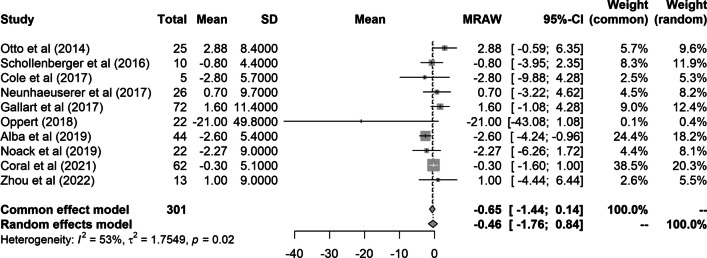
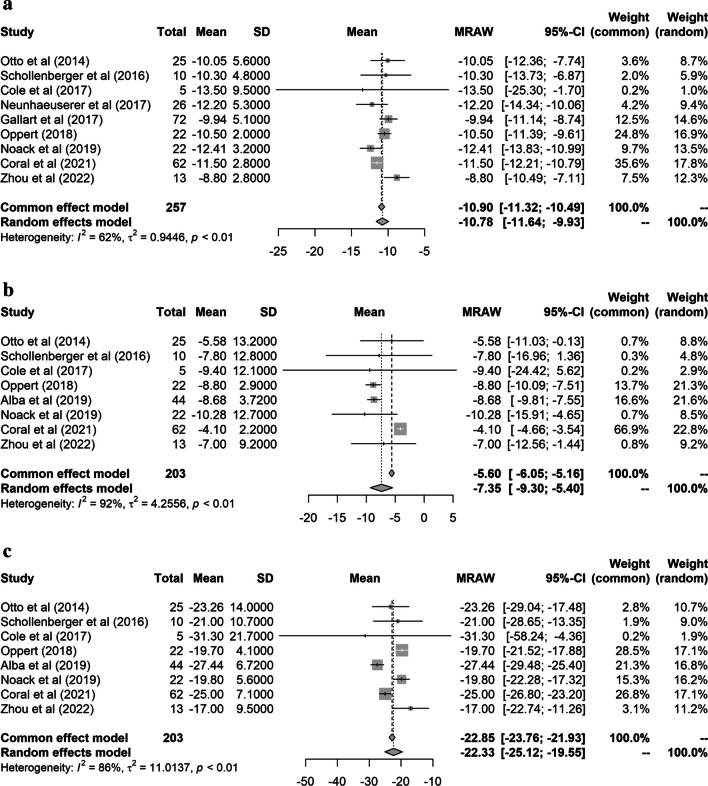
Background: Contrary to the previously known concept of muscle mass decrease following bariatric metabolic surgery, changes in muscle strength have been poorly investigated in systematic reviews. In this meta-analysis, we evaluated changes in handgrip strength (HGS) and lean mass (LM) after undergoing bariatric metabolic surgery. Methods: A systematic literature review using the PubMed, Embase, and Cochrane Library databases was conducted in November 2022. Longitudinal studies reporting HGS change after bariatric metabolic surgery were eligible. Pooled estimates for changes in HGS, body mass index (BMI), LM, and fat mass (FM) were calculated. Changes from baseline to the point closest to 6 months postoperatively were analyzed in trials with multiple follow-up examinations. The risk of bias was assessed using the Joanna Briggs Institute critical appraisal checklist. Results: Three randomized controlled trials and seven prospective cohort studies involving 301 patients were included. Follow-up evaluations were conducted 6 months postoperatively in all trials except for two, whose follow-up visits were at 18 weeks and 12 months, respectively. Pooled analysis showed reduced BMI (− 10.8 kg/m 2 ; 95% confidence interval: − 11.6 to − 9.9 kg/m 2 ), LM (− 7.4 kg; − 9.3 to − 5.4 kg), and FM (− 22.3 kg; − 25.1 to − 19.6 kg) after bariatric metabolic surgery, whereas the change in HGS was not statistically significant (− 0.46 kg; − 1.76 to 0.84 kg). Conclusion: Despite the decreased body composition parameters, including muscle mass, strength was not impaired after bariatric metabolic surgery; this indicates that bariatric metabolic surgery is an effective weight management intervention that does not compromise strength. Graphical Abstract:
Overview
The claims and statistics of this paper haven’t been checked yet.
Free: it reads the open-access text and checks the first 5 claims that cite a source we can check. Create a free account to check every claim.
Integrity signals
Registry
Cites
Statistics
Figures
Verification
Claims the paper makes
The claims and statistics of this paper haven’t been checked yet.
Free: it reads the open-access text and checks the first 5 claims that cite a source we can check. Create a free account to check every claim.
Claims other papers make about this one
Each is checked against this paper’s own text: does it say what the citing paper says it does?
The source backs part of the claim, not all of it — or backs it for a different population, condition or comparison.
In the citing paper
“Indeed, the same meta-analysis reporting nearly a quarter lean mass loss secondary to bariatric surgery also reported preservation in muscle strength (28).”
From G LP1Ra ‐based therapies and DXA ‐acquired musculoskeletal health outcomes: a focused meta‐analysis of placebo‐controlled trials (2025) · cites this paper as [28]
Experimental — accuracy not yet measuredThe source backs part of the claim, not all of it — or backs it for a different population, condition or comparison.
In the citing paper
“A recent meta-analysis examining body composition changes in ~300 individuals in the 6+ months following metabolic bariatric surgery found that 25% of weight lost comes from the fat free compartment (28).”
From G LP1Ra ‐based therapies and DXA ‐acquired musculoskeletal health outcomes: a focused meta‐analysis of placebo‐controlled trials (2025) · cites this paper as [28]
Experimental — accuracy not yet measuredThe cited source says what the claim attributes to it.
In the citing paper
“In a more recent systematic review and meta-analysis, bariatric surgery (10 studies involving 301 patients) showed reduction of body mass index (BMI; mean À10.8 kg/m 2 ) and lean mass (mean À7.4 kg), while hand grip strength was unaffected.29”
From Changes in lean body mass with glucagon‐like peptide ‐1‐based therapies and mitigation strategies (2024) · cites this paper as [29]
In the citing paper
“Some more recent evidence suggests that muscle strength is not affected by BS, probably because of a huge reduction in lipid infiltration of muscles due to the significant WL [46].”
From Nutrition and Physical Activity in Optimizing Weight Loss and Lean Mass Preservation in the Incretin-Based Medications Era: A Narrative Review (2025) · cites this paper as [46]
Self-check
Percentages, sums and reported differences re-computed from the paper’s own numbers.
The self-check needs the paper’s full text.
Citations
Cites
The PRISMA 2020 statement: An updated guideline for reporting systematic reviews
Page, M. J., McKenzie, J. E., Bossuyt, P. M., Boutron, I., Hoffmann, T. C., Mulrow, C. D., Shamseer, L., Tetzlaff, J. M., Akl, E. A., Brennan, S. E., et al. (2021) · BMJ · doi:10.1136/bmj.n71 · Cited by 108,283
Measuring inconsistency in meta-analyses
Higgins, J. P. T., Thompson, S. G., Deeks, J. J., & Altman, D. G. (2003) · BMJ · doi:10.1136/bmj.327.7414.557 · Cited by 63,139
Cochrane Handbook for Systematic Reviews of Interventions: Cochrane Book Series
(2008) · doi:10.1002/9780470712184 · Cited by 25,048
Sarcopenia: revised European consensus on definition and diagnosis
Cruz-Jentoft, A. J., Bahat, G., Bauer, J., Boirie, Y., Bruyère, O., Cederholm, T., Cooper, C., Landi, F., Rolland, Y., Sayer, A. A., et al. (2019) · Age and Ageing · doi:10.1093/ageing/afy169 · Cited by 13,818 · cited 4×
“The latest EWGSOP guidelines recommend strength over muscle mass for parameter of sarcopenia as muscle weakness is a better predictor of adverse outcomes [9].”
BackgroundMethodInfluentialSarcopenia: European consensus on definition and diagnosis
Cruz-Jentoft, A. J., Baeyens, J. P., Bauer, J. M., Boirie, Y., Cederholm, T., Landi, F., Martin, F. C., Michel, J.-P., Rolland, Y., Schneider, S. M., et al. (2010) · Age and Ageing · doi:10.1093/ageing/afq034 · Cited by 11,601
Sarcopenia: revised European consensus on definition and diagnosis
Cruz-Jentoft, A. J., Bahat, G., Bauer, J., Boirie, Y., Bruyère, O., Cederholm, T., Cooper, C., Landi, F., Rolland, Y., Sayer, A. A., et al. (2019) · Age and Ageing · doi:10.1093/ageing/afz046 · Cited by 3,803
Lauretani, F., Russo, C. R., Bandinelli, S., Bartali, B., Cavazzini, C., Di Iorio, A., Corsi, A. M., Rantanen, T., Guralnik, J. M., & Ferrucci, L. (2003) · Journal of Applied Physiology · doi:10.1152/japplphysiol.00246.2003 · Cited by 1,946
Leong, D. P., Teo, K. K., Rangarajan, S., Lopez-Jaramillo, P., Avezum, A., Orlandini, A., Seron, P., Ahmed, S. H., Rosengren, A., Kelishadi, R., et al. (2015) · The Lancet · doi:10.1016/s0140-6736(14)62000-6 · Cited by 1,876
Newman, A. B., Kupelian, V., Visser, M., Simonsick, E. M., Goodpaster, B. H., Kritchevsky, S. B., Tylavsky, F. A., Rubin, S. M., Harris, T. B., & on Behalf of the Health, A. A. B. C. S. I. (2006) · The Journals of Gerontology Series A: Biological Sciences and Medical Sciences · doi:10.1093/gerona/61.1.72 · Cited by 1,692
Benefits and Risks of Bariatric Surgery in Adults: A Review
Arterburn, D. E., Telem, D. A., Kushner, R. F., & Courcoulas, A. P. (2020) · JAMA · doi:10.1001/jama.2020.12567 · Cited by 1,251
Inflammatory Markers and Physical Performance in Older Persons: The InCHIANTI Study
Cesari, M., Penninx, B. W. J. H., Pahor, M., Lauretani, F., Corsi, A. M., Williams, G. R., Guralnik, J. M., & Ferrucci, L. (2004) · The Journals of Gerontology Series A: Biological Sciences and Medical Sciences · doi:10.1093/gerona/59.3.m242 · Cited by 901 · cited 1×
“Increased infiltration of intramuscular fat exacerbates muscle stiffness and inflammation, leading to muscle weakness [33–35].”
BackgroundBariatric Surgery and Long-term Durability of Weight Loss
Maciejewski, M. L., Arterburn, D. E., Van Scoyoc, L., Smith, V. A., Yancy, W. S., Weidenbacher, H. J., Livingston, E. H., & Olsen, M. K. (2016) · JAMA Surgery · doi:10.1001/jamasurg.2016.2317 · Cited by 720
Wind, A. E., Takken, T., Helders, P. J. M., & Engelbert, R. H. H. (2010) · European Journal of Pediatrics · doi:10.1007/s00431-009-1010-4 · Cited by 582
Surgery for weight loss in adults
Colquitt, J. L., Pickett, K., Loveman, E., & Frampton, G. K. (2014) · Cochrane Database of Systematic Reviews · doi:10.1002/14651858.cd003641.pub4 · Cited by 549
Schaap, L. A., van Schoor, N. M., Lips, P., & Visser, M. (2018) · The Journals of Gerontology: Series A · doi:10.1093/gerona/glx245 · Cited by 498
McLean, R. R., Shardell, M. D., Alley, D. E., Cawthon, P. M., Fragala, M. S., Harris, T. B., Kenny, A. M., Peters, K. W., Ferrucci, L., Guralnik, J. M., et al. (2014) · The Journals of Gerontology: Series A · doi:10.1093/gerona/glu012 · Cited by 475
Adiposity, Muscle Mass, and Muscle Strength in Relation to Functional Decline in Older Persons
Schaap, L. A., Koster, A., & Visser, M. (2013) · Epidemiologic Reviews · doi:10.1093/epirev/mxs006 · Cited by 423 · cited 2×
“A pooled analysis of prospective studies also showed that low muscle strength, rather than low muscle mass, was significantly associated with impaired physical function [41, 42].”
BackgroundThe effect of intramuscular fat on skeletal muscle mechanics: implications for the elderly and obese
Rahemi, H., Nigam, N., & Wakeling, J. M. (2015) · Journal of The Royal Society Interface · doi:10.1098/rsif.2015.0365 · Cited by 253 · cited 1×
“Increased infiltration of intramuscular fat exacerbates muscle stiffness and inflammation, leading to muscle weakness [33–35].”
BackgroundNuijten, M. A. H., Eijsvogels, T. M. H., Monpellier, V. M., Janssen, I. M. C., Hazebroek, E. J., & Hopman, M. T. E. (2022) · Obesity Reviews · doi:10.1111/obr.13370 · Cited by 236
Jung, H. N., Jung, C. H., & Hwang, Y. (2023) · Metabolism · doi:10.1016/j.metabol.2023.155557 · Cited by 186
Self-citationPhysical Fitness in Morbidly Obese Patients: Effect of Gastric Bypass Surgery and Exercise Training
Stegen, S., Derave, W., Calders, P., Van Laethem, C., & Pattyn, P. (2011) · Obesity Surgery · doi:10.1007/s11695-009-0045-y · Cited by 184
Intramuscular fat and inflammation differ in older adults: The impact of frailty and inactivity
Addison, O., Drummond, M. J., Lastayo, P. C., Dibble, L. E., Wende, A. R., McClain, D. A., & Marcus, R. L. (2014) · The Journal of nutrition, health and aging · doi:10.1007/s12603-014-0019-1 · Cited by 179
Bernhardt, V., Lorenzo, S., Babb, T. G., & Zavorsky, G. S. (2013) · Chest · doi:10.1378/chest.12-0896 · Cited by 168
Lee, W.-J., Peng, L.-N., Chiou, S.-T., & Chen, L.-K. (2016) · PLOS ONE · doi:10.1371/journal.pone.0160876 · Cited by 159
Self-citationHerring, L. Y., Stevinson, C., Davies, M. J., Biddle, S. J., Sutton, C., Bowrey, D., & Carter, P. (2016) · Obesity Reviews · doi:10.1111/obr.12361 · Cited by 155
Oppert, J., Bellicha, A., Roda, C., Bouillot, J., Torcivia, A., Clement, K., Poitou, C., & Ciangura, C. (2018) · Obesity · doi:10.1002/oby.22317 · Cited by 141
Schollenberger, A. E., Karschin, J., Meile, T., Küper, M. A., Königsrainer, A., & Bischoff, S. C. (2016) · Nutrition · doi:10.1016/j.nut.2015.08.005 · Cited by 118
Alba, D. L., Wu, L., Cawthon, P. M., Mulligan, K., Lang, T., Patel, S., King, N. J., Carter, J. T., Rogers, S. J., Posselt, A. M., et al. (2019) · The Journal of Clinical Endocrinology & Metabolism · doi:10.1210/jc.2018-00952 · Cited by 117
Voican, C. S., Lebrun, A., Maitre, S., Lainas, P., Lamouri, K., Njike-Nakseu, M., Gaillard, M., Tranchart, H., Balian, A., Dagher, I., et al. (2018) · PLOS ONE · doi:10.1371/journal.pone.0197248 · Cited by 113
Li, D., Guo, G., Xia, L., Yang, X., Zhang, B., Liu, F., Ma, J., Hu, Z., Li, Y., Li, W., et al. (2018) · Frontiers in Physiology · doi:10.3389/fphys.2018.00059 · Cited by 101 · cited 2×
“The clinical significance of relative HGS was validated in several studies [30–32].”
BackgroundCamastra, S., Vitali, A., Anselmino, M., Gastaldelli, A., Bellini, R., Berta, R., Severi, I., Baldi, S., Astiarraga, B., Barbatelli, G., et al. (2017) · Scientific Reports · doi:10.1038/s41598-017-08444-6 · Cited by 93
Kern, P. A., Simsolo, R. B., & Fournier, M. (1999) · The Journal of Clinical Endocrinology & Metabolism · doi:10.1210/jcem.84.11.6090 · Cited by 92
Yi, D., Khang, A. R., Lee, H. W., Son, S. M., & Kang, Y. H. (2018) · Diabetes, Metabolic Syndrome and Obesity: Targets and Therapy · doi:10.2147/dmso.s166875 · Cited by 86 · cited 2×
“The clinical significance of relative HGS was validated in several studies [30–32].”
BackgroundMethodHandgrip Strength as a Predictor for Post Bariatric Body Composition
Otto, M., Kautt, S., Kremer, M., Kienle, P., Post, S., & Hasenberg, T. (2014) · Obesity Surgery · doi:10.1007/s11695-014-1299-6 · Cited by 69
Toro‐Ramos, T., Goodpaster, B. H., Janumala, I., Lin, S., Strain, G. W., Thornton, J. C., Kang, P., Courcoulas, A. P., Pomp, A., & Gallagher, D. (2015) · Obesity · doi:10.1002/oby.20932 · Cited by 62
Impact of bariatric surgery on physical functioning in obese adults
Steele, T., Cuthbertson, D. J., & Wilding, J. P. H. (2015) · Obesity Reviews · doi:10.1111/obr.12247 · Cited by 62 · cited 2×
“In contrast, physical function, as measured by validated techniques such as the 6-min walk distance, short physical performance battery, or timed up-and-go test, is significantly enhanced by bariatric metabolic surgery [39].”
MethodFunctional Evaluation in Obese Patients Before and After Sleeve Gastrectomy
Neunhäeuserer, D., Gasperetti, A., Savalla, F., Gobbo, S., Bullo, V., Bergamin, M., Foletto, M., Vettor, R., Zaccaria, M., & Ermolao, A. (2017) · Obesity Surgery · doi:10.1007/s11695-017-2763-x · Cited by 54
Haghighat, N., Ashtary-Larky, D., Bagheri, R., Aghakhani, L., Asbaghi, O., Amini, M., Moeinvaziri, N., Hosseini, B., Wong, A., Shamekhi, Z., et al. (2022) · Surgery for Obesity and Related Diseases · doi:10.1016/j.soard.2022.02.022 · Cited by 36 · cited 5×
“Significant postoperative loss of muscle mass, as assessed by bioelectrical impedance analysis (BIA), dual-energy X-ray absorp-tiometry (DXA), magnetic resonance imaging (MRI), or plethysmography, is apparent within 1 month, and over half of the annual loss occurs within 3 months of surgery [3, 4].”
BackgroundMethodInfluentialCoral, R. V., Bigolin, A. V., Machry, M. C., Menguer, R. K., Pereira‐Lima, J. C., Contin, I., & Stock, P. V. (2021) · Obesity Surgery · doi:10.1007/s11695-021-05634-0 · Cited by 33
Long‐Term Body Composition Changes in Women Following Roux‐en‐Y Gastric Bypass Surgery
Cole, A. J., Kuchnia, A. J., Beckman, L. M., Jahansouz, C., Mager, J. R., Sibley, S. D., & Earthman, C. P. (2017) · Journal of Parenteral and Enteral Nutrition · doi:10.1177/0148607115625621 · Cited by 32 · cited 2×
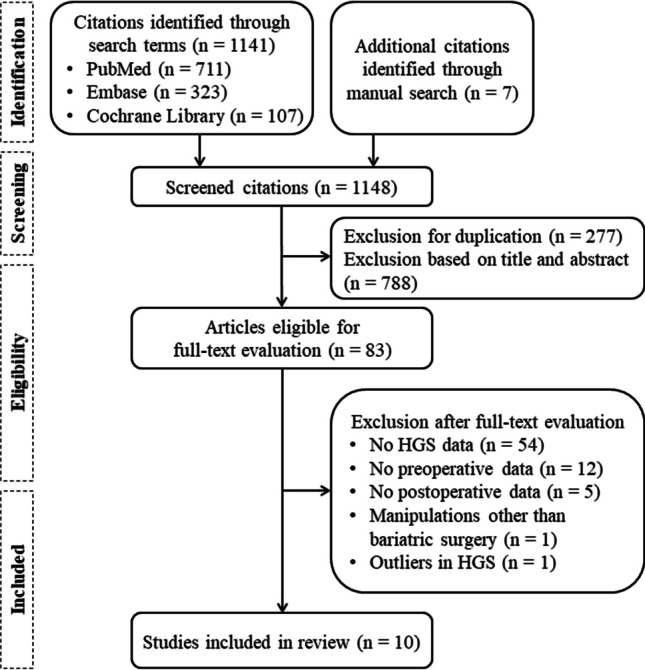
“Of the 10 included studies, seven were single-arm prospective cohort studies [18, 20–22, 24, 26, 27], and three were randomized controlled trials [19, 23, 25] (Table 1).”
BackgroundInfluentialLean mass loss and altered muscular aerobic capacity after bariatric surgery
Zhou, N., Scoubeau, C., Forton, K., Loi, P., Closset, J., Deboeck, G., Moraine, J.-J., Klass, M., & Faoro, V. (2022) · Obesity Facts · doi:10.1159/000521242 · Cited by 26 · cited 7×
“The studies were conducted in European countries [18, 19, 21–23, 27], the USA [20, 24], The patients’ average age and preoperative BMI were 30–50 years and 36.7–49.0 kg/m 2 , respectively [18–27] (Table 1).”
BackgroundResultInfluentialGallart‐Aragón, T., Fernández‐Lao, C., Castro‐Martín, E., Cantarero‐Villanueva, I., Ibáñez, A. C., & Arroyo‐Morales, M. (2016) · Obesity Surgery · doi:10.1007/s11695-016-2427-2 · Cited by 16
Smelt, H. J. M., Pouwels, S., Çelik, A., Gupta, A. K., & Smulders, J. F. (2019) · Medicina · doi:10.3390/medicina55060281 · Cited by 11
Physical Exercise and Grip Strength in Patients Intervened through Bariatric Surgery
Segovia, J. P. N., Sánchez-López, A. M., García, I. G., Rodríguez-Blanque, R., Ríos, X. A. L., & Cordero, M. J. A. (2019) · Aquichan · doi:10.5294/aqui.2019.19.3.6 · Cited by 11
Cited by
Changes in lean body mass with glucagon‐like peptide ‐1‐based therapies and mitigation strategies
Neeland, I. J., Linge, J., & Birkenfeld, A. L. (2024) · Diabetes, Obesity and Metabolism · doi:10.1111/dom.15728 · Cited by 391
Efficacy and Safety of GLP-1 Medicines for Type 2 Diabetes and Obesity
Drucker, D. J. (2024) · Diabetes Care · doi:10.2337/dci24-0003 · Cited by 383
Linge, J., Birkenfeld, A. L., & Neeland, I. J. (2024) · Circulation · doi:10.1161/circulationaha.124.067676 · Cited by 180
Muscle matters: The effects of medically induced weight loss on skeletal muscle
Prado, C. M., Phillips, S. M., Gonzalez, M. C., & Heymsfield, S. B. (2024) · The Lancet Diabetes & Endocrinology · doi:10.1016/s2213-8587(24)00272-9 · Cited by 177
Beavers, K. M., Cortes, T. M., Foy, C. M., Dinkla, L., Reyes San Martin, F., Ard, J. D., Serra, M. C., & Beavers, D. P. (2025) · Obesity · doi:10.1002/oby.24172 · Cited by 41
Metadata
- Authors
- Jung, H. N., Kim, S.-O., Jung, C. H., Lee, W. J., Kim, M. J., & Cho, Y. K.
- Affiliations
- Hallym University Sacred Heart Hospital (KR)
- Asan Medical Center (KR)
- Corresponding author
- Cho, Yun Kyung
- Venue
- Obesity Surgery
- Published
- 2023-09-20
- Volume
- 33
- Issue
- 11
- Pages
- 3422-3430
- ISSN
- 0960-8923 (ISSN-L)
- 1708-0428
- PMC
- PMC10602996
- OpenAlex
- W4386878285
- Semantic Scholar
- a11bcc78b5a583c938320df8fe014df2975a35db
- Cited by
- 51
- References
- 43
- Citations by year
- 2026: 15 · 2025: 20 · 2024: 16
- FWCI
- 3.29
- Type
- journal article
- Language
- en
- Open access
- hybrid
- doi.org
- Licence
- cc-by
- creativecommons.org/licenses/by/4.0 (tdm)
- creativecommons.org/licenses/by/4.0 (vor)
- Locations
- Obesity Surgery (publishedVersion, cc-by)
- PubMed Central (publishedVersion, cc-by)
- PubMed (publishedVersion)
- Funders
- University of Ulsan
- Topics
- Health Sciences › Medicine › Surgery › Bariatric Surgery and Outcomes
- Health Sciences › Medicine › Physiology (medical) › Nutrition and Health in Aging
- Health Sciences › Medicine › Surgery › Body Contouring and Surgery
- Keywords
- bariatric metabolic surgery, muscle strength
- MeSH terms
- Humans, Muscles, Obesity, Morbid, Prospective Studies, Body Mass Index, Randomized Controlled Trials as Topic, Hand Strength, Bariatric Surgery
About these checks
Registry, retraction, Cites and statistics results are computed, not judged, with one exception: a printed reference that no index lists is read once by a model before it counts as a citation error. Claims are extracted by a model and kept only when their quote appears verbatim in the text; each cited source is then checked, with a model’s help, for whether it says what the claim relies on. Those verdicts can be wrong — read the claim’s quote and the cited source before relying on one.
Statistics and arithmetic are recomputed, not judged.
Confidence bands are shown only for fields calibrated on our annotated test set. None is calibrated yet, so no band is shown.
What counts as a claim ›How we measure confidence ›How we check this ›
Are you an author, or do you see a problem with this page? Request a review
Data sources
Bibliographic data: Semantic Scholar, OpenAlex, Crossref.
Contains information from the Semantic Scholar Academic Graph Datasets, made available under the ODC Attribution License (ODC-BY 1.0).
Semantic Scholar’s data is described in: Kinney, R., et al. (2023). The Semantic Scholar Open Data Platform. arXiv:2301.10140.
