

Lipoprotein apheresis is an optimal therapeutic option to reduce increased Lp(a) levels
Open accessThe DOI matches its Crossref record; 47 of the 47 references it cites were found in a registry or an index.
Abstract
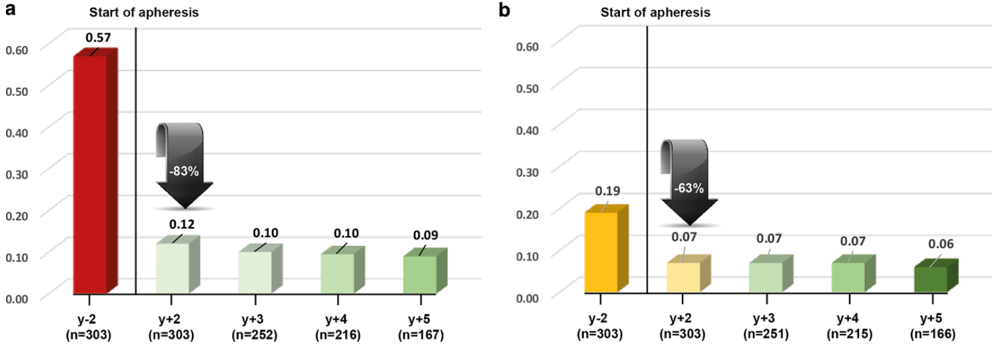
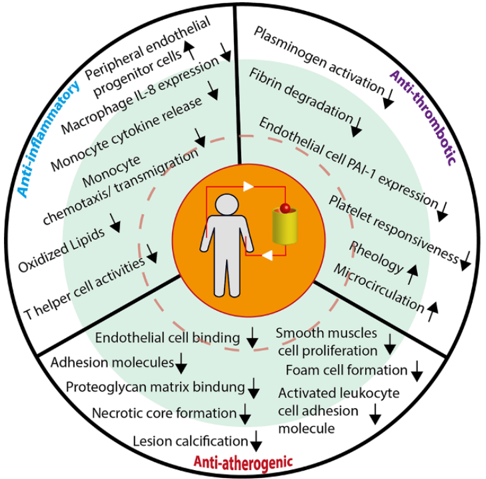
BACKGROUND: Lipoprotein(a) (Lp(a)) is a genetic risk factor for cardiovascular disease (CVD) and is associated with the induction and sustaining of atherosclerotic cardiovascular diseases (ASCVD). Since 2008 Lp(a) along with progressive CVD has been approved as an indication for regular lipoprotein apheresis (LA) in Germany. The German Lipoprotein Apheresis Registry (GLAR) has been initiated to provide statistical evidence for the assessment of extracorporeal procedures to treat dyslipidemia for both LDL-cholesterol (LDL-C) and Lp(a). The GLAR now allows prospective investigations over a 5-year period about annual incidence rates of cardiovascular events. Here Lp(a) patients (LDL-C < 100 mg/dl; Lp(a) > 60 mg/dl or >120 nmol/l) showed the same reduction of major coronary (83%) and non-coronary events (63%) as had been formerly shown in the Pro(a)LiFe study. However, Lp(a) is not only an apolipoprotein(a) (apo(a)) and LDL-C containing particle, which is covalently bound to a LDL-C core by a disulphide bridge. The composition of this particle, inter alia containing oxidized phospholipids, gives pro-atherosclerotic, pro-inflammatory, and pro-thrombotic properties, inducing atherosclerotic processes mainly in the arterial wall. However, recent investigations have shown that a reduction of inflammatory settings without LDL-C or Lp(a) reduction may reduce ASCVD events. Lipoprotein apheresis (LA) could not only reduce LDL-C and Lp(a) in parallel, but also different inflammatory and coagulation parameters. In summary lipoprotein apheresis is not only anti-atherosclerotic, but also anti-inflammatory and anti-thrombotic and therefore an ideal treatment option with respect to the shown reduction of major adverse coronary events (MACE) and major adverse non-coronary events (MANCE) by reducing Lp(a) levels.
Overview
The claims and statistics of this paper haven’t been checked yet.
Free: it reads the open-access text and checks the first 5 claims that cite a source we can check. Create a free account to check every claim.
Integrity signals
Registry
Cites
Statistics
Figures
Verification
Claims the paper makes
The claims and statistics of this paper haven’t been checked yet.
Free: it reads the open-access text and checks the first 5 claims that cite a source we can check. Create a free account to check every claim.
Claims other papers make about this one
Each is checked against this paper’s own text: does it say what the citing paper says it does?
The cited source says what the claim attributes to it.
In the citing paper
“Two studies reported a significantly lower cardiovascular event rate in patients treated with lipid apheresis for Lp(a) [194, 195].”
From Established and Emerging Lipid-Lowering Drugs for Primary and Secondary Cardiovascular Prevention (2023) · cites this paper as [194]
Experimental — accuracy not yet measured
Self-check
Percentages, sums and reported differences re-computed from the paper’s own numbers.
The self-check needs the paper’s full text.
Citations
Cites
Yusuf, S., Hawken, S., Ôunpuu, S., Dans, T., Avezum, A., Lanas, F., McQueen, M., Budaj, A., Pais, P., Varigos, J., et al. (2004) · The Lancet · doi:10.1016/s0140-6736(04)17018-9 · Cited by 12,026
Antiinflammatory Therapy with Canakinumab for Atherosclerotic Disease
Ridker, P. M., Everett, B. M., Thuren, T., MacFadyen, J. G., Chang, W. H., Ballantyne, C., Fonseca, F., Nicolau, J., Koenig, W., Anker, S. D., et al. (2017) · New England Journal of Medicine · doi:10.1056/nejmoa1707914 · Cited by 9,482
Evolocumab and Clinical Outcomes in Patients with Cardiovascular Disease
Sabatine, M. S., Giugliano, R. P., Keech, A. C., Honarpour, N., Wiviott, S. D., Murphy, S. A., Kuder, J. F., Wang, H., Liu, T., Wasserman, S. M., et al. (2017) · New England Journal of Medicine · doi:10.1056/nejmoa1615664 · Cited by 6,138
Alirocumab and Cardiovascular Outcomes after Acute Coronary Syndrome
Schwartz, G. G., Steg, P. G., Szarek, M., Bhatt, D. L., Bittner, V. A., Diaz, R., Edelberg, J. M., Goodman, S. G., Hanotin, C., Harrington, R. A., et al. (2018) · New England Journal of Medicine · doi:10.1056/nejmoa1801174 · Cited by 3,634
Lipoprotein(a) as a cardiovascular risk factor: current status
Nordestgaard, B. G., Chapman, M. J., Ray, K., Borén, J., Andreotti, F., Watts, G. F., Ginsberg, H., Amarenco, P., Catapano, A., Descamps, O. S., et al. (2010) · European Heart Journal · doi:10.1093/eurheartj/ehq386 · Cited by 1,807
A Test in Context: Lipoprotein(a)
Tsimikas, S. (2017) · Journal of the American College of Cardiology · doi:10.1016/j.jacc.2016.11.042 · Cited by 1,137
The immunology of atherosclerosis
Gisterå, A., & Hansson, G. K. (2017) · Nature Reviews Nephrology · doi:10.1038/nrneph.2017.51 · Cited by 982
van der Valk, F. M., Bekkering, S., Kroon, J., Yeang, C., Van den Bossche, J., van Buul, J. D., Ravandi, A., Nederveen, A. J., Verberne, H. J., Scipione, C., et al. (2016) · Circulation · doi:10.1161/circulationaha.116.020838 · Cited by 674
Nordestgaard, B. G., & Langsted, A. (2016) · Journal of Lipid Research · doi:10.1194/jlr.r071233 · Cited by 575
Willeit, P., Ridker, P. M., Nestel, P. J., Simes, J., Tonkin, A. M., Pedersen, T. R., Schwartz, G. G., Olsson, A. G., Colhoun, H. M., Kronenberg, F., et al. (2018) · The Lancet · doi:10.1016/s0140-6736(18)31652-0 · Cited by 564
Cited by
PoLA/CFPiP/PCS/PSLD/PSD/PSH guidelines on diagnosis and therapy of lipid disorders in Poland 2021
Banach, M., Burchardt, P., Chlebus, K., Dobrowolski, P., Dudek, D., Dyrbuś, K., Gąsior, M., Jankowski, P., Jozwiak, J. J., Kłosiewicz−Latoszek, L., et al. (2021) · Archives of Medical Science · doi:10.5114/aoms/141941 · Cited by 189
Vinci, P., Girolamo, F. G. D., Panizon, E., Tosoni, L. M., Cerrato, C., Pellicori, F., Altamura, N., Pirulli, A., Zaccari, M., Biasinutto, C., et al. (2023) · International Journal of Environmental Research and Public Health · doi:10.3390/ijerph20186721 · Cited by 139
Established and Emerging Lipid-Lowering Drugs for Primary and Secondary Cardiovascular Prevention
Michaeli, D. T., Michaeli, J. C., Albers, S., Boch, T., & Michaeli, T. (2023) · American Journal of Cardiovascular Drugs · doi:10.1007/s40256-023-00594-5 · Cited by 109
“Two studies reported a significantly lower cardiovascular event rate in patients treated with lipid apheresis for Lp(a) [194, 195].”
BackgroundGenetics and Pathophysiological Mechanisms of Lipoprotein(a)‐Associated Cardiovascular Risk
Volgman, A. S., Koschinsky, M. L., Mehta, A., & Rosenson, R. S. (2024) · Journal of the American Heart Association · doi:10.1161/jaha.123.033654 · Cited by 80
Lipid Lowering Drugs: Present Status and Future Developments
Ruscica, M., Ferri, N., Santos, R. D., Sirtori, C. R., & Corsini, A. (2021) · Current Atherosclerosis Reports · doi:10.1007/s11883-021-00918-3 · Cited by 73
Safarova, M. S., & Moriarty, P. M. (2023) · Current Atherosclerosis Reports · doi:10.1007/s11883-023-01113-2 · Cited by 46
Banach, M., Burchardt, P., Chlebus, K., Dobrowolski, P., Dudek, D., Dyrbuś, K., Gąsior, M., Jankowski, P., Jozwiak, J. J., Kłosiewicz−Latoszek, L., et al. (2021) · Diagnostyka Laboratoryjna · doi:10.5604/01.3001.0015.4805 · Cited by 36
Lipoprotein (a): When to Measure and How to Treat?
Rhainds, D., Brodeur, M. R., & Tardif, J. (2021) · Current Atherosclerosis Reports · doi:10.1007/s11883-021-00951-2 · Cited by 35
The German Lipoprotein Apheresis Registry—Summary of the ninth annual report
Schettler, V. J. J., Peter, C., Zimmermann, T. P., Julius, U., Roeseler, E., Schlieper, G., Heigl, F., Grützmacher, P., Löhlein, I., Klingel, R., et al. (2022) · Therapeutic Apheresis and Dialysis · doi:10.1111/1744-9987.13780 · Cited by 28
“The German Lipoprotein Apheresis Registry (GLAR) was initiated to provide safety and efficacy of LA to treat severe hypercholesterolemia in particular familial forms and Lp(a)hyperliproteinemia with progressive ASCVD [13].”
BackgroundSelf-citationExtracorporeal apheresis therapy for Alzheimer disease—targeting lipids, stress, and inflammation
Bornstein, S. R., Voit-Bak, K., Rosenthal, P., Tselmin, S., Julius, U., Schatz, U., Boehm, B. O., Thuret, S., Kempermann, G., Reichmann, H., et al. (2019) · Molecular Psychiatry · doi:10.1038/s41380-019-0542-x · Cited by 30
Self-citationTherapeutic Apheresis for Management of Lp(a) Hyperlipoproteinemia
Pokrovsky, S. N., Afanasieva, O. I., & Владиславович, Е. М. (2020) · Current Atherosclerosis Reports · doi:10.1007/s11883-020-00886-0 · Cited by 28
Kounatidis, D. C., Tentolouris, N., Vallianou, N. G., Mourouzis, I. S., Karampela, Ι., Stratigou, T., Rebelos, E., Kouveletsou, M., Stamatopoulos, V., Tsaroucha, E., et al. (2024) · Metabolites · doi:10.3390/metabo14070388 · Cited by 26
“Particularly in Germany, LA is indicated for patients with progressive CVD and Lp(a) concentrations exceeding 60 mg/dL, regardless of LDL-C levels [202].”
BackgroundAfanasieva, O. I., Filatova, A. Y., Arefieva, T. I., Klesareva, E., Tyurina, A. V., Radyukhina, N. V., Владиславович, Е. М., & Pokrovsky, S. N. (2021) · Journal of Cardiovascular Development and Disease · doi:10.3390/jcdd8060063 · Cited by 25
“Specific Lp(a) apheresis and LDL apheresis have demonstrated the stabilization, and even the regression, of atherosclerotic plaques in the coronary and carotid arteries as well as a significant reduction in the risk of adverse cardiovascular events [10,11].”
BackgroundThe German Lipoprotein Apheresis Registry-Summary of the eleventh annual report
Schettler, V. J. J., Selke, N., Jenke, S., Zimmermann, T. P., Schlieper, G., Bernhardt, W. M., Heigl, F., Grützmacher, P., Löhlein, I., Klingel, R., et al. (2024) · Atherosclerosis · doi:10.1016/j.atherosclerosis.2024.118601 · Cited by 24
Self-citationNew Horizons: Revival of Lipoprotein (a) as a Risk Factor for Cardiovascular Disease
Nestel, P. J., Loh, W. J., Ward, N. C., & Watts, G. F. (2022) · The Journal of Clinical Endocrinology & Metabolism · doi:10.1210/clinem/dgac541 · Cited by 21
Pelacarsen and lipoprotein(a) apheresis in secondary prevention: the Lp(a)FRONTIERS APHERESIS trial
Parhofer, K. G., Julius, U., Herzog, A. L., Krüger, T., Weinmann‐Menke, J., Heine, G. H., Cao, H., Schorr, J., Ferber, P. C., Wang, J., et al. (2026) · European Heart Journal · doi:10.1093/eurheartj/ehag073 · Cited by 15
Self-citationBeyond cholesterol—pleiotropic effects of lipoprotein apheresis
Schettler, V. J. J., & Schettler, E. (2022) · Therapeutic Apheresis and Dialysis · doi:10.1111/1744-9987.13857 · Cited by 15
“In addition, this lasting effect could be reconfirmed by the German Lipoprotein Apheresis Registry (GLAR) database, which also shows a prominent MACE reduction in patients with high LDL-C and/or Lp(a) levels [9] (Figure 1).”
BackgroundSelf-citationOrfanos, P., Fonseca, A. F., Hu, X., Gautam, R., Montgomery, G., Studer, R. L., Kaur, J., Saxena, N., & Kaushik, N. (2023) · PLoS ONE · doi:10.1371/journal.pone.0294250 · Cited by 13
Tsamoulis, D., Siountri, I., & Rallidis, L. S. (2023) · Journal of Cardiovascular Development and Disease · doi:10.3390/jcdd10030096 · Cited by 11
“These promising outcomes and the lack of equally sufficient non-invasive approaches explain the fact that in Germany, since 2008, Lp(a) apheresis has been available for patients with elevated Lp(a) levels and established cardiovascular disease (CVD), even without elevated LDL levels [41].”
BackgroundBhatia, H. S., Dalal, S., & Ross, E. (2025) · Current Opinion in Lipidology · doi:10.1097/mol.0000000000000999 · Cited by 10
Afanasieva, O. I., & Pokrovsky, S. N. (2019) · Russian Journal of Cardiology · doi:10.15829/1560-4071-2019-5-101-108 · Cited by 10
Sinha, T., Guntha, M., Mayow, A. H., Zin, A. K., Chaudhari, S. S., Khan, M. W., Kholoki, S., & Khan, A. A. (2024) · Cureus · doi:10.7759/cureus.61069 · Cited by 7
“However, in Germany, progressive CV disease with Lp(a)-hyperlipoproteinemia has been recognized as a distinct indication for apheresis in the guidelines of statutory health insurance funds [32].”
BackgroundLipoprotein apheresis in the era of new lipid-lowering therapies
Sbrana, F., Pino, B. D., Schettler, V. J. J., Muso, E., Harada-Shiba, M., Mola, M. D., Kagitani, M., Pineda, E., Selke, N., Jenke, S., et al. (2026) · European Heart Journal · doi:10.1093/eurheartj/ehag328 · Cited by 4
Self-citationRepeated lipoprotein apheresis and immune response: Effects on different immune cell populations
Walther, R., Wehner, R., Tunger, A., Julius, U., Schatz, U., Tselmin, S., Bornstein, S. R., Schmitz, M., & Graessler, J. (2022) · Therapeutic Apheresis and Dialysis · doi:10.1111/1744-9987.13886 · Cited by 4
“Hemoglobin, hematocrit, thrombocytes, erythrocytes, and the relative count of basophils were significantly lowered by LA treatment, whereas leukocyte cell count was increased by LA. Apheresis treatment efficiently decreased lipid parameters such as Lp(a), TC, LDL-C, and TG (Figure 2, Table 2).”
BackgroundInfluentialSelf-citationMojahedi, A., Chen, O., Skopicki, H. A., Rahman, T., & Sadeghian, A. (2025) · Reviews in Cardiovascular Medicine · doi:10.31083/rcm42784 · Cited by 4
Lipoproteinapherese: Übersicht und Fallbericht zur weltweit längsten HELP-Behandlung
Tünnemann-Tarr, A., Katzmann, J. L., Thiery, J., & Laufs, U. (2022) · Herz · doi:10.1007/s00059-022-05115-9 · Cited by 3
“Im Beobachtungszeitraum von 2012 bis 2017 wurden eine 83%ige Reduktion von unerwünschten Koronarereignissen und eine 63%ige Reduktion von Nichtkoronarereignissen dokumentiert [20].”
Röseler, T., Kayser, D., Schlieper, G., & Bernhardt, W. M. (2025) · Journal of Clinical Apheresis · doi:10.1002/jca.70020 · Cited by 2
Wang, C., Kaufmann, A., Kampschulte, N., Elbelt, U., Kassner, U., Steinhagen‐Thiessen, E., Pietzner, A., Schmöcker, C., Datta, D. B. N., Sanpietro, T., et al. (2024) · Atherosclerosis Plus · doi:10.1016/j.athplu.2024.01.005 · Cited by 1
Results of Therapy at a Lipid Clinic in Patients with Elevated Lipoprotein(a) levels
Julius, U., Winter, K., Tselmin, S., Schatz, U., Weiss, N., & Fischer, S. (2022) · doi:10.33582/mpcvm.2022.202203002 · Cited by 1
Self-citationTyurina, A. V., Афанасьева, О. И., Владиславович, Е. М., & Покровский, С. Н. (2021) · Атеросклероз и дислипидемии · doi:10.34687/2219-8202.jad.2021.03.0006 · Cited by 1
Apherese-Behandlung bei Lipoprotein(a)-Erhöhungen
Julius, U., Tselmin, S., Schatz, U., Fischer, S., & Bornstein, S. R. (2019) · CardioVasc · doi:10.1007/s15027-019-1673-3
Self-citationMalchesky, P. S., & Akizawa, T. (2020) · Therapeutic Apheresis and Dialysis · doi:10.1111/1744-9987.13496
Advanced Research on Lp(a) and Ischemic Stroke
林, 洁. (2023) · Advances in Clinical Medicine · doi:10.12677/acm.2023.1361255
Gefährliches Zusammenspiel: erhöhtes Lipoprotein(a) bei fortgeschrittener Niereninsuffizienz
Bernhardt, W. M. (2023) · Nephrologie aktuell · doi:10.1055/a-2013-6589
Gefährliches Zusammenspiel: erhöhtes Lipoprotein(a) bei fortgeschrittener Niereninsuffizienz
Bernhardt, W. M. (2023) · Diabetes aktuell · doi:10.1055/a-2117-1566
“Das Blutreinigungsverfahren führt zur Reduktion atherogener Lipoproteine wie LDL-Cholesterin und Lp(a) [9].”
BackgroundВыбор метода афереза липопротеидов у пациента очень высокой группы сердечно-сосудистого риска
Абрамян, М. В., Афанасьева, Е. А., Есаян, Г. С., Ярустовский, М. Б., & Назарова, Е. И. (2023) · Kreativnaya kardiologiya · doi:10.24022/1997-3187-2023-17-3-433-433-442
Current trends in solving the problem of residual cardiovascular risk
Ob’edkova, N. Y., Guslyakova, A. A., Mal, G. S., & Геннадьевич, О. Е. (2024) · Meditsinskiy sovet = Medical Council · doi:10.21518/ms2024-115
Daskalakis, M., & Mansouri-Taleghani, B. (2026) · Springer eBooks · doi:10.1007/978-3-662-71825-4_27
Bluthochdruck, Diabetes, Rauchen…?
Brunkhorst, R. R. (2026) · Elsevier eBooks · doi:10.1016/b978-3-437-21335-9.00026-9
Metadata
- Authors
- Scientific Board of GLAR for the German Apheresis Working Group, Schettler, V. J. J., Neumann, C. L., Peter, C., Zimmermann, T., Julius, U., Hohenstein, B., Roeseler, E., Heigl, F., Grützmacher, P., Blume, H., Klingel, R., & Vogt, A.
- Affiliations
- Nephrologisches Zentrum Goettingen (DE)
- Landesamt für Gesundheit und Soziales (DE)
- University Hospital Carl Gustav Carus (DE)
- Agaplesion Markus Hospital (DE)
- Apherese Forschungsinstitut (DE)
- Ludwig-Maximilians-Universität München (DE)
- Corresponding author
- Schettler, V. J. J.
- Venue
- Clinical Research in Cardiology Supplements
- Published
- 2019-03-05
- Volume
- 14
- Issue
- S1
- Pages
- 33-38
- ISSN
- 1861-0706 (ISSN-L)
- 1861-0714
- OpenAlex
- W2922236150
- Semantic Scholar
- d20aafb555f9621715ef4eb7fb6cb2066381f956
- Cited by
- 37
- References
- 44
- Citations by year
- 2026: 4 · 2025: 3 · 2024: 6 · 2023: 8 · 2022: 6 · 2021: 5 · 2020: 2 · 2019: 3
- FWCI
- 3.85
- Type
- journal article
- Language
- en
- Open access
- hybrid
- doi.org
- Licence
- cc-by
- creativecommons.org/licenses/by/4.0 (tdm)
- Locations
- Clinical Research in Cardiology Supplements (publishedVersion, cc-by)
- PubMed (publishedVersion)
- GoeScholar The Publication Server of the Georg-August-Universität Göttingen (Georg-August-Universität Göttingen) (submittedVersion, cc-by)
- Topics
- Health Sciences › Medicine › Cardiology and Cardiovascular Medicine › Lipoproteins and Cardiovascular Health
- Life Sciences › Immunology and Microbiology › Immunology › Atherosclerosis and Cardiovascular Diseases
- Health Sciences › Medicine › Cardiology and Cardiovascular Medicine › Lipid metabolism and disorders
- Keywords
- lipoprotein apheresis, lipoprotein(a), cardiovascular disease, atherosclerotic cardiovascular disease, major adverse coronary events, dyslipidemia, apolipoprotein(a), inflammation, coagulation, oxidized phospholipids, LDL cholesterol
- MeSH terms
- Blood Component Removal, Cardiovascular Diseases, Germany, Humans, Cholesterol, LDL, Registries, Risk Factors, Lipoprotein(a), Genetic Predisposition to Disease, Dyslipidemias, Atherosclerosis
About these checks
Registry, retraction, Cites and statistics results are computed, not judged, with one exception: a printed reference that no index lists is read once by a model before it counts as a citation error. Claims are extracted by a model and kept only when their quote appears verbatim in the text; each cited source is then checked, with a model’s help, for whether it says what the claim relies on. Those verdicts can be wrong — read the claim’s quote and the cited source before relying on one.
Statistics and arithmetic are recomputed, not judged.
Confidence bands are shown only for fields calibrated on our annotated test set. None is calibrated yet, so no band is shown.
What counts as a claim ›How we measure confidence ›How we check this ›
Are you an author, or do you see a problem with this page? Request a review
Data sources
Bibliographic data: Semantic Scholar, OpenAlex, Crossref.
Contains information from the Semantic Scholar Academic Graph Datasets, made available under the ODC Attribution License (ODC-BY 1.0).
Semantic Scholar’s data is described in: Kinney, R., et al. (2023). The Semantic Scholar Open Data Platform. arXiv:2301.10140.
