

The DOI matches its Crossref record; 3 of the 3 references it cites were found in a registry or an index.
The Role of IgA in the Manifestation and Prevention of Allergic Immune Responses
Abstract
Purpose of Review: Immunoglobulin A (IgA) mediates immune exclusion of antigens in the gut. Notably, IgA plays also a role in the prevention of IgE-mediated allergies and induction of immune tolerance. The present review addresses the role of IgA in the manifestation of IgE-mediated allergies, including allergen-specific immunotherapy (AIT), the regulation of IgA production, and the mechanism of IgA in immune cell activation. Recent Findings: The majority of studies report an association of IgA with the induction of immune tolerance in IgE-mediated allergies. However, reports on the involvement of humoral and mucosal IgA, IgA subtypes, monomeric and polymeric IgA, and the mechanism of IgA-mediated immune cell activation are confounding. Summary: Effects by IgA are likely mediated by alteration of microbiota, IgE-blocking capacity, or activation of inhibitory signaling pathways. However, the precise mechanism of IgA-regulation, the contribution of serum and/or mucosal IgA, and IgA1/2 subtypes, on the manifestation of IgE-mediated allergies, and the underlying immune modulatory mechanism are still elusive.
Overview
The claims and statistics of this paper haven’t been checked yet.
Run the check — free, no account needed. It reads the open-access text and checks the sources it cites.
Integrity signals
Registry
Cites
Statistics
Figures
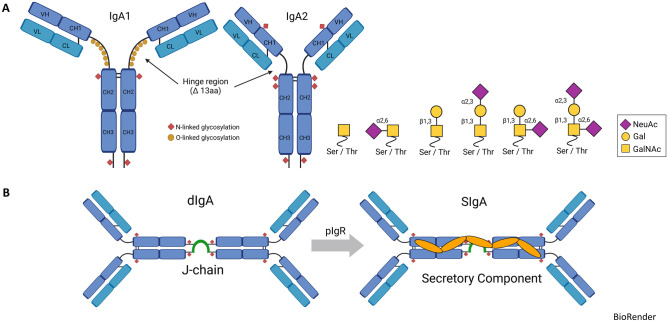
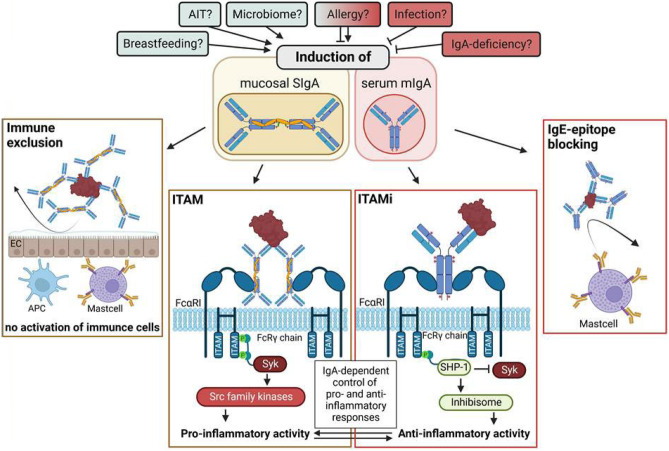
Verification
Claims the paper makes
The claims and statistics of this paper haven’t been checked yet.
Run the check — free, no account needed. It reads the open-access text and checks the sources it cites.
Claims other papers make about this one
Each is checked against this paper’s own text: does it say what the citing paper says it does?
In the citing paper
“For instance, studies have shown that salivary IgA levels correlate with positive therapeutic responses in peanut allergy OIT [224,225].”
From Pollen–Food Allergy Syndrome: Allergens, Clinical Insights, Diagnostic and Therapeutic Challenges (2024) · cites this paper as [224]
In the citing paper
“Found predominantly in mucosal tissues such as the gastrointestinal tract, sIgA can form immune complexes with allergens, reducing their ability to cross the epithelial barrier and trigger an allergic response [224].”
From Pollen–Food Allergy Syndrome: Allergens, Clinical Insights, Diagnostic and Therapeutic Challenges (2024) · cites this paper as [224]
Self-check
Percentages, sums and reported differences re-computed from the paper’s own numbers.
The self-check needs the paper’s full text.
Citations
Cites
Gut Microbial Metabolites Fuel Host Antibody Responses
Kim, M., Qie, Y., Park, J., & Kim, C. H. (2016) · Cell Host & Microbe · doi:10.1016/j.chom.2016.07.001 · Cited by 893
Diversity and dynamism of IgA−microbiota interactions
Huus, K. E., Petersen, C., & Finlay, B. B. (2021) · Nature Reviews Immunology · doi:10.1038/s41577-021-00506-1 · Cited by 198
LANG, M. L., CHEN, Y.-W., SHEN, L., GAO, H., LANG, G. A., WADE, T. K., & WADE, W. F. (2002) · Biochemical Journal · doi:10.1042/bj20011696 · Cited by 60
Research works printed but not linked: 89
- Shamji MH, Valenta R, Jardetzky T, Verhasselt V, Durham SR, Würtzen PA, van Neerven RJJ. The role of allergen-specific IgE, IgG and IgA in allergic disease. Allergy. 2021;76:3627–41. https://doi.org/10.1111/all.14908. · DOI
- Sterlin D, Gorochov G. When therapeutic IgA antibodies might come of age. Pharmacology. 2021;106:9–19. https://doi.org/10.1159/000510251. · DOI
- Kerr MA. The structure and function of human IgA. Biochem J. 1990;271:285–96. https://doi.org/10.1042/bj2710285. · DOI
- Toraño A, Tsuzukida Y, Liu YS, Putnam FW. Location and structural significance of the oligosaccharides in human Ig-A1 and IgA2 immunoglobulins. Proc Natl Acad Sci USA. 1977;74:2301–5. https://doi.org/10.1073/pnas.74.6.2301. · DOI
- Takahashi K, Smith AD, Poulsen K, Kilian M, Julian BA, Mestecky J, et al. Naturally occurring structural isomers in serum IgA1 o-glycosylation. J Proteome Res. 2012;11:692–702. https://doi.org/10.1021/pr200608q. · DOI
- Ding L, Chen X, Cheng H, Zhang T, Li Z. Advances in IgA glycosylation and its correlation with diseases. Front Chem. 2022;10:974854. https://doi.org/10.3389/fchem.2022.974854. · DOI
- León ED, Francino MP. Roles of secretory immunoglobulin A in host-microbiota interactions in the gut ecosystem. Front Microbiol. 2022;13:880484. https://doi.org/10.3389/fmicb.2022.880484. · DOI
- Sørensen V, Rasmussen IB, Sundvold V, Michaelsen TE, Sandlie I. Structural requirements for incorporation of J chain into human IgM and IgA. Int Immunol. 2000;12:19–27. https://doi.org/10.1093/intimm/12.1.19. · DOI
- Johansen FE, Pekna M, Norderhaug IN, Haneberg B, Hietala MA, Krajci P, et al. Absence of epithelial immunoglobulin A transport, with increased mucosal leakiness, in polymeric immunoglobulin receptor/secretory component-deficient mice. J Exp Med. 1999;190:915–22. https://doi.org/10.1084/jem.190.7.915. · DOI
- Stadtmueller BM, Huey-Tubman KE, López CJ, Yang Z, Hubbell WL, Bjorkman PJ. The structure and dynamics of secretory component and its interactions with polymeric immunoglobulins. Elife. 2016. https://doi.org/10.7554/eLife.10640. · DOI
- Davis SK, Selva KJ, Kent SJ, Chung AW. Serum IgA Fc effector functions in infectious disease and cancer. Immunol Cell Biol. 2020;98:276–86. https://doi.org/10.1111/imcb.12306. · DOI
- Cerutti A. The regulation of IgA class switching. Nat Rev Immunol. 2008;8:421–34. https://doi.org/10.1038/nri2322. · DOI
- He B, Xu W, Santini PA, Polydorides AD, Chiu A, Estrella J, et al. Intestinal bacteria trigger T cell-independent immunoglobulin A(2) class switching by inducing epithelial-cell secretion of the cytokine APRIL. Immunity. 2007;26:812–26. https://doi.org/10.1016/j.immuni.2007.04.014. · DOI
- Sterlin D, Fadlallah J, Adams O, Fieschi C, Parizot C, Dorgham K, et al. Human IgA binds a diverse array of commensal bacteria. J Exp Med. 2020. https://doi.org/10.1084/jem.20181635. · DOI
- Pabst O, Ohl L, Wendland M, Wurbel M-A, Kremmer E, Malissen B, Förster R. Chemokine receptor CCR9 contributes to the localization of plasma cells to the small intestine. J Exp Med. 2004;199:411–6. https://doi.org/10.1084/jem.20030996. · DOI
- Morteau O, Gerard C, Lu B, Ghiran S, Rits M, Fujiwara Y, et al. An indispensable role for the chemokine receptor CCR10 in IgA antibody-secreting cell accumulation. J Immunol. 2008;181:6309–15. https://doi.org/10.4049/jimmunol.181.9.6309. · DOI
- Keppler SJ, Goess MC, Heinze JM. The wanderings of gut-derived iga plasma cells: impact on systemic immune responses. Front Immunol. 2021;12:670290. https://doi.org/10.3389/fimmu.2021.670290. · DOI
- Islam KB, Nilsson L, Sideras P, Hammarström L, Smith CI. TGF-beta 1 induces germ-line transcripts of both IgA subclasses in human B lymphocytes. Int Immunol. 1991;3:1099–106. https://doi.org/10.1093/intimm/3.11.1099. · DOI
- Seo G-Y, Jang Y-S, Kim J, Choe J, Han H-J, Lee J-M, et al. Retinoic acid acts as a selective human IgA switch factor. Hum Immunol. 2014;75:923–9. https://doi.org/10.1016/j.humimm.2014.06.021. · DOI
- Bos AV, van Gool MMJ, Breedveld AC, van der Mast R, Marsman C, Bouma G, et al. Fcα receptor-1-activated monocytes promote B lymphocyte migration and IgA isotype switching. Int J Mol Sci. 2022. https://doi.org/10.3390/ijms231911132. · DOI
- Treptow S, Grün J, Scholz J, Radbruch A, Heine G, Worm M. 9-cis retinoic acid and 1.25-dihydroxyvitamin D3 drive differentiation into IgA+ secreting plasmablasts in human naïve B cells. Eur J Immunol. 2021;51:125–37. https://doi.org/10.1002/eji.202048557. · DOI
- Mora JR, Iwata M, Eksteen B, Song S-Y, Junt T, Senman B, et al. Generation of gut-homing IgA-secreting B cells by intestinal dendritic cells. Science. 2006;314:1157–60. https://doi.org/10.1126/science.1132742. · DOI
- Coombes JL, Siddiqui KRR, Arancibia-Cárcamo CV, Hall J, Sun C-M, Belkaid Y, Powrie F. A functionally specialized population of mucosal CD103+ DCs induces Foxp3+ regulatory T cells via a TGF-beta and retinoic acid-dependent mechanism. J Exp Med. 2007;204:1757–64. https://doi.org/10.1084/jem.20070590. · DOI
- Bos A, van Egmond M, Mebius R. The role of retinoic acid in the production of immunoglobulin A. Mucosal Immunol. 2022;15:562–72. https://doi.org/10.1038/s41385-022-00509-8. · DOI
- Avery DT, Bryant VL, Ma CS, de Waal Malefyt R, Tangye SG. IL-21-induced isotype switching to IgG and IgA by human naive B cells is differentially regulated by IL-4. J Immunol. 2008;181:1767–79. https://doi.org/10.4049/jimmunol.181.3.1767. · DOI
- Quast I, Dvorscek AR, Pattaroni C, Steiner TM, McKenzie CI, Pitt C, et al. Interleukin-21, acting beyond the immunological synapse, independently controls T follicular helper and germinal center B cells. Immunity. 2022;55:1414-1430.e5. https://doi.org/10.1016/j.immuni.2022.06.020. · DOI
- Mackay F, Schneider P, Rennert P, Browning J. BAFF and APRIL: a tutorial on B cell survival. Annu Rev Immunol. 2003;21:231–64. https://doi.org/10.1146/annurev.immunol.21.120601.141152. · DOI
- Fehres CM, van Uden NO, Yeremenko NG, Fernandez L, Franco Salinas G, van Duivenvoorde LM, et al. APRIL induces a novel subset of IgA+ regulatory B cells that suppress inflammation via expression of IL-10 and PD-L1. Front Immunol. 2019;10:1368. https://doi.org/10.3389/fimmu.2019.01368. · DOI
- Peterson DA, McNulty NP, Guruge JL, Gordon JI. IgA response to symbiotic bacteria as a mediator of gut homeostasis. Cell Host Microbe. 2007;2:328–39. https://doi.org/10.1016/j.chom.2007.09.013. · DOI · Paper page
- Wu W, Sun M, Chen F, Cao AT, Liu H, Zhao Y, et al. Microbiota metabolite short-chain fatty acid acetate promotes intestinal IgA response to microbiota which is mediated by GPR43. Mucosal Immunol. 2017;10:946–56. https://doi.org/10.1038/mi.2016.114. · DOI
- Takeuchi T, Miyauchi E, Kanaya T, Kato T, Nakanishi Y, Watanabe T, et al. Acetate differentially regulates IgA reactivity to commensal bacteria. Nature. 2021;595:560–4. https://doi.org/10.1038/s41586-021-03727-5. · DOI
- Bunyavanich S, Berin MC. Food allergy and the microbiome: current understandings and future directions. J Allergy Clin Immunol. 2019;144:1468–77. https://doi.org/10.1016/j.jaci.2019.10.019. · DOI
- Palm NW, de Zoete MR, Cullen TW, Barry NA, Stefanowski J, Hao L, et al. Immunoglobulin A coating identifies colitogenic bacteria in inflammatory bowel disease. Cell. 2014;158:1000–10. https://doi.org/10.1016/j.cell.2014.08.006. · DOI · Paper page
- Pröbstel A-K, Zhou X, Baumann R, Wischnewski S, Kutza M, Rojas OL, et al. Gut microbiota-specific IgA+ B cells traffic to the CNS in active multiple sclerosis. Sci Immunol. 2020. https://doi.org/10.1126/sciimmunol.abc7191. · DOI
- Morawska I, Kurkowska S, Bębnowska D, Hrynkiewicz R, Becht R, Michalski A, et al. The epidemiology and clinical presentations of atopic diseases in selective IgA deficiency. J Clin Med. 2021. https://doi.org/10.3390/jcm10173809. · DOI
- Wilms E, Jonkers DMAE, Savelkoul HFJ, Elizalde M, Tischmann L, de Vos P, et al. The impact of pectin supplementation on intestinal barrier function in healthy young adults and healthy elderly. Nutrients. 2019. https://doi.org/10.3390/nu11071554. · DOI
- Yamada K, Tokunaga Y, Ikeda A, Ohkura K, Kaku-Ohkura S, Mamiya S, et al. Effect of dietary fiber on the lipid metabolism and immune function of aged Sprague-Dawley rats. Biosci Biotechnol Biochem. 2003;67:429–33. https://doi.org/10.1271/bbb.67.429. · DOI
- Popov SV, Golovchenko VV, Ovodova RG, Smirnov VV, Khramova DS, Popova GY, Ovodov YS. Characterisation of the oral adjuvant effect of lemnan, a pectic polysaccharide of Lemna minor L. Vaccine. 2006;24:5413–9. https://doi.org/10.1016/j.vaccine.2006.03.076. · DOI
- Lim BO, Lee SH, Park DK, Choue RW. Effect of dietary pectin on the production of immunoglobulins and cytokines by mesenteric lymph node lymphocytes in mouse colitis induced with dextran sulfate sodium. Biosci Biotechnol Biochem. 2003;67:1706–12. https://doi.org/10.1271/bbb.67.1706. · DOI
- Machtinger S, Moss R. Cow’s milk allergy in breast-fed infants: the role of allergen and maternal secretory IgA antibody. J Allergy Clin Immunol. 1986;77:341–7. https://doi.org/10.1016/s0091-6749(86)80115-4. · DOI
- Savilahti E, Tainio VM, Salmenperä L, Arjomaa P, Kallio M, Perheentupa J, Siimes MA. Low colostral IgA associated with cow’s milk allergy. Acta Paediatr Scand. 1991;80:1207–13. https://doi.org/10.1111/j.1651-2227.1991.tb11810.x. · DOI
- Järvinen KM, Laine ST, Järvenpää AL, Suomalainen HK. Does low IgA in human milk predispose the infant to development of cow’s milk allergy? Pediatr Res. 2000;48:457–62. https://doi.org/10.1203/00006450-200010000-00007. · DOI
- Järvinen KM, Westfall JE, Seppo MS, James AK, Tsuang AJ, Feustel PJ, et al. Role of maternal elimination diets and human milk IgA in the development of cow’s milk allergy in the infants. Clin Exp Allergy. 2014;44:69–78. https://doi.org/10.1111/cea.12228. · DOI
- Orivuori L, Loss G, Roduit C, Dalphin J-C, Depner M, Genuneit J, et al. Soluble immunoglobulin A in breast milk is inversely associated with atopic dermatitis at early age: the PASTURE cohort study. Clin Exp Allergy. 2014;44:102–12. https://doi.org/10.1111/cea.12199. · DOI
- Seppo AE, Jackson CM, Järvinen KM. The role of IgA in food allergy remains elusive-timing is everything? J Allergy Clin Immunol. 2023. https://doi.org/10.1016/j.jaci.2023.02.029. · DOI
- Kukkonen K, Kuitunen M, Haahtela T, Korpela R, Poussa T, Savilahti E. High intestinal IgA associates with reduced risk of IgE-associated allergic diseases. Pediatr Allergy Immunol. 2010;21:67–73. https://doi.org/10.1111/j.1399-3038.2009.00907.x. · DOI
- Konstantinou GN, Nowak-Węgrzyn A, Bencharitiwong R, Bardina L, Sicherer SH, Sampson HA. Egg-white-specific IgA and IgA2 antibodies in egg-allergic children: Is there a role in tolerance induction? Pediatr Allergy Immunol. 2014;25:64–70. https://doi.org/10.1111/pai.12143. · DOI
- Liu EG, Zhang B, Martin V, Anthonypillai J, Kraft M, Grishin A, et al. Food-specific immunoglobulin A does not correlate with natural tolerance to peanut or egg allergens. Sci Transl Med. 2022;14:eabq0599. https://doi.org/10.1126/scitranslmed.abq0599. · DOI
- Janzi M, Kull I, Sjöberg R, Wan J, Melén E, Bayat N, et al. Selective IgA deficiency in early life: Association to infections and allergic diseases during childhood. Clin Immunol. 2009;133:78–85. https://doi.org/10.1016/j.clim.2009.05.014. · DOI
- Zhang J, van Oostrom D, Li J, Savelkoul HFJ. Innate mechanisms in selective IgA deficiency. Front Immunol. 2021;12:649112. https://doi.org/10.3389/fimmu.2021.649112. · DOI
- Larché M, Akdis CA, Valenta R. Immunological mechanisms of allergen-specific immunotherapy. Nat Rev Immunol. 2006;6:761–71. https://doi.org/10.1038/nri1934. · DOI
- Tan TJ, Delgado-Dolset MI, Escribese MM, Barber D, Layhadi JA, Shamji MH. Biomarkers of AIT: Models of prediction of efficacy. Allergol Select. 2022;6:267–75. https://doi.org/10.5414/ALX02333E. · DOI
- Platts-Mills TA, von Maur RK, Ishizaka K, Norman PS, Lichtenstein LM. IgA and IgG anti-ragweed antibodies in nasal secretions. Quantitative measurements of antibodies and correlation with inhibition of histamine release. J Clin Invest. 1976;57:1041–50. https://doi.org/10.1172/JCI108346. · DOI
- Jutel M, Akdis M, Budak F, Aebischer-Casaulta C, Wrzyszcz M, Blaser K, Akdis CA. IL-10 and TGF-beta cooperate in the regulatory T cell response to mucosal allergens in normal immunity and specific immunotherapy. Eur J Immunol. 2003;33:1205–14. https://doi.org/10.1002/eji.200322919. · DOI
- Bahceciler NN, Arikan C, Taylor A, Akdis M, Blaser K, Barlan IB, Akdis CA. Impact of sublingual immunotherapy on specific antibody levels in asthmatic children allergic to house dust mites. Int Arch Allergy Immunol. 2005;136:287–94. https://doi.org/10.1159/000083956. · DOI
- Pilette C, Nouri-Aria KT, Jacobson MR, Wilcock LK, Detry B, Walker SM, et al. Grass pollen immunotherapy induces an allergen-specific IgA2 antibody response associated with mucosal TGF-beta expression. J Immunol. 2007;178:4658–66. https://doi.org/10.4049/jimmunol.178.7.4658. · DOI
- Scadding GW, Shamji MH, Jacobson MR, Lee DI, Wilson D, Lima MT, et al. Sublingual grass pollen immunotherapy is associated with increases in sublingual Foxp3-expressing cells and elevated allergen-specific immunoglobulin G4, immunoglobulin A and serum inhibitory activity for immunoglobulin E-facilitated allergen binding to B cells. Clin Exp Allergy. 2010;40:598–606. https://doi.org/10.1111/j.1365-2222.2010.03462.x. · DOI
- Wright BL, Kulis M, Orgel KA, Burks AW, Dawson P, Henning AK, et al. Component-resolved analysis of IgA, IgE, and IgG4 during egg OIT identifies markers associated with sustained unresponsiveness. Allergy. 2016;71:1552–60. https://doi.org/10.1111/all.12895. · DOI
- Kulis M, Saba K, Kim EH, Bird JA, Kamilaris N, Vickery BP, et al. Increased peanut-specific IgA levels in saliva correlate with food challenge outcomes after peanut sublingual immunotherapy. J Allergy Clin Immunol. 2012;129:1159–62. https://doi.org/10.1016/j.jaci.2011.11.045. · DOI
- Smeekens JM, Baloh C, Lim N, Larson D, Qin T, Wheatley L, et al. Peanut-specific IgG4 and IgA in saliva are modulated by peanut oral immunotherapy. J Allergy Clin Immunol Pract. 2022;10:3270–5. https://doi.org/10.1016/j.jaip.2022.07.030. · DOI · Paper page
- Strait RT, Mahler A, Hogan S, Khodoun M, Shibuya A, Finkelman FD. Ingested allergens must be absorbed systemically to induce systemic anaphylaxis. J Allergy Clin Immunol. 2011;127:982-9.e1. https://doi.org/10.1016/j.jaci.2011.01.034. · DOI
- •• Shamji MH, Larson D, Eifan A, Scadding GW, Qin T, Lawson K, et al. Differential induction of allergen-specific IgA responses following timothy grass subcutaneous and sublingual immunotherapy. J Allergy Clin Immunol. 2021;148:1061-1071.e11. https://doi.org/10.1016/j.jaci.2021.03.030. Direct comparison of SLIT and SCIT in regard to the nasal and systemic response of IgA1 and IgA2 promoting the beneficial effect of serum IgA1. · DOI
- Shamji MH, Kappen J, Abubakar-Waziri H, Zhang J, Steveling E, Watchman S, et al. Nasal allergen-neutralizing IgG4 antibodies block IgE-mediated responses: Novel biomarker of subcutaneous grass pollen immunotherapy. J Allergy Clin Immunol. 2019;143:1067–76. https://doi.org/10.1016/j.jaci.2018.09.039. · DOI
- Stokes CR, Soothill JF, Turner MW. Immune exclusion is a function of IgA. Nature. 1975;255:745–6. https://doi.org/10.1038/255745a0. · DOI
- Kaetzel CS, Robinson JK, Chintalacharuvu KR, Vaerman JP, Lamm ME. The polymeric immunoglobulin receptor (secretory component) mediates transport of immune complexes across epithelial cells: a local defense function for IgA. Proc Natl Acad Sci U S A. 1991;88:8796–800. https://doi.org/10.1073/pnas.88.19.8796. · DOI
- Underdown BJ, Schiff JM. Immunoglobulin A: Strategic defense initiative at the mucosal surface. Annu Rev Immunol. 1986;4:389–417. https://doi.org/10.1146/annurev.iy.04.040186.002133. · DOI
- Breedveld A, van Egmond M. IgA and FcαRI: Pathological roles and therapeutic opportunities. Front Immunol. 2019;10:553. https://doi.org/10.3389/fimmu.2019.00553. · DOI
- Schaffer FM, Monteiro RC, Volanakis JE, Cooper MD. IgA deficiency. Immunodefic Rev. 1991;3:15–44.
- Russell MW, Mansa B. Complement-fixing properties of human IgA antibodies. Alternative pathway complement activation by plastic-bound, but not specific antigen-bound, IgA. Scand J Immunol. 1989;30:175–83. https://doi.org/10.1111/j.1365-3083.1989.tb01199.x. · DOI
- Pfaffenbach G, Lamm ME, Gigli I. Activation of the guinea pig alternative complement pathway by mouse IgA immune complexes. J Exp Med. 1982;155:231–47. https://doi.org/10.1084/jem.155.1.231. · DOI
- Zinkernagel RM. Maternal antibodies, childhood infections, and autoimmune diseases. N Engl J Med. 2001;345:1331–5. https://doi.org/10.1056/NEJMra012493. · DOI
- Walker WA, Wu M, Isselbacher KJ, Bloch KJ. Intestinal uptake of macromolecules. III. Studies on the mechanism by which immunization interferes with antigen uptake. J Immunol. 1975;115:854–61. · DOI
- •• El Ansari YS, Kanagaratham C, Burton OT, Santos JV, Hollister B-MA, Lewis OL, et al. Allergen-specific IgA antibodies block IgE-mediated activation of mast cells and basophils. Front Immunol. 2022;13:881655. https://doi.org/10.3389/fimmu.2022.881655. This study demonstrated IgA to inhibit IgE-dependent mast cell degranulation via a calcium and sialic acid-dependent modulation of intracellular mast cell signaling events. · DOI
- Monteiro RC, Kubagawa H, Cooper MD. Cellular distribution, regulation, and biochemical nature of an Fc alpha receptor in humans. J Exp Med. 1990;171:597–613. https://doi.org/10.1084/jem.171.3.597. · DOI
- Daëron M. Fc receptor biology. Annu Rev Immunol. 1997;15:203–34. https://doi.org/10.1146/annurev.immunol.15.1.203. · DOI · Paper page
- Kremer EJ, Kalatzis V, Baker E, Callen DF, Sutherland GR, Maliszewski CR. The gene for the human IgA Fc receptor maps to 19q13.4. Hum Genet. 1992;89:107–8. https://doi.org/10.1007/BF00207054. · DOI
- Monteiro RC, van de Winkel JGJ. IgA Fc receptors. Annu Rev Immunol. 2003;21:177–204. https://doi.org/10.1146/annurev.immunol.21.120601.141011. · DOI
- Smith PD, Smythies LE, Mosteller-Barnum M, Sibley DA, Russell MW, Merger M, et al. Intestinal macrophages lack CD14 and CD89 and consequently are down-regulated for LPS- and IgA-mediated activities. J Immunol. 2001;167:2651–6. https://doi.org/10.4049/jimmunol.167.5.2651. · DOI
- Monteiro RC, Hostoffer RW, Cooper MD, Bonner JR, Gartland GL, Kubagawa H. Definition of immunoglobulin A receptors on eosinophils and their enhanced expression in allergic individuals. J Clin Invest. 1993;92:1681–5. https://doi.org/10.1172/JCI116754. · DOI
- Maruoka T, Nagata T, Kasahara M. Identification of the rat IgA Fc receptor encoded in the leukocyte receptor complex. Immunogenetics. 2004;55:712–6. https://doi.org/10.1007/s00251-003-0626-1. · DOI
- Xue J, Zhao Q, Zhu L, Zhang W. Deglycosylation of FcalphaR at N58 increases its binding to IgA. Glycobiology. 2010;20:905–15. https://doi.org/10.1093/glycob/cwq048. · DOI
- Gomes MM, Wall SB, Takahashi K, Novak J, Renfrow MB, Herr AB. Analysis of IgA1 N-glycosylation and its contribution to FcalphaRI binding. Biochemistry. 2008;47:11285–99. https://doi.org/10.1021/bi801185b. · DOI
- •• Steffen U, Koeleman CA, Sokolova MV, Bang H, Kleyer A, Rech J, et al. IgA subclasses have different effector functions associated with distinct glycosylation profiles. Nat Commun. 2020;11:120. https://doi.org/10.1038/s41467-019-13992-8. Showed IgA2 with low levels of sialylation to be strongly pro-inflammatory, while IgA1 with higher levels of sialylation to not have comparable effects. · DOI
- Sánchez Montalvo A, Gohy S, Rombaux P, Pilette C, Hox V. The role of IgA in chronic upper airway disease: friend or foe? Front Allergy. 2022;3:852546. https://doi.org/10.3389/falgy.2022.852546. · DOI
- Pasquier B, Launay P, Kanamaru Y, Moura IC, Pfirsch S, Ruffié C, et al. Identification of FcalphaRI as an inhibitory receptor that controls inflammation: Dual role of FcRgamma ITAM. Immunity. 2005;22:31–42. https://doi.org/10.1016/j.immuni.2004.11.017. · DOI
- Gulle H, Samstag A, Eibl MM, Wolf HM. Physical and functional association of Fc alpha R with protein tyrosine kinase Lyn. Blood. 1998;91:383–91. · DOI
- Mkaddem SB, Murua A, Flament H, Titeca-Beauport D, Bounaix C, Danelli L, et al. Lyn and Fyn function as molecular switches that control immunoreceptors to direct homeostasis or inflammation. Nat Commun. 2017;8:246. https://doi.org/10.1038/s41467-017-00294-0. · DOI
- Pfirsch-Maisonnas S, Aloulou M, Xu T, Claver J, Kanamaru Y, Tiwari M, et al. Inhibitory ITAM signaling traps activating receptors with the phosphatase SHP-1 to form polarized "inhibisome" clusters. Sci Signal. 2011;4:ra24. https://doi.org/10.1126/scisignal.2001309. · DOI
- Mkaddem SB, Christou I, Rossato E, Berthelot L, Lehuen A, Monteiro RC. IgA, IgA receptors, and their anti-inflammatory properties. Curr Top Microbiol Immunol. 2014;382:221–35. https://doi.org/10.1007/978-3-319-07911-0_10. · DOI
Cited by
Sorted by citations
Pollen–Food Allergy Syndrome: Allergens, Clinical Insights, Diagnostic and Therapeutic Challenges
Haidar, L., Bănărescu, C. F., Uța, C., Moldovan, S. I., Zimbru, E.-L., Zimbru, R.-I., Ciurariu, E., Georgescu, M., & Panaitescu, C. (2024) · Applied Sciences · doi:10.3390/app15010066 · Cited by 21
Metadata
- Authors
- Scheurer, S., Junker, A.-C., He, C., Schülke, S., & Toda, M.
- ORCID
- Scheurer, Stephan
- Venue
- Current Allergy and Asthma Reports
- Published
- 2023-08-23
- Volume
- 23
- Issue
- 10
- Pages
- 589-600
- ISSN
- 1529-7322
- 1534-6315
- PMC
- PMC10506939
- Cited by
- 33
- References
- 3
- Language
- en
- Funders
- Paul-Ehrlich-Institut - Bundesinstitut für Impfstoffe und biomedizinische Arzneimittel
About these checks
Registry, retraction, Cites and statistics results are computed, not judged, with one exception: a printed reference that no index lists is read once by a model before it counts as a citation error. Claims are extracted by a model and kept only when their quote appears verbatim in the text; each cited source is then checked, with a model’s help, for whether it says what the claim relies on. Those verdicts can be wrong — read the claim’s quote and the cited source before relying on one.
Statistics and arithmetic are recomputed, not judged.
Confidence bands are shown only for fields calibrated on our annotated test set. None is calibrated yet, so no band is shown.
What counts as a claim ›How we measure confidence ›How we check this ›
Are you an author, or do you see a problem with this page? Request a review
