

The DOI matches its Crossref record; 1 of the 1 references it cites were found in a registry or an index.
Allergen Stability in Food Allergy: A Clinician’s Perspective
Abstract
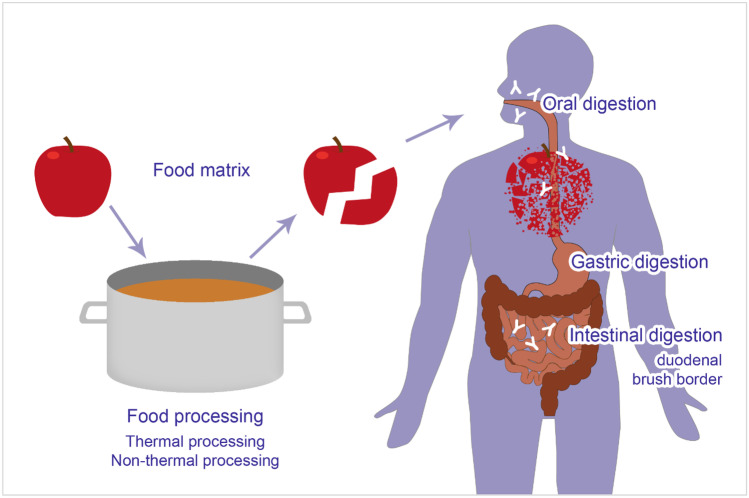
Purpose of Review: The globally rising food allergy prevalence is associated with the urgent need for new disease prevention methods, efficient treatment, and reliable risk assessment methods for characterization of food allergens. Due to inter-individual variations in the digestive system, food allergens are degraded to a different extent in each person. Food processing also influences allergen digestion. Recent Findings: In this review, we provide an overview of the digestive system with focus on relevance for food allergy. Main food proteins causing allergic reactions are evaluated, and the combined role of food processing and digestion for allergen stability is highlighted. Finally, clinical implications of this knowledge are discussed. Summary: Recent literature shows that allergen digestibility is dependent on food processing, digestive conditions, and food matrix. Digestion affects proteins allergenicity. It is currently not possible to predict the immunogenicity of allergens solely based on protein stability.
Overview
The claims and statistics of this paper haven’t been checked yet.
Run the check — free, no account needed. It reads the open-access text and checks the sources it cites.
Integrity signals
Registry
Cites
Statistics
Figures
Verification
Claims the paper makes
The claims and statistics of this paper haven’t been checked yet.
Run the check — free, no account needed. It reads the open-access text and checks the sources it cites.
Claims other papers make about this one
Each is checked against this paper’s own text: does it say what the citing paper says it does?
In the citing paper
“Class I allergens are typically heat-and digestion-stable proteins found in foods such as nuts, shellfish, and eggs.”
From Pollen–Food Allergy Syndrome: Allergens, Clinical Insights, Diagnostic and Therapeutic Challenges (2024) · cites this paper as [41]
In the citing paper
“These allergens are capable of sensitizing individuals through the gastrointestinal tract and are often associated with systemic and severe allergic reactions, including anaphylaxis.”
From Pollen–Food Allergy Syndrome: Allergens, Clinical Insights, Diagnostic and Therapeutic Challenges (2024) · cites this paper as [41]
Self-check
Percentages, sums and reported differences re-computed from the paper’s own numbers.
The self-check needs the paper’s full text.
Citations
Cites
Physiologic, pathophysiologic, and pharmacologic regulation of gastric acid secretion
Schubert, M. L. (2017) · Current Opinion in Gastroenterology · doi:10.1097/mog.0000000000000392 · Cited by 99
Research works printed but not linked: 117
- Sampath V, Abrams EM, Adlou B, Akdis C, Akdis M, Brough HA, et al. Food allergy across the globe. J Allergy Clin Immunol. 2021;148:1347–64. · DOI
- Peters RL, Krawiec M, Koplin JJ, Santos AF. Update on food allergy. Pediatr Allergy Immunol. 2021;32:647–57. · DOI
- Warren C, Nimmagadda SR, Gupta R, Levin M. The epidemiology of food allergy in adults. Ann Allergy Asthma Immunol. 2023;130:276–87. · DOI
- Warren CM, Jiang J, Gupta RS. Epidemiology and burden of food allergy. Curr Allergy Asthma Rep. 2020;20:6. · DOI
- Kim JS, Sicherer S. Should avoidance of foods be strict in prevention and treatment of food allergy? Curr Opin Allergy Clin Immunol. 2010;10:252–7. · DOI
- Costa C, Coimbra A, Vítor A, Aguiar R, Ferreira AL, Todo-Bom A. Food allergy—from food avoidance to active treatment. Scand J Immunol. 2020;91: e12824. · DOI
- Dierick BJH, van der Molen T, Flokstra-de Blok BMJ, Muraro A, Postma MJ, Kocks JWH, et al. Burden and socioeconomics of asthma, allergic rhinitis, atopic dermatitis and food allergy. Expert Rev Pharmacoecon Outcomes Res. 2020;20:437–53. · DOI
- Jansson S-A, Heibert-Arnlind M, Middelveld RJ, Bengtsson UJ, Sundqvist A-C, Kallström-Bengtsson I, et al. Health-related quality of life, assessed with a disease-specific questionnaire, in Swedish adults suffering from well-diagnosed food allergy to staple foods. Clin Transl Allergy. 2013;3:21. · DOI
- Pekar J, Ret D, Untersmayr E. Stability of allergens. Mol Immunol. 2018;100:14–20. · DOI · Paper page
- Verhoeckx KCM, Vissers YM, Baumert JL, Faludi R, Feys M, Flanagan S, et al. Food processing and allergenicity. Food Chem Toxicol. 2015;80:223–40. · DOI · Paper page
- El Mecherfi KE, Curet S, Lupi R, Larré C, Rouaud O, Choiset Y, et al. Combined microwave processing and enzymatic proteolysis of bovine whey proteins: the impact on bovine β-lactoglobulin allergenicity. J Food Sci Technol. 2019;56:177–86. · DOI
- Lu Q, Zuo L, Wu Z, Li X, Tong P, Wu Y, et al. Characterization of the protein structure of soymilk fermented by Lactobacillus and evaluation of its potential allergenicity based on the sensitized-cell model. Food Chem. 2022;366: 130569. · DOI
- Cheng J-H, Wang H, Sun D-W. Insight into the IgE-binding sites of allergenic peptides of tropomyosin in shrimp (Penaeus chinensis) induced by cold plasma active particles. Int J Biol Macromol. 2023;234: 123690. · DOI
- Knorr D, Watzke H. Food processing at a crossroad. Front Nutr. 2019;6:85. · DOI
- van Boekel M, Fogliano V, Pellegrini N, Stanton C, Scholz G, Lalljie S, et al. A review on the beneficial aspects of food processing. Mol Nutr Food Res. 2010;54:1215–47. · DOI
- Knorr D, Froehling A, Jaeger H, Reineke K, Schlueter O, Schoessler K. Emerging technologies in food processing. Annu Rev Food Sci Technol. 2011;2:203–35. · DOI
- Guo Q, Ye A, Singh H, Rousseau D. Destructuring and restructuring of foods during gastric digestion. Comp Rev Food Sci Food Safety. 2020;19:1658–79. · DOI
- Zenker HE, Wichers HJ, Tomassen MMM, Boeren S, De Jong NW, Hettinga KA. Peptide release after simulated infant in vitro digestion of dry heated cow’s milk protein and transport of potentially immunoreactive peptides across the Caco-2 cell monolayer. Nutrients. 2020;12:2483. · DOI
- Ma X, Li H, Zhang J, Ge Y, He L, Kang W, et al. Effect of roasting on the conformational structure and ige binding of sesame allergens. J Agric Food Chem. 2022;70:9442–50. · DOI
- Di Stasio L, d’Acierno A, Picariello G, Ferranti P, Nitride C, Mamone G. In vitro gastroduodenal and jejunal brush border membrane digestion of raw and roasted tree nuts. Food Res Int. 2020;136: 109597. · DOI
- Lamberti C, Nebbia S, Antoniazzi S, Cirrincione S, Marengo E, Manfredi M, et al. Effect of hot air and infrared roasting on hazelnut allergenicity. Food Chem. 2021;342: 128174. · DOI
- Álvarez ML, Mera TDA, Baynova K, Zavala BB, Castaño MP. Anaphylaxis due to roasted sunflower seeds with tolerance to raw sunflower seeds. Ann Allergy Asthma Immunol. 2018;120:330–1. · DOI
- Shi Q, Wang W, Wu Y, Chen H, Tong P, Gao J. Pasteurization induced protein interaction decreased the potential allergenicity of ovalbumin and ovomucoid in egg white. J Sci Food Agric. 2022;102:6835–47. · DOI
- Yang F, Ma X, Hu W, Xiong Z, Huang M, Wu Y, et al. Identification of immunoglobulin E epitopes on major allergens from dairy products after digestion and transportation in vitro. J Dairy Sci. 2022;105:9476–87. · DOI
- Toda M, Hellwig M, Henle T, Vieths S. Influence of the Maillard reaction on the allergenicity of food proteins and the development of allergic inflammation. Curr Allergy Asthma Rep. 2019;19:4. · DOI
- Bai T-L, Han X-Y, Li M-S, Yang Y, Liu M, Ji N-R, et al. Effects of the Maillard reaction on the epitopes and immunoreactivity of tropomyosin, a major allergen in Chlamys nobilis. Food Funct. 2021;12:5096–108. · DOI
- Shi Y, Wang M, Ding Y, Chen J, Niu B, Chen Q. Effects of Maillard reaction on structural modification and potential allergenicity of peanut 7S globulin (Ara h 1). J Sci Food Agric. 2020;100:5617–26. · DOI
- Chizoba Ekezie F-G, Cheng J-H, Sun D-W. Effects of nonthermal food processing technologies on food allergens: a review of recent research advances. Trends Food Sci Technol. 2018;74:12–25. · DOI
- Kurpiewska K, Biela A, Loch JI, Lipowska J, Siuda M, Lewiński K. Towards understanding the effect of high pressure on food protein allergenicity: β-lactoglobulin structural studies. Food Chem. 2019;270:315–21. · DOI
- Cuadrado C, Sanchiz A, Vicente F, Ballesteros I, Linacero R. Changes induced by pressure processing on immunoreactive proteins of tree nuts. Molecules. 2020;25:954. · DOI
- Ng SW, Lu P, Rulikowska A, Boehm D, O’Neill G, Bourke P. The effect of atmospheric cold plasma treatment on the antigenic properties of bovine milk casein and whey proteins. Food Chem. 2021;342: 128283. · DOI
- Saremnezhad S, Soltani M, Faraji A, Hayaloglu AA. Chemical changes of food constituents during cold plasma processing: a review. Food Res Int. 2021;147: 110552. · DOI
- Olatunde OO, Hewage A, Dissanayake T, Aluko RE, Karaca AC, Shang N, et al. Cold atmospheric plasma-induced protein modification: Novel nonthermal processing technology to improve protein quality, functionality, and allergenicity reduction. Comp Rev Food Sci Food Safety. 2023;22:2197–234. · DOI
- Schrama D, Raposo de Magalhães C, Cerqueira M, Carrilho R, Revets D, Kuehn A, et al. Fish processing and digestion affect parvalbumins detectability in gilthead seabream and european seabass. Animals (Basel). 2022;12:3022. · DOI
- Wang J, Wang J, Kranthi Vanga S, Raghavan V. Influence of high-intensity ultrasound on the IgE binding capacity of Act d 2 allergen, secondary structure, and In-vitro digestibility of kiwifruit proteins. Ultrason Sonochem. 2021;71: 105409. · DOI
- Wang C, Xie Q, Wang Y, Fu L. Effect of ultrasound treatment on allergenicity reduction of milk casein via colloid formation. J Agric Food Chem. 2020;68:4678–86. · DOI
- Zhang Z, Zhang X, Chen W, Zhou P. Conformation stability, in vitro digestibility and allergenicity of tropomyosin from shrimp (Exopalaemon modestus) as affected by high intensity ultrasound. Food Chem. 2018;245:997–1009. · DOI
- da Silva JF, Morais AT do B, Santos WG, M Ahrné L, Cardoso DR. UV-C light promotes the reductive cleavage of disulfide bonds in β-Lactoglobulin and improves in vitro gastric digestion. Food Res Int. 2023;168:112729. · DOI
- Yuan J, Zheng Y, Wu Y, Chen H, Tong P, Gao J. Double enzyme hydrolysis for producing antioxidant peptide from egg white: Optimization, evaluation, and potential allergenicity. J Food Biochem. 2020;44:13113. · DOI
- Cuadrado C, Cheng H, Sanchiz A, Ballesteros I, Easson M, Grimm CC, et al. Influence of enzymatic hydrolysis on the allergenic reactivity of processed cashew and pistachio. Food Chem. 2018;241:372–9. · DOI
- Pi X, Yang Y, Sun Y, Cui Q, Wan Y, Fu G, et al. Recent advances in alleviating food allergenicity through fermentation. Crit Rev Food Sci Nutr. 2022;62:7255–68. · DOI
- Huang M, Yang F, Wu Y, Meng X, Shi L, Chen H, et al. Identification of peptides sequence and conformation contributed to potential allergenicity of main allergens in yogurts. Front Nutr. 2022;9:1038466. · DOI
- Villa C, Bavaro SL, De Angelis E, Pilolli R, Costa J, Barni S, et al. Milk ingredients in meat products: can autoclaving and in vitro gastroduodenal digestion mitigate their IgE-binding capacity? Nutrients. 2021;13:931. · DOI
- De Angelis E, Bavaro SL, Forte G, Pilolli R, Monaci L. Heat and pressure treatments on almond protein stability and change in immunoreactivity after simulated human digestion. Nutrients. 2018;10:1679. · DOI
- Bavaro SL, Di Stasio L, Mamone G, De Angelis E, Nocerino R, Canani RB, et al. Effect of thermal/pressure processing and simulated human digestion on the immunoreactivity of extractable peanut allergens. Food Res Int. 2018;109:126–37. · DOI
- Akkerdaas JH, Cianferoni A, Islamovic E, Kough J, Ladics GS, McClain S, et al. Impact of food matrices on digestibility of allergens and poorly allergenic homologs. FrontAllergy. 2022;3: 909410.
- Zhang Y, Wu Z, Li K, Li X, Yang A, Tong P, et al. Allergenicity assessment on thermally processed peanut influenced by extraction and assessment methods. Food Chem. 2019;281:130–9. · DOI
- Renz H, Allen KJ, Sicherer SH, Sampson HA, Lack G, Beyer K, et al. Food allergy Nat Rev Dis Primers. 2018;4:17098. · DOI
- Roblegg E, Coughran A, Sirjani D. Saliva: an all-rounder of our body. Eur J Pharm Biopharm. 2019;142:133–41. · DOI
- Xu F, Laguna L, Sarkar A. Aging-related changes in quantity and quality of saliva: where do we stand in our understanding? J Texture Stud. 2019;50:27–35. · DOI
- Pedersen A, Sørensen CE, Proctor GB, Carpenter GH. Salivary functions in mastication, taste and textural perception, swallowing and initial digestion. Oral Dis. 2018;24:1399–416. · DOI
- Çelebioğlu HY, Lee S, Chronakis IS. Interactions of salivary mucins and saliva with food proteins: a review. Crit Rev Food Sci Nutr. 2020;60:64–83. · DOI
- Lynge Pedersen AM, Belstrøm D. The role of natural salivary defences in maintaining a healthy oral microbiota. J Dent. 2019;80(Suppl 1):S3–12. · DOI
- Domnich M, Riedesel J, Pylaeva E, Kürten CHL, Buer J, Lang S, et al. Oral neutrophils: underestimated players in oral cancer. Front Immunol. 2020;11:565683. · DOI
- Ni X, Tan Z, Ding C, Zhang C, Song L, Yang S, et al. A region-resolved mucosa proteome of the human stomach. Nat Commun. 2019;10:39. · DOI
- Engevik AC, Kaji I, Goldenring JR. The physiology of the gastric parietal cell. Physiol Rev. 2020;100:573–602. · DOI
- Yao X, Smolka AJ. Gastric parietal cell physiology and Helicobacter pylori-induced disease. Gastroenterology. 2019;156:2158–73. · DOI
- Heda R, Toro F, Tombazzi CR. Physiology, Pepsin. [Updated 2023 May 1]. In: StatPearls [Internet]. Treasure Island (FL): StatPearls Publishing. 2023 Jan. Available from: https://www.ncbi.nlm.nih.gov/books/NBK537005/.
- Nganzeu C, Bock JM, Johnston N. Gastric acid and pepsin roles in reflux disease. In: Zalvan CH, editor. Laryngopharyngeal and gastroesophageal reflux: a comprehensive guide to diagnosis, treatment, and diet-based approaches. Cham: Springer International Publishing; 2020. p. 23–38. · DOI
- Boltin D, Niv Y. Mucins in gastric cancer — an update. J Gastrointest Dig Syst. 2013;3:15519. · DOI
- Grondin JA, Kwon YH, Far PM, Haq S, Khan WI. Mucins in intestinal mucosal defense and inflammation: learning from clinical and experimental studies. Front Immunol. 2020;11:2054. · DOI
- Aburub A, Fischer M, Camilleri M, Semler JR, Fadda HM. Comparison of pH and motility of the small intestine of healthy subjects and patients with symptomatic constipation using the wireless motility capsule. Int J Pharm. 2018;544:158–64. · DOI
- Akiba Y, Hashimoto S, Kaunitz JD. Duodenal chemosensory system: enterocytes, enteroendocrine cells, and tuft cells. Curr Opin Gastroenterol. 2020;36:501–8. · DOI
- •• Ballegaard A-SR, Bøgh KL. Intestinal protein uptake and IgE-mediated food allergy. Food Res Int. 2023;163:112150. This review comprehensively summarizes the uptake of allergens in the intestine. · DOI
- Matsushita H, Takenaka M, Ogawa H. Porcine pancreatic alpha-amylase shows binding activity toward N-linked oligosaccharides of glycoproteins. J Biol Chem. 2002;277:4680–6. · DOI
- Nitride C, Vegarud GE, Comi I, Devold TG, Røseth A, Marti A, et al. Effect of sprouting on the proteome of chickpea flour and on its digestibility by ex vivo gastro-duodenal digestion complemented with jejunal brush border membrane enzymes. Food Res Int. 2022;154: 111012. · DOI
- Schneider H, Pelaseyed T, Svensson F, Johansson MEV. Study of mucin turnover in the small intestine by in vivo labeling. Sci Rep. 2018;8:5760. · DOI
- Pelaseyed T, Hansson GC. Membrane mucins of the intestine at a glance. J Cell Sci. 2020;133:jcs240929. · DOI
- Koidl L, Untersmayr E. The clinical implications of the microbiome in the development of allergy diseases. Expert Rev Clin Immunol. 2021;17:115–26. · DOI
- Crouch LI, Urbanowicz PA, Baslé A, Cai Z-P, Liu L, Voglmeir J, et al. Plant N-glycan breakdown by human gut bacteroides. Proc Natl Acad Sci USA. 2022;119: e2208168119. · DOI
- Kim S, Shin Y-C, Kim T-Y, Kim Y, Lee Y-S, Lee S-H, et al. Mucin degrader Akkermansia muciniphila accelerates intestinal stem cell-mediated epithelial development. Gut Microbes. 2021;13:1–20. · DOI
- Pothuraju R, Chaudhary S, Rachagani S, Kaur S, Roy HK, Bouvet M, et al. Mucins, gut microbiota, and postbiotics role in colorectal cancer. Gut Microbes. 2021;13:1974795. · DOI
- Bergstrom K, Shan X, Casero D, Batushansky A, Lagishetty V, Jacobs JP, et al. Proximal colon-derived O-glycosylated mucus encapsulates and modulates the microbiota. Science. 2020;370:467–72. · DOI
- Hansson GC. Mucins and the microbiome. Annu Rev Biochem. 2020;89:769–93. · DOI
- Breugelmans T, Arras W, Boen L-E, Borms E, Kamperdijk L, De Man J, et al. Aberrant mucin expression profiles associate with pediatric inflammatory bowel disease presentation and activity. Inflamm Bowel Dis. 2023;29:589–601. · DOI
- Cantero-Recasens G, Burballa C, Ohkawa Y, Fukuda T, Harada Y, IBD Character Consortium, et al. The ulcerative colitis-associated gene FUT8 regulates the quantity and quality of secreted mucins. Proc Natl Acad Sci USA. 2022;119:e2205277119. · DOI
- Akkerdaas J, Totis M, Barnett B, Bell E, Davis T, Edrington T, et al. Protease resistance of food proteins: a mixed picture for predicting allergenicity but a useful tool for assessing exposure. Clin Transl Allergy. 2018;8:30. · DOI
- Jordakieva G, Kundi M, Untersmayr E, Pali-Schöll I, Reichardt B, Jensen-Jarolim E. Country-wide medical records infer increased allergy risk of gastric acid inhibition. Nat Commun. 2019;10:3298. · DOI
- Pali-Schöll I, Untersmayr E, Klems M, Jensen-Jarolim E. The effect of digestion and digestibility on allergenicity of food. Nutrients. 2018;10:1129. · DOI
- Samadi N, Heiden D, Klems M, Salzmann M, Rohrhofer J, Weidmann E, et al. Gastric enzyme supplementation inhibits food allergy in a balb/c mouse model. Nutrients. 2021;13:738. · DOI
- EFSA Panel on Genetically Modified Organisms (GMO), Naegeli H, Bresson J-L, Dalmay T, Dewhurst IC, Epstein MM, et al. Statement on in vitro protein digestibility tests in allergenicity and protein safety assessment of genetically modified plants. EFSA J. 2021;19:e06350. · DOI
- •• Wang K, Crevel RWR, Mills ENC. An in vitro protocol to characterise the resistance of food proteins to intestinal digestion. Food Chem Toxicol. 2023;173:113590. This study tested multiple allergens simultaneously under several different conditions enabling a good comparability of digestive stability between different food allergens. · DOI
- • Brodkorb A, Egger L, Alminger M, Alvito P, Assunção R, Ballance S, et al. INFOGEST static in vitro simulation of gastrointestinal food digestion. Nat Protoc. 2019;14:991–1014. Standardized protocols, such as the INFOGEST protocol, are necessary for better comparability of study results evaluating digestion resistance of proteins. · DOI · Paper page
- Sicherer SH, Warren CM, Dant C, Gupta RS, Nadeau KC. Food Allergy from Infancy Through Adulthood. J Allergy Clin Immunol Pract. 2020;8:1854–64. · DOI · Paper page
- Warren CM, Agrawal A, Gandhi D, Gupta RS. The US population-level burden of cow’s milk allergy. World Allergy Organiz J. 2022;15: 100644. · DOI
- Pereira PC. Milk nutritional composition and its role in human health. Nutrition. 2014;30:619–27. · DOI
- Nowak-Węgrzyn A, Lawson K, Masilamani M, Kattan J, Bahnson HT, Sampson HA. Increased tolerance to less extensively heat-denatured (baked) milk products in milk-allergic children. J Allergy Clin Immunol Pract. 2018;6:486-495.e5. · DOI
- Chang C, Lahti T, Tanaka T, Nickerson MT. Egg proteins: fractionation, bioactive peptides and allergenicity. J Sci Food Agric. 2018;98:5547–58. · DOI
- Mostashari P, Marszałek K, Aliyeva A, Mousavi Khaneghah A. The impact of processing and extraction methods on the allergenicity of targeted protein quantification as well as bioactive peptides derived from egg. Molecules. 2023;28:2658. · DOI
- Torcello-Gómez A, Dupont D, Jardin J, Briard-Bion V, Deglaire A, Risse K, et al. The pattern of peptides released from dairy and egg proteins is highly dependent on the simulated digestion scenario. Food Funct. 2020;11:5240–56. · DOI
- Yamada A, Hasegawa T, Fujieda M, Morita H, Matsumoto K. Protease-digested egg-white products induce oral tolerance in mice but elicit little IgE production upon epicutaneous exposure. Allergol Int. 2022;71:528–35. · DOI
- Prodić I, Krstić Ristivojević M, Smiljanić K. Antioxidant properties of protein-rich plant foods in gastrointestinal digestion—peanuts as our antioxidant friend or foe in allergies. Antioxidants (Basel). 2023;12:886. · DOI
- Palladino C, Breiteneder H. Peanut allergens. Mol Immunol. 2018;100:58–70. · DOI
- Prodic I, Stanic-Vucinic D, Apostolovic D, Mihailovic J, Radibratovic M, Radosavljevic J, et al. Influence of peanut matrix on stability of allergens in gastric-simulated digesta: 2S albumins are main contributors to the IgE reactivity of short digestion-resistant peptides. Clin Exp Allergy. 2018;48:731–40. · DOI
- Smits M, Nooijen I, Redegeld F, de Jong A, Le T-M, Knulst A, et al. Digestion and transport across the intestinal epithelium affects the allergenicity of Ara h 1 and 3 but not of Ara h 2 and 6. Mol Nutr Food Res. 2021;65:e2000712. · DOI
- de Jongh HHJ, de Jong GAH, Apostolovic D, Taylor SL, Baumert JL, Koppelman SJ. Effect of heat treatment on the conformational stability of intact and cleaved forms of the peanut allergen Ara h 6 in relation to its IgE-binding potency. Food Chem. 2020;326:127027. · DOI
- Zhang T, Shi Y, Zhao Y, Tang G, Niu B, Chen Q. Boiling and roasting treatment affecting the peanut allergenicity. Ann Transl Med. 2018;6:357. · DOI
- Di Stasio L, Tranquet O, Picariello G, Ferranti P, Morisset M, Denery-Papini S, et al. Comparative analysis of eliciting capacity of raw and roasted peanuts: the role of gastrointestinal digestion. Food Res Int. 2020;127:108758. · DOI
- Cheng J-H, Wang H, Sun D-W. An overview of tropomyosin as an important seafood allergen: structure, cross-reactivity, epitopes, allergenicity, and processing modifications. Comp Rev Food Sci Food Safety. 2022;21:127–47. · DOI · Paper page
- Gelis S, Rueda M, Valero A, Fernández EA, Moran M, Fernández-Caldas E. Shellfish allergy: unmet needs in diagnosis and treatment. J Investig Allergol Clin Immunol. 2020;30:409–20. · DOI
- Liu K, Lin S, Gao X, Wang S, Liu Y, Liu Q, et al. Reduced allergenicity of shrimp (Penaeus vannamei) by altering the protein fold, digestion susceptibility, and allergen epitopes. J Agric Food Chem. 2023;71:9120–34. · DOI
- Dong X, Wang J, Raghavan V. Impact of microwave processing on the secondary structure, in-vitro protein digestibility and allergenicity of shrimp (Litopenaeus vannamei) proteins. Food Chem. 2021;337:127811. · DOI
- Schrama D, Czolk R, Raposo de Magalhães C, Kuehn A, Rodrigues PM. Fish allergenicity modulation using tailored enriched diets—where are we? Front Physiol. 2022;13:897168. · DOI
- Carrera M, González-Fernández Á, Magadán S, Mateos J, Pedrós L, Medina I, et al. Molecular characterization of B-cell epitopes for the major fish allergen, parvalbumin, by shotgun proteomics, protein-based bioinformatics and IgE-reactive approaches. J Proteomics. 2019;200:123–33. · DOI
- Untersmayr E, Poulsen LK, Platzer MH, Pedersen MH, Boltz-Nitulescu G, Skov PS, et al. The effects of gastric digestion on codfish allergenicity. J Allergy Clin Immunol. 2005;115:377–82. · DOI
- Yang H, Min J, Han X-Y, Li X-Y, Hu J-W, Liu H, et al. Reduction of the histamine content and immunoreactivity of parvalbumin in Decapterus maruadsi by a Maillard reaction combined with pressure treatment. Food Funct. 2018;9:4897–905. · DOI
- Pérez-Tavarez R, Moreno HM, Borderias J, Loli-Ausejo D, Pedrosa M, Hurtado JL, et al. Fish muscle processing into seafood products reduces β-parvalbumin allergenicity. Food Chem. 2021;364:130308. · DOI
- Luo C, Chen G, Ahmed I, Sun L, Li W, Pavase TR, et al. Immunostimulatory and allergenic properties of emulsified and non-emulsified digestion products of parvalbumin (Scophthalmus maximus) in RBL-2H3 cells and BALB/c mouse models. Food Funct. 2021;12:5351–60. · DOI
- Platts-Mills TA, Hilger C, Jappe U, van Hage M, Gadermaier G, Spillner E, et al. Carbohydrate epitopes currently recognized as targets for IgE antibodies. Allergy. 2021;76:2383–94. · DOI
- Commins SP. Carbohydrates as allergens. Curr Allergy Asthma Rep. 2015;15:492. · DOI
- Hils M, Wölbing F, Hilger C, Fischer J, Hoffard N, Biedermann T. The history of carbohydrates in type I allergy. Front Immunol. 2020;11:586924. · DOI
- Carson AS, Gardner A, Iweala OI. Where’s the beef? Understanding allergic responses to red meat in alpha-gal syndrome. J Immunol. 2022;208:267–77. · DOI
- Apostolovic D, Krstic M, Mihailovic J, Starkhammar M, Cirkovic Velickovic T, Hamsten C, et al. Peptidomics of an in vitro digested α-Gal carrying protein revealed IgE-reactive peptides. Sci Rep. 2017;7:5201. · DOI
- Krstić Ristivojević M, Grundström J, Apostolović D, Radomirović M, Jovanović V, Radoi V, et al. Alpha-gal on the protein surface hampers transcytosis through the Caco-2 monolayer. Int J Mol Sci. 2020;21:5742. · DOI
- Lukschal A, Wallmann J, Bublin M, Hofstetter G, Mothes-Luksch N, Breiteneder H, et al. Mimotopes for Api g 5, a Relevant cross-reactive allergen, in the Celery-Mugwort-Birch-Spice syndrome. Allergy Asthma Immunol Res. 2016;8:124–31. · DOI
- Ferreira-Lazarte A, Moreno FJ, Villamiel M. Bringing the digestibility of prebiotics into focus: update of carbohydrate digestion models. Crit Rev Food Sci Nutr. 2021;61:3267–78. · DOI
- Diem L, Neuherz B, Rohrhofer J, Koidl L, Asero R, Brockow K, et al. Real-life evaluation of molecular multiplex IgE test methods in the diagnosis of pollen associated food allergy. Allergy. 2022;77:3028–40. · DOI
Cited by
Sorted by citations
Pollen–Food Allergy Syndrome: Allergens, Clinical Insights, Diagnostic and Therapeutic Challenges
Haidar, L., Bănărescu, C. F., Uța, C., Moldovan, S. I., Zimbru, E.-L., Zimbru, R.-I., Ciurariu, E., Georgescu, M., & Panaitescu, C. (2024) · Applied Sciences · doi:10.3390/app15010066 · Cited by 21
Metadata
- Authors
- Koidl, L., Gentile, S. A., & Untersmayr, E.
- Venue
- Current Allergy and Asthma Reports
- Published
- 2023-09-04
- Volume
- 23
- Issue
- 10
- Pages
- 601-612
- ISSN
- 1529-7322
- 1534-6315
- PMC
- PMC10506954
- Cited by
- 29
- References
- 1
- Language
- en
- Funders
- Austrian Science Funds FWF (P34836)
- Austrian Science Fund
About these checks
Registry, retraction, Cites and statistics results are computed, not judged, with one exception: a printed reference that no index lists is read once by a model before it counts as a citation error. Claims are extracted by a model and kept only when their quote appears verbatim in the text; each cited source is then checked, with a model’s help, for whether it says what the claim relies on. Those verdicts can be wrong — read the claim’s quote and the cited source before relying on one.
Statistics and arithmetic are recomputed, not judged.
Confidence bands are shown only for fields calibrated on our annotated test set. None is calibrated yet, so no band is shown.
What counts as a claim ›How we measure confidence ›How we check this ›
Are you an author, or do you see a problem with this page? Request a review
How to cite
Cite CoChat for the checks on this page, and the paper for its own findings.
- This page
- CoChat. (2026). Citation check: Allergen Stability in Food Allergy: A Clinician’s Perspective. https://app.cochat.ai/papers/10.1007/s11882-023-01107-9
- The paper
- Koidl, L., Gentile, S. A., & Untersmayr, E. (2023). Allergen Stability in Food Allergy: A Clinician’s Perspective. Current Allergy and Asthma Reports. https://doi.org/10.1007/s11882-023-01107-9
