

Bempedoic Acid (ETC-1002): an Investigational Inhibitor of ATP Citrate Lyase
Open accessThe DOI matches its Crossref record; 28 of the 28 references it cites were found in a registry or an index.
Abstract
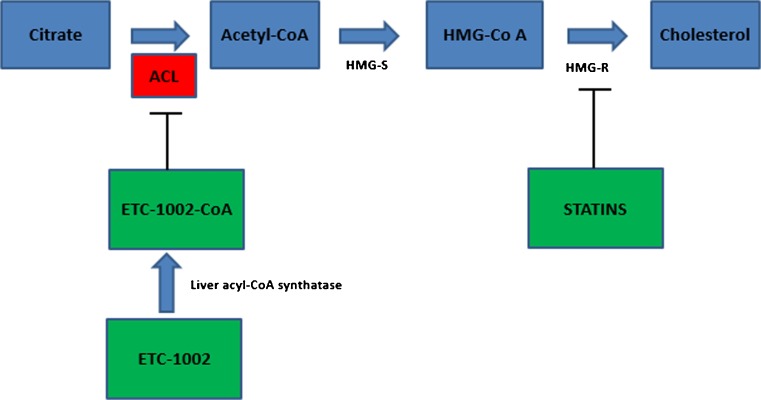
Bempedoic acid (ETC-1002), a novel therapeutic approach for low-density lipoprotein cholesterol (LDL-C) lowering, inhibits ATP citrate lyase (ACL), an enzyme involved in fatty acid and cholesterol synthesis. Although rodent studies suggested potential effects of ACL inhibition on both fatty acid and cholesterol synthesis, studies in humans show an effect only on cholesterol synthesis. In phase 2 studies, ETC-1002 reduced LDL-C as monotherapy, combined with ezetimibe, and added to statin therapy, with LDL-C lowering most pronounced when ETC-1002 was combined with ezetimibe in patients who cannot tolerate statins. Whether clinically relevant favorable effects on other cardiometabolic risk factors such as hyperglycemia and insulin resistance occur in humans is unknown and requires further investigation. Promising phase 2 results have led to the design of a large phase 3 program to gain more information on efficacy and safety of ETC-1002 in combination with statins and when added to ezetimibe in statin-intolerant patients.
Overview
The claims and statistics of this paper haven’t been checked yet.
Free: it reads the open-access text and checks the first 5 claims that cite a source we can check. Create a free account to check every claim.
Integrity signals
Registry
Cites
Statistics
Figures
Verification
Claims the paper makes
The claims and statistics of this paper haven’t been checked yet.
Free: it reads the open-access text and checks the first 5 claims that cite a source we can check. Create a free account to check every claim.
Claims other papers make about this one
Each is checked against this paper’s own text: does it say what the citing paper says it does?
The cited source says what the claim attributes to it.
In the citing paper
“Bempedoic acid inhibits adenosine triphosphate (ATP)-citrate lyase and thereby cholesterol biosynthesis [126].”
From Established and Emerging Lipid-Lowering Drugs for Primary and Secondary Cardiovascular Prevention (2023) · cites this paper as [126]
Self-check
Percentages, sums and reported differences re-computed from the paper’s own numbers.
The self-check needs the paper’s full text.
Citations
Cites
Schwartz, G. G. (2001) · JAMA · doi:10.1001/jama.285.13.1711 · Cited by 2,499
de Lemos, J. A., Blazing, M. A., Wiviott, S. D., Lewis, E. F., Fox, K. A. A., White, H. D., Rouleau, J.-L., Pedersen, T. R., Gardner, L. H., Mukherjee, R., et al. (2004) · JAMA · doi:10.1001/jama.292.11.1307 · Cited by 1,333
De novo lipogenesis in health and disease
Ameer, F., Scandiuzzi, L., Hasnain, S., Kalbacher, H., & Zaidi, N. (2014) · Metabolism · doi:10.1016/j.metabol.2014.04.003 · Cited by 611
Statin use and risk of diabetes mellitus in postmenopausal women in the Women's Health Initiative
Culver, A. L. (2012) · Archives of Internal Medicine · doi:10.1001/archinternmed.2011.625 · Cited by 444
Wiviott, S. D., Cannon, C. P., Morrow, D. A., Ray, K. K., Pfeffer, M. A., & Braunwald, E. (2005) · Journal of the American College of Cardiology · doi:10.1016/j.jacc.2005.04.064 · Cited by 340 · cited 3×
“ing efficacy of ETC-1002 versus ezetimibe, and assess safety and tolerability, including muscle-related adverse events, in patients with or without statin intolerance, defined as inability to tolerate two or more statins because of muscle pain, weakness, or cramping that began or increased during statin therapy and re…”
MethodInfluentialThe broad spectrum of statin myopathy: from myalgia to rhabdomyolysis
Harper, C. R., & Jacobson, T. A. (2007) · Current Opinion in Lipidology · doi:10.1097/mol.0b013e32825a6773 · Cited by 246
Pinkosky, S. L., Filippov, S., Srivastava, R. A. K., Hanselman, J. C., Bradshaw, C. D., Hurley, T. R., Cramer, C. T., Spahr, M. A., Brant, A. F., Houghton, J. L., et al. (2013) · Journal of Lipid Research · doi:10.1194/jlr.m030528 · Cited by 239
Acute coronary syndromes: morbidity, mortality, and pharmacoeconomic burden.
Kolansky, D. M. (2009) · PubMed · Cited by 187
Ballantyne, C. M., Davidson, M. H., MacDougall, D. E., Bays, H. E., DiCarlo, L. A., Rosenberg, N. L., Margulies, J., & Newton, R. S. (2013) · Journal of the American College of Cardiology · doi:10.1016/j.jacc.2013.05.050 · Cited by 175
Self-citationGutierrez, M. J., Rosenberg, N. L., MacDougall, D. E., Hanselman, J. C., Margulies, J. R., Strange, P., Milad, M. A., McBride, S. J., & Newton, R. S. (2014) · Arteriosclerosis, Thrombosis, and Vascular Biology · doi:10.1161/atvbaha.113.302677 · Cited by 170
Cited by
Reprogramming of fatty acid metabolism in cancer
Koundouros, N., & Poulogiannis, G. (2020) · British Journal of Cancer · doi:10.1038/s41416-019-0650-z · Cited by 1,614
Lipid metabolism in cancer: New perspectives and emerging mechanisms
Broadfield, L. A., Pane, A. A., Talebi, A., Swinnen, J. V., & Fendt, S.-M. (2021) · Developmental Cell · doi:10.1016/j.devcel.2021.04.013 · Cited by 758
Granchi, C. (2018) · European Journal of Medicinal Chemistry · doi:10.1016/j.ejmech.2018.09.001 · Cited by 245
Established and Emerging Lipid-Lowering Drugs for Primary and Secondary Cardiovascular Prevention
Michaeli, D. T., Michaeli, J. C., Albers, S., Boch, T., & Michaeli, T. (2023) · American Journal of Cardiovascular Drugs · doi:10.1007/s40256-023-00594-5 · Cited by 109
“Bempedoic acid inhibits adenosine triphosphate (ATP)-citrate lyase and thereby cholesterol biosynthesis [126].”
BackgroundMetabolic Routes in Inflammation: The Citrate Pathway and its Potential as Therapeutic Target
Infantino, V., Pierri, C. L., & Iacobazzi, V. (2018) · Current Medicinal Chemistry · doi:10.2174/0929867325666180510124558 · Cited by 101
ATP-citrate lyase: genetics, molecular biology and therapeutic target for dyslipidemia
Burke, A. C., & Huff, M. W. (2017) · Current Opinion in Lipidology · doi:10.1097/mol.0000000000000390 · Cited by 91
The vital role of ATP citrate lyase in chronic diseases
Khwairakpam, A. D., Banik, K., Girisa, S., Shabnam, B., Shakibaei, M., Fan, L., Arfuso, F., Monisha, J., Wang, H., Mao, X., et al. (2019) · Journal of Molecular Medicine · doi:10.1007/s00109-019-01863-0 · Cited by 94
Lipid Lowering Drugs: Present Status and Future Developments
Ruscica, M., Ferri, N., Santos, R. D., Sirtori, C. R., & Corsini, A. (2021) · Current Atherosclerosis Reports · doi:10.1007/s11883-021-00918-3 · Cited by 73
Khan, S. U., Khan, M. U., Valavoor, S., Khan, M. S., Okunrintemi, V., Mamas, M. A., Leucker, T. M., Blaha, M. J., & Michos, E. D. (2020) · European Journal of Preventive Cardiology · doi:10.1177/2047487319871733 · Cited by 67
“gov identifier: NCT02993406) is evaluating bempedoic acid, a drug which inhibits ATP-citrate lyase and thus reduces cholesterol synthesis and upregulates LDL-R on liver cells.(58) Inclisiran, a chemically modified small interfering RNA that blocks PCSK9 production by specifically targeting PCSK9 mRNA in hepatocytes, h…”
BackgroundEmerging Non-statin Treatment Options for Lowering Low-Density Lipoprotein Cholesterol
Bardolia, C., Amin, N. S., & Turgeon, J. (2021) · Frontiers in Cardiovascular Medicine · doi:10.3389/fcvm.2021.789931 · Cited by 74
“ATP citrate lyase is a vital enzyme in the cholesterol biosynthesis pathway and is responsible for the production of acetyl CoA from citrate (61).”
BackgroundInfluentialMolecular basis for acetyl-CoA production by ATP-citrate lyase
Wei, X., Schultz, K. C., Bazilevsky, G. A., Vogt, A. D., & Marmorstein, R. (2019) · Nature Structural & Molecular Biology · doi:10.1038/s41594-019-0351-6 · Cited by 59
Mitochondria orchestrate macrophage effector functions in atherosclerosis
Dumont, A., Lee, M., Barouillet, T., Murphy, A. J., & Yvan‐Charvet, L. (2020) · Molecular Aspects of Medicine · doi:10.1016/j.mam.2020.100922 · Cited by 60
Familial Hypercholesterolemia: New Horizons for Diagnosis and Effective Management
Mytilinaiou, M. G., Kyrou, I., Khan, M., Grammatopoulos, D. K., & Randeva, H. S. (2018) · Frontiers in Pharmacology · doi:10.3389/fphar.2018.00707 · Cited by 79
“To date, studies either as monotherapy or as combination therapy with statins have shown positive results, without significant side effects (Bilen and Ballantyne, 2016; Lammel Lindemann and Webb, 2016).”
BackgroundRuscica, M., Banach, M., Sahebkar, A., Corsini, A., & Sirtori, C. R. (2019) · Expert Opinion on Pharmacotherapy · doi:10.1080/14656566.2019.1583209 · Cited by 62
“be safe, well tolerated, andwith no dose-limiting side effects [25].”
BackgroundCurrent Options and Future Perspectives in the Treatment of Dyslipidemia
Muscoli, S., Ifrim, M., Russo, M., Candido, F., Sanseviero, A., Milite, M., Luozzo, M. D., Marchei, M., & Sangiorgi, G. (2022) · Journal of Clinical Medicine · doi:10.3390/jcm11164716 · Cited by 57
“69 mmol/L (150 mg/dL)) triglycerides [27].”
BackgroundBempedoic acid and its role in contemporary management of hyperlipidemia in atherosclerosis
Tummala, R., Gupta, M., Devanabanda, A. R., Bandyopadhyay, D., Aronow, W. S., Ray, K. K., Mamas, M. A., & Ghosh, R. K. (2022) · Annals of Medicine · doi:10.1080/07853890.2022.2059559 · Cited by 57
“acid ensures that it does not competitively interrupt the uptake of statins in the liver [17,18].”
BackgroundLigorio, F., Pellegrini, I., Castagnoli, L., Vingiani, A., Lobefaro, R., Zattarin, E., Santamaria, M., Pupa, S. M., Pruneri, G., de Braud, F., et al. (2021) · Cancer Letters · doi:10.1016/j.canlet.2021.04.023 · Cited by 51
Lipid metabolism in cancer: Exploring phospholipids as potential biomarkers
Delmas, D., Mialhe, A., Cotte, A. K., Connat, J., Bouyer, F., Hermetet, F., & Aires, V. (2025) · Biomedicine & Pharmacotherapy · doi:10.1016/j.biopha.2025.118095 · Cited by 59
Nicholls, S. J., Nelson, A. J., Lincoff, A. M., Brennan, D. M., Ray, K. K., Cho, L., Menon, V., Li, N., Bloedon, L. T., & Nissen, S. E. (2024) · JAMA Cardiology · doi:10.1001/jamacardio.2023.5155 · Cited by 57
Colorectal Cancer: Pathogenesis and Targeted Therapy
Li, J., Pan, J., Wang, L., Ji, G., & Dang, Y. (2025) · MedComm · doi:10.1002/mco2.70127 · Cited by 57
“ETC-1002, a potent ACLY inhibitor, activates the AMPK pathway, inhibiting fatty acid and cholesterol synthesis; however, clinical studies have primarily noted its impact on cholesterol synthesis [257].”
Novel Therapeutic Targets for Managing Dyslipidemia
Sathiyakumar, V., Kapoor, K., Jones, S. R., Banach, M., Martin, S. S., & Toth, P. P. (2018) · Trends in Pharmacological Sciences · doi:10.1016/j.tips.2018.06.001 · Cited by 44
Bempedoic Acid (ETC-1002): ATP Citrate Lyase Inhibitor
Zagelbaum, N. K., Yandrapalli, S., Nabors, C. C., & Frishman, W. H. (2018) · Cardiology in Review · doi:10.1097/crd.0000000000000218 · Cited by 43
Bempedoic acid for the treatment of dyslipidemia
Marrs, J. C., & Anderson, S. L. (2020) · Drugs in Context · doi:10.7573/dic.2020-6-5 · Cited by 36
Zhang, H., Li, Y., Huang, J., Shen, L., & Yang, X. W. (2024) · Acta Pharmaceutica Sinica B · doi:10.1016/j.apsb.2024.07.021 · Cited by 41
“Moreover, tissue-specific enrichment in the liver and adipose tissue may limit the potential applications of ACLYor SCD1 inhibitors in cancer therapy 136 e 138 .”
A Review of the Efficacy and Tolerability of Bempedoic Acid in the Treatment of Hypercholesterolemia
Niman, S., Rana, K., Reid, J., Sheikh‐Ali, M., Lewis, T., Choksi, R. R., & Goldfaden, R. F. (2020) · American Journal of Cardiovascular Drugs · doi:10.1007/s40256-020-00399-w · Cited by 37
“Thus, patients who cannot tolerate a statin-based treatment regimen present a challenge for lipid management and cardio-vascular (CV) event risk reduction [6].”
InfluentialMallick, R., Bhowmik, P., & Duttaroy, A. K. (2023) · Biomedicine & Pharmacotherapy · doi:10.1016/j.biopha.2023.115591 · Cited by 41
New and emerging lipid-modifying drugs to lower LDL cholesterol
Kosmas, C. E., Pantou, D., Sourlas, A., Papakonstantinou, E. J., Uceta, R. E., & Guzman, E. (2021) · Drugs in Context · doi:10.7573/dic.2021-8-3 · Cited by 37
ATP-citrate lyase multimerization is required for coenzyme-A substrate binding and catalysis
Bazilevsky, G. A., Affronti, H. C., Wei, X., Campbell, S. L., Wellen, K. E., & Marmorstein, R. (2019) · Journal of Biological Chemistry · doi:10.1074/jbc.ra118.006685 · Cited by 30
Novel lipid modifying drugs to lower LDL cholesterol
Cupido, A. J., Reeskamp, L. F., & Kastelein, J. J. P. (2017) · Current Opinion in Lipidology · doi:10.1097/mol.0000000000000428 · Cited by 33
Sanjay, K. V., Vishwakarma, S., Zope, B. R., Mane, V. S., Mohire, S., & Dhakshinamoorthy, S. (2021) · Current Research in Pharmacology and Drug Discovery · doi:10.1016/j.crphar.2021.100051 · Cited by 30
“Bempedoic acid (ETC-1002) is an orally administered small molecule prodrug which gets converted to its active form ETC-1002-CoA in liver by Acyl CoA synthetase (Bilen and Ballantyne, 2016).”
BackgroundThe Role of RNA-Targeted Therapeutics to Reduce ASCVD Risk: What Have We Learned Recently?
Miname, M. H., Rocha, V. Z., & Santos, R. D. (2021) · Current Atherosclerosis Reports · doi:10.1007/s11883-021-00936-1 · Cited by 26
Structure of ACLY in complex with CoA
Wei, X., & Marmorstein, R. (2019) · Worldwide Protein Data Bank · doi:10.2210/pdb6poe/pdb · Cited by 24
Emerging lipid lowering agents targeting LDL cholesterol
Wójcik, C. (2020) · Postgraduate Medicine · doi:10.1080/00325481.2020.1751422 · Cited by 23
Evaluating pharmacokinetics of bempedoic acid in the treatment of hypercholesterolemia
Cicero, A. F. G., Fogacci, F., & Cincione, R. I. (2021) · Expert Opinion on Drug Metabolism & Toxicology · doi:10.1080/17425255.2021.1951222 · Cited by 27
May, L. T., Bartolo, B. A. D., Harrison, D. G., Guzik, T. J., Drummond, G. R., Figtree, G. A., Ritchie, R. H., Rye, K., & de Haan, J. B. (2022) · Clinical Science · doi:10.1042/cs20210862 · Cited by 24
Emerging Fixed-Dose Combination Treatments for Hyperlipidemia
Pappa, E. T., Rizos, C. V., Filippatos, T. D., & Elisaf, M. (2019) · Journal of Cardiovascular Pharmacology and Therapeutics · doi:10.1177/1074248419838506 · Cited by 24
Umbrella Review on Non-Statin Lipid-Lowering Therapy
Beshir, S. A., Hussain, N., Elnour, A. A., & Said, A. S. A. (2021) · Journal of Cardiovascular Pharmacology and Therapeutics · doi:10.1177/10742484211002943 · Cited by 23
“However, even in the cases of optimal statin use, there is a residual risk of ASCVD.”
BackgroundInfluentialCurrent pharmacotherapies for atherosclerotic cardiovascular diseases
Park, J., & Oh, G. T. (2019) · Archives of Pharmacal Research · doi:10.1007/s12272-019-01116-1 · Cited by 22
New Insights in the Control of Low-Density Lipoprotein Cholesterol to Prevent Cardiovascular Disease
Katzmann, J. L., & Laufs, U. (2019) · Current Cardiology Reports · doi:10.1007/s11886-019-1159-z · Cited by 20
Pharmacometabolomics for the Study of Lipid-Lowering Therapies: Opportunities and Challenges
Gianazza, E., Brioschi, M., Iezzi, A., Paglia, G., & Banfi, C. (2023) · International Journal of Molecular Sciences · doi:10.3390/ijms24043291 · Cited by 24
“The novel Bempedoic acid (ETC-1002) acts as an inhibitor of adenosine triphosphate citrate lyase (ACL), involved in the production of precursor of cholesterol and fatty acids [49].”
BackgroundDevelopment of New Genome Editing Tools for the Treatment of Hyperlipidemia
Preta, G. (2023) · Cells · doi:10.3390/cells12202466 · Cited by 20
“…adenosine triphosphate citrate lyase, an enzyme involved in the cholesterol synthesis pathway, upstream from the HMG-CoA Several clinical trials have demonstrated the efficiency of this drug when used as a monotherapy or in combination with other lipid-lowering therapies [43–45]. reductase [12].”
BackgroundThe Metabolism of Coenzyme A and Its Derivatives Plays a Crucial Role in Diseases
Xie, J., Chen, X., Zheng, M., Zhu, J., & Mao, H. (2024) · Frontiers in Bioscience-Landmark · doi:10.31083/j.fbl2904143 · Cited by 21
“Additionally, the cytoplasmic enzyme ACLY, highly expressed in adipose-synthesizing tissues, is positioned upstream of HMGCR [195].”
BackgroundJia, X., & Virani, S. S. (2019) · Journal of the American Heart Association · doi:10.1161/jaha.119.012352 · Cited by 20
“A, the precursor of the mevalonate pathway of cholesterol synthesis.(10) Like statins, the downstream effects of bempedoic acid are the upregulation of LDL receptors and increased uptake of circulating LDL particles.”
BackgroundNovel treatment options for the management of heterozygous familial hypercholesterolemia
Polychronopoulos, G., & Τζιόμαλος, Κ. (2017) · Expert Review of Clinical Pharmacology · doi:10.1080/17512433.2017.1378096 · Cited by 17
“ETC-1002 is an oral, once-daily administered agent that inhibits adenosine triphosphate citrate (ATP) lyase, an enzyme involved in cholesterol synthesis by catalyzing acetyl-CoA synthesis [57].”
BackgroundDiscovery of a Novel Macrocyclic ATP Citrate Lyase Inhibitor
Zang, Y.-J., Tai, L., Hu, Y.-Y., Wang, Y., Sun, H., Wen, X., Yuan, H., & Dai, L. X. (2022) · Journal of Chemical Information and Modeling · doi:10.1021/acs.jcim.2c00345 · Cited by 17
Ahmed, A. A., Mohamed, S. K., Nofal, S., Morsy, E. M. E., & Ahmed, A. A. E. (2023) · Life Sciences · doi:10.1016/j.lfs.2023.121573 · Cited by 16
Bhattacharyya, U., Pooventhiran, T., & Thomas, R. (2021) · Spectrochimica Acta Part A Molecular and Biomolecular Spectroscopy · doi:10.1016/j.saa.2021.119630 · Cited by 13
Yarra, U. S. T., & Gummadi, S. (2021) · Future Journal of Pharmaceutical Sciences · doi:10.1186/s43094-021-00363-8 · Cited by 14
“acid is a prodrug, the activated form inhibits adenosine triphosphate citrate lyase (ACL) inhibitor which is responsible for biosynthesis of cholesterol in liver [3].”
BackgroundHovingh, G. K., Goldberg, A. C., & Moriarty, P. M. (2017) · Journal of clinical lipidology · doi:10.1016/j.jacl.2017.03.008 · Cited by 15
Bempedoic Acid in the Treatment of Patients with Dyslipidemias and Statin Intolerance
Susekov, A. V., Король, Л. А., & Watts, G. F. (2021) · Cardiovascular Drugs and Therapy · doi:10.1007/s10557-020-07139-x · Cited by 13
“Apart from ETC-1002, there are other ACL inhibitors, such as curcumin, resveratrol, cinnamon polyphenol, and baker’s yeast glucan [21].”
BackgroundInfluentialBempedoic acid. Mechanism of action and pharmacokinetic and pharmacodynamic properties.
Marín, L. M., & Gil, N. P. (2021) · Clínica e Investigación en Arteriosclerosis · doi:10.1016/j.arteri.2021.02.012 · Cited by 24
Drug Discovery for Coronary Artery Disease
Wan, Q., Qian, S., Yonghu, H., Zhang, Y., Peng, Z., Li, Q., Shu, B., Zhu, L., & Wang, M. (2020) · Advances in experimental medicine and biology · doi:10.1007/978-981-15-2517-9_8 · Cited by 13
Phytosterol-Enriched Dietary Supplements for Lowering Plasma LDL-Cholesterol: Yes or No?
Stellaard, F., & Lütjohann, D. (2025) · Nutrients · doi:10.3390/nu17040654 · Cited by 15
“They may then be treated with bempedoic acid [46].”
Saikia, S., Ahmed, F., Prajapati, B. G., Padma, V. V., Chorawala, M. R., Postwala, H. I., & Bhattacharya, S. (2023) · Current Pharmaceutical Biotechnology · doi:10.2174/1389201024666230413084603 · Cited by 14
Combination Lipid-Lowering Therapies for the Prevention of Recurrent Cardiovascular Events
Lee, S., & Cannon, C. P. (2018) · Current Cardiology Reports · doi:10.1007/s11886-018-0997-4 · Cited by 12
Allosteric role of the citrate synthase homology domain of ATP citrate lyase
Wei, X., Schultz, K. C., Pepper, H. L., Megill, E., Vogt, A. D., Snyder, N. W., & Marmorstein, R. (2023) · Nature Communications · doi:10.1038/s41467-023-37986-9 · Cited by 14
Biju, A. K., Lakshmikumar, R. R. C., & Rengasamy, K. R. R. (2024) · Natural Resources for Human Health · doi:10.53365/nrfhh/189500 · Cited by 11
“ETC-1002 is orally administrated with a half-life of 15-24h (Bilen & Ballantyne, 2016; Biolo et al., 2022); the USA and European Union approved it for patients who are intolerant to statins (Ballantyne et al., 2021).”
BackgroundAchieving More Optimal Lipid Control with Non-Statin Lipid Lowering Therapy
Nicholls, S. J., & Nelson, A. J. (2025) · Current Atherosclerosis Reports · doi:10.1007/s11883-025-01280-4 · Cited by 13
The safety and efficacy of Ezetimibe Plus Statins on ASVD and Related Diseases
Wan, S., Ding, Y., Ji, X., & Meng, R. (2021) · Aging and Disease · doi:10.14336/ad.2021.0412 · Cited by 11
“By inhibiting cholesterol synthesis in the liver, bempedoic acid induces the up-regulation of LDL receptor and stimulates the uptake of LDL by the liver, thereby reducing LDL-C levels [80].”
BackgroundChen, C., Wei, F., Dong, Y., & Liu, C. (2024) · Cardiovascular Drugs and Therapy · doi:10.1007/s10557-024-07587-9 · Cited by 10
“Bempedoic acid (BDA) is a prodrug activated by endogenous liver acyl-CoA synthetase that exerts a lipid-lowering effect by inhibiting ATP citrate lyase (ACL), an important enzyme involved in fatty acid and cholesterol synthesis [97].”
Tomlinson, B., Chan, P., Zhang, Y., & Lam, C. W. K. (2020) · Expert Opinion on Pharmacotherapy · doi:10.1080/14656566.2020.1801638 · Cited by 12
Current and future options in cholesterol lowering treatments
Elis, A. (2023) · European Journal of Internal Medicine · doi:10.1016/j.ejim.2023.02.010 · Cited by 12
Poststatin era in atherosclerosis management: lessons from epidemiologic and genetic studies
Yvan‐Charvet, L., & Cariou, B. (2018) · Current Opinion in Lipidology · doi:10.1097/mol.0000000000000505 · Cited by 10
Poststatin Lipid Therapeutics: A Review
Jia, X., Lorenz, P., & Ballantyne, C. M. (2019) · Methodist DeBakey Cardiovascular Journal · doi:10.14797/mdcj-15-1-32 · Cited by 15
Self-citationA New Insight on Atherosclerosis Mechanism and Lipid-Lowering Drugs
Li, P., & Jiang, W. (2025) · Reviews in Cardiovascular Medicine · doi:10.31083/rcm25321 · Cited by 8
“Notably, the combination of ETC-1002 and ezetimibe showed the greatest reduction in LDL-C in patients with a history of statin intolerance [96].”
Cutting-edge lipid-lowering pharmacological therapies: Improving lipid control beyond statins
Capuozzo, M., Ottaiano, A., Cinque, C., Farace, S., & Ferrara, F. (2025) · Hipertensión y Riesgo Vascular · doi:10.1016/j.hipert.2024.12.002 · Cited by 10
Suresh, A., Balakrishnan, A., Ramaswamy, V., & Natesan, S. (2024) · Biomedical Chromatography · doi:10.1002/bmc.5938 · Cited by 9
Bempedoic acid: Review of a novel therapy in lipid management
Delevry, D., & Gupta, E. K. (2021) · American Journal of Health-System Pharmacy · doi:10.1093/ajhp/zxaa352 · Cited by 8
Zhexian, L., Xingqi, G., Xinxin, D., Tong, X., Ma, S., & Yanxi, L. (2025) · Frontiers in Immunology · doi:10.3389/fimmu.2025.1630279 · Cited by 12
“ETC-1002, a potent ACLY inhibitor, activates the AMPK pathway and suppresses lipid and cholesterol synthesis, although its clinical ef fi cacy has been predominantly observed in cholesterol regulation (126).”
Cardiovascular risk management beyond statins: review of new therapies available in Italy
Capuozzo, M., Ottaiano, A., Cinque, C., Farace, S., & Ferrara, F. (2025) · The Egyptian Heart Journal · doi:10.1186/s43044-025-00660-0 · Cited by 8
“ACLY is a cytosolic enzyme that catalyzes the conversion of citrate to acetyl-CoA, a precursor for cholesterol and fatty acid synthesis [47, 48].”
Patti, G., Cavallari, I., Cesaro, A., Gragnano, F., Riva, L., Fimiani, F., Cuccia, C., Fresco, C., Calabrò, P., Leonardi, S., et al. (2022) · Vascular Pharmacology · doi:10.1016/j.vph.2022.107137 · Cited by 6
Ahmed, A. A., Mohamed, S. K., Nofal, S., Morsy, E. M. E., & Ahmed, A. A. E. (2023) · Life Sciences · doi:10.1016/j.lfs.2023.121963 · Cited by 5
Jiang, H., Hou, T., Han, Y., Lu, S.-B., Liu, L., Li, D.-X., Zhu, Y.-H., Huang, H., Li, W., Xue, X., et al. (2022) · Fitoterapia · doi:10.1016/j.fitote.2022.105397 · Cited by 5
Nicholls, S. J., & Nelson, A. J. (2024) · Expert Opinion on Therapeutic Targets · doi:10.1080/14728222.2024.2362644 · Cited by 10
“Bempedoic acid is an oral inhibitor of ATP citrate lyase (ACL), a factor involved in hepatic cholesterol synthesis upstream of hydroxy-methyl glutaryl coenzyme A reductase [26].”
BackgroundTherapieoptionen zur LDL-C-Senkung zusätzlich zu Statinen
Weingärtner, O., Marx, N., Klose, G., & Laufs, U. (2022) · DMW - Deutsche Medizinische Wochenschrift · doi:10.1055/a-1516-2631 · Cited by 4
Taheri, F., Taghizadeh, E., Baniamerian, F., Rostami, D., Rozeian, A., Hayat, S. M. G., Jamialahmadi, T., Reiner, Ž., & Sahebkar, A. (2022) · Endocrine Metabolic & Immune Disorders - Drug Targets · doi:10.2174/1871530322666220509040844 · Cited by 4
Liu, Y., Yu, C., Zhang, Y., Xie, Z., Wang, Y., Qian, H., Liang, L., Liu, Y., Chen, Q., Jia, J., et al. (2025) · Drug Design Development and Therapy · doi:10.2147/dddt.s504814 · Cited by 4
Overview of ideal antilipidemic drugs: Past, present and the future
Atlee, W. C. (2020) · GSC Biological and Pharmaceutical Sciences · doi:10.30574/gscbps.2020.11.3.0162 · Cited by 3
“Increased side effects with increase in statin dose, many patients not able to reach LDL target are the reasons for the clinical trials focusing ezetimibe and ETC-1002 combination or statin and ETC-1002 combination [36].”
Backgroundvan der Laarse, A., & Cobbaert, C. M. (2021) · Expert Review of Cardiovascular Therapy · doi:10.1080/14779072.2021.2022475 · Cited by 4
“BDA is a once daily prodrug that requires activation by the enzyme very-long-chain-acyl-CoA synthetase A [80].”
BackgroundFISIOPATOLOGIA E TRATAMENTOS ATUALMENTE DISPONÍVEIS PARA DISLIPIDEMIA
Almeida, A. B., Pontes, B. B., Gioia, L. N., & Rangel, V. (2023) · EPITAYA eBooks · doi:10.47879/ed.ep.2023809p32 · Cited by 6
How Will Our Practice Change After the CLEAR Outcomes Trial?
Abrahams, T., Nelson, A. J., & Nicholls, S. J. (2024) · Current Atherosclerosis Reports · doi:10.1007/s11883-024-01188-5 · Cited by 3
“Bempedoic acid is an oral inhibitor of ATP citrate lyase (ACL), a factor involved in the same cholesterol synthesis pathway within the liver as hydroxy methyl glutaryl coenzyme A (HMGCoA) reductase, the target of statins [18].”
BackgroundEffects of evolving lipid-lowering drugs on carbohydrate metabolism
Tsimihodimos, V., & Elisaf, M. (2017) · Diabetes Research and Clinical Practice · doi:10.1016/j.diabres.2017.12.012 · Cited by 2
▼Bempedoic acid: another cholesterol-lowering drug
(2022) · Drug and Therapeutics Bulletin · doi:10.1136/dtb.2022.000035 · Cited by 3
Bempedoic acid as adjunct for traditional lipid-lowering therapy in patients with hyperlipidaemia
Schimmenti, C., Sucato, V., Manzone, E., Cancellieri, G., Mortillaro, F., Novo, G., Galassi, A. R., & Venturella, F. (2020) · Coronary Artery Disease · doi:10.1097/mca.0000000000000976 · Cited by 3
Wang, P., Guo, X., Hou, T., Luo, F., Li, M., Wang, X., Zhang, J., Wang, J., Wang, C., & Liang, X. (2024) · Fitoterapia · doi:10.1016/j.fitote.2024.105956 · Cited by 2
Je, I., Park, J.-T., Lee, H. J., Im, A., Lee, J., & Kim, K.-Y. (2025) · Current Pharmaceutical Design · doi:10.2174/0113816128387531250713164724 · Cited by 2
Nisar, S., Sohail, S., Fatima, S., Akhtar, M. T., Ahmad, M., Hanif, M. W., Khan, M., Mehmoodi, A., & Malik, J. (2024) · Journal of Community Hospital Internal Medicine Perspectives · doi:10.55729/2000-9666.1313 · Cited by 3
“49 The ETC-1002-011 study assessed the absorption, metabolism, and excretion of a single dose of bem-pedoic acid in urine and feces in 6 healthy male subjects.”
BackgroundTherapeutic approach in the treatment of dyslipidemia: Novelties and challenges
Lalic, K. S., Rajkovic, N., Popović, L., Lukač, S. S., Rasulić, I., Petakov, A., Krstic, M., & Mitrović, M. (2024) · Galenika Medical Journal · doi:10.5937/galmed2409031l · Cited by 2
Emerging Cholesterol Modulators for Atherosclerotic Cardiovascular Disease
Noh, S., Mai, K., Shaver, M., Yong, S., MOSTAGHIMI, M., Oh, G., & Radwan, M. M. (2022) · The American Journal of the Medical Sciences · doi:10.1016/j.amjms.2021.12.011 · Cited by 3
Pathy, K. (2019) · Surgery & Case Studies Open Access Journal · doi:10.32474/scsoaj.2019.03.000154 · Cited by 2
“[17], Neither party is entitled to any royalties, milestones or any similar development or”
BackgroundCurrent and future trends in the treatment of dyslipidemias
Vrablík, M. (2019) · Vnitřní lékařství · doi:10.36290/vnl.2019.112 · Cited by 4
Combined lipid-lowering therapy
Karásek, D. (2018) · Vnitřní lékařství · doi:10.36290/vnl.2018.169 · Cited by 1
Efficacy and Safety of Bempedoic Acid in Lipid Disorder Therapy: A Review of Clinical Trials
Dąbrowska, P., Żuber, M., & Dacka, M. (2024) · Prospects in Pharmaceutical Sciences · doi:10.56782/pps.208 · Cited by 1
“…badań przeprowadzanych na modelu mysim cukrzycy i otyłości zaobserwowano, że łagodzi stłuszczenie wątroby, obniża poziom cholesterolu lipoprotein o gęstości innej niż wysoka (nie - HDL-C), trójglicerydów i wolnych kwasów tłuszczowych, a także obniża poziom glukozy i jej nietolerancję [14 , 15].”
The effect of bempedoic acid on histopathologic changes associated with natural aging in rat lungs
Barış, S. A., Baris, O., Kaya, H., Guliyev, E. K., Olsen, C. A., Vural, Ç., Boyacı, H., & Başyiğit, İ. (2025) · BMC Pulmonary Medicine · doi:10.1186/s12890-025-03608-x · Cited by 1
“Bempedoic acid inhibits cholesterol and fatty acid synthesis by suppressing the enzyme adenosine triphosphate (ATP)-citrate lyase (ACL) and activating adenosine monophosphate (AMP)-activated protein kinase (AMPK) [4].”
Breaking barriers: Innovative therapies for managing homozygous familial hypercholesterolemia
Huang, S.-J., Huang, P. H., Song, N.-N., Jia, X.-H., Gao, H., Lu, Z., & Wen, X. (2025) · Experimental and Molecular Pathology · doi:10.1016/j.yexmp.2025.105003 · Cited by 1
Kashid, A. M., Tupkar, V. G., Varma, A. S., & Pawar, A. D. (2026) · Discover Chemistry. · doi:10.1007/s44371-026-00609-5 · Cited by 1
Mondal, P., & Bhattacharyya, S. (2026) · Cell Biochemistry and Function · doi:10.1002/cbf.70215 · Cited by 1
New insights into the ACLY-mediated metabolic and epigenetic interplay in macrophages
Yuan, L., Wang, T., Song, Y., 郭鹏, Zhu, Y., Cao, Y., Song, B., & Yu, Z. (2026) · Journal of Enzyme Inhibition and Medicinal Chemistry · doi:10.1080/14756366.2026.2689852 · Cited by 1
“…acid inhibits the release of pro-inflammatory chemokines and cytokines from monocyte-derived macrophages in a concentration-dependent manner 120 . these findings indicate that, despite its inability to directly target macrophages, Bempedoic acid still holds rational translational value in…”
Medical Optimization of Patients with Symptomatic Peripheral Arterial Disease
Abumoawad, A., Okazaki, R. A., Behrooz, L., & Eberhardt, R. T. (2024) · Annals of Vascular Surgery · doi:10.1016/j.avsg.2024.01.027 · Cited by 1
New Trends Approved in Management of Dyslipidaemia
Aboshahba, A. (2019) · Journal of Cardiology & Cardiovascular Therapy · doi:10.19080/jocct.2019.14.555894 · Cited by 1
Metadata
- Authors
- Bilen, O., & Ballantyne, C. M.
- Affiliations
- Houston Methodist (US)
- Corresponding author
- Ballantyne, Christie M.
- Venue
- Current Atherosclerosis Reports
- Published
- 2016-09-23
- Volume
- 18
- Issue
- 10
- Pages
- 61-61
- ISSN
- 1523-3804 (ISSN-L)
- 1534-6242
- PMC
- PMC5035316
- OpenAlex
- W2521647868
- Semantic Scholar
- d783981a9d00e0e4bbb6266bb8b28549d026a834
- Cited by
- 119
- References
- 28
- Citations by year
- 2026: 7 · 2025: 15 · 2024: 17 · 2023: 12 · 2022: 13 · 2021: 18 · 2020: 10 · 2019: 14 · 2018: 8 · 2017: 5
- FWCI
- 1.85
- Type
- journal article
- Language
- en
- Open access
- hybrid
- doi.org
- Locations
- Current Atherosclerosis Reports (publishedVersion, cc-by)
- Europe PMC (PubMed Central) (publishedVersion, cc-by)
- PubMed Central (publishedVersion, cc-by)
- PubMed (publishedVersion)
- Topics
- Health Sciences › Medicine › Cardiology and Cardiovascular Medicine › Lipoproteins and Cardiovascular Health
- Life Sciences › Biochemistry, Genetics and Molecular Biology › Biochemistry › Cholesterol and Lipid Metabolism
- Life Sciences › Biochemistry, Genetics and Molecular Biology › Cancer Research › Cancer, Lipids, and Metabolism
- Keywords
- bempedoic acid, ATP-citrate lyase inhibition, LDL cholesterol lowering, statin intolerance, cholesterol biosynthesis, fatty acid synthesis, hypertriglyceridemia, insulin resistance, cardiometabolic risk factors
- MeSH terms
- Ezetimibe, Anticholesteremic Agents, ATP Citrate (pro-S)-Lyase, Dicarboxylic Acids, Drug Therapy, Combination, Fatty Acids, Humans, Hypercholesterolemia, Cholesterol, LDL, Hydroxymethylglutaryl-CoA Reductase Inhibitors
About these checks
Registry, retraction, Cites and statistics results are computed, not judged, with one exception: a printed reference that no index lists is read once by a model before it counts as a citation error. Claims are extracted by a model and kept only when their quote appears verbatim in the text; each cited source is then checked, with a model’s help, for whether it says what the claim relies on. Those verdicts can be wrong — read the claim’s quote and the cited source before relying on one.
Statistics and arithmetic are recomputed, not judged.
Confidence bands are shown only for fields calibrated on our annotated test set. None is calibrated yet, so no band is shown.
What counts as a claim ›How we measure confidence ›How we check this ›
Are you an author, or do you see a problem with this page? Request a review
Data sources
Bibliographic data: Semantic Scholar, OpenAlex, Crossref.
Contains information from the Semantic Scholar Academic Graph Datasets, made available under the ODC Attribution License (ODC-BY 1.0).
Semantic Scholar’s data is described in: Kinney, R., et al. (2023). The Semantic Scholar Open Data Platform. arXiv:2301.10140.
