

Study Design and Rationale for the Phase 3 Clinical Development Program of Enobosarm, a Selective Androgen Receptor Modulator, for the Prevention and Treatment of Muscle Wasting in Cancer Patients (POWER Trials)
Open accessThe DOI matches its Crossref record; 58 of the 58 references it cites were found in a registry or an index.
Abstract
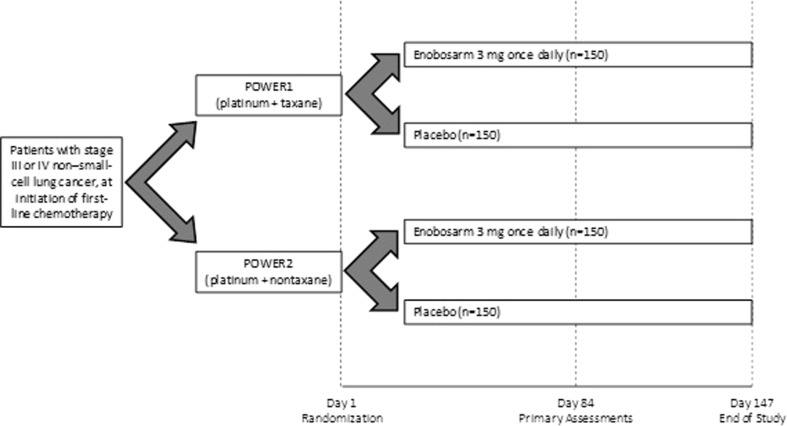
Muscle wasting in cancer is a common and often occult condition that can occur prior to overt signs of weight loss and before a clinical diagnosis of cachexia can be made. Muscle wasting in cancer is an important and independent predictor of progressive functional impairment, decreased quality of life, and increased mortality. Although several therapeutic agents are currently in development for the treatment of muscle wasting or cachexia in cancer, the majority of these agents do not directly inhibit muscle loss. Selective androgen receptor modulators (SARMs) have the potential to increase lean body mass (LBM) and hence muscle mass, without the untoward side effects seen with traditional anabolic agents. Enobosarm, a nonsteroidal SARM, is an agent in clinical development for prevention and treatment of muscle wasting in patients with cancer (POWER 1 and 2 trials). The POWER trials are two identically designed randomized, double-blind, placebo-controlled, multicenter, and multinational phase 3 trials to assess the efficacy of enobosarm for the prevention and treatment of muscle wasting in subjects initiating first-line chemotherapy for non-small-cell lung cancer (NSCLC). To assess enobosarm's effect on both prevention and treatment of muscle wasting, no minimum weight loss is required. These pivotal trials have pioneered the methodological and regulatory fields exploring a therapeutic agent for cancer-associated muscle wasting, a process hereby described. In each POWER trial, subjects will receive placebo (n = 150) or enobosarm 3 mg (n = 150) orally once daily for 147 days. Physical function, assessed as stair climb power (SCP), and LBM, assessed by dual-energy X-ray absorptiometry (DXA), are the co-primary efficacy endpoints in both trials assessed at day 84. Based on extensive feedback from the US Food and Drug Administration (FDA), the co-primary endpoints will be analyzed as a responder analysis. To be considered a physical function responder, a subject must have ≥10 % improvement in physical function compared to baseline. To meet the definition of response on LBM, a subject must have demonstrated no loss of LBM compared with baseline. Secondary endpoints include durability of response assessed at day 147 in those responding at day 84. A combined overall survival analysis for both studies is considered a key secondary safety endpoint. The POWER trials design was established with extensive clinical input and collaboration with regulatory agencies. The efficacy endpoints are a result of this feedback and discussion of the threshold for clinical benefit in patients at risk for muscle wasting. Full results from these studies will soon be published and will further guide the development of future anabolic trials. Clinical Trial ID: NCT01355484. https://clinicaltrials.gov/ct2/show/NCT01355484 , NCT01355497. https://clinicaltrials.gov/ct2/show/NCT01355497?term=g300505&rank=1 .
Overview
The claims and statistics of this paper haven’t been checked yet.
Free: it reads the open-access text and checks the first 5 claims that cite a source we can check. Create a free account to check every claim.
Integrity signals
Registry
Cites
Statistics
Figures
Verification
Claims the paper makes
The claims and statistics of this paper haven’t been checked yet.
Free: it reads the open-access text and checks the first 5 claims that cite a source we can check. Create a free account to check every claim.
Claims other papers make about this one
Each is checked against this paper’s own text: does it say what the citing paper says it does?
The source backs part of the claim, not all of it — or backs it for a different population, condition or comparison.
In the citing paper
“Enobosarm, a non-steroidal SARM, successfully increased muscle mass and physical function in patients without cancer and in those with advanced lung, colorectal or breast cancer or lymphoma427–429.”
From Sarcopenic obesity in older adults: aetiology, epidemiology and treatment strategies (2018) · cites this paper as [427]
Experimental — accuracy not yet measuredThe source backs part of the claim, not all of it — or backs it for a different population, condition or comparison.
In the citing paper
“Early data suggest improved physical function in patients with non-small-cell lung cancer427.”
From Sarcopenic obesity in older adults: aetiology, epidemiology and treatment strategies (2018) · cites this paper as [427]
Experimental — accuracy not yet measured
Self-check
Percentages, sums and reported differences re-computed from the paper’s own numbers.
The self-check needs the paper’s full text.
Citations
Cites
Early Palliative Care for Patients with Metastatic Non–Small-Cell Lung Cancer
Temel, J. S., Greer, J. A., Muzikansky, A., Gallagher, E. R., Admane, S., Jackson, V. A., Dahlin, C. M., Blinderman, C. D., Jacobsen, J., Pirl, W. F., et al. (2010) · New England Journal of Medicine · doi:10.1056/nejmoa1000678 · Cited by 7,482
Definition and classification of cancer cachexia: an international consensus
Fearon, K., Strasser, F., Anker, S. D., Bosaeus, I., Bruera, E., Fainsinger, R. L., Jatoi, A., Loprinzi, C., MacDonald, N., Mantovani, G., et al. (2011) · The Lancet Oncology · doi:10.1016/s1470-2045(10)70218-7 · Cited by 5,767
Meaningful change and responsiveness in common physical performance measures in older adults.
Perera, S., Mody, S. H., Woodman, R. C., & Studenski, S. A. (2006) · Journal of the American Geriatrics Society · doi:10.1111/j.1532-5415.2006.00701.x · Cited by 2,513
Sildenafil Citrate Therapy for Pulmonary Arterial Hypertension
Galiè, N., Ghofrani, H. A., Torbicki, A., Barst, R. J., Rubin, L. J., Badesch, D., Fleming, T., Parpia, T., Burgess, G., Branzi, A., et al. (2005) · New England Journal of Medicine · doi:10.1056/nejmoa050010 · Cited by 2,476
Evans, W. J., Morley, J. E., Argilés, J., Bales, C., Baracos, V., Guttridge, D., Jatoi, A., Kalantar-Zadeh, K., Lochs, H., Mantovani, G., et al. (2008) · Clinical Nutrition · doi:10.1016/j.clnu.2008.06.013 · Cited by 2,450
Prognostic effect of weight loss prior tochemotherapy in cancer patients
Dewys, W. D., Begg, C., Lavin, P. T., Band, P. R., Bennett, J. M., Bertino, J. R., Cohen, M. H., Douglass, H. O., Engstrom, P. F., Ezdinli, E. Z., et al. (1980) · The American Journal of Medicine · doi:10.1016/s0149-2918(05)80001-3 · Cited by 2,354
(2003) · Health and Quality of Life Outcomes · doi:10.1186/1477-7525-1-79 · Cited by 1,506
Cancer Cachexia: Mediators, Signaling, and Metabolic Pathways
Fearon, K. C. H., Glass, D. J., & Guttridge, D. C. (2012) · Cell Metabolism · doi:10.1016/j.cmet.2012.06.011 · Cited by 1,205
Prado, C. M. M., Baracos, V. E., McCargar, L. J., Reiman, T., Mourtzakis, M., Tonkin, K., Mackey, J. R., Koski, S., Pituskin, E., & Sawyer, M. B. (2009) · Clinical Cancer Research · doi:10.1158/1078-0432.ccr-08-2242 · Cited by 1,104
Self-citationCachexia: pathophysiology and clinical relevance1,2
Morley, J. E., Thomas, D. R., & Wilson, M.-M. G. (2006) · The American Journal of Clinical Nutrition · doi:10.1093/ajcn/83.4.735 · Cited by 786
Research works printed but not linked: 1
- World Health Organization GLOBOCAN 2012 Estimated cancer incidence, mortality, and prevalence worldwide in 2012 2012
Cited by
Items 101–177 of 177
Advancing muscle aging and sarcopenia research through spatial transcriptomics
Min, B.-D., Hwang, C. Y., Kim, D., Kim, S.-Y., Jayasinghe, J. N. C., Tran, M. N., Park, S., & Kwon, K. (2025) · Osteoporosis and Sarcopenia · doi:10.1016/j.afos.2025.05.002 · Cited by 13
“Clinical studies, including two phase 3 trials (POWER 1 and POWER 2), have shown improvements in lean body mass and physical function, especially in older populations and patients with cancer-related cachexia [70].”
Kazemi‐Bajestani, S. M. R., Becher, H. H., Butts, C. A., Basappa, N. S., Smylie, M., Joy, A. A., Sangha, R. S., Gallivan, A., Chu, Q. S.-C., & Baracos, V. E. (2018) · Supportive Care in Cancer · doi:10.1007/s00520-018-4561-y · Cited by 11
Combination of selective androgen and estrogen receptor modulators in orchiectomized rats
Roch, P. J., Wolgast, V., Gebhardt, M.-M., Böker, K. O., Hoffmann, D. B., Saul, D., Schilling, A. F., Sehmisch, S., & Komrakova, M. (2022) · Journal of Endocrinological Investigation · doi:10.1007/s40618-022-01794-7 · Cited by 11
SELECTIVE ANDROGEN RECEPTOR MODULATORS (SARMs) IN THE CONTEXT OF DOPING
Miklos, A. (2018) · FARMACIA · doi:10.31925/farmacia.2018.5.3 · Cited by 10
Endocrinological aspects of sarcopenic obesity
Minnetti, M., Poggiogalle, E., Frigerio, F., Piciocchi, C., Pierantozzi, G., Vincenzo, O. D., Pinto, A., Gianfrilli, D., Isidori, A. M., Migliaccio, S., et al. (2026) · Annals of Medicine · doi:10.1080/07853890.2026.2626085 · Cited by 14
“…(also known as ostarine) is the best-studied SARM, with early-phase trials showing increases in fat-free mass and modest functional benefits, although later studies in cancer-related cachexia did not confirm a consistent improvement in strength or performance despite gains in lean mass [43,44].”
Nontargeted detection of designer androgens: Underestimated role of in vitro bioassays
Lund, R. A., Cooper, E. R., Wang, H., Ashley, Z., Cawley, A., & Heather, A. K. (2021) · Drug Testing and Analysis · doi:10.1002/dta.3049 · Cited by 10
Yaghobi, N., Mehrzad, V., Badri, S., Yegdaneh, A., & Moghaddas, A. (2021) · Journal of Herbal Medicine · doi:10.1016/j.hermed.2021.100499 · Cited by 9
Wearable-Based Stair Climb Power Estimation and Activity Classification
Psaltos, D., Mamashli, F., Adamusiak, T., Demanuele, C., Santamaria, M., & Czech, M. D. (2022) · Sensors · doi:10.3390/s22176600 · Cited by 10
“A decrease in stair climb power, in elderly populations, has been associated with changes in balance, falls, and morbidity and mortality, while increases have shown an improvement in quality of life [16].”
BackgroundMethodInfluentialCancer cachexia: Are we ready to take a step forward?
Crawford, J. (2017) · Cancer · doi:10.1002/cncr.31126 · Cited by 9
“This has been difficult to achieve with anamorelin as well as another promising agent, enobosarm, which also has shown increases in lean body mass but inconsistent effects on physical function as determined by stair climb power.(11) As a result, experts in the field have requested regulatory guidance for cancer cachex…”
BackgroundSelf-citationLesnak, J. B., Nakhla, D. S., Plumb, A. N., McMillan, A., Saha, S., Gupta, N., Xu, Y., Phruttiwanichakun, P., Rasmussen, L., Meyerholz, D. K., et al. (2022) · Pain · doi:10.1097/j.pain.0000000000002841 · Cited by 9
Polyamine pathway is associated with muscle anabolic effects by androgen receptor ligand
Kanou, M., Nakamura, K., Horie, K., Sakai, H., Yanagihara, Y., Sakakibara, I., Yamana, K., & Imai, Y. (2020) · JCSM Rapid Communications · doi:10.1002/rco2.28 · Cited by 11
“TEI‐SARM2 has a longer half‐life and higher AUC in blood than those of ostarine, the clinical effects of which have been evaluated most extensively among the current SARMs.20 Based on this background, it has been desired to be developed that novel therapeutic strategies including AR agonists such as TEI‐SARM2 to treat…”
BackgroundDrugs for the Treatment of Muscle Atrophy
Chen, L., Zhang, H., Chi, M., Yang, Q., & Guo, C. (2021) · IntechOpen eBooks · doi:10.5772/intechopen.93503 · Cited by 11
Renard, J., Durand, J.-P., Percin, S. D., Arrondeau, J., Noel, J., Thomas‐Schoemann, A., Meyo, M. T., Villeminey, C., Alexandre, J., Boudou, P., et al. (2025) · Clinical Nutrition · doi:10.1016/j.clnu.2025.07.029 · Cited by 8
Islam, M. S., Chen, L. W., & Segars, J. H. (2021) · Clinical Obstetrics & Gynecology · doi:10.1097/grf.0000000000000659 · Cited by 8
Famil-Dardashti, A., Hajigholami, A., Badri, S., Yekdaneh, A., & Moghaddas, A. (2020) · International Journal of Cancer Management · doi:10.5812/ijcm.102515 · Cited by 7
“Many therapeutic modalities have been suggested in preclinical and clinical studies for the management of cancer-induced cachexia; however, only a small number of drugs such as megestrol acetate, anabolic steroids, and glucocorticoids are used extensively (8-11).”
BackgroundAryal, S., Bachman, S. L., Lyden, K. A., & Clay, I. (2023) · JCO Clinical Cancer Informatics · doi:10.1200/cci.23.00055 · Cited by 8
Borecki, R., Byczkiewicz, P., & Słowikowska‐Hilczer, J. (2025) · Endokrynologia Polska · doi:10.5603/ep.104795 · Cited by 9
Leitao, E. P. T., & Sobral, L. M. S. (2024) · Journal of Biomedical Research & Environmental Sciences · doi:10.37871/jbres1883 · Cited by 5
Novel molecular targets of muscle wasting in cancer patients
Miller, J. D., & Skipworth, R. J. E. (2019) · Current Opinion in Clinical Nutrition & Metabolic Care · doi:10.1097/mco.0000000000000555 · Cited by 9
Pancreatic cancer cachexia: A systemic consequence of multi-organ interactions
Xiao, A., Feng, Y., Yin, B., Zhang, J., Cao, Z., Liu, X., Liang, Y., & Wu, W. (2025) · hLife · doi:10.1016/j.hlife.2025.05.002 · Cited by 6
“Currently, the POWER trial is investigating the ef fi cacy of the SARM enobosarm in a Phase III clinical trial for cancer patients [400].”
Skorupski, W. J., Marko, A., Janus, M., Skorupska, K., Lesiak, M., & Klotzka, A. (2024) · Polskie Archiwum Medycyny Wewnętrznej · doi:10.20452/pamw.16770 · Cited by 5
Ostarine attenuates pyocyanin in Pseudomonas aeruginosa by interfering with quorum sensing systems
Dong, L., Sun, L., Hu, X., Nie, T., Pang, J., Wang, X., Yang, X., Li, C., Yao, K., Zhang, Y., et al. (2021) · The Journal of Antibiotics · doi:10.1038/s41429-021-00469-4 · Cited by 7
Yuan, J., Zhang, R. Q., Guo, Q., Aji, T., & Shao, Y. M. (2025) · European Journal of Gastroenterology & Hepatology · doi:10.1097/meg.0000000000002965 · Cited by 4
“Proinflammatory cytokines (e.g. interleukin-6 or tumor necrosis factor-α ) and C-reactive protein inhibit the serum ALB concentration and affect hepatocyte ALB synthesis [32,33].”
Bonomi, P., Moudgalya, H., Gomez‐Perez, S. L., Shah, P., Basu, S., Batus, M., Martinka, L. B., Abdelkader, A., Tzameli, I., Cobain, S., et al. (2024) · Journal of Cachexia Sarcopenia and Muscle · doi:10.1002/jcsm.13534 · Cited by 4
“Results from Phase III placebo-controlled trials in advanced NSCLC patients showed that anamorelin 33 and enobosarm 34 were associated with signi fi cant increases in lean body mass despite signi fi cant differences in eligibility criteria.”
Komrakova, M., Schilling, A. F., Lehmann, W., Vasilev, V., Georgieva, K. N., Gerginska, F., Boyadjiev, N., & Delchev, S. (2023) · Pharmaceuticals · doi:10.3390/ph16091249 · Cited by 5
“OST and LIG are still being investigated in clinical trials Pharmaceuticals 2023 , 16 , 1249 2 of 13 and are not currently approved for human use in any country [9,11–14].”
BackgroundHey, P., & Sinclair, M. J. (2019) · Springer eBooks · doi:10.1007/978-3-030-26226-6_15 · Cited by 4
Improved functional assessment in cancer patients using home-based digital technologies
Karahanoğlu, F. I., Jensen, C. E., Cai, X., Santamaria, M., Psaltos, D., Messere, A., Demanuele, C., Stone, J., Tarachandani, A., Adamowicz, L., et al. (2025) · Scientific Reports · doi:10.1038/s41598-025-02401-4 · Cited by 4
Roch, P. J., Noisser, L., Böker, K. O., Hoffmann, D. B., Schilling, A. F., Sehmisch, S., & Komrakova, M. (2023) · Journal of Endocrinological Investigation · doi:10.1007/s40618-023-02188-z · Cited by 3
“In addition, clinical studies have shown improved physical function and beneficial effects on body mass and muscle in elderly men and postmenopausal women, and reduced muscle wasting in cancer patients [13–15].”
BackgroundBezafibrate attenuates immobilization-induced muscle atrophy in mice
Nakamura, S., Sato, Y., Kobayashi, T., Oya, A., Fujie, A., Matsumoto, M., Nakamura, M., Kanaji, A., & Miyamoto, T. K. (2024) · Scientific Reports · doi:10.1038/s41598-024-52689-x · Cited by 3
Zheng, H. W., Pan, Q., Zhu, W., Li, H., Niu, Z., Fang, Y., Li, D., Lou, H., Hu, H., Shou, J., et al. (2021) · Frontiers in Oncology · doi:10.3389/fonc.2021.628693 · Cited by 3
Wasting away: How to treat cachexia and muscle wasting in chronic disease?
von Haehling, S. (2017) · British Journal of Clinical Pharmacology · doi:10.1111/bcp.13387 · Cited by 3
Preclinical and clinical studies on cancer-associated cachexia
Widner, D. B., Files, D. C., Weaver, K. E., & Shiozawa, Y. (2018) · Frontiers in Biology · doi:10.1007/s11515-018-1484-4 · Cited by 3
“…double-blind phase III trials, dubbed the POWER 1 and 2 trials, measured bene fi ts in muscle mass preservation in NSCLC patients receiving enobosarm orally with and without a taxane and chemotherapy, but the results from these trials have not yet been fully published (Crawford et al., 2016).”
Wang, J., Jia, W., Li, D., Song, Y., Sun, N., Yang, K., Li, H., & Yin, C. (2022) · PubMed Central · doi:10.3779/j.issn.1009-3419.2022.101.21 · Cited by 4
Symptoms in Advanced Hematologic Malignancies and Other Serious Hematologic Conditions
Davis, M. P., Fernandez, C., Vithalani, N., Nicholls, L. E., & Digwood, G. (2023) · Springer eBooks · doi:10.1007/978-3-031-38058-7_14 · Cited by 3
Deng, Y., Wang, S., Geng, L., Meng, Z., Chen, F., Yang, X., Wang, F., Chen, Y., Li, Z., & Xie, Z. (2026) · Journal of Medicinal Chemistry · doi:10.1021/acs.jmedchem.6c00858 · Cited by 2
Bartoli, A., Maffulli, N., Oliva, G., Ziello, S., & Oliva, F. (2024) · Muscles Ligaments and Tendons Journal · doi:10.32098/mltj.02.2024.17 · Cited by 3
“These play critical roles in the regulation of many male, and female sexual, somatic and behavioral functions critical to lifelong health, like bone density, strength muscle mass, coagulations, cognition, metabolism (5, 6) (”
BackgroundSugumar, D., Rymbai, E., & Selvaraj, D. (2024) · Medical Hypotheses · doi:10.1016/j.mehy.2024.111427 · Cited by 2
Puskas, J., Guda, T., Niccoli, S., Rathbone, C. R., Tan‐Johnson, B., Puskas, D., Middleton, R., Otis, J. S., & Lees, S. J. (2025) · Physiological Reports · doi:10.14814/phy2.70463 · Cited by 3
“In addition, clinical trials have been conducted to explore the potential benefit of SARM therapy in cancer cachexia (Crawford et al., 2016; Dobs et al., 2013).”
Anabolic and Anticatabolic Agents in Burns
Vinaik, R., Gus, E. I., & Jeschke, M. G. (2019) · Springer eBooks · doi:10.1007/978-3-030-18940-2_22 · Cited by 2
Pelosof, L. C., & Gerber, D. E. (2018) · Wiley eBooks · doi:10.1002/9781118592168.ch45 · Cited by 2
Sugumar, D., Rymbai, E., Kothandan, R., Chakkittukandiyil, A., Krishnamurthy, P. T., Muthu, S., & Selvaraj, D. (2025) · European Journal of Pharmacology · doi:10.1016/j.ejphar.2025.177825 · Cited by 1
Skeletal Muscle Biology and Therapeutics: From Molecular Mechanisms to Clinical Translation
Green, M. M., & Chakravarthy, K. V. (2025) · Physiology · doi:10.5772/intechopen.1011812 · Cited by 1
Klus, W., Ossowska, J., Kowalcze, K., Kiliszczyk, A., & Paziewska, A. (2026) · Cancers · doi:10.3390/cancers18071060 · Cited by 1
“Similar to anamorelin, enobosarm failed to satisfy the FDA’s requirement for demonstrable improvement in physical function, underscoring the gap between body composition endpoints and meaningful clinical outcomes in cachexia research [73].”
Rogers, E., Ormiston, W. E. L., Heron, R., Pontré, B. P., MacLeod, R., & Doyle, A. (2018) · JCSM Clinical Reports · doi:10.17987/jcsm-cr.v3i2.59 · Cited by 1
“Both POWER 1 and 2 studies which investigated enobosarm at multiple doses, again utilised the primary endpoint of LBM by DEXA and improvement in physical function by stair climb test (31).”
BackgroundAetiology, classification, assessment, and treatment of the anorexia-cachexia syndrome
Baracos, V. E., & Watanabe, S. (2021) · doi:10.1093/med/9780198821328.003.0056 · Cited by 3
Huang, X., Reye, G., Momot, K. I., Blick, T., Lloyd, T., Tilley, W. D., Hickey, T. E., Snell, C. E., Thompson, E. W., & Hugo, H. J. (2023) · Biomedical Spectroscopy and Imaging · doi:10.3233/bsi-230000 · Cited by 1
“Enobosarm is a nonsteroidal selective AR modulator (SARM) that was developed for the treatment of muscle wasting and osteoporosis [14], but has AR agonist activity in breast cancer cells [25,31].”
Selective Androgen Receptor Modulators in the Treatment of Hypogonadism and Men’s Health
Sigalos, J. T., Walker, D. T., & Lipshultz, L. I. (2023) · Cambridge University Press eBooks · doi:10.1017/9781009197533.034 · Cited by 2
Cachexia, Anorexia and Feeding Difficulties in Palliative Care Patients
Agar, M. R., & Razmovski‐Naumovski, V. (2024) · Springer eBooks · doi:10.1007/978-3-319-31738-0_16-2 · Cited by 1
Cachexia, Anorexia, and Feeding Difficulties in Palliative Care Patients
Agar, M. R., & Razmovski‐Naumovski, V. (2024) · Springer eBooks · doi:10.1007/978-3-031-48991-4_16 · Cited by 1
Sarkopenie: Wie kommt der Patient wieder zu Kräften?
Ferrari, U., & Drey, M. (2019) · MMW - Fortschritte der Medizin · doi:10.1007/s15006-019-0455-2 · Cited by 2
Background and Management of Muscular Atrophy
Cseri, J. (2020) · IntechOpen eBooks · doi:10.5772/intechopen.90959 · Cited by 2
The use of bioassays to detect designer androgens in sports supplements
Cooper, E. R. (2016) · UTS ePRESS (University of Technology Sydney) · Cited by 2
Henkies, D. (2020) · eDiss (Georg-August-Universität Göttingen) · doi:10.53846/goediss-7868 · Cited by 3
Pharmakologische Therapie der Kachexie
von Haehling, S. (2017) · doi:10.1007/978-3-89935-305-1_9
Cachexia/Anorexia and Feeding Difficulties
Agar, M. R., & Razmovski‐Naumovski, V. (2019) · Springer eBooks · doi:10.1007/978-3-319-77740-5_16 · Cited by 1
Sarkopenie: eine Herausforderung im Alter
Ferrari, U., & Drey, M. (2020) · Aktuelle Ernährungsmedizin · doi:10.1055/a-0965-9892 · Cited by 2
Pharmacological Intervention for Sarcopenia in Chronic Kidney Disease
Sakuma, K., & Yamaguchi, A. (2020) · Springer eBooks · doi:10.1007/978-981-15-2365-6_11
Wolgast, J. V. B. B.-R. (2020) · eDiss (Georg-August-Universität Göttingen) · doi:10.53846/goediss-7924 · Cited by 1
State-of-the-Art Clinical Results of Growth Hormone Secretagogues, SARM and AntagonistsPreprint
Filho, I. J. Z. (2020) · doi:10.22541/au.159122261.11891577/v2
A new trend in use of performance enhancing drugs in CrossFit®
Schlegel, P. (2020) · Tělesná kultura · doi:10.5507/tk.2020.010
Eguren‐Santamaría, I., Centeno, C., & Bazo, I. G. (2021) · UNIPA Springer series · doi:10.1007/978-3-030-56051-5_21
Cachexia/Anorexia and Feeding Difficulties
Agar, M. R., & Razmovski‐Naumovski, V. (2018) · Springer eBooks · doi:10.1007/978-3-319-31738-0_16-1
“In a Phase III study using enobosarm, a nonsteroidal selective androgen receptor modulator (SARM), subjects prior to receiving chemotherapy were eligible to apply, allowing the clinical trial to examine both prevention and treatment of the condition (Crawford et al. 2016).”
MethodState-of-the-Art Clinical Results of Growth Hormone Secretagogues, SARM and AntagonistsPreprint
Filho, I. J. Z. (2020) · doi:10.22541/au.159122261.11891577
State-of-the-art clinical results of growth hormone secretagogues, sarm and antagonists
(2020) · International Journal of Development Research · doi:10.37118/ijdr.19112.06.2020 · Cited by 1
Ostarine avoids masseter atrophy caused by changes in the diet consistency
Shindo, J. V. T. C. (2022) · Digital Library of Theses and Dissertations (Universidade de São Paulo) · doi:10.11606/d.25.2022.tde-01092022-090404
Gois, S. M. S., Borges, T. B. S., Sandes, M. N. S., & de Oliveira, L. T. S. (2022) · Revista Ibero-Americana de Humanidades, Ciências e Educação · doi:10.51891/rease.v8i11.7956
Ostafin, K., Edyko, K., Petryla, P., Minkner, M., Bieńkowski, B., Feja, K., Suwała, Z., REKTOR, N., Łuczak, E., & Marchewka, U. (2023) · Journal of Education Health and Sport · doi:10.12775/jehs.2023.45.01.030
Drey, M., & Bauer, J. M. (2023) · Springer Reference Medizin · doi:10.1007/978-3-642-54676-1_101-1
Cancer Cachexia: Causes and Therapeutic Strategies
Al-Janabi, I. I. (2025) · Al-Rafidain Journal of Medical Sciences · doi:10.54133/ajms.v8i2.1616
Hasan, A. (2025) · Springer eBooks · doi:10.1007/978-981-96-7810-5_34
Gadallah, A. I., Abdelhaffez, A., Hussein, O. A., Sayed, S. A., Abdelhakiem, M. A. H., & El-Mottaleb, N. A. A. (2026) · Canadian Journal of Physiology and Pharmacology · doi:10.1139/cjpp-2025-0063
Dhaliwal, R., & Pope, H. G. (2026) · Performance Enhancement & Health · doi:10.1016/j.peh.2026.100424
Cesbron, N. (2017) · theses.fr (ABES) · doi:10.70675/1b2da96fzac91z4479z8831ze3f4a10345f2 · Cited by 1
Amino-Acid-Derived Androgen Receptor Modulators
Semenya, J., & Picazo, E. (2026) · ACS Medicinal Chemistry Letters · doi:10.1021/acsmedchemlett.6c00227
Mihalev, K., Iliev, I., Agova, N. V., Toshev, N., & Georgieva, S. F. (2026) · International Journal of Molecular Sciences · doi:10.3390/ijms27135765
“In phase 2 and phase 3 clinical trials (the POWER program), ostarine produced statistically significant increases in total lean body mass in cancer patients with muscle wasting, with an acceptable safety profile and no clinically significant androgenic adverse events [59].”
Targeting skeletal muscle wasting: emerging therapeutics and translational challenges
Roberts, B. M. (2026) · Biochimica et Biophysica Acta (BBA) - General Subjects · doi:10.1016/j.bbagen.2026.131001
Engaging the host adaptive response to nutrient limitation delays cancer cachexiaPreprint
Gomez-Jenkins, M., Das, T., Ibrahim, M., Fard, D., Lopez-Darwin, S. L., Raeber, J., Powers, J., Hu, Z., Sarkar, H., CararoLopes, E., et al. (2026) · bioRxiv (Cold Spring Harbor Laboratory) · doi:10.64898/2026.10.08.757672
Metadata
- Authors
- Crawford, J., Prado, C. M. M., Johnston, M. A., Gralla, R. J., Taylor, R. P., Hancock, M. L., & Dalton, J. T.
- Affiliations
- Duke University (US)
- University of Alberta (CA)
- GTx (United States) (US)
- Albert Einstein College of Medicine (US)
- University of Michigan (US)
- Corresponding author
- Crawford, Jeffrey
- Dalton, James T.
- Venue
- Current Oncology Reports
- Published
- 2016-05-02
- Volume
- 18
- Issue
- 6
- Pages
- 37-37
- ISSN
- 1523-3790 (ISSN-L)
- 1534-6269
- PMC
- PMC4853438
- OpenAlex
- W2345927750
- Cited by
- 178
- References
- 58
- Citations by year
- 2026: 11 · 2025: 14 · 2024: 11 · 2023: 20 · 2022: 12 · 2021: 24 · 2020: 22 · 2019: 21 · 2018: 21 · 2017: 17 · 2016: 5
- FWCI
- 2.51
- Type
- journal article
- Language
- en
- Open access
- hybrid
- doi.org
- Locations
- Current Oncology Reports (publishedVersion, cc-by)
- PubMed Central (publishedVersion, cc-by)
- PubMed (publishedVersion)
- Funders
- Helsinn
- Topics
- Health Sciences › Medicine › Physiology (medical) › Nutrition and Health in Aging
- Life Sciences › Biochemistry, Genetics and Molecular Biology › Molecular Biology › Muscle Physiology and Disorders
- Health Sciences › Medicine › Endocrinology, Diabetes and Metabolism › Hormonal and reproductive studies
- Keywords
- enobosarm, selective androgen receptor modulators, cachexia, non-small cell lung cancer, lean body mass, physical function, responder analysis, first-line chemotherapy, feedback regulation, overall survival, quality of life, functional disability, weight loss, trial design rationale, anabolic therapy, dual-energy X-ray absorptiometry
- MeSH terms
- Androgen Antagonists, Anilides, Antineoplastic Agents, Cachexia, Double-Blind Method, Humans, Neoplasms, Receptors, Androgen, Research Design, Multicenter Studies as Topic, Clinical Trials, Phase III as Topic
About these checks
Registry, retraction, Cites and statistics results are computed, not judged, with one exception: a printed reference that no index lists is read once by a model before it counts as a citation error. Claims are extracted by a model and kept only when their quote appears verbatim in the text; each cited source is then checked, with a model’s help, for whether it says what the claim relies on. Those verdicts can be wrong — read the claim’s quote and the cited source before relying on one.
Statistics and arithmetic are recomputed, not judged.
Confidence bands are shown only for fields calibrated on our annotated test set. None is calibrated yet, so no band is shown.
What counts as a claim ›How we measure confidence ›How we check this ›
Are you an author, or do you see a problem with this page? Request a review
Data sources
Bibliographic data: Semantic Scholar, OpenAlex, Crossref.
Contains information from the Semantic Scholar Academic Graph Datasets, made available under the ODC Attribution License (ODC-BY 1.0).
Semantic Scholar’s data is described in: Kinney, R., et al. (2023). The Semantic Scholar Open Data Platform. arXiv:2301.10140.
