

Study Design and Rationale for the Phase 3 Clinical Development Program of Enobosarm, a Selective Androgen Receptor Modulator, for the Prevention and Treatment of Muscle Wasting in Cancer Patients (POWER Trials)
Open accessThe DOI matches its Crossref record; 58 of the 58 references it cites were found in a registry or an index.
Abstract
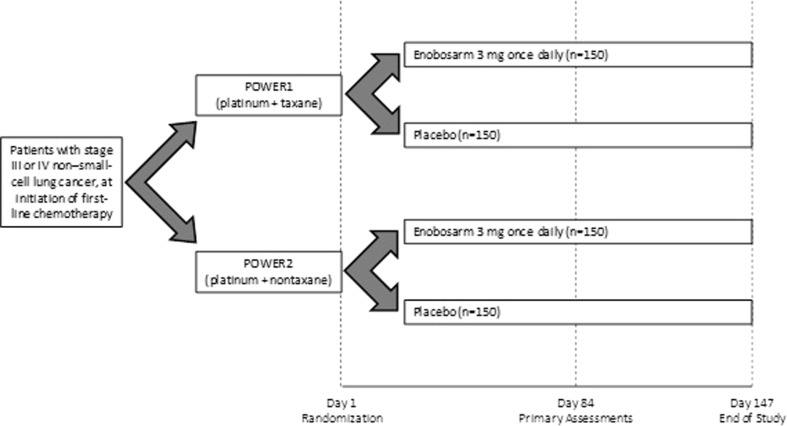
Muscle wasting in cancer is a common and often occult condition that can occur prior to overt signs of weight loss and before a clinical diagnosis of cachexia can be made. Muscle wasting in cancer is an important and independent predictor of progressive functional impairment, decreased quality of life, and increased mortality. Although several therapeutic agents are currently in development for the treatment of muscle wasting or cachexia in cancer, the majority of these agents do not directly inhibit muscle loss. Selective androgen receptor modulators (SARMs) have the potential to increase lean body mass (LBM) and hence muscle mass, without the untoward side effects seen with traditional anabolic agents. Enobosarm, a nonsteroidal SARM, is an agent in clinical development for prevention and treatment of muscle wasting in patients with cancer (POWER 1 and 2 trials). The POWER trials are two identically designed randomized, double-blind, placebo-controlled, multicenter, and multinational phase 3 trials to assess the efficacy of enobosarm for the prevention and treatment of muscle wasting in subjects initiating first-line chemotherapy for non-small-cell lung cancer (NSCLC). To assess enobosarm's effect on both prevention and treatment of muscle wasting, no minimum weight loss is required. These pivotal trials have pioneered the methodological and regulatory fields exploring a therapeutic agent for cancer-associated muscle wasting, a process hereby described. In each POWER trial, subjects will receive placebo (n = 150) or enobosarm 3 mg (n = 150) orally once daily for 147 days. Physical function, assessed as stair climb power (SCP), and LBM, assessed by dual-energy X-ray absorptiometry (DXA), are the co-primary efficacy endpoints in both trials assessed at day 84. Based on extensive feedback from the US Food and Drug Administration (FDA), the co-primary endpoints will be analyzed as a responder analysis. To be considered a physical function responder, a subject must have ≥10 % improvement in physical function compared to baseline. To meet the definition of response on LBM, a subject must have demonstrated no loss of LBM compared with baseline. Secondary endpoints include durability of response assessed at day 147 in those responding at day 84. A combined overall survival analysis for both studies is considered a key secondary safety endpoint. The POWER trials design was established with extensive clinical input and collaboration with regulatory agencies. The efficacy endpoints are a result of this feedback and discussion of the threshold for clinical benefit in patients at risk for muscle wasting. Full results from these studies will soon be published and will further guide the development of future anabolic trials. Clinical Trial ID: NCT01355484. https://clinicaltrials.gov/ct2/show/NCT01355484 , NCT01355497. https://clinicaltrials.gov/ct2/show/NCT01355497?term=g300505&rank=1 .
Overview
The claims and statistics of this paper haven’t been checked yet.
Free: it reads the open-access text and checks the first 5 claims that cite a source we can check. Create a free account to check every claim.
Integrity signals
Registry
Cites
Statistics
Figures
Verification
Claims the paper makes
The claims and statistics of this paper haven’t been checked yet.
Free: it reads the open-access text and checks the first 5 claims that cite a source we can check. Create a free account to check every claim.
Claims other papers make about this one
Each is checked against this paper’s own text: does it say what the citing paper says it does?
The source backs part of the claim, not all of it — or backs it for a different population, condition or comparison.
In the citing paper
“Enobosarm, a non-steroidal SARM, successfully increased muscle mass and physical function in patients without cancer and in those with advanced lung, colorectal or breast cancer or lymphoma427–429.”
From Sarcopenic obesity in older adults: aetiology, epidemiology and treatment strategies (2018) · cites this paper as [427]
Experimental — accuracy not yet measuredThe source backs part of the claim, not all of it — or backs it for a different population, condition or comparison.
In the citing paper
“Early data suggest improved physical function in patients with non-small-cell lung cancer427.”
From Sarcopenic obesity in older adults: aetiology, epidemiology and treatment strategies (2018) · cites this paper as [427]
Experimental — accuracy not yet measured
Self-check
Percentages, sums and reported differences re-computed from the paper’s own numbers.
The self-check needs the paper’s full text.
Citations
Cites
Early Palliative Care for Patients with Metastatic Non–Small-Cell Lung Cancer
Temel, J. S., Greer, J. A., Muzikansky, A., Gallagher, E. R., Admane, S., Jackson, V. A., Dahlin, C. M., Blinderman, C. D., Jacobsen, J., Pirl, W. F., et al. (2010) · New England Journal of Medicine · doi:10.1056/nejmoa1000678 · Cited by 7,482
Definition and classification of cancer cachexia: an international consensus
Fearon, K., Strasser, F., Anker, S. D., Bosaeus, I., Bruera, E., Fainsinger, R. L., Jatoi, A., Loprinzi, C., MacDonald, N., Mantovani, G., et al. (2011) · The Lancet Oncology · doi:10.1016/s1470-2045(10)70218-7 · Cited by 5,767
Meaningful change and responsiveness in common physical performance measures in older adults.
Perera, S., Mody, S. H., Woodman, R. C., & Studenski, S. A. (2006) · Journal of the American Geriatrics Society · doi:10.1111/j.1532-5415.2006.00701.x · Cited by 2,513
Sildenafil Citrate Therapy for Pulmonary Arterial Hypertension
Galiè, N., Ghofrani, H. A., Torbicki, A., Barst, R. J., Rubin, L. J., Badesch, D., Fleming, T., Parpia, T., Burgess, G., Branzi, A., et al. (2005) · New England Journal of Medicine · doi:10.1056/nejmoa050010 · Cited by 2,476
Evans, W. J., Morley, J. E., Argilés, J., Bales, C., Baracos, V., Guttridge, D., Jatoi, A., Kalantar-Zadeh, K., Lochs, H., Mantovani, G., et al. (2008) · Clinical Nutrition · doi:10.1016/j.clnu.2008.06.013 · Cited by 2,450
Prognostic effect of weight loss prior tochemotherapy in cancer patients
Dewys, W. D., Begg, C., Lavin, P. T., Band, P. R., Bennett, J. M., Bertino, J. R., Cohen, M. H., Douglass, H. O., Engstrom, P. F., Ezdinli, E. Z., et al. (1980) · The American Journal of Medicine · doi:10.1016/s0149-2918(05)80001-3 · Cited by 2,354
(2003) · Health and Quality of Life Outcomes · doi:10.1186/1477-7525-1-79 · Cited by 1,506
Cancer Cachexia: Mediators, Signaling, and Metabolic Pathways
Fearon, K. C. H., Glass, D. J., & Guttridge, D. C. (2012) · Cell Metabolism · doi:10.1016/j.cmet.2012.06.011 · Cited by 1,205
Prado, C. M. M., Baracos, V. E., McCargar, L. J., Reiman, T., Mourtzakis, M., Tonkin, K., Mackey, J. R., Koski, S., Pituskin, E., & Sawyer, M. B. (2009) · Clinical Cancer Research · doi:10.1158/1078-0432.ccr-08-2242 · Cited by 1,104
Self-citationCachexia: pathophysiology and clinical relevance1,2
Morley, J. E., Thomas, D. R., & Wilson, M.-M. G. (2006) · The American Journal of Clinical Nutrition · doi:10.1093/ajcn/83.4.735 · Cited by 786
Research works printed but not linked: 1
- World Health Organization GLOBOCAN 2012 Estimated cancer incidence, mortality, and prevalence worldwide in 2012 2012
Cited by
Baracos, V. E., Martin, L., Korc, M., Guttridge, D. C., & Fearon, K. C. H. (2018) · Nature Reviews Disease Primers · doi:10.1038/nrdp.2017.105 · Cited by 1,738
Sarcopenic obesity in older adults: aetiology, epidemiology and treatment strategies
Batsis, J. A., & Villareal, D. T. (2018) · Nature Reviews Endocrinology · doi:10.1038/s41574-018-0062-9 · Cited by 1,382
Cancer cachexia: molecular mechanisms and treatment strategies
Setiawan, T., Sari, I. N., Wijaya, Y. T., Julianto, N. M., Muhammad, J. A., Lee, H., Chae, J. H., & Kwon, H. Y. (2023) · Journal of Hematology & Oncology · doi:10.1186/s13045-023-01454-0 · Cited by 315
Metabolic Syndrome and Sarcopenia
Nishikawa, H., Asai, A., Fukunishi, S., Nishiguchi, S., & Higuchi, K. (2021) · Nutrients · doi:10.3390/nu13103519 · Cited by 321
Clinical relevance of sarcopenia in chronic kidney disease
Moorthi, R. N., & Avin, K. G. (2017) · Current Opinion in Nephrology and Hypertension · doi:10.1097/mnh.0000000000000318 · Cited by 269
Cachexia: A systemic consequence of progressive, unresolved disease
Ferrer, M., Anthony, T. G., Ayres, J. S., Biffi, G., Brown, J. C., Caan, B. J., Cespedes Feliciano, E. M., Coll, A. P., Dunne, R. F., Goncalves, M. D., et al. (2023) · Cell · doi:10.1016/j.cell.2023.03.028 · Cited by 260
Development of selective androgen receptor modulators (SARMs)
Narayanan, R., Coss, C. C., & Dalton, J. T. (2018) · Molecular and Cellular Endocrinology · doi:10.1016/j.mce.2017.06.013 · Cited by 251
“Enobosarm has been or is being evaluated in several phase II and phase III clinical trials for multiple indications uch as cancer cachexia, sarcopenia, breast cancer, and stress urinary incontinence (53-55).”
Self-citationArgilés, J. M., López-Soriano, F. J., Stemmler, B., & Busquets, S. (2023) · Nature Reviews Clinical Oncology · doi:10.1038/s41571-023-00734-5 · Cited by 246
Cancer-induced muscle wasting: latest findings in prevention and treatment
Aversa, Z., Costelli, P., & Muscaritoli, M. (2017) · Therapeutic Advances in Medical Oncology · doi:10.1177/1758834017698643 · Cited by 215
Current and investigational medications for the treatment of sarcopenia
Rolland, Y., Dray, C., Vellas, B., & Barreto, P. D. S. (2023) · Metabolism · doi:10.1016/j.metabol.2023.155597 · Cited by 195
Selective Androgen Receptor Modulators: Current Knowledge and Clinical Applications
Solomon, Z. J., Mirabal, J. R., Mazur, D. J., Kohn, T. P., Lipshultz, L. I., & Pastuszak, A. W. (2019) · Sexual Medicine Reviews · doi:10.1016/j.sxmr.2018.09.006 · Cited by 174
“While the AR is widely known for its role in male sexual development and maintenance, it also has important effects on bone density, strength, muscle mass, hematopoiesis, coagulation, metabolism, and cognition.[2][3]”
BackgroundInfluentialNuclear receptors: recent drug discovery for cancer therapies
Zhao, L., Zhou, S., & Gustafsson, J.-Α. (2019) · Endocrine Reviews · doi:10.1210/er.2018-00222 · Cited by 191
Selective androgen receptor modulators: the future of androgen therapy?
Christiansen, A. R., Lipshultz, L. I., Hotaling, J. M., & Pastuszak, A. W. (2020) · Translational Andrology and Urology · doi:10.21037/tau.2019.11.02 · Cited by 128
“The AR is essential both for its role in male sexual development and maintenance but also has the potential to alter bone density, strength, muscle mass, hematopoiesis, coagulation, metabolism, and cognition (26,27).”
BackgroundPancreatic Cancer and Cachexia—Metabolic Mechanisms and Novel Insights
Poulia, K., Sarantis, P., Antoniadou, D., Koustas, E., Papadimitropoulou, A., Papavassiliou, A. G., & Karamouzis, M. V. (2020) · Nutrients · doi:10.3390/nu12061543 · Cited by 145
“However, another clinical study NSCLC did not confirm the effects of enobosarm on muscle loss of patients with cancer cachexia [86].”
Chen, J., Lin, P., Tsai, Y.-R., Yang, Y.-C., & Kang, H. (2019) · Cells · doi:10.3390/cells8111318 · Cited by 141
Muscle Wasting Diseases: Novel Targets and Treatments
Furrer, R., & Handschin, C. (2018) · The Annual Review of Pharmacology and Toxicology · doi:10.1146/annurev-pharmtox-010818-021041 · Cited by 103
A magic drug target: Androgen receptor
Li, D., Zhou, W., Pang, J., Tang, Q., Zhong, B., Shen, C., Li, X., & Hou, T. (2018) · Medicinal Research Reviews · doi:10.1002/med.21558 · Cited by 91
Sarcopenia in gastric cancer: when the loss costs too much
Ongaro, E., Buoro, V., Cinausero, M., Caccialanza, R., Turri, A., Fanotto, V., Basile, D., Vitale, M. G., Ermacora, P., Cardellino, G. G., et al. (2017) · Gastric Cancer · doi:10.1007/s10120-017-0722-9 · Cited by 79
Novel targeted therapies for cancer cachexia
Argilés, J. M. A., López-Soriano, F. J., Stemmler, B., & Busquets, S. (2017) · Biochemical Journal · doi:10.1042/bcj20170032 · Cited by 81
Fonseca, G. W. P. D., Dworatzek, E., Ebner, N., & Von Haehling, S. (2020) · Expert Opinion on Investigational Drugs · doi:10.1080/13543784.2020.1777275 · Cited by 68
Advances in research on pharmacotherapy of sarcopenia
Feike, Y., Liu, Z., & Chen, W. (2021) · Aging Medicine · doi:10.1002/agm2.12168 · Cited by 82
Lean body mass wasting and toxicity in early breast cancer patients receiving anthracyclines
Mazzuca, F., Onesti, C. E., Roberto, M., Girolamo, M. D., Botticelli, A., Begini, P., Strigari, L., Marchetti, P., & Muscaritoli, M. (2018) · Oncotarget · doi:10.18632/oncotarget.25394 · Cited by 71
“gov NCT01355484 and NCT01355497), showing a gain in lean body mass in the experimental arm [47].”
BackgroundNaito, T., Okayama, T., Aoyama, T., Ohashi, T., Masuda, Y., Kimura, M., Shiozaki, H., Murakami, H., Kenmotsu, H., Taira, T., et al. (2017) · BMC Cancer · doi:10.1186/s12885-017-3795-2 · Cited by 75
“A number of investigational agents are now in clinical development, including ghrelin and ghrelin mimetics [10, 11], selective androgen receptor modulators [9], and anti-inflammatory agents [33].”
BackgroundTherapeutic strategies against cancer cachexia
Argilés, J. M. A., López-Soriano, F. J., Stemmler, B., & Busquets, S. (2019) · European Journal of Translational Myology · doi:10.4081/ejtm.2019.7960 · Cited by 64
“Physical function will be assessed as stair climb power, and lean body mass assessed by dual-energy X-ray absorptiometry (DXA), these being the co-primary efficacy endpoints in both trials assessed at day 84.(55) Preliminary data report an increase in lean body mass and improvement in SCP (POWER1).”
MethodPathogenesis, Intervention, and Current Status of Drug Development for Sarcopenia: A Review
Jang, J. Y., Kim, D.-H., & Kim, N. D. (2023) · Biomedicines · doi:10.3390/biomedicines11061635 · Cited by 68
Ha, Y., Kim, D., Han, S., Chon, Y. E., Lee, Y. B., Kim, M. N., Lee, J. H., Park, H., Rim, K. S., & Hwang, S. G. (2018) · Cancer Research and Treatment · doi:10.4143/crt.2017.232 · Cited by 50
“Studies which evaluate survival are underway for patients with non-small cell lung cancer [29].”
BackgroundDiscovery of Novel Androgen Receptor Ligands by Structure-Based Virtual Screening and Bioassays
Zhou, W., Duan, M., Fu, W., Pang, J., Tang, Q., Sun, H., Xu, L., Chang, S., Li, D., & Hou, T. (2018) · Genomics Proteomics & Bioinformatics · doi:10.1016/j.gpb.2018.03.007 · Cited by 58
“Given their great therapeutic potentials, SARMs such as GTx-024 [13], LGD-4033 [14], and PF-0626414 (NCT02070939) are currently subjected to safety evaluation for potential treatment of muscle wasting and sarcopenia.”
BackgroundThe Therapeutic Intervention of Sex Steroid Hormones for Sarcopenia
Huang, L., & Wang, J. (2021) · Frontiers in Medicine · doi:10.3389/fmed.2021.739251 · Cited by 65
“In addition to postmenopausal women, patients suffering from any chronic disease, such as osteoporosis, non-small-cell lung cancer, stress urinary incontinence, and hip fractures, can also benefit from SARMs treatment with increased muscle mass (70, 81).”
BackgroundUnderstanding tumor anabolism and patient catabolism in cancer-associated cachexia.
Schcolnik‐Cabrera, A., Chávez-Blanco, A. D., Domínguez-Gómez, G., & Dueñas‐González, A. (2017) · Europe PMC (PubMed Central) · Cited by 77
Recio‐Boiles, A., Galeas, J. N., Goldwasser, B., Sanchez, K., Man, L. M.-W., Gentzler, R. D., Gildersleeve, J., Hollen, P. J., & Gralla, R. J. (2018) · Supportive Care in Cancer · doi:10.1007/s00520-018-4051-2 · Cited by 58
Self-citationThiyagarajan, T., Ponnusamy, S., Hwang, D., He, Y., Asemota, S., Young, K. L., Johnson, D. L., Bocharova, V., Zhou, W., Jain, A. K., et al. (2022) · Proceedings of the National Academy of Sciences · doi:10.1073/pnas.2211832120 · Cited by 52
Redox tolerance and metabolic reprogramming in solid tumors
Mortezaee, K. (2020) · Cell Biology International · doi:10.1002/cbin.11506 · Cited by 49
“This condition can occur before involving apparent signs of body weight loss and before the diagnosis of cachexia in cancer patients (Crawford et al., 2016).”
BackgroundCancer cachexia: molecular basis and therapeutic advances
Tan, Y., Xue, R., Pan, Y., he, Z., Hu, X., Li, Y., Li, K., Zhang, X., Bian, X.-W., & Wang, B. (2026) · Signal Transduction and Targeted Therapy · doi:10.1038/s41392-025-02331-7 · Cited by 67
The Role of Malnutrition and Muscle Wasting in Advanced Lung Cancer
Jain, R., Coss, C. C., Whooley, P. D., Phelps, M. A., & Owen, D. H. (2020) · Current Oncology Reports · doi:10.1007/s11912-020-00916-9 · Cited by 51
Medicinal Use of Testosterone and Related Steroids Revisited
Tauchen, J., Jurášek, M., Huml, L., & Rimpelová, S. (2021) · Molecules · doi:10.3390/molecules26041032 · Cited by 62
Roeland, E. J., JOSEPH, D. R., Nelson, S. H., Seibert, T. M., Heavey, S., Revta, C., Gallivan, A., & Baracos, V. E. (2016) · Supportive Care in Cancer · doi:10.1007/s00520-016-3402-0 · Cited by 50
“A longitudinal analysis of percent change will be the statistical method [19].”
MethodEfimenko, I., Valancy, D., Dubin, J. M., & Ramasamy, R. (2021) · International Journal of Impotence Research · doi:10.1038/s41443-021-00465-0 · Cited by 41
“Although enobosarm significantly improved muscle mass in the trials, it only marginally increased physical function of its users [4, 14].”
BackgroundTestosterone Replacement Therapy in Hypogonadal Men
Wang, C., & Swerdloff, R. S. (2022) · Endocrinology and Metabolism Clinics of North America · doi:10.1016/j.ecl.2021.11.005 · Cited by 54
Ponnusamy, S., Asemota, S., Schwartzberg, L. S., Guestini, F., McNamara, K. M., Pierobon, M., Font‐Tello, A., Qiu, X., Xie, Y., Rao, P. K., et al. (2019) · iScience · doi:10.1016/j.isci.2019.10.038 · Cited by 47
Muscle wasting: emerging pathways and potential drug targets
Domaniku, A., Bilgiç, Ş. N., & Kır, S. (2023) · Trends in Pharmacological Sciences · doi:10.1016/j.tips.2023.07.006 · Cited by 42
Suzuki, H., Ito, M., Takemura, K. N., Nakanishi, Y., Kataoka, M., Sakamoto, K., Tobisu, K., & Koga, F. (2019) · Urologic Oncology Seminars and Original Investigations · doi:10.1016/j.urolonc.2019.10.014 · Cited by 39
Updates in Cancer Cachexia: Clinical Management and Pharmacologic Interventions
Pandey, S., Bradley, L., & Fabbro, E. D. (2024) · Cancers · doi:10.3390/cancers16091696 · Cited by 48
“Phase III trials (POWER Trials) with Enobosarm in patients with NSCLC beginning first-line chemotherapy showed inconsistent results regarding lean body mass and stair climb power [137].”
ResultHeitman, K., Alexander, M. S., & Faul, C. (2024) · International Journal of Molecular Sciences · doi:10.3390/ijms25105117 · Cited by 51
The different phenotypes of COPD
Yousuf, A., McAuley, H., Elneima, O., & Brightling, C. E. (2021) · British Medical Bulletin · doi:10.1093/bmb/ldaa043 · Cited by 41
Morigny, P., Kaltenecker, D., Zuber, J., Machado, J., Mehr, L., Tsokanos, F., Kuzi, H., Hermann, C. D., Völkl, M., Monogarov, G., et al. (2021) · Journal of Cachexia Sarcopenia and Muscle · doi:10.1002/jcsm.12758 · Cited by 39
“Treatment of patients with refractory cachexia may be ineffective and inappropriately invasive, and recent clinical trials now comprise patients with less advanced stages of the disease.(9,10) The future of anticachexia therapies includes an earlier management of the disease, ideally at a pre-cachectic stage, and a pe…”
BackgroundA systematic review of herbal medicines for the treatment of cancer cachexia in animal models
Park, B., You, S., Cho, W. C. S., Choi, J., & Lee, M. S. (2019) · Journal of Zhejiang University SCIENCE B · doi:10.1631/jzus.b1800171 · Cited by 39
Steroid receptor/coactivator binding inhibitors: An update
Skowron, K. J., Booker, K., Cheng, C., Creed, S. M., David, B. P., Lazzara, P. R., Lian, A., Siddiqui, Z., Speltz, T. E., & Moore, T. W. (2019) · Molecular and Cellular Endocrinology · doi:10.1016/j.mce.2019.110471 · Cited by 41
“The initial development of SARMs was for a treatment for muscle-wasting conditions (Crawford et al., 2016; Dalton et al., 2011; Gao et al., 2005).”
BackgroundLe‐Rademacher, J. G., Lopez, C., Wolfe, E. G., Foster, N. R., Mandrekar, S. J., Wang, X., Kumar, R., Adjei, A. A., & Jatoi, A. (2020) · Journal of Cachexia Sarcopenia and Muscle · doi:10.1002/jcsm.12625 · Cited by 35
Pring, E. T., Malietzis, G. A., Kennedy, R. H., Athanasiou, T., & Jenkins, J. T. (2018) · Cancer Treatment Reviews · doi:10.1016/j.ctrv.2018.10.002 · Cited by 35
Emerging Treatment Options For Cancer-Associated Cachexia: A Literature Review
Naito, T. (2019) · Therapeutics and Clinical Risk Management · doi:10.2147/tcrm.s196802 · Cited by 38
Liva, S. G., Tseng, Y., Dauki, A. M., Sovic, M. G., Vu, T. T., Henderson, S. E., Kuo, Y., Benedict, J., Zhang, X., Remaily, B., et al. (2020) · EMBO Molecular Medicine · doi:10.15252/emmm.201809910 · Cited by 34
“…preparation, we identified a single demonstration of anti-cachectic anabolic therapy in C-26 mice (Morimoto et al, 2017), despite anabolic agents being among the most advanced clinical development programs in cancer wasting (Crawford et al, 2016; Argiles et al, 2017; Graf & Garcia, 2017).”
BackgroundMorimoto, M., Aikawa, K., Hara, T., & Yamaoka, M. (2017) · Oncology Letters · doi:10.3892/ol.2017.7200 · Cited by 38
“To the best of our knowledge, enobosarm has not been reported to be effective in cancer cachexia models; however, it has been reported to increase lean body mass and improve muscle function in patients with non‑small cell lung carcinoma (NSCLC) in a Phase III clinical trial (36,37).”
Current Nutritional and Pharmacological Approaches for Attenuating Sarcopenia
Sakuma, K., Hamada, K., Yamaguchi, A., & Aoi, W. (2023) · Cells · doi:10.3390/cells12192422 · Cited by 39
“The effects of SARMs have been tested in healthy older men and patients in cancer-related sarcopenia [68,69].”
BackgroundOstarine and Ligandrol Improve Muscle Tissue in an Ovariectomized Rat Model
Roch, P. J., Henkies, D., Carstens, J. C., Krischek, C., Lehmann, W., Komrakova, M., & Sehmisch, S. (2020) · Frontiers in Endocrinology · doi:10.3389/fendo.2020.556581 · Cited by 40
Cespiati, A., Meroni, M., Lombardi, R., Oberti, G., Dongiovanni, P., & Fracanzani, A. L. (2022) · Biomedicines · doi:10.3390/biomedicines10010182 · Cited by 33
“In humans, enobosarm, a SARM, led to an increase in lean body mass in cancer-related sarcopenia, but it did not improve muscle performance [182].”
BackgroundStene, G. B., Balstad, T. R., Leer, A. S. M., Bye, A., Kaasa, S., Fallon, M., Laird, B. J. A., Maddocks, M. M., & Solheim, T. S. (2019) · Cancers · doi:10.3390/cancers11121925 · Cited by 30
“In the POWER trials, no minimum or maximum weight loss at baseline were required for eligibility [5].”
BackgroundResultMohan, D., Rossiter, H. B., Watz, H., Fogarty, C. M., Evans, R. A., Man, W. D., Tabberer, M. M., Beerahee, M., Kumar, S., Millns, H., et al. (2022) · Thorax · doi:10.1136/thorax-2021-218360 · Cited by 38
Cancer cachexia: molecular mechanism and pharmacological management
Li, Y., Jin, H., Chen, Y., Huang, T., Mi, Y., & Zou, Z. (2021) · Biochemical Journal · doi:10.1042/bcj20201009 · Cited by 32
Sheng, J. A., Tan, S. M. L., Hale, T. M., & Handa, R. J. (2021) · Androgens Clinical Research and Therapeutics · doi:10.1089/andro.2021.0021 · Cited by 39
Watanabe, K., Hirata, M., Tominari, T., Matsumoto, C., Endo, Y., Murphy, G., Nagase, H., Inada, M., & Miyaura, C. (2016) · Biochemical and Biophysical Research Communications · doi:10.1016/j.bbrc.2016.07.027 · Cited by 28
Sarcopenia in chronic kidney disease: from bench to bedside
Kim, D. W., & Song, S. H. (2023) · The Korean Journal of Internal Medicine · doi:10.3904/kjim.2022.338 · Cited by 40
“Several SARMs, such as MK-0773, GTx024, and GSK2881078, increased lean body mass in healthy older individuals, but MK-0773 and GTx-024 failed to improve physical performance [90-93].”
Update on the treatment of cancer cachexia
Nishie, K., Nishie, T., Sato, S., & Hanaoka, M. (2023) · Drug Discovery Today · doi:10.1016/j.drudis.2023.103689 · Cited by 29
Currow, D. C., Maddocks, M., Cella, D., & Muscaritoli, M. (2018) · International Journal of Molecular Sciences · doi:10.3390/ijms19113471 · Cited by 27
Geisler, C., Prado, C., & Müller, M. (2016) · Nutrients · doi:10.3390/nu9010023 · Cited by 27
Self-citationThe long and winding road for selective androgen receptor modulators
Dalton, J. T. (2017) · British Journal of Clinical Pharmacology · doi:10.1111/bcp.13345 · Cited by 34
Self-citationLaws, J. M., Caplan, N., Bruce, C., McGrogan, C., Lindsay, K., Wild, B., Debuse, D., Wotring, V., & Winnard, A. (2020) · Acta Astronautica · doi:10.1016/j.actaastro.2020.02.038 · Cited by 26
Cancer cachexia: Focus on cachexia factors and inter-organ communication
Wang, Y., Dong, Z.-K., An, Z., & Jin, W. (2023) · Chinese Medical Journal · doi:10.1097/cm9.0000000000002846 · Cited by 27
“[184] The treatment of metabolites of cancer cachexia is an attempt to restore the homeostasis of the internal environment, especially the metabolic disorder.”
BackgroundPapadopoulos, E., Irving, B. A., Brown, J. C., Heymsfield, S. B., Sattar, S., Alibhai, S. M. H., Williams, G. R., & Dunne, R. F. (2025) · Drugs & Aging · doi:10.1007/s40266-025-01252-y · Cited by 31
Dunne, R. F., Mustian, K. M., Garcia, J. M., Dale, W., Hayward, R., Roussel, B. N., Buschmann, M. M., Caan, B. J., Cole, C. L., Fleming, F. J., et al. (2017) · Current Opinion in Supportive and Palliative Care · doi:10.1097/spc.0000000000000301 · Cited by 29
Current Status of Sarcopenia in Korea: A Focus on Korean Geripausal Women
Park, H. M. (2018) · Annals of Geriatric Medicine and Research · doi:10.4235/agmr.2018.22.2.52 · Cited by 26
Molfino, A., Amabile, M. I., Giorgi, A., Monti, M., D’Andrea, V., & Muscaritoli, M. (2019) · Expert Opinion on Investigational Drugs · doi:10.1080/13543784.2019.1646727 · Cited by 25
“The key secondary endpoint is the overall survival for both studies [28].”
BackgroundThe Selective Androgen Receptor Modulator Ostarine Improves Bone Healing in Ovariectomized Rats
Komrakova, M., Furtwängler, J., Hoffmann, D. B., Lehmann, W., Schilling, A. F., & Sehmisch, S. (2019) · Calcified Tissue International · doi:10.1007/s00223-019-00613-1 · Cited by 30
Overcoming obstacles in the design of cancer anorexia/weight loss trials
Le‐Rademacher, J. G., Crawford, J., Evans, W. J., & Jatoi, A. (2017) · Critical Reviews in Oncology/Hematology · doi:10.1016/j.critrevonc.2017.06.008 · Cited by 25
Self-citationYatsu, T., Kusakabe, T., Kato, K., Inouye, Y., Nemoto, K., & Kanno, Y. (2018) · Biological and Pharmaceutical Bulletin · doi:10.1248/bpb.b17-00748 · Cited by 26
Cancer‐driven changes link T cell frequency to muscle strength in people with cancer: a pilot study
Narsale, A. A., Moya, R., Ma, J., Anderson, L. J., Wu, D. Y., Garcia, J. M., & Davies, J. D. (2019) · Journal of Cachexia Sarcopenia and Muscle · doi:10.1002/jcsm.12424 · Cited by 25
Analytical strategies to detect enobosarm administration in bovines
Cesbron, N., Sydor, A., Penot, M., Prevost, S., Bizec, B. L., & Dervilly, G. (2016) · Food Additives & Contaminants Part A · doi:10.1080/19440049.2016.1258122 · Cited by 23
“Recently enobosarm was investigated in a clinical trial phase III for the prevention and treatment of muscle wasting in cancer patients (Crawford et al. 2016).”
Muscle derangement and alteration of the nutritional machinery in NSCLC
Trestini, I., Γκουντάκος, Α., Carbognin, L., Avancini, A., Lanza, M., Molfino, A., Friso, S., Corbo, V., Tortora, G., Scarpa, A., et al. (2019) · Critical Reviews in Oncology/Hematology · doi:10.1016/j.critrevonc.2019.06.007 · Cited by 22
Selective androgen receptor modulators (SARMs) have specific impacts on the mouse uterus
Simitsidellis, I., Esnal-Zuffiaure, A., Kelepouri, O., O’Flaherty, E. A. A., Gibson, D. A., & Saunders, P. T. K. (2019) · Journal of Endocrinology · doi:10.1530/joe-19-0153 · Cited by 26
Dang, C., Wang, M., Zhu, F., Qin, T., & Qin, R. (2021) · Asian Journal of Surgery · doi:10.1016/j.asjsur.2021.08.011 · Cited by 22
Current advancements in pharmacotherapy for cancer cachexia
da Fonseca, G. W. P., Sato, R., Alves, M. J. D. N. N., & von Haehling, S. (2023) · Expert Opinion on Pharmacotherapy · doi:10.1080/14656566.2023.2194489 · Cited by 22
Sarcopenia in MASLD—Eat to Beat Steatosis, Move to Prove Strength
Crișan, D., Avram, L., Morariu-Barb, A. M., Grapa, C. M., Hirişcău, E. I., Crăciun, R., Donca, V., & Nemeș, A. (2025) · Nutrients · doi:10.3390/nu17010178 · Cited by 23
“However, it ultimately failed to meet primary endpoints in phase III trials [40,41].”
History of androgens and androgen action
Handelsman, D. J. (2022) · Best Practice & Research Clinical Endocrinology & Metabolism · doi:10.1016/j.beem.2022.101629 · Cited by 22
Morimoto, M., Amano, Y., Oka, M., Harada, A., Fujita, H., Hikichi, Y., Tozawa, R., Yamaoka, M., & Hara, T. (2017) · PLoS ONE · doi:10.1371/journal.pone.0189480 · Cited by 22
Sarcopenia in Ageing and Chronic Illness: Trial Endpoints and Regulatory Issues
von Haehling, S., Langer, H. T., Heymsfield, S., Evans, W. J., & Anker, S. D. (2025) · Journal of Cachexia Sarcopenia and Muscle · doi:10.1002/jcsm.13841 · Cited by 26
Sarcopenia in Lung Cancer: A Narrative Review
Jogiat, U., Jimoh, Z., Turner, S. R., Baracos, V. E., Eurich, D. T., & Bédard, E. L. R. (2023) · Nutrition and Cancer · doi:10.1080/01635581.2023.2212425 · Cited by 21
Using multiple primary endpoints in clinical trials with a focus on heart failure
Anker, S. D., Butler, J., Talha, K. M., & Friede, T. (2024) · Global Cardiology · doi:10.4081/cardio.2024.33 · Cited by 23
Receptor-Mediated Muscle Homeostasis as a Target for Sarcopenia Therapeutics
Yoon, J. H., & Kwon, K. (2021) · Endocrinology and Metabolism · doi:10.3803/enm.2021.1081 · Cited by 18
“Although not specifically targeted for sarcopenia, GTx-024 was evaluated as a potential treatment for muscle wasting and cachexia in completed phase 2 and 3 trials (NCT00467844; 2007, NCT01355497; 2011) [48, 49].”
BackgroundLiu, H. M., Zang, P., Lee, I., Anderson, B., Christiani, A. J., Strait‐Bodey, L., Breckheimer, B. A., Storie, M., Tewnion, A., Krumm, K., et al. (2021) · Journal of Cachexia Sarcopenia and Muscle · doi:10.1002/jcsm.12743 · Cited by 15
Kinsey, E. N., Ajazi, E., Wang, X., Johnston, M. A., & Crawford, J. (2018) · Journal of Thoracic Oncology · doi:10.1016/j.jtho.2018.05.029 · Cited by 19
Self-citationKomrakova, M., Nagel, J., Hoffmann, D. B., Lehmann, W., Schilling, A. F., & Sehmisch, S. (2020) · Calcified Tissue International · doi:10.1007/s00223-020-00751-x · Cited by 17
Resting energy metabolism and anticancer treatments
Jouinot, A., Vazeille, C., & Goldwasser, F. (2018) · Current Opinion in Clinical Nutrition & Metabolic Care · doi:10.1097/mco.0000000000000457 · Cited by 16
Exploiting common aspects of obesity and cancer cachexia for future therapeutic strategies
Molocea, C., Tsokanos, F., & Herzig, S. (2020) · Current Opinion in Pharmacology · doi:10.1016/j.coph.2020.07.006 · Cited by 15
Lambert, C. P. (2021) · Journal of Cachexia Sarcopenia and Muscle · doi:10.1002/jcsm.12695 · Cited by 14
“8 reported that 10 weeks of resistance training in 100 men and women mean age 87.4 resulted in a 28.4% increase in stair climbing power compared to no-exercise training.”
Influential“Bioelectrical impedance analysis in managing sarcopenic obesity in NAFLD”
Hanna, D. J., Jamieson, S. T., Lee, C. S., Pluskota, C. A., Bressler, N., Benotti, P. N., Khurana, S., Rolston, D. D. K., & Still, C. D. (2021) · Obesity Science & Practice · doi:10.1002/osp4.509 · Cited by 14
Theoretical and Practical Implications of Treating Cachexia in Advanced Lung Cancer Patients
Bonomi, P., Fidler, M. J., Shah, P., & Borgia, J. A. (2019) · Cancers · doi:10.3390/cancers11111619 · Cited by 17
“Despite increasing lean body mass, amamorelin and enobosarm did not meet the functional endpoints of hand grip strength and stair climb, respectively [20,21].”
BackgroundResultInfluentialTherapeutic effects of androgens for cachexia
Giovanelli, L., & Quinton, R. (2021) · Best Practice & Research Clinical Endocrinology & Metabolism · doi:10.1016/j.beem.2021.101598 · Cited by 15
Cancer cachexia: A tumor-driven disorder of whole-body homeostasis
Zhang, Y., Nipp, R. D., Janowitz, T., Li, Y.-P., Guttridge, D. C., & Li, M. (2026) · Cancer Cell · doi:10.1016/j.ccell.2026.03.012 · Cited by 21
“143,163 Direct inhibition of proteolytic pathways, including the UPS and autophagy-lysosome axis, remains largely preclinical and context dependent.”
Cancer cachexia in thoracic malignancy: a narrative review
Kidd, A. C., Skrzypski, M. T., Jamal‐Hanjani, M., & Blyth, K. G. (2019) · Current Opinion in Supportive and Palliative Care · doi:10.1097/spc.0000000000000465 · Cited by 12
“POWER 1 & 2 [80,81] Enobosarm 651 Phase III Physical function and lean body mass (84 days) No improvements in total lean body mass or physical function Not licensed; no further study detailed”
BackgroundKowalczyk, K., Torres-Elguera, J. C., Jarek, A., Konopka, A., Kwiatkowska, D., & Bulska, E. (2021) · Drug Testing and Analysis · doi:10.1002/dta.3151 · Cited by 11
Drugs of Muscle Wasting and Their Therapeutic Targets
Sakuma, K., & Yamaguchi, A. (2018) · Advances in experimental medicine and biology · doi:10.1007/978-981-13-1435-3_21 · Cited by 14
Metadata
- Authors
- Crawford, J., Prado, C. M. M., Johnston, M. A., Gralla, R. J., Taylor, R. P., Hancock, M. L., & Dalton, J. T.
- Affiliations
- Duke University (US)
- University of Alberta (CA)
- GTx (United States) (US)
- Albert Einstein College of Medicine (US)
- University of Michigan (US)
- Corresponding author
- Crawford, Jeffrey
- Dalton, James T.
- Venue
- Current Oncology Reports
- Published
- 2016-05-02
- Volume
- 18
- Issue
- 6
- Pages
- 37-37
- ISSN
- 1523-3790 (ISSN-L)
- 1534-6269
- PMC
- PMC4853438
- OpenAlex
- W2345927750
- Cited by
- 178
- References
- 58
- Citations by year
- 2026: 11 · 2025: 14 · 2024: 11 · 2023: 20 · 2022: 12 · 2021: 24 · 2020: 22 · 2019: 21 · 2018: 21 · 2017: 17 · 2016: 5
- FWCI
- 2.51
- Type
- journal article
- Language
- en
- Open access
- hybrid
- doi.org
- Locations
- Current Oncology Reports (publishedVersion, cc-by)
- PubMed Central (publishedVersion, cc-by)
- PubMed (publishedVersion)
- Funders
- Helsinn
- Topics
- Health Sciences › Medicine › Physiology (medical) › Nutrition and Health in Aging
- Life Sciences › Biochemistry, Genetics and Molecular Biology › Molecular Biology › Muscle Physiology and Disorders
- Health Sciences › Medicine › Endocrinology, Diabetes and Metabolism › Hormonal and reproductive studies
- Keywords
- enobosarm, selective androgen receptor modulators, cachexia, non-small cell lung cancer, lean body mass, physical function, responder analysis, first-line chemotherapy, feedback regulation, overall survival, quality of life, functional disability, weight loss, trial design rationale, anabolic therapy, dual-energy X-ray absorptiometry
- MeSH terms
- Androgen Antagonists, Anilides, Antineoplastic Agents, Cachexia, Double-Blind Method, Humans, Neoplasms, Receptors, Androgen, Research Design, Multicenter Studies as Topic, Clinical Trials, Phase III as Topic
About these checks
Registry, retraction, Cites and statistics results are computed, not judged, with one exception: a printed reference that no index lists is read once by a model before it counts as a citation error. Claims are extracted by a model and kept only when their quote appears verbatim in the text; each cited source is then checked, with a model’s help, for whether it says what the claim relies on. Those verdicts can be wrong — read the claim’s quote and the cited source before relying on one.
Statistics and arithmetic are recomputed, not judged.
Confidence bands are shown only for fields calibrated on our annotated test set. None is calibrated yet, so no band is shown.
What counts as a claim ›How we measure confidence ›How we check this ›
Are you an author, or do you see a problem with this page? Request a review
Data sources
Bibliographic data: Semantic Scholar, OpenAlex, Crossref.
Contains information from the Semantic Scholar Academic Graph Datasets, made available under the ODC Attribution License (ODC-BY 1.0).
Semantic Scholar’s data is described in: Kinney, R., et al. (2023). The Semantic Scholar Open Data Platform. arXiv:2301.10140.
