

Intrinsic Brain Network Biomarkers of Antidepressant Response: a Review
Open accessThe DOI matches its Crossref record; 130 of the 130 references it cites were found in a registry or an index.
Abstract
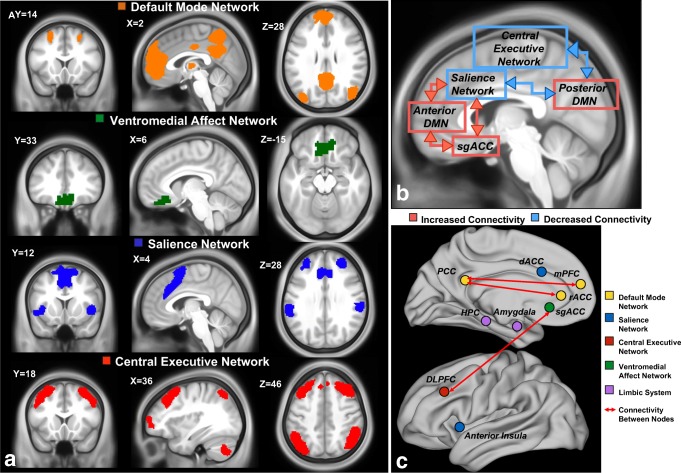
PURPOSE OF REVIEW: Poor treatment response is a hallmark of major depressive disorder. To tackle this problem, recent neuroimaging studies have sought to characterize antidepressant response in terms of pretreatment differences in intrinsic functional brain networks. Our aim is to review recent studies that predict antidepressant response using intrinsic network connectivity. We discuss current methodological limitations and directions for future antidepressant biomarker studies. RECENT FINDINGS: Functional connectivity stemming from the subgenual and rostral anterior cingulate has shown particular consistency in predicting antidepressant response. Differences in this connectivity may prove fruitful in differentiating treatment responders to many antidepressant interventions. Future biomarker studies should integrate biological MDD subtypes to address the disorder's inherent clinical heterogeneity. These clinical and scientific advancements have the potential to address this population marked by limited treatment response. Methodological considerations, including patient selection, response criteria, and model overfitting, will require future investigation to ensure that biomarkers generalize for prospective prediction of treatment response.
Overview
The claims and statistics of this paper haven’t been checked yet.
Free: it reads the open-access text and checks the first 5 claims that cite a source we can check. Create a free account to check every claim.
Integrity signals
Registry
Cites
Statistics
Figures
Verification
Claims the paper makes
The claims and statistics of this paper haven’t been checked yet.
Free: it reads the open-access text and checks the first 5 claims that cite a source we can check. Create a free account to check every claim.
Claims other papers make about this one
Each is checked against this paper’s own text: does it say what the citing paper says it does?
In the citing paper
“The neuroimaging studies suggest that changes occur at the network level rather than in a single structure, although within these networks some areas may play a more important role and trigger more systemic changes”
From Cognitive neuropsychological theory of antidepressant action: a modern-day approach to depression and its treatment (2021) · cites this paper as Dunlop et al. 2019
In the citing paper
“The subgenual frontal region has been consistently associated with treatment response across imaging modalities ( Dichter et al., 2015 , Dunlop et al., 2019 , Keedwell et al., 2010 , Mayberg et al., 1997 )”
From Self-blame-selective hyper-connectivity between anterior temporal and subgenual cortices predicts prognosis in major depressive disorder (2023) · cites this paper as Dunlop et al., 2019
Self-check
Percentages, sums and reported differences re-computed from the paper’s own numbers.
The self-check needs the paper’s full text.
Citations
Cites
Complex brain networks: graph theoretical analysis of structural and functional systems
Bullmore, E., & Sporns, O. (2009) · Nature Reviews Neuroscience · doi:10.1038/nrn2575 · Cited by 11,820
The organization of the human cerebral cortex estimated by intrinsic functional connectivity
Thomas Yeo, B. T., Krienen, F. M., Sepulcre, J., Sabuncu, M. R., Lashkari, D., Hollinshead, M., Roffman, J. L., Smoller, J. W., Zöllei, L., Polimeni, J. R., et al. (2011) · Journal of Neurophysiology · doi:10.1152/jn.00338.2011 · Cited by 9,182
Dissociable intrinsic connectivity networks for salience processing and executive control
Seeley, W. W., Menon, V., Schatzberg, A. F., Keller, J., Glover, G. H., Kenna, H., Reiss, A. L., & Greicius, M. D. (2007) · The Journal of Neuroscience · doi:10.1523/jneurosci.5587-06.2007 · Cited by 7,426
The organization of the human cerebellum estimated by intrinsic functional connectivity
Buckner, R. L., Krienen, F. M., Castellanos, A., Diaz, J. C., & Yeo, B. T. T. (2011) · Journal of Neurophysiology · doi:10.1152/jn.00339.2011 · Cited by 7,304
Rush, A. J., Trivedi, M. H., Wisniewski, S. R., Nierenberg, A. A., Stewart, J. W., Warden, D., Niederehe, G., Thase, M. E., Lavori, P. W., Lebowitz, B. D., et al. (2006) · American Journal of Psychiatry · doi:10.1176/ajp.2006.163.11.1905 · Cited by 5,643
Saliency, switching, attention and control: a network model of insula function
Menon, V., & Uddin, L. Q. (2010) · Brain Structure and Function · doi:10.1007/s00429-010-0262-0 · Cited by 5,592
Consistent resting-state networks across healthy subjects
Damoiseaux, J. S., Rombouts, S. A. R. B., Barkhof, F., Scheltens, P., Stam, C. J., Smith, S. M., & Beckmann, C. F. (2006) · Proceedings of the National Academy of Sciences · doi:10.1073/pnas.0601417103 · Cited by 4,326
Functional Network Organization of the Human Brain
Power, J. D., Cohen, A. L., Nelson, S. M., Wig, G. S., Barnes, K. A., Church, J. A., Vogel, A. C., Laumann, T. O., Miezin, F. M., Schlaggar, B. L., et al. (2011) · Neuron · doi:10.1016/j.neuron.2011.09.006 · Cited by 4,124
Trivedi, M. H., Rush, A. J., Wisniewski, S. R., Nierenberg, A. A., Warden, D., Ritz, L., Norquist, G., Howland, R. H., Lebowitz, B., McGrath, P. J., et al. (2006) · American Journal of Psychiatry · doi:10.1176/appi.ajp.163.1.28 · Cited by 3,879
Mayberg, H. S., Liotti, M., Brannan, S. K., McGinnis, S., Mahurin, R. K., Jerabek, P. A., Silva, J. A., Tekell, J. L., Martin, C. C., Lancaster, J. L., et al. (1999) · American Journal of Psychiatry · doi:10.1176/ajp.156.5.675 · Cited by 2,416
Cited by
The neurobiology of treatment-resistant depression: A systematic review of neuroimaging studies
Runia, N., Yücel, D. E., Lok, A., de Jong, K., Denys, D. A. J. P., van Wingen, G. A., & Bergfeld, I. O. (2022) · Neuroscience & Biobehavioral Reviews · doi:10.1016/j.neubiorev.2021.12.008 · Cited by 117
“Such studies have revealed that various regions involved in the pathophysiology of depression are involved in treatment resistance, including the prefrontal cortex (PFC), anterior cingulate cortex (ACC), hippocampus, amygdala, insula, salience network and default mode network (DMN) (Dunlop et al., 2019; Fonseka et al.…”
Godlewska, B. R., & Harmer, C. J. (2021) · Psychopharmacology · doi:10.1007/s00213-019-05448-0 · Cited by 123
Functional connectomics in depression: insights into therapies
Chai, Y., Sheline, Y. I., Oathes, D. J., Balderston, N. L., Rao, H., & Yu, M. (2023) · Trends in Cognitive Sciences · doi:10.1016/j.tics.2023.05.006 · Cited by 120
Cosmo, C. S. A., Zandvakili, A., Petrosino, N. J., Berlow, Y. A., & Philip, N. S. (2021) · Current Treatment Options in Psychiatry · doi:10.1007/s40501-021-00238-y · Cited by 70
Sex is a defining feature of neuroimaging phenotypes in major brain disorders
Salminen, L. E., Tubi, M. A., Bright, J. K., Thomopoulos, S. I., Wieand, A., & Thompson, P. M. (2021) · Human Brain Mapping · doi:10.1002/hbm.25438 · Cited by 69
Connectome-based models can predict early symptom improvement in major depressive disorder
Ju, Y., Horien, C. L., Chen, W., Guo, W., Lu, X., Sun, J., Dong, Q., Liu, B., Liu, J., Yan, D., et al. (2020) · Journal of Affective Disorders · doi:10.1016/j.jad.2020.04.028 · Cited by 53
Colato, E., Stutters, J., Tur, C., Narayanan, S., Arnold, D. L., Wheeler‐Kingshott, C. A. M. G., Barkhof, F., Ciccarelli, O., Chard, D., & Eshaghi, A. (2021) · Journal of Neurology Neurosurgery & Psychiatry · doi:10.1136/jnnp-2020-325610 · Cited by 54
Zhao, K., Xie, H., Fonzo, G. A., Tong, X., Carlisle, N. B., Chidharom, M., Etkin, A., & Zhang, Y. (2023) · Molecular Psychiatry · doi:10.1038/s41380-023-01958-8 · Cited by 50
“In recent years, an increasing number of studies have begun to discover promising FC biomarkers predictive of treatment response in MDD.(14) FCs involved in anterior cingulate cortex and prefrontal cortex were shown to predict treatment remission of antidepressant medication.”
BackgroundInfluentialTranscranial focused ultrasound stimulation of cortical and thalamic somatosensory areas in human
Kim, H., Lee, W., Weisholtz, D. S., & Yoo, S. (2023) · PLoS ONE · doi:10.1371/journal.pone.0288654 · Cited by 45
Jamieson, A. J., Harrison, B. J., Razi, A., & Davey, C. G. (2022) · Neuropsychopharmacology · doi:10.1038/s41386-021-01214-z · Cited by 41
“Major depressive disorder (MDD) is one of the most common psychiatric disorders, with an estimated prevalence of 10% within the adult population [1].”
BackgroundMethodInfluentialNeuroimaging-Derived Biomarkers of the Antidepressant Effects of Ketamine
Zavaliangos‐Petropulu, A., Al‐Sharif, N., Taraku, B., Leaver, A. M., Sahib, A. K., Espinoza, R. T., & Narr, K. L. (2022) · Biological Psychiatry Cognitive Neuroscience and Neuroimaging · doi:10.1016/j.bpsc.2022.11.005 · Cited by 40
“…network (DMN), salience network (SN), cingulo-opercular network (CON), frontoparietal network (FPN)/central executive network (CEN), orbito-affective network (OAN), and ventromedial affective network (VMN) are repeatedly implicated in depression and appear to influence treatment outcomes (20–23).”
InfluentialPrecision non-implantable neuromodulation therapies: a perspective for the depressed brain
Borrione, L., Bellini, H., Razza, L. B., Ganho-Ávila, A., Baeken, C., Brem, A., Busatto, G. F., Carvalho, A. F., Chekroud, A. M., Daskalakis, Z. J., et al. (2020) · Brazilian Journal of Psychiatry · doi:10.1590/1516-4446-2019-0741 · Cited by 38
A mega-analysis of functional connectivity and network abnormalities in youth depression
Tse, N. Y., Ratheesh, A., Tian, Y., Connolly, C. G., Davey, C. G., Ganesan, S., Gotlib, I. H., Harrison, B. J., Han, L. K. M., Ho, T. C., et al. (2024) · Nature Mental Health · doi:10.1038/s44220-024-00309-y · Cited by 43
Uyulan, Ç., de la Salle, S., Erguzel, T. T., Lynn, E., Blier, P., Knott, V., Adamson, M. M., Zelka, M., & Tarhan, N. (2021) · Clinical EEG and Neuroscience · doi:10.1177/15500594211018545 · Cited by 38
“90 In resting-state neuroimaging studies, intrinsic functional connectivity within and between large-scale neural networks is altered in MDD, 91 and it is necessary to be particularly consistent when predicting antidepressant response outcomes.”
BackgroundInfluentialBatail, J.-M., Xiao, X., Azeez, A., Tischler, C., Kratter, I. H., Bishop, J. H., Saggar, M., & Williams, N. R. (2023) · Translational Psychiatry · doi:10.1038/s41398-023-02537-9 · Cited by 33
“Our findings highlight the central role of the SN for the ATD effect of FC-guided lDLPFC aiTBS.”
BackgroundInfluentialTassone, V. K., Demchenko, I., Salvo, J. J., Mahmood, R., Passa, A.-M. D., Kuburi, S., Rueda, A., & Bhat, V. (2022) · Psychiatry Research Neuroimaging · doi:10.1016/j.pscychresns.2022.111517 · Cited by 35
Tassone, V. K., Nezhad, F. G., Demchenko, I., Rueda, A., & Bhat, V. (2024) · Psychiatry Research Neuroimaging · doi:10.1016/j.pscychresns.2023.111777 · Cited by 35
Chen, X., Beltran, D. J., Tsygankova, V., Woolwine, B. J., Patel, T., Baer, W. M., Felger, J. C., Miller, A. H., & Haroon, E. (2021) · Translational Psychiatry · doi:10.1038/s41398-021-01587-1 · Cited by 32
Intrinsic Connectivity Networks of Glutamate-Mediated Antidepressant Response: A Neuroimaging Review
Demchenko, I., Tassone, V. K., Kennedy, S. H., Dunlop, K., & Bhat, V. (2022) · Frontiers in Psychiatry · doi:10.3389/fpsyt.2022.864902 · Cited by 29
“Moreover, stronger pretreatment connectivity between posterior (PCC) and anterior nodes (mPFC) of the DMN correlates with antidepressant response to pharmacotherapy and electroconvulsive therapy (23), and a recent coordinate-based meta-analysis has concluded that baseline within-network DMN connectivity at rest predic…”
BackgroundSelf-citationKelley, M. E., Choi, K. S., Rajendra, J. K., Craighead, W. E., Rakofsky, J. J., Dunlop, B. W., & Mayberg, H. S. (2021) · Biological Psychiatry · doi:10.1016/j.biopsych.2021.02.966 · Cited by 25
Gao, Q., Chen, X., Castellanos, F. X., Lu, B., & Yan, C. (2025) · Psychoradiology · doi:10.1093/psyrad/kkaf024 · Cited by 25
“While this symptom-based approach is clinically effective, it is constrained by a lack of neurobiological support, which affects both its objectivity and its potential for clinical success (Dunlop et al ., 2019 ; Kim, 2019 ).”
Zhang, Y., Kong, Y., Liu, X., Gao, H.-R., Yin, Y., Hou, Z., Zhang, H., Zhang, H., Xie, C., Zhang, Z., et al. (2020) · Journal of Magnetic Resonance Imaging · doi:10.1002/jmri.27466 · Cited by 24
“In the context of MDD research, evidence from a large body of literature show that FC derived from networks such as the default mode network (DMN), salience network, and executive control network (ECN) may be used to classify treatment responders and nonresponders.(7) A study of late-life depression indicates that ear…”
MethodKrug, S., Müller, T., Kayali, Ö., Leichter, E., Peschel, S. K. V., Jahn, N., Winter, L., Krüger, T. H. C., Kahl, K. G., Sinke, C., et al. (2022) · Journal of Psychiatric Research · doi:10.1016/j.jpsychires.2022.07.040 · Cited by 27
Liu, C., Belleau, E. L., Dong, D., Sun, X., Xiong, G., Pizzagalli, D. A., Auerbach, R. P., Wang, X., & Yao, S. (2023) · Journal of Affective Disorders · doi:10.1016/j.jad.2023.05.074 · Cited by 24
Prompiengchai, S., & Dunlop, K. (2024) · Neuropsychopharmacology · doi:10.1038/s41386-024-01907-1 · Cited by 26
Self-citationSinha, P., Joshi, H., & Ithal, D. (2021) · Frontiers in Human Neuroscience · doi:10.3389/fnhum.2020.616054 · Cited by 24
“, 2019), psychotherapy (Dunlop et al., 2019), and ECT (van Waarde et al.”
BackgroundResultInfluentialDai, Y., Wu, Y., Chen, X., Zeng, Y., Li, K., Li, J., Su, Y., Zhu, L.-L., Yan, C., & Si, T. (2023) · Journal of Affective Disorders · doi:10.1016/j.jad.2023.02.126 · Cited by 20
van der Wijk, G., Harris, J. K., Hassel, S., Davis, A. D., Zamyadi, M., Arnott, S. R., Milev, R. V., Lam, R. W. M., Frey, B. N., Hall, G. B., et al. (2021) · Cerebral Cortex · doi:10.1093/cercor/bhab286 · Cited by 22
Depression patient-derived cortical neurons reveal potential biomarkers for antidepressant response
Avior, Y., Ron, S., Kroitorou, D., Albeldas, C., Lerner, V., Corneo, B., Nitzan, E., Laifenfeld, D., & Solal, T. C. (2021) · Translational Psychiatry · doi:10.1038/s41398-021-01319-5 · Cited by 21
Clinical pharmacological innovation in the treatment of depression
Witkin, J. M., Golani, L. K., & Smith, J. L. (2023) · Expert Review of Clinical Pharmacology · doi:10.1080/17512433.2023.2198703 · Cited by 17
Effects of spaceflight on the EEG alpha power and functional connectivity
Pusil, S. A., Zegarra-Valdivia, J. A., Cuesta, P., Laohathai, C., Cebolla, A. M., Haueisen, J., Fiedler, P., Funke, M. E., Maestú, F., & Cheron, G. A. (2023) · Scientific Reports · doi:10.1038/s41598-023-34744-1 · Cited by 18
Thai, M., Olson, E. A., Nickels, S., Dillon, D. G., Webb, C. A., Ren, B., Killgore, W. D. S., Rauch, S. L., Rosso, I. M., & Pizzagalli, D. A. (2024) · Translational Psychiatry · doi:10.1038/s41398-024-03020-9 · Cited by 33
Driving brain state transitions in major depressive disorder through external stimulation
Wang, S., Wen, H., Qiu, S., Xie, P., Qiu, J., & He, H. (2022) · Human Brain Mapping · doi:10.1002/hbm.26006 · Cited by 18
“Recent reviews suggest that abnormal communication within and between brain structural and functional networks underscores the complex psychopathology observed in MDD (Brakowski et al., 2017; Dai et al., 2019; Dunlop et al., 2019; Kerestes et al., 2014; Nixon et al., 2014).”
BackgroundKuburi, S., Passa, A.-M. D., Tassone, V. K., Mahmood, R., Lalovic, A., Ladha, K. S., Dunlop, K., Rizvi, S. J., Demchenko, I., & Bhat, V. (2022) · Chronic Stress · doi:10.1177/24705470221115342 · Cited by 18
“In particular, the CEN, DMN and SN, which integrate critical brain areas including the dorsal ACC (dACC), anterior insula, DLPFC, and amygdala, all have demonstrated specific alterations in MDD patients who underwent treatment with typical antidepressants.(70) In the open-label trial by Daws et al(63) (2022), psilocyb…”
Self-citationDai, Z., Pei, C., Zhang, S., Tian, S., Chen, Z., Zhou, H., Lü, Q., & Yao, Z. (2021) · CNS Neuroscience & Therapeutics · doi:10.1111/cns.13787 · Cited by 14
Murthy, M. K. (2025) · Neuroscience · doi:10.1016/j.neuroscience.2025.08.009 · Cited by 13
Braund, T. A., Breukelaar, I. A., Griffiths, K. R., Tillman, G., Palmer, D. M., Bryant, R. A., Phillips, M. L., Harris, A. W. F., & Korgaonkar, M. S. (2021) · Biological Psychiatry Cognitive Neuroscience and Neuroimaging · doi:10.1016/j.bpsc.2021.07.010 · Cited by 13
Godlewska, B. R. (2020) · Current Behavioral Neuroscience Reports · doi:10.1007/s40473-020-00198-2 · Cited by 14
Ahmed, R., Boyd, B. D., Elson, D. M., Albert, K. M., Begnoche, J. P., Kang, H., Landman, B. A., Szymkowicz, S. M., Andrews, P., Vega, J. N., et al. (2022) · Psychological Medicine · doi:10.1017/s0033291722003579 · Cited by 20
“Past work suggests that higher resting connectivity between anterior and posterior nodes of the DMN predicts better pharmacotherapy response (Andreescu et al., 2013; Dunlop et al., 2019; Goldstein-Piekarski et al., 2018),a finding replicated in our primary analysis.”
Vaccarino, S. R., Wang, S., Rizvi, S. J., Lou, W. Y. W., Hassel, S., MacQUEEN, G. M., Ho, K. T., Frey, B. N., Lam, R. W. M., Milev, R. V., et al. (2024) · BJPsych Open · doi:10.1192/bjo.2023.588 · Cited by 13
Changes of EEG beta band power and functional connectivity during spaceflight: a retrospective study
Quivira‐Lopesino, A., Sevilla-García, M. A., Cuesta, P., Pusil, S. A., Bruña, R., Fiedler, P., Cebolla, A. M., Cheron, G. A., Funke, M. E., & Maestú, F. (2025) · Scientific Reports · doi:10.1038/s41598-025-96897-5 · Cited by 12
“The relevance of utilizing EEG for functional assessment is emphasized by the fact that modifications in brain function could manifest before structural brain abnormalities 32 .”
Wilson, J. D., Gerlach, A., Karim, H. T., Aizenstein, H. J., & Andreescu, C. (2023) · Molecular Psychiatry · doi:10.1038/s41380-023-02158-0 · Cited by 12
Bulubas, L., Padberg, F., Mezger, E., Suen, P. J. C., Bueno, P. V. S., Duran, F., Busatto, G. F., Amaro, E., Benseñor, I. M., Lotufo, P. A., et al. (2020) · European Archives of Psychiatry and Clinical Neuroscience · doi:10.1007/s00406-020-01187-y · Cited by 9
Wang, X., Qin, J., Zhu, R., Zhang, S., Tian, S., Sun, Y., Wang, Q., Zhao, P., Tang, H., Wang, L., et al. (2021) · Brain Connectivity · doi:10.1089/brain.2021.0153 · Cited by 9
“…have focused on investigating biomarkers of response or remission through functional magnetic resonances imaging (fMRI) (Dichter et al., 2015; Dunlop et al., 2019; Fonseka et al., 2018; Wu et al., 2020), especially for functional connectivity (FC) (Chin Fatt et al., 2020; Corlier et al.,…”
Zhang, Y., Ren, Y., Chen, G., Wang, H., Miao, J., Cui, B., Zou, Z., Jin, F., Hong, C., Han, M., et al. (2025) · General Psychiatry · doi:10.1136/gpsych-2025-102041 · Cited by 9
“20 Based on these previous findings, we hypothesise that multimodal MRI-derived brain networks are able to predict the therapeutic efficacy of Yueju Pill.”
Fennema, D., Barker, G. J., O’Daly, O., Duan, S., Carr, E., Goldsmith, K., Young, A. H., Moll, J., & Zahn, R. (2024) · Biological Psychiatry Global Open Science · doi:10.1016/j.bpsgos.2024.100308 · Cited by 9
“These fl uctuations can be induced by a task or occur spontaneously in the absence of a task, i.e., "resting state," providing insight into the pathophysiology of MDD and potential biomarkers of response to treatment (14,15).”
Fatt, C. C., Minhajuddin, A., Jha, M. K., Mayes, T. L., Rush, A. J., & Trivedi, M. H. (2022) · Journal of Psychiatric Research · doi:10.1016/j.jpsychires.2022.12.002 · Cited by 9
Introduction to Functional MR Imaging
Sopich, N., & Holodny, A. I. (2020) · Neuroimaging Clinics of North America · doi:10.1016/j.nic.2020.09.002 · Cited by 8
Williams, R. J., Brown, E. C., Clark, D., Pike, G. B., & Ramasubbu, R. (2021) · Brain and Behavior · doi:10.1002/brb3.2287 · Cited by 8
“Studies utilizing functional magnetic resonance imaging (fMRI) in patients prior to treatment have shown that baseline blood oxygenation level-dependent (BOLD) responses may be predictive of later clinical response (Dunlop et al., 2019;Mayberg et al., 1997; Phillips et al., 2015; Pizzagalli, 2011).”
MethodFennema, D., Barker, G. J., O'Daly, O., Duan, S., Carr, E., Goldsmith, K., Young, A. H., Moll, J., & Zahn, R. (2023) · NeuroImage: Clinical · doi:10.1016/j.nicl.2023.103453 · Cited by 7
an, K., Zhang, D., Gao, M., Zhang, Y., Zhang, Q., Jiang, Y., Qian, Y., & Zhu, J. (2026) · Neurobiology of Disease · doi:10.1016/j.nbd.2026.107363 · Cited by 7
Rotstein, N. M., Cohen, Z. D., Welborn, A., Zbozinek, T. D., Akre, S., Jones, K. G., Null, K. E., Pontanares, J., Sanchez, K. L., Flanagan, D. C., et al. (2025) · Frontiers in Human Neuroscience · doi:10.3389/fnhum.2025.1478534 · Cited by 9
Wang, X., Li, X., Shao, J., Dai, Z., Hua, L., Yan, R., Yao, Z., & Lü, Q. (2024) · Clinical Neurophysiology · doi:10.1016/j.clinph.2024.02.004 · Cited by 8
Assche, E. V., Hohoff, C., Zang, J. C. S., Knight, M. J., & Baune, B. T. (2023) · Frontiers in Molecular Neuroscience · doi:10.3389/fnmol.2023.1223216 · Cited by 7
“Nonetheless, as depression and recovery from depression have been linked to improved neuronal connectivity (Dichter et al., 2015; Dunlop et al., 2019; Long et al., 2020), inflammation (Gasparini et al.”
BackgroundA Dynamic Approach to Depression Treatment Prediction
Drysdale, A. T., & Patel, G. H. (2022) · Biological Psychiatry · doi:10.1016/j.biopsych.2022.06.028 · Cited by 7
Burrows, M., Kotoula, V., Dipasquale, O., Stringaris, A. K., & Mehta, M. A. (2023) · Journal of Psychopharmacology · doi:10.1177/02698811231189432 · Cited by 6
“Disrupted connectivity within these networks in depression has been associated with negative self-referential rumination and deficits in cognitive control (Dunlop et al., 2019).”
BackgroundTatlı, S. Z., & Atagün, M. İ. (2025) · Actas Españolas de Psiquiatría · doi:10.62641/aep.v53i6.1946 · Cited by 7
“…[62–65], neurobiological biomarkers (e.g., C-reactive protein (CRP), interleukin-6 (IL-6), and and tumor necrosis factor-alpha (TNF-α )) [47], and neuroimaging tools (e.g., functional magnetic resonance imaging (fMRI) and electroencephalography (EEG)) [66] are promising for identifying…”
Biological markers of treatment response to serotonergic psychedelic therapies: a systematic review
Wong, S., Jones, B. D. M., Thiyagarajah, M. T., Sabbah, S. G., Thompson, C. W., Solmi, M., Umer, M., Zrenner, C., Voineskos, D., Rosenblat, J. D., et al. (2025) · Therapeutic Advances in Psychopharmacology · doi:10.1177/20451253251384513 · Cited by 5
“%) of their patient population had greater than high school level education, with 57.8% completing college level education and 26.3% completing a Master’s degree.”
InfluentialMolecular imaging findings for treatment resistant depression
Yang, K., & Chou, Y.-H. (2023) · Progress in brain research · doi:10.1016/bs.pbr.2023.03.003 · Cited by 4
Zhang, Y., Wu, G., Witte, S. D., & Baeken, C. (2025) · Biological Psychiatry Cognitive Neuroscience and Neuroimaging · doi:10.1016/j.bpsc.2025.02.010 · Cited by 8
Berkovitch, L., Lee, K., Ji, J., Helmer, M., Rahmati, M., Demšar, J., Kraljič, A., Matkovič, A., Tamayo, Z., Murray, J. D., et al. (2025) · Psychological Medicine · doi:10.1017/s0033291725100962 · Cited by 4
Uygur, A. B., Yıldız, S., Velioğlu, H. A., Özşimşek, A., Öktem, E. Ö., Bayraktaroğlu, Z., Ergün, T., Lakadamyalı, H., Hanoğlu, L., Çankaya, Ş., et al. (2020) · Journal of Clinical Neuroscience · doi:10.1016/j.jocn.2020.12.001 · Cited by 4
Latent Profile Analysis of Childhood Maltreatment and Neural Markers in Depression
Rowe, J., Nogovitsyn, N., Mazurka, R., Squires, S. D., Hassel, S., Poppenk, J., Dunlop, K., Zamyadi, M., Milev, R. V., Foster, J. A., et al. (2025) · JAMA Network Open · doi:10.1001/jamanetworkopen.2025.25147 · Cited by 4
Self-citationDang, Y., Lu, B., Vanderwal, T., Castellanos, F. X., & Yan, C. (2024) · Psychological Medicine · doi:10.1017/s0033291724001156 · Cited by 3
“One such technique is fMRI, which uses the blood-oxygenation-level-dependent (BOLD) signal to indirectly measure neural activity, and it is most frequently used to estimate functional connectivity relationships in the brain (Dunlop, Talishinsky, & Liston, 2019; Fan et al., 2020).”
Elfaki, L. A., Sharma, B., Meusel, L.-A., So, I., Colella, B., Wheeler, A. L., Harris, J. E., & Green, R. (2025) · Frontiers in Neurology · doi:10.3389/fneur.2025.1541520 · Cited by 3
“These discrepancies may explain the limited progress in identifying a biomarker of depression in TBI (14, 21, 25).”
Jamieson, A. J., Davey, C. G., Pujol, J., Blanco-Hinojo, L., & Harrison, B. J. (2025) · Psychological Medicine · doi:10.1017/s0033291725000510 · Cited by 2
“Within this framework, MDD has been associated with alterations across multiple intrinsic brain networks (Brakowski et al., 2017; Li et al., 2018), including the default mode (DMN), salience, and central executive networks (Dunlop, Talishinsky, & Liston, 2019; Tse et al., 2024).”
Sevilla-García, M. A., Quivira‐Lopesino, A., Cuesta, P., Pusil, S. A., Bruña, R., Fiedler, P., Maestú, F., Cebolla, A. M., Cheron, G. A., Brauns, K., et al. (2025) · Scientific Reports · doi:10.1038/s41598-025-26291-8 · Cited by 3
“Therefore, monitoring brain function during space flights using techniques like electroencephalography (EEG) is increasingly essential, especially as functional brain changes may precede visible structural alterations 15,20,21 .”
Demchenko, I., Sousa-Ho, R. L., Baltazar, V. A., Tailor, I., Roy, N., Schweizer, T. A., Kennedy, S. H., Boutet, A., Lozano, A. M., Dunlop, K., et al. (2026) · Translational Psychiatry · doi:10.1038/s41398-026-04006-5 · Cited by 2
Self-citationHan, Y., Yan, H., Guo, W., & Cao, H. (2026) · Neurotherapeutics · doi:10.1016/j.neurot.2026.e00932 · Cited by 2
“Importantly, abnormalities within several of these regions, particularly those embedded within the default mode network (DMN), have emerged as potential signatures distinguishing treatment-responsive from treatment-resistant depression [5,11,12].”
Zhang, M., Li, W., Hu, Z., Lu, H., Zhou, Y., & Ning, Y. (2024) · BMC Psychiatry · doi:10.1186/s12888-024-06346-2 · Cited by 2
Metabolic resilience: liraglutide’s potential in alleviating depressive symptoms
Gammoh, O., Qnais, E. Y., Aljabali, A. A. A., Hatahet, T., & Alqudah, A. M. (2025) · Molecular Biology Reports · doi:10.1007/s11033-025-10641-w · Cited by 2
“The bidirectional interplay between metabolic disorders and mental health is a multifaceted line of scientific research that includes complex pathways and shared molecular cascades [49].”
Sousa-Ho, R. L., Demchenko, I., Baltazar, V. A., Tailor, I., Dunkley, B. T., Schweizer, T. A., Kennedy, S. H., Boutet, A., Lozano, A. M., Fatt, C. C., et al. (2026) · Progress in Neuro-Psychopharmacology and Biological Psychiatry · doi:10.1016/j.pnpbp.2026.111616 · Cited by 1
Self-citationEarly brain functional connectivity changes induced by antidepressants and placebo
Tong, X., Fonzo, G. A., Carlisle, N. B., Xie, H., Berdichevsky, Y., Keller, C. J., Oathes, D. J., Nemeroff, C. B., Lin, F. V., & Zhang, Y. (2026) · Nature Mental Health · doi:10.1038/s44220-026-00729-y · Cited by 2
Editorial: Rising stars in brain imaging and stimulation 2023
Ayache, S. S., Biabani, M., & Chalah, M. A. (2024) · Frontiers in Human Neuroscience · doi:10.3389/fnhum.2024.1437975 · Cited by 1
Zavaliangos‐Petropulu, A. (2024) · Biological Psychiatry · doi:10.1016/j.biopsych.2024.09.007
Chaïb, S. (2023) · theses.fr (ABES) · doi:10.70675/00e3b294z3b0az4a32zb1c5z3c09edd92416 · Cited by 1
State entropy reveals the reconfiguration of brain complexity in Parkinson’s disease
Wang, X., Zou, T., Chen, H., Chen, C., Zhang, C., Cheng, J., & Li, R. (2024) · Brain Network Disorders · doi:10.1016/j.bnd.2024.10.004
Samman, M. E., Fiorentini, L., Herlyn, D. L., Tsuchiyagaito, A., Castro, M. N., Costanzo, E., Brusco, L. I., Camprodon, J. A., Forcato, C., Guinjoan, S. M., et al. (2026) · Psychiatry Research Neuroimaging · doi:10.1016/j.pscychresns.2026.112141
Hao, R., Chen, C., Zhang, X., Xu, Y., Fang, N., Teng, H., Luo, X., Sun, L., & Zhang, B. (2026) · Psychiatry Research Neuroimaging · doi:10.1016/j.pscychresns.2026.112176
Mir-Moghtadaei, A. (2024) · TSpace (University of Toronto) · Cited by 2
Emotional biases in mood disorders : study of olfaction in mice models of depression and mania
Bigot, M. (2021) · theses.fr (ABES) · doi:10.70675/f69d7295z699fz468fz95f9zb41f25eacac2 · Cited by 2
Neuromodulation: Current Knowledge and Future Priorities
Krystal, A. D. (2026) · Springer eBooks · doi:10.1007/978-3-032-31497-0_5
Song, Y. W., Lee, H.-A., Kim, S., & Kim, J. S. (2026) · Progress in Neuro-Psychopharmacology and Biological Psychiatry · doi:10.1016/j.pnpbp.2026.111957
Navigating the Complexities of Treatment-Resistant Depression in Late Life
Cross, C. B., Hristidis, V. C., & Lenze, E. J. (2026) · FOCUS The Journal of Lifelong Learning in Psychiatry · doi:10.1176/appi.focus.20260010
Metadata
- Authors
- Dunlop, K., Talishinsky, A., & Liston, C.
- Affiliations
- Weill Cornell Medicine (US)
- Corresponding author
- Dunlop, Katharine
- Venue
- Current Psychiatry Reports
- Published
- 2019-08-13
- Volume
- 21
- Issue
- 9
- Pages
- 87-87
- ISSN
- 1523-3812 (ISSN-L)
- 1535-1645
- PMC
- PMC6692448
- OpenAlex
- W2967819611
- Cited by
- 80
- References
- 129
- Citations by year
- 2026: 10 · 2025: 13 · 2024: 12 · 2023: 13 · 2022: 9 · 2021: 15 · 2020: 8
- FWCI
- 1.02
- Type
- journal article
- Language
- en
- Open access
- hybrid
- doi.org
- Licence
- cc-by
- creativecommons.org/licenses/by/4.0 (tdm)
- creativecommons.org/licenses/by/4.0 (vor)
- Locations
- Current Psychiatry Reports (publishedVersion, cc-by)
- PubMed Central (publishedVersion, cc-by)
- PubMed (publishedVersion)
- Funders
- Canadian Institutes of Health Research
- National Institute of Mental Health (R56MH114976, R01MH118388)
- National Institute on Drug Abuse (R01DA047851)
- Topics
- Life Sciences › Neuroscience › Cognitive Neuroscience › Functional Brain Connectivity Studies
- Health Sciences › Medicine › Pharmacology (medical) › Treatment of Major Depression
- Social Sciences › Psychology › Experimental and Cognitive Psychology › Mental Health Research Topics
- Keywords
- antidepressant response, major depressive disorder, functional connectivity, subgenual anterior cingulate cortex, rostral anterior cingulate cortex, treatment-resistant depression, biomarkers, treatment response prediction, clinical heterogeneity
- MeSH terms
- Antidepressive Agents, Brain, Depressive Disorder, Major, Major Depressive Disorder, Humans, Biomarkers
About these checks
Registry, retraction, Cites and statistics results are computed, not judged, with one exception: a printed reference that no index lists is read once by a model before it counts as a citation error. Claims are extracted by a model and kept only when their quote appears verbatim in the text; each cited source is then checked, with a model’s help, for whether it says what the claim relies on. Those verdicts can be wrong — read the claim’s quote and the cited source before relying on one.
Statistics and arithmetic are recomputed, not judged.
Confidence bands are shown only for fields calibrated on our annotated test set. None is calibrated yet, so no band is shown.
What counts as a claim ›How we measure confidence ›How we check this ›
Are you an author, or do you see a problem with this page? Request a review
Data sources
Bibliographic data: Semantic Scholar, OpenAlex, Crossref.
Contains information from the Semantic Scholar Academic Graph Datasets, made available under the ODC Attribution License (ODC-BY 1.0).
Semantic Scholar’s data is described in: Kinney, R., et al. (2023). The Semantic Scholar Open Data Platform. arXiv:2301.10140.
