

The Ethics of Digital Well-Being: A Thematic Review
Open accessThe DOI matches its Crossref record; 138 of the 142 references it cites were found in a registry or an index.
Abstract
This article presents the first thematic review of the literature on the ethical issues concerning digital well-being. The term ‘digital well-being’ is used to refer to the impact of digital technologies on what it means to live a life that is good for a human being. The review explores the existing literature on the ethics of digital well-being, with the goal of mapping the current debate and identifying open questions for future research. The review identifies major issues related to several key social domains: healthcare, education, governance and social development, and media and entertainment. It also highlights three broader themes: positive computing, personalised human–computer interaction, and autonomy and self-determination. The review argues that three themes will be central to ongoing discussions and research by showing how they can be used to identify open questions related to the ethics of digital well-being.
Overview
The claims and statistics of this paper haven’t been checked yet.
Free: it reads the open-access text and checks the first 5 claims that cite a source we can check. Create a free account to check every claim.
Integrity signals
Registry
Cites
Statistics
Figures
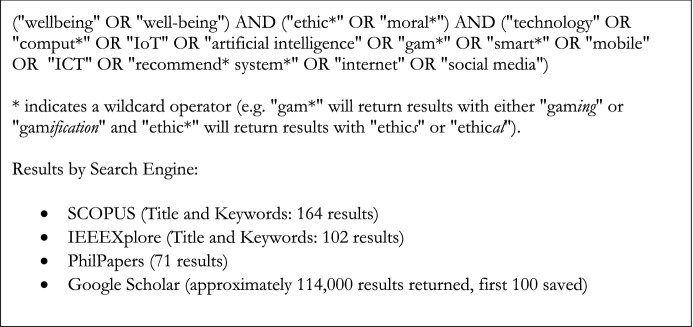
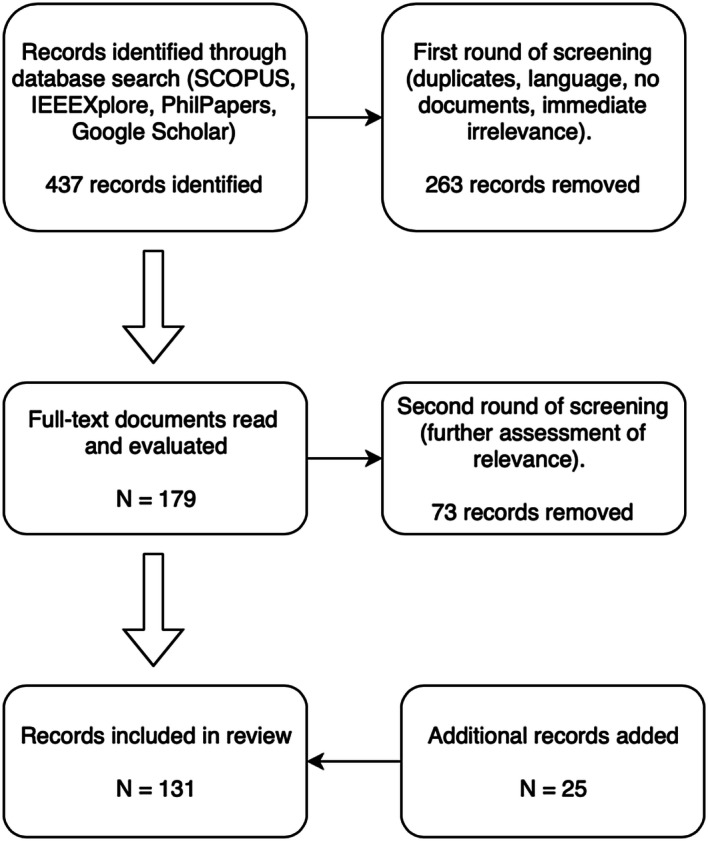
Verification
Claims the paper makes
The claims and statistics of this paper haven’t been checked yet.
Free: it reads the open-access text and checks the first 5 claims that cite a source we can check. Create a free account to check every claim.
Claims other papers make about this one
Each is checked against this paper’s own text: does it say what the citing paper says it does?
The check wasn’t confident either way, so it gives no verdict — never disputed.
In the citing paper
“On other occasions a false negative occurred when AI incorrectly fails to indicate the presence of a disease when in reality it is present.”
From Responsible AI for Digital Health: a Synthesis and a Research Agenda (2023) · cites this paper as Burr et al., 2020
Experimental — accuracy not yet measuredIn the citing paper
“decision making in health are untranslatable between different care settings, which challenges the scientific rigor of these methods (Burr et al., 2020).”
From Responsible AI for Digital Health: a Synthesis and a Research Agenda (2023) · cites this paper as Burr et al., 2020
Self-check
Percentages, sums and reported differences re-computed from the paper’s own numbers.
The self-check needs the paper’s full text.
Citations
Cites
Ryan, R. M., & Deci, E. L. (2000) · American Psychologist · doi:10.1037//0003-066x.55.1.68 · Cited by 54,599
Principles of Biomedical Ethics
(2012) · Thieves of Virtue · doi:10.7551/mitpress/9079.003.0009 · Cited by 13,453
The Need for a New Medical Model: A Challenge for Biomedicine
Engel, G. L. (1977) · Science · doi:10.1126/science.847460 · Cited by 12,887
Positive psychology: An introduction.
Seligman, M. E. P., & Csikszentmihalyi, M. (2000) · American Psychologist · doi:10.1037/0003-066x.55.1.5 · Cited by 11,351 · cited 2×
“Positive computing builds on research in positive psychology (Seligman & Csikszentmihalyi, 2000), by adopting an interdisciplinary perspective to study the individual and social factors that foster human flourishing in order to understand how to design digital interfaces that promote user s’…”
BackgroundThe future of employment: How susceptible are jobs to computerisation?
Frey, C. B., & Osborne, M. A. (2017) · Technological Forecasting and Social Change · doi:10.1016/j.techfore.2016.08.019 · Cited by 8,727 · cited 2×
“2018, Orben and Przybylski 2019) and a need for understanding the extent of disruption to labour markets and related well-being issues, which will be caused by increased automation (Frey and Osborne 2017).”
BackgroundThe global landscape of AI ethics guidelines
Jobin, A., Ienca, M., & Vayena, E. (2019) · Nature Machine Intelligence · doi:10.1038/s42256-019-0088-2 · Cited by 6,220 · cited 1×
“This type of analysis would be useful, especially given the recent focus on exploring the global landscape of AI ethics guidelines (e.g. Jobin, Ienca, and Vayena 2019; Floridi et al., 2018).”
Floridi, L., Cowls, J., Beltrametti, M., Chatila, R., Chazerand, P., Dignum, V., Luetge, C., Madelin, R., Pagallo, U., Rossi, F., et al. (2018) · Minds and Machines · doi:10.1007/s11023-018-9482-5 · Cited by 4,774 · cited 4×
“This type of analysis would be useful, especially given the recent focus on exploring the global landscape of AI ethics guidelines (e.g. Jobin, Ienca, and Vayena 2019; Floridi et al., 2018).”
BackgroundMethodInfluentialSelf-citationExperimental evidence of massive-scale emotional contagion through social networks
Kramer, A. D. I., Guillory, J. E., & Hancock, J. T. (2014) · Proceedings of the National Academy of Sciences · doi:10.1073/pnas.1320040111 · Cited by 3,687 · cited 1×
“, happiness), which in turn could be misused by social media companies experimenting with the manipulation of user’s emotional states (Kramer et al., 2014), or advertisers looking to target very specific audiences (Matz et al.”
BackgroundThe fourth industrial revolution
Schwab, K. (n.d.) · Cited by 2,997
Flourishing Across Europe: Application of a New Conceptual Framework for Defining Well-Being
Huppert, F. A., & So, T. T. C. (2013) · Social Indicators Research · doi:10.1007/s11205-011-9966-7 · Cited by 1,864 · cited 1×
“Many national governments have become interested in the sciences of well-being and their impact on policy (Huppert and So 2013; Stiglitz et al. 2008).”
Background
Research works printed but not linked: 4
- Human Genetics Commission. (2010). A common framework of principles for direct-to-consumer genetic testing services (pp. 1–15). London: HGC.
- IEEE. (2017). Ethically aligned design, v2. The IEEE initiative on ethics of autonomous and intelligent systems. https://ethicsinaction.ieee.org. Date Accessed November 22, 2018 [*].
- Sen A The idea of justice 2010 London Penguin
- Thieme, A., Wallace, J., Meyer, T. D., & Olivier, P. (2015). Designing for mental wellbeing. In Presented at the the 2015 British HCI conference (pp. 1–10). New York, NY: ACM Press.
Cited by
Items 201–300 of 373
The Use of AI in Personalized Marketing: Balancing Benefits and Privacy Concerns
Yadav, M., Kumar, A., & Jha, R. (2024) · International Journal of Advanced Research in Science Communication and Technology · doi:10.48175/ijarsct-17823 · Cited by 7
Investigation of Teacher Candidates' Digital Well-Being Levels with Respect to Various Variables
Karabatak, S., Polat, E., & Alanoğlu, M. (2024) · International Symposium on Digital Forensics and Security (ISDFS) · doi:10.1109/isdfs60797.2024.10527230 · Cited by 3
“The widespread adoption of digital technologies and their integration into people's lives has fundamentally transformed the individual's relationship with themselves and their environment [1].”
BackgroundBosbach, J., Helms, M., Lattemann, C., & Umel, A. (2024) · HMD Praxis der Wirtschaftsinformatik · doi:10.1365/s40702-024-01124-w · Cited by 2
“Zusätzlich wird der Gewinn von Fachkräften erschwert, da sich nicht nur Ar-beitsbedingungen und Arbeitsweisen ändern (Burr et al. 2020), sondern in allen Bereichen neue Jobs mit digitalen Kompetenzen benötigt werden (Thonipara et al. 2020).”
InfluentialMüller-Salo, J. (2024) · Ethics and Information Technology · doi:10.1007/s10676-024-09815-0 · Cited by 9
Digital Well-Being and Internet Addiction Across the Lifespan
Singha, R., & Singha, S. (2025) · Advances in human and social aspects of technology book series · doi:10.4018/979-8-3693-6366-9.ch009 · Cited by 6
Ethics and Digital Innovation in Finance
Argandoña, A. (2021) · International handbooks in business ethics · doi:10.1007/978-3-030-29371-0_9 · Cited by 4
Khoshkbarchi, A., & Shahriari, H. R. (2022) · International Journal of Human-Computer Interaction · doi:10.1080/10447318.2022.2115639 · Cited by 3
“Burr et al. (2020) utilizes Floridi ’ s IE to review the ethical issues regarding different aspects of digital well-being, including positive computing, personalized human – computer interaction (HCI), and autonomy and self-determination.”
MethodWu, X., & Xing, H. (2023) · Journal of the Knowledge Economy · doi:10.1007/s13132-023-01521-4 · Cited by 2
“…elderly individuals’ adoption of digital technologies and their implications for mental well-being has been a focal point of this research, shaping a nuanced perspective on the complex interplay between technology and mental health in the context of aging (Anaf et al., 2013; Burr et al., 2020).”
RetractedAraujo, T., & Neijens, P. C. (2024) · Amsterdam University Press eBooks · doi:10.1515/9789048560608 · Cited by 9
Tying Ethics to Teamwork Training in a Minimodule
Sprague, A., & Diaz-Sprague, R. (2019) · Computer Science Education Research Conference · doi:10.1145/3375258.3375275 · Cited by 2
Berg, K., Doktorchik, C. T. A., Quan, H., & Saini, V. (2019) · Research Square · doi:10.21203/rs.2.16433/v1 · Cited by 2
“For example, a patient may feel that the provided SDOH information may further extend power differentials through stigmatization (40).”
BackgroundSustainable Practices in Social Business: A Qualitative StudyPreprint
Khashru, A., Lin, C., Ho, H. H., & Ferdoues, N. (2024) · SSRN Electronic Journal · doi:10.2139/ssrn.4894163 · Cited by 2
How Can Social Media Affect EFL Teachers' Digital Well-Being and Digital Burnout?
Dehghan, F. (2023) · Advances in educational technologies and instructional design book series · doi:10.4018/978-1-6684-9246-8.ch007 · Cited by 1
Mahadevan, J. (2024) · Springer eBooks · doi:10.1007/978-3-658-44969-8_11 · Cited by 1
Theoretical Framework of Digital Ethics Concerns for Public Services: Electronic Voting Use Case
Andreasyan, N., Buson, D., Rüst, J., Portmann, E., & Terán, L. (2024) · International Conference on eDemocracy & eGovernment · doi:10.1109/icedeg61611.2024.10702098 · Cited by 5
“However, digital ethics research is scattered across different areas without a comprehensive publication to present a cohesive approach [3–5].”
BackgroundPEKYÜREK, M. F., Durak, H. Y., YILDIZ, E. A., Aydoğdu, Y. Ö., & Sarıtepeci, M. (2025) · Quality & Quantity · doi:10.1007/s11135-024-02051-0 · Cited by 1
“…(Burr, Taddeo, & Floridi, 2020), digital communication (Benedetto & Ingrassia, 2020), digital literacy (Nichols and Selim 2022), digital marketing (Rowley, 2008 ), digital security (Burr, Taddeo, & Floridi, 2020), digital law (Benedetto & Ingrassia, 2020 ), and digital health (Nazeha et al., 2020).”
Ibadullaeva, S. (2025) · Journal of Cases in Educational Leadership · doi:10.1177/15554589251320850 · Cited by 5
“Digital well-being in education is a comprehensive concept that aims to foster a healthy relationship with technology while optimizing its learning benefits (Burr et al., 2020).”
Nurturing Virtues with Digital Democratic Innovations
Mikhaylovskaya, A., & Rouméas, É. (2025) · Philosophy & Technology · doi:10.1007/s13347-025-00906-4 · Cited by 3
“…innovations and the impact of existing technologies on human well-being, but a specific focus on democratic virtues and their possible cultivation through technologies is lacking (Burr et al., 2020; Constantinescu et al., 2021; Floridi et al., 2018; Taddeo & Floridi, 2018; Tempels et al., 2017).”
Purohit, A. K., & Roffarello, A. M. (2025) · Lecture notes in computer science · doi:10.1007/978-3-031-95452-8_14 · Cited by 1
Prabowo, T. T., Sitthiworachart, J., Sriwisathiyakun, K., & Morris, J. M. (2025) · Journal of Librarianship and Information Science · doi:10.1177/09610006251349833 · Cited by 1
“•• Ethical considerations: Digital well-being intersects with ethical concerns in information access, privacy and data management (Burr et al., 2020).”
Colecchia, F., Spinelli, G., Havsteen-Franklin, D., & Nandy, M. (2025) · Journal of Medical Internet Research · doi:10.2196/64790 · Cited by 2
Ethical and Legal Considerations in AI-Generated Media
Vetrivel, S. C., Vidhyapriya, P., Arun, V. P., & Sabareeshwari, V. (2025) · Advances in computational intelligence and robotics book series · doi:10.4018/979-8-3373-6481-0.ch001 · Cited by 1
ElSayary, A. (2025) · Human Behavior and Emerging Technologies · doi:10.1155/hbe2/5597545 · Cited by 4
Ethical and regulatory considerations in nanodermatology
Kaur, S., Sahu, V., Yadav, S., & Shukla, V. K. (2025) · Elsevier eBooks · doi:10.1016/b978-0-443-36326-9.00022-8 · Cited by 2
A Review on AI-Based Cognitive Systems for Digital Wellbeing
Singh, H., Ahuja, M., Singh, N., Tamilselvan, K., Singh, A. K., & Gupta, P. (2026) · Communications in computer and information science · doi:10.1007/978-3-032-08508-5_15 · Cited by 1
The Ethical and Social Impact of Digital Innovation: A Critical Literature Review
Elviani, S., Supitriyani, Muda, I., & Abdullah, N. M. H. (2026) · Studies in systems, decision and control · doi:10.1007/978-3-031-85398-2_86 · Cited by 1
Digital Well-Being Scale for Young Adults: Validity and Reliability Study
Kurtça, T. T. (2026) · International Journal of Human-Computer Interaction · doi:10.1080/10447318.2026.2622575 · Cited by 4
“This definition process is based on primarily Self-Determination Theory (Deci & Ryan, 2000) and contemporary approaches in the digital well-being literature (Burr et al., 2020; Hatem & Ker, 2021).”
InfluentialSingha, R., & Singha, S. (2026) · IGI Global eBooks · doi:10.4018/979-8-3693-0997-1.ch002 · Cited by 1
Kamble, A., Rao, K. B., & Navare, A. V. (2026) · Acta Psychologica · doi:10.1016/j.actpsy.2026.106768 · Cited by 3
What is Digital Wellbeing? A Leverage Points Framework to Guide Research and Action
Roffarello, A. M., Molino, M., & Russis, L. D. (2026) · CHI Conference on Human Factors in Computing Systems · doi:10.1145/3772318.3793192 · Cited by 5
“The first, proposed by Burr et al. [12] in their 2020 article “The Ethics of Digital Well-Being,” frames digital wellbeing as: “The impact of digital technologies on what it means to live a life that is good for a human being.”
InfluentialLiberacka-Dwojak, M., Cruz, G. V., Wiłkość-Dębczyńska, M., Terzioğlu, M. A., Légaré, A.-A., Orsolini, L., Farchione, T. J., Lecomte, T., Ingram, S., Khan, R., et al. (2026) · PLoS ONE · doi:10.1371/journal.pone.0346670 · Cited by 3
“For example, individuals lacking agency may be more prone to compulsive use, while those with strong emotional regulation capacities may be less reactive to online comparison [58,59].”
Designing AI for distress: an iterative case study of a hierarchical agent for psychosocial support
Patturajan, V., Ravikumar, D., Narayanan, S., Krishnamurthy, V., & Santhosh, S. (2026) · Frontiers in Artificial Intelligence · doi:10.3389/frai.2026.1772215 · Cited by 1
The digital well-being among learners in higher education: a scoping review
Bahar, F. H. M., Roslan, N. S., Ping, N. P. T., Nasir, N., Ibrahim, M. S., Adam, S. A., Razali, S. A., & Yusoff, M. S. B. (2026) · BMC Medical Education · doi:10.1186/s12909-026-09370-w · Cited by 8
“However, these advancements also raise important concerns regarding the effects of digital technology on human health, including increased cognitive load, digital fatigue, sleep disruption, and psychological stress, which require careful consideration [7].”
Król, K. (2026) · Quality & Quantity · doi:10.1007/s11135-026-02871-2 · Cited by 2
“These are qualities that may support or hinder sustainable, effortless use of information resources (Burr et al. 2020 ).”
Demircan, F., Nebel, M., & Janiesch, C. (2026) · Lecture notes in computer science · doi:10.1007/978-3-032-28313-9_4 · Cited by 1
Behavioral Science Interventions to Enhance Digital Well-being among Thai Undergraduate Students
Natakuatoong, O., Ayudhya, P. M. N., & Kirdpitak, P. (2026) · The Journal of Behavioral Science · doi:10.69523/tjbs.2026.292215 · Cited by 1
Arya, V., Purohit, S., & Frau, M. (2026) · Journal of Business Ethics · doi:10.1007/s10551-026-06409-2 · Cited by 1
Assessing OS-level automation for digital self-control interventions
Purohit, A. K., & Roffarello, A. M. (2026) · Behaviour and Information Technology · doi:10.1080/0144929x.2026.2711013 · Cited by 1
“Therefore, it is not surprising that a new research area in HCI is emerging around the topic of ‘digital wellbeing,’ defined by Burr, Taddeo, and Floridi (2020) as ‘the impact of digital technologies on what it means to live a life that is good for a human being in an information society’ (p. 2313).”
Chen, J., & Huang, T. (2026) · Discover Computing · doi:10.1007/s10791-026-10587-y · Cited by 1
“Digital platforms now play a significant role in selecting, evaluating and filtering options, indirectly shaping behaviour through the design of user interfaces and presentation of information [5].”
InfluentialDoes AI undermine democratic deliberation? How engagement algorithms hijack epistemic agency
Dorsch, J., Coeckelbergh, M., & Vierkant, T. (2026) · Synthese · doi:10.1007/s11229-026-05820-6 · Cited by 2
“…widely recognized that recommender algorithms are designed to cultivate addictive patterns of engagement, capturing and sustaining user attention through the exploitation of reward-based feedback loops (Andreassen, 2015; Harris, 2016; Seaver, 2018 ; Zuboff, 2019; Burr et al., 2020; Vallor, 2021).”
Human Rights and Cybersecurity in Modern International Law
Zhailau, Z., Adibayeva, A., Abdilda, D., Berkinbayev, T., & Nyssanbekova, L. (2026) · Law State and Telecommunications Review · doi:10.26512/lstr.v18i2.59877 · Cited by 1
Dias, J. S. R. (2020) · Pimenta Cultural eBooks · doi:10.31560/pimentacultural/2020.052.191-218 · Cited by 2
The Subject Field Of Digital Pedagogy: Discussions And Problems
Gryaznova, E. V. (2021) · The European Proceedings of Social & Behavioural Sciences · doi:10.15405/epsbs.2021.12.03.103 · Cited by 1
“(Bertram, 2020; Burr et al., 2019; Dennis, 2021; Lindberg, 2020; Pachero et al., 2020).”
Delivering personalised, digital experience
Kuksa, I., Skinner, M. K., Fisher, T., & Kent, T. (2023) · Elsevier eBooks · doi:10.1016/b978-0-08-101987-0.00017-5 · Cited by 1
Rjsé, V., Sadeq, T., & Miettinen, S. (2023) · Springer series in design and innovation · doi:10.1007/978-3-031-29306-1_8 · Cited by 1
Aguerrebere, P. M., Medina, E., & Pacanowski, T. G. (2023) · European Journal of Communication and Media Studies · doi:10.24018/ejmedia.2023.2.5.26 · Cited by 3
“Artificial intelligence, big data, and telemedicine have radically transformed hospitals, as well as doctors’ and nurses’ professional practices (Burr et al ., 2020).”
BackgroundBem-estar digital, crianças e jovens: perspectivas para além da patologização
Kubrusly, A. (2023) · Pós-Limiar · doi:10.24220/2595-9557v6a2023e7005 · Cited by 1
The Role of Smart Technologies in French Hospitals’ Branding Strategies
Aguerrebere, P. M., Medina, E., & Pacanowski, T. G. (2024) · Journalism and Media · doi:10.3390/journalmedia5010007 · Cited by 7
“Besides social media platforms and mobile applications, hospitals use artificial intelligence-based tools to establish new relationships with their stakeholders (Burr et al. 2020).”
Background5. Youth and the Digital Society
Piotrowski, J. T. (2024) · Amsterdam University Press eBooks · doi:10.1515/9789048560608-006 · Cited by 4
How Can Favorite Digital Services Enhance Users’ Digital Well-Being? A Qualitative Study
Kemppainen, T., & Paananen, T. (2024) · Lecture notes in business information processing · doi:10.1007/978-3-031-56481-9_5 · Cited by 1
Aguerrebere, P. M., Medina, E., & Pacanowski, T. G. (2024) · REVISTA ESPAÑOLA DE COMUNICACIÓN EN SALUD · doi:10.20318/recs.2024.8365 · Cited by 3
“For example, the application of artificial intelligence for tracking patients can be a double-edged sword since this technology, combined with facial recognition technology, could pinpoint anyone, anytime, anywhere, and know what they have done (Burr, Taddeo & Floridi, 2020).”
BackgroundBuilding Hospital Brands through Smart Technologies
Aguerrebere, P. M., Medina, E., & Pacanowski, T. G. (2024) · Questiones Publicitarias · doi:10.5565/rev/qp.398 · Cited by 1
“…these technologies, including a lack of health literacy skills (Rubeis, 2022); a tension between autonomy and automation that causes patients to lose control over some medical processes (Burr et al. , 2020); and a difficulty using some tools, such as mobile apps or patient portals (Lv, Qiao, 2020).”
MethodGrassi, A. D., & Forliano, R. (2024) · Communications in computer and information science · doi:10.1007/978-3-031-67351-1_31 · Cited by 3
Making Sense of AI-Infused Systems. Framing Current Design Challenges
Spallazzo, D., Sciannamè, M., & Ceconello, M. (2025) · SpringerBriefs in applied sciences and technology · doi:10.1007/978-3-031-77521-5_2 · Cited by 2
The Promise of Digital Wellness to Promote Youth Well-Being and Healthy Communities
Laffier, J., Rehman, A., & Westley, M. (2025) · IntechOpen eBooks · doi:10.5772/intechopen.1008817 · Cited by 4
Fadare, S. A., Alcopra, A. R., Englatiera, B., Lagrosas, M. L. B., Fadare, M. C., & Cosain, H. O. (2025) · Salud Ciencia y Tecnología - Serie de Conferencias · doi:10.56294/sctconf20251435 · Cited by 7
Cultivating Sustainable Growth and Well-Being in Digital Financial Education
Mukherjee, S., Thakur, D., Chandel, P. K., Chandra, S., & Karia, A. (2025) · IGI Global eBooks · doi:10.4018/979-8-3693-6910-4.ch014 · Cited by 1
The Interplay of Ethics, Consciousness, and Human Purpose
Hassen, M. Z. (2025) · Mathematics and Computer Science · doi:10.11648/j.mcs.20251001.11 · Cited by 2
Cybersecurity risks in remote work: a canadian labour law perspective
Ajibola, A. (2025) · International Cybersecurity Law Review · doi:10.1365/s43439-025-00163-3 · Cited by 2
“These dangers underline the significance of informed consent and employee participation in choices affecting their digital footprint at work [3].”
InfluentialEntrepreneurial Perspective of AI Bias: A Preliminary Investigation
Smacchia, M., Cipriano, M., & Za, S. (2025) · Lecture notes in information systems and organisation · doi:10.1007/978-3-032-01697-3_19 · Cited by 3
Monteiro, M. C. S., Craveiro, P. S. U., & Máximo, T. M. (2020) · Pimenta Cultural eBooks · doi:10.31560/pimentacultural/2020.052.242-270 · Cited by 3
Impact of Digital Wellbeing in Intelligent Knowledge Management Systems
Jain, S., & Alam, M. A. (2022) · Lecture notes in networks and systems · doi:10.1007/978-981-16-5655-2_63 · Cited by 1
Teoreettinen kehys viestintäteknologioiden käytön hallinnasta: toimijuus ja osaaminen tietotyössä
Huusko, A., & Sivunen, A. E. (2022) · Media & viestintä · doi:10.23983/mv.115670 · Cited by 13
The term well-being in Technology-Enhanced Learning: A systematic literature review
Aadmi-Laamech, K. E., Hakami, E., Santos, P., & Hernández‐Leo, D. (2022) · International Symposium on Computers in Education · doi:10.1109/siie56031.2022.9982319 · Cited by 5
“…concept of “digital well-being” seems to be weaving its way through into the well-being theoretical framework centered around the use of digital technologies: [4] refer to “digital well-being” as “the impact of digital technologies on what it means to live a life that is good for a human being”.”
BackgroundNiankara, I., Refae, G. A. E., & Qasim, A. (2020) · Preprints.org · doi:10.20944/preprints202007.0008.v1 · Cited by 1
“…scientific evidence on the availability, access, and usage consequences of ICT on various dimensions of youth life are split in their conclusions (Burr et al., 2019; Crompton et al., 2017; Dickson et al., 2019; Newland et al., 2018; Orben & Przybylski, 2019; Parry et al., 2020; Vannucci &…”
BackgroundGui, M., Gerosa, T., Argentin, G., & Losi, L. (2021) · SocArXiv (OSF Preprints) · doi:10.31235/osf.io/8bd43 · Cited by 3
Rajab, V. (2020) · Lauda (University of Lapland) · Cited by 4
O direito à participação no canal de Julia Silva no YouTube
de Miranda, N. P., & Sampaio, I. V. (2020) · Pimenta Cultural eBooks · doi:10.31560/pimentacultural/2020.052.326-357 · Cited by 1
dos Santos, D. M. (2020) · Pimenta Cultural eBooks · doi:10.31560/pimentacultural/2020.052.97-114
Criança conectada em tempos de pandemia: Traços do consumo infantil na ambiência digital
Lima, N., & Covaleski, R. L. (2020) · Pimenta Cultural eBooks · doi:10.31560/pimentacultural/2020.052.116-141 · Cited by 1
de Andrade, M. (2020) · Pimenta Cultural eBooks · doi:10.31560/pimentacultural/2020.052.142-166 · Cited by 1
Shaw, J. (2021) · Open Access Victoria University of Wellington | Te Herenga Waka (Figshare) · doi:10.26686/wgtn.14471310.v1
A Preliminary Study on the Construction of College Students’ Self-identity Under the Online Media
Aizezi, M., & Chen, T. (2021) · Advances in Social Science, Education and Humanities Research/Advances in social science, education and humanities research · doi:10.2991/assehr.k.210803.028
Mechanisms to foster Self-Determination on Engagement Platforms - An Online Experiment
Lohrenz, L., Michalke, S., Robra-Bissantz, S., & Lattemann, C. (2022) · Hawaii International Conference on System Sciences (HICSS) · doi:10.24251/hicss.2022.407 · Cited by 1
Herrmann, J.-P., Nemoto, Y., Kobelt, D., gGmbH, N. M., Tackenberg, S. M., & Goppold, M. (2021) · Gemeinschaften in Neuen Medien · doi:10.25368/2022.47
“The advancing adoption of digital technologies by society has spurred a debate on their impacts on human well-being and ethical issues (Burr, Taddeo, & Floridi, 2020; Floridi et al., 2018).”
Users’ Feedback about a Digital Well-Being System
Özyirmidokuz, E. K., Stoıca, E. A., & Uyar, K. (2022) · European Journal of Interdisciplinary Studies · doi:10.24818/ejis.2022.15
“Burr et al .”
A lakásotthonokban élő fiatalok digitális médiahasználati profiljai
Jakab, G., Németh, S., Patai, R., & Tímár, B. (2022) · Iskolakultúra · doi:10.14232/iskkult.2022.3.44
The social study of the digital wellbeing era: opportunities and challenges
Ambrish, A., Wazir, S., Nafis, M. T., & Kumar, R. (2023) · International Conference ICT for Digital, Smart and Sustainable Development · doi:10.4108/eai.24-3-2022.2319023 · Cited by 1
Zdravje in dobro počutje študentov
Ferjan, M. B., Buzeti, J., Stare, J., & Mar, Š. (2024) · doi:10.18690/um.fov.3.2024.8 · Cited by 1
Covucci, C., Confetto, M. G., Ključnikov, A., & Panait, M. C. (2024) · SSRN Electronic Journal · doi:10.2139/ssrn.4800883
Subjective and Objective Well-Being: Do Innovation Drivers Matter?Preprint
Chaparro‐Banegas, N., Maggino, F., Roig‐Tierno, N., & Álvarez‐Coque, J. M. G. (2024) · SSRN Electronic Journal · doi:10.2139/ssrn.4816643
Digital Wellbeing for Teens: Designing Educational Systems (DIGI-Teens 2024)
Ceccarini, C., Prandi, C., Roffarello, A. M., & Russis, L. D. (2024) · International Conference on Advanced Visual Interfaces (AVI) · doi:10.1145/3656650.3660538 · Cited by 2
“These problems gave rise to a new kind of psychological “digital wellbeing [1, 3, 6],” investigated in fields such as Human-Computer Interaction (HCI) and psychology.”
BackgroundCritical evaluation of disruptive transportation in Indonesia
Wasiaturrahma, W., Supeno, E., Ibrahim, K. H., & Putra, A. P. (2024) · Journal of Infrastructure Policy and Development · doi:10.24294/jipd.v8i6.3794 · Cited by 4
“This achievement is very important in delivering news to the public, this consideration requires high determination so that the selection of the dilemma case study can be objectively applied (Burr et al., 2020; Dutta, 2020).”
BackgroundSUSTAINABILITY TRACING FOR COMPANIES: GOVERNANCE, REGULATION, ECONOMICAL AND ETHICAL CONSIDERATIONS
Pisoni, G., Molnár, B., & Moloney, S. K. A. M. (2024) · IADIS International Conference Information Systems · doi:10.33965/is2024_202401c002
WELL-BEING AND LIFE STAGES IN DIGITAL WORK ENVIRONMENTS
Helms, M., Bosbach, J., Gebbing, P., & Lattemann, A. U. A. C. (2024) · IADIS International Conference Information Systems · doi:10.33965/is2024_202401l005 · Cited by 1
Can Technology and Affinity Be Bridges for Well-Being in Educators?
Seipel, B., Aguilar-McKay, N., Bertolone-Smith, C., Moffit, C. A., Schreder, K., Slemrod, T., & Whitiney, E. (2024) · Advances in educational marketing, administration, and leadership book series · doi:10.4018/979-8-3693-1806-5.ch009
Contreras, R. V., Moreno, J. R., & Montoro, M. Á. (2024) · Revista Electrónica Interuniversitaria de Formación del Profesorado · doi:10.6018/reifop.614841 · Cited by 4
Handwerk – aus Tradition innovativ: Der Mensch im Mittelpunkt der Digitalisierung
Helms, M., Bosbach, J., Finster, R., Friesecke, M., Beuchel, S., Bartelt-Urich, K., Meub, L., Thiem, S., Umel, A., Jantos, L., et al. (2024) · HMD Praxis der Wirtschaftsinformatik · doi:10.1365/s40702-024-01123-x
Aguerrebere, P. M., Medina, E., & Pacanowski, T. G. (2024) · Digital · doi:10.3390/digital4040050 · Cited by 1
A digitális jóllét pozitív pszichológiai megközelítésben
Turóczi, H., & Kun, Á. (2025) · Magyar Pszichológiai Szemle · doi:10.1556/0016.2024.00098 · Cited by 3
Integrating digital well-being into MOOCS: A ten-year review of trends in China´s higher education
Hu, X., Norman, H., & Nordin, N. M. (2025) · Yugoslav journal of operations research · doi:10.2298/yjor240815056h
Visualization Tools for African Digital Humanities: Scholars’ Perspectives on Ethics and Morality
Chadha, K. (2024) · ACM/IEEE Joint Conference on Digital Libraries · doi:10.1145/3677389.3702618 · Cited by 1
“While some research studies have examined the ethical considerations for digitizing archival material (such as consent, privacy, and data sharing) [11], [12], the impact of visualization tools is understudied despite the exponential growth of such tools in recent years.”
Ethical and Moral Evaluation of African Digital Humanities: Methodology and Preliminary Results
Chadha, K., & Bartlett, J. C. (2024) · ACM/IEEE Joint Conference on Digital Libraries · doi:10.1145/3677389.3702592
“…examined the ethical considerations of digitizing archival material and have identified general ethical concerns (such as consent, privacy, and data sharing) when using digital technologies in the context of archives [11], [12], the results from these studies cannot be generalized across domains.”
Transforming Healthcare: Exploring the Potential of Futuristic Healthcare Delivery System
Garg, V., Malhotra, C., Kumar, H., Bhardwaj, A., Bansal, R., & Saini, S. (2025) · Springer eBooks · doi:10.1007/978-981-97-0244-2_2
Csuka, S. I., Horvát, B., Csordás, G., Lakatos, C., & Martos, T. (2025) · Frontiers in Digital Health · doi:10.3389/fdgth.2025.1455261
“The concept of autonomously motivated technology usage is a crucial part of maintaining global health (30, 32).”
Docherty, N. (2025) · Springer Reference Sozialwissenschaften · doi:10.1007/978-3-658-08460-8_108-1
A Systematic Approach to Define Digital Well-Being at Work
de Vaate, N. A. J. D. B., de Vries, D. A., & Bouwmans, M. (2025) · Bled eConference · doi:10.18690/um.fov.4.2025.44 · Cited by 1
Wisdom and Well-Being: A Wisdom Theory Model
Spence, E. H. (2025) · Springer eBooks · doi:10.1007/978-3-031-93883-2_2 · Cited by 1
Wisdom and Intelligent Machines: Who Is in Control?
Spence, E. H. (2025) · Springer eBooks · doi:10.1007/978-3-031-93883-2_6
Rachana, R., & Dhawan, S. (2025) · Journal of Mountain Research · doi:10.51220/jmr.v20-i1.29
Metadata
- Authors
- Burr, C., Taddeo, M., & Floridi, L.
- Affiliations
- University of Oxford (GB)
- Corresponding author
- Burr, Christopher
- Venue
- Science and Engineering Ethics
- Published
- 2020-01-13
- Volume
- 26
- Issue
- 4
- Pages
- 2313-2343
- ISSN
- 1353-3452 (ISSN-L)
- 1471-5546
- PMC
- PMC7417400
- OpenAlex
- W2959327140
- Semantic Scholar
- 4b5dbfb7a01d8a4b7d5b596c9b83e2743ad95f27
- Cited by
- 374
- References
- 142
- Citations by year
- 2026: 75 · 2025: 86 · 2024: 57 · 2023: 45 · 2022: 38 · 2021: 39 · 2020: 28
- FWCI
- 7.28
- Type
- journal article
- Language
- en
- Open access
- hybrid
- doi.org
- Licence
- cc-by
- creativecommons.org/licenses/by/4.0 (tdm)
- creativecommons.org/licenses/by/4.0 (vor)
- Locations
- Science and Engineering Ethics (publishedVersion, cc-by)
- SSRN Electronic Journal (acceptedVersion)
- PubMed Central (publishedVersion, cc-by)
- PubMed (publishedVersion)
- PhilPapers (PhilPapers Foundation) (submittedVersion)
- Funders
- Microsoft Research
- Topics
- Physical Sciences › Computer Science › Artificial Intelligence › Ethics and Social Impacts of AI
- Social Sciences › Communication › Digital Media and Philosophy
- Social Sciences › Arts and Humanities › Philosophy › Neuroethics, Human Enhancement, Biomedical Innovations
- Keywords
- digital well-being, digital ethics, positive computing, autonomy and self-determination, health care, governance, social development, media and entertainment industry
- MeSH terms
- Delivery of Health Care, Humans, Technology, Personal Autonomy
About these checks
Registry, retraction, Cites and statistics results are computed, not judged, with one exception: a printed reference that no index lists is read once by a model before it counts as a citation error. Claims are extracted by a model and kept only when their quote appears verbatim in the text; each cited source is then checked, with a model’s help, for whether it says what the claim relies on. Those verdicts can be wrong — read the claim’s quote and the cited source before relying on one.
Statistics and arithmetic are recomputed, not judged.
Confidence bands are shown only for fields calibrated on our annotated test set. None is calibrated yet, so no band is shown.
What counts as a claim ›How we measure confidence ›How we check this ›
Are you an author, or do you see a problem with this page? Request a review
Data sources
Bibliographic data: Semantic Scholar, OpenAlex, Crossref.
Contains information from the Semantic Scholar Academic Graph Datasets, made available under the ODC Attribution License (ODC-BY 1.0).
Semantic Scholar’s data is described in: Kinney, R., et al. (2023). The Semantic Scholar Open Data Platform. arXiv:2301.10140.
