

The Ethics of Digital Well-Being: A Thematic Review
Open accessThe DOI matches its Crossref record; 138 of the 142 references it cites were found in a registry or an index.
Abstract
This article presents the first thematic review of the literature on the ethical issues concerning digital well-being. The term ‘digital well-being’ is used to refer to the impact of digital technologies on what it means to live a life that is good for a human being. The review explores the existing literature on the ethics of digital well-being, with the goal of mapping the current debate and identifying open questions for future research. The review identifies major issues related to several key social domains: healthcare, education, governance and social development, and media and entertainment. It also highlights three broader themes: positive computing, personalised human–computer interaction, and autonomy and self-determination. The review argues that three themes will be central to ongoing discussions and research by showing how they can be used to identify open questions related to the ethics of digital well-being.
Overview
The claims and statistics of this paper haven’t been checked yet.
Free: it reads the open-access text and checks the first 5 claims that cite a source we can check. Create a free account to check every claim.
Integrity signals
Registry
Cites
Statistics
Figures
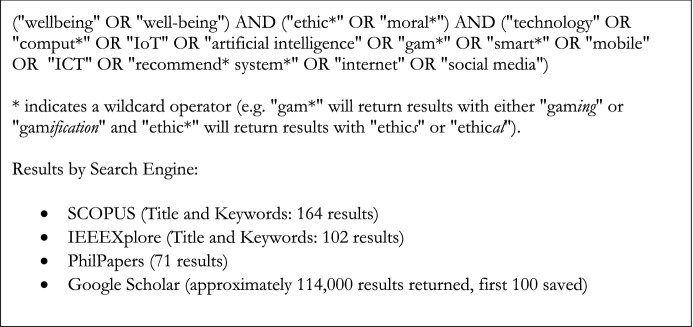
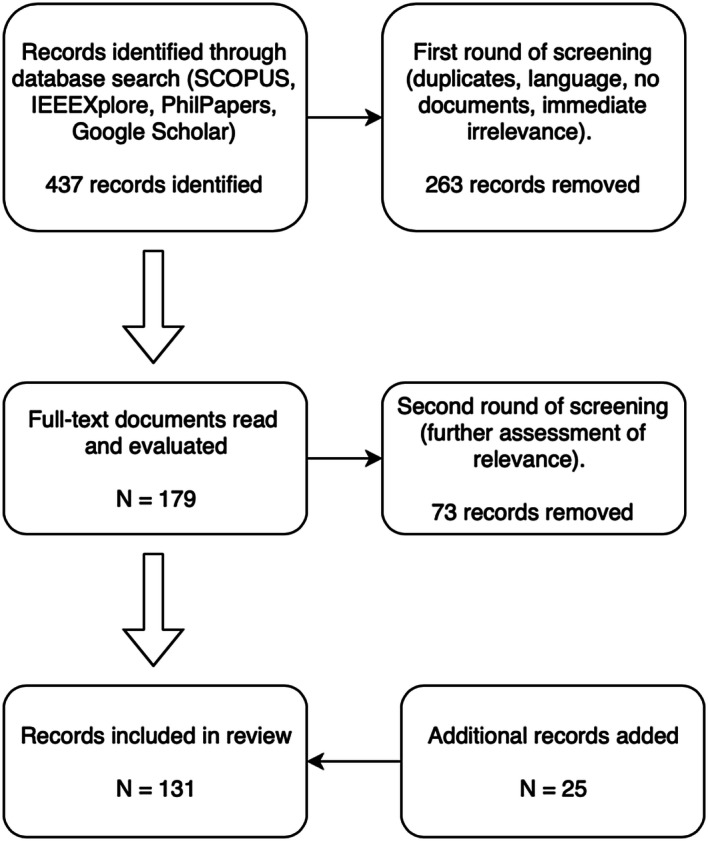
Verification
Claims the paper makes
The claims and statistics of this paper haven’t been checked yet.
Free: it reads the open-access text and checks the first 5 claims that cite a source we can check. Create a free account to check every claim.
Claims other papers make about this one
Each is checked against this paper’s own text: does it say what the citing paper says it does?
The check wasn’t confident either way, so it gives no verdict — never disputed.
In the citing paper
“On other occasions a false negative occurred when AI incorrectly fails to indicate the presence of a disease when in reality it is present.”
From Responsible AI for Digital Health: a Synthesis and a Research Agenda (2023) · cites this paper as Burr et al., 2020
Experimental — accuracy not yet measuredIn the citing paper
“decision making in health are untranslatable between different care settings, which challenges the scientific rigor of these methods (Burr et al., 2020).”
From Responsible AI for Digital Health: a Synthesis and a Research Agenda (2023) · cites this paper as Burr et al., 2020
Self-check
Percentages, sums and reported differences re-computed from the paper’s own numbers.
The self-check needs the paper’s full text.
Citations
Cites
Ryan, R. M., & Deci, E. L. (2000) · American Psychologist · doi:10.1037//0003-066x.55.1.68 · Cited by 54,599
Principles of Biomedical Ethics
(2012) · Thieves of Virtue · doi:10.7551/mitpress/9079.003.0009 · Cited by 13,453
The Need for a New Medical Model: A Challenge for Biomedicine
Engel, G. L. (1977) · Science · doi:10.1126/science.847460 · Cited by 12,887
Positive psychology: An introduction.
Seligman, M. E. P., & Csikszentmihalyi, M. (2000) · American Psychologist · doi:10.1037/0003-066x.55.1.5 · Cited by 11,351 · cited 2×
“Positive computing builds on research in positive psychology (Seligman & Csikszentmihalyi, 2000), by adopting an interdisciplinary perspective to study the individual and social factors that foster human flourishing in order to understand how to design digital interfaces that promote user s’…”
BackgroundThe future of employment: How susceptible are jobs to computerisation?
Frey, C. B., & Osborne, M. A. (2017) · Technological Forecasting and Social Change · doi:10.1016/j.techfore.2016.08.019 · Cited by 8,727 · cited 2×
“2018, Orben and Przybylski 2019) and a need for understanding the extent of disruption to labour markets and related well-being issues, which will be caused by increased automation (Frey and Osborne 2017).”
BackgroundThe global landscape of AI ethics guidelines
Jobin, A., Ienca, M., & Vayena, E. (2019) · Nature Machine Intelligence · doi:10.1038/s42256-019-0088-2 · Cited by 6,220 · cited 1×
“This type of analysis would be useful, especially given the recent focus on exploring the global landscape of AI ethics guidelines (e.g. Jobin, Ienca, and Vayena 2019; Floridi et al., 2018).”
Floridi, L., Cowls, J., Beltrametti, M., Chatila, R., Chazerand, P., Dignum, V., Luetge, C., Madelin, R., Pagallo, U., Rossi, F., et al. (2018) · Minds and Machines · doi:10.1007/s11023-018-9482-5 · Cited by 4,774 · cited 4×
“This type of analysis would be useful, especially given the recent focus on exploring the global landscape of AI ethics guidelines (e.g. Jobin, Ienca, and Vayena 2019; Floridi et al., 2018).”
BackgroundMethodInfluentialSelf-citationExperimental evidence of massive-scale emotional contagion through social networks
Kramer, A. D. I., Guillory, J. E., & Hancock, J. T. (2014) · Proceedings of the National Academy of Sciences · doi:10.1073/pnas.1320040111 · Cited by 3,687 · cited 1×
“, happiness), which in turn could be misused by social media companies experimenting with the manipulation of user’s emotional states (Kramer et al., 2014), or advertisers looking to target very specific audiences (Matz et al.”
BackgroundThe fourth industrial revolution
Schwab, K. (n.d.) · Cited by 2,997
Flourishing Across Europe: Application of a New Conceptual Framework for Defining Well-Being
Huppert, F. A., & So, T. T. C. (2013) · Social Indicators Research · doi:10.1007/s11205-011-9966-7 · Cited by 1,864 · cited 1×
“Many national governments have become interested in the sciences of well-being and their impact on policy (Huppert and So 2013; Stiglitz et al. 2008).”
Background
Research works printed but not linked: 4
- Human Genetics Commission. (2010). A common framework of principles for direct-to-consumer genetic testing services (pp. 1–15). London: HGC.
- IEEE. (2017). Ethically aligned design, v2. The IEEE initiative on ethics of autonomous and intelligent systems. https://ethicsinaction.ieee.org. Date Accessed November 22, 2018 [*].
- Sen A The idea of justice 2010 London Penguin
- Thieme, A., Wallace, J., Meyer, T. D., & Olivier, P. (2015). Designing for mental wellbeing. In Presented at the the 2015 British HCI conference (pp. 1–10). New York, NY: ACM Press.
Cited by
The ethics of AI in health care: A mapping review
Morley, J., Machado, C. C. V., Burr, C., Cowls, J., Joshi, I., Taddeo, M., & Floridi, L. (2020) · Social Science & Medicine · doi:10.1016/j.socscimed.2020.113172 · Cited by 1,105
Self-citationLeveraging Artificial Intelligence in Marketing for Social Good—An Ethical Perspective
Hermann, E. (2022) · Journal of Business Ethics · doi:10.1007/s10551-021-04843-y · Cited by 403
Responsible AI for Digital Health: a Synthesis and a Research Agenda
Trocin, C., Mikalef, P., Papamitsiou, Z., & Conboy, K. (2023) · Information Systems Frontiers · doi:10.1007/s10796-021-10146-4 · Cited by 205
Porat, T., Nyrup, R., Calvo, R. A., Paudyal, P., & Ford, E. (2020) · Frontiers in Public Health · doi:10.3389/fpubh.2020.573397 · Cited by 171
Supporting Human Autonomy in AI Systems: A Framework for Ethical Enquiry
Calvo, R. A., Peters, D., Vold, K., & Ryan, R. M. (2020) · Philosophical Studies Series · doi:10.1007/978-3-030-50585-1_2 · Cited by 148
Metadata
- Authors
- Burr, C., Taddeo, M., & Floridi, L.
- Affiliations
- University of Oxford (GB)
- Corresponding author
- Burr, Christopher
- Venue
- Science and Engineering Ethics
- Published
- 2020-01-13
- Volume
- 26
- Issue
- 4
- Pages
- 2313-2343
- ISSN
- 1353-3452 (ISSN-L)
- 1471-5546
- PMC
- PMC7417400
- OpenAlex
- W2959327140
- Semantic Scholar
- 4b5dbfb7a01d8a4b7d5b596c9b83e2743ad95f27
- Cited by
- 374
- References
- 142
- Citations by year
- 2026: 75 · 2025: 86 · 2024: 57 · 2023: 45 · 2022: 38 · 2021: 39 · 2020: 28
- FWCI
- 7.28
- Type
- journal article
- Language
- en
- Open access
- hybrid
- doi.org
- Licence
- cc-by
- creativecommons.org/licenses/by/4.0 (tdm)
- creativecommons.org/licenses/by/4.0 (vor)
- Locations
- Science and Engineering Ethics (publishedVersion, cc-by)
- SSRN Electronic Journal (acceptedVersion)
- PubMed Central (publishedVersion, cc-by)
- PubMed (publishedVersion)
- PhilPapers (PhilPapers Foundation) (submittedVersion)
- Funders
- Microsoft Research
- Topics
- Physical Sciences › Computer Science › Artificial Intelligence › Ethics and Social Impacts of AI
- Social Sciences › Communication › Digital Media and Philosophy
- Social Sciences › Arts and Humanities › Philosophy › Neuroethics, Human Enhancement, Biomedical Innovations
- Keywords
- digital well-being, digital ethics, positive computing, autonomy and self-determination, health care, governance, social development, media and entertainment industry
- MeSH terms
- Delivery of Health Care, Humans, Technology, Personal Autonomy
About these checks
Registry, retraction, Cites and statistics results are computed, not judged, with one exception: a printed reference that no index lists is read once by a model before it counts as a citation error. Claims are extracted by a model and kept only when their quote appears verbatim in the text; each cited source is then checked, with a model’s help, for whether it says what the claim relies on. Those verdicts can be wrong — read the claim’s quote and the cited source before relying on one.
Statistics and arithmetic are recomputed, not judged.
Confidence bands are shown only for fields calibrated on our annotated test set. None is calibrated yet, so no band is shown.
What counts as a claim ›How we measure confidence ›How we check this ›
Are you an author, or do you see a problem with this page? Request a review
Data sources
Bibliographic data: Semantic Scholar, OpenAlex, Crossref.
Contains information from the Semantic Scholar Academic Graph Datasets, made available under the ODC Attribution License (ODC-BY 1.0).
Semantic Scholar’s data is described in: Kinney, R., et al. (2023). The Semantic Scholar Open Data Platform. arXiv:2301.10140.
