

The Gut Microbiome Alterations and Inflammation-Driven Pathogenesis of Alzheimer’s Disease—a Critical Review
Open accessThe DOI matches its Crossref record; 105 of the 105 references it cites were found in a registry or an index.
Abstract
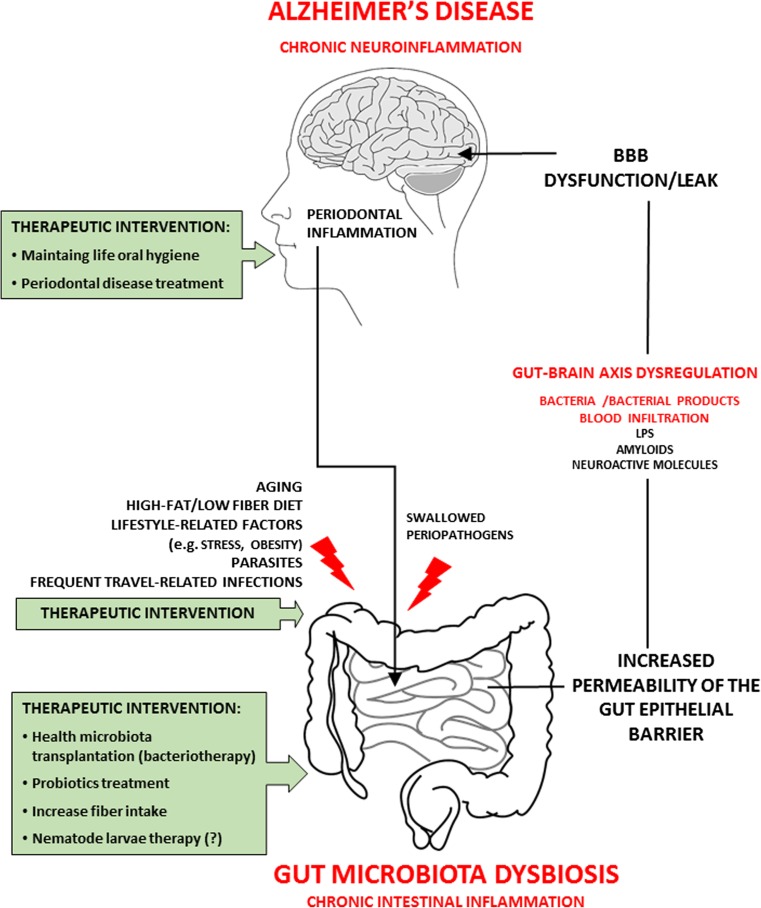
One of the most important scientific discoveries of recent years was the disclosure that the intestinal microflora takes part in bidirectional communication between the gut and the brain. Scientists suggest that human gut microflora may even act as the "second brain" and be responsible for neurodegenerative disorders like Alzheimer's disease (AD). Although human-associated microbial communities are generally stable, they can be altered by common human actions and experiences. Enteric bacteria, commensal, and pathogenic microorganisms, may have a major impact on immune system, brain development, and behavior, as they are able to produce several neurotransmitters and neuromodulators like serotonin, kynurenine, catecholamine, etc., as well as amyloids. However, brain destructive mechanisms, that can lead to dementia and AD, start with the intestinal microbiome dysbiosis, development of local and systemic inflammation, and dysregulation of the gut-brain axis. Increased permeability of the gut epithelial barrier results in invasion of different bacteria, viruses, and their neuroactive products that support neuroinflammatory reactions in the brain. It seems that, inflammatory-infectious hypothesis of AD, with the great role of the gut microbiome, starts to gently push into the shadow the amyloid cascade hypothesis that has dominated for decades. It is strongly postulated that AD may begin in the gut, and is closely related to the imbalance of gut microbiota. This is promising area for therapeutic intervention. Modulation of gut microbiota through personalized diet or beneficial microbiota intervention, alter microbial partners and their products including amyloid protein, will probably become a new treatment for AD.
Overview
The claims and statistics of this paper haven’t been checked yet.
Free: it reads the open-access text and checks the first 5 claims that cite a source we can check. Create a free account to check every claim.
Integrity signals
Registry
Cites
Statistics
Figures
Verification
Claims the paper makes
The claims and statistics of this paper haven’t been checked yet.
Free: it reads the open-access text and checks the first 5 claims that cite a source we can check. Create a free account to check every claim.
Claims other papers make about this one
Each is checked against this paper’s own text: does it say what the citing paper says it does?
The cited source says what the claim attributes to it.
In the citing paper
“The onset of systemic inflammation may allow inflammatory mediators to cross over the BBB and impact microglia, further exacerbating neuroinflammation.213,217”
From Recent advances in Alzheimer's disease: Mechanisms, clinical trials and new drug development strategies. (2024) · cites this paper as [217]
Self-check
Percentages, sums and reported differences re-computed from the paper’s own numbers.
The self-check needs the paper’s full text.
Citations
Cites
An obesity-associated gut microbiome with increased capacity for energy harvest
Turnbaugh, P. J., Ley, R. E., Mahowald, M. A., Magrini, V., Mardis, E. R., & Gordon, J. I. (2006) · Nature · doi:10.1038/nature05414 · Cited by 12,444 · cited 1×
“In turn, those microbial disturbances may increase pathogen susceptibility [29], obesity [28, 36], and auto-inflammatory disease [30], diseases which are becoming more frequent in the developed world.”
BackgroundDiet rapidly and reproducibly alters the human gut microbiome
David, L. A., Maurice, C. F., Carmody, R. N., Gootenberg, D. B., Button, J. E., Wolfe, B. E., Ling, A. V., Devlin, A. S., Varma, Y., Fischbach, M. A., et al. (2014) · Nature · doi:10.1038/nature12820 · Cited by 10,100 · cited 1×
“biotics [33–35], bowel surgery [37], and short-term diet shifts [38, 39].”
BackgroundHuman gut microbes associated with obesity
Ley, R. E., Turnbaugh, P. J., Klein, S., & Gordon, J. I. (2006) · Nature · doi:10.1038/4441022a · Cited by 8,785 · cited 1×
“In turn, those microbial disturbances may increase pathogen susceptibility [29], obesity [28, 36], and auto-inflammatory disease [30], diseases which are becoming more frequent in the developed world.”
BackgroundLinking long-term dietary patterns with gut microbial enterotypes
Wu, G. D., Chen, J., Hoffmann, C., Bittinger, K., Chen, Y.-Y., Keilbaugh, S. A., Bewtra, M., Knights, D., Walters, W. A., Knight, R., et al. (2011) · Science · doi:10.1126/science.1208344 · Cited by 6,513 · cited 1×
“biotics [33–35], bowel surgery [37], and short-term diet shifts [38, 39].”
BackgroundNeuroinflammation in Alzheimer's disease
Heneka, M. T., Carson, M. J., Khoury, J. E., Landreth, G. E., Brosseron, F., Feinstein, D. L., Jacobs, A. H., Wyss-Coray, T., Vitorica, J., Ransohoff, R. M., et al. (2015) · The Lancet Neurology · doi:10.1016/s1474-4422(15)70016-5 · Cited by 6,226 · cited 1×
“response that supports the neurotoxic processes, which cause brain injury and neuronal death [5, 6].”
BackgroundIntroduction to the human gut microbiota
Thursby, E., & Juge, N. (2017) · Biochemical Journal · doi:10.1042/bcj20160510 · Cited by 3,600 · cited 7×
“The reason is that the GI represents one of the largest interfaces (250–400 m(2)) between the host, environmental factors, and antigens in the human body [23].”
BackgroundInfluentialBacterial Community Variation in Human Body Habitats Across Space and Time
Costello, E. K., Lauber, C. L., Hamady, M., Fierer, N., Gordon, J. I., & Knight, R. (2009) · Science · doi:10.1126/science.1177486 · Cited by 3,231 · cited 1×
“Hence, many microbiome time series have featured limited longitudinal host metadata [32, 42], making it difficult to link microbial dynamics to host behavior.”
BackgroundThe Effect of Diet on the Human Gut Microbiome: A Metagenomic Analysis in Humanized Gnotobiotic Mice
Turnbaugh, P. J., Ridaura, V. K., Faith, J. J., Rey, F. E., Knight, R., & Gordon, J. I. (2009) · Science Translational Medicine · doi:10.1126/scitranslmed.3000322 · Cited by 3,058 · cited 1×
“However, studies across mice and humans suggest that common aspects of the modern Western lifestyle, including antibiotics [26, 33–35] and high-fat diets [27], can alter commensal microbial communities.”
BackgroundPeriodontitis: from microbial immune subversion to systemic inflammation
Hajishengallis, G. (2015) · Nature Reviews Immunology · doi:10.1038/nri3785 · Cited by 3,046 · cited 6×
“Travel from the developed to the developing world in one subject led to a nearly twofold increase in the Bacteroidetes to Firmicutes ratio, which reversed upon return.”
BackgroundInfluentialSuccession of microbial consortia in the developing infant gut microbiome
Koenig, J. E., Spor, A., Scalfone, N., Fricker, A. D., Stombaugh, J., Knight, R., Angenent, L. T., & Ley, R. E. (2011) · Proceedings of the National Academy of Sciences · doi:10.1073/pnas.1000081107 · Cited by 2,540
Research works printed but not linked: 1
- Hill JM, Bhattacharjee S, Pogue AI, Lukiw WJ (2014) The gas- trointestinal tract microbiome and potential link to Alzheimer's disease. Front Neurol 5:43
Cited by
Items 301–400 of 600
Potential Benefits of Anthocyanins in Chronic Disorders of the Central Nervous System
Panchal, S. K., & Brown, L. (2022) · Molecules · doi:10.3390/molecules28010080 · Cited by 19
Dymek, A., Zielińska, M., Englert-Bator, A., Dereń, K., & Łuszczki, E. (2025) · Nutrients · doi:10.3390/nu17172835 · Cited by 19
“A weakened intestinal barrier facilitates the translocation of pathogenic bacteria and their metabolites, including LPS, into lymph nodes and the bloodstream, thereby amplifying immune responses [116,122].”
Xue, G., Zheng, Z., Liang, X., Zheng, Y., & Wu, H. (2023) · Microbiology Spectrum · doi:10.1128/spectrum.00409-23 · Cited by 17
“The imbalance of gut microbiota could lead to disorders of the intestinal barrier and bacterial translocation, triggering a persistent state of systemic inflammation and resulting in the onset and progression of the disease (12).”
BackgroundRahman, G., Morton, J. T., Martino, C., Sepich‐Poore, G. D., Allaband, C., Guccione, C., Chen, Y., Hakim, D., Estaki, M., & Knight, R. D. (2023) · bioRxiv (Cold Spring Harbor Laboratory) · doi:10.1101/2023.01.30.526328 · Cited by 20
Bidirectional communication between the gut microbiota and the central nervous system
Liu, Y., Tang, T., Cai, H., & Liu, Z. (2025) · Neural Regeneration Research · doi:10.4103/nrr.nrr-d-25-00434 · Cited by 17
“This condition typically results in respiratory failure and death within 2 to 5 years after onset (Gonzalez-Bermejo et al., 2016; Goutman et al., 2022).”
Raj, K., Singh, S., Chib, S., & Mallan, S. (2022) · Current Pharmaceutical Design · doi:10.2174/1381612828666221003112300 · Cited by 17
Pinchaud, K., Hafeez, Z., Auger, S., Chatel, J., Chadi, S., Langella, P., Paoli, J., Dary, A., Maguin‐Gaté, K., & Olivier, J. L. (2022) · Nutrients · doi:10.3390/nu14245338 · Cited by 18
Andriolo, I. R. L., Longo, B. C., de Melo, D. M., de Souza, M. M., Prediger, R. D., & da Silva, L. M. (2024) · CNS & Neurological Disorders - Drug Targets · doi:10.2174/0118715273289138240306050532 · Cited by 20
A unified model of dementias and age‐related neurodegeneration
Fossel, M. (2020) · Alzheimer s & Dementia · doi:10.1002/alz.12012 · Cited by 17
Morishima, S., Oda, N., Ikeda, H., Segawa, T., Oda, M., Tsukahara, T., Kawase, Y., Takagi, T., Naito, Y., Fujibayashi, M., et al. (2021) · Microorganisms · doi:10.3390/microorganisms9081687 · Cited by 17
Importance of crosstalk between the microbiota and the neuroimmune system for tissue homeostasis
Li, K., Ly, K., Mehta, S. Y., & Braithwaite, A. W. (2022) · Clinical & Translational Immunology · doi:10.1002/cti2.1394 · Cited by 17
Revisiting the Relationship Between Alzheimer’s Disease and Cancer With a circRNA Perspective
Chen, D., Hao, S., & Xu, J. (2021) · Frontiers in Cell and Developmental Biology · doi:10.3389/fcell.2021.647197 · Cited by 17
A MicroRNA Gene Panel Predicts the Vaginal Microbiota Composition
Cheng, L., Kaźmierczak, D., Norenhag, J., Hamsten, M., Fransson, E., Schuppe‐Koistinen, I., Olovsson, M., Engstrand, L. G., Hydbring, P., & Du, J. (2021) · mSystems · doi:10.1128/msystems.00175-21 · Cited by 15
Drug-Resistant Epilepsy and Gut-Brain Axis: an Overview of a New Strategy for Treatment
Chen, S., Jiao, Y., Han, C. Q., Li, Y., Zou, W., & Liu, J. (2023) · Molecular Neurobiology · doi:10.1007/s12035-023-03757-2 · Cited by 17
“Gut-associated lymphoid tissue (GALT) is the largest and most important immune organ in the human, including about 70% of immune cells in the whole body [84].”
Zhang, L., Jiang, Z., Hu, S., Ni, H., Zhao, Y., Tan, X., Yi, L., Na, R., Li, Y., Du, Q., et al. (2024) · Inflammation · doi:10.1007/s10753-024-02133-z · Cited by 16
Biological activities of astaxanthin in the treatment of neurodegenerative diseases
Lotfi, A., Abroodi, Z., & Khazaei, M. (2024) · Neurodegenerative Disease Management · doi:10.1080/17582024.2024.2433932 · Cited by 16
Kuziak, A., Heczko, P. B., Pietrzyk, A., & Strus, M. (2025) · Microorganisms · doi:10.3390/microorganisms13010122 · Cited by 15
“Babies born vaginally are colonized mainly by Lactobacillus and Bifidobacterium species (their mother’s vaginal microflora [100,101].”
The role of the gut microbiota in the pathophysiology of mental and neurological disorders
Pusceddu, M. M., & Bas-Prior, J. M. D. (2020) · Psychiatric Genetics · doi:10.1097/ypg.0000000000000255 · Cited by 15
“More recently, the development of strategies preserving a healthy microbiota has emerged as a novel approach to prevent AD (Cerovic et al., 2019; Sochocka et al., 2019).”
BackgroundLindblom, N., Lindquist, L., Westman, J., Åström, M., Bullock, R. A., Hendrix, S. B., & Wahlund, L. (2021) · Journal of Alzheimer s Disease Reports · doi:10.3233/adr-210301 · Cited by 16
“Further, periodontal bacterial infection [30] and gut microbiota have been implicated in AD [31].”
BackgroundProbiotic supplement as a promising strategy in early tau pathology prevention: Focusing on GSK-3β?
Flynn, C. M., & Yuan, Q. (2023) · Frontiers in Neuroscience · doi:10.3389/fnins.2023.1159314 · Cited by 15
“observed in AD patients (Vogt et al., 2017; Sochocka et al., 2019) and AD rodent models (Nimgampalle and Kuna, 2017; Lee et al.”
Jin, Y., Liang, S., Qiu, J., Jin, J., Zhou, Y., Huang, Y., He, C., Yu, W., Deng, S., Cheng, S., et al. (2023) · Frontiers in Cellular and Infection Microbiology · doi:10.3389/fcimb.2023.1323674 · Cited by 15
“In clinical settings, AD patients have been found to have increased levels of Bacteroides and decreased levels of Firmicutes (Vogt et al., 2017; Sochocka et al., 2019).”
Sip, S., Rosiak, N., Sip, A., Żarowski, M., Hojan, K., & Cielecka‐Piontek, J. (2023) · Antioxidants · doi:10.3390/antiox13010024 · Cited by 18
Gut Microbiota and Cognitive Function Among Women Living with HIV
Hua, S., Peters, B. A., Lee, S. O., Fitzgerald, K. C., Wang, Z., Sollecito, C. C., Grassi, E., Wiek, F., Peter, L. S., DʼSouza, G., et al. (2023) · Journal of Alzheimer s Disease · doi:10.3233/jad-230117 · Cited by 15
Ren, T., Chen, Z. B., Xie, J., Tan, S., & Zhu, Y. (2024) · Journal of Functional Foods · doi:10.1016/j.jff.2024.106046 · Cited by 14
Neuroprotective Effects of Probiotic-Supplemented Diet on Cognitive Behavior of 3xTg-AD Mice
Tan, C., Liu, Y., Zhang, H., Di, C., Xu, D., Liang, C., Zhang, N., Han, B., & Lang, W. (2022) · Journal of Healthcare Engineering · doi:10.1155/2022/4602428 · Cited by 15
RetractedWang, J., Zhu, X., Li, Y., Zhang, P., Wang, T., & Li, M. (2022) · Evidence-based Complementary and Alternative Medicine · doi:10.1155/2022/6091671 · Cited by 15
The potential mechanisms of Macrocystis pyrifera polysaccharides mitigating type 2 diabetes in rats
Jia, R., Li, Z., Lin, L., Luo, D., Chen, C., & Zhao, M. (2022) · Food & Function · doi:10.1039/d2fo01083f · Cited by 15
Sánchez-de-Lara-Sánchez, S., & Sánchez‐Pérez, A. M. (2022) · Journal of Alzheimer s Disease · doi:10.3233/jad-220615 · Cited by 15
Linking Puberty and the Gut Microbiome to the Pathogenesis of Neurodegenerative Disorders
Esposito, P., & Ismail, N. (2022) · Microorganisms · doi:10.3390/microorganisms10112163 · Cited by 14
Tun, X., Wang, E. J., Gao, Z., Lundberg, K. C., Xu, R., & Hu, D. (2023) · International Journal of Molecular Sciences · doi:10.3390/ijms24065697 · Cited by 14
Correlation between APOE4 gene and gut microbiota in Alzheimer’s disease
Chen, X.-X., Zeng, M.-X., Cai, D., Zhou, H.-H., Wang, Y., & Liu, Z. (2023) · Beneficial Microbes · doi:10.1163/18762891-20220116 · Cited by 15
Xuan, C. L., Linh, N. V., Wannavijit, S., Outama, P., Fontana, C. M., Meepowpan, P., & Doan, H. V. (2024) · Aquaculture · doi:10.1016/j.aquaculture.2024.740943 · Cited by 15
Zhang, J., Zhao, X., Xu, H.-L., Liu, X., He, Y., Tan, X., & Gu, J. (2024) · Biochemical and Biophysical Research Communications · doi:10.1016/j.bbrc.2024.150274 · Cited by 14
Liu, M., Li, D., Hong, X., & Sun, Z. (2022) · Frontiers in Neurology · doi:10.3389/fneur.2022.813266 · Cited by 17
The Microbiome–Neurodegeneration Interface: Mechanisms, Evidence, and Future Directions
Böckels, L., Alexa, D., Antal, D. C., Gațcan, C., Alecu, C., Kacani, K., Cretu, R. A., Piseru, E.-A., Bîlcu, R. V., & Cuciureanu, D. I. (2026) · Cells · doi:10.3390/cells15020135 · Cited by 13
Shi, M., Li, C., Tian, X., Chu, F., & Zhu, J. (2021) · Frontiers in Aging Neuroscience · doi:10.3389/fnagi.2021.685863 · Cited by 13
Bibliometric Visualization Analysis of Microbiome-Gut-Brain Axis from 2004 to 2020
Wang, H., Long, T., You, J., Li, P., & Xu, Q. (2022) · Medical Science Monitor · doi:10.12659/msm.936037 · Cited by 13
Cheng, F., Li, D., Ma, X., Wang, Y., Lu, L., Hu, B., & Cui, S. (2023) · International Immunopharmacology · doi:10.1016/j.intimp.2023.111235 · Cited by 13
Dunham, S. J. B., Avelar‐Barragan, J., Rothman, J. A., Adams, E. D., Faraci, G., Forner, S., Kawauchi, S., Tenner, A. J., Green, K. N., LaFerla, F. M., et al. (2024) · Alzheimer s & Dementia · doi:10.1002/alz.13794 · Cited by 13
“8 The relationship between gut microbiome composition and AD progression requires us to consider the microbial perspective when using murine models for AD research.”
BackgroundThe Gut Microbiota-Brain Axis: A New Frontier in Alzheimer's Disease Pathology
Dhanawat, M., Garima, G., Wilson, K., Gupta, S., Gupta, N., & Sardana, S. (2024) · CNS & Neurological Disorders - Drug Targets · doi:10.2174/0118715273302508240613114103 · Cited by 13
Current and Near-Future Treatment of Alzheimer’s Disease
Gąsiorowski, K., Brokos, B., Sochocka, M., Ochnik, M., Chojdak-Łukasiewicz, J., Zajączkowska, K., Fułek, M., & Leszek, J. (2021) · Current Neuropharmacology · doi:10.2174/1570159x19666211202124239 · Cited by 13
“We should underline that, with age, microbiota, with bacteria being its major component, can induce autoimmune and widespread neuroinflammation disorders such as AD [100].”
Self-citationGao, C.-Y., Pan, Y., Su, W.-S., Wu, C.-Y., Chang, T.-Y., & Yang, F. (2024) · Neurotherapeutics · doi:10.1016/j.neurot.2024.e00494 · Cited by 13
Unlocking the neuroprotective secrets of natural products: a focus on the gut-brain axis
Yang, X., Hu, D., Cheng, R., Bao, Q., Jiang, H., Zhao, B., & Zhang, Y. (2025) · Phytochemistry Reviews · doi:10.1007/s11101-025-10081-1 · Cited by 16
“As a key to the GBA, the microbiota is able to secrete a variety of metabolites involved in human growth, development, and pathological processes, including SCFA, bile acids, and neurotransmitters (Sochocka et al. 2019).”
Bacterial membrane vesicles restore gut anaerobiosis
Pitt, N., Morrissette, M., Gates, M. F., Bargabos, R., Krumpoch, M. T., Hawkins, B. A., & Lewis, K. (2025) · npj Biofilms and Microbiomes · doi:10.1038/s41522-025-00676-z · Cited by 14
Lv, X., Ye, T., Liao, X., Li, Q., Fang, Z., Lin, X., Chen, M., Dai, C., Zhan, L., Zhuo, L., et al. (2025) · Gut Microbes · doi:10.1080/19490976.2025.2605768 · Cited by 12
“9,10 Supporting this connection, fecal microbiota transplantation from AD transgenic mice to wild-type control mice resulted in AD-associated tau phosphorylation and cognitive impairment; 11 conversely, transplantation of healthy microbiota could reduce AD pathogenesis.”
Xiu, R., Sun, Q., Li, B., & Wang, Y. (2023) · Nutrients · doi:10.3390/nu15143203 · Cited by 15
“Furthermore, the dysbiosis, or imbalance, of the gut microbiota is suspected to affect neuroinflammation and neurodegeneration, two key components of AD’s pathogenesis [10,11].”
BackgroundSystematic Review on the Link between Sleep Bruxism and Systemic Chronic Inflammation
Fułek, M., Wieckiewicz, M. A., Szymańska–Chabowska, A., Michałek-Zrąbkowska, M., Fułek, K., Lachowicz, G., Poręba, R., Mazur, G. J., & Martynowicz, H. (2023) · Brain Sciences · doi:10.3390/brainsci13071104 · Cited by 15
Yang, K., Zhang, Z., Zhang, Q., Zhang, H., Liu, X., Jia, Z., Ying, Z., & Liu, W. (2024) · Journal of Periodontal Research · doi:10.1111/jre.13220 · Cited by 15
Ma, B.-Q., Jia, J., Wang, H., Li, S., Yang, Z.-J., Wang, X., & Yan, X.-S. (2024) · Journal of Toxicology and Environmental Health · doi:10.1080/15287394.2024.2338914 · Cited by 13
“…amyloids and lipopolysaccharides (LPS), deposition of Aβ in the brain, and production of proinflammatory cytokines classical features of neuroinflammation in AD (Jiang et al. 2017; Mahmoudian-Dehkordi et al. 2018; Shabbir et al. 2021; Sochocka et al. 2018; Solanki, Karande, and Ranganathan 2023).”
BackgroundGuidolin, D., Anderlini, D., Maura, G., Marcoli, M., Cortelli, P., Buonaura, G. C., Woods, A. S., & Agnati, L. F. (2019) · International Journal of Environmental Research and Public Health · doi:10.3390/ijerph16173136 · Cited by 12
Savignac, C., Villeneuve, S., Badhwar, A., Saltoun, K., Shafighi, K., Zajner, C., Sharma, V., Taliun, S. A. G., Farhan, S. M. K., Poirier, J., et al. (2022) · PLoS Biology · doi:10.1371/journal.pbio.3001863 · Cited by 12
“Cardiovascular risk factors that are exacerbated in females following menopause, such as trunk fat mass, have been associated with chronic neuroinflammation and microstructural alteration of the fornix [58,59]—the main output tract from the HC that carries direct neural signals toward partner regions of the midline DN…”
BackgroundWaller, E. S., Yardeny, B. J., Fong, W. Y., Gan, X. Y., Jimenez, S. V., Pan, Y., Abasszade, J. H., & Nicolazzo, J. A. (2022) · Advanced Drug Delivery Reviews · doi:10.1016/j.addr.2022.114282 · Cited by 12
Jahani‐Sherafat, S., Taghavi, H., Asri, N., Rezaei–Tavirani, M., Razzaghi, Z., & Rostami‐Nejad, M. (2023) · Gastroenterology and hepatology from bed to bench. · doi:10.22037/ghfbb.v16i4.2687 · Cited by 11
Decoding TGR5: A comprehensive review of its impact on cerebral diseases
Zhang, Z., Zhang, Y., Peng, H., Yu, Q., Kang, X., Liu, Y., Zheng, Y., Cheng, F., Wang, X., & Li, F. (2025) · Pharmacological Research · doi:10.1016/j.phrs.2025.107671 · Cited by 12
Hammed, O. S., Afolabi, O. A., Ajike, R. A., Hezekiah, O. S., Alabi, B. A., Ajao, D., Saka, W. A., Oyekunle, O. S., & Olusola, B. O. (2025) · Frontiers in Neuroscience · doi:10.3389/fnins.2025.1597170 · Cited by 14
Meier, M. J., Nguyen, K. C., Crosthwait, J., Kawata, A., Rigden, M. D., Leingartner, K., Wong, A., Holloway, A. C., Shwed, P. S., Beaudette, L. A., et al. (2021) · NanoImpact · doi:10.1016/j.impact.2021.100343 · Cited by 11
Benmelouka, A. Y., Ouerdane, Y., Outani, O., Alnasser, Y., Alghamdi, B. S. A., Perveen, A., Ashraf, G. M., & Ebada, M. A. (2022) · Current Alzheimer Research · doi:10.2174/1567205019666220418151914 · Cited by 11
Gut Microbes Regulate Innate Immunity and Epilepsy
Zhang, L., Li, S., Tai, Z., Yu, C., & Xu, Z. (2022) · Frontiers in Neuroscience · doi:10.3389/fnins.2022.870197 · Cited by 13
Khezri, M. R., & Ghasemnejad‐Berenji, M. (2023) · npj Aging · doi:10.1038/s41514-023-00104-6 · Cited by 11
Intestinal barrier damage caused by addictive substance use disorder
Gao, Y., Kong, D., Sun, J., Ma, Z.-X., Wang, G.-Q., Ma, X., Sun, L., Luo, H.-Y., Xu, Y., & Wang, K. (2025) · European journal of medical research · doi:10.1186/s40001-025-02446-1 · Cited by 12
“Increased permeability of the intestinal barrier leads to the invasion of different bacteria, viruses, and their neuroactive products, which support the neuroinflammatory response in the brain [70].”
Current perspectives and applications in plant probiotics
Walker, R. M., Pille, C. O., Gupta, S., Schillaci, M., & Roessner, U. (2020) · Microbiology Australia · doi:10.1071/ma20024 · Cited by 11
“Indirectly, microorganisms improve soil nutritional status and health through variousmechanisms including: (1) increased phosphate availability through the solubilisation of occluded soil phosphates; (2) fixation of atmospheric nitrogen into bioavailable forms by free-living diazotrophs; (3) increasing the organic con…”
BackgroundMethyl Diet Enhanced Sepsis-Induced Mortality Through Altering Gut Microbiota
Yu, C. J., Zhu, X., Zheng, C., Luo, Y., Wang, F., Gao, Y., Wu, H., Sun, X., & Kong, X. (2021) · Journal of Inflammation Research · doi:10.2147/jir.s305202 · Cited by 13
Linking gut microbiota dysbiosis to molecular pathways in Alzheimer’s disease
Asadifard, E., Hokmabadi, M., Hashemi, M., & Bereimipour, A. (2024) · Brain Research · doi:10.1016/j.brainres.2024.149242 · Cited by 10
Hochuli, N., Kadyan, S., Park, G., Patoine, C., & Nagpal, R. (2025) · Molecular Neurobiology · doi:10.1007/s12035-025-04960-z · Cited by 11
“An important player within the GBA is the gut microbiome—the collective consortium of trillions of commensal bacterial, fungal, protozoal, and viral species that inhabit a host’s gut [11].”
Wang, P., Zhang, W., Feng, Z., Zhang, J., Sun, Y. J., & Zhang, W. (2021) · Molecular Medicine Reports · doi:10.3892/mmr.2021.12165 · Cited by 11
“contribute to inhibiting the proliferation of neural stem cells in the hippocampus of patients with Alzheimer's disease (46).”
BackgroundCrosstalk between peripheral immunity and central nervous system in Alzheimer’s disease
Yang, H.-C., Qin, Q., Wang, M., Yin, Y., Li, R., & Tang, Y. (2023) · Cellular Immunology · doi:10.1016/j.cellimm.2023.104743 · Cited by 12
Sarcopenic obesity and brain health: A critical appraisal of the current evidence
Booranasuksakul, U., Guan, Z., Macdonald, I. A., Tsintzas, K., Stephan, B. C. M., & Siervo, M. (2025) · Nutrition Bulletin · doi:10.1111/nbu.12725 · Cited by 10
Recent Advancements in Strategies for Abnormal Protein Clearance in Alzheimer's Disease
Zhuang, J., Gao, J., Yin, Y., Gong, B., Ji, W., Chen, X., Li, P., Cheng, W., Zhao, Y., & He, B. (2022) · Mini-Reviews in Medicinal Chemistry · doi:10.2174/1389557522666220214092824 · Cited by 11
Kim, S. Y., Park, E., Lim, W., Kim, S. I., Jeon, S. W., Chang, Y., Ryu, S., Kim, H., & Kim, H. (2022) · Psychosomatic Medicine · doi:10.1097/psy.0000000000001111 · Cited by 10
“These modifications are anticipated to activate innate resistance receptors and cause neuroinflammation through bacterial adhesion, invasion, and immune evasion (54).”
Backgroundde Oliveira, B. S. A., Milanezi, D. S., Gonzaga, P. D. V., Detoni, F. R., & Soriano, R. N. (2022) · Heliyon · doi:10.1016/j.heliyon.2022.e12172 · Cited by 11
“, 2014) –, seem to cause structural changes in the BBB, compromising its permeability (Figure 1) (Jiang et al., 2017; Sochocka et al., 2019).”
BackgroundInfluentialResolving a paradox: antidepressants, neuroinflammation, and neurodegeneration
Rajkumar, R. P. (2024) · Exploration of Neuroprotective Therapy · doi:10.37349/ent.2024.00068 · Cited by 9
Katsigianni, S., & Koutsouraki, E. (2026) · Molecular Neurobiology · doi:10.1007/s12035-026-05914-9 · Cited by 9
“Given their roles in maintaining epithelial and BBB integrity, reduced SCFA levels may contribute to barrier dysfunction and systemic inflammation [93, 144–147].”
Mechanisms of Acupuncture in Improving Alzheimer’s Disease Caused by Mitochondrial Damage
Jiang, Y.-H., He, J., Li, R., Chen, Z.-H., & Jia, B. (2022) · Chinese Journal of Integrative Medicine · doi:10.1007/s11655-022-3511-6 · Cited by 10
Ternák, G., Németh, M., Rozanovic, M., & Bogár, L. (2022) · Journal of Alzheimer s Disease · doi:10.3233/jad-220018 · Cited by 9
Effects of Animal-Assisted Therapy (AAT) in Alzheimer’s Disease: A Case Study
Gregorini, A., Canio, A. D., Palmucci, E., Tomasetti, M., Rocchi, M., & Colomba, M. (2022) · Healthcare · doi:10.3390/healthcare10030567 · Cited by 10
Lu, Y., Li, J., & Hu, T. (2022) · Computational and Mathematical Methods in Medicine · doi:10.1155/2022/2701748 · Cited by 10
RetractedTian, Y., Gao, G., & Dai, J. (2022) · Journal of Chemical Neuroanatomy · doi:10.1016/j.jchemneu.2022.102105 · Cited by 9
Thymosin beta 4 prevents systemic lipopolysaccharide-induced plaque load in middle-age APP/PS1 mice
Othman, O. A., Marshall, H. J., Masterson, M., Winlow, P., Gibson, G., Ding, Y., & Pardon, M. (2023) · International Immunopharmacology · doi:10.1016/j.intimp.2023.109951 · Cited by 10
Zhang, T., Jia, C., Ran, L., Shi, J., Amarmend, T., & Li, H. (2024) · CNS Neuroscience & Therapeutics · doi:10.1111/cns.14620 · Cited by 9
“13,14 17 Some natural products, such as flavonoids, have shown a beneficial alle-viative effect on disease progression.”
BackgroundMaia, J. M., Solon, I. G., Soriano, R. N., & Branco, L. G. S. (2024) · Brain Behavior and Immunity Integrative · doi:10.1016/j.bbii.2024.100097 · Cited by 15
Jang, Y. J., Kim, M., Lee, S.-J., Lim, S., & Kim, D. K. (2025) · Medicina · doi:10.3390/medicina61010108 · Cited by 9
“Potential research might involve an investigation of the gut–brain axis, as recent studies have highlighted the influence of the gut microbiome on oxidative stress and inflammatory pathways [40–42].”
Microbiote intestinal et santé : une nécessaire refonte de notre système agri-alimentaire
Duru, M. (2021) · Cahiers de Nutrition et de Diététique · doi:10.1016/j.cnd.2021.10.006 · Cited by 13
Application of Caenorhabditis elegans in the evaluation of food nutrition: A review
Li, Q., Xiao, M., Li, N., Cai, W., Zhao, C., Liu, B., & Zeng, F. (2023) · eFood · doi:10.1002/efd2.68 · Cited by 10
Al‐Malki, E. S. (2025) · Beni-Suef University Journal of Basic and Applied Sciences · doi:10.1186/s43088-025-00597-y · Cited by 9
“The results of clinical trials shows a significant decrease in both the intensity and duration of infections, indicating that the manipulation of the microbiome could be a successful approach for treating parasitic diseases in people [74].”
Mana, L., Chen, F., & Yuan, X. (2025) · Frontiers in Pharmacology · doi:10.3389/fphar.2025.1483883 · Cited by 8
Gut brain axis and gut microbiome in glioblastoma. Associations, treatment and outcomes
Ganesh, N., Saleem, A., Roja, B., & Suresh, P. K. (2025) · Medicine in Microecology · doi:10.1016/j.medmic.2025.100131 · Cited by 8
Qian, Q., & Luo, W. (2024) · Medicine · doi:10.1097/md.0000000000037103 · Cited by 8
The hidden link: How oral and respiratory microbiomes affect multiple sclerosis
Jameie, M., Ahli, B., Ghadir, S., Azami, M., Amanollahi, M., Ebadi, R., Rafati, A., & Moghadasi, A. N. (2024) · Multiple Sclerosis and Related Disorders · doi:10.1016/j.msard.2024.105742 · Cited by 8
Adaptive immunity in the pathogenesis and treatments of Parkinson’s disease
Du, X., Akter, S., Oludipe, D. B., Sil, S., Zhang, C., Gendelman, H. E., & Mosley, R. L. (2025) · NeuroImmune Pharmacology and Therapeutics · doi:10.1515/nipt-2025-0008 · Cited by 8
“However, disruption of the microbiome composition results in altered metabolic activities, gut barrier dysfunction, and compromised gut homeostasis [53], contributing to aberrant inflam-matory responses that may accelerate neurodegeneration [54, 55].”
Direct Modulation of the Gut Microbiota as a Therapeutic Approach for Alzheimer’s Disease
Wang, Y., & Dykes, G. A. (2021) · CNS & Neurological Disorders - Drug Targets · doi:10.2174/1871527320666210806165751 · Cited by 8
Tripathi, S. K., Kesharwani, K., Saxena, D., Singh, R. S., Kautu, A., Sharma, S., Pandey, A., Chopra, S., & Joshi, K. B. (2023) · ChemMedChem · doi:10.1002/cmdc.202200654 · Cited by 8
Wiatrak, B., Krzyżak, E., Szczęśniak-Sięga, B. M., Szandruk-Bender, M., Szeląg, A., & Nowak, B. (2022) · Pharmacological Reports · doi:10.1007/s43440-022-00414-8 · Cited by 9
“To further denote the amyloid as the main AD triggering agent, no correlation has been found between Aβ burden and clinical manifestation of the disease [1].”
BackgroundInfluentialA New Insight on Feasibility of Pre-, Pro-, and Synbiotics-based Therapies in Alzheimer’s Disease
Talebi, M., Ebrahimi, V., Rasouli, A., Farjami, A., Soofiyani, S. R., Soleimanian, A., Forouhandeh, H., & Tarhriz, V. (2022) · Journal of Reports in Pharmaceutical Sciences · doi:10.4103/jrptps.jrptps_170_21 · Cited by 8
Zhou, R., Wu, Q., Qian, H., Wang, L., Liu, G., Zhang, B., Wu, W., & Zhang, S. (2025) · Reviews in Cardiovascular Medicine · doi:10.31083/rcm26835 · Cited by 7
“This prolonged inflammatory state plays a crucial role in the development of numerous diseases [13].”
Yu, D.-Y., Gao, J.-Q., Yang, X.-X., Gao, F.-F., Liu, J., Shen, M.-Q., Gu, B., Zhang, Y.-X., & Yan, C. (2025) · Neuropharmacology · doi:10.1016/j.neuropharm.2025.110579 · Cited by 7
Rafique, H., Dong, R., Tianqi, L., Ma, Z., Hu, X., Khalid, M. Z., & Khalid, W. (2025) · Journal of Agriculture and Food Research · doi:10.1016/j.jafr.2025.102394 · Cited by 10
Yu, Y., Zi, Y., Fu, R., Fu, B., Li, C., Lv, Y., Li, Z., Wang, H., & Leng, J. (2024) · Frontiers in Microbiology · doi:10.3389/fmicb.2024.1335818 · Cited by 10
Zampieri, G., Cabrol, L., Urra, C., Castro‐Nallar, E., Schwob, G., Cleary, D. W., Angione, C., Deacon, R. M. J., Hurley, M. J., & Cogram, P. (2024) · iScience · doi:10.1016/j.isci.2024.110348 · Cited by 7
Huang, Z., Chang, Y., Hao, K., Tan, Y., Ding, L., Wang, L., Wang, Z., Pan, Z., Gao, H., Wu, J., et al. (2023) · iMeta · doi:10.1002/imt2.100 · Cited by 7
Li, X., Li, J., Yuan, H., Chen, Y., Li, S., Jiang, S., Xi, Y. Z., Zhang, G., & Jian-xiong, L. (2024) · Frontiers in Veterinary Science · doi:10.3389/fvets.2024.1436807 · Cited by 9
Metadata
- Authors
- Sochocka, M., Donskow-Łysoniewska, K., Diniz, B. S., Kurpas, D., Brzozowska, E., & Leszek, J.
- Affiliations
- Ludwik Hirszfeld Institute of Immunology and Experimental Therapy (PL)
- The University of Texas Health Science Center at Houston (US)
- Wroclaw Medical University (PL)
- Corresponding author
- Leszek, Jerzy
- Venue
- Molecular Neurobiology
- Published
- 2018-06-23
- Volume
- 56
- Issue
- 3
- Pages
- 1841-1851
- ISSN
- 0893-7648 (ISSN-L)
- 1559-1182
- PMC
- PMC6394610
- OpenAlex
- W2811371297
- Cited by
- 584
- References
- 105
- Citations by year
- 2026: 40 · 2025: 80 · 2024: 84 · 2023: 79 · 2022: 115 · 2021: 84 · 2020: 70 · 2019: 22 · 2018: 9
- FWCI
- 4.59
- Type
- journal article
- Language
- en
- Open access
- hybrid
- doi.org
- Licence
- cc-by
- creativecommons.org/licenses/by/4.0 (tdm)
- Locations
- Molecular Neurobiology (publishedVersion, cc-by)
- Europe PMC (PubMed Central) (publishedVersion, cc-by)
- PubMed Central (publishedVersion, cc-by)
- PubMed (publishedVersion)
- Topics
- Life Sciences › Biochemistry, Genetics and Molecular Biology › Molecular Biology › Gut microbiota and health
- Life Sciences › Neuroscience › Cellular and Molecular Neuroscience › Alzheimer's disease research and treatments
- Life Sciences › Neuroscience › Neurology › Neuroinflammation and Neurodegeneration Mechanisms
- Keywords
- Alzheimer's disease, gut microbiota, gut-brain axis, dysbiosis, neuroinflammation, intestinal permeability, amyloid hypothesis, neuroactive metabolites, dietary modulation of microbiota, microbiota-based therapy
- MeSH terms
- Gastrointestinal Microbiome, Alzheimer Disease, Animals, Brain, Humans, Inflammation
About these checks
Registry, retraction, Cites and statistics results are computed, not judged, with one exception: a printed reference that no index lists is read once by a model before it counts as a citation error. Claims are extracted by a model and kept only when their quote appears verbatim in the text; each cited source is then checked, with a model’s help, for whether it says what the claim relies on. Those verdicts can be wrong — read the claim’s quote and the cited source before relying on one.
Statistics and arithmetic are recomputed, not judged.
Confidence bands are shown only for fields calibrated on our annotated test set. None is calibrated yet, so no band is shown.
What counts as a claim ›How we measure confidence ›How we check this ›
Are you an author, or do you see a problem with this page? Request a review
Data sources
Bibliographic data: Semantic Scholar, OpenAlex, Crossref.
Contains information from the Semantic Scholar Academic Graph Datasets, made available under the ODC Attribution License (ODC-BY 1.0).
Semantic Scholar’s data is described in: Kinney, R., et al. (2023). The Semantic Scholar Open Data Platform. arXiv:2301.10140.
