

GLP-1R Agonist Exendin-4 Protects Against Hemorrhagic Transformation Induced by rtPA After Ischemic Stroke via the Wnt/β-Catenin Signaling Pathway
Open accessThe DOI matches its Crossref record; 57 of the 57 references it cites were found in a registry or an index.
Abstract
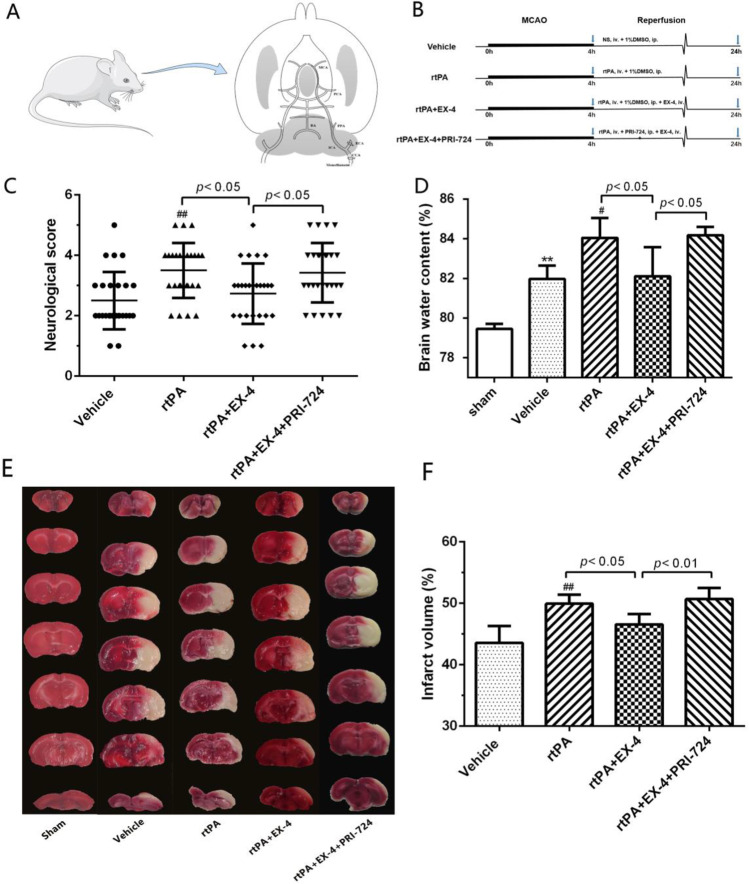
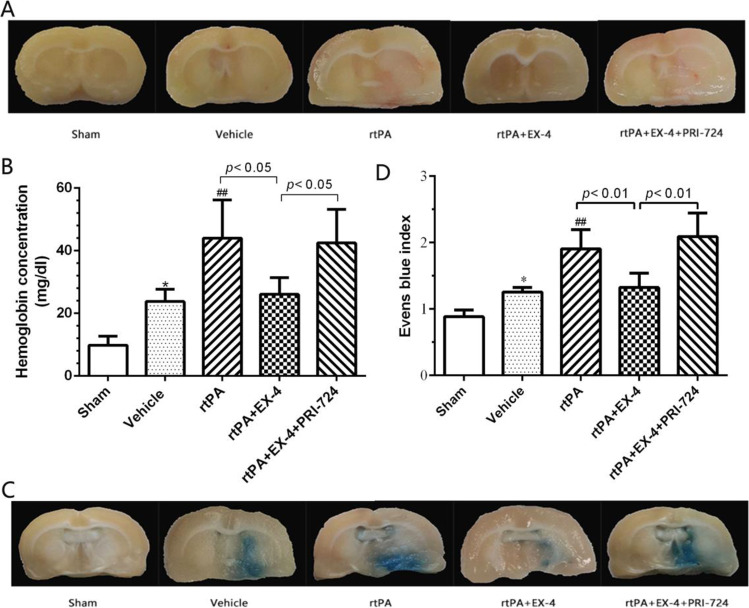
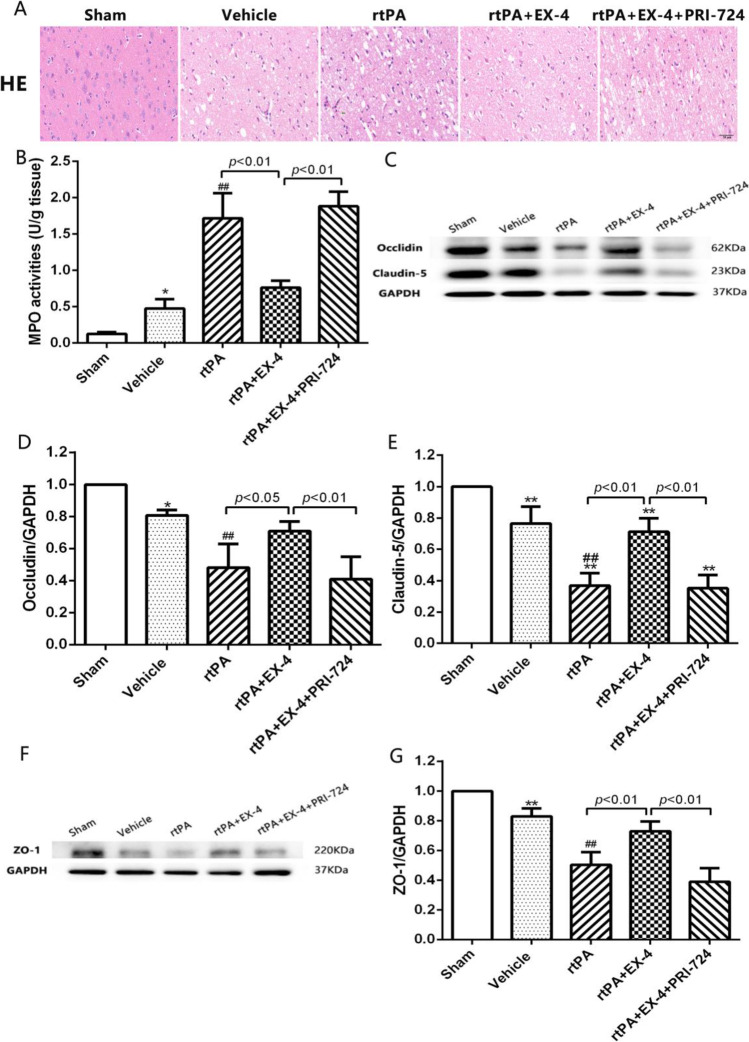
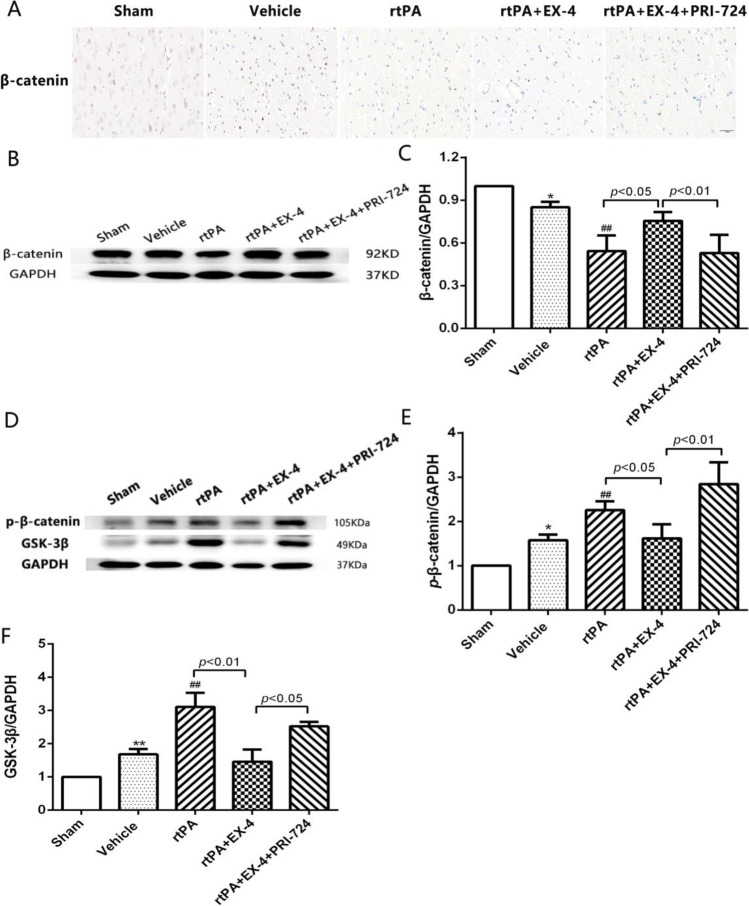
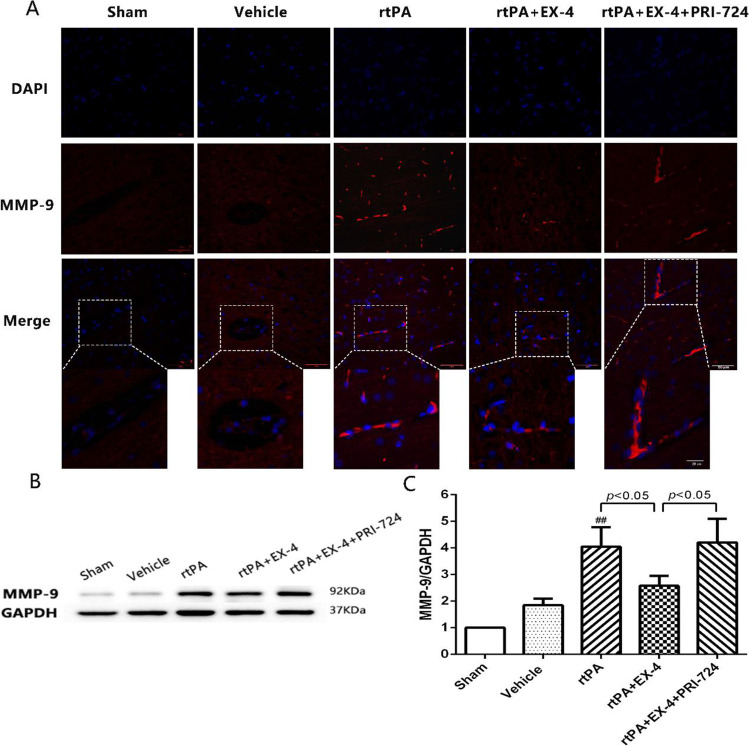
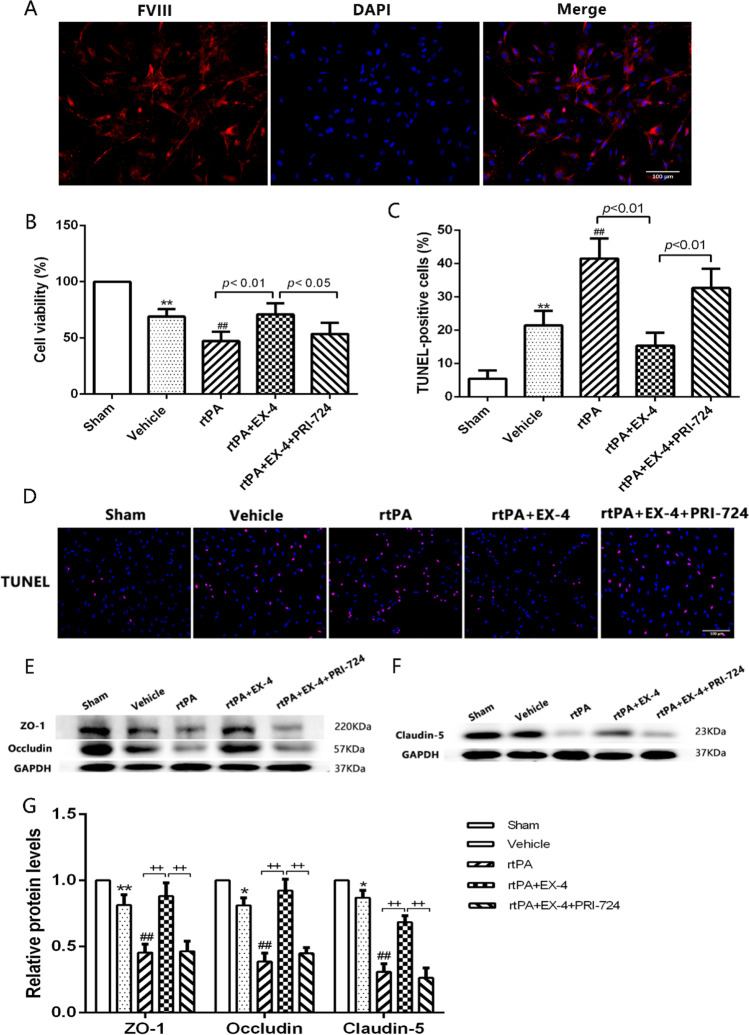
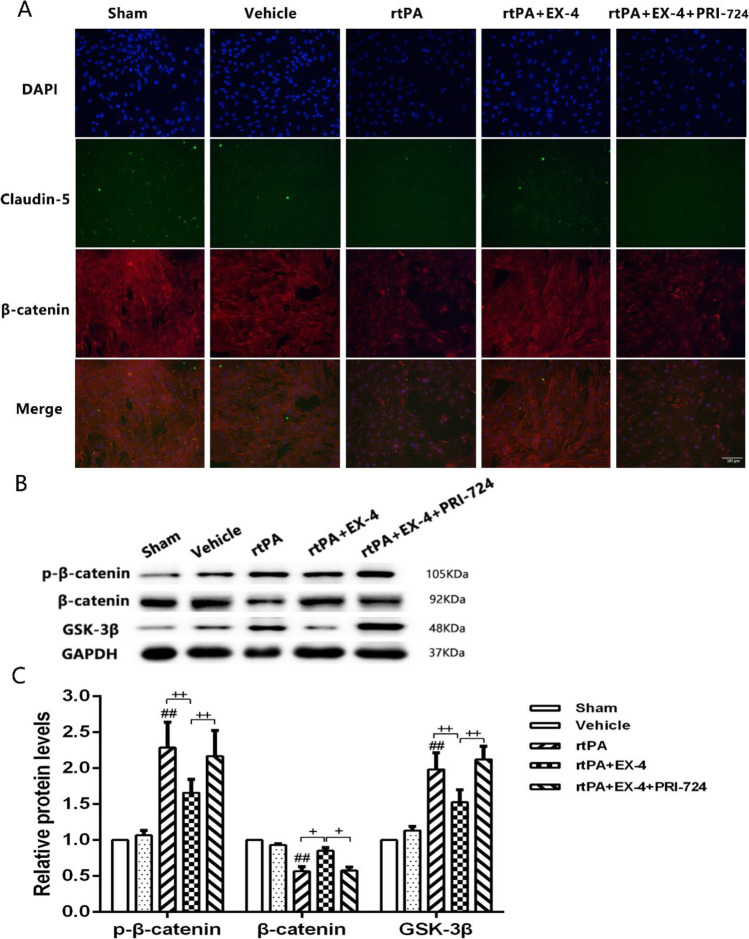
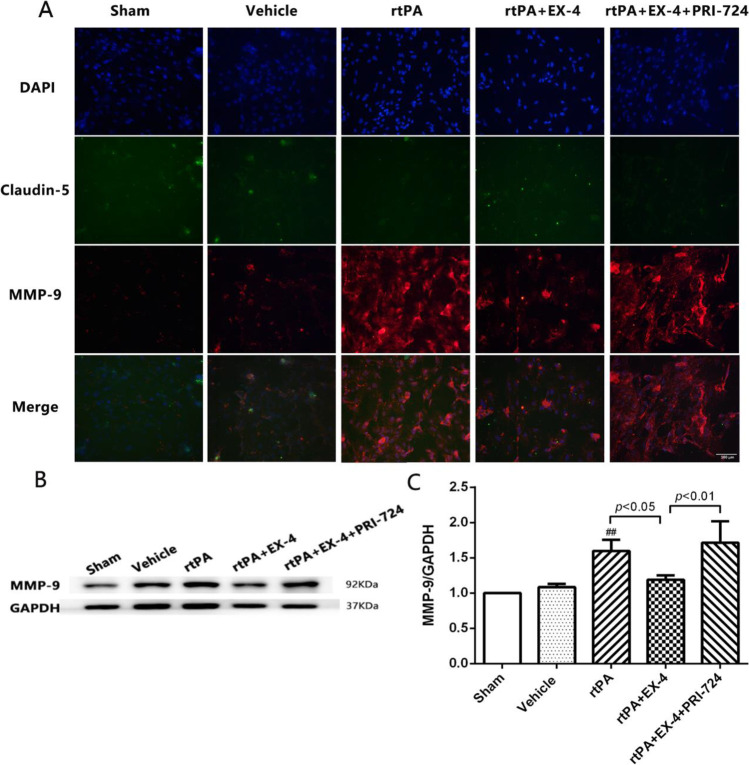
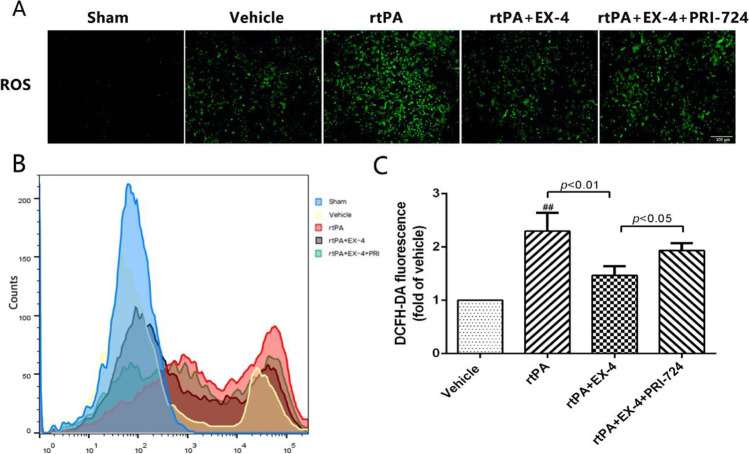
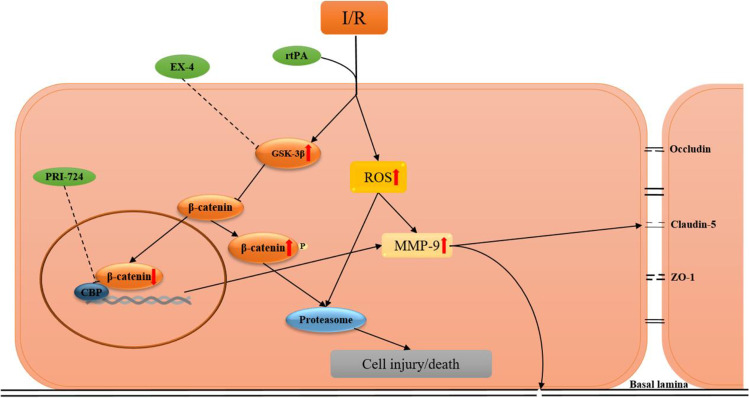
Tissue plasminogen activator (tPA) is recommended by the FDA to dissolve intravascular clots after acute ischemic stroke (AIS). However, it may contribute to hemorrhagic transformation (HT). The Wnt/β-catenin signaling pathway plays an important role in regulating the blood–brain barrier (BBB) formation in the central nervous system. We explored whether glucagon-like peptide-1 receptor (GLP-1R) agonist exendin-4 (EX-4) reduces the risk of HT after rtPA treatment via the Wnt/β-catenin pathway by using a rat transient middle cerebral artery occlusion (MCAO) model in vivo and an oxygen–glucose deprivation plus reoxygenation (OGD/R) model in vitro. Our results showed that EX-4 attenuated neurological deficits, brain edema, infarct volume, BBB disruption, and rtPA-induced HT in ischemic stroke. EX-4 suppressed the production of ROS and the activation of MMP-9 to protect the integrity of the BBB by activating the Wnt/β-catenin signaling pathway. PRI-724, a selective inhibitor of β-catenin, was able to reverse the therapeutic effect of EX-4 in vivo and in vitro. Therefore, our results indicate that the GLP-1R agonist may be a potential therapeutic agent to decrease the risk of rtPA-induced HT after ischemic stroke via the Wnt/β-catenin signaling pathway.
Overview
The claims and statistics of this paper haven’t been checked yet.
Free: it reads the open-access text and checks the first 5 claims that cite a source we can check. Create a free account to check every claim.
Integrity signals
Registry
Cites
Statistics
Figures
Verification
Claims the paper makes
The claims and statistics of this paper haven’t been checked yet.
Free: it reads the open-access text and checks the first 5 claims that cite a source we can check. Create a free account to check every claim.
Claims other papers make about this one
Each is checked against this paper’s own text: does it say what the citing paper says it does?
The cited source says what the claim attributes to it.
In the citing paper
“Consistently, in another in vivo/in vitro study using a rat transient MCAO model, exendin-4 reduced BBB tight-junction protein degradation by inhibiting MMP-9 activation and reactive oxygen species (ROS) production via activation of the Wnt/β-catenin signaling pathway [64].”
From Protection against stroke with glucagon-like peptide-1 receptor agonists: a comprehensive review of potential mechanisms (2022) · cites this paper as [64]
Self-check
Percentages, sums and reported differences re-computed from the paper’s own numbers.
The self-check needs the paper’s full text.
Citations
Cites
1 retracted
Fu, X., Zhu, X., Qin, F., Zhang, Y., Lin, J., Ding, Y., Yang, Z., Shang, Y., Wang, L., Zhang, Q., et al. (2018) · Molecular Cancer · doi:10.1186/s12943-018-0783-3 · Cited by 109
Self-citationRetractedJauch, E. C., Saver, J. L., Adams, H. P., Bruno, A., Connors, J. J. (., Demaerschalk, B. M., Khatri, P., McMullan, P. W., Qureshi, A. I., Rosenfield, K., et al. (2013) · Stroke · doi:10.1161/str.0b013e318284056a · Cited by 7,634
Powers, W. J., Rabinstein, A. A., Ackerson, T., Adeoye, O. M., Bambakidis, N. C., Becker, K., Biller, J., Brown, M., Demaerschalk, B. M., Hoh, B., et al. (2018) · Stroke · doi:10.1161/str.0000000000000158 · Cited by 5,446
Biology of Incretins: GLP-1 and GIP
Baggio, L. L., & Drucker, D. J. (2007) · Gastroenterology · doi:10.1053/j.gastro.2007.03.054 · Cited by 3,639 · cited 1×
“As a relatively small molecule, EX-4 diffuses across the BBB to directly access the central nervous system [9].”
BackgroundDevelopment, maintenance and disruption of the blood-brain barrier
Obermeier, B., Daneman, R., & Ransohoff, R. M. (2013) · Nature Medicine · doi:10.1038/nm.3407 · Cited by 2,452 · cited 3×
“The Wnt/β-catenin signaling pathway can participate in regulating the induction and maintenance of BBB characteristics during embryonic and postnatal development [5, 13].”
BackgroundWnt/β-catenin signaling controls development of the blood–brain barrier
Liebner, S., Corada, M., Bangsow, T., Babbage, J., Taddei, A., Czupalla, C. J., Reis, M., Felici, A., Wolburg, H., Fruttiger, M., et al. (2008) · The Journal of Cell Biology · doi:10.1083/jcb.200806024 · Cited by 860
Li, Y., Perry, T., Kindy, M. S., Harvey, B. K., Tweedie, D., Holloway, H. W., Powers, K., Shen, H., Egan, J. M., Sambamurti, K., et al. (2009) · Proceedings of the National Academy of Sciences · doi:10.1073/pnas.0806720106 · Cited by 589 · cited 1×
“It has been implied that EX-4 can alleviate ischemia–reperfusion injury by suppressing oxidative stress and inflammatory reaction in the mouse MCAO model [12, 14, 43, 44].”
BackgroundCrosstalk between Wnt/β-Catenin and NF-κB Signaling Pathway during Inflammation
Ma, B., & Hottiger, M. O. (2016) · Frontiers in Immunology · doi:10.3389/fimmu.2016.00378 · Cited by 563
Sun, M.-S., Jin, H., Sun, X., Huang, S., Zhang, F.-L., Guo, Z.-N., & Yang, Y. (2018) · Oxidative Medicine and Cellular Longevity · doi:10.1155/2018/3804979 · Cited by 502
Matrix Metalloproteinases and Blood-Brain Barrier Disruption in Acute Ischemic Stroke
Lakhan, S. E., Kirchgessner, A., Tepper, D., & Leonard, A. (2013) · Frontiers in Neurology · doi:10.3389/fneur.2013.00032 · Cited by 384
Wang, J., & Tsirka, S. E. (2005) · Brain · doi:10.1093/brain/awh489 · Cited by 321
Self-citationEffects of the Chemokine CCL2 on Blood–Brain Barrier Permeability during Ischemia–Reperfusion Injury
Dimitrijevic, O. B., Stamatovic, S. M., Keep, R. F., & Andjelkovic, A. V. (2006) · Journal of Cerebral Blood Flow & Metabolism · doi:10.1038/sj.jcbfm.9600229 · Cited by 252
Higher neutrophil counts before thrombolysis for cerebral ischemia predict worse outcomes
Maestrini, I., Strbian, D., Gautier, S., Haapaniemi, E., Moulin, S., Sairanen, T., Dequatre-Ponchelle, N., Sibolt, G., Cordonnier, C., Melkas, S., et al. (2015) · Neurology · doi:10.1212/wnl.0000000000002029 · Cited by 211
Potential Role of Glucagon-Like Peptide-1 (GLP-1) in Neuroprotection
Hölscher, C. (2012) · CNS Drugs · doi:10.2165/11635890-000000000-00000 · Cited by 191
Shan, Y., Tan, S., Lin, Y., Liao, S., Zhang, B., Chen, X., Wang, J., Deng, Z., Zeng, Q., Zhang, L., et al. (2019) · Journal of Neuroinflammation · doi:10.1186/s12974-019-1638-6 · Cited by 188
Self-citationKim, J.-T., Fonarow, G. C., Smith, E. E., Reeves, M. J., Navalkele, D. D., Grotta, J. C., Grau-Sepulveda, M. V., Hernandez, A. F., Peterson, E. D., Schwamm, L. H., et al. (2017) · Circulation · doi:10.1161/circulationaha.116.023336 · Cited by 184
Potential therapeutic targets for intracerebral hemorrhage-associated inflammation: An update
Ren, H., Han, R., Chen, X., Liu, X., Wan, J., Wang, L., Yang, X., & Wang, J. (2020) · Journal of Cerebral Blood Flow & Metabolism · doi:10.1177/0271678x20923551 · Cited by 181
Self-citationProtective role of tuftsin fragment 1‐3 in an animal model of intracerebral hemorrhage
Wang, J., Rogove, A. D., Tsirka, A. E., & Tsirka, S. E. (2003) · Annals of Neurology · doi:10.1002/ana.10750 · Cited by 175
Self-citationWeston, R. M., Jones, N. M., Jarrott, B., & Callaway, J. K. (2007) · Journal of Cerebral Blood Flow & Metabolism · doi:10.1038/sj.jcbfm.9600324 · Cited by 139
The critical roles of mitophagy in cerebral ischemia
Tang, Y., Tian, H.-X., Yi, T., & Chen, H. (2016) · Protein & Cell · doi:10.1007/s13238-016-0307-0 · Cited by 139
Darsalia, V., Mansouri, S., Ortsäter, H., Olverling, A., Nozadze, N., Kappe, C., Iverfeldt, K., Tracy, L. M., Grankvist, N., Sjöholm, Å., et al. (2012) · Clinical Science · doi:10.1042/cs20110374 · Cited by 130
Marcos-Contreras, O. A., Martinez de Lizarrondo, S., Bardou, I., Orset, C., Pruvost, M., Anfray, A., Frigout, Y., Hommet, Y., Lebouvier, L., Montaner, J., et al. (2016) · Blood · doi:10.1182/blood-2016-03-705384 · Cited by 124
Wang, Y., Meng, C., Zhang, J., Wu, J., & Zhao, J. (2019) · International Immunopharmacology · doi:10.1016/j.intimp.2018.12.042 · Cited by 110
Yang, J., Li, Q., Wang, Z., Qi, C., Han, X., Lan, X., Wan, J., Wang, W., Zhao, X., Hou, Z., et al. (2017) · Scientific Reports · doi:10.1038/srep40358 · Cited by 98
Self-citationToxic role of prostaglandin E2 receptor EP1 after intracerebral hemorrhage in mice
Zhao, X., Wu, T., Chang, C.-F., Wu, H., Han, X., Li, Q., Gao, Y., Li, Q., Hou, Z., Maruyama, T., et al. (2015) · Brain, Behavior, and Immunity · doi:10.1016/j.bbi.2015.02.011 · Cited by 94
Self-citationDarsalia, V., Hua, S., Larsson, M., Mallard, C., Nathanson, D., Nyström, T., Sjöholm, Å., Johansson, M. E., & Patrone, C. (2014) · PLoS ONE · doi:10.1371/journal.pone.0103114 · Cited by 92 · cited 1×
“1 3 has been reported that EX-4 could exert anti-inflammatory and protective effects on the BBB and neurons by reducing oxidative stress, which may contribute to the treatment of stroke [11, 12].”
BackgroundWang, W., Li, M., Wang, Y., Li, Q., Deng, G., Wan, J., Yang, Q., Chen, Q., & Wang, J. (2015) · Molecular Neurobiology · doi:10.1007/s12035-015-9607-2 · Cited by 92
Self-citationSong, D., Zhang, X., Chen, J., Liu, X., Xue, J., Zhang, L., & Lan, X. (2019) · Journal of Neuroinflammation · doi:10.1186/s12974-019-1660-8 · Cited by 88
Wang, M., Hong, X., Chang, C.-F., Li, Q., Ma, B., Zhang, H., Xiang, S., Heo, H., Zhang, Y., Lee, D., et al. (2015) · Magnetic Resonance in Medicine · doi:10.1002/mrm.25690 · Cited by 84
Self-citationLi, Q., Han, X., Lan, X., Hong, X., Li, Q., Gao, Y., Luo, T., Yang, Q., Koehler, R. C., Zhai, Y., et al. (2017) · Neurobiology of Disease · doi:10.1016/j.nbd.2017.08.011 · Cited by 81
Self-citationNeutrophils and stroke – Can neutrophils mitigate disease in the central nervous system?
Easton, A. S. (2013) · International Immunopharmacology · doi:10.1016/j.intimp.2013.06.015 · Cited by 79
Inhibition of prostaglandin E2 receptor EP3 mitigates thrombin-induced brain injury
Han, X., Lan, X., Li, Q., Gao, Y., Zhu, W., Cheng, T., Maruyama, T., & Wang, J. (2016) · Journal of Cerebral Blood Flow & Metabolism · doi:10.1177/0271678x15606462 · Cited by 79
Self-citationSrc regulates angiogenic factors and vascular permeability after focal cerebral ischemia–reperfusion
Zan, L., Zhang, X., Xi, Y., Wu, H., Song, Y., Teng, G., Li, H., Qi, J., & Wang, J. (2014) · Neuroscience · doi:10.1016/j.neuroscience.2013.12.060 · Cited by 76
Self-citationLeBlanc, N. J., Menet, R., Picard, K., Parent, G., Tremblay, M., & ElAli, A. (2019) · Molecular Neurobiology · doi:10.1007/s12035-019-1539-9 · Cited by 73
Gong, P., Zhang, Z., Zou, Y., Tian, Q., Han, S., Xu, Z., Liao, J., Gao, L., Chen, Q., & Li, M. (2019) · European Journal of Pharmacology · doi:10.1016/j.ejphar.2019.04.028 · Cited by 72
Repeated administration of exendin-4 reduces focal cerebral ischemia-induced infarction in rats
Briyal, S., Gulati, K., & Gulati, A. (2011) · Brain Research · doi:10.1016/j.brainres.2011.10.026 · Cited by 71
Li, P.-C., Liu, L.-F., Jou, M.-J., & Wang, H.-K. (2016) · BMC Neuroscience · doi:10.1186/s12868-016-0272-9 · Cited by 69
Gong, P., Zhang, Z., Zou, C., Tian, Q., Chen, X., Hong, M., Liu, X., Chen, Q., Zhou, X., Li, M., et al. (2018) · Behavioural Brain Research · doi:10.1016/j.bbr.2018.08.003 · Cited by 64
Self-citationHemorrhagic Transformation After Tissue Plasminogen Activator Treatment in Acute Ischemic Stroke
Liu, C., Xie, J., Sun, S., Li, H., Li, T., Jiang, C. Q., Chen, X., Wang, J., Le, A., Wang, J., et al. (2020) · Cellular and Molecular Neurobiology · doi:10.1007/s10571-020-00985-1 · Cited by 63
Self-citationGSK-3β as a target for protection against transient cerebral ischemia
Wang, W., Li, M., Wang, Y., Wang, Z., Zhang, W., Guan, F., Chen, Q., & Wang, J. (2017) · International Journal of Medical Sciences · doi:10.7150/ijms.17514 · Cited by 61
Self-citationKuroki, T., Tanaka, R., Shimada, Y., Yamashiro, K., Ueno, Y., Shimura, H., Urabe, T., & Hattori, N. (2016) · Stroke · doi:10.1161/strokeaha.116.012934 · Cited by 60
Li, Y., Xu, X., Zhao, D., Pan, L., Huang, C., Guo, L., Lu, Q., & Wang, J. (2015) · CNS Neuroscience & Therapeutics · doi:10.1111/cns.12469 · Cited by 59
Self-citationOrientin Inhibits HMGB1-Induced Inflammatory Responses in HUVECs and in Murine Polymicrobial Sepsis
Yoo, H., Ku, S., Lee, T., & Bae, J. (2014) · Inflammation · doi:10.1007/s10753-014-9899-9 · Cited by 59
Chen, F., Wang, W., Ding, H., Yang, Q., Dong, Q., & Cui, M. (2016) · Journal of Neuroinflammation · doi:10.1186/s12974-016-0661-0 · Cited by 52
Self-citationZan, L., Wu, H., Jiang, J., Zhao, S., Song, Y., Teng, G.-X., Li, H., Jia, Y., Zhou, M., Zhang, X., et al. (2011) · Neurochemistry International · doi:10.1016/j.neuint.2011.02.014 · Cited by 50
Self-citationGori, A. M., Giusti, B., Piccardi, B., Nencini, P., Palumbo, V., Nesi, M., Nucera, A., Pracucci, G., Tonelli, P., Innocenti, E., et al. (2017) · Journal of Cerebral Blood Flow & Metabolism · doi:10.1177/0271678x17695572 · Cited by 49
Han, X., Zhao, X., Lan, X., Li, Q., Gao, Y., Liu, X., Wan, J., Yang, Z.-J., Chen, X., Zang, W., et al. (2018) · Journal of Cerebral Blood Flow & Metabolism · doi:10.1177/0271678x18762645 · Cited by 46
Self-citationDarsalia, V., Larsson, M., Nathanson, D., Klein, T., Nyström, T., & Patrone, C. (2015) · Journal of Cerebral Blood Flow & Metabolism · doi:10.1038/jcbfm.2015.17 · Cited by 44
Okazaki, H., Sato, S., Koyama, K., Morizumi, S., Abe, S., Azuma, M., Chen, Y., Goto, H., Aono, Y., Ogawa, H., et al. (2019) · Experimental Lung Research · doi:10.1080/01902148.2019.1638466 · Cited by 42
Trimeric PEG-Conjugated Exendin-4 for the Treatment of Sepsis
Lee, W., Park, E. J., Kwak, S., Lee, K. C., Na, D. H., & Bae, J. (2016) · Biomacromolecules · doi:10.1021/acs.biomac.5b01756 · Cited by 28
Rosas-Hernández, H., Cuevas, E., Lantz, S. M., Paule, M. G., & Ali, S. F. (2017) · Methods in molecular biology · doi:10.1007/978-1-4939-7571-6_23 · Cited by 28
Park, C. H., Shin, T. K., Lee, H. Y., Kim, S. J., & Lee, W. S. (2011) · The Korean Journal of Physiology and Pharmacology · doi:10.4196/kjpp.2011.15.2.115 · Cited by 27
Boltze, J., Aronowski, J. A., Badaut, J., Buckwalter, M. S., Caleo, M., Chopp, M., Dave, K. R., Didwischus, N., Dijkhuizen, R. M., Doeppner, T. R., et al. (2021) · Frontiers in Aging Neuroscience · doi:10.3389/fnagi.2021.623751 · Cited by 24
Self-citationLeu, S., Day, Y., Sun, C., & Yip, H. (2016) · Stem Cells International · doi:10.1155/2016/5417565 · Cited by 23
Kim, Y. S., Yoo, A., Son, J., Kim, H. Y., Lee, Y.-J., Hwang, S., Lee, Y. J., Lee, Y. J., Ayata, C., Kim, H.-H., et al. (2016) · Molecular Neurobiology · doi:10.1007/s12035-016-0063-4 · Cited by 20
Glycogen Synthase Kinase-β3 in Ischemic Neuronal Death
Pradeep, H., Densi, A., & Rajanikant, G. K. (2014) · Current Neurovascular Research · doi:10.2174/1567202611666140520151002 · Cited by 19
Exendin-4 Inhibits HMGB1-Induced Inflammatory Responses in HUVECs and in Murine Polymicrobial Sepsis
Lee, W., Ku, S., Park, E. J., Na, D. H., Kim, K., & Bae, J. (2014) · Inflammation · doi:10.1007/s10753-014-9919-9 · Cited by 14
Cited by
Kopp, K. O., Glotfelty, E. J., Li, Y., & Greig, N. H. (2022) · Pharmacological Research · doi:10.1016/j.phrs.2022.106550 · Cited by 298
Liu, C., Yao, K., Tian, Q., Guo, Y., Wang, G., He, P., Wang, J., Wang, J., Zhang, Z., & Li, M. (2023) · Redox Biology · doi:10.1016/j.redox.2023.102960 · Cited by 100
Self-citationBlood-brain barrier permeability in the ischemic stroke: An update
Mathias, K., Machado, R. S., Stork, S. D. S., dos Santos, D., Joaquim, L. D. S., Generoso, J. S., Danielski, L. G., Barichello, T., Prophiro, J. S., & Petronilho, F. C. (2023) · Microvascular Research · doi:10.1016/j.mvr.2023.104621 · Cited by 87
Liu, C., He, P., Guo, Y., Tian, Q., Wang, J., Wang, G., Zhang, Z., & Li, M. (2022) · Free Radical Biology and Medicine · doi:10.1016/j.freeradbiomed.2022.11.003 · Cited by 73
Self-citationVergès, B., Aboyans, V., Angoulvant, D., Boutouyrie, P., Cariou, B., Hyafil, F., Mohammedi, K., & Amarenco, P. (2022) · Cardiovascular Diabetology · doi:10.1186/s12933-022-01686-3 · Cited by 72
“Consistently, in another in vivo/in vitro study using a rat transient MCAO model, exendin-4 reduced BBB tightjunction protein degradation by inhibiting MMP-9 activation and reactive oxygen species (ROS) production via activation of the Wnt/β-catenin signaling pathway [64].”
Background
Metadata
- Authors
- Liu, C., Sun, S., Xie, J., Li, H., Li, T., Wu, Q., Zhang, Y., Bai, X., Wang, J., Wang, X., Li, Z., & Wang, W.
- Affiliations
- Tongji Hospital (CN)
- Zhengzhou University (CN)
- Brigham and Women's Hospital (US)
- Corresponding author
- Li, Zhanfei
- Wang, Wei
- ORCID
- Venue
- Molecular Neurobiology
- Published
- 2022-03-31
- Volume
- 59
- Issue
- 6
- Pages
- 3649-3664
- ISSN
- 0893-7648 (ISSN-L)
- 1559-1182
- PMC
- PMC9148281
- OpenAlex
- W4220980256
- Cited by
- 28
- References
- 57
- Citations by year
- 2026: 6 · 2025: 8 · 2024: 3 · 2023: 6 · 2022: 5
- FWCI
- 3.97
- Type
- journal article
- Language
- en
- Open access
- hybrid
- doi.org
- Licence
- cc-by
- creativecommons.org/licenses/by/4.0 (tdm)
- creativecommons.org/licenses/by/4.0 (vor)
- Locations
- Molecular Neurobiology (publishedVersion, cc-by)
- PubMed Central (publishedVersion, cc-by)
- PubMed (publishedVersion)
- Funders
- National Natural Science Foundation of China (81801174)
- Topics
- Health Sciences › Medicine › Clinical Neurology › Acute Ischemic Stroke Management
- Life Sciences › Neuroscience › Neurology › Barrier Structure and Function Studies
- Life Sciences › Neuroscience › Neurology › Neuroprotection in Cerebral Ischemia
- Keywords
- exendin-4, GLP-1 receptor agonists, hemorrhagic transformation, acute ischemic stroke, tissue plasminogen activator, Wnt/β-catenin signaling, blood-brain barrier disruption, MMP-9, reactive oxygen species, PRI-724, transient middle cerebral artery occlusion, oxygen-glucose deprivation/reoxygenation, neuroprotection
- MeSH terms
- Exenatide, Ischemic Stroke, Animals, Hemorrhage, Tissue Plasminogen Activator, Stroke, beta Catenin, Rats, Wnt Signaling Pathway
About these checks
Registry, retraction, Cites and statistics results are computed, not judged, with one exception: a printed reference that no index lists is read once by a model before it counts as a citation error. Claims are extracted by a model and kept only when their quote appears verbatim in the text; each cited source is then checked, with a model’s help, for whether it says what the claim relies on. Those verdicts can be wrong — read the claim’s quote and the cited source before relying on one.
Statistics and arithmetic are recomputed, not judged.
Confidence bands are shown only for fields calibrated on our annotated test set. None is calibrated yet, so no band is shown.
What counts as a claim ›How we measure confidence ›How we check this ›
Are you an author, or do you see a problem with this page? Request a review
Data sources
Bibliographic data: Semantic Scholar, OpenAlex, Crossref.
Contains information from the Semantic Scholar Academic Graph Datasets, made available under the ODC Attribution License (ODC-BY 1.0).
Semantic Scholar’s data is described in: Kinney, R., et al. (2023). The Semantic Scholar Open Data Platform. arXiv:2301.10140.
