

Relationship between relative skeletal muscle mass and nonalcoholic fatty liver disease: a systematic review and meta-analysis
Open accessThe DOI matches its Crossref record; 33 of the 33 references it cites were found in a registry or an index.
Abstract
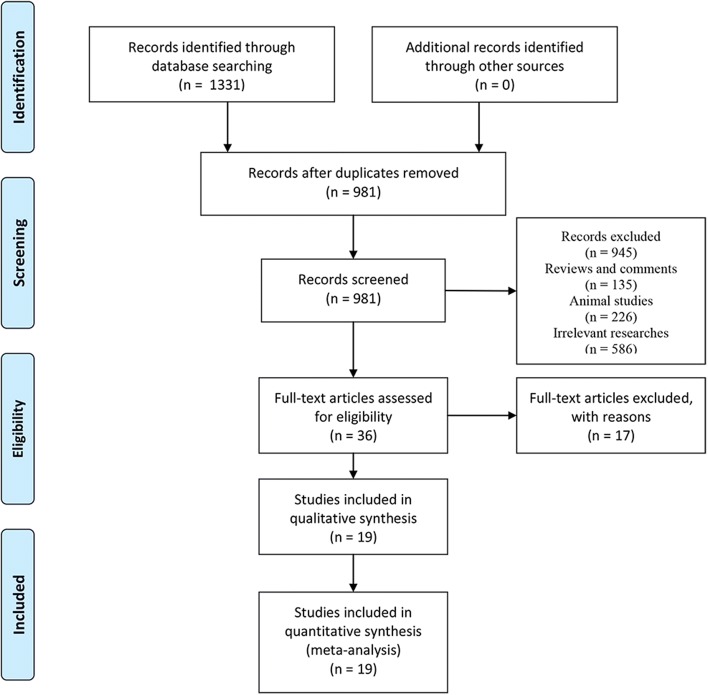
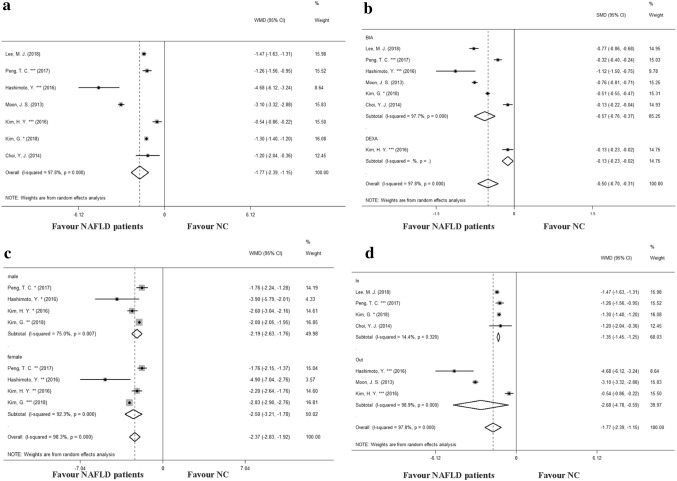
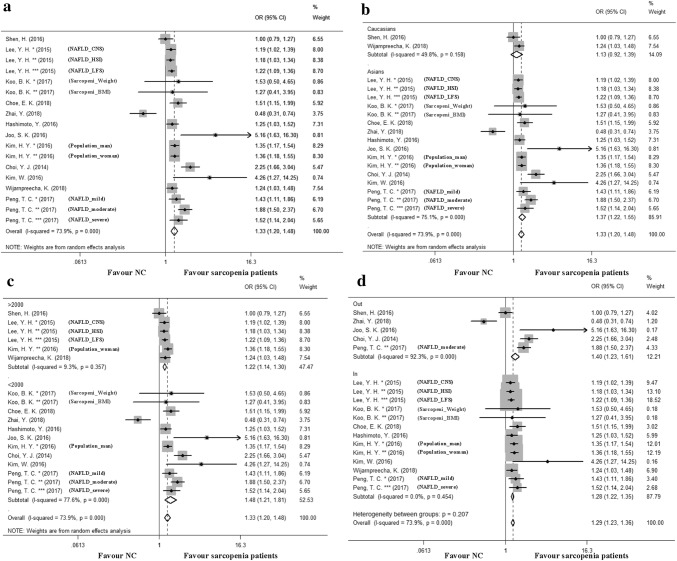
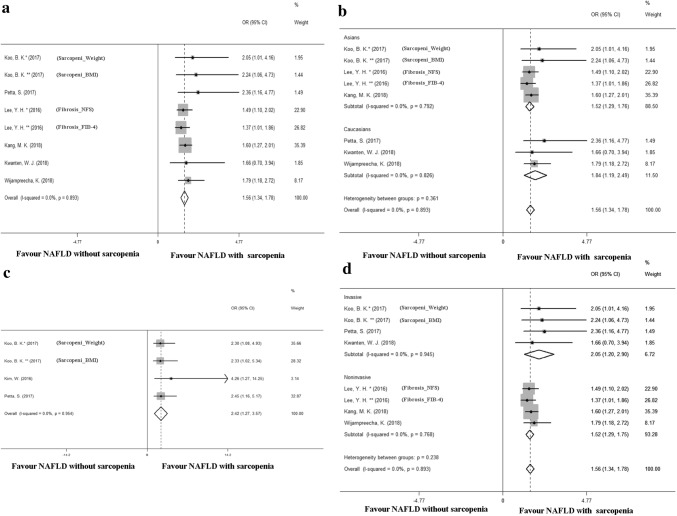
BACKGROUND AND AIM: Nonalcoholic fatty liver disease (NAFLD) has gradually become one of the most common chronic liver diseases in the world. More and more evidence shows that low skeletal muscle mass index (SMI) may play a role in the development of NAFLD. Our aim was to quantify the association between SMI, sarcopenia and the presence and severity of NAFLD. METHODS: We systematically searched English relevant studies from PubMed, Embase, the Web of Science and the Cochrane Library updated to December 20th, 2018. Studies in which SMI was compared between NAFLD cases and controls were included. So were studies concerning the odds ratio (OR) of NAFLD, non-alcoholic steatohepatitis (NASH) and significant fibrosis in sarcopenia patients. Pooled weighted mean differences and ORs were calculated. RESULTS: Of the 1331 retrieved studies, 19 articles were included. SMI level in NAFLD patients was 1.77 (95% CI 1.15, 2.39) lower than that in normal controls. We also found a significantly higher occurrence risk of NAFLD (OR = 1.33, 95% CI 1.20 to 1.48), NASH (OR = 2.42, 95% CI 1.27 to 3.57) and NAFLD-related significant fibrosis (OR = 1.56, 95% CI 1.34, 1.78) in sarcopenia subjects. CONCLUSIONS: SMI level in patients with NAFLD was lower than healthy people, and patients with sarcopenia have higher occurrence risk of NAFLD, as well as its advanced stages including NASH or NAFLD-related significant fibrosis. Further well-designed prospective studies are required to strengthen the arguments.
Overview
The claims and statistics of this paper haven’t been checked yet.
Free: it reads the open-access text and checks the first 5 claims that cite a source we can check. Create a free account to check every claim.
Integrity signals
Registry
Cites
Statistics
Figures
Verification
Claims the paper makes
The claims and statistics of this paper haven’t been checked yet.
Free: it reads the open-access text and checks the first 5 claims that cite a source we can check. Create a free account to check every claim.
Claims other papers make about this one
Each is checked against this paper’s own text: does it say what the citing paper says it does?
The cited source says what the claim attributes to it.
In the citing paper
“A recent comprehensive meta-analysis across similar studies found increased risks of NAFLD and liver fibrosis in subjects with sarcopenia (Cai et al., 2020).”
From Comprehensive Multi-omics Analysis Reveals Mitochondrial Stress as a Central Biological Hub for Spaceflight Impact (2020) · cites this paper as Cai et al., 2020
Self-check
Percentages, sums and reported differences re-computed from the paper’s own numbers.
The self-check needs the paper’s full text.
Citations
Cites
Sarcopenia: European consensus on definition and diagnosis
Cruz-Jentoft, A. J., Baeyens, J. P., Bauer, J. M., Boirie, Y., Cederholm, T., Landi, F., Martin, F. C., Michel, J.-P., Rolland, Y., Schneider, S. M., et al. (2010) · Age and Ageing · doi:10.1093/ageing/afq034 · Cited by 11,601
The Natural History of Nonalcoholic Fatty Liver Disease: A Population-Based Cohort Study
Adams, L. A., Lymp, J. F., St. Sauver, J., Sanderson, S. O., Lindor, K. D., Feldstein, A., & Angulo, P. (2005) · Gastroenterology · doi:10.1053/j.gastro.2005.04.014 · Cited by 2,890
Evolution of inflammation in nonalcoholic fatty liver disease: The multiple parallel hits hypothesis
Tilg, H., & Moschen, A. R. (2010) · Hepatology · doi:10.1002/hep.24001 · Cited by 2,548
DeFronzo, R. A., Jacot, E., Jequier, E., Maeder, E., Wahren, J., & Felber, J. P. (1981) · Diabetes · doi:10.2337/diab.30.12.1000 · Cited by 1,770
Loomba, R., & Sanyal, A. J. (2013) · Nature Reviews Gastroenterology & Hepatology · doi:10.1038/nrgastro.2013.171 · Cited by 1,641
Brunt, E. M., Kleiner, D. E., Wilson, L. A., Belt, P., & Neuschwander-Tetri, B. A. (2011) · Hepatology · doi:10.1002/hep.24127 · Cited by 1,251
Charlton, M. R., Burns, J. M., Pedersen, R. A., Watt, K. D., Heimbach, J. K., & Dierkhising, R. A. (2011) · Gastroenterology · doi:10.1053/j.gastro.2011.06.061 · Cited by 1,106
Stienstra, R., Saudale, F., Duval, C., Keshtkar, S., Groener, J. E. M., van Rooijen, N., Staels, B., Kersten, S., & Müller, M. (2010) · Hepatology · doi:10.1002/hep.23337 · Cited by 452 · cited 1×
“Irisin, another myokines, plays a critical role in fatty acid β-oxidation in the liver [31].”
BackgroundSarcopenia is an independent risk factor for non-alcoholic steatohepatitis and significant fibrosis
Koo, B. K., Kim, D., Joo, S. K., Kim, J. H., Chang, M. S., Kim, B. G., Lee, K. L., & Kim, W. (2017) · Journal of Hepatology · doi:10.1016/j.jhep.2016.08.019 · Cited by 440
Hong, H. C., Hwang, S. Y., Choi, H. Y., Yoo, H. J., Seo, J. A., Kim, S. G., Kim, N. H., Baik, S. H., Choi, D. S., & Choi, K. M. (2014) · Hepatology · doi:10.1002/hep.26716 · Cited by 385
Research works printed but not linked: 2
- Kwanten WJ De Fré C De Fré M Vonghia L Vanwolleghem T Michielsen PP Sarcopenia is less prevalent in an obese population with NAFLD compared to patients with obesity alone, but increases with severity of disease Hepatology 2018 68 1282A 1283A
- Kim KH Kim SU Sarcopenia is independently associated with significant fibrosis as assessed using transient elastography in patients with chronic liver disease Hepatology 2018 68 1134A 10.1002/hep.30049 · DOI · Paper page
Cited by
da Silveira, W. A., Fazelinia, H., Rosenthal, S. B., Laiakis, E. C., Kim, M. S., Meydan, C., Kidane, Y., Rathi, K. S., Smith, S. M., Stear, B., et al. (2020) · Cell · doi:10.1016/j.cell.2020.11.002 · Cited by 402
“A recent comprehensive meta-analysis across similar studies found increased risks of NAFLD and liver fibrosis in subjects with sarcopenia (Cai et al., 2020).”
Petermann-Rocha, F. E., Gray, S. R., Forrest, E. H., Welsh, P. I., Sattar, N. A., Celis-Morales, C. A., Ho, F. K. W., & Pell, J. P. (2022) · Journal of Hepatology · doi:10.1016/j.jhep.2022.01.010 · Cited by 145
Hepatic glucose metabolism in the steatotic liver
Scoditti, E., Sabatini, S., Carli, F., & Gastaldelli, A. (2024) · Nature Reviews Gastroenterology & Hepatology · doi:10.1038/s41575-023-00888-8 · Cited by 134
“Interestingly, patients with SLD have increased protein catabolism and sarcopenia 111 , which is further exaggerated in patients with liver cirrhosis who have increased gluconeogenesis but reduced glycogenolysis, therefore maintaining EGP and fasting glycaemia within normal ranges 48 .”
Zhong, Q., Zhou, R., Huang, Y., Huang, R.-D., Li, F., Chen, H.-W., Wei, Y.-F., Liu, K., Cao, B., Liao, K.-Y., et al. (2024) · Journal of Hepatology · doi:10.1016/j.jhep.2024.08.024 · Cited by 121
Non-Alcoholic Fatty Liver Disease in Lean and Non-Obese Individuals: Current and Future Challenges
Kuchay, M. S., Martínez‐Montoro, J. I., Choudhary, N. S., Fernández‐García, J. C., & Ramos‐Molina, B. (2021) · Biomedicines · doi:10.3390/biomedicines9101346 · Cited by 119
Sarcopenia, sarcopenic obesity and nonalcoholic fatty liver disease
Pοlyzos, S. A., Vachliotis, I. D., & Mantzoros, C. S. (2023) · Metabolism · doi:10.1016/j.metabol.2023.155676 · Cited by 108
Harnessing Muscle–Liver Crosstalk to Treat Nonalcoholic Steatohepatitis
Chakravarthy, M. V., Siddiqui, M. S., Forsgren, M. F., & Sanyal, A. J. (2020) · Frontiers in Endocrinology · doi:10.3389/fendo.2020.592373 · Cited by 88
“39) than that in healthy controls (42).”
Fatty Liver Disease: Diagnosis and Stratification
Saiman, Y., Duarte‐Rojo, A., & Rinella, M. E. (2021) · Annual Review of Medicine · doi:10.1146/annurev-med-042220-020407 · Cited by 101
The Emerging Role of Branched-Chain Amino Acids in Liver Diseases
Lo, E. K. K., Felicianna, Xu, J., Zhan, Q., Zeng, Z., & El-Nezami, H. S. (2022) · Biomedicines · doi:10.3390/biomedicines10061444 · Cited by 94
“It is also important to note that the loss of muscle mass, the major BCAA catabolic site, is usually accompanied by chronic liver diseases [85,86].”
BackgroundKuchay, M. S., Martínez‐Montoro, J. I., Kaur, P., Fernández‐García, J. C., & Ramos‐Molina, B. (2022) · Ageing Research Reviews · doi:10.1016/j.arr.2022.101696 · Cited by 93
Skeletal muscle and MASLD: Mechanistic and clinical insights
Marjot, T., Armstrong, M. J., & Stine, J. G. (2025) · Hepatology Communications · doi:10.1097/hc9.0000000000000711 · Cited by 84
“[ 122 ] 132 – 135] Most recently, pooled analysis of 25 studies showed that MASLD was significantly associated with sarcopenia (OR = 1.25), although odds varied according to adjustment by height, weight, or BMI.”
InfluentialBattistella, S., D’Arcangelo, F., Grasso, M., Zanetto, A., Gambato, M., Germani, G., Senzolo, M., Russo, F. P., & Burra, P. (2022) · Clinical and Molecular Hepatology · doi:10.3350/cmh.2022.0392 · Cited by 84
“A synergic overlap between pathophysiology of these two conditions resulted in an increased risk of NAFLD development when sarcopenia is present and vice versa.(103,104) Pre-LT sarcopenia has been associated with increased risk of adverse outcomes after liver transplantation, such as higher risk of bacterial infection…”
BackgroundKim, H., Bae, S., Lee, M. J., Kim, E. H., Park, H., Kim, H. S., Cho, Y. K., Jung, C. H., Lee, W. J., & Choe, J. (2023) · Clinical and Molecular Hepatology · doi:10.3350/cmh.2023.0035 · Cited by 75
“Sarcopenia has been shown to be associated with NAFLD and its complications such as NASH and liver fibrosis, independent of obesity (9, 10, 36).”
BackgroundThe Impact of Estrogen Deficiency on Liver Metabolism: Implications for Hormone Replacement Therapy
Dong, J., Dennis, K. M. J. H., Venkatakrishnan, R., Hodson, L., & Tomlinson, J. (2025) · Endocrine Reviews · doi:10.1210/endrev/bnaf018 · Cited by 72
Azevedo, V. Z., Silaghi, C. A., Maurel, T., Silaghi, H., Ratziu, V., & Pais, R. (2022) · Frontiers in Nutrition · doi:10.3389/fnut.2021.774030 · Cited by 68
“Conversely, subjects with NAFLD have significantly lower SMI when compared to controls (153).”
BackgroundImpact of Sarcopenia on Non-Alcoholic Fatty Liver Disease
Iwaki, M., Kobayashi, T., Nogami, A., Saito, S., Nakajima, A., & Yoneda, M. (2023) · Nutrients · doi:10.3390/nu15040891 · Cited by 70
“Conversely, subjects with NAFLD have been reported to have significantly lower skeletal muscle index (SMI) compared with controls [74].”
ResultChun, H. S., Kim, M. N., Lee, J. S., Lee, H. W., Kim, B. K., Park, J. Y., Kim, D. Y., Ahn, S. H., & Kim, S. U. (2021) · Journal of Cachexia Sarcopenia and Muscle · doi:10.1002/jcsm.12754 · Cited by 58
“To date, a few studies have reported worse metabolic profiles among subjects with MAFLD, when compared with those with NAFLD.4,5 All these findings imply that the MAFLD definition can identify subjects with higher risk of disease progression, compared with the NAFLD definition.30 However, heterogeneous disease severit…”
ResultInfluentialNachit, M., Lanthier, N., Rodriguez, J., Neyrinck, A. M., Cani, P. D., Bindels, L. B., Hiel, S., Pachikian, B. D., Tréfois, P., Thissen, J., et al. (2021) · JHEP Reports · doi:10.1016/j.jhepr.2021.100323 · Cited by 52
Kouvari, M., Polyzos, S. A., Chrysohoou, C., Skoumas, J., Pitsavos, C. S., Panagiotakos, D. B., & Mantzoros, C. S. (2022) · Clinical Nutrition · doi:10.1016/j.clnu.2022.03.022 · Cited by 38
Malik, A., Javaid, S. T., Malik, M. I., & Qureshi, S. (2024) · Annals of Hepatology · doi:10.1016/j.aohep.2024.101544 · Cited by 43
Kamada, Y., Takahashi, H., Shimizu, M., Kawaguchi, T., Sumida, Y., Fujii, H., Seko, Y., Fukunishi, S., Tokushige, K., Nakajima, A., et al. (2021) · Journal of Gastroenterology · doi:10.1007/s00535-021-01833-9 · Cited by 44
Kwon, Y., & Jeong, S. J. (2020) · Journal of Clinical Medicine · doi:10.3390/jcm9103355 · Cited by 41
“The underlying mechanism is thought to be complex [5,10,11,16], and the hypotheses currently being discussed can be summarized as follows: First, considering that skeletal muscle is the major insulin-mediated glucose utilizing organ, a reduction in SMM may cause insulin resistance, which is one of the primary causes o…”
BackgroundCho, Y., Chang, Y., Ryu, S., Jung, H. S., Kim, C., Oh, H., Kim, M. K., Sohn, W., Shin, H. C., Wild, S. H., et al. (2022) · Hepatology Communications · doi:10.1002/hep4.1975 · Cited by 40
“Recent cross-sectional and longitudinal studies have shown a positive association between low skeletal muscle mass and NAFLD risk, [10,30,31] focusing on ASM adjusted for proxy indicators of obesity, such as BMI or body weight, without considering visceral adiposity.”
Xu, L., Jing, Y.-X., Zhao, C., Zhang, Q., Zhao, X., Yang, J. H., Wu, L., & Yang, Y. (2020) · Journal of Gastrointestinal Oncology · doi:10.21037/jgo-20-122 · Cited by 34
“CT-defined sarcopenia indexes have been reported in several studies as strong and independent prognostic factors for poor postoperative surgical and oncology treatment outcomes in patients with some diseases and types of cancer, particularly in digestive tract cancers (11-14,34-37).”
BackgroundGuo, W., Zhao, X., Miao, M., Liang, X., Li, X., Qin, P., Lü, J., Zhu, W., Wu, J., Chen, Z., et al. (2022) · Frontiers in Nutrition · doi:10.3389/fnut.2022.883015 · Cited by 34
Seo, J. Y., Cho, E. J., Kim, M. J., Kwak, M., Yang, J. I., Chung, S. J., Yim, J. Y., Yoon, J. W., & Chung, G. E. (2022) · Journal of Cachexia Sarcopenia and Muscle · doi:10.1002/jcsm.13099 · Cited by 33
“mass may play a role in the risk of NAFLD as well as its advanced stages.(21) Potential pathogenic connections between NAFLD and muscle mass may be complex, bidirectional and synergistic; however, a cause–effect relation remains to be determined.”
BackgroundFisetin Alleviates Hepatic and Adipocyte Fibrosis and Insulin Resistance in Diet-Induced Obese Mice
Choi, M., Choi, J., & Kwon, E. (2020) · Journal of Medicinal Food · doi:10.1089/jmf.2019.4619 · Cited by 31
“5 8 As a result, attention is focusing on BAT and skeletal muscle as target organs for treating or preventing NAFLD.”
Fernández, T., Briceño, F. A. C., Espinosa‐Ramírez, M., García-Valdés, P., López‐Fuenzalida, A., Riquelme, A. J., Arab, J. P., Cabrera, D., Arrese, M. A., & Francisco Barrera, M. (2020) · Expert Review of Gastroenterology & Hepatology · doi:10.1080/17474124.2020.1810563 · Cited by 29
“included 19 articles, 17 of them were cross-sectional and 2 were retrospective [32].”
BackgroundMetabolic dysfunction-associated steatotic liver disease: A story of muscle and mass
Va, I. (2025) · World Journal of Gastroenterology · doi:10.3748/wjg.v31.i20.105346 · Cited by 29
“Several meta-analyses have estimated the risk of MASLD among patients with sarcopenia and showed that individuals with sarcopenia are at a higher risk of developing MASLD[27,28].”
Zhang, X., He, Z., Si, Q., Hu, X., Yang, L., Gu, X., Du, L.-J., Wang, L., Pan, L., Li, Y., et al. (2022) · Journal of Diabetes Research · doi:10.1155/2022/2229139 · Cited by 28
“Nevertheless, patients with diabetes tend to have higher prevalence and worse severity of lean NAFLD, and the other way round, lean NAFLD could also be an emerging risk factor for diabetes and diabetes-related complications [43].”
BackgroundOsteosarcopenia in NAFLD/MAFLD: an underappreciated clinical problem in chronic liver disease
Musio, A., Perazza, F., Leoni, L., Stefanini, B., Dajti, E., Menozzi, R., Petroni, M. L., Colecchia, A., & Ravaioli, F. (2023) · International Journal of Molecular Sciences · doi:10.3390/ijms24087517 · Cited by 26
“[32] included 19 studies, of which 17 were cross-sectional and only 2 were retrospective cohort studies [33,34].”
BackgroundLiu, S. M., He, Y., Yu, G., Song, C., Wang, D., Liu, L., Liang, H., Wan, H., & Shen, J. (2024) · Annals of Medicine · doi:10.1080/07853890.2024.2390169 · Cited by 25
“…degree of insulin resistance in men compared to women [48], which is a risk factor for the progression of MaslD [5]. although previous studies [21, 49] suggest that elevated weight-adjusted asM is associated with a lower risk of NaFlD, we added evidence that BMi-adjusted asM was negatively…”
ResultInflammation—Insulin Resistance Crosstalk and the Central Role of Myokines
Dobre, M.-Z., Vîrgolici, B., Stefan, D. C. A., Doicin, I.-C., & Stănescu-Spînu, I.-I. (2025) · International Journal of Molecular Sciences · doi:10.3390/ijms27010060 · Cited by 28
Spooner, H. C., Derrick, S. A., Maj, M. A., Manjarín, R., Hernandez, G. V., Tailor, D. S., Bastani, P. S., Fanter, R. K., Fiorotto, M. L., Burrin, D. G., et al. (2021) · Nutrients · doi:10.3390/nu13124195 · Cited by 28
“Several studies suggest that diet-based insulin resistance and inflammation may be the cause of concurrent skeletal muscle weakness and liver dyslipidemia, although there is limited evidence supporting this relationship [6,7,20].”
BackgroundРасимовна, Х. А., Андреев, Д. Н., Maev, I. V., Kucheryavyy, Y. A., Beliy, P. A., Dzhafarova, A. P., Cherenkova, V. V., & Sokolov, F. S. (2025) · Nutrients · doi:10.3390/nu17050870 · Cited by 26
Xing, M., Ni, Y., Zhang, Y., Zhao, X., & Yu, X. (2023) · Frontiers in Nutrition · doi:10.3389/fnut.2023.1246157 · Cited by 24
From gut to liver: unveiling the differences of intestinal microbiota in NAFL and NASH patients
Huang, F., Lyu, B., Xie, F., Li, F., Xing, Y., Han, Z., Lai, J., Ma, J., Zou, Y., Zeng, H., et al. (2024) · Frontiers in Microbiology · doi:10.3389/fmicb.2024.1366744 · Cited by 26
Wan, Q., Liu, X., Xu, J., Zhao, R., Yang, S., Feng, J., Cao, Z., Li, J., He, X., Chen, H., et al. (2024) · Journal of Cachexia Sarcopenia and Muscle · doi:10.1002/jcsm.13605 · Cited by 23
Self-citationDuseja, A. K., De, A., & Wong, V. W. (2023) · Clinics in Liver Disease · doi:10.1016/j.cld.2023.01.011 · Cited by 23
Miyake, T., Miyazaki, M., Yoshida, O., Kanzaki, S., Nakaguchi, H., Nakamura, Y., Watanabe, T., Yamamoto, Y., Koizumi, Y., Tokumoto, Y., et al. (2021) · BMC Gastroenterology · doi:10.1186/s12876-021-01748-y · Cited by 26
Liu, C., Li, N., Sheng, D., Shao, Y., Qiu, L., Shen, C., & Liu, Z. (2024) · Lipids in Health and Disease · doi:10.1186/s12944-024-02100-5 · Cited by 22
“Concurrently, reduced skeletal muscle mass (SMM), a key aspect of sarcopenia, also plays a role in increasing NAFLD risks [15].”
BackgroundMetabolic-associated fatty liver disease and sarcopenia: A double whammy
Viswanath, A., Fouda, S., Fernandez, C. J., & Pappachan, J. M. (2024) · World Journal of Hepatology · doi:10.4254/wjh.v16.i2.152 · Cited by 22
Deng, C., Ou, Q., Ou, X., & Pan, D. (2024) · BMJ Open · doi:10.1136/bmjopen-2023-078933 · Cited by 21
Losasso, M. R., Parussolo, M. L. C., Silva, A. O., Direito, R., Quesada, K. R., Detregiachi, C. R. P., Bechara, M. D., Méndez‐Sánchez, N., Abenavoli, L., Araújo, A. C., et al. (2025) · International Journal of Molecular Sciences · doi:10.3390/ijms26104673 · Cited by 18
“The restoration of relative skeletal muscle mass may act as a protective factor in preventing and progressing MAFLD, both in healthy individuals and in patients with sarcopenia [222].”
Radmehr, M., Homayounfar, R., & Djazayery, A. (2025) · Frontiers in Nutrition · doi:10.3389/fnut.2024.1494497 · Cited by 18
Mátis, D., Hegyi, P., Teutsch, B., Tornai, T., Erőss, B. M., Pár, G., & Váncsa, S. (2023) · Frontiers in Medicine · doi:10.3389/fmed.2023.1114836 · Cited by 16
Kang, M. K., Baek, J.-H., Kweon, Y.-O., Tak, W. Y., Jang, S. Y., Lee, Y. R., Hur, K., Kim, G., Lee, H. W., Han, M., et al. (2021) · Diagnostics · doi:10.3390/diagnostics11061061 · Cited by 16
“Although several studies have reported on the association between sarcopenia and NAFLD, most of these studies determined this association using noninvasive methods such as ultrasounds, the fatty liver index or the hepatic steatosis index for NAFLD, and bioimpedance analysis (BIA) for sarcopenia [28,29].”
BackgroundGao, F., Zheng, K. I., Zhu, P., Li, Y., Ma, H., Li, G., Tang, L., Rios, R. S., Liu, W., Pan, X.-Y., et al. (2020) · British Journal Of Nutrition · doi:10.1017/s0007114520004559 · Cited by 16
“In recent years, the relationship between sarcopenia and NAFLD has attracted attention(23).”
BackgroundSelf-citationZhou, T., Ye, J., Lin, Y., Wang, W., Feng, S., Zhuo, S., & Zhong, B. (2023) · British Journal Of Nutrition · doi:10.1017/s0007114523000399 · Cited by 15
“A recent meta-analysis reported nineteen studies exploring the relationship between SMI and MAFLD, of which ASM/W, ASM/BMI and ASM/H2 were used in 16, 3 and 3 studies, respectively(42).”
MethodLee, H. W., Lee, D. H., Lee, J., Lee, S., Koo, B. K., Joo, S. K., Heo, E. Y., Jung, Y. J., Kim, W. K., & Kim, D. K. (2020) · Liver International · doi:10.1111/liv.14626 · Cited by 17
Mikami, K., Endo, T., Sawada, N., Igarashi, G., Kimura, M., Hasegawa, T., Iino, C., Sawada, K., Ando, M., Sugimura, Y., et al. (2021) · Journal of Clinical Biochemistry and Nutrition · doi:10.3164/jcbn.21-61 · Cited by 17
The metabolic profiles and body composition of non-obese metabolic associated fatty liver disease
Zhang, Y., Xiang, L.-L., Qi, F., Cao, Y.-T., Zhang, W., Lv, T.-S., & Zhou, X. (2024) · Frontiers in Endocrinology · doi:10.3389/fendo.2024.1322563 · Cited by 16
“A meta-analysis indicated that the SMI level in patients with NAFLD was lower than in healthy people, and sarcopenia is associated with NAFLD (25).”
BackgroundPark, H., Jun, D. W., Park, H.-K., Park, K., Kim, M., & Hwang, H. (2020) · Life · doi:10.3390/life10100218 · Cited by 15
“All 17 of these studies showed a higher prevalence of sarcopenia in the NAFLD group [10].”
BackgroundPresence and Implications of Sarcopenia in Non-alcoholic Steatohepatitis
Habig, G., Smaltz, C. M., & Halegoua-DeMarzio, D. L. (2021) · Metabolites · doi:10.3390/metabo11040242 · Cited by 15
Association of Body Composition and Sarcopenia with NASH in Obese Patients
Schmitz, S. M., Schooren, L., Kroh, A., Koch, A. H., Stier, C. K., Neumann, U. P., Ulmer, T. F., & Alizai, P. H. (2021) · Journal of Clinical Medicine · doi:10.3390/jcm10153445 · Cited by 13
“to be inversely associated with NAFLD [6,16,17].”
BackgroundHepatic Steatosis Contributes to the Development of Muscle Atrophy via Inter-Organ Crosstalk
Pasmans, K., Adriaens, M. E., Olinga, P., LANGEN, R. C. J., Rensen, S. S., Schaap, F. G., Damink, S. W. M. O., Caiment, F., van Loon, L. J. C., Blaak, E. E., et al. (2021) · Frontiers in Endocrinology · doi:10.3389/fendo.2021.733625 · Cited by 14
Freer, C. L., George, E. S., Tan, S., Abbott, G., Dunstan, D. W., & Daly, R. M. (2022) · BMJ Open Diabetes Research & Care · doi:10.1136/bmjdrc-2022-002950 · Cited by 13
Wei, X., Liu, X., Zhao, J., Zhang, Y., Qiu, L., & Zhang, J. (2025) · Frontiers in Aging · doi:10.3389/fragi.2025.1573170 · Cited by 13
Lee, I., Kim, J., & Kang, H. (2020) · International Journal of Environmental Research and Public Health · doi:10.3390/ijerph17113902 · Cited by 12
“[39] showed that patients with NAFLD had lower SMI than normal controls.”
BackgroundAssociations between muscle mass, strength, and performance and non-alcoholic fatty liver disease
Rigor, J., VASCONCELOS, R., LOPES, R., MOREIRA, T., BARATA, P., & Martins‐Mendes, D. (2022) · Minerva Gastroenterology · doi:10.23736/s2724-5985.22.03097-2 · Cited by 11
Sarcopenia in the setting of nonalcoholic fatty liver
Arrese, M. A., Cabello‐Verrugio, C., Arab, J. P., Francisco Barrera, M., Baudrand, R., Guarda, F. J., Gul, I., & Cabrera, D. (2022) · Metabolism and Target Organ Damage · doi:10.20517/mtod.2021.16 · Cited by 10
Freer, C. L., George, E. S., Tan, S., Abbott, G., & Daly, R. M. (2024) · British Journal Of Nutrition · doi:10.1017/s0007114524000242 · Cited by 10
“Although weight loss is at the forefront of NAFLD lifestyle recommendations, a common consequence of dietary-induced weight loss is a concurrent loss of muscle (lean) mass (13) , which has been shown to be a risk factor for both onset and progression of NAFLD (14) .”
Son, D., Kwon, Y., & Lee, J. (2024) · The journal of nutrition health & aging · doi:10.1016/j.jnha.2024.100270 · Cited by 9
“In a recent meta-analysis, the sarcopenia group showed a 1.33-fold higher risk of MASLD and a 2.4-fold higher risk of MASH compared to the control group [24].”
InfluentialXi, Y., Liang, Z., Jin, H., Jiang, Y., Tan, R., Zhang, Y., Wang, J., Sui, W., Liu, B., Zhang, H., et al. (2026) · Hepatology International · doi:10.1007/s12072-026-11064-w · Cited by 8
“…body composition–based markers have been proposed to improve metabolic risk stratification and MAFLD prediction, including sarcopenia indices [3] (e.g., appendicular lean mass adjusted for height or weight), visceral adiposity measures derived from imaging or anthropometry [4] (e.g., waist…”
Metabolic Dysfunction-Associated Steatotic Liver Disease and Sarcopenia: Review of Literature
Nishikawa, H., Kim, S. K., Yoshio, S., & ASAI, A. (2026) · Journal of Clinical Medicine · doi:10.3390/jcm15041661 · Cited by 7
“Sarcopenia is a key component of physical frailty [26].”
InfluentialFang, D., Tang, W., Zhao, X., Sun, H., Gu, T., & Bi, Y. (2022) · Hepatology International · doi:10.1007/s12072-021-10265-9 · Cited by 7
“Some studies demonstrated that patients with low skeletal muscle mass suffer higher occurrence risk of NASH [9, 10], while the recent research pointed that NASH was more closely related to fat mass than muscle mass [11].”
BackgroundRivera, F. B., Adizas, A. V., Cubarrubias, D. L. P. F., Bantayan, N. R. B., Choi, S., Carado, G. P., Lerma, E. V., Vijayaraghavan, K., & Yu, M. G. (2024) · Journal of the ASEAN Federation of Endocrine Societies · doi:10.15605/jafes.039.01.04 · Cited by 7
“20,21 A prospective study of UK Biobank participants identifies low muscle mass and grip strength as risk factors associated with a higher risk of severe NAFLD.”
BackgroundMachado, M. V. (2020) · Hepatoma Research · doi:10.20517/2394-5079.2020.90 · Cited by 12
“Other studies and recent meta-analysis corroborated that data([80-85]).”
ResultFreer, C. L., George, E. S., Tan, S., Abbott, G., Scott, D. S., & Daly, R. M. (2024) · Calcified Tissue International · doi:10.1007/s00223-024-01212-5 · Cited by 7
“Low skeletal muscle mass, a key component of the disease sarcopenia (defined as low muscle mass, strength and function) has emerged as an independent risk factor for NAFLD and its severity, with some evidence that low muscle mass is associated with a 30% increased risk of NAFLD [3].”
BackgroundXu, G., Wu, Y., Chen, J., Xiang, D., & Li, D. (2024) · Frontiers in Medicine · doi:10.3389/fmed.2024.1384366 · Cited by 7
Sarcopenia as a Novel Risk Factor for Nonalcoholic Fatty Liver Disease
Noh, J. H. (2020) · Journal of Obesity & Metabolic Syndrome · doi:10.7570/jomes20017 · Cited by 6
Bardet-Biedl Syndrome Caused by Skipping of SCLT1 Complicated by Microvesicular Steatohepatitis
Horiuchi, K., Kogiso, T., Sagawa, T., Ito, T., Taniai, M., Miura, K., Hattori, M., Morisada, N., Hashimoto, E., & Tokushige, K. (2020) · Internal Medicine · doi:10.2169/internalmedicine.5045-20 · Cited by 7
“Insulin resistance and a low skeletal muscle mass may be associated with the initiation of steatosis (27-29).”
BackgroundKilaitė, J., Pranckevičienė, E., Ginevičienė, V., Urnikytė, A., Dadelienė, R., Mastavičiūtė, A., Jamontaitė, I. E., Alekna, V., & Ahmetov, I. I. (2025) · Experimental Gerontology · doi:10.1016/j.exger.2025.112953 · Cited by 6
Fan, A., Zhang, J., & Ye, Q. (2025) · Frontiers in Endocrinology · doi:10.3389/fendo.2025.1706068 · Cited by 4
Aguirre, F. S., Valero‐Breton, M., Cabrera, D., Peñailillo, L., Otero, C., Fredes, C., & Cabello‐Verrugio, C. (2025) · European Journal of Translational Myology · doi:10.4081/ejtm.2025.13365 · Cited by 4
Real‐Martínez, Y., Fernandez‐Garcia, C. E., Fuertes-Yebra, E., Soto, M. C., Berlana, Á., Barrios, V., Caldas, M., González‐Moreno, L., García-Buey, L., Baena, B. M., et al. (2025) · World Journal of Gastroenterology · doi:10.3748/wjg.v31.i7.100039 · Cited by 5
“Sarcopenia is, a progressive disorder characterized by skeletal muscle alterations (SMAs) that include loss of muscle mass, loss of muscle strength or both; a significant number of meta-analyses and clinical studies have demonstrated a strong association between sarcopenia and MASLD[4,5].”
Sarcopenia: an emerging risk factor for non-alcoholic fatty liver disease
Lee, Y., & Kim, S. U. (2019) · Hepatology International · doi:10.1007/s12072-019-09999-4 · Cited by 4
Li, Y., Liu, R., An, Y., & He, F. (2025) · European Journal of Pediatrics · doi:10.1007/s00431-025-06332-0 · Cited by 3
Kohira, T., Oeda, S., Eto, E., Kubotsu, Y., Norita, M., Inoue, K., Hara, N., Noge, S., Tanaka, K., Yoshimura, S., et al. (2025) · Scientific Reports · doi:10.1038/s41598-025-17396-1 · Cited by 3
“According to the meta-analysis including 19 studies with MASLD ( n = 7934) and healthy participants ( n = 29,533) shows that low SMI is a risk of MASLD (odds ratio = 1.77) 37 .”
InfluentialYang, T., Liu, Z., Xiu, M., Qing, X. L., Liu, S., Xiao, W., & Lü, M. (2024) · Frontiers in Public Health · doi:10.3389/fpubh.2024.1412842 · Cited by 5
“A recent synthesis of 19 observational studies, along with data from the National Health and Nutrition Examination Survey (NHANES), has corroborated these findings (28, 29).”
ResultSu, R., Wei, X., Wei, Q., Lü, D., Lin, Z., Wang, S., Shao, C., & Xu, X. L. (2022) · HepatoBiliary Surgery and Nutrition · doi:10.21037/hbsn-20-568 · Cited by 3
“Clinically, a recent systemic review including a total of 19 studies with 17 cross-sectional design and 2 retrospective cohorts evaluated the association of sarcopenia with NAFLD (75).”
BackgroundZhong, L., Wu, C., Li, Y., Zeng, Q., Lai, L., Chen, S., & Tang, S. (2022) · Therapeutic Advances in Chronic Disease · doi:10.1177/20406223221083508 · Cited by 4
Li, Q., Zhang, F., Xu, J., Wang, F., & Fan, Y. (2024) · Journal of Orthopaedic Surgery and Research · doi:10.1186/s13018-024-04717-9 · Cited by 3
“The results of a meta-analysis that assessed 1,331 relevant publications and statistically analyzed 19 of them suggested that the muscle mass of fatty liver patients was lower than that of the control group, indicating an increased risk of fatty liver in this demographic [58].”
BackgroundTatsuta, M., Masaki, T., Kimura, S., Sato, Y., Tomida, A., Ishikawa, I., Nakamura, Y., Takuma, K., Nakahara, M., Oura, K., et al. (2024) · Nutrients · doi:10.3390/nu16244422 · Cited by 3
“A meta-analysis showed that patients with sarcopenia have a significantly higher risk of developing NAFLD, NASH, and NAFLD-related fibrosis [20].”
Skeletal muscle mass and sarcopenia in nonalcoholic fatty liver disease
Panjawatanan, P., Wijarnpreecha, K., & Kim, D. (2019) · Translational Gastroenterology and Hepatology · doi:10.21037/tgh.2019.11.03 · Cited by 3
“In this study, patients with NAFLD had low SMM compared to healthy control, with the weighted mean difference (WMD) of −1.77 (95% CI: −2.39 to 1.15).”
BackgroundMethodInfluentialNonalcoholic Steatohepatitis, Sarcopenia, and Liver Transplantation
Bhanji, R. A., Saiman, Y., & Watt, K. D. S. (2021) · Clinical Liver Disease · doi:10.1002/cld.1000 · Cited by 2
Chen, Y., Hsu, C., & Chien, R. (2023) · Journal of Medical Virology · doi:10.1002/jmv.29213 · Cited by 2
“Most studies reported old age at entry as a significant predictor for the development of virological or clinical relapse, 9,11,14,28 – 30, 33, 37 while one study showed that Compared to ETV treatment, this study revealed that TDF treatment was a significant factor for virological relapse (Table 3),…”
ResultSelf-citationYe, T., Mi, K., Zhu, L., Li, J. C., & Pan, C. Q. (2024) · Obesity Facts · doi:10.1159/000541650 · Cited by 4
Exploring the Clinical and Pathophysiological Links between Sarcopenia and Liver Pathology
Sergeeva, V. A., Рунихина, Н. К., & Шульпина, Н. Ю. (2024) · Russian Journal of Geriatric Medicine · doi:10.37586/2686-8636-3-2024-216-224 · Cited by 2
Song, K., Seol, E. G., Lee, E., Lee, H. S., Lee, H. C., Chae, H. W., & Shin, H. J. (2025) · Gut and Liver · doi:10.5009/gnl240342 · Cited by 2
“10,13 However, investigations on the relationship between BIA parameters and fatty liver severity in children are limited.”
Song, K., Kwon, Y., Lee, E. J., Lee, H. S., Youn, Y. H., Baik, S. J., Lee, H., Kim, J. Y., Choi, Y., & Chae, H. W. (2025) · Internal and Emergency Medicine · doi:10.1007/s11739-025-03880-z · Cited by 2
“A meta-analysis showed lower SMI levels in patients with NAFLD than in normal individuals [30].”
Bie, L., Wu, C., & Wang, J. (2025) · World Journal of Hepatology · doi:10.4254/wjh.v17.i6.107931 · Cited by 1
Fraenkel, E., Koky, T., Štellmach, S., & Lazúrová, I. (2025) · Minerva Endocrinology · doi:10.23736/s2724-6507.25.04312-x · Cited by 2
Tajirika, S., Miwa, T., Shimizu, M., & Yamamoto, M. (2026) · Nutrition · doi:10.1016/j.nut.2026.113118 · Cited by 1
CT-assessed abdominal visceral adiposity and MASLD: a sex-stratified cross-sectional analysis
Xu, L., Chen, T., Xie, Y., Xiang, X., Liu, Y., Xu, C., & Wang, S. (2026) · Frontiers in Nutrition · doi:10.3389/fnut.2026.1750470 · Cited by 1
“Third, in populations with substantial adiposity, the adverse metabolic effects of visceral fat may dominate and mask any protective influence of muscle mass (36).”
Kim, M., Kim, J., & Lee, I. (2026) · Nutrients · doi:10.3390/nu18111715 · Cited by 1
“Moreover, a meta-analysis of 19 observational and cross-sectional studies [14], a cohort study based on a large-scale Korean population [33], and a cross-sectional study using MRI data from the UK Biobank [34] reported that low AMI relative to body weight is significantly associated with an…”
NON-ALCOHOLIC FATTY LIVER DISEASE AND SARCOPENIA
Pivtorak, K. V., & Marchuk, O. (2022) · Bulletin of Problems Biology and Medicine · doi:10.29254/2077-4214-2022-3-166-79-86 · Cited by 1
Mátis, D., Teutsch, B., & Váncsa, S. (2022) · Orvostudományi Értesítö · doi:10.2478/orvtudert-2022-0006 · Cited by 1
Xu, M., Lin, Y., Yang, N., Li, J., Li, L., Ding, H., & Xu, C. (2024) · Revista da Associação Médica Brasileira · doi:10.1590/1806-9282.20230963 · Cited by 1
“A previous meta-analysis, including 19 studies 20 , in line with our findings, indicated that the SMI level in patients with NAFLD was lower than that in healthy individuals.”
ResultEditorial: Nutrition in prevention and management of non-alcoholic fatty liver disease
Kouvari, M., Sergi, D., Zec, M. M., & Naumovski, N. (2023) · Frontiers in Nutrition · doi:10.3389/fnut.2023.1212363 · Cited by 1
Metadata
- Authors
- Cai, C., Song, X., Chen, Y., Chen, X., & Yu, C.
- Affiliations
- First Affiliated Hospital Zhejiang University (CN)
- Corresponding author
- Yu, Chaohui
- Venue
- Hepatology International
- Published
- 2019-07-09
- Volume
- 14
- Issue
- 1
- Pages
- 115-126
- ISSN
- 1936-0533 (ISSN-L)
- 1936-0541
- PMC
- PMC6994447
- OpenAlex
- W2961155473
- Cited by
- 118
- References
- 33
- Citations by year
- 2026: 12 · 2025: 18 · 2024: 24 · 2023: 12 · 2022: 18 · 2021: 18 · 2020: 14 · 2019: 2
- FWCI
- 1.90
- Type
- journal article
- Language
- en
- Open access
- hybrid
- doi.org
- Licence
- cc-by
- creativecommons.org/licenses/by/4.0 (tdm)
- creativecommons.org/licenses/by/4.0 (vor)
- Locations
- Hepatology International (publishedVersion, cc-by)
- Europe PMC (PubMed Central) (publishedVersion, cc-by)
- PubMed Central (publishedVersion, cc-by)
- PubMed (publishedVersion)
- Funders
- National Key R&D Program of China (2017YFC0908900)
- National Natural Science Foundation of China (81700485)
- Topics
- Health Sciences › Medicine › Hepatology › Liver Disease Diagnosis and Treatment
- Health Sciences › Medicine › Physiology (medical) › Nutrition and Health in Aging
- Health Sciences › Medicine › Hepatology › Hepatocellular Carcinoma Treatment and Prognosis
- Keywords
- non-alcoholic fatty liver disease, skeletal muscle index, sarcopenia, nonalcoholic steatohepatitis, liver fibrosis
- MeSH terms
- Humans, Severity of Illness Index, Muscle, Skeletal, Sarcopenia, Non-alcoholic Fatty Liver Disease
About these checks
Registry, retraction, Cites and statistics results are computed, not judged, with one exception: a printed reference that no index lists is read once by a model before it counts as a citation error. Claims are extracted by a model and kept only when their quote appears verbatim in the text; each cited source is then checked, with a model’s help, for whether it says what the claim relies on. Those verdicts can be wrong — read the claim’s quote and the cited source before relying on one.
Statistics and arithmetic are recomputed, not judged.
Confidence bands are shown only for fields calibrated on our annotated test set. None is calibrated yet, so no band is shown.
What counts as a claim ›How we measure confidence ›How we check this ›
Are you an author, or do you see a problem with this page? Request a review
Data sources
Bibliographic data: Semantic Scholar, OpenAlex, Crossref.
Contains information from the Semantic Scholar Academic Graph Datasets, made available under the ODC Attribution License (ODC-BY 1.0).
Semantic Scholar’s data is described in: Kinney, R., et al. (2023). The Semantic Scholar Open Data Platform. arXiv:2301.10140.
