

Pharmacokinetics, Pharmacodynamics, and Safety of Canagliflozin in Japanese Patients with Type 2 Diabetes Mellitus
Open accessThe DOI matches its Crossref record; 29 of the 30 references it cites were found in a registry or an index.
Abstract
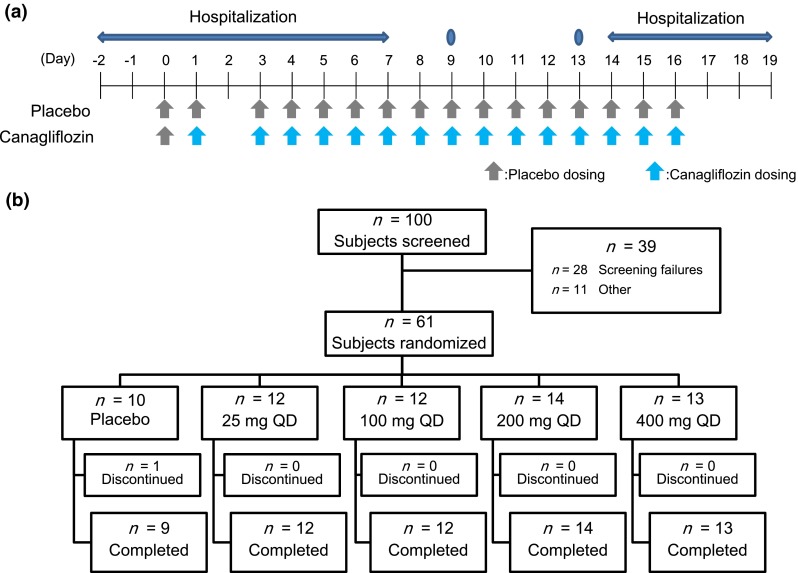
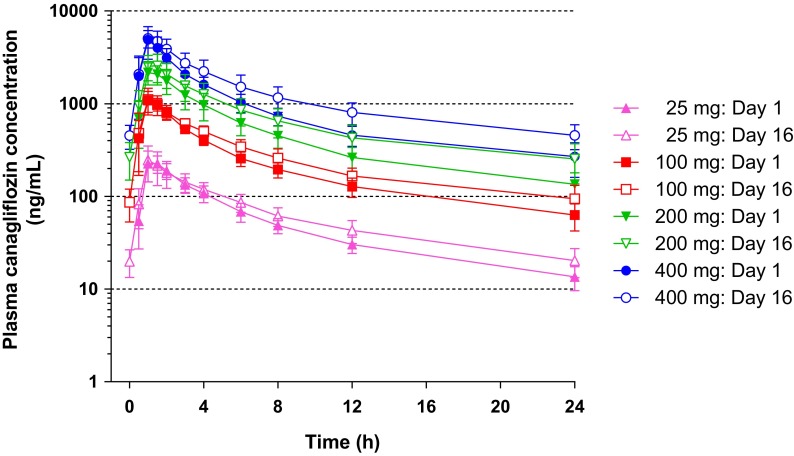
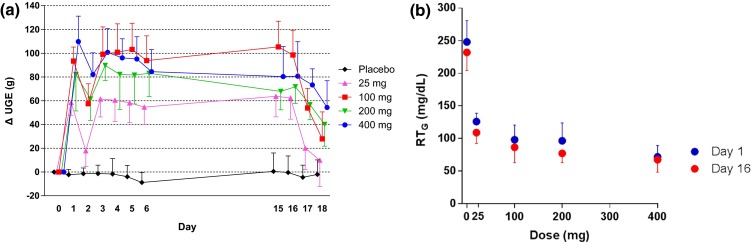
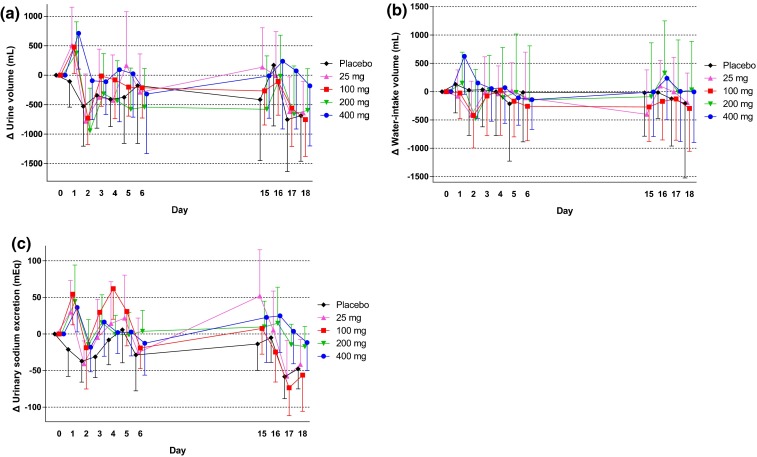
INTRODUCTION: Canagliflozin is a sodium glucose co-transporter 2 inhibitor approved worldwide for the treatment of patients with type 2 diabetes mellitus (T2DM). The present study evaluated pharmacokinetics, pharmacodynamics, and safety of canagliflozin in Japanese patients with T2DM. METHODS: Canagliflozin, at doses of 25, 100, 200, or 400 mg, was administered as a single dose and, after a washout of 1 day, in repeated doses for 14 consecutive days to 61 subjects in a randomized, double-blind, placebo-controlled study. Plasma concentrations of canagliflozin and urinary glucose excretion (UGE) were measured, and renal threshold for glucose excretion (RTG) was calculated. Safety was evaluated on the basis of adverse event (AE) reports, blood and urine laboratory parameters, and vital signs. RESULTS: Plasma canagliflozin maximum concentration and area under the concentration-time curve (AUC) values increased in a dose-dependent manner with the time to maximum concentration (t max) of 1.0 h and elimination half-life (t 1/2) of 10.22-13.26 h on Day 1. No significant changes in t max and t 1/2 were observed after multiple-dose administration. The linearity factors, as calculated from the ratios of AUC0-24h on Day 16 to AUC0-∞ on Day 1, were close to 1 in all canagliflozin groups. Canagliflozin increased UGE0-24h (80-110 g/day with canagliflozin ≥100 mg) and decreased RTG from the first day of treatment; these effects were sustained during the entire period of multiple administration. No significant AEs were noted. Urine volume was slightly increased on Day 1, but subsequent changes after repeated doses for 14 days were small. Urinary sodium tended to be higher in the early treatment period, whereas no particular change was observed in serum osmolality and hematocrit. CONCLUSION: Canagliflozin increased UGE, decreased RTG, and was well tolerated throughout the entire period of multiple administrations in Japanese patients with T2DM. FUNDING: Mitsubishi Tanabe Pharma Corporation. TRIAL REGISTRATION: ClinicalTrials.gov#NCT00707954.
Overview
The claims and statistics of this paper haven’t been checked yet.
Free: it reads the open-access text and checks the first 5 claims that cite a source we can check. Create a free account to check every claim.
Integrity signals
Registry
Cites
Statistics
Figures
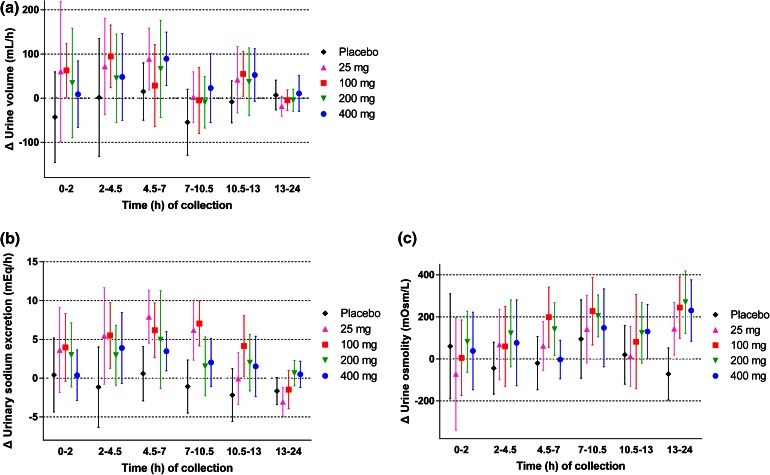
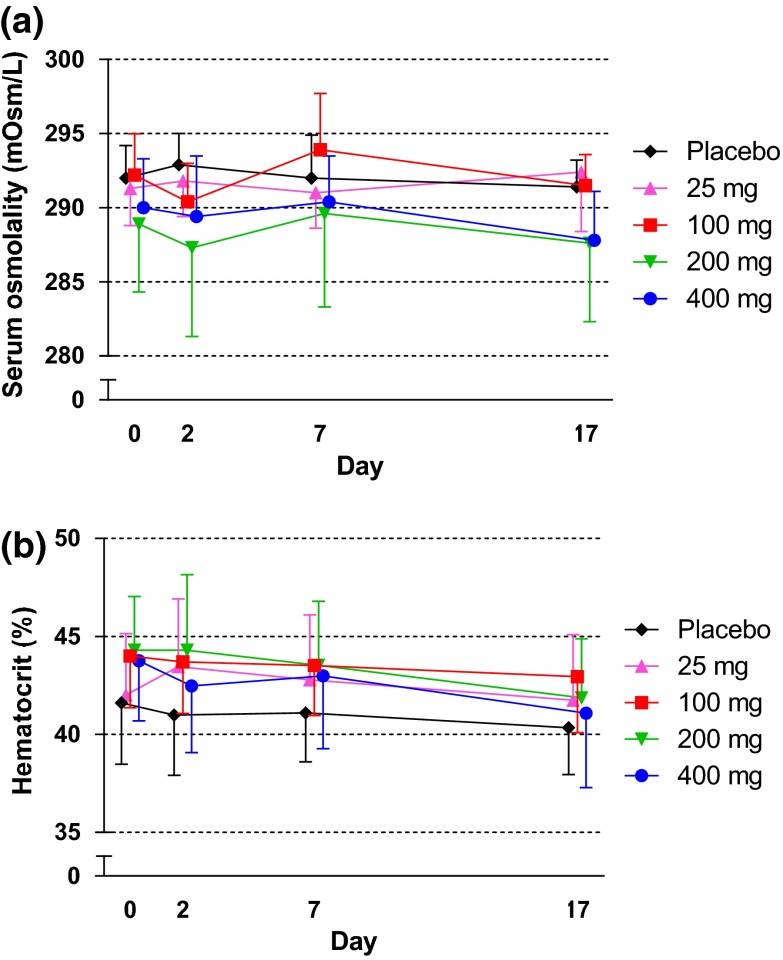
Verification
Claims the paper makes
The claims and statistics of this paper haven’t been checked yet.
Free: it reads the open-access text and checks the first 5 claims that cite a source we can check. Create a free account to check every claim.
Claims other papers make about this one
Each is checked against this paper’s own text: does it say what the citing paper says it does?
The cited source doesn’t support the claim as written.
In the citing paper
“Although clinical studies demonstrated natriuretic/osmotic diuretic effects of SGLT2 inhibitors, it should be mentioned that these studies did not record or standardize sodium intake (Tanaka et al., 2017; Iijima et al., 2015; Wilcox et al., 2018; Mordi et al., 2020; Griffin et al., 2020).”
From A kidney perspective on the mechanism of action of sodium glucose co-transporter 2 inhibitors (2021) · cites this paper as Iijima et al., 2015
Checked by a reasoning model — may be wrong.
Experimental — accuracy not yet measured
Self-check
Percentages, sums and reported differences re-computed from the paper’s own numbers.
The self-check needs the paper’s full text.
Citations
Cites
Stearne, M. R., Palmer, S. L., Hammersley, M. S., Franklin, S. L., Spivey, R. S., Lévy, J., Tidy, C. R., Bell, N. J., Steemson, J., Barrow, B. A., et al. (1998) · UCL Discovery (University College London) · Cited by 6,090
Report of the Committee on the Classification and Diagnostic Criteria of Diabetes Mellitus
The Committee of the Japan Diabetes Society on the Diagnostic Criteria of Diabetes Mellitus, Seino, Y., Nanjo, K., Tajima, N., Kadowaki, T., Kashiwagi, A., Araki, E., Ito, C., Inagaki, N., Iwamoto, Y., et al. (2010) · Journal of Diabetes Investigation · doi:10.1111/j.2040-1124.2010.00074.x · Cited by 1,772 · cited 1×
“As JDS issued a recommendation to use HbA1c (NGSP) instead of HbA1c (JDS) after study completion [23], HbA1c (JDS) values were converted to HbA1c”
Self-citationReduction in Weight and Cardiovascular Disease Risk Factors in Individuals With Type 2 Diabetes
The Look AHEAD Research Group (2007) · Diabetes Care · doi:10.2337/dc07-0048 · Cited by 1,522 · cited 1×
“In addition to blood glucose control, the management of body weight and blood pressure is critical for the prevention of diabetic complications [7, 8].”
Kinaan, M., Ding, H., & Triggle, C. R. (2015) · Medical Principles and Practice · doi:10.1159/000381643 · Cited by 1,515
Dapagliflozin a glucose-regulating drug with diuretic properties in subjects with type 2 diabetes
Lambers Heerspink, H. J., de Zeeuw, D., Wie, L., Leslie, B., & List, J. (2013) · Diabetes, Obesity and Metabolism · doi:10.1111/dom.12127 · Cited by 837 · cited 2×
“Volume-related parameters, including mean hematocrit values and serum osmolality, were not markedly changed in the present study although some SGLT2 inhibitors have been reported to increase hematocrit values and transiently decrease body fluid volumes [5, 9, 10].”
BackgroundGerich, J. E. (2010) · Diabetic Medicine · doi:10.1111/j.1464-5491.2009.02894.x · Cited by 633 · cited 3×
“90% of filtered glucose is reabsorbed by the sodium glucose co-transporter (SGLT) 2 in the S1 segment of proximal tubules, and the residual glucose is reabsorbed by SGLT1 in the S2 and S3 segments [1].”
Scheen, A. J. (2015) · Drugs · doi:10.1007/s40265-014-0337-y · Cited by 554 · cited 2×
“These pharmacodynamic profiles of canagliflozin in Japanese patients were also similar to those in studies with non-Japanese patients [3, 20, 22, 24].”
Baker, W. L., Smyth, L. R., Riche, D. M., Bourret, E. M., Chamberlin, K. W., & White, W. B. (2014) · Journal of the American Society of Hypertension · doi:10.1016/j.jash.2014.01.007 · Cited by 452 · cited 2×
“Furthermore, some SGLT2 inhibitors have shown antihypertensive effects because of their diuretic action [5, 6].”
BackgroundNomura, S., Sakamaki, S., Hongu, M., Kawanishi, E., Koga, Y., Sakamoto, T., Yamamoto, Y., Ueta, K., Kimata, H., Nakayama, K., et al. (2010) · Journal of Medicinal Chemistry · doi:10.1021/jm100332n · Cited by 385 · cited 1×
“Canagliflozin is an SGLT2 inhibitor available for the treatment of T2DM in many countries, including Japan [11–18].”
Sha, S., Polidori, D., Heise, T., Natarajan, J., Farrell, K., Wang, S. ‐., Sica, D., Rothenberg, P., & Plum‐Mörschel, L. (2014) · Diabetes, Obesity and Metabolism · doi:10.1111/dom.12322 · Cited by 249 · cited 2×
“Volume-related parameters, including mean hematocrit values and serum osmolality, were not markedly changed in the present study although some SGLT2 inhibitors have been reported to increase hematocrit values and transiently decrease body fluid volumes [5, 9, 10].”
Devineni, D., Morrow, L., Hompesch, M., Skee, D., Vandebosch, A., Murphy, J., Ways, K., & Schwartz, S. (2012) · Diabetes, Obesity and Metabolism · doi:10.1111/j.1463-1326.2012.01558.x · Cited by 220 · cited 1×
“The RTG on Days 0, 1, and 16 was calculated post hoc from the measured PG, UGE, and estimated glomerular filtration rate as previously described [18, 21, 22].”
MethodDevineni, D., Curtin, C. R., Polidori, D., Gutierrez, M. J., Murphy, J., Rusch, S., & Rothenberg, P. L. (2013) · The Journal of Clinical Pharmacology · doi:10.1002/jcph.88 · Cited by 217 · cited 3×
“These pharmacodynamic profiles of canagliflozin in Japanese patients were also similar to those in studies with non-Japanese patients [3, 20, 22, 24].”
BackgroundResultFujita, Y., & Inagaki, N. (2014) · Journal of Diabetes Investigation · doi:10.1111/jdi.12214 · Cited by 148 · cited 1×
“Thus, SGLT2 inhibitors reduce PG levels in an insulin-independent manner and also promote weight reduction by excreting the ingested calories in the form of glucose [3, 4].”
BackgroundSelf-citationInagaki, N., Kondo, K., Yoshinari, T., Maruyama, N., Susuta, Y., & Kuki, H. (2013) · Diabetes, Obesity and Metabolism · doi:10.1111/dom.12149 · Cited by 135 · cited 1×
“Canagliflozin is an SGLT2 inhibitor available for the treatment of T2DM in many countries, including Japan [11–18].”
Self-citationInagaki, N., Kondo, K., Yoshinari, T., Takahashi, N., Susuta, Y., & Kuki, H. (2014) · Expert Opinion on Pharmacotherapy · doi:10.1517/14656566.2014.935764 · Cited by 123
Self-citationRave, K., Nosek, L., Posner, J., Heise, T., Roggen, K., & van Hoogdalem, E. (2006) · Nephrology Dialysis Transplantation · doi:10.1093/ndt/gfl175 · Cited by 116 · cited 1×
“In patients with T2DM, RTG is higher than that in nondiabetic individuals [1, 2].”
BackgroundSGLT2 inhibitors: their potential reduction in blood pressure
Maliha, G., & Townsend, R. R. (2014) · Journal of the American Society of Hypertension · doi:10.1016/j.jash.2014.11.001 · Cited by 98 · cited 2×
“Volume-related parameters, including mean hematocrit values and serum osmolality, were not markedly changed in the present study although some SGLT2 inhibitors have been reported to increase hematocrit values and transiently decrease body fluid volumes [5, 9, 10].”
Sha, S., Polidori, D., Farrell, K., Ghosh, A., Natarajan, J., Vaccaro, N., Pinheiro, J., Rothenberg, P., & Plum‐Mörschel, L. (2015) · Diabetes, Obesity and Metabolism · doi:10.1111/dom.12418 · Cited by 90 · cited 1×
“These pharmacodynamic profiles of canagliflozin in Japanese patients were also similar to those in studies with non-Japanese patients [3, 20, 22, 24].”
Polidori, D., Sha, S., Ghosh, A., Plum-Mörschel, L., Heise, T., & Rothenberg, P. (2013) · The Journal of Clinical Endocrinology & Metabolism · doi:10.1210/jc.2012-4205 · Cited by 87 · cited 1×
“The RTG on Days 0, 1, and 16 was calculated post hoc from the measured PG, UGE, and estimated glomerular filtration rate as previously described [18, 21, 22].”
MethodSha, S., Devineni, D., Ghosh, A., Polidori, D., Hompesch, M., Arnolds, S., Morrow, L., Spitzer, H., Demarest, K., & Rothenberg, P. (2014) · PLoS ONE · doi:10.1371/journal.pone.0105638 · Cited by 72 · cited 3×
“In canagliflozin-treated groups, although an increasing trend was observed in the 24-h urine volume on Day 1, this increase soon declined toward baseline levels despite the sustained UGE increase, which is similar to previously reported findings [22].”
MethodResultRenal Pathophysiology: The Essentials
Rennke, H. G., & Denker, B. M. (1994) · Medical Entomology and Zoology · Cited by 70
Inagaki, N., Kondo, K., Yoshinari, T., & Kuki, H. (2015) · Journal of Diabetes Investigation · doi:10.1111/jdi.12266 · Cited by 69 · cited 1×
“Canagliflozin is an SGLT2 inhibitor available for the treatment of T2DM in many countries, including Japan [11–18].”
Self-citationKuriyama, C., Xu, J., Lee, S. P., Qi, J., Kimata, H., Kakimoto, T., Nakayama, K., Watanabe, Y., Taniuchi, N., Hikida, K., et al. (2014) · Journal of Pharmacology and Experimental Therapeutics · doi:10.1124/jpet.114.217992 · Cited by 51 · cited 1×
“Canagliflozin is an SGLT2 inhibitor available for the treatment of T2DM in many countries, including Japan [11–18].”
Furuse, K. (1995) · PubMed · Cited by 48
Inagaki, N., Kondo, K., Yoshinari, T., Ishii, M., Sakai, M., Kuki, H., & Furihata, K. (2014) · Clinical Drug Investigation · doi:10.1007/s40261-014-0226-x · Cited by 31 · cited 1×
“Japanese patients with T2DM and moderate renal impairment in an open-label, cross-over study [14].”
BackgroundSelf-citationOguma, T., Kuriyama, C., Nakayama, K., Matsushita, Y., Yoshida, K., Kiuchi, S., Ikenaga, Y., Nakamaru, Y., Hikida, K., Saito, A., et al. (2015) · Journal of Pharmacological Sciences · doi:10.1016/j.jphs.2015.03.006 · Cited by 30 · cited 1×
“Canagliflozin is an SGLT2 inhibitor available for the treatment of T2DM in many countries, including Japan [11–18].”
Devineni, D., Vaccaro, N. M., Polidori, D., Stieltjes, H., & Wajs, E. (2014) · International Journal of Clinical Pharmacology and Therapeutics · doi:10.5414/cp202218 · Cited by 19 · cited 2×
“In the United States, a clinical study was conducted on the tolerability and dose-dependent pharmacokinetics and pharmacodynamics of canagliflozin at doses of 50–300 mg in healthy subjects or patients with T2DM [19, 20].”
BackgroundResultStaff, T. P. O. (2014) · PLoS ONE · doi:10.1371/journal.pone.0110069 · Cited by 17
Cited by
Donnan, J. R., Grandy, C. A., Chibrikov, E., Marra, C. A., Aubrey-Bassler, K., Johnston, K., Swab, M., Hache, J., Curnew, D., Nguyen, H., et al. (2019) · BMJ Open · doi:10.1136/bmjopen-2018-022577 · Cited by 222
Ansary, T. M., Nakano, D., & Nishiyama, A. (2019) · International Journal of Molecular Sciences · doi:10.3390/ijms20030629 · Cited by 174
“In type 2 diabetic patients, increased urinary sodium excretion has been observed during the early phase of treatment with canagliflozin [16,18,19] and empagliflozin [24].”
BackgroundUmino, H., Hasegawa, K., Minakuchi, H., Muraoka, H., Kawaguchi, T., Kanda, T., Tokuyama, H., Wakino, S., & Itoh, H. (2018) · Scientific Reports · doi:10.1038/s41598-018-25054-y · Cited by 162
A kidney perspective on the mechanism of action of sodium glucose co-transporter 2 inhibitors
Sen, T., & Heerspink, H. J. L. (2021) · Cell Metabolism · doi:10.1016/j.cmet.2021.02.016 · Cited by 161
Tanaka, H., Takano, K., Iijima, H., Kubo, H., Maruyama, N., Hashimoto, T., Arakawa, K., Togo, M., Inagaki, N., & Kaku, K. (2017) · Advances in Therapy · doi:10.1007/s12325-016-0457-8 · Cited by 140
“We performed correlation and multiple regression analyses using the data of present and previous studies [19].”
BackgroundMethodResultSelf-citation
Metadata
- Authors
- Iijima, H., Kifuji, T., Maruyama, N., & Inagaki, N.
- Affiliations
- Tanabe Pharma Corporation (Japan) (JP)
- Kyoto University (JP)
- Corresponding author
- Iijima, Hiroaki
- Venue
- Advances in Therapy
- Published
- 2015-08
- Volume
- 32
- Issue
- 8
- Pages
- 768-782
- ISSN
- 0741-238X (ISSN-L)
- 1865-8652
- PMC
- PMC4569680
- OpenAlex
- W1867144247
- Cited by
- 70
- References
- 30
- Citations by year
- 2026: 5 · 2025: 9 · 2024: 6 · 2023: 10 · 2022: 9 · 2021: 5 · 2020: 10 · 2019: 4 · 2018: 6 · 2017: 2 · 2016: 4
- FWCI
- 3.47
- Type
- journal article
- Language
- en
- Open access
- hybrid
- doi.org
- Licence
- cc-by-nc
- Locations
- Advances in Therapy (publishedVersion, cc-by-nc)
- PubMed Central (publishedVersion, cc-by-nc)
- PubMed (publishedVersion)
- Funders
- Mitsubishi Tanabe Pharma Corporation
- Topics
- Health Sciences › Medicine › Endocrinology, Diabetes and Metabolism › Diabetes Treatment and Management
- Health Sciences › Medicine › Endocrinology, Diabetes and Metabolism › Diabetes Management and Research
- Health Sciences › Medicine › Pharmacology (medical) › Pharmacology and Obesity Treatment
- Keywords
- canagliflozin, SGLT2 inhibitors, type 2 diabetes, pharmacokinetics, pharmacodynamics, urinary glucose excretion, renal glucose threshold, repeated dosing, drug safety, Japanese patients, dose dependence, adverse events, urinary sodium, serum osmolality, hematocrit, urine output, elimination half-life, bioavailability
- MeSH terms
- Canagliflozin, Sodium-Glucose Transporter 2 Inhibitors, Adult, Aged, Blood Glucose, Diabetes Mellitus, Type 2, Dose-Response Relationship, Drug, Double-Blind Method, Drug Administration Schedule, Female, Half-Life, Humans, Hypoglycemic Agents, Male, Middle Aged, Treatment Outcome, Drug Monitoring, Asian People
About these checks
Registry, retraction, Cites and statistics results are computed, not judged, with one exception: a printed reference that no index lists is read once by a model before it counts as a citation error. Claims are extracted by a model and kept only when their quote appears verbatim in the text; each cited source is then checked, with a model’s help, for whether it says what the claim relies on. Those verdicts can be wrong — read the claim’s quote and the cited source before relying on one.
Statistics and arithmetic are recomputed, not judged.
Confidence bands are shown only for fields calibrated on our annotated test set. None is calibrated yet, so no band is shown.
What counts as a claim ›How we measure confidence ›How we check this ›
Are you an author, or do you see a problem with this page? Request a review
Data sources
Bibliographic data: Semantic Scholar, OpenAlex, Crossref.
Contains information from the Semantic Scholar Academic Graph Datasets, made available under the ODC Attribution License (ODC-BY 1.0).
Semantic Scholar’s data is described in: Kinney, R., et al. (2023). The Semantic Scholar Open Data Platform. arXiv:2301.10140.
