

The Economic Burden of Adults with Major Depressive Disorder in the United States (2019)
Open accessThe DOI matches its Crossref record; 9 of the 30 references it cites were found in a registry or an index; 6 of the 21 sources its claims cite were checked for support.
Abstract
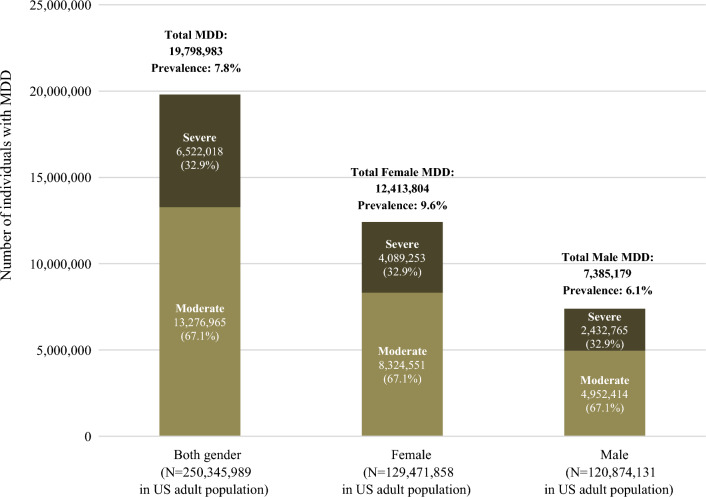
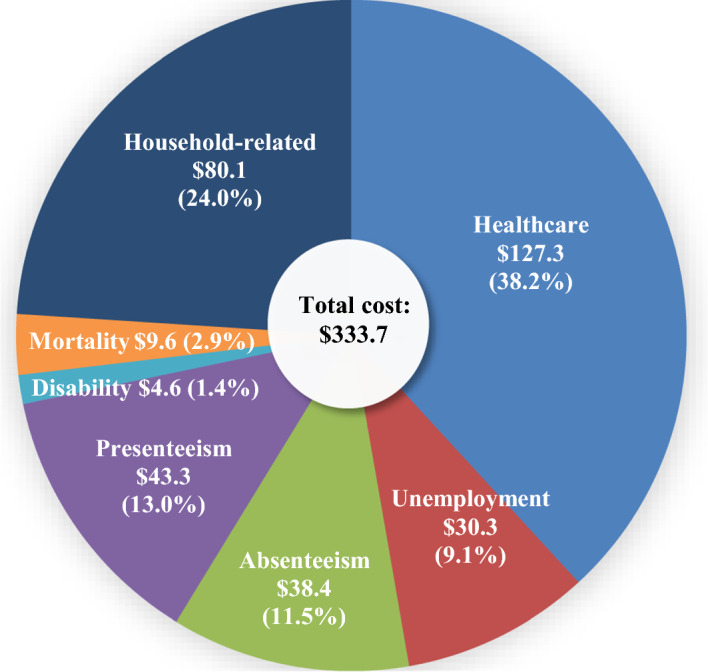
INTRODUCTION: Previous societal burden estimations for major depressive disorder (MDD) often fail to account for several hidden cost components. This study provides a comprehensive evaluation of societal costs for adults with MDD in the United States (USA) in 2019. The potential impact of a more effective, rapid-acting MDD therapy vs standard of care on the economic burden of MDD was estimated to illustrate the utility of such a framework in evaluating new interventions. METHODS: This study used a prevalence-based human capital approach. Incremental costs (2019 US dollars) per individual with MDD were derived from national survey inputs and published literature and included incremental healthcare costs and indirect costs. For each cost component, the societal costs were extrapolated by multiplying the per-patient costs by the number of individuals with MDD. The impact of a more effective, rapid-acting novel therapy on the economic burden of MDD was then simulated on the basis of these inputs. RESULTS: In 2019, the number of adults with MDD in the USA was estimated at 19.8 million (62.7% female; 32.9% severe MDD), and the incremental societal economic burden of MDD was estimated at $333.7 billion ($382.4 billion in 2023 US dollars), or $16,854 per adult with MDD. The primary cost drivers were healthcare costs ($127.3 billion; 38.1%), household-related costs ($80.1 billion; 24.0%), presenteeism ($43.3 billion; 13.0%), and absenteeism ($38.4 billion; 11.5%). In the simulated scenario, a hypothetical novel therapy with a 50.0% early response rate was associated with a 7.7% reduction in the economic burden of MDD relative to standard of care over 12 months. CONCLUSIONS: The economic burden of MDD is substantial and extends beyond healthcare costs, underscoring the impact of MDD across multiple aspects of life. Such a broad societal perspective should be considered in assessing the impact of the advent of effective, rapid-acting MDD therapies.
Overview
CoChat Summary
TL;DR
This study estimates the 2019 societal economic burden of major depressive disorder (MDD) among US adults at $333.7 billion, or $16,854 per adult with MDD, with most costs driven by indirect components. A hypothetical simulation suggests a more effective, rapid-acting therapy could reduce the incremental economic burden by 7.7%.
Key findings
- The total incremental economic burden of MDD in US adults in 2019 was $333.7 billion ($382.4 billion in 2023 USD), or $16,854 per adult with MDD; indirect costs accounted for 61.9% ($206.4 billion) of the total.
- Household-related costs were $80.1 billion (24.0% of total burden), representing 38.8% of all indirect costs and borne by adults without MDD living with an adult with MDD.
- MDD prevalence among US adults was 7.8%, equivalent to 19.8 million adults; 67.1% had moderate and 32.9% had severe symptoms, and 62.7% of the MDD population were female.
- In a simulation assuming a novel therapy with early response of 50.0% versus 19.8% for standard care, the incremental economic burden fell to $308.0 billion, a 7.7% reduction; sensitivity analyses ranged from $254.4 billion to $418.6 billion.
Methods
- Prevalence-based human capital approach using a bottom-up method: average per-patient incremental costs were multiplied by the estimated number of US adults with MDD.
- Cost components included healthcare costs, unemployment, absenteeism, presenteeism, disability, all-cause mortality, and household-related costs, stratified by gender and MDD severity where available.
- Inputs came from national survey data (NSDUH, NHANES), US Census Bureau data, claims-based studies, and published literature; a hypothetical simulation assessed the impact of a rapid-acting novel MDD therapy.
Limitations
- The paper states that cost estimates should be interpreted as associations rather than causation, and that reliance on multiple literature-based estimates may under- or overestimate certain cost components.
- The paper states that MDD prevalence used NSDUH major depressive episode data as a proxy, with possible self-report bias, and that individuals with mild depressive symptoms (PHQ-9 score <10) were assumed not to qualify for MDD, potentially missing some burden.
- The paper states that the novel therapy simulation was hypothetical, assumed all treated patients would switch to the novel therapy, and did not account for long-term life-course effects; the text also makes evident that the study was funded by Biogen Inc. and Sage Therapeutics, Inc., with several authors employed by or consulting for industry.
Model-written summary. Check it against the paper before relying on it.
Integrity signals
Registry
Cites
Statistics
Figures
Verification
Claims the paper makes
3 Valid · 3 Not valid · 13 Not checked · 62 Own results and interpretations
At least one cited source doesn’t support this claim or points to a different paper, and none confirmed it — see the verdicts below.
In the paper
“The current estimate of total incremental costs of MDD in 2019 represents a 3.5% increase in the burden compared with a prior estimate in 2018 (when standardized to 2019 values), with 36.0% of the total incremental costs of MDD in 2019 coming from novel components not previously included in the prior estimate (i.e., unemployment, all-cause mortality, householdrelated costs) [8].”
§ The Economic Burden of Adults with Major Depressive Disorder in the United States (2019) > DISCUSSION
What the sources say
- Disputedcites [8] Greenberg PE, Fournier AA, Sisitsky T, et al. The economic burden of adults with major depressive disorder in the United States (2010 and 2018). Pharmacoeconomics. 2021;39(6):653-65. sourceExperimental — accuracy not yet measured
Our copy of Greenberg et al. (2021) reports only a 2010-vs-2018 comparison in year 2020 values: the incremental burden rose from $US236.6B to $US326.2B, an increase of 37.9% (§3.2 MDD Costs: 2010 vs. 2018; Abstract), with the 2018 composition being 35% direct, 4% suicide-related and 61% workplace costs — no 2019 estimate and no 3.5% figure appear anywhere. The claim's 'novel components' are also contrary to what the paper says: §4.2 Limitations states that 'potentially important cost categories were not incorporated into the methodology, thereby resulting in understated estimates' (student/career effects, caregiver burden, quality-of-life), and its only mortality component is suicide-related cost with 50% of suicides attributed to MDD (§2.4), not all-cause mortality, unemployment or household-related costs. Searches for '2019 values / 3.5%', 'unemployment, all-cause mortality, household-related costs' returned nothing supporting the attributed numbers. (LLM, conf=0.68)
Checked by a reasoning model — may be wrong.
plainstates an association- Asserted: passes — The authors put it forward as true.
- Checkable: passes — It can be checked against evidence.
- Load-bearing: unclear — It is unclear whether the paper’s conclusions depend on it.
- Based: passes — The paper gives a reason why it holds.
- Disputed
The cited sources support only part of this claim — read each source’s verdict below.
In the paper
“one of the key differentiators of the current study from previous estimations of the economic burden of MDD [8,33,34] was the consideration of household-related costs.”
§ The Economic Burden of Adults with Major Depressive Disorder in the United States (2019) > DISCUSSION
What the sources say
- Supportedcites [8] Greenberg PE, Fournier AA, Sisitsky T, et al. The economic burden of adults with major depressive disorder in the United States (2010 and 2018). Pharmacoeconomics. 2021;39(6):653-65. source
The citation identifies this paper as a previous estimate of MDD’s economic burden, rather than attributing the citing study’s household-cost analysis to it. The Introduction describes an update of earlier estimates focused on direct, suicide-related, and workplace costs; the Limitations section notes that caregiver burdens were not incorporated. This supports the stated distinction. (LLM, conf=0.91)
- Not checked yetcites [33] Chow W, Doane MJ, Sheehan J, et al. Clinical brief. Economic burden among patients with major depressive disorder: an analysis of healthcare resource use, work productivity, and direct and indirect costs by depression severity. Am J Manag Care. 2019. (Supplements and Featured Publica- tions. February 2019). https://www.ajmc.com/view/ economic-burden-mdd.
- Partly supportedcites [34] Jain S, Gupta S, Li VW, et al. Humanistic and eco- nomic burden associated with depression in the United States: a cross-sectional survey analysis. BMC Psychiatry. 2022;22(1):542. sourceExperimental — accuracy not yet measured
The Background identifies this as a study of depression’s economic burden, and Methods > Measures describes its work-productivity and healthcare-utilization measures. It therefore supports citing the paper as earlier economic-burden research, but our copy does not report a monetary cost estimate. The statement about household-related costs is the citing authors’ description of their own study, not a finding attributed to this source. (LLM, conf=0.79)
plain- Asserted: passes — The authors put it forward as true.
- Checkable: passes — It can be checked against evidence.
- Load-bearing: passes — The paper’s conclusions depend on it.
- Based: passes — The paper gives a reason why it holds.
- Supported
The cited sources support only part of this claim — read each source’s verdict below.
In the paper
“Given that MDD is highly comorbid with other mental and physical health conditions [7,43]”
§ The Economic Burden of Adults with Major Depressive Disorder in the United States (2019) > DISCUSSION
What the sources say
- Partly supportedcites [7] Hasin DS, Sarvet AL, Meyers JL, et al. Epidemiology of adult DSM-5 major depressive disorder and its specifiers in the United States. JAMA Psychiat. 2018;75(4):336-46. sourceExperimental — accuracy not yet measured
The Discussion and Table 2 report substantial comorbidity between MDD and other psychiatric disorders, including anxiety and substance use disorders. The passages do not establish comorbidity with physical health conditions; the physical conditions found in the References are titles of other works. Page numbers are not available in our copy. (LLM, conf=0.85)
- Not checked yetcites [43] Iosifescu DV, Nierenberg AA, Alpert JE, et al. The impact of medical comorbidity on acute treatment in major depressive disorder. Am J Psychiatry. 2003;160(12):2122-7. source
plainstates an association- Asserted: passes — The authors put it forward as true.
- Checkable: passes — It can be checked against evidence.
- Load-bearing: passes — The paper’s conclusions depend on it.
- Based: passes — The paper gives a reason why it holds.
- Partly supported
A result the paper reports from its own data — it cites no other source for it, so there is none to check. The quote shows it is in the paper.
In the paper
“The total incremental economic burden of adults with MDD in the USA in 2019 was estimated at $333.7 billion (equivalent to $382.4 billion in 2023 USD), or $16,854 per adult with MDD (Table 1); women with MDD accounted for 52.6% of the total burden.”
- Also stated in: § DISCUSSION · plain
“The total incremental costs associated with MDD in 2019 amounted to $333.7 billion (equivalent to $382.4 billion in 2023 USD), or $16,854 per adult with MDD, which was driven by indirect costs (61.9%),”
§ The Economic Burden of Adults with Major Depressive Disorder in the United States (2019) > Economic Burden of MDD
plain- Asserted: passes — The authors put it forward as true.
- Checkable: passes — It can be checked against evidence.
- Load-bearing: passes — The paper’s conclusions depend on it.
- Based: passes — The paper gives a reason why it holds.
- Also stated in: § DISCUSSION · plain
A result the paper reports from its own data — it cites no other source for it, so there is none to check. The quote shows it is in the paper.
In the paper
“The total incremental economic burden of adults with MDD in the USA in 2019 was estimated at $333.7 billion (equivalent to $382.4 billion in 2023 USD), or $16,854 per adult with MDD (Table 1); women with MDD accounted for 52.6% of the total burden.”
§ The Economic Burden of Adults with Major Depressive Disorder in the United States (2019) > Economic Burden of MDD
hedged- Asserted: passes — The authors put it forward as true.
- Checkable: passes — It can be checked against evidence.
- Load-bearing: passes — The paper’s conclusions depend on it.
- Based: passes — The paper gives a reason why it holds.
48 more claims
Create a free account to see all 81 claims and to verify the 15 references still open.
- Probably not a substantial claim. 15
- It may state two separate claims as one. 17
- The quote only partly states this claim. 5
Claims other papers make about this one
Each is checked against this paper’s own text: does it say what the citing paper says it does?
The cited source says what the claim attributes to it.
In the citing paper
“This finding suggested that the immense economic burden caused by depressive disorder may have deteriorated in recent decades, which aligns with the findings from a 2019 study [19].”
Self-check
Percentages, sums and reported differences re-computed from the paper’s own numbers.
Each contradiction between two passages listed here was confirmed by an independent check.
Rated minor: it would not touch a result — a value no result rests on, a p-value that stays on the same side of the significance level, or a conflict that is clerical, resolved elsewhere in the paper, or outside its own findings.
In the paper
§ The Economic Burden of Adults with Major Depressive Disorder in the United States (2019) > CONCLUSIONS
“| Disability | $4,621,054,657 | $2,834,898,257 | $1,786,156,400 |”
§ The Economic Burden of Adults with Major Depressive Disorder in the United States (2019) > DISCUSSION
“Employed male with MDD 4,686,307 $242 $1,764,389,407 [12]”
Rated minor: it would not touch a result — a value no result rests on, a p-value that stays on the same side of the significance level, or a conflict that is clerical, resolved elsewhere in the paper, or outside its own findings.
In the paper
§ The Economic Burden of Adults with Major Depressive Disorder in the United States (2019) > DISCUSSION
“A third of the total count of suicides in the USA in 2019 (30,899 out of 45,861 suicides) were attributed to MDD”
§ The Economic Burden of Adults with Major Depressive Disorder in the United States (2019) > Mortality
“In 2019, there were an estimated 30,899 incremental deaths among adults with MDD in the USA, of which 15,272 were estimated to be due to suicide, accounting for one-third of all suicides that year.”
Citations
Cites
Mental health and the COVID-19 pandemic
Pfefferbaum, B., & North, C. S. (2020) · New England Journal of Medicine · doi:10.1056/nejmp2008017 · Cited by 4,378 · cited 17×
“A third of the total count of suicides in the USA in 2019 (30,899 out of 45,861 suicides) were attributed to MDD, which accounted for 50% of the excess all-cause deaths among adults with MDD in 2019.”
BackgroundInfluentialPrevalence of and Risk Factors for Lifetime Suicide Attempts in the National Comorbidity Survey
Kessler, R. C., Borges, G., & Walters, E. E. (1999) · Archives of General Psychiatry · doi:10.1001/archpsyc.56.7.617 · Cited by 2,514
Self-citationPrevalence of depression symptoms in US adults before and during the COVID-19 pandemic
Ettman, C. K., Abdalla, S. M., Cohen, G. H., Sampson, L., Vivier, P. M., & Galea, S. (2020) · JAMA Network Open · doi:10.1001/jamanetworkopen.2020.19686 · Cited by 2,138
“Pandemic fear” and COVID-19: mental health burden and strategies
Ornell, F., Schuch, J. B., Sordi, A. O., & Kessler, F. H. P. (2020) · Brazilian Journal of Psychiatry · doi:10.1590/1516-4446-2020-0008 · Cited by 1,852 · cited 1×
“The pandemic has brought fundamental changes to the lifestyle, work routine, and social relationships of the US population, and there could be long-lasting effects even after the pandemic subsides [47].”
BackgroundEpidemiology of Adult DSM-5 Major Depressive Disorder and Its Specifiers in the United States
Hasin, D. S., Sarvet, A. L., Meyers, J. L., Saha, T. D., Ruan, W. J., Stohl, M., & Grant, B. F. (2018) · JAMA Psychiatry · doi:10.1001/jamapsychiatry.2017.4602 · Cited by 1,737 · cited 1×
“Given that MDD is highly comorbid with other mental and physical health conditions [7, 43], which may exert reciprocal impacts on disease severity and management, the burden of MDD is likely partially embodied in the economic assessments of other mental and physical health conditions.”
BackgroundMokdad (2018) · doi:10.1001/jama.2018.0158 · Cited by 1,517
Cost of Lost Productive Work Time Among US Workers With Depression
Stewart, W. F. (2003) · JAMA · doi:10.1001/jama.289.23.3135 · Cited by 1,421 · cited 2×
“The number of workdays missed due to presenteeism associated with reduced productivity while at work was based on prior literature estimates [21].”
BackgroundMethodThe Economic Burden of Adults with Major Depressive Disorder in the United States (2010 and 2018)
Greenberg, P. E., Fournier, A.-A., Sisitsky, T., Simes, M., Berman, R., Koenigsberg, S. H., & Kessler, R. C. (2021) · PharmacoEconomics · doi:10.1007/s40273-021-01019-4 · Cited by 838
Self-citationGrenard, J. L., Munjas, B. A., Adams, J. L., Suttorp, M., Maglione, M., McGlynn, E. A., & Gellad, W. F. (2011) · Journal of General Internal Medicine · doi:10.1007/s11606-011-1704-y · Cited by 635
Lakdawalla, D. N., Doshi, J. A., Garrison, L. P., Phelps, C. E., Basu, A., & Danzon, P. M. (2018) · Value in Health · doi:10.1016/j.jval.2017.12.007 · Cited by 540
Research works printed but not linked: 2
- Voller C, Hickey C, Tan R, et al. Assessing the onset of efficacy and tolerability of pharmacological treatments in major depressive disorder: a system- atic literature review and descriptive analysis. [un- published manuscript]. 2023.
- Chitnis A, O'Callaghan L, Fournier AA, et al. Impact of living with an adult with major depressive dis- order among households in the United States. J Affect Disord. 2023. (in press).
Cited by
Items 101–200 of 264
Lisha, I., Godbole Kroger, N. B., Tsalatsanis, A., Norred, M. A., Daneman, L. E. W., Tindall, B., Grewal, E. P., Araque, S. M., & Zuschlag, Z. D. (2026) · Journal of Affective Disorders · doi:10.1016/j.jad.2025.121032 · Cited by 1
Comparative Side‐Effects of Neurosurgical Treatment of Treatment‐Resistant Depression
Keat, A. L. E., Li, K. T. J., Teo, C. H., & Soga, T. (2024) · CNS Neuroscience & Therapeutics · doi:10.1111/cns.70090 · Cited by 1
Shin, D., Han, K., Lee, S., Kim, B., Pyun, S., Tae, W., & Ham, B. (2024) · Psychiatry Research Neuroimaging · doi:10.1016/j.pscychresns.2024.111942 · Cited by 2
Jha, M. K., Zhdanava, M., Shah, A., Voegel, A., Tardif‐Samson, A., Pilon, D., & Joshi, K. (2025) · Drugs - Real World Outcomes · doi:10.1007/s40801-024-00478-3 · Cited by 2
He, S., Li, H., Xie, F., Li, W. S., Wan, L., & Zhang, H. (2025) · Frontiers in Psychiatry · doi:10.3389/fpsyt.2025.1595829 · Cited by 1
Petak, A., & Novak, M. (2025) · Chronobiology International · doi:10.1080/07420528.2025.2513433 · Cited by 1
“Due to the significant social and economic burdens associated with poor sleep (Hafner et al. 2023) and depression (Greenberg et al. 2023), as well as the high prevalence of both problems among students (Maithani et al. 2024; Ramón-Arbués et al. 2020; Zhou et al. 2022), it is essential to understand…”
Pan, J., Liu, J., Fan, Q., Gao, S., Yu, L., & Zhang, L. (2025) · Frontiers in Pharmacology · doi:10.3389/fphar.2025.1606445 · Cited by 1
Racial Disparities in TMS Research Participation and Clinical Access in the United States
Sullivan, C. R. P., Cooper, D. C., McCright, A. M., Hackman, D. E., Widge, A. S., Wilson, S., & Cabrera, L. Y. (2025) · Advances in neuroethics · doi:10.1007/978-3-031-92401-9_3 · Cited by 1
Ralph, L. N., & Kohler, C. G. (2025) · Journal of the American Psychiatric Nurses Association · doi:10.1177/10783903251354945 · Cited by 1
“While prevalence rates for both major depression and bipolar disorder are much higher than schizophrenia, they are associated with similar economic burdens (Bessonova et al., 2020; Greenberg et al., 2023).”
Integrating Cortical Source Reconstruction and Adversarial Learning for EEG Classification
Guo, Y., Pei, Y., Yao, R., Yan, Y., Song, M., & Li, H. (2025) · Sensors · doi:10.3390/s25164989 · Cited by 1
Masand, P. S., Parikh, M., Ta, J. T., Wade, S. W., Haile, F., Ripley, S., Zanardo, E., Spencer, C., Laliberté, F., & Nabulsi, N. A. (2025) · ClinicoEconomics and Outcomes Research · doi:10.2147/ceor.s522756 · Cited by 1
Wilding, H. E., Dyer, W. G., Sutara, B. N., Lee, S., Linden‐Carmichael, A. N., Lanza, S. T., & Lee, H. (2025) · Social Psychiatry and Psychiatric Epidemiology · doi:10.1007/s00127-025-02987-0 · Cited by 1
Crawford, C. A., Minor, K. S., Cyders, M. A., & Stewart, J. C. (2025) · Sleep Medicine · doi:10.1016/j.sleep.2025.106824 · Cited by 1
Life Stressors and Depressive Symptoms: The Moderating Roles of Alcohol Consumption and Age
Moon, J., Jeon, S. W., An, Y., & Cho, S. (2025) · Brain Sciences · doi:10.3390/brainsci15101126 · Cited by 1
Masand, P. S., Clayton, A. H., Parikh, M., Haile, F., Germain, G., Ripley, S., Ma, S., Laliberté, F., & Nabulsi, N. A. (2025) · Journal of Medical Economics · doi:10.1080/13696998.2025.2587412 · Cited by 1
“Major depressive disorder (MDD) has a substantial humanistic and economic burden 1 – 3 , with a past-year prevalence of 7.1% among US adults in 2018 4 .”
InfluentialGlobal burden of major depressive disorder attributable to psoriasis, 2000–2021
Pandey, A., Elhaj, H., Nedjar, H., Khoury, L., Rahme, E., Litvinov, I. V., Hundal, S., Kaouache, M., & Netchiporouk, E. (2025) · Journal of the European Academy of Dermatology and Venereology · doi:10.1111/jdv.70228 · Cited by 1
Hematological inflammatory indices and Long-Term risk of depressive symptoms: a korean cohort study
Jung, J. Y., Oh, C., Ryoo, J., Chung, Y., & Park, S. K. (2025) · The World Journal of Biological Psychiatry · doi:10.1080/15622975.2025.2599303 · Cited by 1
“For instance, in the United States, the incremental economic burden of major depressive disorder (MDD) was estimated at USD 333.7 billion in 2019 (Greenberg et al. 2023).”
InfluentialSousa-Ho, R. L., Demchenko, I., Baltazar, V. A., Tailor, I., Dunkley, B. T., Schweizer, T. A., Kennedy, S. H., Boutet, A., Lozano, A. M., Fatt, C. C., et al. (2026) · Progress in Neuro-Psychopharmacology and Biological Psychiatry · doi:10.1016/j.pnpbp.2026.111616 · Cited by 1
Horwitz, A. G., Mills, E. D., Nanwani, R., Bohnert, A. S. B., & Sen, S. (2026) · Journal of Affective Disorders · doi:10.1016/j.jad.2026.121237 · Cited by 1
Chao, Y., Seo, J. Y., Yeh, A.-Y., Wang, W., & Chang, Y. (2026) · Perspectives In Psychiatric Care · doi:10.1155/ppc/9538612 · Cited by 1
Stark, C., Beck, J., Oswald, A., Rogausch, A., Schreiner, A.-K., Cody, R., Hohberg, V., Knappe, F., Kreppke, J.-N., Ludyga, S., et al. (2026) · Trials · doi:10.1186/s13063-026-09500-1 · Cited by 1
“Indirect costs — such as household expenses, presenteeism, and absenteeism — are about as high as direct healthcare costs [5].”
Durgam, S., Earley, W. R., Kozauer, S. G., Chen, C., Lakkis, H. D., & Cutler, A. J. (2026) · European Neuropsychopharmacology · doi:10.1016/j.euroneuro.2026.112786 · Cited by 1
Geng, Z., Guo, W., Wang, J., Ma, Y., & Zhu, Y. (2026) · Sensors · doi:10.3390/s26092868 · Cited by 1
Serum lipid profiles and risk of depression: a UK Biobank prospective cohort study
Du, M., & Li, C. J. (2026) · Frontiers in Nutrition · doi:10.3389/fnut.2026.1839994 · Cited by 1
Homocysteine and cognitive function in depression: a systematic review and meta-analysis
Liu, X., Liu, Q., Xu, J., & Wu, J. (2026) · Frontiers in Psychiatry · doi:10.3389/fpsyt.2026.1798998 · Cited by 1
Khalid, R., Elbashir, G., Hassan, A., & Abdulbagi, M. (2026) · Cureus · doi:10.7759/cureus.109712 · Cited by 1
Ruan, J., Li, S., Xu, F., Ho, F. Y., Cheung, T. C. C., Ho, J. Y. S., Chan, W. C., Chen, H., Au, D. C. W., Lee, R. W. Y., et al. (2026) · Healthcare · doi:10.3390/healthcare14121631 · Cited by 1
Lee, H., Kang, H., Paik, J.-W., Jeong, Y., Eum, H., & Lee, H. (2026) · Current Medical Research and Opinion · doi:10.1080/03007995.2026.2683436 · Cited by 1
“In European and US cost-of-illness studies, indirect or social costs accounted for more than 60% of the total burden of depression 33,34 , exceeding the 45% indirect cost share during the MDE observed here, whereas a previous Korean study reported an indirect cost proportion of 95.8% in 2005 35 .”
InfluentialFan, K., Niu, X., Zhao, J., Lin, G., Qu, J., Wang, Q., & Li, L. (2026) · Frontiers in Psychiatry · doi:10.3389/fpsyt.2026.1873016 · Cited by 2
Ye, J., Duan, C., Pei, H., Weng, J., Wang, W., Xu, J., Li, Y., Yuan, T., & Peng, D. (2026) · Translational Psychiatry · doi:10.1038/s41398-026-04258-1 · Cited by 1
“It is anticipated that by the year 2030, major depressive disorder (MDD) will become the leading factor contributing to the global burden of disease, marking it as a signi fi cant global health crisis [1, 2].”
Sexual Dysfunctions Among Female Major Depressive Disorder Patients of Reproductive Age
Habiba, R., Sharif-ul-Alam, S., Uddin, M. J., Singha, R. K., Sayed, M. A., & Chowdhury, A. R. (2024) · Scholars Journal of Applied Medical Sciences · doi:10.36347/sjams.2024.v12i02.020 · Cited by 1
“Moreover, WHO projections suggest that by the year 2020, depression will ascend to the position of the second leading cause of disease burden worldwide, underscoring the urgent need for understanding and addressing this pervasive condition [3].”
BackgroundMajor Depressive Disorder: A General Overview
Wang, T. (2024) · Springer Link (Chiba Institute of Technology) · doi:10.1051/shsconf/202419303007/pdf · Cited by 1
Exploring the link between neuroticism, depression and anxiety: the mediating role of death anxiety
Dumitru, E. P., Cardoș, R. A.-I., & David, D. O. (2026) · Current Psychology · doi:10.1007/s12144-025-08864-y · Cited by 1
“Along with its psychological impact, depression also carries a significant economic burden, con - tributing to a societal cost of $382.3 billion (Greenberg et al., 2023).”
InfluentialKokolakis, E., von Mücke-Heim, I.-A., Pape, J. C., Grandi, N. C., Erhardt, A., Sämann, P. G., Spoormaker, V. I., Gogolla, N., Binder, E. B., & Falkai, P. (2026) · Scientific Reports · doi:10.1038/s41598-026-42459-2 · Cited by 1
McQueen, R. B., Cohen, B., Kacergis, C., Kennedy, E., & Rosettie, K. L. (2026) · PharmacoEconomics - Open · doi:10.1007/s41669-026-00654-x · Cited by 1
“In contrast, informal caregiving-related impacts on unpaid non-market work productivity were assessed in only 30% of studies (9 of 30) and were assessed less frequently [26, 30, 32, 33, 35, 37, 47, 50, 51].”
InfluentialFrom waitlists to well-being: An analytical approach to AI-supported mental healthcare
Cai, J., Likvornik, N. F., & Zychlinski, N. (2026) · IISE Transactions · doi:10.1080/24725854.2026.2679528 · Cited by 1
Morris, L. S., Beltran, J., Kvamme, T. L., Chowdhury, A., Butler, G., Adams, A., Patel, T., Obie, E., Fontaine, S., Corniquel, M. B., et al. (2026) · Molecular Psychiatry · doi:10.1038/s41380-026-03911-x · Cited by 1
Mei, H., Rowe, J. T. W., Sowinski, A., & Greer, D. (2024) · Cureus · doi:10.7759/cureus.76200 · Cited by 1
Strategies to Improve Women’s Mental Health Across the Life Course
Simonovich, S. D., Stephens, J. D., Huang, H. Y., & Tabb, K. M. (2025) · Journal of Obstetric, Gynecologic & Neonatal Nursing · doi:10.1016/j.jogn.2024.12.001 · Cited by 1
Macroeconomics of Mental HealthPreprint
Abramson, B., Boerma, J., & Tsyvinski, A. (2024) · SSRN Electronic Journal · doi:10.2139/ssrn.4802569 · Cited by 3
Therapeutic Alliance Predicts Clinical Outcomes in a Fully Virtual Telepsychiatry PracticePreprint
Phillips, N., Gaveras, G., & Person, C. L. (2025) · medRxiv · doi:10.1101/2025.05.09.25327264 · Cited by 1
The Effects of Waiting Periods on Firearm Suicides in the U.SPreprint
Hadah, H. (2025) · SSRN Electronic Journal · doi:10.2139/ssrn.5383500 · Cited by 1
Abreu, P. R. (2016) · Digital Library of Theses and Dissertations (Universidade de São Paulo) · doi:10.11606/d.59.2016.tde-11082016-142317
Garg, A. (2019) · Juniper Online Journal of Case Studies · doi:10.19080/jojcs.2019.10.555784
State of Emergency on Childhood Trauma
Hummons, R. A. (2023) · International Journal of Sciences · doi:10.18483/ijsci.2667
Çınaroğlu, M., TÜTÜNCÜ, S., Ülker, S. V., & Memnun, D. (2023) · JOURNAL OF SOCIAL HUMANITIES AND ADMINISTRATIVE SCIENCES · doi:10.29228/joshas.68545
Sadr, S. S., Vaziri-harami, R., Ardestani, S. M. S., & Dehghani, S. (2024) · Iranian Journal of Psychiatry · doi:10.18502/ijps.v19i3.15807
“Mood disorders not only affect individuals but also have significant economic and societal impacts (7).”
BackgroundAre women really at a 2-fold increased risk to develop lifetime depression, compared to men?Preprint
Miché, M. (2024) · PsyArXiv (OSF Preprints) · doi:10.31234/osf.io/tcbj3
Lichen Sclerosus is a high-cost diagnosis, compounded by comorbid conditions
Visingardi, J., Patel, S., Lu, V., Bibicheff, D., & De, E. (2024) · Continence · doi:10.1016/j.cont.2024.101706
Research Progress of Mental Health Services of General Practitioners
方, 哲. (2024) · Advances in Clinical Medicine · doi:10.12677/acm.2024.14102692
Relationship between Depression, Rumination, and Emotionally Valenced Working Memory Performance
Tran, D. (2024) · San José State University ScholarWorks (San Jose State University) · doi:10.31979/etd.gm6s-ku9f
Marczak, A., Walczuk, J. K. V., Maciąg, M., Sobczyk, M., Garbacz, K., Pasztelan, M., Pulikowski, J., Muca, A., Słaboń, M., & Baran, J. (2024) · Quality in Sport · doi:10.12775/qs.2024.33.55164
Pharmacogenetic clinical implementation
Esquivel, B., & Dawes, M. G. (2024) · Elsevier eBooks · doi:10.1016/b978-0-323-98808-7.00005-9
Zhuo, L. (2024) · Highlights in Science Engineering and Technology · doi:10.54097/rb9anw11
Tamm, J., Brendler, A., Bauer, A., Gordon, J., Strauss, D., Brinkmann, R., Degmayr, R., Pfahl, D., Friedrichs, M., Schwind, J., et al. (2025) · medRxiv · doi:10.1101/2025.01.18.25320669
Khan, A., Ronan, P. J., & Rahman, S. (2025) · SSRN Electronic Journal · doi:10.2139/ssrn.5229259
Efficacy of Homeopathic Medicines in Depressive Disorders: A Retrospective Observational Study
Puri, V., Sharma, S., & Munjal, S. (2025) · Journal for ReAttach Therapy and Developmental Diversities · doi:10.53555//jrtdd.v8i1.3617
Kapadia, S., Zhang, Z., Csoboth, C. T., Patel, M., Thase, M. E., & Papakostas, G. I. (2025) · The International Journal of Neuropsychopharmacology · doi:10.1093/ijnp/pyaf050
Razavilar, N., Chan, B., Chokka, P. R., van-Katwyk, S., Liu, Y. S., & Unsal, A. (2025) · Journal of Affective Disorders · doi:10.1016/j.jad.2025.119837
Comorbidity with other medical conditions
Vázquez, G. H. (2025) · Elsevier eBooks · doi:10.1016/b978-0-443-33580-8.00017-9
Guo, F., Li, Y., Cheng, J., Wang, X., Hu, W., Zhang, K., Jing, X., Xing, J., Liu, Z., Zhang, H., et al. (2025) · Neuropsychiatric Disease and Treatment · doi:10.2147/ndt.s525882
de Filippis, R., & Foysal, A. A. (2025) · OALib · doi:10.4236/oalib.1113957
Ning, L., Zhang, H., Xiang, Y., Liu, K., Tang, Z., Wu, Y., Liu, M., & Liu, Q. (2025) · SSRN Electronic Journal · doi:10.2139/ssrn.5413528
Grover, K., Solano, K., Xu, T., Lozica, I., Rizk, A. A., Choudhury, M., Minhas, A., Khurana, J., & Nmecha, I. K. (2025) · Health Science Inquiry · doi:10.29173/hsi502
“2,7 One of the most promising proteomic markers is brain-derived neurotrophic factor (BDNF), with previous work supporting its ability to regulate neural plasticity and nervous system survival.”
Person, C. L., Phillips, N., Venkatachalam, K., & Gaveras, G. (2025) · JMIR Formative Research · doi:10.2196/77243
Predictors and Session‐Specific Effects of Metacognitive Training for Depression (D‐ MCT )
Lüthgen, J., Jelinek, L., Lohse, L., Yassari, A. H., Scheunemann, J., & Miegel, F. S. (2025) · Psychiatry and Clinical Neurosciences · doi:10.1111/pcn.13913
“2 Combined with the current under-provision of therapeutic outpatient care options, this results in an increasing demand for cost-effective, easy-to-administer, evidence-based treat-ment.”
Frantzidιs, C. A., Stravoravdi, A. S., Ladas, A. I., & Papazisis, G. (2025) · IEEE International Conference on Bioinformatics and Bioengineering (BIBE) · doi:10.1109/bibe66822.2025.00124
“These costs are largely due to direct healthcare expenses, loss of productivity, suicide-related losses, treatment of comorbidities, and reduced quality of life [9].”
Kobyakova, О. S., Kanev, A. F., Kurakova, N. G., & Леонидовна, К. Р. (2025) · Public Health · doi:10.21045/2782-1676-2025-5-4-45-65
Zare, M., Poshtmashhadi, M., & Poursharifi, H. (2025) · Iranian Journal of Psychiatry · doi:10.18502/ijps.v21i1.20561
Hartnagel, L.-M. (2025) · Repository KITopen (Karlsruhe Institute of Technology) · doi:10.5445/ir/1000178291
Buck Dodson, R. E. (2023) · ThinkTech (Texas Tech University)
Association between Frequent Mental Distress and Insurance Status using the 2022 BRFSS
Clayson, C. (2023) · DigitalCommons@UNMC
An Educational Intervention on the Efficacy of Ketamine Therapy for Treatment-Resistant Depression
Wangathika, V. M., & Wangathika, V. M. (2024) · UA Campus Repository (The University of Arizona)
Multiomic analysis of neuropsychiatric disorders
Shane, C. (2025) · ARAN (University of Galway Research Repository) (Ollscoil na Gaillimhe – University of Galway) · doi:10.13025/29945
Investigating the Physiological Effects of Gut Therapeutics in a Psychiatric Popualtion
Forth, E. (2025) · QSpace (Queen's University Library)
Deep Transcranial Magnetic Stimulation for Geriatric Depression
Di Passa, A.-M. (2024) · MacSphere (McMaster University) · doi:10.71548/18656
Müller, S., Keller, A., Wagner, T., & Hoffmann, L. (2021) · Specialty journal of Pharmacognosy Phytochemistry and Biotechnology · doi:10.51847/zgnkximaii
EXAMINATION OF THE EFFECTS OF EPIGALLOCATECHIN GALLATE IN EXPERIMENTAL DEPRESSION MODEL OF MICE
Say, A., & Kalyoncu, N. İ. (2025) · Sabuncuoglu Serefeddin Health Sciences · doi:10.55895/sshs.1804132
Dong, X., Xiao, J., Yi, X., Ding, M., Bai, M., Guo, X., Hou, X., & Zhou, C. (2025) · BMC Medicine · doi:10.1186/s12916-025-04604-y
“More than 300 million people worldwide are affected by depression [2], and the annual healthcare costs associated with depression in the United States have reached $382.4 billion [3].”
InfluentialDahrendorff, J. (2025) · Digital Commons - University of South Florida (University of South Florida)
Association Between Heroin Use and Depression: NHANES 2005–2018
Li, B., Yang, Z., Zhang, X., Yang, M., Qiu, H., & Ren, Y. (2026) · Addiction Biology · doi:10.1111/adb.70127
“Beyond individual suffering, depression predicts impaired occupational and social functioning, increased healthcare costs and a two-to three-fold elevation in suicide risk [6]. use and depression is still emerging rather than conclusive.”
Rosenberg, B. M., Barnes‐Horowitz, N. M., Ngo, D., Park, J. W., Amran, O. H., West, A., Jiani, L. I., Yang, C., Cai, K. Y., Valles, T. E., et al. (2026) · Journal of Affective Disorders · doi:10.1016/j.jad.2026.121366
Liu, J., Liu, Y., & Liu, Y. (2026) · Research Square · doi:10.21203/rs.3.rs-8315324/v1
McAlister, K. L., Baez, L. M., Newton, D. A., Seiniger, S., Woodhouse, A., & Huberty, J. (2026) · INQUIRY The Journal of Health Care Organization Provision and Financing · doi:10.1177/00469580261418135
Belova, A., Munson, K., Keeler, D. G., Sluder, M., Kiesel, A., Sarofim, M. C., Silva, R. A., Anenberg, S. C., Clayton, S., & Gould, C. A. (2026) · The Lancet Planetary Health · doi:10.1016/j.lanplh.2025.101426
Role of lactic acid-mediated ALKBH5 in depression induced by blue light exposure at night
Li, Y., Wang, Y., Ma, Y., Yang, W., Yu, G., Li, H., Cong, W., Wu, S., & Hu, H. (2026) · Ecotoxicology and Environmental Safety · doi:10.1016/j.ecoenv.2026.119928
Morlan, G. L., & Morgan, P. C. (2026) · Journal of Affective Disorders · doi:10.1016/j.jad.2026.121480
Chen, Z.-L., Huang, C., Yin, M., Wáng, Q., Tang, S., Huang, X.-T., & Zhang, Y.-F. (2026) · Journal of Applied Gerontology · doi:10.1177/07334648261426737
Reconsideration of the lifetime limit of 50 rebated TMS sessions
PRIDMORE, S. A., Turnier‐Shea, Y., Rybak, M., & Peterson, G. M. (2026) · Australasian Psychiatry · doi:10.1177/10398562261431257
Ahmed, E. W., Peterson, A., & Singh, V. K. (2026) · doi:10.2196/preprints.94021
Tajika, A., Toyomoto, R., Sakata, M., Luo, Y., Akechi, T., Horikoshi, M., Inoue, K., Noma, H., Cuijpers, P. J., & Furukawa, T. A. (2026) · BMJ Mental Health · doi:10.1136/bmjment-2025-302303
Xu, Z., Wu, J., Wang, M., Dong, M., & He, Y. (2026) · Psychiatry Research Neuroimaging · doi:10.1016/j.pscychresns.2026.112194
Evaluation the DASS-8 as a rapid screening tool for mental health in the Malaysian population
Berezina, E. B., Lee, A.-S., Fam, J. Y., Lim, D. H. J., & Gill, C. M. H. D. (2026) · Discover Public Health · doi:10.1186/s12982-026-01693-9
Reward-based electroencephalography biomarkers in major depressive disorder
Gomez, M.-A. D. (n.d.) · Summit (Simon Fraser University)
Pharmacogenetic Testing in Patients With Depression: A Quality Improvement Project
Rockwell, J. T., Spurlock, A., & Outlaw, K. L. (2026) · Journal of the American Psychiatric Nurses Association · doi:10.1177/10783903261431278
“MDD costs the U.S. health care system roughly $127.3 billion annually (Greenberg et al., 2023).”
InfluentialMetabolic disruption in early life: the role of endocrine disruptors in pediatric obesity
Kleinrok, J., Pająk, W., Pec, J., Wojtas, J., & Baj, J. (2026) · Pediatria Polska · doi:10.5114/polp.2026.160300
Sharma, B., Ballester, P. L., Minuzzi, L., Xiao, W., Antoniades, M., Srinivasan, D., Erus, G., García, J., Fan, Y., Arnone, D., et al. (2026) · Biological Psychiatry · doi:10.64898/2026.03.31.26349338
Gashi, A., Strippoli, M. F., Szücs, A., Vandel, P., von Gunten, A., Preisig, M., & Schuster, J. (2026) · Journal of Affective Disorders · doi:10.1016/j.jad.2026.121765
Pouquet, M. (2025) · theses.fr (ABES) · doi:10.70675/59b2bf37z3fafz4f83z8d48z919f085ad678
Understanding the Impact of AI on the Mental Health of Employees
Kapoor, R., Khurana, P., & Narula, S. (2026) · Wiley eBooks · doi:10.1002/9781394347308.ch6
Metadata
- Authors
- Greenberg, P., Chitnis, A., Louie, D., Suthoff, E., Chen, S.-Y., Maitland, J., Gagnon-Sanschagrin, P., Fournier, A.-A., & Kessler, R. C.
- Affiliations
- Analysis Group (United States) (US)
- Biogen (United States) (US)
- Sage Therapeutics (United States) (US)
- Harvard University (US)
- Corresponding author
- Maitland, Jessica
- Venue
- Advances in Therapy
- Published
- 2023-07-31
- Volume
- 40
- Issue
- 10
- Pages
- 4460-4479
- ISSN
- 0741-238X (ISSN-L)
- 1865-8652
- PMC
- PMC10499687
- OpenAlex
- W4385396235
- Cited by
- 223
- References
- 30
- Citations by year
- 2026: 90 · 2025: 89 · 2024: 35 · 2023: 3
- FWCI
- 64.23
- Type
- journal article
- Language
- en
- Open access
- hybrid
- doi.org
- Licence
- cc-by-nc
- creativecommons.org/licenses/by-nc/4.0 (tdm)
- creativecommons.org/licenses/by-nc/4.0 (vor)
- Locations
- Advances in Therapy (publishedVersion, cc-by-nc)
- PubMed Central (publishedVersion, cc-by-nc)
- PubMed (publishedVersion)
- Funders
- Biogen
- Sage Therapeutics
- Topics
- Health Sciences › Medicine › Psychiatry and Mental health › Mental Health Treatment and Access
- Social Sciences › Economics, Econometrics and Finance › Economics and Econometrics › Health Systems, Economic Evaluations, Quality of Life
- Health Sciences › Medicine › Pharmacology (medical) › Treatment of Major Depression
- Keywords
- major depressive disorder, economic burden, social costs, health care costs, indirect costs, presenteeism, absenteeism, household costs, rapid-acting antidepressants, cost-effectiveness, prevalence, United States
- MeSH terms
- Financial Stress, Adult, Depressive Disorder, Major, Major Depressive Disorder, Female, Humans, Male, United States, Prevalence, Health Care Costs, Cost of Illness
About these checks
Registry, retraction, Cites and statistics results are computed, not judged, with one exception: a printed reference that no index lists is read once by a model before it counts as a citation error. Claims are extracted by a model and kept only when their quote appears verbatim in the text; each cited source is then checked, with a model’s help, for whether it says what the claim relies on. Those verdicts can be wrong — read the claim’s quote and the cited source before relying on one.
The claim verdicts this report counts are experimental: their accuracy is not yet measured.
A language model drew the claims from the paper on 2026-10-05, under version 3 of the claim definition (model deepseek-v4.1-flash, prompt extract-v3).
A second model labelled each claim on 2026-10-05 (model jev-1.13-20260917, definition revision gold-guideline-v0.2).
Cited sources are checked with a language model’s help (qwen3.8-omni-flash and gpt-6-sol).
Statistics and arithmetic are recomputed, not judged.
Confidence bands are shown only for fields calibrated on our annotated test set. None is calibrated yet, so no band is shown.
What counts as a claim ›How we measure confidence ›How we check this ›
Are you an author, or do you see a problem with this page? Request a review
Data sources
Bibliographic data: Semantic Scholar, OpenAlex, Crossref.
Contains information from the Semantic Scholar Academic Graph Datasets, made available under the ODC Attribution License (ODC-BY 1.0).
Semantic Scholar’s data is described in: Kinney, R., et al. (2023). The Semantic Scholar Open Data Platform. arXiv:2301.10140.
